
►► Heal Your Heart & Move On Strong From Your Breakup. Tap Here to Watch Your FREE Training → http://www.MoveOnStrong.com
Month: August 2022
How to Finally Get Over Your Ex | Matthew Hussey
Matthew Hussey ON: How to Get Over Your Ex & Find True Love in Your Relationships
Mathew Hussey sits down with Jay Shetty to talk about dealing with relationships. The way most of us struggle with finding the right person, when we expect too much from our partner, when we refuse to acknowledge that change is voluntary, and when the amount of energy we are willing to give to someone who isn’t at par with what we’re willing to give are the truths that are harder to accept. Mathew Hussey is an British life coach, a YouTube personality, and the author of the New York Times bestseller Get The Guy: Learn Secrets of the Male Mind to Find the Man You Want and the Love You Deserve. His podcast, Love Life with Matthew Hussey, offers practical tips you can use right away to improve all of your relationships – romantic, family, friends, career, and the relationship you have with yourself. What We Discuss with Matthew: 00:00 Intro 03:09 What’s your favorite story of love? 06:22 The importance of reevaluating what is actually important in a partner 12:44 It’s uncomfortable but maybe it’s teaching you something 21:21 When all the special moves don’t work and your genuine self comes out 23:56 The problem is people are falling in love too fast 25:47 How can you be nervous when you’re valuing the right things? 28:06 You obsess over what they could have been 32:59 Don’t be upset when you lose a poet, the poetry is the relationship 35:49 A moment where you genuinely are brave enough to let someone in and be seen 39:03 When you come out of an argument bleeding every time 44:31 People aren’t comfortable in being an area they can be criticized 47:32 The culture you create will have an impact in the people around you 50:53 Give an amount of energy you are willing to lose 55:34 Experiencing the endless ocean of disappointment 01:00:00 There is someone that uniquely vibes with your personality 01:03:35 You can’t change a person when they don’t want to 01:09:43 You’ve never been heartbroken, have you? 01:13:35 Staying in unhappy for a long time makes it difficult to entertain the the idea of leaving 01:18:40 The 30-Day Confidence Challenge 01:22:25
The 3 KEY SIGNS That Relationship Will Last! (How To Find Love) | Lewis Howes & Jay Shetty
Do you want to meditate daily with me? Go to go.calm.com/onpurpose to get 40% off a Calm Premium Membership. Experience the Daily Jay. Only on Calm Why do some people stay in a relationship? People stay because they are in love obviously – but sometimes people stay because it’s convenient and they don’t want to waste the time they’ve already spent with that person. But is this really what makes you stay? In this episode of On Purpose, we get to listen to Jay’s conversation with Lewis Howe where they talk about whether someone can stay in a relationship with someone for a very long time. Want to be a Jay Shetty Certified Life Coach? Get the Digital Guide and Workbook from Jay Shetty https://jayshettypurpose.com/fb-getti… Key Takeaways: 00:00 Intro 02:46 Real love is different from the movies 05:13 Desire in relationships 06:50 The chase and pursuit 09:56 Why you don’t need to love one person for the rest of your life 11:14 The reason why people stay in a non-working relationship 11:56 Starting a relationship in therapy 13:16 Seeing life in seasons 14:05 Polyamorous relationships will not give you peace 18:37 Have a conversation about the relationship that you want 22:20 Relationships should be high engagement – low attachment 24:58 A long term relationship does not mean it’s a successful one 28:20 Life story vs. love story 30:18 Commitment 31:26 Stop bringing baggage into the relationship 33:21 What you can learn in a committed relationship 37:52 Removing sexual chemistry in the start of a relationship 42:12 Wanting to be in a relationship because you feel lonely 44:50 Learn what you want to do together 48:12 The different stages of relationships 50:26 Inner peace
An Advanced Society.
Very interesting!

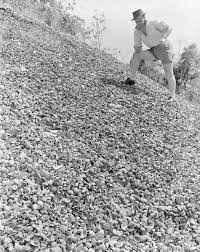
The Advanced Society.
In his book The Road to Serfdom, Freidrich Hayek asserts that the economic freedom of capitalism is a requisite of political freedom… with continual growth being the mechanism that feeds such “economic freedom”.
So we have to propose the question : What makes an “Advanced Society”?
Could it be that as proposed by Hayek above?..Or is it something more basic…more durable…more sustainable than the capitalist notion of continuous growth / continuous consumption? Can it be presumed that a technological advanced society holds greater ethical dominance and therefore deserved racial dominance over the more stable tribal structures that once were spread throughout the Australian environment for tens of thousands of years?
Consider these examples..
Eucalyptus Largiflorens (Black Box) : Distribution and occurrence: Local community dominant, in grassy woodland on heavy black clay soils in seasonally flooded areas;
In this area of Sth. Aust’…
View original post 725 more words
Therapist REVEALS Why Finding Love Is SO HARD…| Lori Gottlieb & Lewis Howes
No matter if you’re currently in a relationship, still searching to find the right partner, or just curious about the topic, I think you’ll find value in Lori and I’s discussion. If you’re ready to get one step closer to finding the love you want in your life, then I encourage you to listen to it. Please join me for Episode 1,190 of The School of Greatness!
America’s Deadliest Drug: Fentanyl
On the latest episode of Patriot Act, Hasan discusses America’s opioid epidemic and the recent spike in deaths due to one drug in particular: fentanyl. One of the most powerful drugs ever created, Fentanyl is a highly potent opiate that’s now the leading cause of overdose deaths in the United States. Hasan looks into its makers and distributors, from cartels to pharmaceutical companies like Insys and Teva, to discern how it has been able to wreak so much havoc on so many lives.
Poisoned: America’s Fentanyl Crisis | ABCNL
In part one of a series, ABC News’ Bob Woodruff examines how the powerful synthetic opioid fentanyl is devastating cities across America, and what one city is doing to respond to the epidemic
Contaminated: the fentanyl crisis in St. Louis
Fentanyl is the most lethal drug ever created. News 4 spent months looking into how it impacts the St. Louis community, where it comes from, and what can be done to alter its deadly path. For more stories, resources & what you can do to help fight the fentanyl crisis go to http://www.kmov.com/fentanyl.
https://en.wikipedia.org/wiki/Fentanyl
Fentanyl
From Wikipedia, the free encyclopedia
Jump to navigationJump to search
Fentanyl, also spelled fentanil, is a potent opioid used as a pain medication. Together with other drugs, fentanyl is used for anesthesia.[3] It is also used illicitly as a recreational drug, sometimes mixed with heroin, cocaine, benzodiazepines or methamphetamine. Its potentially deadly overdose effects can be neutralized by naloxone.[5] Fentanyl is commonly used to create counterfeit pills disguised as OxyContin, Xanax, Adderall, among others. It has a rapid onset and its effects generally last under two hours.[3] Medically, it is used by injection, nasal spray, or skin patch, or absorbed through the cheek as a lozenge or tablet.[3][6]
Common adverse effects of fentanyl include nausea, vomiting, constipation, itching, sedation, confusion, and injuries related to poor coordination.[3][7] Serious adverse effects may include respiratory depression, hallucinations, serotonin syndrome, low blood pressure, or development of an opioid use disorder.[3][7] Fentanyl works by activating μ-opioid receptors.[3] It is around 100 times stronger than morphine and about 50 times stronger than heroin. Fentanyl was first made by Paul Janssen in 1960 and approved for medical use in the United States in 1968.[3][8] In 2015, 1,600 kilograms (3,500 pounds) were used in healthcare globally.[9] As of 2017, fentanyl was the most widely used synthetic opioid in medicine;[10] in 2019, it was the 278th most commonly prescribed medication in the United States, with more than 1 million prescriptions.[11][12] It is on the World Health Organization’s List of Essential Medicines.[13]
In 2021, fentanyl and fentanyl analogues accounted for most drug overdose deaths in the United States with 71,238 deaths.[14][15][16][17][18][19] Compared to heroin, it is more potent, has higher profit margins, and, because it is compact, has simpler logistics. It can be cut into, or even replace entirely, the supply of heroin and other opiates.[20] Factories in China manufacture fentanyl or fentanyl precursors; it is then smuggled into other countries for illicit sale; in the United States, the Chinese-manufactured fentanyl is smuggled primarily via Mexico.[21]
Contents
- 1Medical uses
- 2Adverse effects
- 3Overdose
- 4Pharmacology
- 5History
- 6Society and culture
- 7Veterinary use
- 8See also
- 9References
- 10Further reading
- 11External links
Medical uses[edit]
Anesthesia[edit]
Intravenous fentanyl is often used for anesthesia and to treat pain.[22] To induce anesthesia, it is given with a sedative-hypnotic, like propofol or thiopental, and a muscle relaxant.[23] To maintain anesthesia, inhaled anesthetics and additional fentanyl may be used.[23] . . . .
How do you stretch your social muscles again? Start small. – Letters From Esther
Whether you’ve fumbled your words over dinner with an old friend or sat in awkward silence trying to remember a social norm, our social muscles are in need of a bit of stretching and flexing. For some of us, we may need to take smaller steps before diving headfirst into the bigger, deeper dinner party conversations. In this workshop, we’ll discuss how to engage in the dance of finding small commonalities as we begin to connect with old friends, acquaintances, and strangers. I’ll be discussing this month’s newsletter on Small Talk. Letters from Esther Perel is a monthly newsletter and free workshop series created to help you deepen your connections through reflection and action. Sign up for the series here: http://bitly.com/lettersfromesther
 AuntyUta

