
“The Urban Homestead offers an extremely comprehensive survival guide . . .”
We may be in need of this!

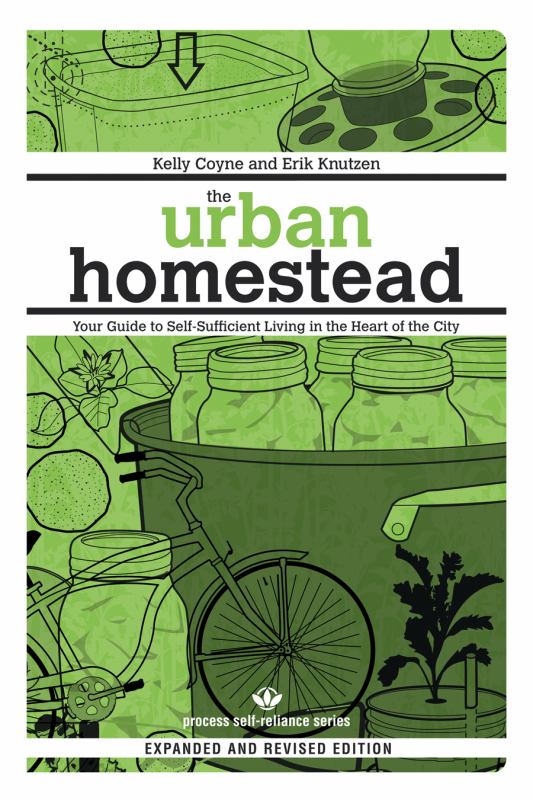 The Urban Homestead: Your Guide to Self-Sufficient Living in the Heart of the City
by Kelly Coynce and Eric Knutzen
Process (2010)
Book Review
This book sees three possible options for the future of industrialized society:
- More of the same: a ruling elite with access to organic food and solar panels, with ordinary people eating heavily processed foods and being defined as “consumers” rather than citizens.
- An apocalypse – driven mainly by resource shortages, civilization collapses
- A shift in consciousness – a new urban agriculture arises, with people relying on their neighbors and community building rather than big tech.
The Urban Homestead offers an extremely comprehensive survival guide for all three of these options. The authors point out how citizens of Shanghai already produce 85% of their veggies within the city and how Cuban city dwellers produce half the fresh fruits and vegetables they consume.
Meanwhile in the West, industrialized…
View original post 193 more words
 AuntyUta
Possessiveness Brings Pain
auntyuta Diary, Life in Australia, Old Age May 18, 2023 3 Minutes
Well, this is the title to a blog by ARUNSINGHA:
I republished it here:
In the comment section I wrote:
I say: Maybe it is feeling helpless in coping with certain aspects of modern life that gives me the most pain.
For instance: I could pay my bills at the Post Office. No problem. I can do it, can’t I?
But no, my daughters tell me, the bills have to be paid online.
At the check-out: Why shouldn’t I let the person at the check-out do the work for me?
I just like to be served at the check-out!
Urban homestead – that figures! Reminds me of the UK during WWII and the “Dig for Victory” campaign. Hitler cut off our imported food supplies & we had to rely on what we could grow ourselves, so every little garden had at least one patch of vegetables (or rhubarb!) and many people had allotments that supplied them with basic vegetables. Many people also kept chickens in their gardens, and some even had a pig. It was extra work, but the food was healthy and nutritious.
Thanks for commenting, Cat.
Germans did very much the same during the war and after the war!
We did grow tomatoes on our balcony. They were delicious! 🙂
Yummy!