Auntie, Sister. Grandmother, Great-Grandmother,
Mother and Wife of German Descent
I've lived in Australia since 1959 together with my husband Peter. We have four children, eight grandchildren and two great-grandchildren. I started blogging because I wanted to publish some of my childhood memories. I am blogging now also some of my other memories. I like to publish some photos too as well as a little bit of a diary from the present time. Occasionally I publish a story with a bit of fiction in it. Peter, my husband, is publishing some of his stories under berlioz1935.wordpress.com
When I put the ABC TV Morning program on just now, the first thing I heard was, that Drink Spiking has become a major problem. So, when I go out and someone offers me a drink, I have to make sure, it cannot be spiked!
Today is Wednesday, the 27th of May. Two days ago, last Monday, we had Anzac Day, that is a Public Holiday! This is why I had no home help last Monday.
My dear Summah is going to help me for two hours on Thursday (tomorrow) again! Then on Friday morning I can go over to the Club to see the knitting group ladies for a little bit, and maybe have a bit of lunch at the club. And tomorrow afternoon is another games afternoon for Barbara, Erika, Irene, and me!
This coming Saturday is going to be the last day of this month. So, that means on Sunday is the 1st of May!
Now, here is some great news: One week from next Sunday, that is on the 8th of May, I am going to be on the plane with my daughters Caroline and Monika, and Krystal (Monika’s daughter)!
We go first to Singapore. And from Singapore we catch a direct flight to Berlin, Germany, to see some relatives and friends . . . .
We are going to be back in Australia on Monday, the 23rd of May!
Noam Chomsky: “We’re approaching the most dangerous point in human history” US professor, Noam Chomsky now 93, joins George Eaton to discuss the Ukraine Russia War, the climate catastrophe, Keir Starmer’s Labour Party, Brexit, and much more. “It’s monstrous for Ukraine,” he said. In common with many Jews, Noam Chomsky has a family connection to the region: his father was born in present-day Ukraine and emigrated to the US in 1913 to avoid serving in the tsarist army; his mother was born in Belarus. Chomsky, who is often accused by critics of refusing to condemn any anti-Western government, unhesitatingly denounced Vladimir Putin’s “criminal aggression”. Noam Chomsky is also still engaged by British politics. “Brexit was a very serious error, it means that Britain will be compelled to drift even further into subordination to the US,” he told me. “I think it’s a disaster. What does it mean for the Conservative Party? I imagine they can lie their way out of it, they’re doing a good job of lying about a lot of things and getting away with it.” Read the full interview by George Eaton here: https://www.newstatesman.com/encounte… Chapters: 0:00–1:23 Intro 1:23–12:38 Ukraine Russia War 12:38–23:05 Afghanistan war, Yemen, and US foreign policy 23:05–28:30 Putin and US democracy 28:30–35:32 Trump and the “greatest threat to humanity” 35:32–37:00 Keir Starmer and the Labour Party 37:00–47:47 The US Democratic party 47:47–48:58 Brexit 48:58–53:37 Why Chomsky is still politically active 53:37–59:06 Hope and Extinction Rebellion #NoamChomsky#Brexit#RussiaUkraine
April 25 is a sacred day in the Australian and New Zealand national calendars. It is a day on which many of our citizens can set aside their divides and commemorate the ultimate sacrifice of over 102,000 members of the Australian armed forces who have died during or as a result of their service in wars and peacetime operations.
On the morning of April 25, 1915, those hardy yet inexperienced souls of the Anzac Corps landed at a place few Australians had heard of. It ended in disaster for the British Expeditionary Force. But, as Australian historian C.E.W. Bean wrote afterwards:
“In the first straight rush up the Anzac hills in the dark, in the easy figures first seen on the ridges against the dawn sky, in the working parties stacking stores on the shelled beach without the turning of a head, in the stretcher-bearers walking … onlookers had recognised in these men qualities always vital to the human race. Australians watched the name of their country rise high in the esteem of the world’s oldest and greatest nations.”
In the modern era, these words might also be applied to the courageous Ukrainians. Fighting against a larger, more technologically advanced nation since February 24, the Ukrainian people, their tenacious military and their inspirational president have demonstrated the kinds of qualities we so admire in our Anzac veterans and celebrate every April.
‘Why did he sign up?’: Historian uncovers his own family’s Anzac past
This Anzac Day, as Australians continue to see the Ukrainians demonstrate those qualities of courage, resilience, empathy and cleverness so “vital to the human race”, what might we learn from the Russo-Ukraine War?
We can’t disappear war with hope
The first lesson is that war remains a central aspect of human existence. No amount of hoping it goes away can make it disappear. As historian Ian Morris has written, war is “something that cannot be wished out of existence, because it cannot be done”.
Despite the theories of Steven Pinker and others, authoritarians such as Vladimir Putin believe that resorting to war to achieve their desired outcomes remains a valid course of action in the 21st century.
China is running out of time to achieve the glory so desired by President Xi Jinping.(AP: Li Xiang/Xinhua)
We must not fool ourselves into believing this might just be a European phenomenon. While nations such as China would have us believe they prefer to “win without fighting”, they have also engaged in the largest military build-up seen anywhere in the world in the past several decades.
And China is a nation running out of time to achieve the glory so desired by President Xi. It is getting older, smaller and more desperate to reintegrate Taiwan into China. The lesson for Australia is that a large-scale war is possible in our region in the coming years.
We must be prepared to fight
There is a follow-on lesson from this. We need to do everything we can to deter such an eventuality, but also be prepared to fight if deterrence and diplomacy fails.
This means that Australia will probably need to spend even more than recently promised increases in defence spending. Potentially, we may need to double the amount of our GDP spent on national defence.
This increase should apply to the larger national defence effort, and not just military spending. If our nation is to play a more substantial role in deterring conflict, and securing our region, we will need to significantly expand our diplomatic capacity.
Our nation’s diplomats are on the front line of our global engagement, every single day of the year. We need to expand their numbers, their presence, and their aid budget to shape the regional environment so it is less conducive to external coercion or military conflict.
Military might must expand
At the same time, our military capabilities will need to be sharpened considerably in quality and quantity — on land, at sea, in the air, in space and cyberspace.
Australia must be a nation that potential adversaries look at and think, “no thanks”. This may involve a significant and rapid enlargement in the size of the Australian Defence Force, complemented with a much-improved civil defence and resilience capacity.
It might even necessitate a form of national service for young Australians. Young Australians could serve in the military services or in a variety of state emergency response organisations and other forms of non-martial services.
Leadership matters
Perhaps the most important leader in the world right now is Ukraine’s President Volodymyr Zelenskyy.(Reuters: Gleb Garanich)
Finally, leadership matters. Leadership and inspiration from individuals can make or break nations. Despite the centrality of slow, committee-based decision making in our national capital, it is clever, connected, empathetic and values-based leaders who are essential to our nation.
These leaders must be willing to take risks, nurture an environment where failure is permitted in a strategic learning culture, and accept that time is short. Too many in our national defence community think in terms of decades when it comes to risk and defence procurement. This must change, and quickly.
Ukraine gives us an alternative example of strategic leadership. Perhaps the most important leader in the world right now is President Zelenskyy. He was underestimated by Western leaders before the war, but has since unified his people, exhorted courage from his military and inspired millions around the world to reconsider why democracy is worth defending. He appreciates the need to take risks and knows that time is his most precious resource in saving his nation from potential extinction.
Many national leaders in the West will have since looked at themselves in the mirror and wondered if they could meet the high standard of leadership Zelenskyy has set.
This Anzac Day, Australia again looks on from afar as a foreign democracy fights desperately for its life. We must, as a nation, give thanks for the sacrifices of our forebears.
But we should also honour their sacrifices by learning from the war in Ukraine so in the coming years we might better defend our values, our democratic system, and our prosperity in the 21st century.
Mick Ryan is a strategist and recently retired Australian Army major general. He served in East Timor, Iraq and Afghanistan, and as a strategist on the United States Joint Chiefs of Staff. His first book, War Transformed, is about 21st century warfare.
Ukrainians begin to rebuild in Irpin after Russian assaults
The connection between Russian oppression and Stalinism
The connection between Ukrainian nationalism and anti-communism
The present basis of support for Ukrainian fascist groups
How that could all change
Since I was recently in Ukraine, I was asked by a respected friend and fellow worker to write about my impressions of the issue of fascism in Ukraine. To me, it’s a very complex issue and it involves the whole issue of the old Soviet regime, the restoration of capitalism in that part of the world in general and the whole issue of national rights for Ukraine.
I am very, very far from an expert on any of this, but I have read a little bit. That reading includes Yulia Yurchenko’s excellent book Ukraine and the Empire of Capital, which reads kind of like a combination of Das Capital plus the Communist Manifesto brought up to date and with a focus on Ukraine, but placed in a world context. My experience in Ukraine was extremely limited and only allowed me to just scratch the surface, but I tried my best to keep my eyes and ears open. So with that understanding, here’s how the issues appear to me:
Ukraine means “borderland”, and that’s what Ukraine is – a borderland between many of the European powers. Combined with the fact that much of it is a flat, broad plain, this meant that it was invaded over and over again, so its peoples are composed of many different ethnic groups. The country or major parts of it were passed back and forth like the booty in a war. Over the last 100+ years, though, Russia has been the dominating power and threat. There was, for example, the “Holodomor” or mass starvation of 1932-3 in which 13% of the Ukrainian population starved to death. This national disaster was caused by the criminal policies of Stalin.
This and similar memories is seared into the minds of Ukrainian national culture, and it means that national oppression is equated with both Russia and what passed for socialism. My impression is that to many Ukrainians, they are one and the same.
Donbas miners on strike in 1989
1989 Donbas miners strike In the late 1980s there was a mass strike movement of miners in the Donbas region. (The following quotes and statistics are from Yurchenko’s book.) In 1989, 173 out of 226 miners – a half million in all – went on strike. They elected strike committees that became semi-permanent institutions These were embryonic workers councils in the making, but the workers didn’t know where to go with them. The miners called for educational programs, but that layer of society with access to history and a wider understanding of the world – the petit bourgeois intellectuals – were intent on Ukrainian nationalism and ignored these strike committees. So, the miners’ intent on fighting the “Soviet system” found but one alternative: a first step back to capitalism through “enterprise autonomy”.
The miners strike could have been a first step towards the working class taking power. But the only option that seemed on the table was some sort of “kinder and gentler” capitalism. Something along the lines of what existed in Sweden or Germany – a well ordered society in which clear laws existed and were observed by all. A society with a “free” press and “fair” elections. A society that was able to provide the economic basics and had a wide level of social benefits.
The result of the collapse of the miners strike was a forewarning of what was to come. Throughout the Donbas, crime took off as criminal gangs multiplied. Increased drug addiction, the collapse of family life – all the ties that hold a society together even under capitalism frayed to the breaking point.
Return to capitalism The middle class nationalist intelligentsia and the gangster capitalists combined. This along with the fact of the long standing oppression by Russia led to over 90% of voters voted for independence from Russia in the 1991 referendum. This was not only a vote for political independence, it also implied a view of moving towards capitalism as it was seen in Western Europe – capitalism with a kind and “democratic” face, capitalism with clean and “democratic” elections, lack of corruption and social programs to provide health care, pensions, etc.
With or without independence from Russia, though, a return to capitalism was inevitable at that point. The point is that independence also meant some form of democratic rule to those who voted in its favor.
What kind of capitalism they were going to get was indicated by the fact that in 1993 inflation reached 10,000%, by 1996 the GDP had shrunk to its lowest level in the history of Ukraine and by the following year the productive (as opposed to the speculative) component of GDP was at a mere 47.8%.
The “nomenklatura” (the old Soviet era bureaucracy) combined with outright criminal gangs to hive off the state owned industries. Gangsterism reined supreme. Each oligarch ruled over his turf like drug gang leaders do. They developed their own regional-based political parties. They fought amongst themselves as much as they did against their class enemy, the working class. This capitalist class in the making was a “criminal-political nexus”.
Capitalism in Western Europe and U.S. At that time Western Europe was headed down the neoliberal road, reducing all social benefits and even the social democrats were collaborating in taking that direction. Due to this, far right nationalist and even outright fascist forces were bound to develop in those countries. So what chance did capitalism stand in Ukraine?
As for “democracy”, we have to realize one thing: It is a luxury for the capitalist class to rule through democratic norms. True, it’s the safest and least expensive means of their rule, but it is only possible when the capitalist class can offer at least the hope of a decent life to the majority of the working class. That is why it is being steadily eroded in Western Europe and the United States. In the US, where the working class is in crisis, the main resistance to that erosion comes from all the institutions that base themselves on capitalist democracy. That includes most of the capitalist media and almost all governmental institutions – for example the bureaucracies that control elections, different regulatory bodies, and even the US military. Even here, though, we see the erosion as for example within the police, where a large sector are committed racists and even fascists. And the US military has always had its “Dr. Strangelove” wing which is exemplified today by the likes of Michael Flynn and the convicted war criminal (pardoned by Trump) Eddie Gallagher. For all its extreme failings and its decline, the US unions also still stand as something of a bulwark to the developing anti-democratic trend that is being led by the Republicans.
Political basis for capitalist rule in former East Bloc But what did Ukraine (or Russia or any of those countries) have? The previous state institutions were based on repression. There was no tradition of “free” press. And the unions were simply the old state-controlled unions, more like company unions than real worker organizations of any sort.
As for socialism: In the West – the US for example – socialists always were in the forefront of any workers’ movement. All the best, the most serious and dedicated union leaders were socialists of some sort – the famous ones like Eugene Debs, Big Bill Hayward, P.J. McGuire, and those whom history has largely forgotten like Benjamin Fletcher and R.T. Sims. (These names are largely forgotten due to racism.)
But the working class of Ukraine lacked the mass workers’ organizations – the unions. And as for socialism – it was and is almost unanimously associated with national oppression and the monster to the east.
Western capital played its role. Again, according to Yurchenko, it flooded Ukraine with speculative finance capital. She writes: “A large proportion of the economic growth of Ukraine’s economy in the pre-crisis years was growth on paper, based on fictitious foundations of credit finance and mirage liquidity. Investment from abroad that flooded the country in the last few years, before the Lehman Brothers collapse, has been the last wave of Ponzi-type financialisation. Ukraine’s banking sector growth since 2000 and especially during 2005–2008 was not a sign of the country’s improving economic performance but rather a sign of growing dependency and integration with the global financial architecture. It was an expression of the last wave of financialisation that began in the USA and then spread over to Europe–first Western and later farther to the East….. Ukraine cumulatively borrowed $44 billion and over 15.6 billion euros with the largest lenders being the IMF, the World Bank and the European Commission.”
All that money had to be repaid… by the working class.
The Maidan protests They were not nationalist or fascist inspired
Maidan In 2014, masses of Ukrainian youth rose up against the corrupt and pro-Russian president Yanukovich. Some on the “left” claim that it was a right wing-led coup that drove Yanukovich out of office. An independent study revealed that 70% of the protesters mentioned police brutality as a reason for being out in the streets; 53.3% mentioned Yanukovich’s refusal to sign the EU-Ukraine agreement; 50% said it was a desire to change life in Ukraine. Only 5% mentioned following a call of one of the right wing parties.
As with the years that led up to Maidan, the years that followed were filled with power struggles between different regional and gangster capitalist based parties, of which Yanukovich’s “Party of the Regions” was only one. It was the one most closely linked to Russia.
Ukrainian fascism It was in this historical context that we have to understand Ukrainian fascism. Before commenting any further, it should be stressed that contrary to how most of those on the left raise it, fascism in
A member of the Russian National Unity Party. Putin sent these fascists into Donbas. The “socialists” who talk about fascism in Ukraine ignore Putin’s much stronger fascist links.
Ukraine is no isolated phenomenon. There is a fascist component to almost all those former east bloc countries, with the strongest fascist component being in Russia. There, Putin’s Number One advisor is the fascist Aleksander Dugin. Almost every fascist group and prominent individual throughout Europe supports Putin. While she is not directly a fascist, France’s Marine Le Pen is close to it. She has been directly financed by Putin. At a recent conference of the white supremacist America First in the US, the crowd was chanting “Putin, Putin, Putin”. So any talk of fascism in Ukraine is hypocrisy at best if it doesn’t point this out.
Nor is the Zelensky government a fascist or even fascist friendly one. In fact, Zelensky recently dismissed his interior minister Avakov, who was giving protection to the fascist-led Azov Battalion. And in the 2021 elections, the fascists received something like 3% of the vote and didn’t get a single delegate elected (as opposed to in the US).
However, this can be somewhat deceptive. According to what I was told when I was there, support for Azov is quite widespread as are right wing sentiments… of a sort. I was told that one can give the Nazi salute without being arrested, but one can be arrested for singing the Internationale. But we must see the complexity of this sentiment:
A funeral for a right wing leader in Lviv. Support for the far right is a complex issue in Ukraine.
Ukraine nationalism is totally integrated with the view that national oppression of Ukraine is integrally linked with the old Soviet Union. This is the basis of the anti-communism. Anti-communism and Ukrainian nationalism are one and the same in a the minds of many Ukrainians. Those who want to resist the Russian invasion would be looking for the force most determined and most able to do so. For many, that would be Azov. It is similar to those Syrians who wanted to resist the fascistic Assad dictatorship joining with the Muslim fundamentalists. They were not necessarily fundamentalists; they just wanted arms to fight Assad.
It is worth quoting Yurchenko at length: “The Ukrainian nation as an imagined community was weak when the country became independent… until the insurrection of 2013-2014…. It became popular to view the annexation of Crimea by Russia and the latter’s active support for separatist forces as factors that forced the birth of the Ukrainian nation that had been in the making since the early 1990s…. The Ukrainian is now locked into defining themselves in opposition to the Russian ‘Other’… [which] is chained to the communist Soviet.” (From pp. 20-21)
This view has nothing in common with that of Putin, who denies the very right of Ukraine to exist, and does so in order to justify a brutal imperialist invasion. Yurchenko bitterly opposes the invasion and has no patience for those “socialists” who deny Ukraine’s right to obtain arms from any source available, including the NATO nations. But what her explanation does do is explain two things: First is the link between Ukrainian nationalism and anti-communism; and second and related to this is the relatively weak basis for Ukrainian nationalism as compared to, for example German or Italian nationalism.
The basis of any national sentiment is a shared historical experience, a common language and culture, and more or less clear borders, among other things. What is happening in Ukraine – what has happened – is only the most extreme example of a global process. In 2004, the Guardian newspaper carried an extremely interesting article called The Demise of the Nation State. The author, Das Gupta, explained that all these factors that hold a nation together are under assault by global capital as well as other forces. But workers know no form of rule under capitalism other than the nation states. In fact, there is no other form of rule. It is exactly these processes that are driving a yearning for the “good old days”, meaning increased nationalism. The author didn’t comment on the absence of a mass, working class based socialist movement as an alternative, but that factor is certainly there globally and doubly so in Ukraine.
So what we see in Ukraine is a concentrated image of the future that capitalism holds for all.
More specifically, in relation to Ukraine, if Putin’s invasion succeeds even in part, if he succeeds in gaining military control over the Black Sea coast, possibly even all the way down to Odessa, this will lead to years of low scale war. It won’t be entirely different from what is happening in the West Bank and Gaza today. In the absence of a clear headed – which is to say socialist – wing of the working class developing, then hatred of Russia and in fact all Russian people could develop. This could include a movement against ethnic Russians in Ukraine, maybe even including physical attacks. In that case, then genuine fascist ideology could start to really develop.
Israeli fascist youth chanting “death to Arabs” at a protest.
To continue the previous analogy: In Israel today, Zionist fascism (as opposed to simple colonial/racist thinking) is developing, especially among the settlers in the West Bank. In the case of the war in Ukraine, Putin would likely have to bring in a “new” and more loyal population into his newly conquered territory. These would have a fascist ideology. Not only that, but the chauvinism that Putin bases himself on in Russia would also lead to an increase in outright fascism in the mother country. In fact, it’s possible that Putin’s rule could become an outright fascist one.
On the other hand, if Putin’s invasion fails, if his forces are even just driven out of the regions they already have conquered and Luhansk and Donetsk remain as puppet “states” for Putin, it seems likely to me that that would be considered a huge victory for Ukraine. In that case, within Russia a mood similar to the post-Vietnam mood in the US could start to develop. That would be a radical left challenge to the Putin regime, including mass disafection within the military. More important is what could start to develop in Ukraine. It seems most likely to me that there would be an initial outpouring of national pride. “We beat the Russian bear!” would be the mood. But then a new mood could start to develop among workers: “We went through all this sacrifice, now we want ours.” In other words, a renewed class struggle. Under these circumstances, an opening could develop for genuine socialism.
A funeral for a right wing leader in Lviv. Support for the far right is a complex issue in Ukraine.
And how can there be adequate freedom and happiness with their government
for the whole population, or at least the majority of the population of one
country?
At the moment I am sufficiently confused. I ask myself, will we ever be able to achieve
lasting peace all over the world?
What about the defense industry: Does mankind really need that many weapons and war inducing facilities?
Can we not eventually talk to each other to settle our differences,
rather than attack each other in a nasty way just because we are different
from each other, and also may have different feelings about certain things?
What is there, that can unite mankind for good?
Why do we promote war rather than peace with another country?
Is war really the best way to ‘get our wishes’ for freedom or independence promoted?
You guess right: I am thinking more and more about how the Ukrainian people might perhaps be helped.
So, It is strange to consider, that the most hatred can often develop between very close people, like between brothers/sisters or cousins!
Well, it looks to me, to work for and achieve peace still takes quite a bit of time, especially if there are so many war mongers are among us that profit financially from the promotion of war!
It is the poor people that have to suffer most and more and more from all this.
That we can all have the ‘good’ life is again becoming just a dream and not the reality.
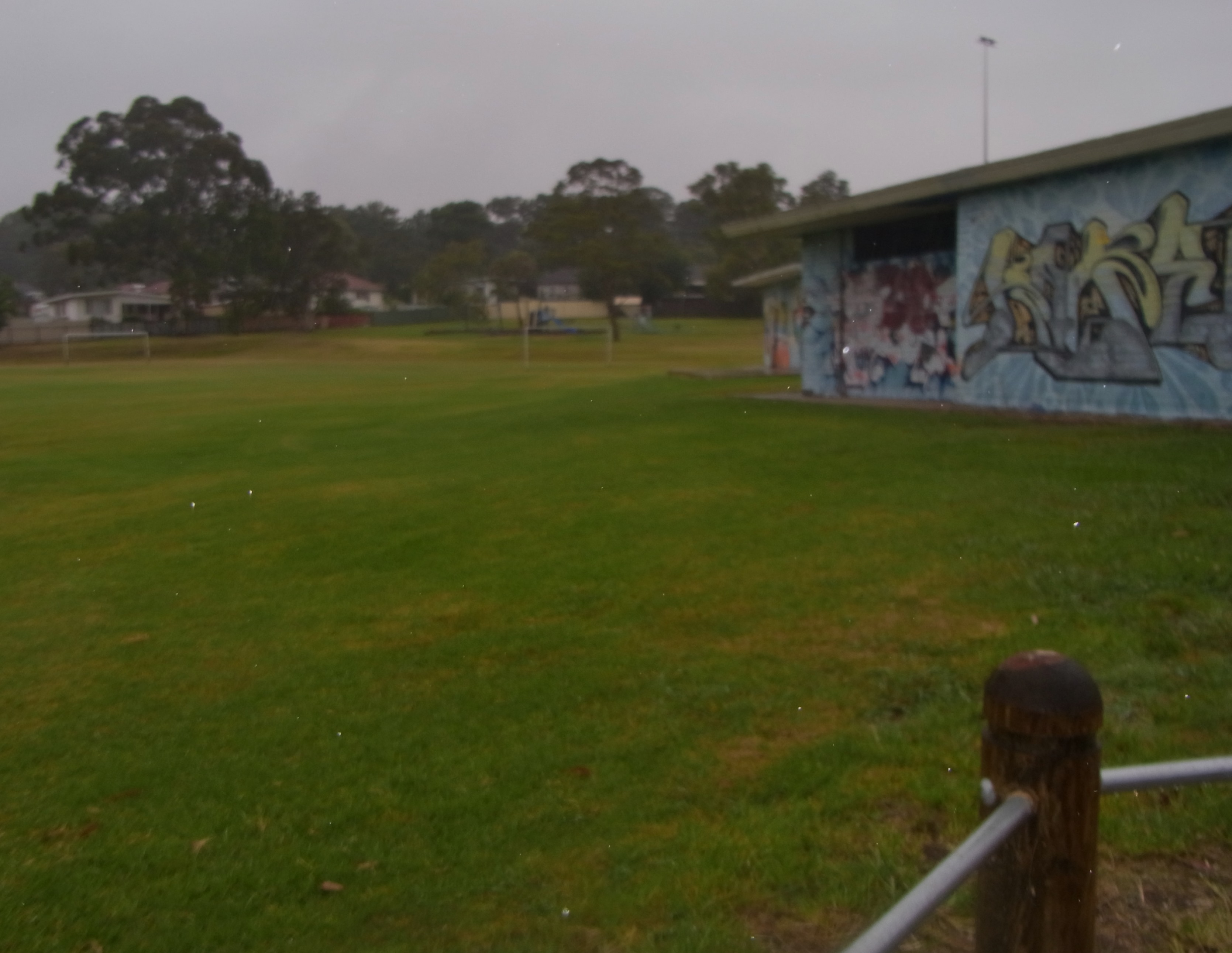
This morning I ventured out into the rain for a leisurely walk to take some pictures. It was just a drizzle and absolutely calm. I was able to walk with an umbrella without having to fear that some nasty wind would rip it apart. The bush smelled lovely after being slowly soaked with beautiful warm rain. Yes, it’s still in the low twenties, Celsius I mean. For me this is still a very pleasantly wet summer day.
This is part of Cambridge Road
Some Footpaths in Cambridge Road remind me a bit of the tracks we used to walk along at Sussex Inlet.
This is near a bridge over Brooks Creek.
There still isn’t much water to be seen in this part of Brooks Creek.
And then I walked back via Lakelands Park.
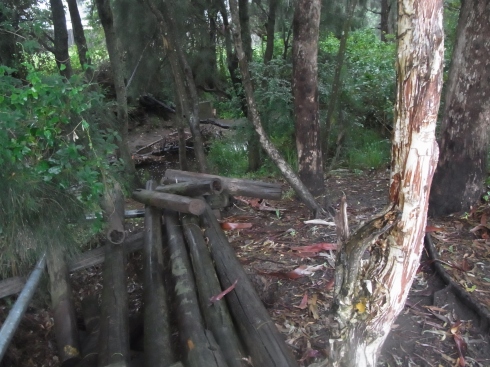
Brooks Creek ‘flows’ along beside the wooded area on this side of Lakelands Park. Someone tried to…
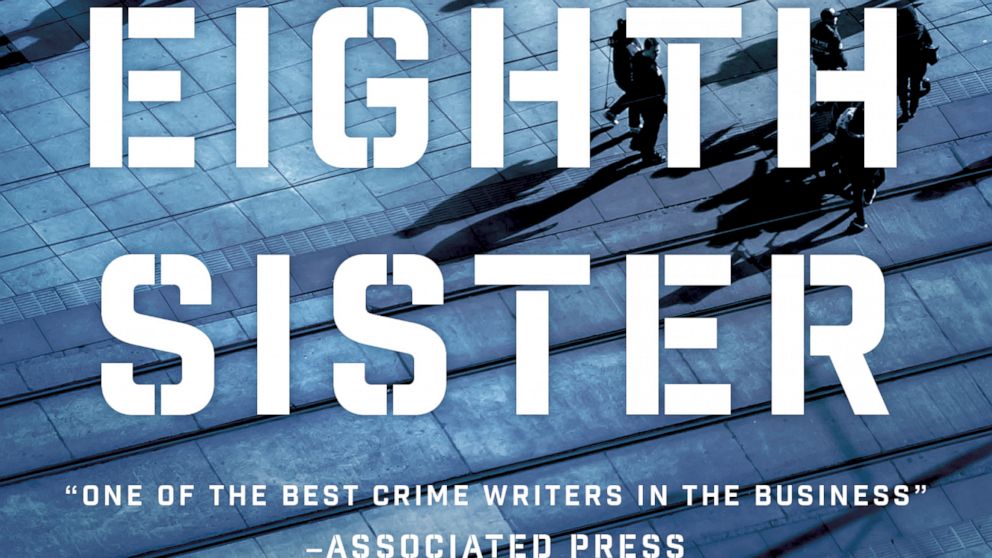
The Associated PressThis cover image released by Thomas and Mercer shows “The Eighth Sister,” by Robert D…Read More
“The Eighth Sister” by Robert Dugoni (Thomas and Mercer).
Charles Jenkins has left his time in the CIA far behind and now lives with his family on a farm on a remote island in Washington state. His wife is expecting their second child, and he runs a security consulting business to pay the bills. When financial issues force him to contemplate how to pay his employees while at the same time keeping his wife as stress-free as possible due to pregnancy complications, Jenkins receives an offer he should refuse.
His former boss arrives at the farm and asks him to travel undercover to Moscow to find a Russian operative targeting agents from the United States that were part of an operation known as the “Seven Sisters.” The hope is that when Jenkins arrives in Russia and starts to ask questions, the elusive agent known as the Eighth Sister will make her presence known. Jenkins desperately needs the money, so he reluctantly agrees to the mission.
The initial routine assignment soon turns deadly when Jenkins stumbles upon a buried secret, and with that comes the wrath of a Russian intelligence officer. He wants Jenkins eliminated, and like Javert in “Les Miserables,” will not give up under any circumstances. Now it becomes a race as Jenkins tries to escape foreign territory while the climate favors an angry Russian official who wants his brand of justice.
Robert Dugoni has crafted a thriller with “The Eighth Sister” that echoes the best of classic Russian literature with a hint of John LeCarre added to the mix. When the storyline veers into predictability, the narrative takes a drastic turn and becomes a legal drama that will remind readers of Scott Turow’s best. This novel is destined to be a classic in the genre, and Dugoni is arguably one of the best writers in the field right now.
This is a blog by Keith Davis published by the AIM Network on August 17, 2019. I read it today, and I also read the 32 replies that were published by the AIM Network.
Keith Davis wants “equality, and an end to violence against women in our society!”
Among other things Keith asks: “Who, on average, kills one Australian woman each and every week of each and every year of each and every decade?”
These killings of course are a terrible crime. So, we know, these killings are mostly done by men. But what actually drives some men to commit murder? Is it a power game? Do they want to show that they have more power than a woman by resorting to killing or to some kind of abuse? In what cases do women have the power to defend themselves?
The Federal Aviation Administration’s COVID-19 vaccine mandate for pilots violates federal regulations and places pilots and passengers at risk, according to a letter from the California-based Advocates for Citizens’ Rights. The group cited multiple cases of pilots being injured or dying after the vaccine.
The Federal Aviation Administration’s (FAA) COVID-19 vaccine mandate for pilots violates federal regulations and places pilots and passengers at risk, according to a letter from the California-based Advocates for Citizens’ Rights.
The letter, only recently made public, was hand-delivered in December 2021 to then-director of the FAA, U.S. Department of Transportation, U.S. Department of Justice (DOJ), and CEOs and legal counsel of major U.S. air carriers (American Airlines, Alaska Airlines, Delta Airlines, Southwest Airlines and United Airlines).
It includes data showing pilots across the aviation industry — including commercial, military and general aviation pilots — face increased health risks from the…







 The Associated PressThis cover image released by Thomas and Mercer shows “The Eighth Sister,” by Robert D…Read More

 AuntyUta