Auntie, Sister. Grandmother, Great-Grandmother,
Mother and Wife of German Descent
I've lived in Australia since 1959 together with my husband Peter. We have four children, eight grandchildren and two great-grandchildren. I started blogging because I wanted to publish some of my childhood memories. I am blogging now also some of my other memories. I like to publish some photos too as well as a little bit of a diary from the present time. Occasionally I publish a story with a bit of fiction in it. Peter, my husband, is publishing some of his stories under berlioz1935.wordpress.com
The MIT community is driven by a shared purpose: to make a better world through education, research, and innovation. We are fun and quirky, elite but not elitist, inventive and artistic, obsessed with numbers, and welcoming to talented people regardless of where they come from.
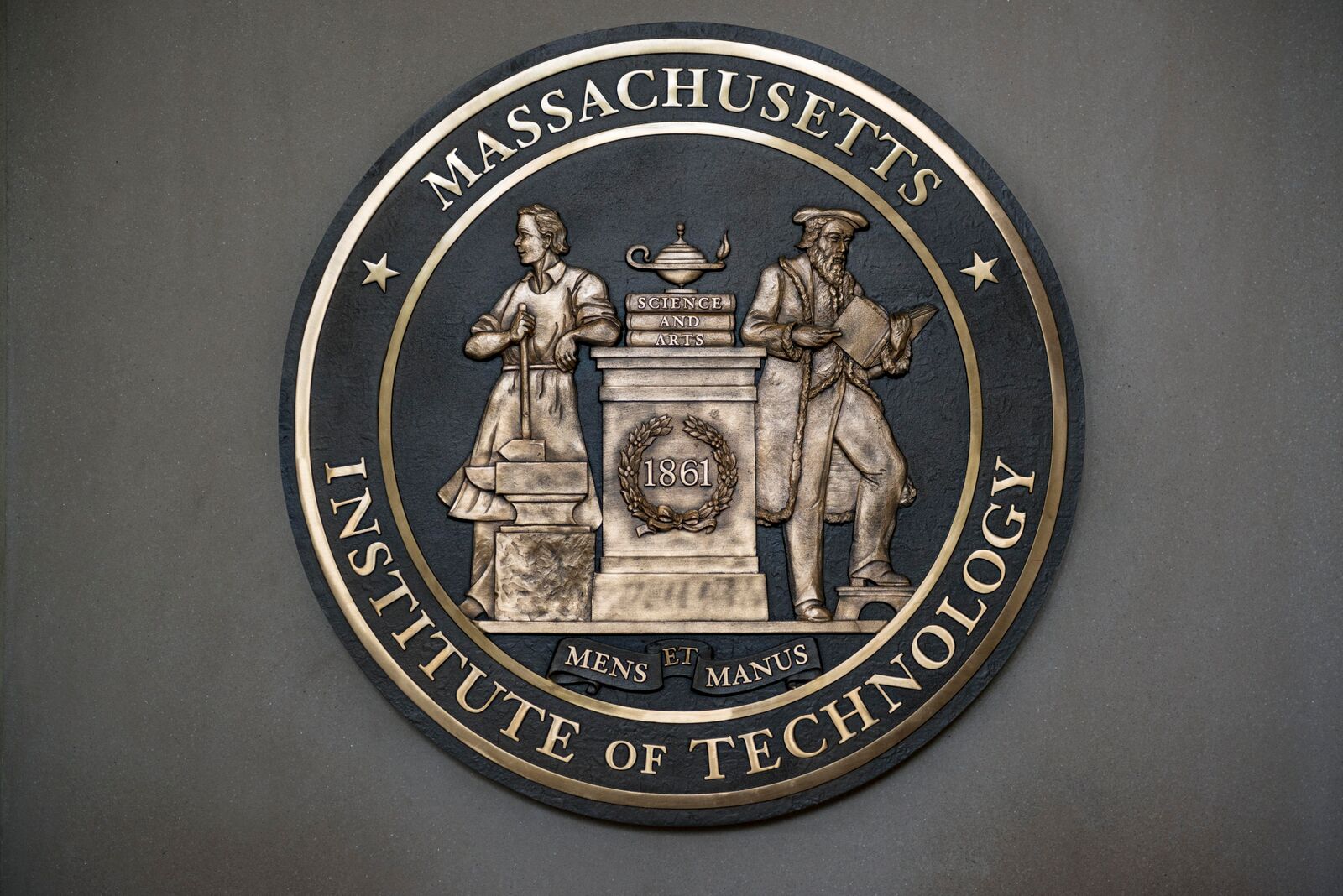
MIT’s motto is “mens et manus,” or “mind and hand,” signifying the fusion of academic knowledge with practical purpose.
Towards the end of January 1945, when we were about to leave the Ausbau, Mum, Tante Ilse, Frau Todtenhausen, as well as Katja and Maria were busy all night killing all our rabbits and chooks and preserving the whole lot in glasses. We ended up taking quite a few of those glasses to Leipzig, where miraculously they survived the total distruction of our house during a bomb raid in the pantry next to a very strong wall. Not one glass was shattered! I myself though was not able to eat any of the rabbit- or chicken-meat, since from early childhood on I’ve never been able to eat this kind of meat. …
Before we left the Ausbau, all the furniture in the house was pushed together as much as possible. Some beds had been dismantled already. But we children were meant to get some sleep in spite of all the commotion. I was put with Eva in one room. The two of us were much too excited to sleep. We kept ourselves awake for hours singing all the songs we knew. Eva taught me a few new songs which I had not known until then. Yet I still know them now. One song was a song from Tirol about some young men who go looking over the fence to see a girl, the one who looks after the cows.
Ja wenn wir schaun, schaun, schaun
übern Zaun, Zaun, Zaun,
in das schöne Land Tirol –
Ja dann freuet sich die Sennerin,
ja wenn wir schaun, schaun, schaun übern Zaun.
Ja wenn wir gucken, gucken, gucken
durch die Lucken, Lucken, Lucken,
in das schöne Land Tirol –
Ja dann freuet sich die Sennerin,
ja wenn wir gucken, gucken, durch die Lucken, Lucken, Lucken …
Subscribe here: https://bit.ly/2mBeStv | Harvard trained epidemiologist Dr Eric Feigl-Ding predicted in January last year that COVID-19 would be a “thermonuclear pandemic” and he has explained why he believes vaccines alone aren’t the solution. The epidemiologist told A Current Affair host Tracy Grimshaw, “even for highly vaccinated countries relying on vaccines alone is not a panacea to stop Delta”. (Broadcast August 11, 2021)
People flocked to the beaches of Tel Aviv when Israel almost completely reopened.(Reuters: Amir Cohen)
Life is set to be very different once 80 per cent of Australians are vaccinated — but one country has shown the dangers of being too confident and throwing out the rest of the COVID toolkit.
Key points:
Israel recently had to reimpose restrictions following a huge surge in COVID-19 cases
The vast majority of new cases were unvaccinated children
Experts say the resurgence proves the vaccine cannot be relied upon alone
“You would still have to respect some rules that exist around vaccinations, around social distancing, around mask wearing [once 80 per cent target is met],” she said.
But Israel, which has almost the same population as Sydney, reopened completely after reaching the 80 per cent mark — and took one giant step backwards.
In recent months, Israel has reopened businesses, schools and event venues, lifting nearly all restrictions.(ABC News: Phil Hemingway)
Israel shot to an early lead in the race to vaccinate, inoculating its citizens at an eye-watering pace to deliver the world’s fastest vaccine rollout.
Around 78 per cent of the eligible population are now fully vaccinated, just shy of the 80 per cent target set for Australia to start to open up.
But in recent weeks Israel has been hit by a surprise resurgence of COVID-19, with seven-day average daily case numbers surging past 6,500 this week.
Epidemiologist Catherine Bennett from Deakin University has been paying close attention to Israel’s experience with COVID-19 and said the new surge of infections was”disappointing”, as it quashed many people’s hopes of a return to normality.
Professor Catherine Bennett, Deakin’s chair of Epidemiology.(ABC News: Peter Drought)
“Everyone would have loved for the story to be a great one where you could live normally and all would be well,” she said.
“They had gone to the future we hoped might be possible… but that was pre-Delta.”
So what went wrong for Israel? Two months ago it appeared the country had all but conquered the virus.
Seven-day average case numbers had toppled from a peak of more than 8,500 in January to a mere handful by June after a successful vaccination campaign, and health authorities were jubilant.
The death rate had also dropped, from an average of over 65 a day in January to near zero by late June, according to data from Johns Hopkins University.
People take part in an annual gay pride parade in Tel Aviv on June 25.(Reuters)
Residents celebrated no longer having to wear a mask or socially distance.Some even travelled overseas, although they were encouraged not to.
But within weeks the Delta variant had entered the country, initially emerging in schools.
“The vast majority of those infected are unvaccinated children. There are also vaccinated individuals [and] the severe cases are among older adults 60 years of age and older,” a statement from Israel’s Ministry of Health said.
Elderly residents who had previously received two doses of the Pfizer vaccine began reporting serious symptoms after contracting the virus, sparking concerns that vaccine effectiveness was wearing off, according to Israeli epidemiologist Nadav Davidovitch.
Professor Davidovitch, who works at Israel’s Ben-Gurion University and is a member of the national expert committee on COVID-19, said Israel had false confidence.
“People were celebrating the end of COVID and this was probably too early,” he said.
Israel learns hard lessons of Delta
Since the explosion of cases, Israel has had to backtrack.
Masks have been reintroduced indoors, and the “green pass” was recently re-imposed, requiring residents to prove their vaccination status before entering certain venues.
‘Green passes’ are required upon entry to facilities like gyms.(Reuters: Ronen Zvulun)
Three weeks ago, Israel began offering third Pfizer shots to the elderly and health care workers, and 1 million booster shots have since been administered.
Israel has also tried incentives such as free beer to win over the hesitant, with more than 1 million people still holding out on receiving the vaccine.
As for calling another lockdown, Professor Davidovitch said the government would resist it for as long as possible.
“For me, lockdowns are only when you’re failing.”
Nadav Davidovitch is an epidemiologist and public health physician in Israel.(Supplied)
He said the main indicator would be if the hospitals were overrun, and said that, fortunately, admissions had halved following the vaccination rollout.
The death rate is also much lower, despite the surging cases.
As of August 17, the seven-day average daily death rate was 19, compared to a seven day average of 65 deaths a day at the peak of Israel’s outbreak in January.
Professor Catherine Bennett said that was one small comfort, but the warning to Australia was clear.
“We know from Israel that opening up completely and [the virus] getting away from you is a problem,” she said.
“Israel relied completely on the vaccine, Australia [should not] do that.”
A man walks past people taking part in a silent disco event in Tel Aviv.(Reuters: Amir Cohen )
Professor Bennett said Australia was more likely to retain some public health safety measures such as testing, tracing and isolating, even after it reached its 80 per cent vaccination target.
“We can’t get to 80 per cent and expect things to magically change if our case numbers are too high.”
As for when complete freedom will be restored, Professor Bennett suggested it might be a slow process.
“If we suppress transmission by two thirds around the world, we might not see another variant emerge as quickly as we saw Delta, which means vaccines targeting Delta will work for longer,” she said.
“This means we will progressively grind it down to a level we won’t see new variants … and the ideal situation is in a year’s time we can treat COVID-19 like other infections such as the measles,” she said.
By health reporter Olivia WillisPosted Wed 18 Aug 2021 at 5:00amWednesday 18 Aug 2021 at 5:00am, updated Wed 18 Aug 2021 at 10:13am
How do vaccines mimic a virus?
In order to train our bodies to recognise pathogens (and fight them off down the track), vaccines introduce our immune system to part of a pathogen — known as an “antigen” — which triggers an immune response.
This antigen might be a weakened or inactivated virus, or it might be just one part of a pathogen — for example, the spike protein found on the surface of SARS-CoV-2 (used by the virus to latch onto and enter human cells).
Traditional vaccines, including some COVID-19 jabs, deliver antigens directly to the body.
But other COVID-19 vaccines, such as the Pfizer, Moderna and AstraZeneca jabs, use different technology.
Instead of delivering the antigen itself, the vaccines contain a genetic blueprint (or set of instructions) that tell the body to make the SARS-CoV-2 spike protein using the body’s own cells.
To do this, the Pfizer and Moderna jabs contain a single strand of genetic material — that’s the mRNA or messenger RNA — which is encapsulated in a protective fatty coating.
The AstraZeneca vaccine, on the other hand, contains double-stranded DNA, which is carried into the body via a weakened version of a common cold virus, engineered so it doesn’t replicate.
The genetic instructions in the AstraZeneca vaccine come in the form of DNA, which is much more stable than mRNA.(Pixabay)
“The DNA gets taken up by your cells, that DNA then encodes the mRNA, and then it turns into a protein … which is what your body is going to respond to,” says Stuart Tangye, an immunologist from the Garvan Institute of Medical Research.
“The mRNA vaccine just skips that first step.”
Read more about the spread of COVID-19 in Australia:
The FDA’s top vaccine official vowed to complete the process ‘as rapidly as possible,’ but would not speculate on the timetable. Other officials have suggested it could be a matter of weeks.
by Laurie McGinley, August 2, 2021 at 9:00 a.m. EDT
I love early mornings. Waking up early always seems exciting to me. Here in Australia the nights are getting rather cold now as we are approaching winter. These days when I wake up at five it is still dark outside. Sometimes I think it is better not to get up straight away. So I may tell myself to stay in bed for one more hour or so. Occasionally I am still a bit tired and go back to sleep after a little while. But usually I stay awake the whole time, lying in bed thinking about what I plan for the day or perhaps saying a few prayers. Often I remember my childhood prayers!
The family I grew up in was not very religious. During my whole childhood I remember being taken to church only once. This was for a service on Christmas Eve in 1943. Lots of familiar Christmas songs were being sung then. I thought this was wonderful!
Now what about prayers? Strangely enough there are some childhood prayers that I often remember when I wake up early in the morning. Then I am that child again who was being told to say these prayers before going to sleep.
The first prayer I learned was just saying that I am small and my heart is pure with only Jesus in it.
When I was a bit older I learned another prayer. saying that I was tired, closing my eyes and asking the Lord to watch over my bed.
Mum also told me to ask God for the protection of all my loved ones. In the reciting of all the names there was always Dad included who was on the Eastern Front at this time of WW II.
Here are the prayers as I remember them in German:
“Ich bin klein, mein Herz ist rein; soll niemand drin wohnen als Jesus allein.”
or
“Müde bin ich geh’ zur Ruh schliesse beide Augen zu. Vater lass die Augen dein über meinem Bette sein.”
And I would say:
“Lieber Gott, behüte Mutti und Vati, Bodo und Peter, Tante Ilse, die Omi und Renate und alle die ich lieb habe.”
There is a saying that the morning hour has gold in its mouth . It says that getting up early is worthwhile because it is easy to work in the morning and early risers can achieve more. It is the verbatim translation of the Latin textbook sentence aurora habet aurum in ore . This refers to the personified dawn (Latin: aurora ) that wears gold in the mouth and in the hair.
In earlier times, the Latin proverb aurora musis amica (the morning hour is the friend of the muses), which means as much as study in the morning, was first documented in a letter from Erasmus of Rotterdam to his student Christian Northoff one best


 AuntyUta