The pressure is on for Australia to accept the coronavirus really can spread in the air we breathe

The Conversation, May 13, 2021

https://theconversation.com/the-pressure-is-on-for-australia-to-accept-the-coronavirus-really-can-spread-in-the-air-we-breathe-160641

. . . . .

Catching COVID from surfaces is very unlikely. So perhaps we can ease up on the disinfecting

What does the evidence say?

SARS-CoV-2 is a respiratory virus that multiplies in the respiratory tract. So it is spread by the respiratory route — via breathing, speaking, singing, coughing or sneezing.

Two other coronaviruses — the ones that cause MERS (Middle Eastern respiratory sydrome) and SARS (severe acute respiratory syndrome) — are also spread this way. Both are accepted as being airborne.

In fact, experimental studies show SARS-CoV-2 is as airborne as these other coronaviruses, if not more so, and can be found in the air 16 hours after being aerosolised.

. . . . .

So why has airborne denialism persisted for so long?

The role of airborne transmission has been denied for so long partly because expert groups that advise government have not included engineers, aerosol scientists, occupational hygienists and multidisciplinary environmental health experts.

Partly it is because the role of airborne transmission for other respiratory viruses has been denied for decades, accompanied by a long history of denial of adequate respiratory protection for health workers. For example, during the SARS outbreak in Canada in 2003, denial of protection against airborne spread for health workers in Toronto resulted in a fatal outbreak.

Even influenza is airborne, but this has been denied by infection control committees.

Read more: Here’s the proof we need. Many more health workers than we ever thought are catching COVID-19 on the job

What’s the difference between aerosols and droplets?

The distinction between aerosols and droplets is largely artificial and driven by infection control dogma, not science.

This dogma says large droplets (defined by WHO as larger than 5 micrometres across) settle to the ground and are emitted within 2 metres of an infected person. Meanwhile, fine particles under 5 micrometres across can become airborne and exist further away.

There is in fact no scientific basis for this belief. Most studies that looked at how far large droplets travelled found the horizontal distance is greater than 2 metres. And the size threshold that dictates whether droplets fall or float is actually 100 micrometres, not 5 micrometres. In other words, larger droplets travel further than what we’ve been led to believe.

. . . . .

Leading aerosol scientists explain the historical basis of these false beliefs, which go back nearly a century.

And in further evidence the droplet theory is false, we showed that even for infections believed to be spread by droplets, a N95 respirator protects better than a surgical mask. In fact airborne precautions are needed for most respiratory infections.

Why does this difference matter?

Accepting how SARS-CoV-2 spreads means we can better prevent transmission and protect people, using the right types of masks and better ventilation.

Breathing and speaking generate aerosols. So an infected person in a closed indoor space without good ventilation will generate an accumulation of aerosols over time, just like cigarette smoke accumulates.

church outbreak in Australia saw spread indoors up to 15 metres from the sick person, without any close contact.https://platform.twitter.com/embed/Tweet.html?

Masks work, both by preventing sick people from emitting infected aerosols, and by preventing well people from getting infected. A study in Hong Kong found most transmission occurred when masks weren’t worn inside, such as at home and in restaurants.


Read more: This video shows just how easily COVID-19 could spread when people sing together


Coughing generates more aerosols

The old dogma of droplet infection includes a belief that only “aerosol generating procedures” — such as inserting a tube into someone’s throat and windpipe to help them breathe — pose a risk of airborne transmission. But research shows a coughing patient generates more aerosols than one of these procedures.

Yet we do not provide health workers treating coughing COVID-19 patients with N95 respirators under current guidelines.

At the Royal Melbourne Hospital, where many health worker infections occurred in 2020, understanding airflow in the COVID ward helped explain how health workers got infected.

Think about it. Airborne deniers tell us infection occurs after a ballistic strike by a single large droplet hitting the eye, nose or mouth. The statistical probability of this is much lower than simply breathing in accumulated, contaminated air.

The ballistic strike theory has driven an industry in plastic barriers and face shields, which offer no protection against airborne spread. In Switzerland, only hospitality workers using just a face shield got infected and those wearing masks were protected.


Read more: Many of our buildings are poorly ventilated, and that adds to COVID risks


In hotel quarantine, denial of airborne transmission stops us from fixing repeated breaches, which are likely due to airborne transmission.

We need to select quarantine venues based on adequacy of ventilation, test ventilation and mitigate areas of poor ventilation. Opening a window, drawing in fresh air or using air purifiers dramatically reduce virus in the air.


Read more: As international travellers return to Melbourne, will it be third time lucky for Victoria’s controversial hotel quarantine system?


We need to provide N95 respirators to health, aged-care and quarantine workers who are at risk of high-dose exposure, and not place them in poorly ventilated areas.

It’s time to accept the evidence and tighten protection accordingly, to keep Australia safe from SARS-CoV-2 and more dangerous variants of concern, some of which are vaccine resistant.
Australian Influenza Surveillance Report and Activity Updates

https://www1.health.gov.au/internet/main/publishing.nsf/Content/cda-surveil-ozflu-flucurr.htm

. . . . . .

Australian Influenza Surveillance Report – 2021 Influenza Season in Australia

Australian Influenza Surveillance Report No 07 – fortnight ending 04 July 2021

Key Messages

It is important to note that due to the COVID-19 epidemic in Australia, data reported from the various influenza surveillance systems may not represent an accurate reflection of influenza activity. Results should be interpreted with caution, especially where comparisons are made to previous influenza seasons. Interpretation of influenza activity data from April 2020 onwards should take into account, but are not limited to, the impact of social distancing measures, likely changes in health seeking behaviour of the community including access to alternative streams of acute respiratory infection specific health services, and focussed testing for COVID-19 response activities. Current COVID-19 related public health measures and the community’s adherence to public health messages are also likely having an effect on transmission of acute respiratory infections, including influenza.

Activity

  • While influenza-like-illness (ILI) activity in the community remains at historically low levels, it has continued to gradually increase since January 2021.
  • Notifications of laboratory-confirmed influenza have remained low since April 2020. In the year to date in 2021, there have been 388 notifications to the National Notifiable Diseases Surveillance System (NNDSS) in Australia, of which 25 notifications had a diagnosis date this fortnight.

Severity

  • There is no indication of the potential severity of the 2021 season at this time.
  • In the year to date, of the 388 notifications of laboratory-confirmed influenza, no influenza-associated deaths have been notified to the NNDSS.
  • There have been no hospital admissions due to influenza reported across sentinel hospitals sites since commencement of surveillance in April 2021.

Impact

  • Given the low number of laboratory-confirmed influenza notifications, low community ILI activity, and no hospitalisations due to influenza at sentinel hospital sites, it is likely there is minimal impact on society due to influenza in 2021 to date.

. . . . .

Diary

https://believeanyway.wordpress.com/2021/07/17/link-arms-at-the-campfire/

Kate is right, “there is always someone in your corner”. She says: “Go to the campfires where the loving people are.” – “Sit beside them. Link arms. Laugh until your sides hurt. Sing with them. Listen.” –

I am waiting for the time when my ‘tribe’ can come to visit and share with me the beautiful deck that very dear young Aaron has crafted at the back of my house. It is a huge deck. I imagine a lot of people can one day use it for a beautiful get-together.

Yes, I believe that these dreams of mine can one day become true. Never mind the Coronavirus with this Delta variant, which is rather scary right now. But we are going to be watchful. So, I do believe, I still have a chance of dying of ‘old age’ rather than of this infectious virus . . . .

How lucky am I really, that the deck and a lot of other improvements could be finished before all these ‘hard’ lockdowns started! And Aaron was able to buy from Bunnings all the material that was needed before the prices went up!

A far as these lockdowns are concerned, well, they cannot last forever, can they now?

I wonder, what Christmas is going to be like this year, the second Christmas without Peter . . . .

Fatal flooding in western Germany and neighboring countries — as it happened

https://www.dw.com/en/fatal-flooding-in-western-germany-and-neighboring-countries-as-it-happened/a-58270820

At least 58 people have died in parts of western Germany amid heavy rains and flooding, local police said on Thursday. Most of the deaths have been reported in the states of North Rhine-Westphalia and Rhineland-Palatinate.

The flooding has heavily impacted transport in the region, which lies near the borders to Belgium, Luxembourg, France and the Netherlands. Weather forecasters say more rain is expected in the coming days.

Remembering Gaby and the Birth of Lucas

https://auntyuta.com/2012/08/09/diary-of-a-bereavement/

Diary of a Bereavement

auntyutaDiary  August 9, 2012 5 Minutes

Following Gaby’s passing on Sunday, 15th July 2012, there was a viewing on Monday, 23rd July, for family and friends. We were able to take photos at the viewing.

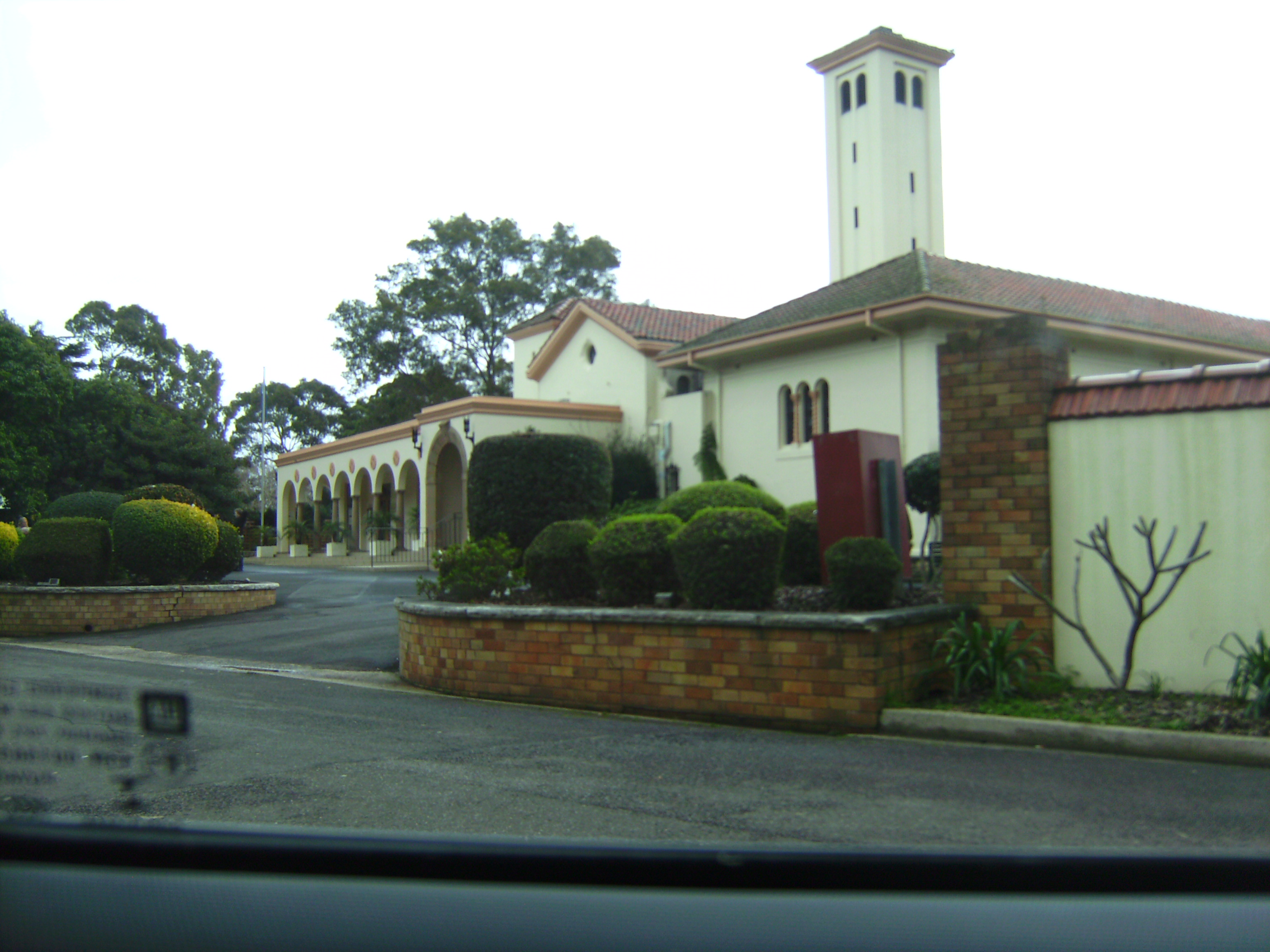
The funeral service took place on Tuesday, 24th July, 12,30 pm, at

ROOKWOOD GARDENS CREMATORIUM, SOUTH CHAPEL.

The officiating celebrant was Michael Bourke. Michael lives in our area and came to visit us on Saturday, 21st July, to discuss with us the order of service.

Bernie, our funeral director in Sydney, organized the viewing at the funeral parlor. Daughter Caroline and Matthew had made first contacts with Bernie. Caroline took time off work that week, Matthew went back to work and also filled in for Caroline a bit. Son Martin took time off work too. He arrived from Melbourne in a hired car late on Wednesday, 18th July.

Martin drove daughters Caroline and Monika as well as Peter and myself to the funeral directors in Sydney on Thursday, 19th July, to make arrangements for the funeral. (Monika had taken time off work too.) Peter had that same day an appointment with an officer at Merrylands police station. After the consultation with Bernie for all the funeral arrangements we were on our way to Merrylands. The traffic turned out to be extremely slow moving because of an incident. So we were late getting to Merrylands. The police were very understanding. The interview with the police took about two hours. They wanted to know a lot about Gaby’s life.

By the way, on the day of Gaby’s departure Caroline and Matthew had driven us first to Merrylands West to Gaby’s house where we had a chance to talk to all the distressed carers including David. Later in the day Matthew drove us to Glebe. He had arranged that we could view Gaby’s body there at the morgue. The visit was very good for us. It gave us a chance to say properly good-bye to Gaby. A very understanding woman greeted us very respectfully. She made arrangements with Caroline to talk to her on the phone on our behalf whenever we had any questions. Caroline stayed with us at our place and was constantly doing all the necessary phone-calls for us. It was such a relief for us that she could do this. She was great in handling all the calls.

On Sunday, the 15th, when we were at Gaby’s house for an hour or so, we took some of Gaby’s photo albums along and also her computer, her digital camera and her mobile phone. The following day the police asked Peter to bring all these electronic items of Gaby’s to the next police station. At present these items are still in the hands of the police for further checking and investigation.

Early on Wednesday morning, 18th July, Ryan and Ebony had a baby boy. They called him Lucas. Ryan is one of Monika’s twins. So Monika is now a grandma. And Peter and I are great grandparents again! Our son Martin has already two grandchildren. So the family is growing. Caroline drove Peter and me to Wollongong hospital to see the new born baby boy. He was surrounded by his Mum and Dad and a number of aunties. We were all allowed to hold him. The baby was most of the time asleep and didn’t mind at all being passed from one to the other. It was a very joyous experience for all of us.

From 11,30 on people arrived at Rookwood Memorial Gardens on the day of the funeral service. The Pall Bearers were our son Martin, Monika’s partner Mark, Monika’s twins, Troy and Ryan, Carolines’s partner Matthew and Gaby’s friend Steve. Welcome by Michael Bourke, Celebrant: Tributes by Peter, Soloist Elice Craig, and a choir of carers and friends singing Amazing Grace. Next a Photographic tribute with images of Gaby: Her life, her family, her friends.
Prayers: One Hail Mary. Verse: Michael Bourke and Committal.

The South Chapel of Roodwood Gardens Crematorium
Four of the Pall Bearers
Caroline and Michael Bourke
Steve had brought Dave to the service. Dave decided he didn’t want to go inside. He preferred to stay in the car.

After the service the celebrations of Gaby’s life were to continue at Parramatta Leagues Club. We stayed there for a while for drinks and to talk to people. Some nice pizza was available too.

Entrance to Parramatta Leagues Club
Miriam with an ‘Eels’ Shawl. Miriam used to be Gaby’s cook.
Still want to include this picture of Gaby’s coffin inside the South Chapel
Monika looked after ‘Honey’ and took her inside the chapel for the service.
This is when the funeral car arrived at the Crematorium

Caroline, with some input from Matthew, did a tremendous amount of work in assembling the photos for the photographic tribute. She also organized the printing of the cards for the funeral service. Caroline stayed with Peter and me from the 15th of July until the day of the funeral. Martin stayed with us for one whole week too, and for part of the time Matthew stayed also with us. Recently Caroline stayed with us once more for a few days to sort out things and to give us some support. We’ve been driving with Caroline to some beautiful places here in our area. A lot of these places remind us of Gaby, of course. In our home we constantly find things that remind us of Gaby. Gaby had been a very demanding person, but also very loving and caring. She made sure that we’ll never forget her.

Diary

I have just been reading this blog:

Memento Mori – The reason I started this page

I wanted to reblog it, but unfortunately this did not work. This is what it said:

ZANFERS.COM ISN’T WORKING! OH NO!

Zanfers” is not available at the domain zanfers.com right now. There’s a problem with the mapping for this domain. If you are the site owner, please log into your WordPress.com account for more information.”

Here is some of what “Zanfers” says in his blog:

“. . . . For example I am an avid gamer. Coming home from work, playing a few hours before sleep was my way of relaxing and I saw nothing wrong with it. Same with binging YouTube or some series. But then again, when it becomes your only way of entertainment or activity, you start to see its flaws. I realized that it lacks any productivity. This was obvious to many even before, but apparently I was one of the slow learners and I needed this pandemic to make me wonder if I am doing the right thing for myself and for the people around me. I started to wonder, if I vanish tomorrow, what will remain after me? What will be my legacy? As for now, it would be nothing but some Facebook messages and my games library. Which was a pretty depressing thought. . . .”

I just reblogged another post WRITTEN BY TENPORATH on how the Coronavirus may have affected us. The title of that post: ‘LESSON LEARNED.’

David Gulpilil takes centre stage to tell his incredible life story in intimate documentary My Name is Gulpilil

https://www.abc.net.au/news/2021-05-26/david-gulpilil-documentary-my-name-is-gulpilil/100156218

ABC Arts / 

By Annabel Brady-BrownPosted Wed 26 May 2021 at 4:37amWednesday 26 May 2021 at 4:37am, updated Wed 26 May 2021 at 3:42pmWednesday 26 May 2021 at 3:42pm

Actor David Gulpilil, an older Yolngu man in shearling coat taking off his akubra, in the documentary My Name is Gulpilil
The film homes in on Gulpilil’s magnetic performances, from his breakout role in Walkabout to his turns in critically acclaimed films, including Rabbit Proof Fence.(Supplied: ABCG Film)

Share

In early 2017, when the legendary actor David Gulpilil was diagnosed with stage-four lung cancer and advised that he had only months to live, he told filmmakers Molly Reynolds and Rolf de Heer that he wanted to make one more film.

He wasn’t well enough to appear as planned in Stephen Maxwell Johnson’s revisionary western, High Ground — he requested that his role be taken by Yothu Yindi’s Witiyana Marika, who is a close relative.

But the three decided “that the best way we could go forward was to do his life story, right until the end,” Reynolds says.

The result is My Name is Gulpilil, an intimate documentary about the actor squaring with the end of his life.

Actor David Gulpilil, an older Yolngu man standing in a hospital corridoor, in the documentary My Name is Gulpilil
Gulpilil has been living more than 3,000 kilometres from home in Arnhem Land, as he receives treatment for lung cancer and emphysema.(Supplied: ABCG Film)

“This film is about me. This is my story of my story,” he says at the outset.

Moving between hospital visits and scenic excursions through the South Australian landscape, the film interweaves footage of Gulpilil speaking direct-to-camera with news archives and clips from his movies, reliving his astonishing half-century on screen.

“I like to show my face to remember,” he says.

Viewers are taken on a bittersweet journey — from his debut in the 1971 Australian New Wave classic Walkabout, through some of the country’s most popular and critically acclaimed films, including Storm Boy, Mad Dog Morgan, Crocodile Dundee and Rabbit Proof Fence.

Refreshingly, the movie clips are presented without title cards that name the directors, as the documentary instead homes in on Gulpilil’s magnetic performances.

‘I’m an actor, I’m a dancer, I’m a singer and also a painter.’

My Name is Gulpilil is likely the final entry in a fruitful, two-decade collaboration between Gulpilil and the white Australian filmmaker Rolf de Heer and his partner Reynolds, which started with the Yolngu actor’s phenomenal lead role — his first — in The Tracker in 2002.

Play Audio. Duration: 15 minutes 57 seconds
Listen: David Gulpilil and Rolf de Heer

Over the four films they’ve made since then — which are widely held up as examples of best-practice collaborative filmmaking — Gulpilil has increasingly asserted creative control over his story.

He initiated and narrated Ten Canoes (2006) — the first Australian feature entirely in Indigenous language — and co-wrote and starred in the semi-autobiographical drama Charlie’s Country (2013) and the follow-up essay-documentary Another Country (2015).

Actor David Gulpilil, an older Yolngu man in a white singlet out in the forest on 2013 film Charlie's Country
Charlie’s Country won Gulpilil the Best Actor award at Cannes’s Un Certain Regard section and the AACTA Awards in 2015.(Supplied: ABCG Film)

It’s fitting, then, that My Name is Gulpilil sees him occupy centre stage.

“It’s like, ‘Over to you, David,'” says Reynolds, who directed the film. 

“It’s a fabulous progression, for all of us really.”

Reminiscing direct to camera, Gulpilil recounts his youth as a tribal man from the Arafura Swamp region in Central Arnhem Land, and how it was his talent as a ceremonial dancer that led the British director Nicolas Roeg to “discover” him as a teen and cast him in the biblical desert horror Walkabout.

The experience ignited Gulpilil’s love for cinema and his abiding diva-like delight in front of the camera.

As he said in his 2004 one-man stage show, “Acting came natural to me. Piece of piss. I know how to walk across the land in front of a camera, because I belong there.”

Walkabout toured the world, which took the Yolngu teenager out of his ancestral home and catapulted him into the European film world — and Hollywood-level excess.

Actor David Gulpilil, an young Yolngu man in traditional paint dancing, in the 1971 film Walkabout
At the time Gulpilil was cast in Walkabout, non-Indigenous actors were still being cast as Indigenous characters. (Supplied: ABCG Film)

He amusingly relates some of his adventures: dining with the Queen, carousing with Dennis Hopper, partying with Muhammad Ali and getting high for the first time with Bob Marley. It was the start of a lifelong balancing act for Gulpilil — straddling two worlds, Yolngu and Balanda — and the documentary emphasises the great personal toll this took.

He’s sober these days, but he speaks openly about his well-publicised substance abuse and his time living in the long grass in Darwin.

“Drinking all this grog, smoking all this tobacco, smoking all this ganja. I ended up good in prison every day in Darwin,” he says.

The film uses audio clips from news reports that run through his numerous convictions, including one for domestic violence in 2011, after he broke his wife’s arm.

“I forgot about her,” he says. “Because I was a drunken, drunken man.

“I’m a drug and alcoholic.”

‘No one else can do the life of me, it’s only me. I can do the life about me.’

Unlike other biographic treatments, such as Darlene Johnson’s 2002 documentary Gulpilil: One Red Blood, or Derek Rielly’s 2020 book Gulpilil, there are no other interviewees or talking heads.

“People, usually whitefellas, sort of speak for or about David,’ says Reynolds, explaining the reasoning behind the “clear choices” that she and David made about how to present the documentary.

“David is the consummate performer, the consummate artist, actor. I thought, ‘What happens if he just spoke for himself?’

“I knew David’s capacity to deliver. I thought, ‘He can hold the screen,'” she says. 

Filmmaker Molly Reynolds,  a white woman in red hat and glasses, and David Gulpilil, the Yolgnu actor and dancer in an akubra
“The terrific thing was that throughout this project we developed a real affection, love and regard for one another,” says Reynolds.(Supplied: ABCG Film/Bonnie Paku)

“David really embraced that, because there were no intermediaries at all. He could just look straight down the lens, and speak it as he saw it. 

“Having said that, he’s also an actor and he likes having a director to support his work.”

Needing to stay close to doctors and hospitals, and too sick to travel to Arnhem Land, Gulpilil is observed living in a modest house — kitted out with posters of his films — in Murray Bridge, east of Adelaide, with his indefatigable carer Mary Hood.

Before each shooting session, Reynolds and Gulpilil would discuss what he wanted to talk about that day.

“I quickly learned to be a different director to what I’d normally be,” she says, describing her role as “sort of the brains trust who holds the information”.

“I was there to support his performance, even though his performance was really him.”

The interviews would run for hours. 

“Then he’d just conclude somehow so poetically, and ‘boom’, we’ve got it.”

Tying the film together into effectively one long interview, the unhurried monologues allow the viewer to really listen, and to sink into the rhythm of Gulpilil’s storytelling.

‘I like to make a film, it’s a history. I like it because it won’t rub out.’

Gulpilil’s role extended far beyond being the star interviewee.

“One day he called me up,” recounts Reynolds. “‘Molly, Molly,’ he said. ‘What I’d like to do is, I want you to wrap me in our film, in my cemetery box.'”

She had to break the news to him: “David, we’re shooting digital, not 35mm … but I got the image he was evoking, and that was really poetic, so we did end up shooting it,” she says.

The shot shows Gulpilil lying inside a coffin with his eyes closed, resting on a bed of unfurled analogue film – one of several dreamy images that appear in the documentary to suggest he is confronting his own mortality, and which often foreground his connection with the land.

“He’s got a true sense of cinema,” says Reynolds.

Actor David Gulpilil, an older Yolngu man standing on empty train tracks, in the documentary My Name is Gulpilil
The film is in English and Mandhalpingu and was filmed and produced on Ngarrindjeri, Kaurna and Andyamathana Lands.(Supplied: ABCG Film)

The new film sees Gulpilil credited for the first time in his career as a producer — alongside de Heer and his Ten Canoes co-director Peter Djigirr.

Reynolds describes Djigirr as “critical to everything we do with the Yolngu mob up there… He’s been involved in every single film we’ve made in Ramingining.”

Acting as a kind of “pivot point” between the filmmakers and the community, Djigirr also ensured that everything was done in accord with cultural protocols and traditions.

There was another crucial, if sombre, reason for his involvement, says Reynolds: “There was the expectation that David would be dead by the time we finished. So we wanted someone who … would be able to look at the film and determine how David would feel about it.”

That Gulpilil is still alive to see the finished film, walking the red carpet at the Adelaide Festival for the premiere in March, is a surprise twist ending.

“It felt so right that it worked out this way,” says Reynolds.

“One thing that pleases me about the film, for David, is that I think it has cemented his legacy,” she says. 

“It’s the culmination of all that he has done.”

‘This film will remember to generation to generation.’

In 2002, academic and cultural commentator Marcia Langton said: “David has been absolutely critical to both representing Aboriginal people in modern Australia in the cinema … and also, in his own ironic and charismatic way, undermining the stereotypes that were forced on him. He’s a tremendously important person to us culturally.”

Reflecting on this important role, Reynolds says, “I don’t think Australia yet appreciates [David’s contribution] enough.”

“And I really, really do hope that, on behalf of all of us, whitefellas and blackfellas alike, that we do get to that point.

“My Name Is Gulpilil may just be a reference to help us get there.”https://www.youtube.com/embed/vK1DLvEkvtA?feature=oembedYOUTUBEMy Name is Gulpilil trailer

Taronga Park Zoo

https://www.abc.net.au/news/2021-07-10/covid-live-updates-coronavirus-press-conference-sydney-lockdown/100282612

https://taronga.org.au/taronga-tv

Taronga Zoo Sydney is temporarily closed. Taronga Western Plains Zoo Dubbo is still operating. Read more.

EnglishSearchExtended Menu

Taronga TV

Breadcrumb

Taronga is bringing its two beautiful Zoos directly into your living room! Tune in daily to see your favourite animals, meet our friendly keepers and learn what goes on behind the scenes at Taronga.

Taronga TV is proudly brought to you by Mastercard®.WATCH NOW

On this page

Animal live-camsFeatured videoMastercard – Presenting Partner of Taronga TVLatest keeper chatsLatest showsAnimal anticsFrom our Wildlife HospitalConservation programsLooking for more?

How you can help

While you may not be able to visit, you can still support our ongoing conservation work by donating to Taronga. Read more about how you can donate from anywhere in the world!

Coronavirus Outbreak

COVID live updates: NSW braces for more community transmission, as police checkpoints set up along Victorian border

By Bridget Judd and Jessica RigaPosted 46m ago46 minutes ago

Play Video
ABC News Channel live stream

Share

New South Wales is bracing for more locally acquired cases of COVID-19 and the prospect of a longer lockdown as authorities work to get the outbreak under control.

Stay up-to-date on the coronavirus outbreak

It comes as police checkpoints are set up along the Victorian border to ensure those returning from school holidays are carrying the correct permits.

Follow all of Saturday’s COVID-19 updates in the live blog below. 

Key events