










trees in backyard
From: PoliticOz
Date: 21 October 2014 12:58
Subject: Edward Gough Whitlam, 1916-2014
Edward Gough Whitlam, 1916-2014
Prime minister for only three years, the Whitlam legacy is legendary. Universal health insurance; multiculturalism; diplomatic relations with China; no-fault divorce and the Family Court; Aboriginal land rights; the Racial Discrimination Act; environmental and consumer protection; Blue Poles; outer-suburban sewering; and ‘Advance Australia Fair’ are still cogs in the national framework. Free education was revolutionary, but ultimately too expensive. His Royal Commission into Human Relationships was world-unique, and represented a high point in the faith in social democratic governments to solve social problems and protect the most vulnerable.
“It’s time”, the Whitlamites sang in 1972, and in the end, timing is everything. Whitlam’s social democratic “Program” coincided with a OPEC-sparked world recession and a rapid loss of faith among policymakers in the role of governments, especially big-spending ones. We credit the Hawke-Keating governments with the pro-market “modernisation” of the Australian economy, but it was the Whitlam government’s 25 per cent tariff cuts in 1973 which ushered in the new era.
After crashing through, Whitlam crashed. No government has since come to office with a “Program” of such broad reform, and Labor’s fear of being seen as “economically irresponsible” still constrains its ambitions. Paul Keating may have learned politics from Jack Lang, but his experience on Whitlam’s front bench during the loans affair helped encourage his own economic orthodoxy.
But now, nearly 40 years since the Dismissal, Australian public life is so nasty that Malcolm Fraser – formerly “Kerr’s cur” – is more Green than blue-blood, and is now politically much closer to Whitlam than he is to his former party. And just as he did during his (free) university career, Tony Abbott came to the prime ministership still railing against the Whitlam legacy. His campaign from opposition framed Rudd and Gillard as the Whitlams of their time. They weren’t, but the carbon price would have sat with the best of Whitlam’s Program.
Whitlam made tremendous errors of judgement. But in the end, Whitlam’s legacy is informed by his expansive vision for the nation. The possibility of that vision is what is most missed.
Russell Marks
Editor
Whitlam’s time
The best of the rolling coverage of the events and tributes following Gough Whitlam’s death this morning can be found at Fairfax and the Guardian.
Former Labor leaders Julia Gillard (Guardian) and Mark Latham (Australian) have penned tributes, as has Race Mathews (Guardian) and the Conversation has a number of ‘experts’ assess Whitlam’s legacy. Thea Hayes (Drum) was there when Whitlam poured soil into Vincent Lingiari’s hands at Wave Hill.
The Guardian is running an archive piece from 11 November 1975, and News.com.au has an excellent comparison of the Whitlam legacy and the Abbott government’s program. Michelle Grattan at the Conversation compares the first years of Australian prime ministers from Whitlam to Abbott.
Coalition mates on the MRT
Scott Morrison appears to have made two overtly political appointments – one a former staffer in Tony Abbott’s office, the other a one-time Liberal candidate – to the Migration Review Tribunal, the body which reviews departmental decisions to not grant protection visas to asylum seeker applicants (Guardian).
And Fairfax reports that the annual cost of Australia’s offshore detention centres has hit $1 billion.
Biffo poll
The Labor Party has received an unexpected bounce in the latest Newspoll (Guardian), though the Australian emphasises the fact that Tony Abbott’s threat to shirtfront Vladimir Putin went down well among 63 per cent of respondents.
Supermarket monsters
Barnaby Joyce’s cabinet-approved agriculture Green Paper signalled more dams and more protections for farmers in their dealings with the supermarket giants (Australian).
In the Business Spectator, Cliona O’Dowd analyses the ACCC’s pursuit of Coles.
Teachers on 457s
A Fairfax exclusive this morning reports that foreign teachers are being employed on 457 visas despite a “growing glut of unemployed Australian teaching graduates”.
If you like this newsletter, we’d love you to share it with your friends. They can sign up for free here.
http://www.themonthly.com.au/politicoz/october/1413939797/well-may-we-say
Over the weekend Peter and I talked and talked about two different movies that we saw a few days ago. The first movie was DAS WEISSE BAND (The White Ribbon). This one we watched online. The other movie was BEFORE I GO TO SLEEP. Both movies were very thought provoking. After we saw BEFORE I GO TO SLEEP on Saturday morning at the GALA Cinema in Warrawong we had lunch – (not just desert!) – in this Cafe which used to be a book shop previously.

DAS WEISSE BAND is set in a village in northern Germany before World War One. To me the way religion was regarded in this village looked very much like fundamentalism. Normal village life suffered because of this. Built up frustrations among adults as well as children resulted in evil deeds. Significantly nobody wanted the culprits to be found. Really strange behaviour! The Authority of the baron, the doctor, the pastor was accepted as a God given by the farmers and village workers. Nobody ever questioned the authority of these people.
The village teacher and the 17 year old nanny of the baron’s children were from the city, meaning they were outsiders and being treated as such. The midwife, who acted as housekeeper to the widowed doctor, suffered terrible abuse from him. The baroness was an altogether different person. She spent most of her time living in great style in Italy with her two children and a lot of servants, having a great time there. Once she returned to the baron’s manor with all her servants. This is when she employed the 17 year old nanny. However the baroness did not stay for very long. She asked the baron for a divorce for she had met someone in Italy and wanted to go back to Italy.
The pastor made his two eldest pubescent children wear a white band to remind them that they had to stay pure. The boy’s hands were tied to the bed at night so he would not be able to touch himself! All the poor families in the village (including the pastor) had too many children and were constantly in fear they would not be able to feed that many children.
Then World War One started.
See more here: http://en.wikipedia.org/wiki/The_White_Ribbon
http://en.wikipedia.org/wiki/Before_I_Go_to_Sleep_(film)
Before I go to sleep: “This psychological thriller is based on the worldwide best-selling novel about a woman who wakes up every day remembering nothing – the result of a traumatic accident in her past – until one day, new terrifying truths emerge that force her to question everyone around her…”
As I said we watched this movie in the GALA Cinema. So many things in the plot we did not quite understand at first. I read up a bit now about it, also about the plot in the novel. In the movie the woman, Christine, speaks every day onto a camera as opposed to keeping a journal as in the novel. Christine is played by Nicole Kidman . Mark Strong plays Dr. Nash. Colin Firth plays Ben Lucas, the husband of Christine. Anne-Marie Duff plays Claire, a good friend of Christine’s. Can Christine trust her? She admits to having had a brief affair with Ben and that she then stayed away from Ben and his son for she did not want to upset her friend Christine.
Christine decides to trust Claire. She also wants to trust, Ben, her husband. Then it becomes doubtful that she can trust him. There were some scenes when Christine had reason not to completely trust Dr Nash. In the end she is very confused and does not know whom to trust.
Presumably, Christine was for a number of years in hospital after her traumatic accident. When the movie starts, she was at home with her husband Ben, but maybe only for about the last four months or so. Living with Christine becomes quite frustrating for Ben for every morning Christine has forgotten everything that went on the day before. After sleeping she does not know that Ben is her husband.
Dr. Nash gets in touch with her. He rings her every morning telling her where she has hidden her camera. Christine meets Dr. Nash but is not allowed to tell her husband about it. It is a suspense drama all right.
And how the story ends is really mind boggling. There are a lot of contradictory things that Ben tells Christine. What sort of accident has she actually been in and what or who caused it? I ask the question, why has this horrific “accident” not been conclusively investigated? Who is telling the truth? If Christine’s son is alive (according to Claire), why is she being told by her husband that he is dead?
Both movies had to do with human relationships and they raise for me the question why act people in a certain way? I tend to contemplate about what influences play a part in their lives? The photography, directing and acting in both movies was outstanding.
http://www.illawarramercury.com.au/story/2600053/the-ballad-of-living-treasure-lola-wright/
The Illawarra Mercury published the above story about Lola Wright, written
The following is part of the article which I copied:
“Nothing went to waste in the Queensland bush tent where Lola lived for two years of her transient childhood.

Lola, still smoking away, living in a tiny community in central-western NSW.
Each day, her mother would sprinkle the dirt floor with water then sweep it, until the surface underfoot felt as solid as concrete.
The drawers and the kitchen sink were made of split kerosene tins and the legs of the cupboards were cotton reels, stood inside old condensed milk cans filled with kerosene, to deter ants.
Lola slept in a bush bunk made from a chaff bag suspended between two forked tree branches.
The hammock-style arrangement was a marvel of 1930s bush ingenuity, though its frailties were exposed on stormy nights when the family’s frightened collie dog would take refuge underneath, only to later stand up and butt against the bag’s underside, expelling the sleeping child.
The tent had only two real pieces of furniture – a double bed for Lola’s mother and father and a wind-up, Gramophone-style record player. Whatever would come, with Lola there would always be music.

Lola was taught to play the piano by nuns at her school but taught herself the accordion she played in the bush band.
‘‘When [the record player] ran out of needles, you’d use a straw out of the broom,’’ Lola remembers.
From her current home in tiny Morundah, a town near Narrandera consisting of little more than a hotel, some silos and houses for 22 residents, Lola looks back on the bush tent as the last real home of her childhood. She, her mother and little brother Billy had long followed her father from job to job, arriving at the camp in Dotswood Station, where the family’s ‘‘gypsy’’ patriarch cut timber for the railway, in 1934. But her parents soon divorced, and life became more uncertain. Lola was sent to boarding school and never knew where she would spend her holidays, or with which relative. Looking back, she attributes her decision to marry young – at 21, to a man she would later divorce (‘‘a good choice who just went bad as he got older’’) – to a want for stability. ‘‘I lived in a suitcase until I was married,’’ she said. ‘‘Then I had my own flat, my own things in my place – and it was very important to me.’’
Billy had been unwell for much of his childhood and was in care when Lola went to boarding school. Unbeknown to the family then, the eight-year-old had Hunter Syndrome, a rare and serious genetic disorder that mostly affects boys. The condition is caused by a lack of the enzyme iduronate sulfatase. Without this enzyme, compounds build up in various body tissues, causing damage. Lola’s father came to collect her one day, telling her: ‘‘we’ve got to go and bury Billy, he died’’. ‘‘I was a little bit sad but he had nothing to live for, poor little fellow,’’ Lola said.
Tragedy arrived again in 1942 when Lola’s father, Harvey Cowling, became a prisoner of war during the Japanese invasion of Ambon, in Indonesia. Cowling went to Ambon as part of the field ambulance and was captured almost immediately. He remained a prisoner for three years before he emerged weighing about 40kgs, with a pot belly from beriberi. Lola was there to greet him when he stepped off a ship onto Australian soil again, in 1946.
‘‘I couldn’t feel the sad things about him, I just knew it was my father,’’ she said. ‘‘It was just overwhelming to even think about meeting him when he got off the ship. All the love I had for him just flowed out, I couldn’t think about anything else. We were really good mates.’’
Nuns had taught Lola to play piano at boarding school and she later taught herself to play the accordion. She could often play a song after a single listen and had an uncanny ability to remember songs, from the very old songs her grandmother passed down, to the traditional Australian folk songs she picked up around the campfires of her family’s transient days in the 1920s and 1930s. During the 1950s and 1960s, when she campaigned for women’s rights and aligned herself with Communism, she favoured anthems about solidarity and women’s rights.
Her incredible internal archive – estimated to include 600 songs – brought her to the attention of the National Library, whose recordings were discovered by Randwick producer and musical director Christina Mimmocchi. Mimmocchi was struck by the story ‘‘of a very resilient woman’’ and the ‘‘great character’’ that started to emerge alongside the music-focused recordings. The resulting play, Lola’s Keg Night, is a musical memoir adapted by Mimmocchi and Sutherland playwright Pat Cranney, who recognised in Lola a role model and early feminist. In the 1950s nad 1960s she had helped popularise a song called The Equal Pay Song, written to support the campaign for female teachers to be paid the same as their male colleagues. ‘‘She didn’t take being treated badly by husbands,’’ Cranny said. ‘‘She left them if the relationship wasn’t working – she was quite a strong women.’’
Mimmocchi and Cranney drew directly from the library recordings, and Lola’s unpublished autobiography, to develop a verbatim play that will premiere at the Illawarra Performing Arts Centre on October 9. They named it after the keg nights Lola and her long-term escort, Bill, would host in their Horsley Road, Oak Flats home in the late 1970s. Lola’s teaching friends, Bill’s fellow wharfies and various Labor Party mates had a tradition of meeting in an area pub on Fridays. But the gatherings were moved to Lola’s when the group’s relationship with the publican broke down. Bill would procure the kegs and Lola would take her piano accordion out on the front porch and oversee rousing sing-alongs. She was encouraging, with a schoolteacher’s authority and a knack for getting everyone involved. ‘‘People follow her instructions, so if she said ‘you’re not to touch that keg until you’ve sung Solidarity Forever’, they’d listen,’’ Mimmocchi said. To the bad singers she gave a set of spoons to play, or a lagerphone.
They were instruments she was well familiar with by then. In 1958, inspired by an appearance by Australia’s first bush band in the musical Reedy River, she formed the South Coast Bush Band with a group of friends and her second husband, Coledale Labor Union icon Jack Wright.

The South Coast Bush Band was in demand for union demos, fund-raisers and dances.
Lola was the only one with any musical knowledge, but the band was in demand at local dances and miners’ strikes, school fundraisers and trade union functions. In 1959 they played in Petersham Town Hall to celebrate Dame Mary Gilmore’s 90th birthday. In her autobiography, Lola describes how the others compensated for their lack of musical training. ‘‘The blokes were all extroverts with good voices, good presentation and a sense of rhythm,’’ she wrote. ‘‘Normal Mitchell, Winifred’s better half, played the lagerphone – better than any I had heard before or since. Jack Wright played bones that he rattled like a professional. Merv Haberly played mouth organ and Johnny Chalmers played bass – bush bass, that is. That needed no expertise, but his voice was as magnificent as his huge frame.Our band was formed, not to make money, but to spread Australian folk songs. At the time we were being inundated with Yankie Folk Songs and ours, which are equally as good, were being ignored.’’
Lola was a champion for Australian culture and carried this into the classroom over a 40-year teaching career that took her to about 10 Illawarra primary schools. In a submission to a book published in March 2012 to mark the Centenary of Coledale Public school, former student Michelle Harvey recalled her ‘‘incredible teacher’’ from the 1950s. ‘‘She introduced us to a love of learning. We learnt much of our own country and some of its culture. She became an inspiration to me for the way she radiated warmth and responsiveness to us kids.’’ She liked to get kids singing and playing percussion instruments, and led giant sing-alongs in the schoolyard. She was always looking out for the underdog and ‘‘the child who needed extra love’’, said colleague and friend Lenore Armour.

Lola Troy (later Wright) and her first daughter Denise.
‘‘But she didn’t muck around. She wasn’t soft, she was absolutly respected’’.
‘‘She was a risk taker, she would bend the rules a bit. She cared about the learner, not the subject, and she had results.’’
Lola had two daughters (her son, Peter, died in infancy), and had two marriages behind he when she started seeing Bill Everill.
Their attraction sparked at a progressive bush dance in Wollongong.
‘‘How are you?’’ asked Lola.
‘‘Any better and I’d be dangerous,’’ Bill replied.
‘‘That’s how I like my men.’’
The dance separated them, but Bill arranged a later introduction. It was love.
‘‘The first thing that struck me was the way his blue eyes could twinkle,’’ Lola said.
‘‘He was a man who was well read, loved music, was gentle and understanding.’’
Bill was married to a Catholic woman who wouldn’t give him a divorce, so he and Lola weren’t married until 1986, 13 years into their courtship. They moved together to an acre of land in little Morundah and had 14 good years together before Bill’s heath started to fail.
Lola nursed him through a suite of illnesses for the last six years of his life, including dementia towards then end.
Bill stayed at home until seven days before he died. At the hospital, a nurse told Lola she had performed the work of five nurses in caring for him.
Lola sat quietly at Bill’s bedside and stroked his hand until he died.
‘‘There was no drama about it except I had a friend with me who was a clairvoyant,’’ Lola said.
‘‘We were in a hospital room and of course it was air conditioned, but she went and opened the window. I asked her why, and she said, ‘to let the spirits in to take Bill’s soul away’.
‘‘A week later she walked in and saw a photo on the table and said: ‘who are they?’. I said, they’re Bill’s maternal grandparents. She said ‘oh my goodness, they’re the ones that came to take him away’.’’
Lola looks back on her bush upbringing and thinks it taught her to be friendly. There weren’t many people around, so was important to get along. ‘‘Often you need things and you can share things – your life and our time and your abilities. I think that it’s the sharing and caring that I got from living in the bush.’’ In Morundah, Lola was still mowing her own lawn until six months ago, when she started making socks for the younger residents, so they will do it for her. She buys her bread from the pub, which doubles as a corner store. On Friday nights you may find her there.
‘‘There’s a good crowd,’’ she said.
‘‘There’s only 22 of us but we’re all good mates.’’

I copied the following from this website: http://www.illawarrafolkfestival.com.au/lola-wrights-keg-night and http://bushmusicclub.blogspot.com.au/2014/07/lolas-keg-night-story-of-lola-wright.html
“Lola Wright’s Keg Night” is a musical memoir adapted by PP Cranney & Christina Mimmocchi from the autobiography of Lola Wright. It’s a new verbatim play with music based on the passionate life and times of former Illawarra resident, Lola Wright – teacher, activist, performer, wife, mother, lover. For over forty years, from the 1940s to the 1980s, Lola contributed to the Illawarra’s vibrant social history. Whether teaching nursery rhymes to primary students, establishing the South Coast’s first bush band, playing piano at local dances, singing The Red Flag at miners’ strikes, or leading a sing-along of The Internationale at one of her infamous Oak Flats Keg Nights, Lola’s passion for music, and social justice, left its mark on all who knew her. This is her story in her own words and the music that she loved – an entertaining, audience-participation reading-in-progress performed by Vashti Hughes, Laura Bishop and others.
With thanks to the Alistair Hulett Memorial Fund, the NSW Teachers’ Federation, the National Library of Australia, the Bush Music Club, the Illawarra Folk Club and Merrigong Theatre.
Lola’s keg night? Well, Lola was famous for her parties, where the keg was not broached until sufficient songs were sung! And no one could say they didn’t know the songs as the words were projected onto a screen. After all, she was a teacher.”
Mrs. Wright (Lola Wright) was principal of Oak Flats Primary School in the 1960s. This is how our children know and remember her. She is 88 now and lives in Morundah, a small town in the South West of NSW with 22 dwellings, a pub and an Opera Centre. (See: http://www.morundahopera.com.au/contacts.html) In April 2013 we stayed in Fig Tree Motel in Narrandera for one night. It’s a pity we did not know then that Mrs. Wright lives in Morundah very close to Narrandera! https://auntyuta.com/2013/04/page/3/
Christina Mimmocchi, the producer of Lola’s Keg Night, says that she had the pleasure of delving into the National Library of Australia’s oral history and folklore archive to seek out old songs . . . . Christina listened to all fourteen hours of Lola’s interviews and recordings for the NLA. So everything in the play has been either said by Lola in her National Library interviews or has been written by her in her unpublished autobiography. http://trove.nla.gov.au/work/22720011?selectedversion=NBD24494996
Our family was very interested to see Lola’s Keg Night. Caroline booked tickets online for six of us for Saturday night, 11th of October 2014, at the Merrigong Studio in Wollongong.
http://bushmusicclub.blogspot.com.au/2014/07/lolas-keg-night-story-of-lola-wright.html
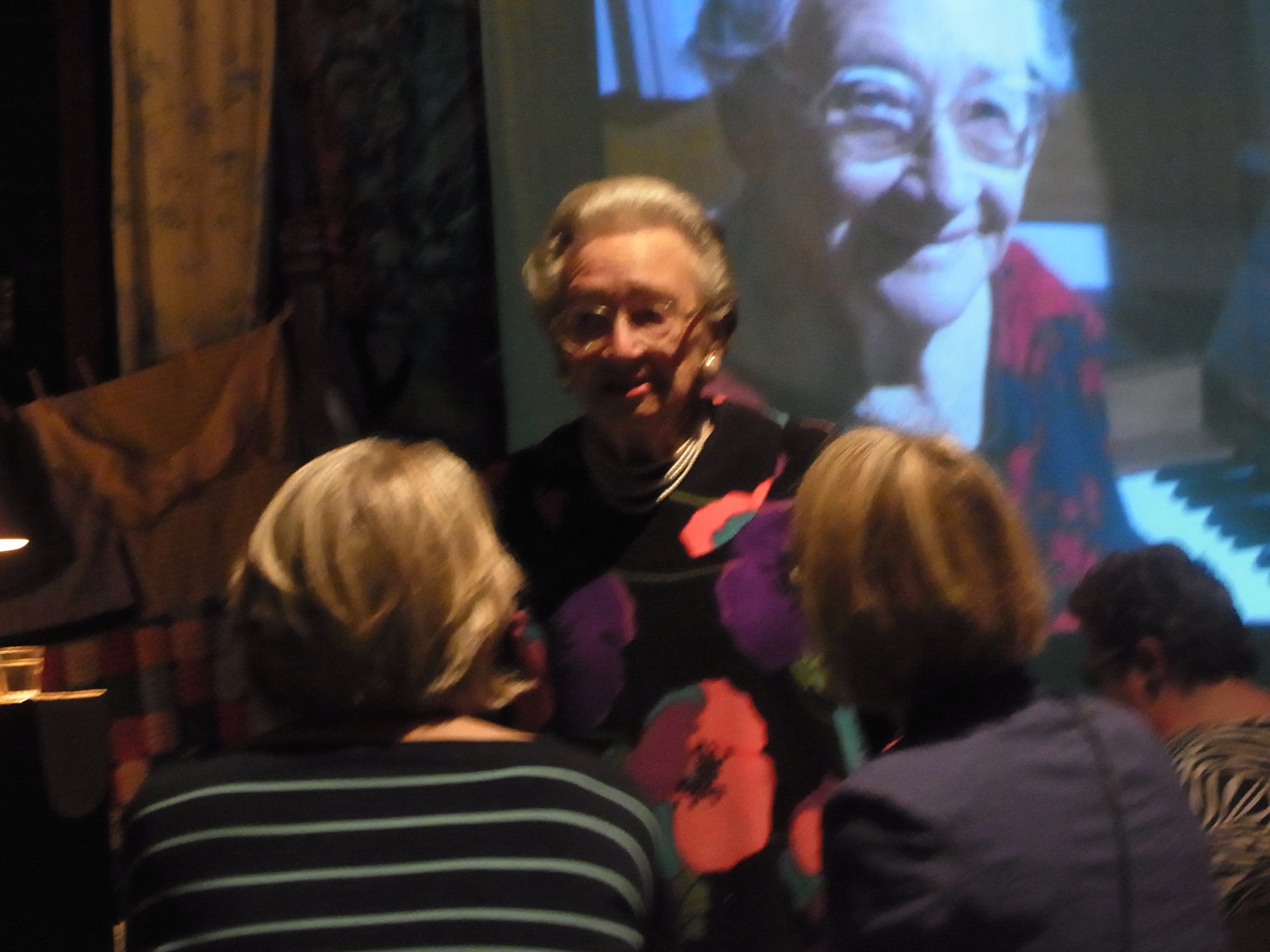
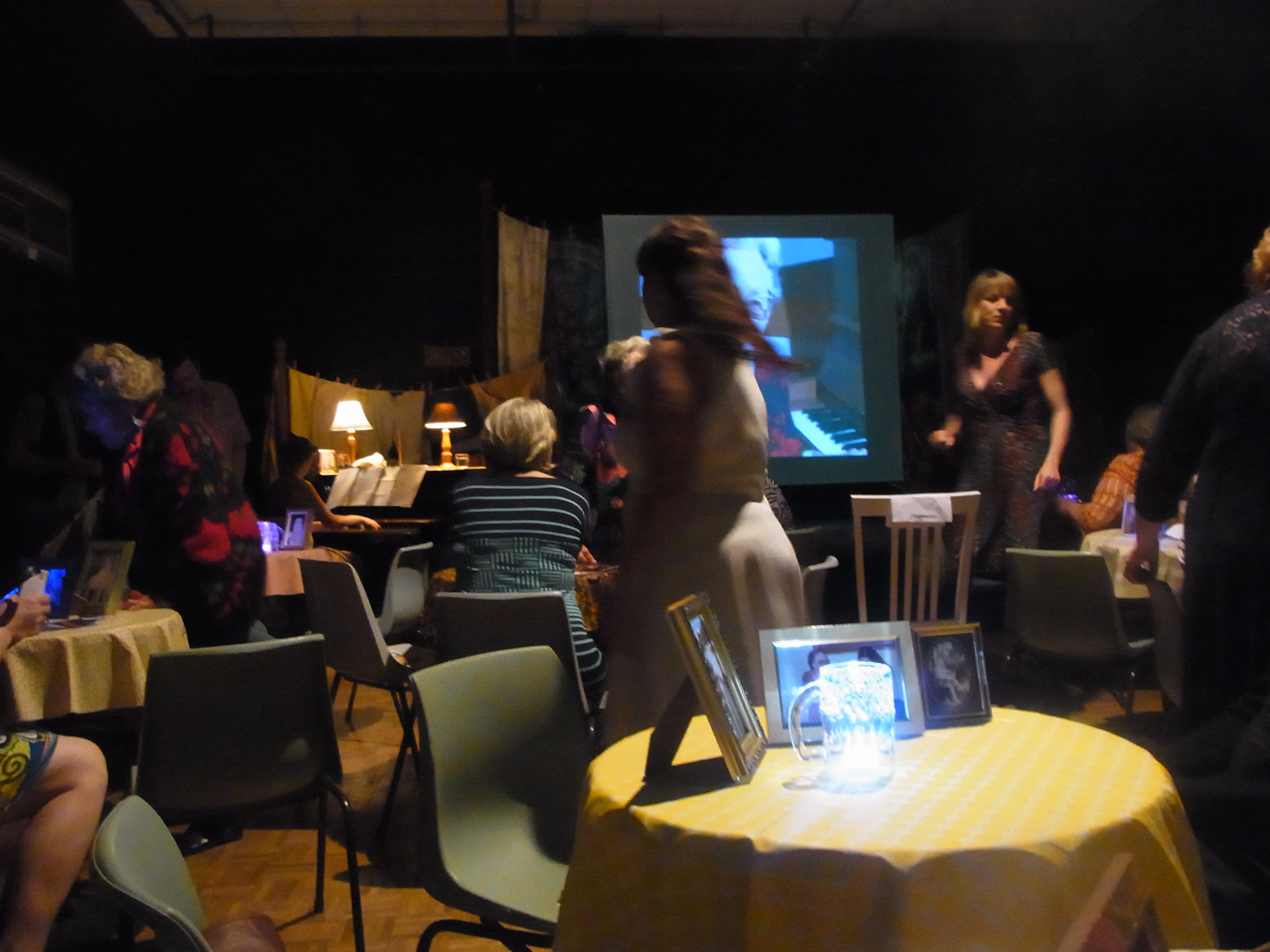
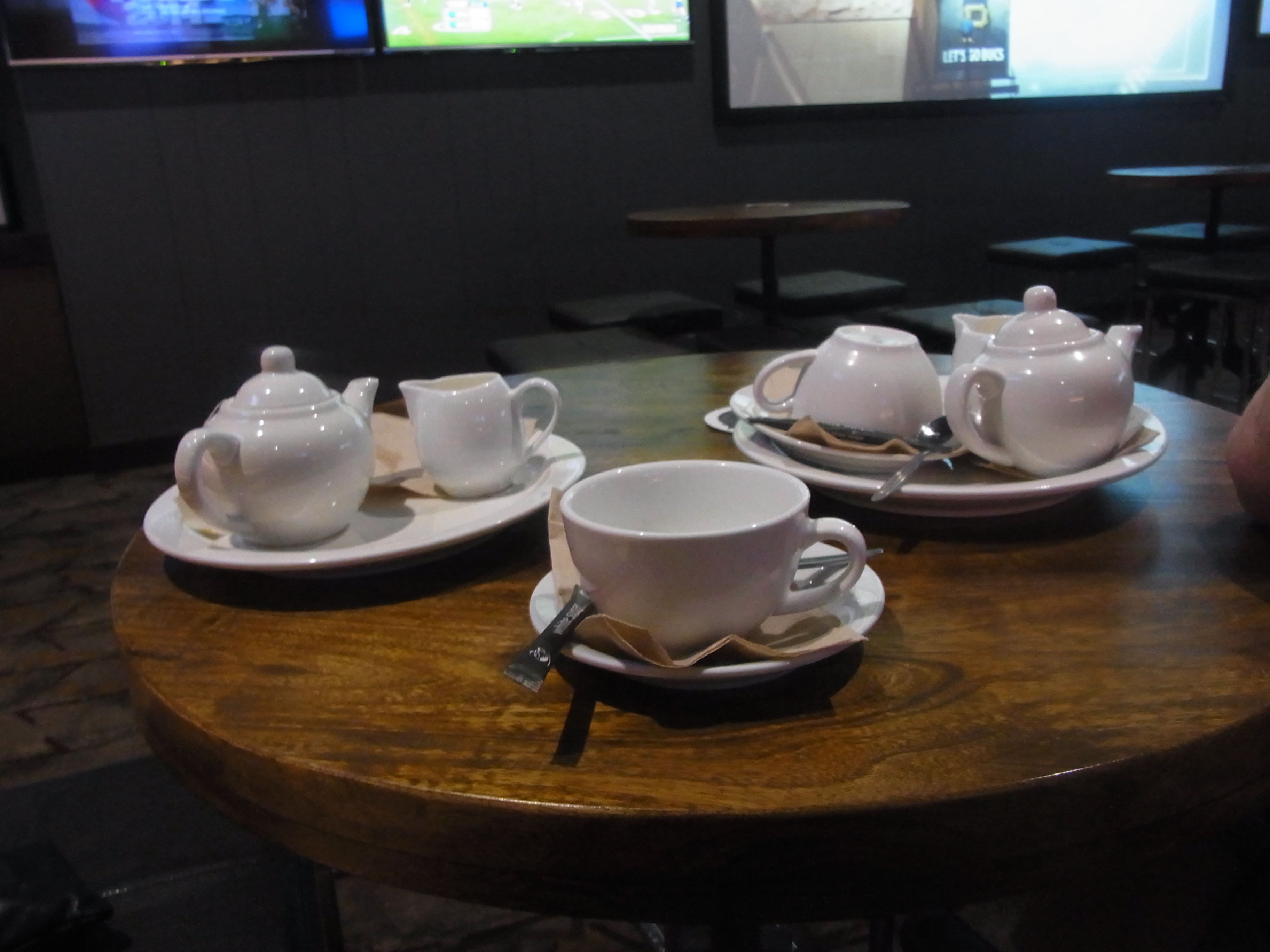
The above website shows pictures from the Merrigong Studio. There were individual small tables for the theater goers. There were candles and pictures on each table. Matthew organised the pushing together of some tables for our family group: There were Monika and Mark, Caroline and Matthew as well as Peter and myself. All of us had a terrific evening. In time I warmed up enough to join in the singing of some of the bushsongs. The texts were always displayed on the screen above the stage. Our group took to drinking beer. During intermission I felt that I’d rather have some hot tea to drink. Matthew soon arrived with a lovely wooden tray with an old fashioned tea-pot on it plus a beautiful cup and a creamer and sugar. I enjoyed this tea very much.


Saturday, 4th of October 2014
Peter is busily turning all our clocks one hour ahead right now. This means, we lose one hour during the night and from tomorrow on we are going to be on daylight saving (summer) time already!
It is 9 pm now. With the clock going on daylight saving during the night I tell myself it is really like 10 o’clock. I might soon get ready for bed and do a bit of reading in my kindle before I go to sleep.
I am about to start the fifth chapter in “1984”. Reading Orwell’s book a second time I find quite a challenge. I did read this book once before, as long ago as the 1960s. At the time 1984 seemed a long time away. I think I kind of could not believe that changes in society could become as extreme as what Orwell predicted. But of course we started to make plenty of jokes about it all the time when some changes seemed to become slightly Orwellian.
It seems to me changes are getting now actually more and more Orwellian. If for instance people do not blindly believe everything the government tells them and voice their opinion about it, people fear this may result in some kind of surveillance. And people realise how electronic surveillance is possible and more and more being made use of without people’s knowledge even. Just reading on the internet certain blogs that criticise the government could perhaps have consequences. This is what people think.
Anyhow, one gets the feeling some governments do not welcome a proper debate on issues that are controversial. More and more governments wants to hide things from their population. I think it is hard to trust a government that becomes very, very secretive; never wanting to tell people the truth. WAR IS PEACE. This is Orwellian!
Sunday, 5th of October 2014
Notes from Chapter Five of Orwell’s 1984
“Freedom is Slavery”
Orthodoxy means not thinking – not needing to think.
Orthodoxy is unconsciousness
thought-criminals and saboteurs
DUCKSPEAK, to quack like a duck
Applied to an opponent, it is abuse,
applied to someone you agree with, it is praise.
Syme. There was something that he lacked: Discretion, aloofness, a sort of saving stupidity. He said things that would have been better unsaid, he read too many books . . . .
About a quarter of one’s salary had to be earmarked for voluntary subscriptions, which were so numerous that it was difficult to keep track of them. For Hate Week the house-by-house fund. . . . .
Thought Police – to wear an improper expression on your face (to look incredulous when a victory was announced, for example) was itself a punishable offence. There was even a word for it in Newspeak: FACECRIME, it was called.
Sunday, 5th of October 2014
Notes from Orwell’s 1984, Chapter 6
Winston was writing in his diary about a woman with a young face painted very thick. The whiteness of it, like a mask, and the bright red lips appealed to him.
But then he could not go on writing. “He wanted to do any violent or noisy or painful thing that might black out the memory that was tormenting him.” . . . .
“For days at a time he was capable of forgetting that he had ever been married. They had only been together for about fifteen months. The party did not permit divorce, but it encouraged separation in cases where there were no children.
. . . .Very early in their married life he had decided – that she had without exception the most stupid, vulgar, empty mind that he had ever encountered. She had not a thought in her head that was not a slogan, and there was no imbecility, absolutely none that she was not capable of swallowing if the Party handed it out to her.”
So some three years ago Winston found himself in a kitchen of one of the poorer quarters with the white painted woman who was a prostitute. He is aching to write about it, to confess. He remembers, “what he had suddenly seen in the lamplight was that the woman was OLD. The paint was plastered so thick on her face that it looked as though it might crack like a cardboard mask. There were streaks of white in her hair; but the truly dreadful detail was that her mouth had fallen a little open, revealing nothing except a cavernous blackness. She had no teeth at all.
He wrote hurriedly, in scrabbling handwriting:
‘When I saw her in the light she was quite an old woman, fifty years at least. But I went ahead and did it just the same.’
He pressed his fingers against his eyelids again. He had written it down at last, but it made no difference. The therapy had not worked. The urge to shout filthy words at the top of his voice was as strong as ever.”
Today is Thursday, the second of October 2014. The weeks and months seem to pass in a flash. Is it already one week since Peter drove Aileen and me to the centre for the heart move exercises? I can’t believe it. Where has the week gone to? Aileen is one of my neighbours. Last week she came along with me for the first time to see whether these heart move exercises were suitable for her. It turned out that she liked the class very much. So today she wants to come along with me again.
On Friday last week we had our games afternoon at Irene’s place. Erika is back now from her holidays and she invited us to come tomorrow to her place for our games afternoon. Last Saturday, the 27th of September, our beautiful new great-grandson Alexander was born. We spent a wonderful afternoon with him on Sunday. His parents had gone to the hospital just before midnight on Friday. It took less than one hour before little Alex was born. About twelve hours later the parents went already back home with their little bundle of joy.
Peter drove me on Sunday to church for the 9,30 Mass. That Sunday turned out to be quite a warm day already. Then on Monday and Tuesday the temperatures went up to a bit over 30 Degrees Celsius. Peter and I had dental appointments for Tuesday at the Sydney Holistic Dental Centre. We caught the train from Dapto as we always do when we go to the Dental Centre. I had taken an extra cardigan along for the train and Peter had taken a warm jumper along. We knew the air-conditioning on the trains is often turned up much too high on a summery day. And so it was. On our two hour train ride we both were cooled down a lot with the air-conditioning blowing very, very cold air all around us.
We had appointments with one of the Dental Centre’s Dental Hygienists. Our appointments had been made months ago. On Tuesday Peter had had a bad night because he had developed a very bad toothache. Even a lot of painkillers did not make him feel much better. The pain had already started on Monday. He felt like there was an infection in the tooth. It may have resulted in some kind of poisoning wandering around in his head for he could feel it was affecting his brain! But he decided to wait till Tuesday when we had dental appointments anyway. He was lucky, he did get the right kind of treatment by a friendly young dentist at the centre. He killed the nerve of the tooth. It turned out that the infection was a root infection. He drained the infected area, which made Peter feel much better immediately. The dentist said he could have given Peter antibiotics. But these would not have been a guarantee for a cure.
Peter felt totally all right the following day after having had a good sleep. When the Dental Centre rang in the afternoon to ask whether he was feeling okay, he could assure them that he was fine. He said the dentist did a good job. I think this made them happy. But in about four weeks Peter has another appointment to see the dentist who usually treats him. It was only a few days ago when Peter said he is not going to make any more appointments with the Dental Centre for he wants to save the money for another trip to Berlin. Peter likes to make jokes about it, saying now the dentist can go overseas instead!
The Dental Hygienist asked me how I was feeling. I said considering I just turned 80 I do feel all right. I am glad I can still move around, but I said that I did not like this very cold air-conditioning on the train to Sydney.
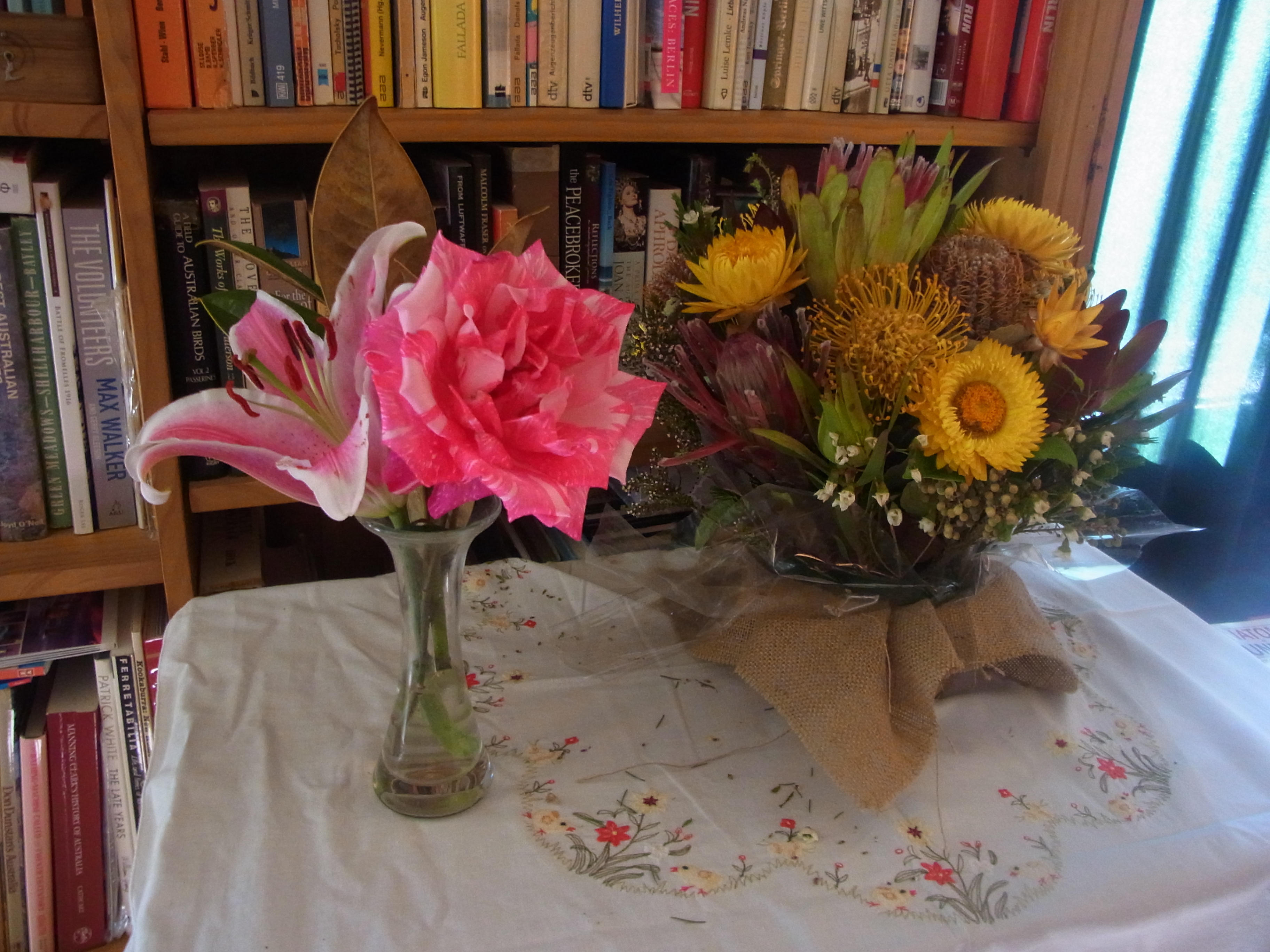
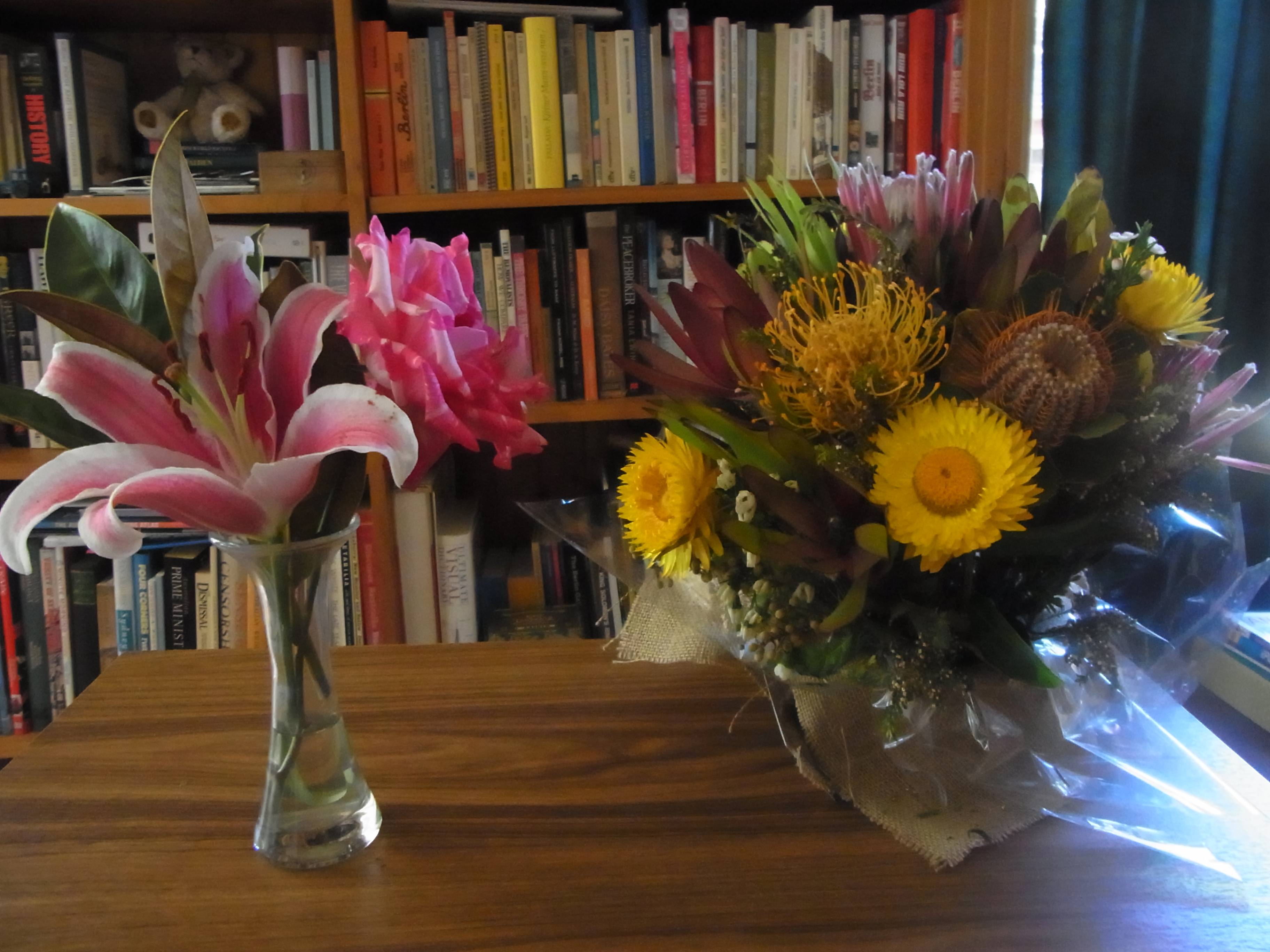
A week after my birthday Joan, one of my neighbours, called and gave me this beautiful large rose out of her garden.


On Monday, 29th of September, Peter and I went to the Dapto Leagues Club. As a member I had received birthday vouchers for free cake and coffee. I chose a rather large piece of cake with a profiterole. It was delicious. There was plenty for both Peter and myself.
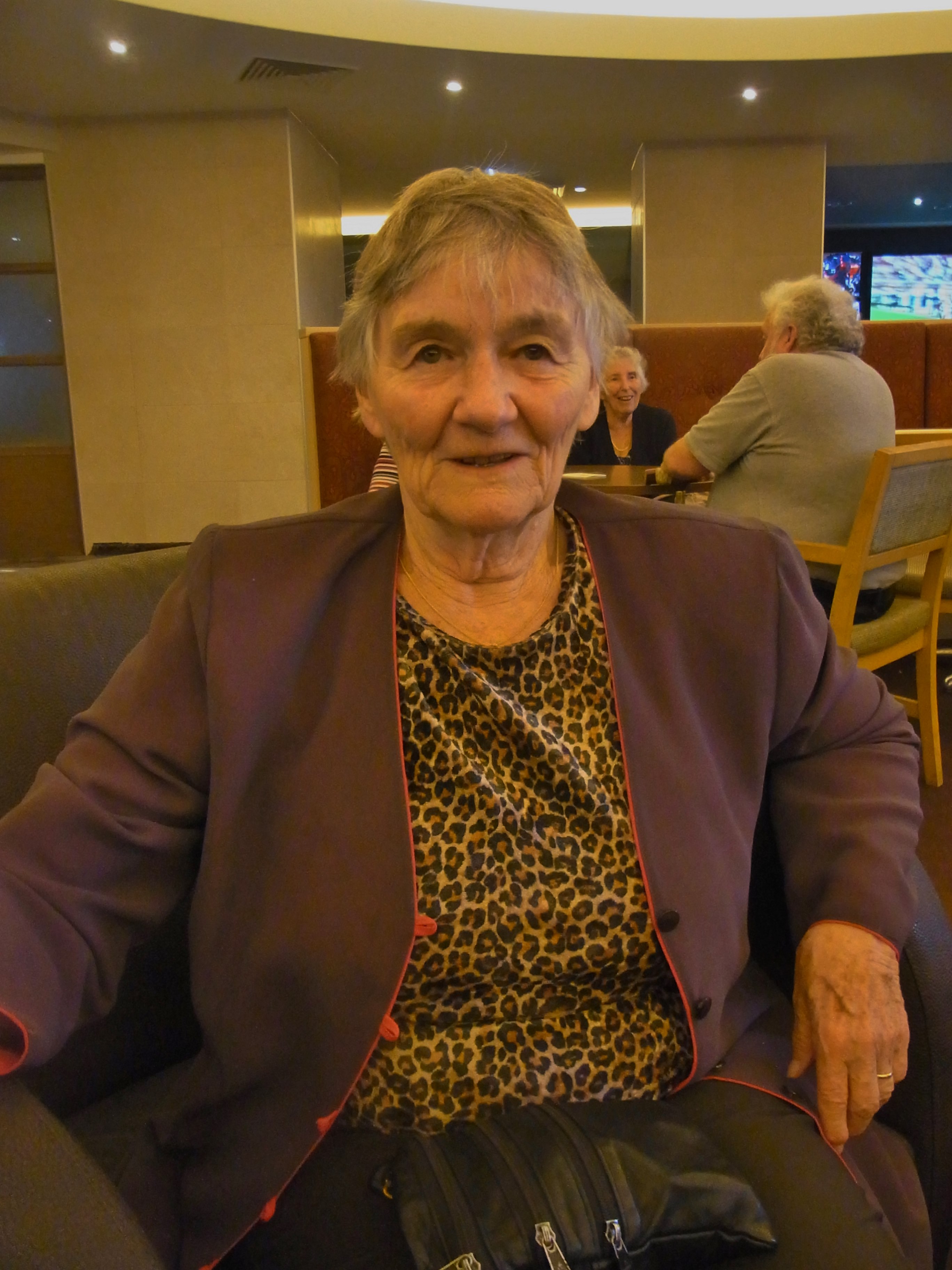
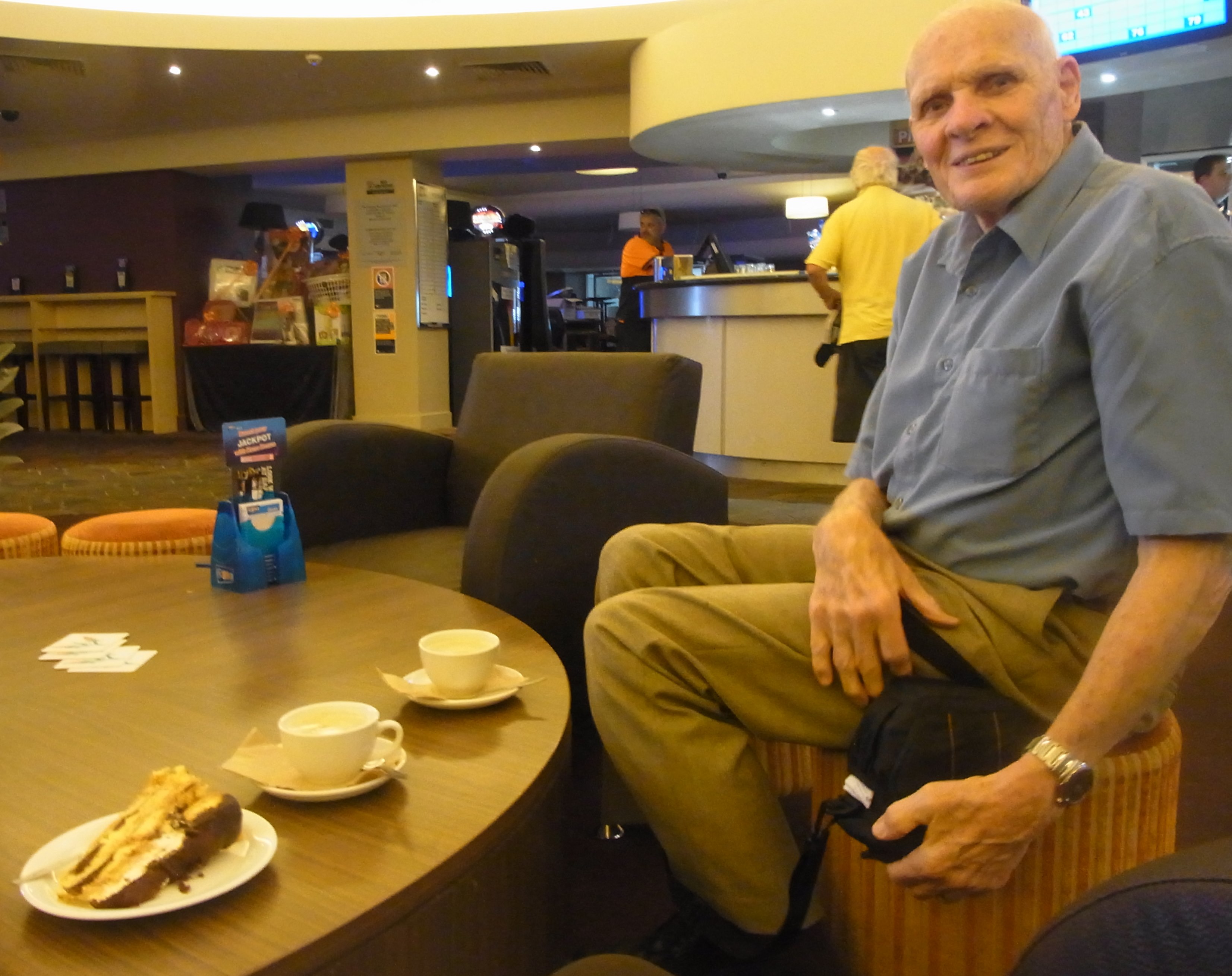
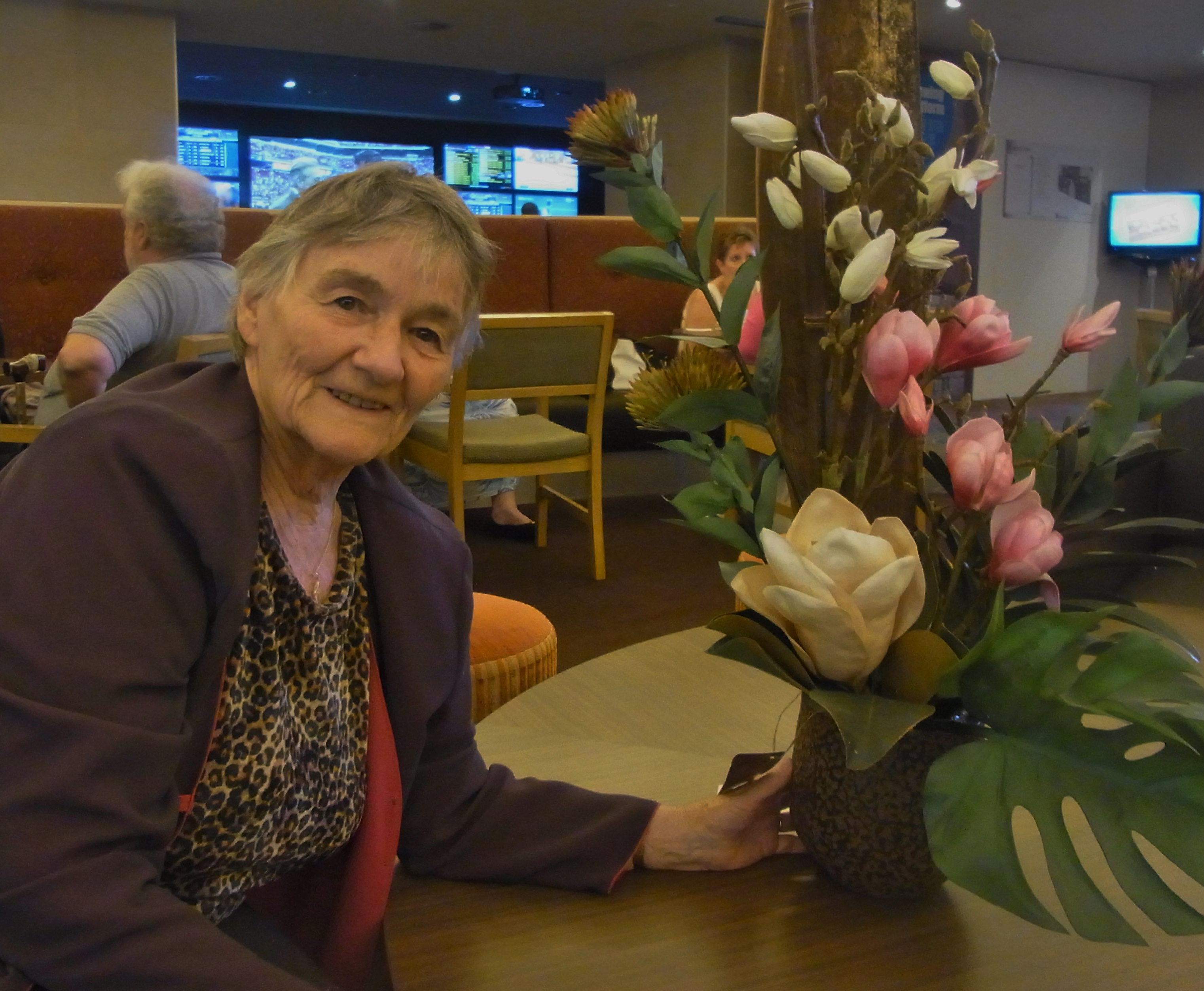
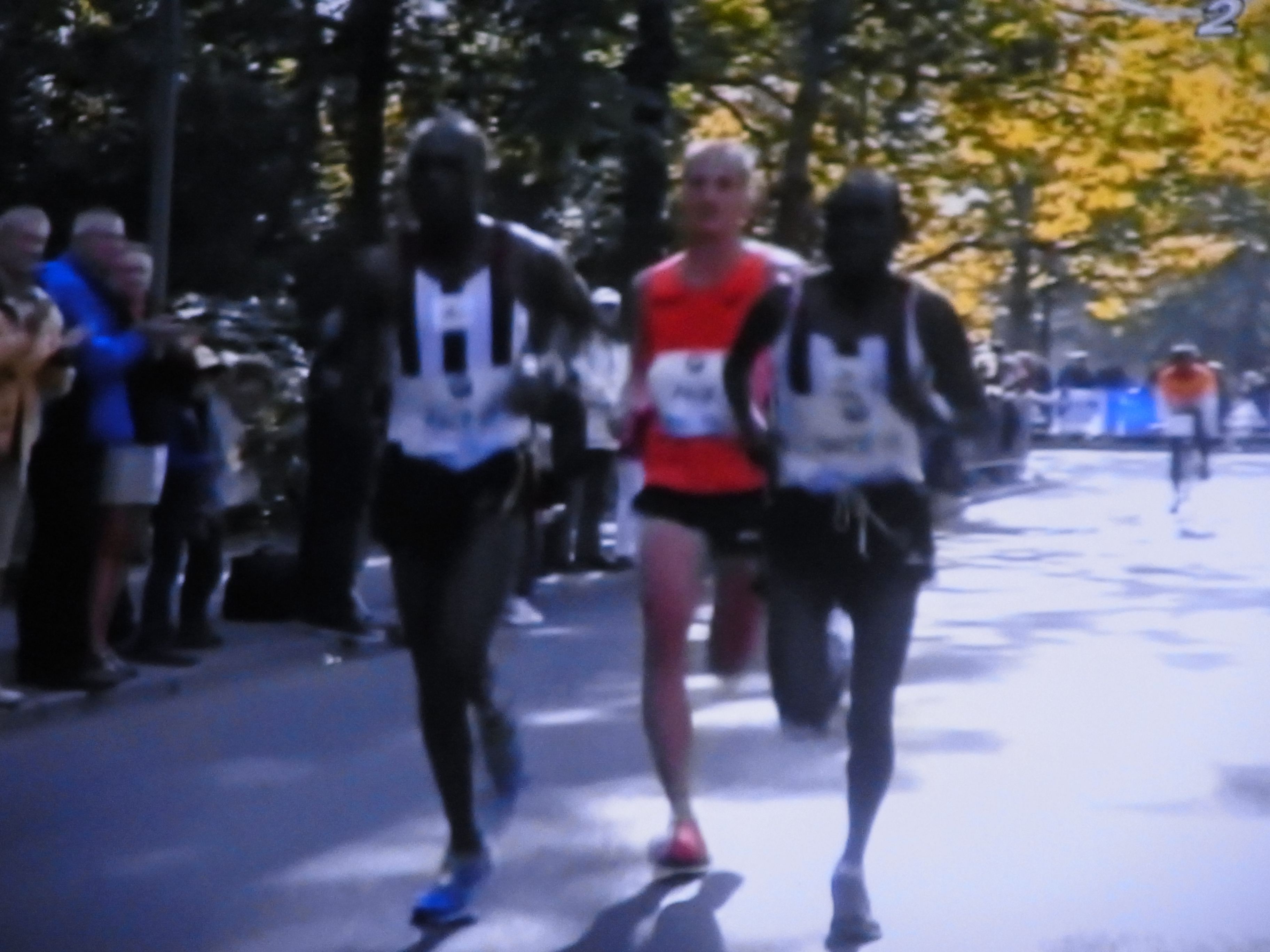
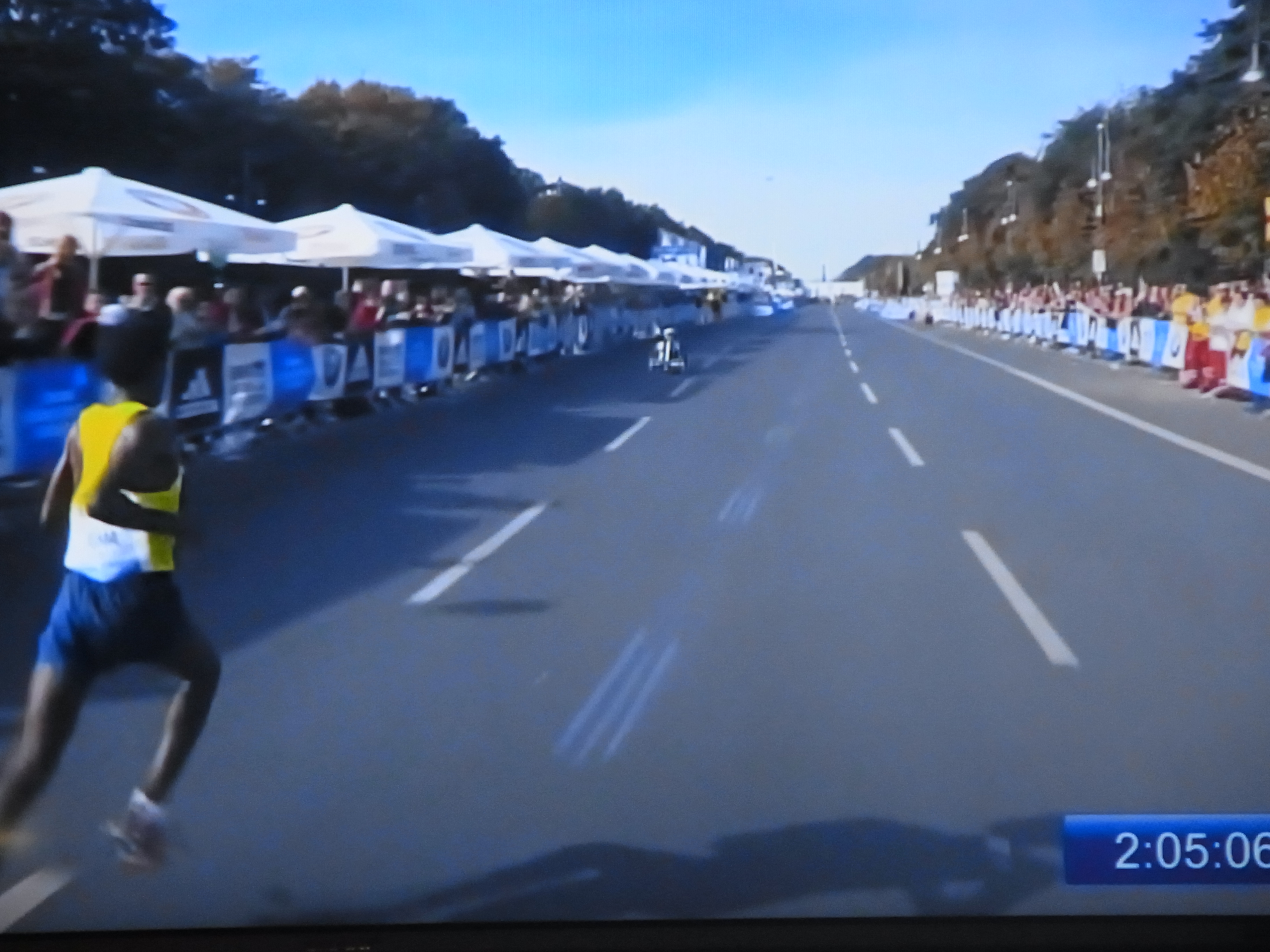
After we finished our coffee and cake we went to another room where we had noticed – surprise, surprise! – on a big screen was shown the Berlin Marathon that had taken place on the previous day and where a Kenyan had been running a world record. There was still one hour’s running left to show on the screen. We decided we would sit down and watch it.
I gave Peter my camera. So he took quite a few pictures from the screen. Most of these turned out all right.















Posted
We ought to wonder how a Government that weeks ago seemed incapable of attracting and holding our trust is now cast as the solid paternal guardian against nameless dread, writes Jonathan Green.
The following is an extract from Jonathan Green’s article:
“In our Senate this morning debate resumes on legislation that seeks to reset those scales in the firm concrete of law, law that may see journalists imprisoned for reporting state secrets in the public interest, may see your devices tracked, your data horded. The debate will be coloured by events, will be driven by the tensions of a moment and the frustrations of a state security apparatus that confronts that most elusive of threats: the acts of maddened individuals.
As Senator Brandis told his colleagues yesterday: “Freedom is not a given. Freedom must be secured particularly at a time when those who seek to destroy those freedoms are active, are blatant and are among us.”
As the joke goes: if they hate us for our freedoms, perhaps removing that freedom will make us safer.
Our politicians will continue to speak with tremendous certainty and assurance, but the rest of us ought to wonder.
We ought to wonder how a Government that weeks ago seemed incapable of attracting and holding our trust is now cast as the solid paternal guardian against nameless dread, how our fears have ennobled it.
We ought to wonder how an Opposition can be so desperate to share those spoils of our anxiety that while it talks down every Coalition gesture in economics, education, health and all the rest, it can find only unbounded praise for everything the Government does in national security. Somehow it manages to get that so defiantly right.
We ought to wonder, with whatever calm we can muster, just how much we are prepared to give to secure ourselves against the unknown.
And perhaps we ought not be so certain.”
Jonathan Green hosts Sunday Extra on Radio National and is the former editor of The Drum. View his full profile here.

 AuntyUta