
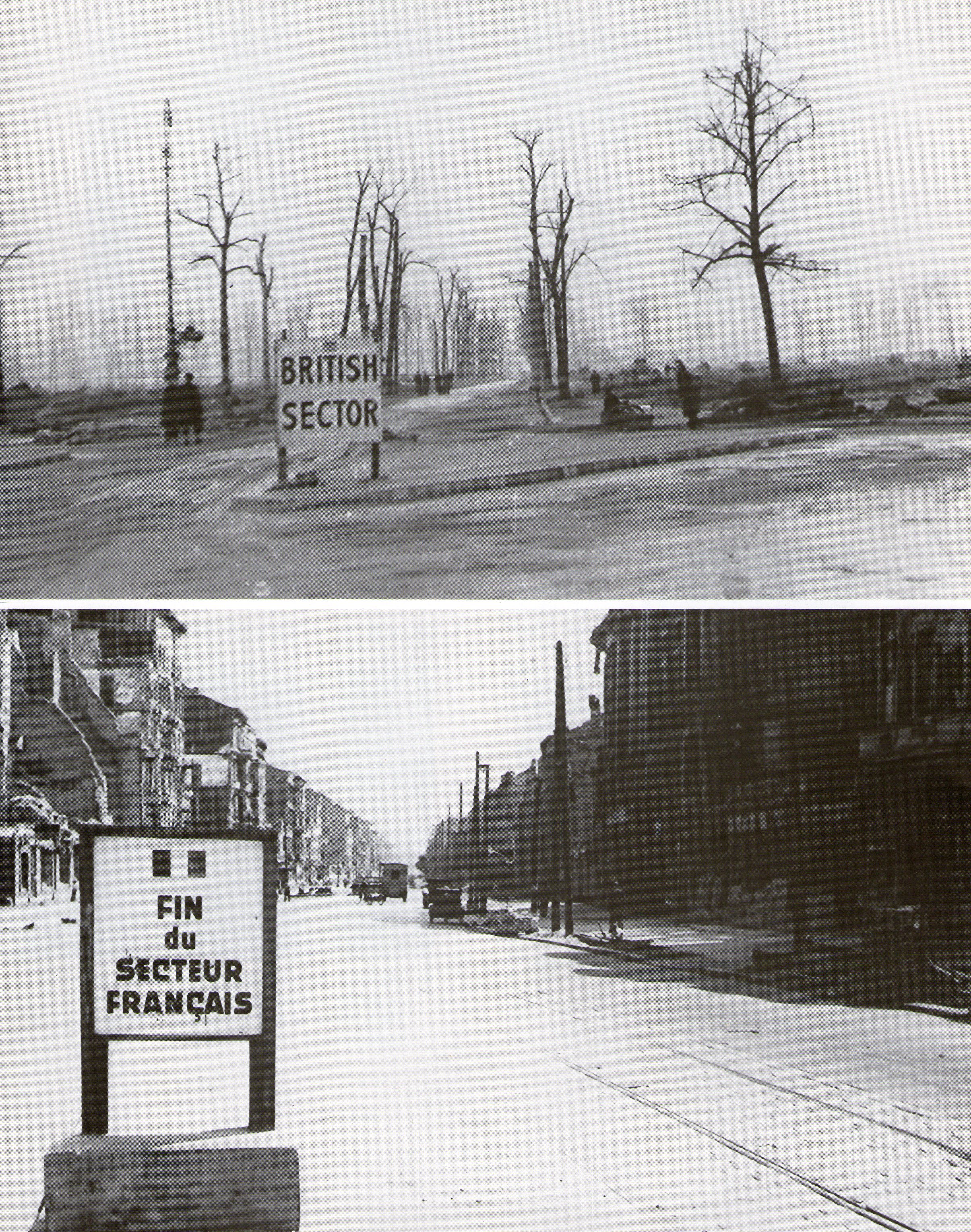
After the fall of Berlin in May 1945 the occupying forces divided the city into four sectors: One American, one British, one French and one Russian. Correspondingly Germany was divided into four different zones. In the 1950s more and more people fled from the Russian Zone of Germany to one of the Western Zones. A lot of refugees chose to flee to West-Berlin. From there they were flown out to Western Germany.
The Eastern Zone was the German Democratic Republic, West-Germany was called Bundesrepublik. That people wanted to flee the GDR showed, what a bad regime they had in the GDR. Refugees were received with open arms in the West. The GDR made it very difficult for people to flee once the “Wall” was built around West-Berlin and right along the border of East- and West-Germany.
Here are some refugees near the Brandenburg Gate in 1953:

In the picture underneath are some West-Berliners gathered waiting for the arrival of relatives from the East who presumably want to flee the GDR.
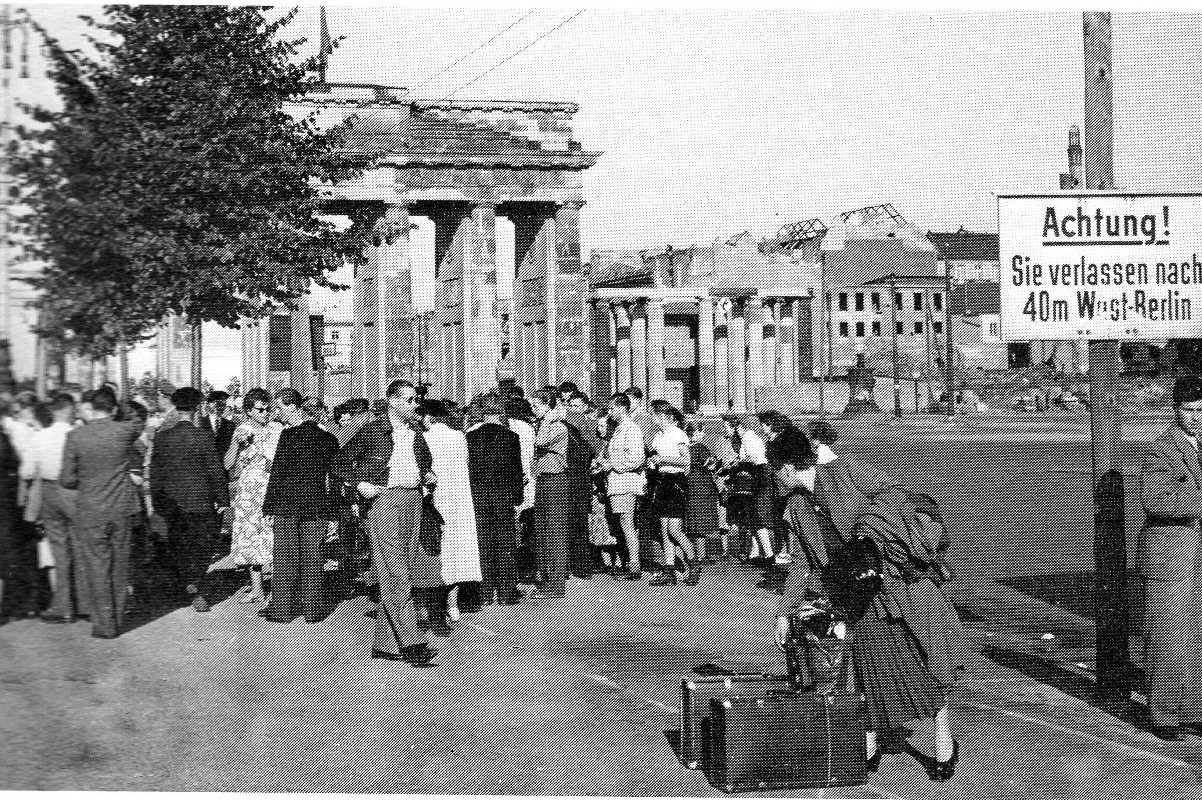


All pictures are taken from “Aus dem Berliner Tagebuch” by Thilo Koch published by Bertelsmann Club GmbH
 AuntyUta
Einen schönen Sonntag liebe Ute und Danke für deinen Besuch.War eine schlimme Zeit für viele Menschen,zu was darf nie wieder besIren,meine Enkelkinder kommen heute zu Mittag habe wenig Zeit.Liebe Grüße von mir und einen glücklichen Tag.Gislinde
Thanks for your comment, liebe Gislinde. Es ist interessant, dass man in Büchern immer noch Bilder finden kann, wo einem vor Augen geführt wird, wie schlimm es zu der Zeit nach dem Krieg aussah. Leider gibt es immer noch zu viele Länder, wo Menschen unter unzähligen kriegerischen Auseinandersetzungen zu leiden haben.
Wir haben übers Wochenende auch meine Familie bei uns gehabt. Ich finde es immer schön, wenn wir Besuch bekommen.
Ich wünsche dir eine recht gute Woche, liebe Gislinde.
Viele Grüsse, Uta. 🙂
Great piece of history Auntyuta,hard to imagine the thoughts of those refugees trying to relocate.
Ian
Before the wall was built, Ian, they were able to relocate, not a problem. The policy of the West German Government was that they should be accepted with open arms. It was not always easy to find accommodation for the newcomers. There was still a severe housing shortage due to the war. The people who were supposed to share their living places with refugees were not always happy about this. Still, nobody was sent back to the East against their will.
An aunt who lived with her parents in Berlin at this time, told me some stories about it. Woefully she, and of course, her parents are gone now. There is only one person in my family left from that era. I wish I could use a time machine that would land me in the Bundesrepublic for just one week, just so that I could feel the full measure of that enormous cataclysm.
Thanks, Linda, for you comment. I too sometimes wish to be able to go back in time with a time machine and talk to the people of long ago about the things that I missed out on talking about then.
Maybe you remember still some of your aunt’s stories and can write about it? I would find this very interesting! 🙂
I have written a bit about her. But not published. I think I have a voice recording of her somewhere. After the war she discovered her brother was in southern Germany in a military hospital, missing one leg and very sick. Somehow she made her way from Berlin to where he was, solo, w/o transportation, crossing those four borders you mention, (well not all of them, but the Soviet one, I think.) He always attributed his survival to his sister. She was a hell of a woman.
This is a great story, Linda. I hope you’re going to publish it one day. Can you remember the name of the city where this military hospital was? Was it perhaps a hospital run by the Americans? You probably know the name of your aunt’s brother. Maybe it’s possible to find some records about this man’s hospital treatment?
Any way out of Berlin would have been through the ‘Sowjetische Besatzungszone’, Linda. You say there was no transportation. So I guess she walked through the Sowjet zone until she could cross the border into one of the Western zones.
The French zone was the smallest and in the south-west corner of Germany, the British zone was in the Northern part of Germany. This means that the hospital in southern Germany was probably in the American zone. Was it perhaps in Munich or Frankfurt/Main?
There still is now in Germany a huge American military hospital in Wiesbaden, run by Americans! This hospital is bound to get for instance severely insured soldiers from Afghanistan or Iraq for treatment. This means they do not have to be flown all the way to America, getting badly needed treatment asap.