Sunday Diary, March 2015

We are well into March now. It seems a bit like autumn already here in Australia. Last Thursday afternoon Monika came to see us with Lucas. After coffee we decided we could all go with Lucas to the playground near the lake. Two year old Lucas enjoyed the playground very much even though it turned out to be very, very windy that afternoon. When we arrived, Peter took a picture of a flock of corellas sitting on the grass near the lake.

IMG_0189


There is a lot to explore for Lucas on this playground!

Not so long ago Peter and I drove up Mount Brown to have a look at the new sub-divisions. A lot of buildings have already gone up. People who buy a block of land up there have a beautiful view towards the lake.

IMG_0555

IMG_0556

IMG_0554

IMG_0557

IMG_0551

IMG_0553

What Timothy Egan says about Hillary Clinton

Timothy Egan worked for 18 years as a writer for The New York Times, first as the Pacific Northwest correspondent, then as a national enterprise reporter.

In 2006, Mr. Egan won the National Book Award for his history of people who lived through the Dust Bowl, “The Worst Hard Time.” The book also became a New York Times best seller.

In 2001, he won the Pulitzer Prize as part of a team of reporters who wrote the series “How Race Is Lived in America.” He has done special projects on the West and the decline of rural America, and he has followed the entire length of the Lewis and Clark Trail.

Mr. Egan is the author of five books, including “The Good Rain: Across Time and Terrain in the Pacific Northwest,” and “Lasso the Wind, Away to the New West.” He lives in Seattle. Mr. Egan’s column appears every Friday.

ON MARCH 6, 2015 Timothy Egan writes in the New York Times Opinion Pages a piece titled: HILLARY’S STEP.


In conclusion to this article he says:

” . . . .  One hopes that Hillary has been using her time out of the limelight, such as it is, to do some hard thinking about the serious structural flaws of the United States. We are creating more wealth, at an astonishing rate, for a select few, while also creating more poverty. The issues of great consequence — health care for all, affordable education that is a ladder to a better life, a middle class with security, not the fear of being one paycheck from panic — are mired in the deadened cast of our politics.

If Clinton hasn’t been looking for answers to the Big Questions, if she hasn’t been using the best and brightest around her to present something fresh, original and unifying, she will be stuck at the Hillary Step — close enough to taste the top of the world, but with no way to get there.”

About Health and Disease

Drug firms ‘inventing diseases’
Last Updated: Tuesday, 11 April 2006, 09:32 GMT 10:32 UK by the BBC
Pills

Disease-mongering is putting people at risk, researchers say

Pharmaceutical firms are inventing diseases to sell more drugs, researchers have warned.Disease-mongering promotes non-existent diseases and exaggerates mild problems to boost profits, the Public Library of Science Medicine reported.

Researchers at Newcastle University in Australia said firms were putting healthy people at risk by medicalising conditions such as menopause.

But the pharmaceutical industry denied it invented diseases.

DISEASE-MONGERING
Restless legs – Prevalence of rare condition exaggerated
Irritable bowel syndrome – Promoted as a serious illness needing therapy, when usually a mild problem
Menopause – Too often medicalised as a disorder when really a normal part of life

Report authors David Henry and Ray Moynihan criticised attempts to convince the public in the US that 43% of women live with sexual dysfunction.

They also said that risk factors like high cholesterol and osteoporosis were being presented as diseases – and rare conditions such as restless leg condition and mild problems of irritable bowel syndrome were exaggerated.

The report said: “Disease-mongering is the selling of sickness that widens the boundaries of illness and grows the markets for those who sell and deliver treatments.

Campaigns

“It is exemplified mostly explicitly by many pharmaceutical industry-funded disease awareness campaigns – more often designed to sell drugs than to illuminate or to inform or educate about the prevention of illness or the maintenance of health.”

The researchers called on doctors, patients and support groups to be aware of the marketing tactics of the pharmaceutical industry and for more research into the way in which conditions are presented.

They added: “The motives of health professionals and health advocacy groups may well be the welfare of patients, rather than any direct self-interested financial benefit, but we believe that too often marketers are able to crudely manipulate those motivations.

“Disentangling the different motivations of the different actors in disease-mongering will be a key step towards a better understanding of this phenomenon.”

But Richard Ley, of the Association of the British Pharmaceutical Industry, said the research was centred on the US where the drugs industry had much more freedom to promote their products to the public.

“The way you can advertise is much more restricted in the UK so it is wrong to extrapolate it.

“Also, it is not right to say the industry invents diseases, we don’t. It is up to doctors to decide what treatment to give people, we can’t tell them.”

There IS an Alternative to the TPP

I wished a lot of people would read this. I reblog it!

wolfess's avatarWolfessblog -- Guillotine mediocrity in all its forms!

Published on Friday, March 06, 2015

Congressional Progressive Caucus Offers A Real Alternative on Trade

Sen. Orrin Hatch, R-Utah. (Photo: Bloomberg)

Utah Sen. Orrin Hatch just postponed the introduction of fast-track trade authority legislation until April.

Fast track is designed to grease the skids for passage of the Trans-Pacific Partnership (TPP) trade agreement that is still being negotiated behind closed doors. Postponing the debate on fast track gives opponents another month to build opposition. It gives Republican leaders and the administration a month to line up every vote so that once introduced, it could be voted on overnight. They’re hoping to fast-track fast track.

The month does provide time for a long overdue serious national debate on our global trade and tax policy. The U.S. has racked up an unimaginable $6.75 trillion in trade deficits since 2000. Good…

View original post 1,181 more words

TPP, TTIP, and Comparison Between TTP/TTIP Countries and the BRICS

http://australianvoice.livejournal.com/5895.html

TPP – THE BIG PICTURE

“The main purpose of this article is to
show how all the world’s events are just
pebbles in the mosaic of one global power.
May God save the world.”
The Observer, 2014TPP – One Piece of a Gigantic Puzzle
The TPP did not float to the shores of Australia in a sealed bottle. It has been many years in the making. It is part of a wider plan never discussed in our media. Australia’s participation in the TPP is a small part of a geopolitical power play by the US and its largest corporations. This powerplay has two major components. One is economic and the other is political/military. How does the TPP in Australia fit into the massive changes taking place in the world economy? How do these changes fit into the international political and military situation?Who is in the TPP? Who is Not in the TPP?
The TPP is not just a local imposition on our sovereignty and legal system. The negotiations on what became the TPP began in 2005.(1) The main nasty element of the TPP, the Investor-State Dispute Settlement system, was developed in the late 1980s.(2) The TPP covers 12 contries which border on the Pacific: Australia, Brunei, Canada, Chile, Japan, Malaysia, Mexico, New Zealand, Peru, Singapore, the United States, and Vietnam. Unlike standard bilateral trade agreements, the TPP is a one size fits all treaty carefully designed by 600 of the largest and most powerful corporations in the world. It is forced on the politicians of the different countries, not negotiated by them.The TPP does not include any of the Asian Tigers in our region. It does not include China, which has the second largest economy in the world as measured by its Gross Domestic Product.(GDP). Nor does it include important South East Asian countries like Indonesia – 9th largest GDP, South Korea – 11th, Taiwan – 21st, or Thailand – 22nd. The table below shows the GDP rank of the countries involved in the TPP.(3) Slightly more than half of them rank lower than these important Asian economies. What the 11 countries joining with the US in the TPP have in common is that they are politically very close to the US. Are these 11 countries in the TPP simply because they are client states of the US and prepared to accept the dictates of the the US corporations?

Countries in the TPP with GDP rank:
United States 1
Japan 4
Mexico 11
Canada 15
Australia 19
Malaysia 28
Vietnam 37
Singapore 40
Chile 42
Peru 47
New Zealand 69
Brunei 116

And There is More – the TTIP!
The TPP is not a one-off. There is another TPP clone being negotiated between the US and the EU called the Transatlantic Trade and Investment Partnership (TTIP). It developed out of three important groups. In 1995, a pressure group of business people was founded. Later the Transatlantic Business Dialogue (TABD) was set up by public authorities on both sides of the Atlantic. In turn this led, in 1998, to the creation of an advisory committee, the Transatlantic Economic Partnership.(4) Finally negotiations got serious about 2013 and it is supposed to be finalized this year. The TTIP covers the US and 28 countries.(5) Three European countries are missing: Iceland, Switzerland and Norway.

One might also wonder where Israel fits into this global economic picture. Israel’s rank of 54 puts it between Portugal – 53rd and Morocco – 55th. In terms of its economic weight, Israel is clearly a lightweight. Really it is a US funded garrison state in the Middle East. It has political and military influence far above its lowly position in the world economic system. In economic terms it is outranked by the following Middle Eastern countries: Saudi Arabia – 14th, Turkey – 17th, Iran – 18th, Egypt – 24th, the United Arab Emirates – 32th, Algeria – 34th, Iraq – 35th, Qatar – 49th and Kuwait – 52th. If there ever was an national mouse that roared, it is Israel.

There is an Alternative to the TPP/TTIP Trade Block – the BRICS
Outside of the TPP/TTIP trade block several countries are coming together to create a new economic world order. In reality this is a direct challenge to the TPP/TTIP trade block because they want to do things very differently. Their goal is to replace the current system controlled by the International Monetary Fund (IMF) and the World Bank, which in turn are directed by the international 1% in the US and the EU. One of their main goals is to use local currencies rather than the US dollar for imports and exports. The most prominent countries working on this project are Russia and China. The media, our government and all major political parties in Australia are silent about these new and quite public plans.

The most prominent countries leading this movement are called the BRICS (Brazil, Russia, India, China, and South Africa). The BRICS countries also play a role in the Shanghai Cooperation Organization (SCO), the Asian counterweight to NATO. The SCO is made up of China, Kazakhstan, Kyrgyzstan, Russia, Tajikistan, India, Mongolia, Iran, and Pakistan.

Comparison Between TTP/TTIP Countries and the BRICS
It is useful to look at the GDP of the BRICS countries and compare them with some of the major EU countries. As we have seen China is ranked 2nd. India is 3rd. Russia – 6th, Brazil – 7th, and South Africa is 29th. By comparison, Germany at 5th is below China and India. France at 8th is below Russia and Brazil. The UK, at 10th, is just below Indonesia at 9th, and just above Mexico.

Top 10 countries by GDP rank:
1. USA TPP/TTIP
2. China BRICS
3. India BRICS
4. Japan TPP/TTIP
5. Germany TPP/TTIP
6. Russia BRICS
7. Brazil BRICS
8. France TPP/TTIP
9. Indonesia Independent
10. UK TPP/TTIP

Thus of the top 10 countries ranked by GDP, four of them are in the BRICS, five of them are in the TTP/TTIP block. The only “non-aligned” country in the top 10 is Indonesia. Notice that the BRICS countries are not economic lightweights, and to think of them as “underdeveloped” is to miss the point. In economic terms they are right up there with the Big Boys of the West. Further, if you think about the aggressive and antagonistic attitude of Prime Minister Abbott toward Indonesia, it is interesting to realize that ranked in terms of its GDP, it is easily on a par with his native UK. He is certainly not thinking about Australia’s economic and political future in Asia.

The following table highlights an interesting fact about a difference between the major Western countries in the TPP/TTIP trade agreements and the major BRICS countries.(6) All of the major Western countries in the TPP/TTIP agreements have a greater government debt to GDP ratio than any of the BRICS countries. Note also that Australia’s debt to GDP ratio is at the lower end of the percentages for the BRICS countries. While the Liberal/National Coalition talks of Australia’s level of government debt as if it was a sign of gross economic mismanagement – and Labor does not seem to dispute this – Australia’s debt level is relatively low by world standards. It looks much better than the debt ratios of the large Western countries who run the IMF. Do they practice what they preach? It seems the LNP Coalition are just playing politics.

Please go to

http://australianvoice.livejournal.com/5895.html

for more details.

Bringing back the Carbon Tax?

https://theconversation.com/for-this-generation-and-the-next-its-time-to-bring-back-the-carbon-tax-38224?utm_medium=email&utm_campaign=Latest+from+

Max Corden argues that the tax burden of a carbon tax could come to represent a benefit for future generations.

Australians have been told that this “great big new tax” would be a burden. Max Corden points out that all taxes impose burdens or costs somewhere, whether on companies or individuals.

I think it is a very interesting article. If you want to read it,  please go to the above link.

Our Common Inheritance

Comment by Uta: I found all the following in Google. “The unjust Desert” sounds very interesting to me. It seems to explain why the rich keep getting richer and the working people do not get their just share.


About one of the Authors

Gar Alperovitz (born May 5, 1936) is Lionel R. Bauman Professor of Political Economy at the University of Maryland, College Park Department of Government and Politics. He is a former Fellow of King’s College, Cambridge; a founding Fellow of Harvard’s Institute of Politics; a Fellow at the Institute for Policy Studies; and a Guest Scholar at the Brookings Institution. Alperovitz also served as a Legislative Director in the U.S. House of Representatives and the U.S. Senate, and as a Special Assistant in the Department of State. Alperovitz is a founding principal of The Democracy Collaborative at the University of Maryland, and a member of the board of directors for the New Economics Institute (NEI).

Unjust Deserts: How the Rich Are Taking Our Common Inheritance and Why We Should Take it Back

by Gar Alperovitz

with Lew Daly

  • * How much of wealth is the result of being born into a society with a rich heritage that is shared by all and how much is due to individual effort?
  • * Why should only a tiny fraction of our citizens keep most of the money made off this heritage if, in fact, it is this common background that gave them their success?
  • * Does this argument make income inequality morally and economically unjustified?

Praise for Unjust Deserts * Reviews *
Media

As our financial system lurches into an unknown future, traditional views of wealth and personal rewards are being questioned. Consequently, there is no better time for a conversation about the creation of wealth today—who is entitled to it and who will control it. As our national financial crisis puts into stark relief, aren’t we are all in the economy together, whether rich or not?

With a bold salvo challenging the status quo, authors Professor Gar Alperovitz and Demos fellow Lew Daly tip the scales with the answers to these questions in what will be one of the most talked about books of the season: UNJUST DESERTS: How the Rich Are Taking Our Common Inheritance and Why We Should Take It Back(The New Press, publication date: November 18, 2008; $24.95 hardcover, 220 pages).

Alperovitz and Daly are in good company when they write that culture has more to do with individual success than we generally acknowledge. One of the wealthiest men on the planet, Warren Buffett, with a current net worth of $60 billion, acknowledges that “society is responsible for a very significant percentage of what I’ve earned.” Bill Gates, Sr. agrees when he writes, “Success is a product of having been born in this country, a place where education and research are subsidized, where there is an orderly market, where the private sector reaps enormous benefits from public investment. For someone to assert that he or she has grown wealthy in America without the benefit of substantial public investment is pure hubris.”

Drawing on cutting-edge research as well as their knowledge of philosophy and economics, Alperovitz and Daly prove that up to 90 per cent ‘or even more ? of private earnings are the result not of individual ingenuity, effort or investment, but of what they describe as the “unjust” appropriation of our collective inheritance. In other words, the cumulative or aggregate knowledge that we all inherit is key to individual achievement.

The authors demonstrate that if the market rewarded people according to their contributions it would make up only 10-20% of their income. The rich don’t work harder and are not morally justified in deservingness, or ‘deserts’ as philosophers describe it than the rest of us. We get the commonly held viewpoint that we are entitled to own whatever wealth we create from philosopher John Locke. In his agrarian society and that of our Founding Fathers, wealth was mostly based on physical labor. In our knowledge-based society, Locke’s argument doesn’t work, since all knowledge that we receive from previous generations is a social contribution.

The individual’s role in advancing art, science and technology again is mostly based on our common heritage, too. The authors make an historically-based case for the wave of cultural and scientific knowledge that pushes a few people to the next level, the “geniuses” who create what happens next. Some enlightening examples of this argument include:

  • * Alexander Graham Bell and Elisha Gray, who both filed for a telephone patent on the same day, though they were working independently
  • * Gary Kindall who created the same computer operating system that Bill Gates then “perfected”
  • * Charles Darwin racing to complete The Origin of the Species because Alfred Russel Wallace was developing the same scientific argument.

Alperovitz and Daly rightly conclude that the individual isn’t really important in the case of each breakthrough. Instead, the development of knowledge is society’s forward-moving catalyst.

The second half of the book bolsters their thinking further by detailing how knowledge is shared. They note and quote widely from philosophers and economists starting with 18th century Thomas Paine and Benjamin Franklin though 20th century Nobel Laureate Herman Simon and Cass Sunstein, to name a few. The reader understands that there has always been this debate about what society owns and what is rightly owned by the individual.

What reforms do the authors suggest could begin the process of income redistribution along the lines of social justice? They say that income taxation for the top 1-2% should be increased, raising the current cap on Social Security taxes, increasing corporate taxes ? especially on windfall gains in connection with oil industry profits, and increasing inheritance taxes on large estates would be a beginning. Proceeds from the new taxes could be used for the common good, such as instituting universal health care or propping up decaying infrastructures like bridges and tunnels. In addition, education and research could receive additional funds. There is a promising plan put forth by Yale law professors Bruce Ackerman and Anne Abbott that suggests and ‘capital stake’ or allocation of $80,000 to every citizen upon reaching adulthood ? to be used most likely for a college education. The capital stake would be recouped at death through an inheritance tax.

Bound to be a flashpoint of discussion and contention, this bold new book will be the talk of the political circles this fall and to come.

ABOUT THE AUTHORS

Gar Alperovitz is the Lionel R. Bauman Professor of Political Economy at the University of Maryland and a Founding Principal of the Democracy Collaborative. His previous Books include The Decision to Use the Atomic Bomb and America Beyond Capitalism. He lives in Washington, D.C.

Lew Daly is senior fellow at Demos, the New York City progressive think tank, and the author of God and the Welfare State. He lives in New York City.

UNJUST DESERTS How the Rich Are Taking Our Common Inheritance and Why We Should Take It Back By Gar Alperovitz and Lew Daly Publication Date: November 17. 2008 ISBN: 978-1-59558-402-1 230 pages Price: $24.95 hardcover

Praise for Unjust Deserts:

“Rarely do the facts of the matter so illuminate a moral truth as they do in Unjust Deserts. Quite simply, this book changes the fundamental terms of reference for future debates about inequality. It convincingly demonstrates that knowledge is the primary source of our national wealth, with or without the elites at the top who claim the lion’s share. In a surprising yet persuasive way, Alperovitz and Daly help us understand what this reality means, and the values at stake, in a nation growing more unequal with each passing day. This book opens an extraordinary new vista on the moral bankruptcy of our second Gilded Age.”
— Bill Moyers

“A brilliant and wonderfully timely book—the perfect gift for people who were born on third base and thought they’d hit a triple.”— Robert H. Frank, Cornell University

“The viewpoint presented in this important and provocative book by Alperovitz and Daly should alter the current public discourse on income distribution.”— Kenneth J. Arrow, Nobel Laureate

“Unjust Deserts is an elegant work of moral philosophy, a reflection on science, technology, cumulative causation and the collective character of the common wealth. It is work with deep implications for structures of pay, ownership and taxation, perfectly timed for the end of the grab-what-you-can era.”— James K. Galbraith, UT Austin

“This deeply informed and carefully argued study of the social and historical factors that enter into creative achievement formulates issues of entitlement in ways that have far-reaching implications for a just social order. It merits careful study and reflection, and should be a call for constructive action.”— Noam Chomsky, MIT

“Alperovitz and Daly drive a stake through the heart of the strongest and most enduring argument against income and wealth redistribution: the idea that each of us alone—or mostly alone—is responsible for what we earn and accumulate… Their timely, deftly argued book redefines our vision of the common good.— Jacob S. Hacker, U.C. Berkeley

Unjust Deserts reveals the untold story of wealth creation in our time. Our celebrated entrepreneurs and money men are hoisting a cherry to the top of an already existing sundae-and then laying claim to the entire ice cream parlor.”— Barbara Ehrenreich & Chuck Collins

Uta’s Diary Update, March 2015

IMG_0745

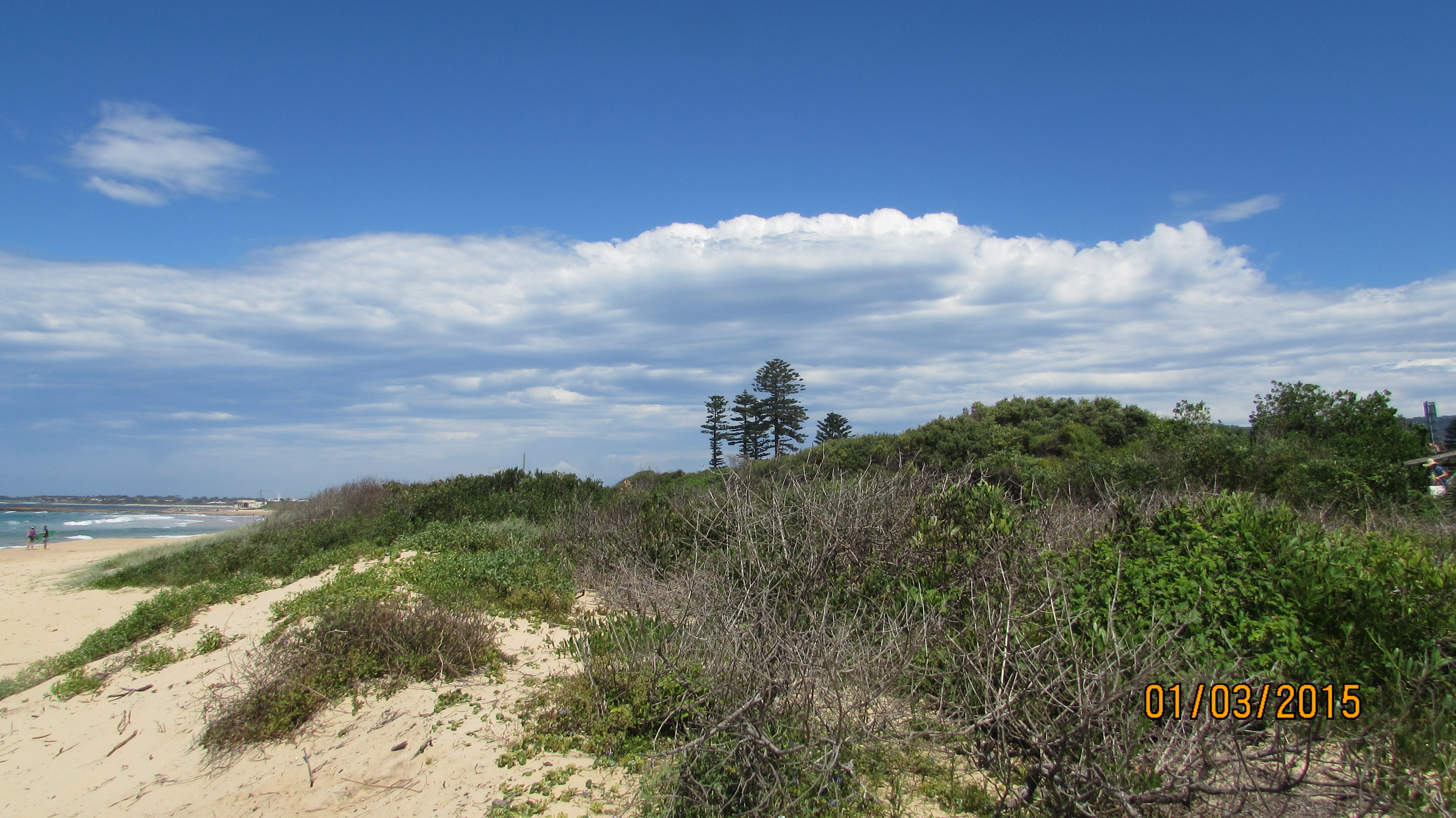
Today is already the second of March. Yesterday was officially the beginning of autumn here in Australia. It promised to be a very warm day. We agreed it would be good to have lunch near Bulli Beach. It was about time we paid that beach another visit!

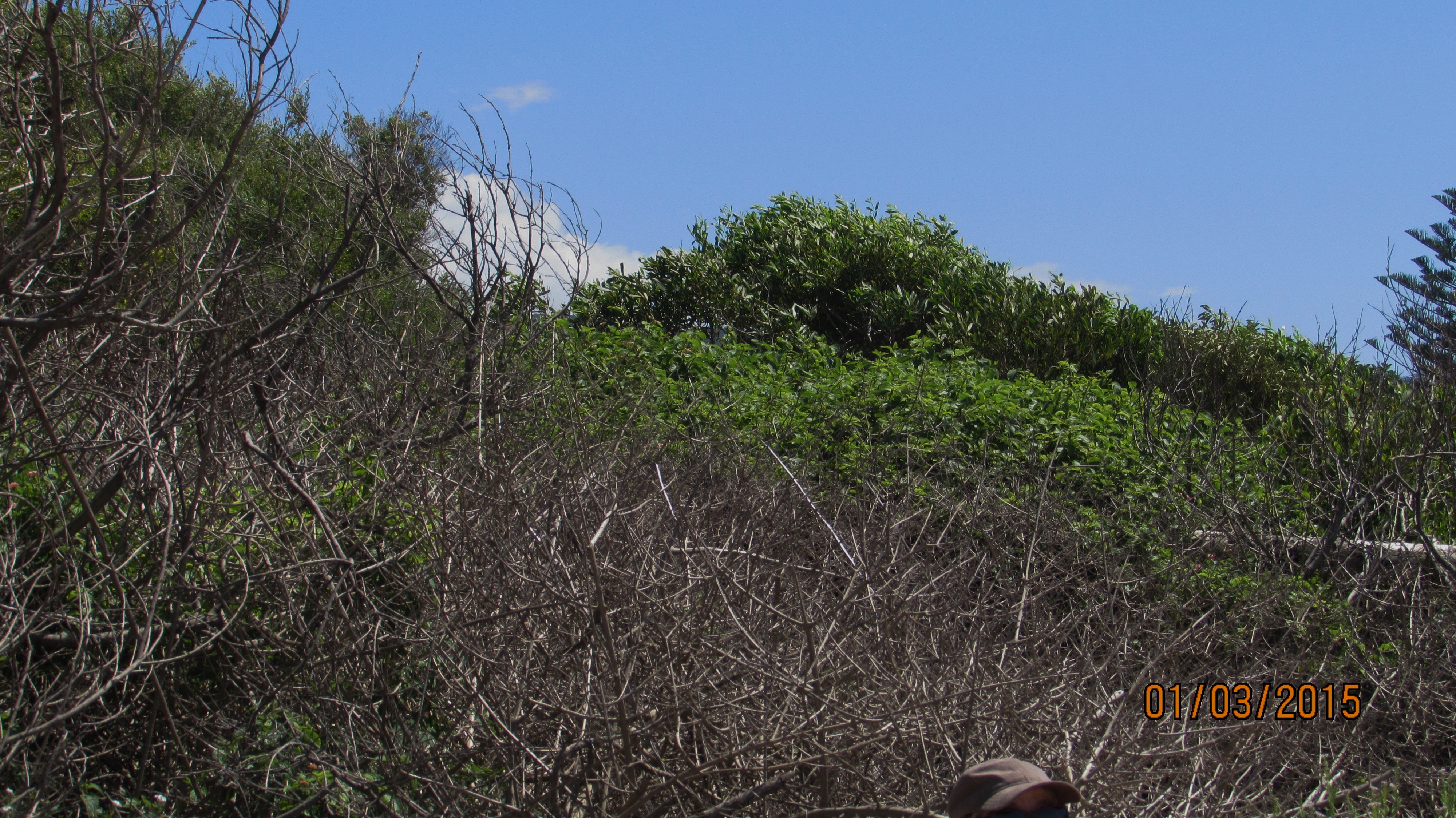
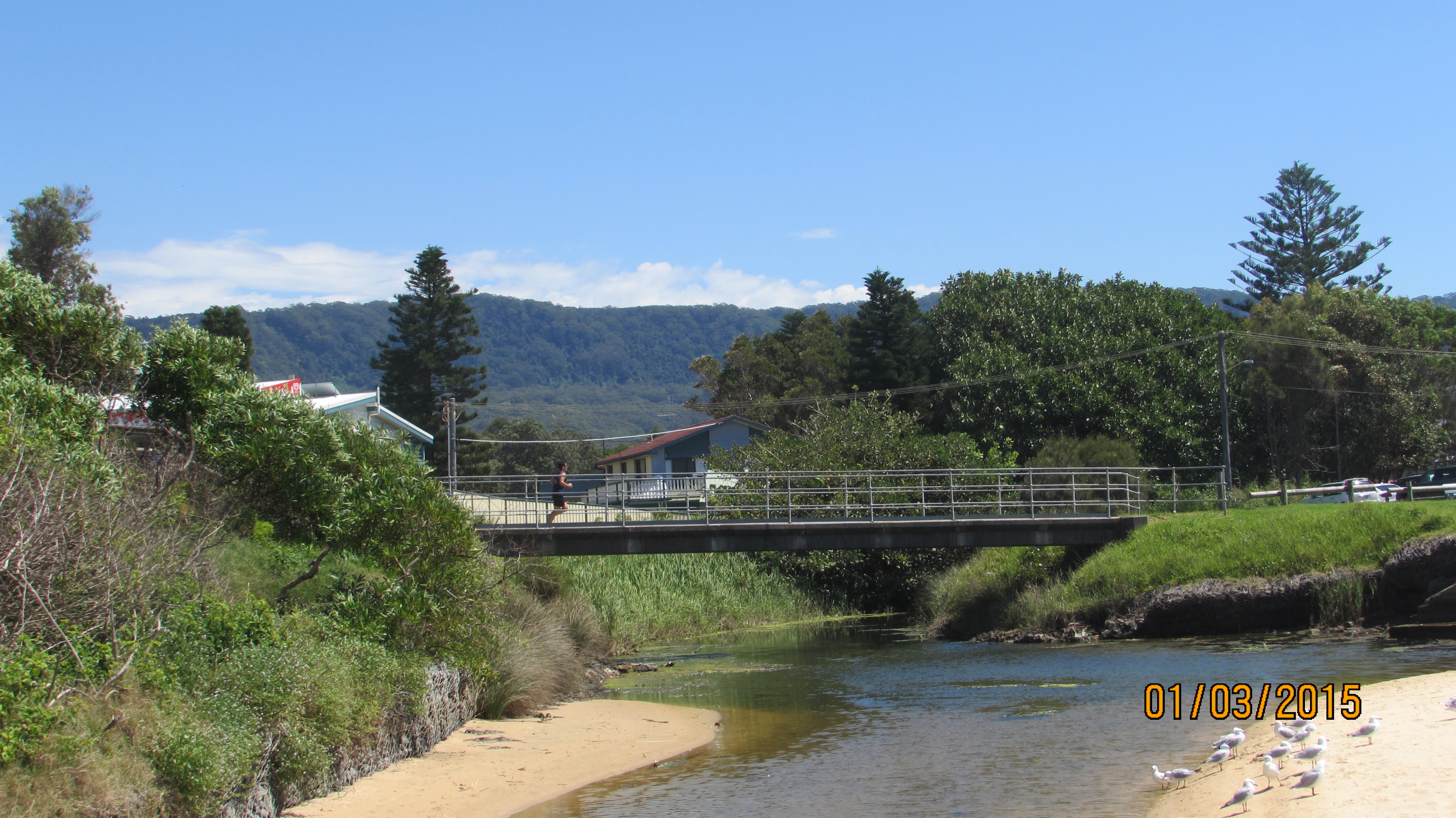
We left home at eleven o’clock. A few minutes later we arrived at Ruby’s Cafe. We ordered beer battered fish, chips, salad and a pot of tea. I did not take my camera along because it had been playing up a bit recently. But Peter had brought his camera.  He took some pictures when we went down to the beach  while I was resting on a sand dune. Peter and I always share our pictures. So he does not mind that I publish some of yesterday’s photos. I like these photos! (With ‘like’ to this post at the bottom I’m going to indicate that I like Peter’s photos.)

Some months ago I had an infection in my left knee. A few days ago I started to get another knee infection, however this time it is the right knee that hurts!

RIMG0941This is an old picture of the cafe, but it still looks like this. There were already quite a few people near the beach when we arrived. We were glad we had decided to have lunch early. Soon after we left the cafe, it filled up a lot. Also, there was hardly any more parking available!

IMG_0750

IMG_0749

IMG_0752

IMG_0754

IMG_0746

IMG_0751

So it turned out to be a perfect day for the beach, at least until a thunderstorm came up a bit later on. But we were already on our way home then, having picked up some cake in a Thirroul Shopping Centre.  As soon as we arrived home, we made some filter coffee to go along with our cake.

This was our Sunday. How was yours?