Remembering a Friend

My blogger friend Debra from ‘Breathelighter’ published a blog after the funeral of a dear friend. Here is an excerpt of this blog:

. . . The family chose a scripture reading I’ve heard dozens of times before, but today the words gained life as they described a special, very kind man. The challenges are simple and clear; not so easy perhaps to live.

“Let love by genuine; hate what is evil, hold fast to what is good; love another with mutual affection; outdo one another in showing honor. Do not lag in zeal, be ardent in spirit, serve the Lord. Rejoice in hope, be patient in suffering, persevere in prayer. Contribute to the needs of the saints; extend hospitality to strangers. Bless those who persecute you; bless and do not curse them. Rejoice with those who rejoice, weep with those who weep. Live in harmony with one another; do not be haughty, but associate with the lowly; do not claim to be wiser than you are. Do not repay anyone evil for evil, but take thought for what is noble in the sight of all. If it is possible, so far as it depends on you, live peaceably with all.” Romans 12:9-18

This reading fits the life our friend will be remembered for. I don’t see a lot of ego in this brief passage–perhaps these calming words are worth contemplating in a world that likes to stir up conflict. Peace.

Vivid Sydney 2015

Yesterday evening the family stayed in the city of Sydney for a while to see some of the lighting festival. Peter and I left Sydney a bit earlier. We went back to Dapto on the train. We were home just before 7 pm. We were glad to be home early.

http://en.wikipedia.org/wiki/Vivid_Sydney

Vivid Sydney is an annual outdoor lighting festival with immersive light installations and projections in Sydney. Part of the lighting festival also includes the performances from local and international musicians and an ideas exchange forum featuring public talks and debates from leading creative thinkers.
The event is held during winter in central Sydney over the course of three weeks in May and June. The centrepiece of Vivid Sydney is the light sculptures, multimedia interactive work and building projections that transform various buildings and landmarks such as the Sydney Opera House and Sydney Harbour Bridge in and around the Sydney CBD into an outdoor night time canvas of art.[2]
During the 2015 festival, sites of interest were Central Park, Chatswood and the University of Sydney as well as around the CBD, Darling Harbour and The Rocks

TIDAL REED GARDEN

http://www.vividsydney.com/event/light/tidal-reed-garden

Tall feathery reeds glowing with gentle light line a wharf running at right angles to the Opera House. Swaying and bobbing with the movement of the water, the reeds send light dancing across the harbour’s rippling surface.
Tidal Reed Garden

When:
22 May – 08 Jun, 06:00 pm – Midnight
Price:
FREE
Location
Campbells Cove, Sydney NSW 2000

Colourful images of Sydney’s flora and fauna are projected onto Customs House, draping the stately sandstone columns and balconies with glowing vegetation and animal life.
Enchanted Sydney
FREE // Circular Quay // 22 May – 08 Jun, 06:00 pm – Midnight

Orbs of various sizes connected by a framework form an irregular domed structure that shines with gentle blue light. Within the orbs and connecting bars, sparks of light intensify and fade in reaction to the touch and movement of participants.

FREE // Circular Quay // 22 May – 08 Jun, 06:00 pm – Midnight

Arclight
FREE // The Rocks // 22 May – 08 Jun, 06:00 pm – Midnight

Dolly
FREE // Campbell’s Cove // 22 May – 08 Jun, 06:00 pm – Midnight

A huge Rococo pig adorned with flowers and filigree sits on an ornate platform. Around it, Rococo piglets stand within a square of four towering chairs decorated with flowers and curlicues.

FREE // The Rocks // 22 May – 08 Jun, 06:00 pm – Midnight

The darkness of a shipping container narrows to triangular mirrored space in which shifting colours and lights are reflected from all sides, creating an array of patterns stretching into the darkness.
Kaleidoscope
FREE // The Rocks // 22 May – 08 Jun, 06:00 pm – Midnight

Artist: Aura (Gioia Murray and Louise Jarvis)
Country: Australia

Tidal Reed Garden is a bed of artificially produced reeds that float along the line of a harbour wharf. At night the reeds become glowing, sculptural illuminations that cast dancing reflections on the water.

Each reed is shaped to mimic a natural water reed and are animated by the swell of the water, movements in the tide and wash from passing ferries.

Tidal Reed Garden celebrates the beauty and power of elements in nature. Artists Gioia Murray and Louise Jarvis’ approach to the work was developed through their ongoing interest in biomimicry – design that seeks to be sustainable by emulating nature’s time-tested patterns and strategies.

THIS EVENT HAPPENS IN CAMPBELL’S COVE
A small bay on the eastern shore of Sydney Cove, Campbell’s Cove is named after Robert Campbell, a Scottish merchant who arrived in Sydney in the late 1790s and established a highly successful import/export business operated out of storehouses and a jetty on its shores. See what else is happening in Campbell’s Cove

SPONSORS

Vivid Light Walk Contributor

Queen’s Birthday Weekend in Australia in 2015

This weekend is a long weekend in Australia. It is the Queen’s Birthday Weekend. This means tomorrow, Monday, is going to be a public holiday.

Ice-Cream from MESSINA

This shop is in Sydney, not far from the Griffin Theatre. We went there yesterday for some ice-cream after the theatre matinee performance. We all love this ice-cream (gelato) very much!

 Gelato de Messina! Homemade on the premises.
Gelato de Messina! Homemade on the premises.


0177155922faaaef277cb017c52e11f3aed6e05739

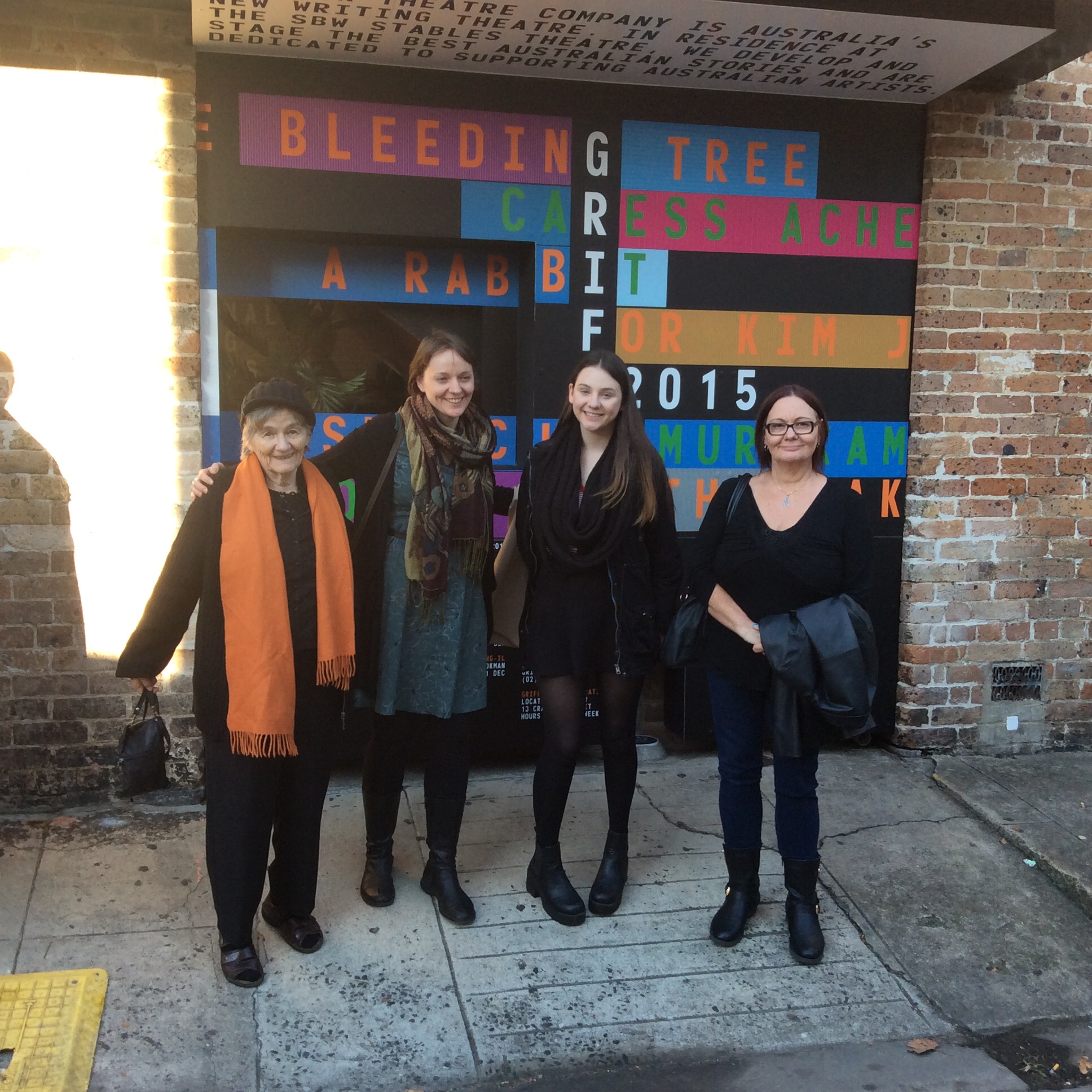
Peter took this photo of the four of us in front of the theatre. It is great for me to be able to remember this day that we spent with our two daughters and a grand-daughter.
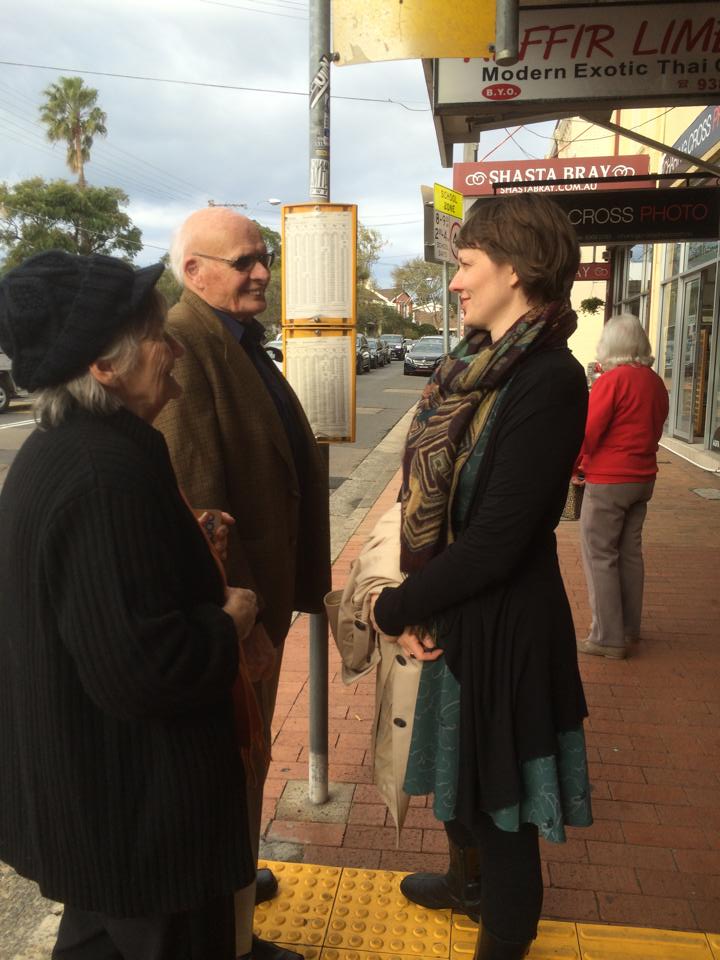
One daughter took the following photo of us waiting at a bus-stop:

11328919_10207029736127420_210138083_n

When we were in Melbourne towards the end of last year we had an excellent dinner at this
Maylasian Food Restaurant:

RIMG0450

We knew Messina Ice-Cream from Sydney and were happy to find that there was a MESSINA Ice-Cream shop also in Melbourne. We went there at night time. This photo shows how popular it is:

RIMG0347

And on another night we went for Haxtaburgers at this place which is opposite from MESSINA’S:

RIMG0360

An Article from the SATURDAY PAPER on Citizenship-Stripping

https://www.thesaturdaypaper.com.au/news/politics/2015/06/06/citizenship-stripping-and-abbotts-jihad-civil-rights/14335128001974#.VXNWR9Kqqko

JUN 6, 2015
Citizenship-stripping and Abbott’s jihad on civil rights

SOPHIE MORRIS
The practical results of revoking citizenship are yet to be seen, but the threat has already served its purpose in the party room.

In his final report last year as independent national security legislation monitor, Bret Walker, SC, recommended the government have the power to disown dual citizens involved in terrorism if it would not make them stateless.

Now the barrister and former president of the Law Council of Australia fears the government is going too far and is considering a regime that could be unconstitutional.

In particular, he is concerned that allowing the immigration minister, rather than the courts, to determine whether someone is a terrorist and revoking their citizenship on that basis leads to a very dark place.

Other legal experts have described it as “Kafka-esque”.

“They mustn’t do this,” Walker tells The Saturday Paper. “I really would like them to draw back and make it clear that of course they’re not talking about a ministerial parallel to a criminal process.”

“The people we’re talking about are not deterred by blowing themselves up … so they’re not going to be deterred by being deprived of citizenship.”
It is indeed a bizarre turn of events, when Malcolm Turnbull and conservative Liberal senator Cory Bernardi find themselves on a unity ticket against counterterrorism proposals being pushed by Tony Abbott and most of his backbench.

This week the government was divided over an issue that goes to the core of the power of government and the role in a democracy of the rule of law.

In the latest counterterrorism frenzy, the government will introduce legislation within weeks allowing the immigration minister, Peter Dutton, to strip dual nationals of Australian citizenship if they are involved in terrorism.

Even without seeing details of the legislation, Opposition Leader Bill Shorten has been goaded into expressing “in-principle support” for this measure, which extends existing laws that revoke citizenship if dual nationals join a foreign army that is fighting Australia.

Abbott wanted to go further and apply the measures to Australians who have no other citizenship but who might be eligible to apply elsewhere. On this, he was rolled by his cabinet last week. In an extraordinarily detailed leak of cabinet debate, The Sydney Morning Herald’s political editor, Peter Hartcher, revealed that six cabinet ministers had risen up against the proposal, with some warning that it trashed the rule of law and could leave people stateless.

Turnbull denied he had any hand in the leak, as did Foreign Minister Julie Bishop, as Machiavellian theories circulated about the source and whether it was designed to damage the prime minister or his rivals.

Turnbull went on to publicly opine, at a press conference on Wednesday, about the importance of the rule of law and its role in restraining the actions of government. On questions of national security, he said: “It is not good enough that laws simply be tough, this is not a sort of a bravado issue, it is that they have got to be the right laws”.

Bernardi went further, saying the proposal to allow a sole national to be stripped of citizenship at the whim of a minister was “the sort of power creep that I think is very dangerous from any government”.

Abbott was more concerned with instinct than the rule of law. “We know, instinctively, that anyone who raises a gun or a knife to an Australian because of who we are has utterly forfeited any right to be considered one of us,” he said in parliament, before demanding Labor declare its hand.

Most of the backbench rallied to support him, including some who had sought in February to end his leadership. Forty-four Coalition MPs in the house of representatives signed a petition urging him to extend the measures “not only to dual nationals, but those eligible for the citizenship of another country”. If this were adopted, even Australians with no other citizenship could lose it and end up refused re-entry to Australia or detained here indefinitely.

When Liberal backbenchers handed around the petition in question time last Thursday, they did not bother to ask Philip Ruddock for his support. Ruddock, known as Father of the House because he is the longest-serving MP, would not have signed it anyway.

He argues it would be inappropriate, as he is supposed to be jointly leading a national conversation on these matters, in his new role as the PM’s special envoy for citizenship and community engagement. He says he does not come to this role with preconceived views.

However, he does believe that laws to revoke citizenship could deter some would-be terrorists.

“We’re making sure people understand, when they become Australians, there is a commitment to accept and honour the laws of Australia and there are consequences if you don’t,” he tells The Saturday Paper.

“Those consequences may be jail but they may also be, for some, deprivation [of citizenship]. And I’m saying, in my view, it is not unreasonable to assume that some people might be influenced by that and, if they are, I think that is a good thing.”

Ruddock invokes the rule of law, but rather than Turnbull’s notion of it as a limit on government power he characterises it as something that those who take Australian citizenship must respect. “I think deprivation is about focusing people’s minds on why it is undesirable to not observe the rule of law,” he says.

According to Hartcher’s detailed reports, several cabinet ministers felt the proposals pushed by Dutton, with Abbott’s backing, would undermine the rule of law.

He wrote that Barnaby Joyce, George Brandis, Christopher Pyne, Turnbull and Bishop all raised objections, and Kevin Andrews warned that targeting sole nationals would be even more controversial in the community than in cabinet.

Although Walker argues there are valid national security reasons for revoking dual citizenship, he rejects the suggestion it is a deterrent.

“We can put safely to one side all thought of deterrent value,” he says. “The people we’re talking about are not deterred by blowing themselves up or being shot down by jet fighters, so they’re not going to be deterred by being deprived of citizenship.”

Curtin University researcher and counterterrorism expert Anne Aly goes further, saying the measures play right into the hands of the terrorist movement, which entices people with the promise of citizenship of a new Islamic State.

“They want people to go there and become stateless,” she says. “That’s what they’re banking on. They are building their state with the lost souls of those who have been lured into their web and find no escape. Why we would want to give them that is beyond me.”

She also warns that the discourse around citizenship-stripping could risk inflaming tensions and fuelling feelings of isolation and disenchantment for some Australian Muslims.

“Hopefully the government will be smart about this and will not frame this in a way that only further contributes to an already tense and volatile relationship between the government and the Australian Muslim communities that they are also elected to represent,” says Aly.

The cabinet split forced Abbott to ditch plans to legislate that sole nationals could be targeted and instead incorporate this into a discussion paper. He has appointed Ruddock and parliamentary secretary Concetta Fierravanti-Wells to oversee consultation on the measures and on citizenship more broadly.

Ruddock, a former attorney-general and immigration minister, is a curious mix of national security hawk and champion of multiculturalism and inclusion. It was the more dovish side that surfaced in one debate this week.

Liberal MP Andrew Nikolic, who was promoted to the Coalition whips team when Ruddock was shafted from it in February, moved a rather bellicose motion supporting the government’s approach to national security, no doubt designed to pressure Labor. Ruddock seconded the motion. Some MPs who spoke on it gave in to the urge to thump their chests about the threat of terrorism, but Ruddock struck a different tone. He argued the numbers of people involved were relatively small and “we ought not to allow ourselves to demonise whole communities because of the actions of individuals”.

At this stage, Ruddock won’t say whether he considers stripping sole nationals of citizenship to be warranted or legal. But he does imply there are good arguments for it, suggesting terrorists might renounce claims to citizenship elsewhere if being a sole national ensures their Australian citizenship cannot be revoked.

He also tackles another controversial dimension of the proposals, mounting the case for the immigration minister, rather than the courts, having the power to decide if someone loses their citizenship.

“With terrorism, there is difficulty getting what I regard as normal admissible evidence,” he says. “Very often, you are reliant upon intelligence and the difficulty with intelligence is that, if you put it into the public arena, particularly even informing the individual about whom you have concerns, you are exposing the very people who might help inform you.”

This argument worries Walker.

“It’s just not good enough to say that conviction is difficult,” says Walker. “Well, yes, so it is, but why on earth would you say, ‘We are going to pass laws to permit people to be punished in advance of, indeed without even trying to, convict them’? What an extraordinary thing to say about the rule of law.”

Walker adds that giving the minister this power could be unconstitutional, as revoking citizenship would be punitive. Under the constitution, only a court can rule on punishable offences. Conviction for Commonwealth offences requires a judge and jury.

Kim Rubenstein, the director of the Australian National University’s centre for international and public law, says any citizenship revocation proposals, whether of dual or sole nationals, would certainly face legal challenge.

“There would be a very strong case that it’s beyond the power of the Commonwealth to strip individuals of their citizenship,” she says. “This potential change is a reversion back to a notion of subjectivity in terms of the power of the state, which I think is very unhealthy in terms of the rule of law democratic framework.”

Constitutional lawyers have also flagged that a compromise put forward by the minister for social services, Scott Morrison, to suspend certain citizenship rights, would clash with High Court rulings enshrining the rights of citizens to enter and remain in Australia.

Walker says the current debate about citizenship-stripping falls into a category of lawmaking he describes as primarily designed to “encourage a kind of mutual pretence between the government and some people and some commentators that something is being done about something which is deplorable”.

But he fears that the rhetoric could backfire. “It is glamorising and rendering more important than they really are the adherents to and supporters of these dreadful terrorist movements. You only have to follow the inquest into Monis [the Lindt cafe hostage-taker and murderer] to know how dangerous all that can be.”

Australia is not alone in considering banishing those who support IS. The model being pushed by backbenchers and by Abbott resembles a recently enacted British regime, with broad ministerial discretion. New laws in Canada give the minister power to revoke citizenship, but only on the basis of a conviction.

Professor of law at the University of Toronto Audrey Macklin writes in a recent publication that denationalisation has long been a tool used by states “to rid themselves of political dissidents, convicted criminals and ethnic, religious or racial minorities”.

“The latest target of denationalisation is the convicted terrorist, or the suspected terrorist, or the potential terrorist, or maybe the associate of a terrorist. He is virtually always Muslim and male,” writes Macklin.

“Citizenship-stripping is sometimes defended in the name of strengthening citizenship, but it does precisely the opposite. The defining feature of contemporary legal citizenship is that it is secure. Making legal citizenship contingent on performance demotes citizenship to another category of permanent residence. Citizenship revocation thus weakens citizenship itself. It is an illegitimate form of punishment and it serves no practical purpose.”

For Abbott, it may have already served its practical purpose. He has posed as “instinctively” tough on terrorism, tougher indeed than his leadership rivals. He has issued a veiled threat to cabinet ministers that leaking has “political and personal consequences”. He has rallied backbenchers around him and forced Labor to pre-emptively declare “in-principle” support for laws it is yet to see.

Talking terrorism makes Abbott feel secure and it’s a theme on which he will continue to focus. But he still has to deal with a deeply divided cabinet.


Lies and the Truth

Today Peter and I were in the Griffin Theatre with two daughters and one grand-daughter. We saw the play THE HOUSE ON THE LAKE. The five of us went to a close by Indian Restaurant for a great lunch before the matinee.

http://www.griffintheatre.com.au/whats-on/the-house-on-the-lake/

THE HOUSE ON THE LAKE
BY AIDAN FENNESSY

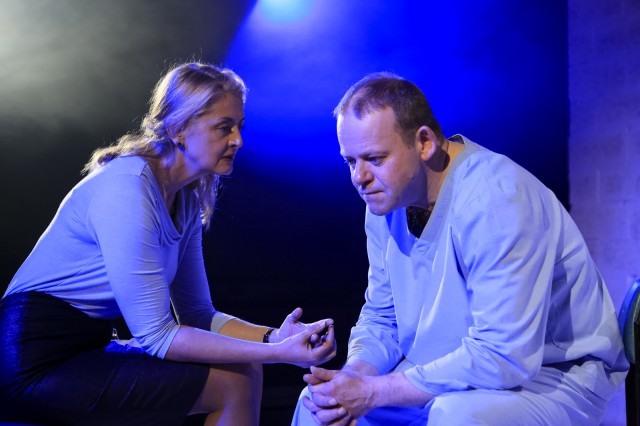
A criminal lawyer with a cool head and a passion for logic, David wakes up to find himself confined to a small, sparsely furnished room, unable to remember what happened the day before. With the help of his doctor, David begins to coax memories out of the darkness, before the details of a terrible secret emerge.

Razor sharp and tourniquet tight, The House on the Lake is a psychological thriller so crafty it’s criminal. Mired deep in layers of deception, it’s a puzzle of a play certain to engage the intellect and assault the nervous system.

The House on the Lake is a twisting labyrinth of playwright Aidan Fennessy’s devising. Director Kim Hardwick leads the way through.

Commissioned by Black Swan State Theatre Company and developed with the assistance of Playwriting Australia.

I agree that this psychological thriller is quite an assault on the nervous system.
It deals with the problem of what to do when you are being lied to, and how difficult it can be to find out the truth.
Also what your reaction might be if you feel you are very seriously being attacked. How do you survive? Is it possible to survive?

grif0006_main_houseonthelake_webtiles_hero590x320_fa01

GRIFFIN_TheHouseOnTheLake_BP_3180-640x426

Pictures courtesy of Griffin Theatre

Our Fundamental Freedoms

THE GUARDIAN PUBLISHED THE FOLLOWING ARTICLE ON 6TH OF JUNE 2015:

http://www.theguardian.com/australia-news/2015/jun/06/gillian-triggs-slams-scores-of-laws-threatening-fundamental-freedoms

Gillian Triggs slams ‘scores of laws’ threatening fundamental freedoms

Human rights commissioner delivers forceful warning over counter-terrorism legislation and attacks on rule of law by parliaments across Australia

Gillian Triggs: ‘Australian parliaments have passed scores of laws that infringe our democratic freedoms of speech, association and movement, the right to a fair trial and the prohibition on arbitrary detention.’

Last modified on Friday 5 June 2015 10.03

Australian parliaments have passed “scores of laws” that threaten fundamental rights and freedoms, Professor Gillian Triggs has said, pointedly warning MPs to uphold the rule of law as they prepare to debate extraordinary ministerial powers to revoke citizenship.

In a forceful speech, the president of the Australian Human Rights Commission argued parliaments had failed to protect democratic rights and many politicians were “breathtakingly inconsistent” in supporting the rule of law.

And she warned that counter-terrorism laws introduced with “unseemly haste” were likely to have a chilling effect on free speech and privacy.

Triggs’s intervention comes amid intense debate about executive overreach as the government prepares laws to give the immigration minister the power to strip dual nationals of their Australian citizenship if they are suspected of involvement in terrorism.

The speech is likely to inflame Triggs’s already strained relationship with the Abbott government, which has previously said it had lost confidence in the Human Rights Commission chief over her handling of an inquiry into children in immigration detention.

Triggs referred to the 800th anniversary of Magna Carta – which she said had “symbolic power” – as she raised concerns that the supremacy of the law over the executive government was “under threat in Australia’s contemporary democracy”.

“Over the last 15 years or so, the major political parties have agreed with each other to pass laws that threaten some of the most fundamental rights and freedoms that we have inherited from our common law tradition,” she told an audience at the Human Rights Law Centre in Melbourne on Friday evening.

These laws undermine democracy, especially in granting powers to the executive that aren’t subject to judicial scrutiny
“For, over the last decade, particularly since the attack in 2001 on the twin towers in America, Australian parliaments have passed scores of laws that infringe our democratic freedoms of speech, association and movement, the right to a fair trial and the prohibition on arbitrary detention.

“These new laws undermine a healthy, robust democracy, especially if they grant discretionary powers to the executive government that are not subject to judicial scrutiny.”

Triggs said the expansion of ministerial powers represented a “growing threat to democracy” and she cited numerous examples of executive overreach including:

Powers to detain indefinitely various classes of individuals, including refugees and asylum seekers, those with infectious diseases, those subject to mandatory admission to drug and alcohol rehabilitation facilities and the mentally ill;
The holding of four Indigenous men with intellectual and cognitive disabilities for years in a maximum security prison in the Northern Territory even though “each complainant had been found unfit to stand trial or found not guilty by reason of insanity”;
The indefinite detention of asylum seekers and refugees including children because of adverse security assessments “without meaningful access to legal advice or judicial review”;
The reduction of freedom of association from Queensland’s “anti-bikie” laws;
Constraints on judicial power to assess individual circumstances due to “a spate of mandatory sentencing laws”.
Triggs also spoke at length about the significant expansion of counter-terrorism powers in Australia on the grounds of community safety, arguing the strength of the rule of law was “more truly tested when security is threatened than in times of peace”.

“To the extent that Australia is threatened by terrorism, the need to protect our traditional liberties and freedoms assumes an even greater urgency,” she said.

“Many laws introduced with unseemly haste before Christmas in the name of national security go well beyond what might be deemed to necessary, creating a chilling effect on freedom of speech and the press and breaching the right to privacy.”

A detention centre on Nauru. Triggs also used the speech to criticise the indefinite detention of asylum seekers and refugees because of adverse security assessments from Asio, without any course of meaningful appeal.
Referring to the data retention laws passed with bipartisan support in March, Triggs said it was curious that a “journalist information warrant” was required to access the call logs of a reporter but such a warrant was not needed for agencies to look at other citizens’ metadata.

“As the metadata will be collected in respect of most of the 23 million Australians, and those involved in terrorism or paedophilia are very few, it might be said that the act employs a sledgehammer to crack a nut,” she said.

Triggs also raised concerns that accused persons would face an evidentiary burden to defend themselves against a 10-year prison sentence for entering “declared areas” listed by the foreign affairs minister under the Foreign Fighters Act.

She said the same act introduced a new offence of advocating terrorism, “an imprecise crime whose scope may cover, for example, opposing the Assad regime in Syria or supporting Palestinian efforts to gain statehood”.

Other national security laws passed last year created an offence punishable by up to 10 years in jail for disclosing information about a “special intelligence operation”, which was likely to “have a chilling effect on legitimate public debate about security operations”, Triggs said.

“The overreach of executive power is clear in the yet-to-be defined proposal that those accused of being jihadists fighting against Australian interests will be stripped of their citizenship if they are potentially dual nationals,” she said.

“This proposal strikes at the heart of Australia as a largely migrant nation. Not only may this idea violate Australia’s international obligation not to render a person stateless, but also the decision may be at the discretion of a minister, without recourse to judicial processes.

“This proposal is not new. It follows a bill introduced last year to give the minister discretion to revoke citizenship for fraud or misrepresentation, or where the minister is ‘satisfied’ that a person is not of good character, all without trial or conviction. The debate, it seems, is between the subjective suspicions of a minister, versus an evidence-based determination by a judge according to established rule of law.”

Gillian Triggs accused of ‘slur’ by linking Bali Nine deaths to asylum seeker policy

The Coalition has faced criticism from legal experts over its citizenship proposals, ahead of the introduction of a bill during the next sitting of parliament that would allow the immigration minister, Peter Dutton, to target dual nationals.

The government deferred a decision on a related proposal to allow the minister to also revoke the citizenship of sole nationals who might be able to apply for citizenship elsewhere, following a cabinet backlash.

The prime minister, Tony Abbott, said the government subscribed to the “very clear principle” that “anyone who raises a gun or a knife to an Australian because of who we are has utterly forfeited any right to be considered one of us”.

But the criteria and procedure for such ministerial determinations remains unclear because the legislation is yet to be released.

Dutton suggested on Friday that affected persons could apply for a judicial review on limited grounds.

Asked whether the review would apply only to the process rather than the substance of the claims against the person, Dutton said: “It relates to that part of the decision, you’re right, and the government’s not going to have the court second-guessing ministerial decisions.”

Before she delivered her speech on Friday about the need for parliaments to “meet their obligations as a check on executive government”, Triggs was strongly criticised by Dutton for earlier comments about “the consequences” of turning asylum-seeker boats back towards Indonesia.

She was reported by the Australian newspaper to have said: “Is it any wonder that Indonesia will not engage with us on other issues that we care about, like the death penalty?”

Triggs’s office said she was reflecting on the death penalty in the region broadly, rather than specific cases, but Dutton said it was an “outrageous slur” to link the death of two of the Bali Nine drug smugglers to Australia’s asylum seeker policy.