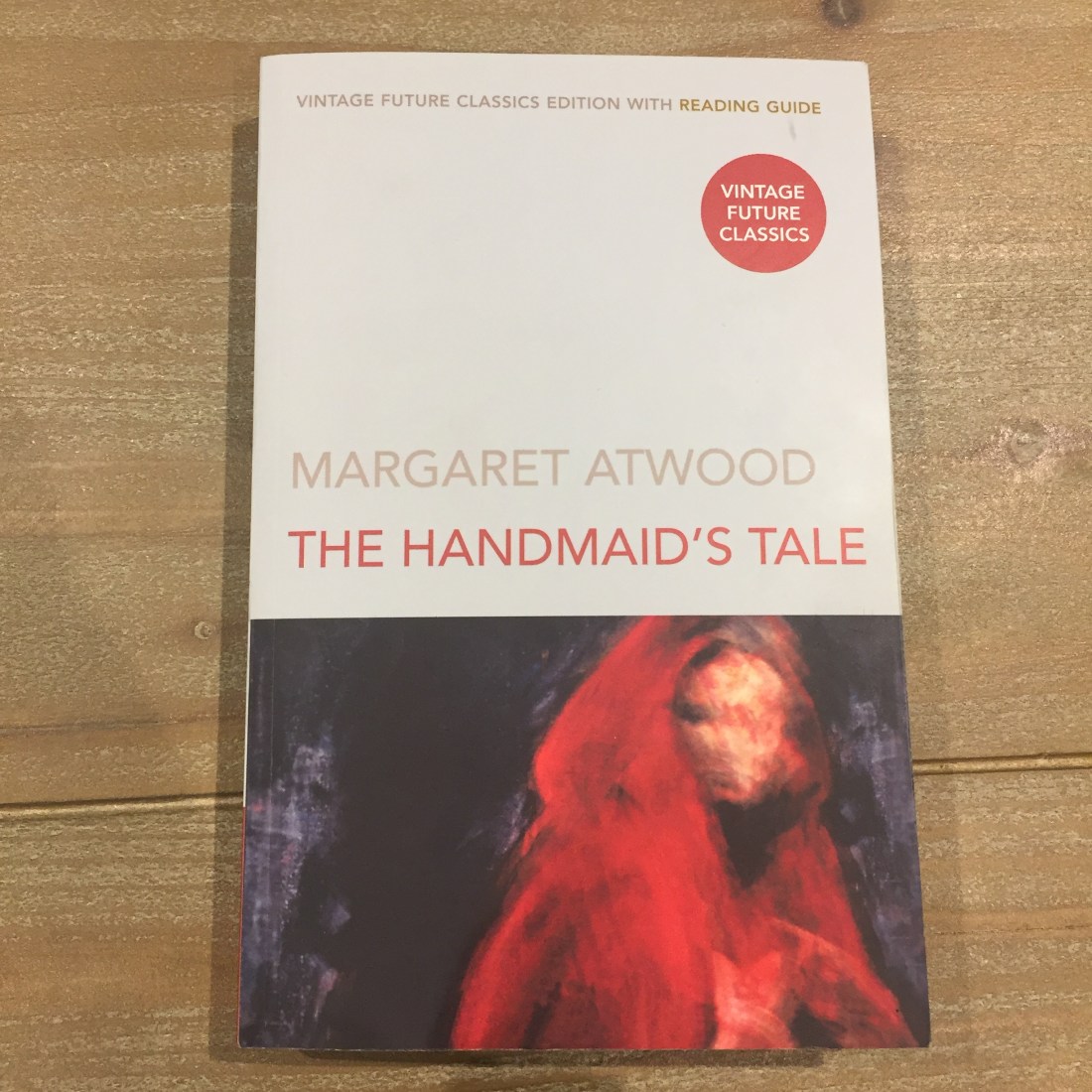
I have seen the whole TV series, but I have not read the book yet. This review was interesting for me. Is it possible that the book gives us a less clearer picture about the Handmaid’s Society than the TV series. I should really read the book and find out.
Month: July 2017
The Handmaid’s Tale is the most horrific thing I have ever seen
I very much like this review. It says: “The Handmaid’s Tale has come at the right time to entertain and divert us. But it also does what great storytelling always has: It invites us to step back from our entrenched ideas—whatever they are—and think about where they fit into a broader view of history. Could the ultra-authoritarian world of The Handmaid’s Tale ever become our reality? It’s up to us to decide.” I would say there is a lot to think about!
Going non-traditional
This is about the movie “My Happy Family”.
NEW DIRECTORS/NEW FILMS 2017 – NANA EKVTIMISHVILI, SIMON GROSS: MY HAPPY FAMILY/CHEMI BEDNIERI OJAKNI (2017)
Peter and I watch quite regularly ‘Der Tag’, that is a program on the Deutsche Welle (DW). Today film director Simon Groß was interviewed on that program. Simon pointed out that he made the above movie together with his wife and that to have a close working relationship with your wife may cause some problems.
In the movie,. the middle aged school-teacher, who lives with her husband in an extended very large family, decides she has to move out and live on her own because ‘she cannot breathe”.
This movie is set in Georgia, ” where the language has a special lilt, and where any festive gathering means people will sing, in a rich, resonant chorus. . . .”
Here is a bit more of what it says in one of the reviews to the movie:
“Manana and Soso live with her family, which she’s sick of (and we can see why). They consist of her querulous and bossy mother (Berta Khapava), her brother, her grandfather, her husband, son Lasha (Giorgi Tabidze) and daughter Nino (Tsisia Qumsashvili) and daughter’s husband, augmented on occasion by aunts, uncles and other relatives, as needed. The big squabbles concern Manana’s decision to move into a cheap apartment on her own, leaving her husband and all the rest, but the squabbles themselves show us why Manana would want to take this liberating step. It’s not that she can’t get along with her husband. She can’t breathe.
Her departure is against the wishes of everyone over 25. But it’s a foregone conclusion we’re aware of from the first scene, when she views a sunny if shabby flat in an unfashionable but quiet neighborhood. The price is right, and the decision is made. The objections confirm its validity. But will Manana stay with this decision? Will the tomatoes she plants on the balcony bear fruit? Stay tuned – though the film ends with a question mark, as it should. The conflicts here depicted between traditional and nuclear families, couples and independence, aren’t easily resolved. . . . .”
http://www.chrisknipp.com/writing/viewtopic.php?f=1&t=3592
I am intrigued by the questions that come up because of the movie’s ending. Who knows the answers to all these questions:
Is it better to live in a traditional or in a nuclear family?
Is it better if couples live together or is there some benefit to a couple’s relationship if they each have their own place?
What makes for happy families?
http://www.imdb.com/name/nm0344144/

LOVE OF THE STRANGER, LOVE OF THE UNBORN, LOVE OF THE TRUTH
Is humanity in danger of destroying itself?
Can love save humanity?
Is it possible to learn to love more?
HOW TO MAKE A COUNTRY RICH
Published on Oct 12, 2015
If you were setting out to make a country rich, what kind of mindsets and ideas would be most likely to achieve your goals? We invent a country, Richland, and try to imagine the psychology of its inhabitants. If you like our films, take a look at our shop (we ship worldwide): https://goo.gl/LSHb5a
FURTHER READING
“Most of what we call ‘politics’ really revolves around the question of what you need to do to make a country richer.
Rather than ask this of any specific country, let’s imagine designing a country from scratch. How could you make it as rich as possible?
Suppose the brief was to design ‘Richland’: an ideal wealth-creating society. What would be the chief characteristics you’d need to build into this society? What would a nation look like that was ideally suited to success in modern capitalism?…”
You can read more on this and other topics on our blog TheBookofLife.org at this link: https://goo.gl/StpBHa
MORE SCHOOL OF LIFE
Our website has classes, articles and products to help you think and grow: https://goo.gl/oeof2J
Watch more films on CAPITALISM in our playlist:
http://bit.ly/TSOLcapitalism
Do you speak a different language to English? Did you know you can submit Subtitles on all of our videos on YouTube? For instructions how to do this click here: https://goo.gl/RK1kdE
SOCIAL MEDIA
Feel free to follow us at the links below:
Facebook: https://www.facebook.com/theschoolofl…
Twitter: https://twitter.com/TheSchoolOfLife
Instagram: https://www.instagram.com/theschoolof…
CREDITS
Produced in collaboration with:
Vale Productions
http://www.valeproductions.co.uk
Women’s Ceremony Art – Central Art in Australia
Awelve is the Anmatyerre word for women’s ceremonies. Awelye also refers specifically to the designs applied to a women’s body as part of a ceremony.
The Awelye is performed by Aboriginal women to recall their ancestors, to show respect for their country and to demonstrate their responsibility for the wellbeing of their community.
Since it reflects women’s role as the nurturer the Awelye makes connections with the fertility of the land and a celebration of the aboriginal food it provides. It is women’s business and is never done in the presence of men.
The Awelye ceremony begins with the women painting each others’ bodies in designs relating to a particular women’s Dreaming and in accordance with their skin name and tribal hierarchy. The Awelye designs represent a range of Dreamings including animals and plants, healing and law.
The designs are painted on the chest and shoulders using powders ground from
ochre, charcoal and ash. It is applied with a flat stick with padding or withfingers in raw linear and curved lines. This is a meditative and sensualexperience.
The act of decorating the body transforms the individual and changes their identity. During the painting which can take up to three hours, the women chant their Dreaming. The final part of the ceremony is when the women dance and chant.
Central Art has a wide collection of Awelye paintings from the women in Utopia including the prominent artist Ada Bird Petyarre. She was one of the first to paint the Awelye and her bold strong paintings remain iconic Awelye art.
Minnie Pwerle’s work combines the traditional Awelye and the bush melon seeds conveying her connection with her country and her Dreaming. The linear pattern represents the designs painted on the top half of a women’s body.
.. . . . . .”
http://www.aboriginalartstore.com.au/about-us/
“Central Art is a leading gallery specialising in art from the very heart of Australia – contemporary works by Aboriginal artists of the Central and Western Deserts. It uniquely combines a large private showroom in Alice Springs with a richly informative on-line gallery, so that viewers anywhere can enjoy this exceptional art and learn more about the Aboriginal artists, their traditional lands and culture. . . . “
A film by John Pilger: UTOPIA
Doesitevenmatter is sharing what’s on her mind:
The blogger doesitevematter wrote a blog about a painting on the 5th of this month. The heading is:
sPEEking of paintings…
https://doesitevenmatter3.wordpress.com/2017/07/05/speeking-of-paintings-d/
This is what is said about the painting in the above blog.
“The words “der löwe”, on the painting, are German for “the lion”. Also, there was a famous German prince from the 1100’s named Heinrich der Löwe (Henry the Lion).”
“This blog post is about Tank. Tank is not a painter. He’s an art critic.”
Have a look, what a beautiful art critic this Tank is!
ZOMBIES TO PROTEST
FAR LEFT PROTESTERS ARE DRESSING UP AS ZOMBIES TO PROTEST GOVERNMENTS AND BANKS AT THE G20 SUMMIT
Back to my Diary
We had arrived in Benalla two weeks ago on Wednesday in beautiful late afternoon sunshine. I was very happy that we had found our son’s new place straight away and that we had made good time on our a bit more than 600 km trip. We had left Dapto early in the morning as soon as it got a bit light and we made it to Benalla before it got dark. In Benalla the air was fresh and cool, but the sun still warmed it a bit. Martin, our son, said that during the night the temperature could drop to freezing point. First thing in the morning he would look outside and check whether the birdbath had been frozen over again. In Martin’s house it was warm and cozy. A cup of tea was very welcome. Later on we had an excellent home cooked dinner.
Martin had bought a two bedroom house. We were given the spare bedroom. It was similar to what it had been like when we used to visit him in Essendon in Melbourne, where he had rented a two bedroom place. Before Martin left the place in Melbourne, he had given away most of his furniture for he was in the lucky position to take over the Benalla house with all the furniture and other things in it. This is furniture, I might say, is absolutely great to have and very tasteful. On top of it it saved Martin quite a bit of moving. Still, he had to get rid of his old furniture in Melbourne, which was not all that easy, I guess.
The stuff that he had to move to the new house some 200 km away he packed into a hired van. He had to return the van the same day after having travelled the 200 km to Benalla and back. Martin is 57 and not used to lifting heavy things. He’s only used to office work and a lot of walking and he even did quite a bit of running in the past. In Melbourne he did not need a car. He could walk everywhere or use public transport. For travelling he often hired a car.
Now, in Benalla, he’s already used to walking the few minutes into town. Still, he says he might perhaps buy a car sometime soon. But he’s not sure yet. At the moment he has problems with sitting. With all that sitting at the office his back was vulnerable. Now with having had to lift a lot of stuff to clear his place in Melbourne just a few weeks ago, his back became very painful, still is very painful when he is sitting down or lying down. He can never sit for very long. He does most things standing up. Walking, he finds is very easy for him. So he feels fine walking. But lying down is difficult and he has trouble sleeping through the night.
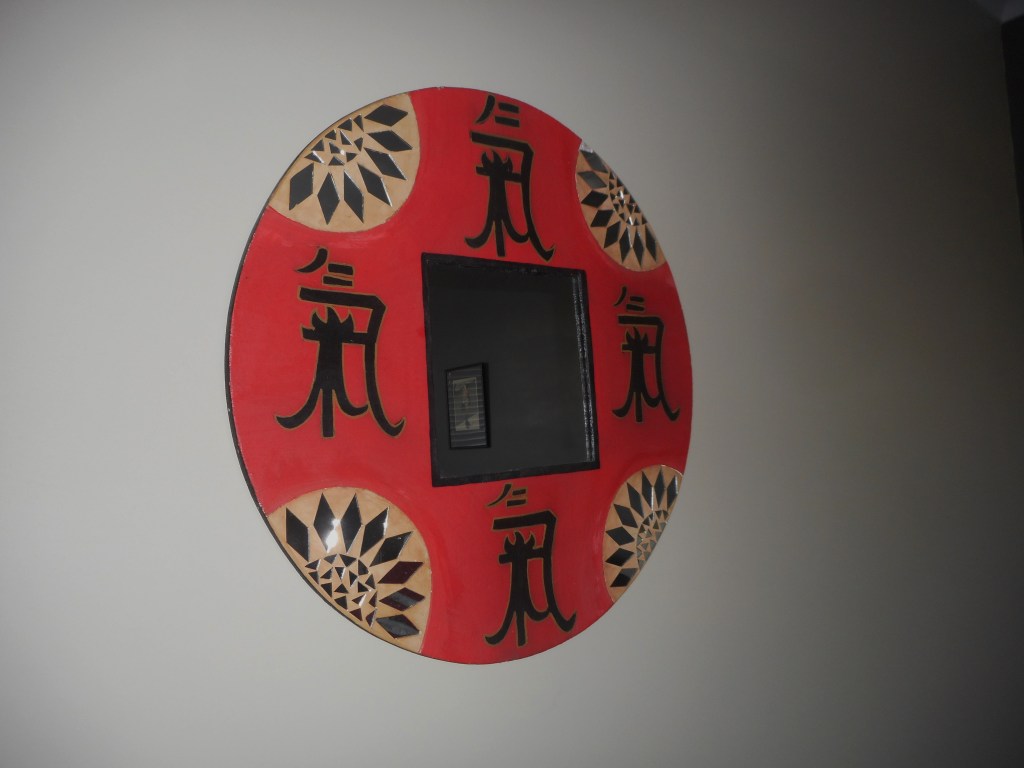
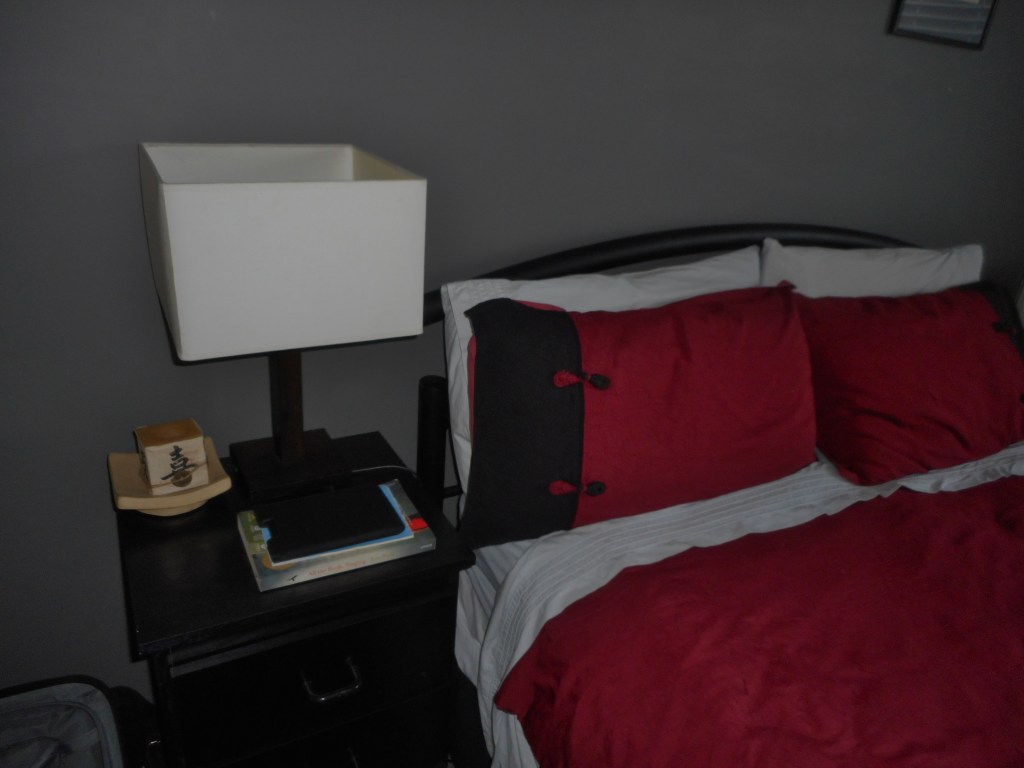
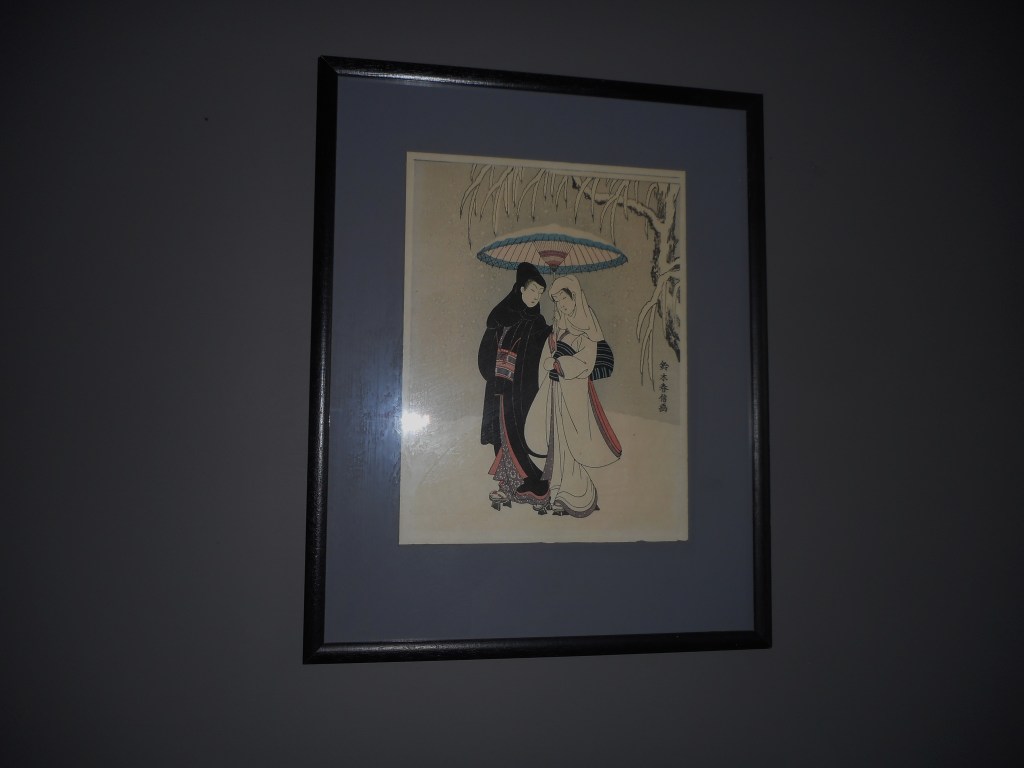
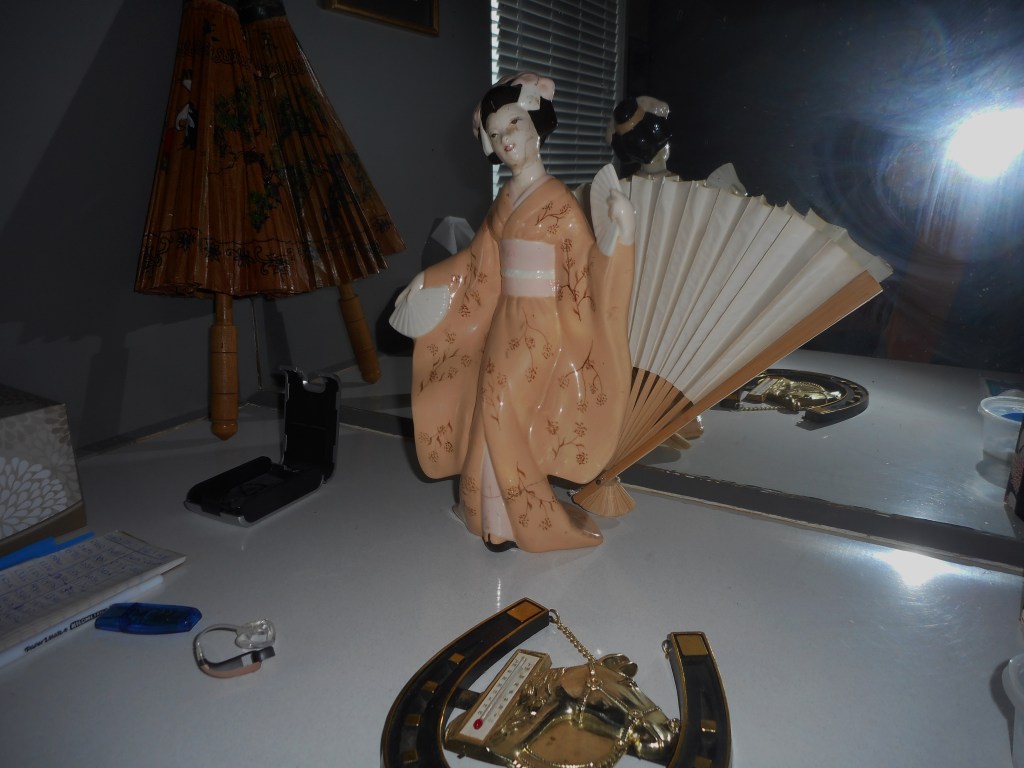
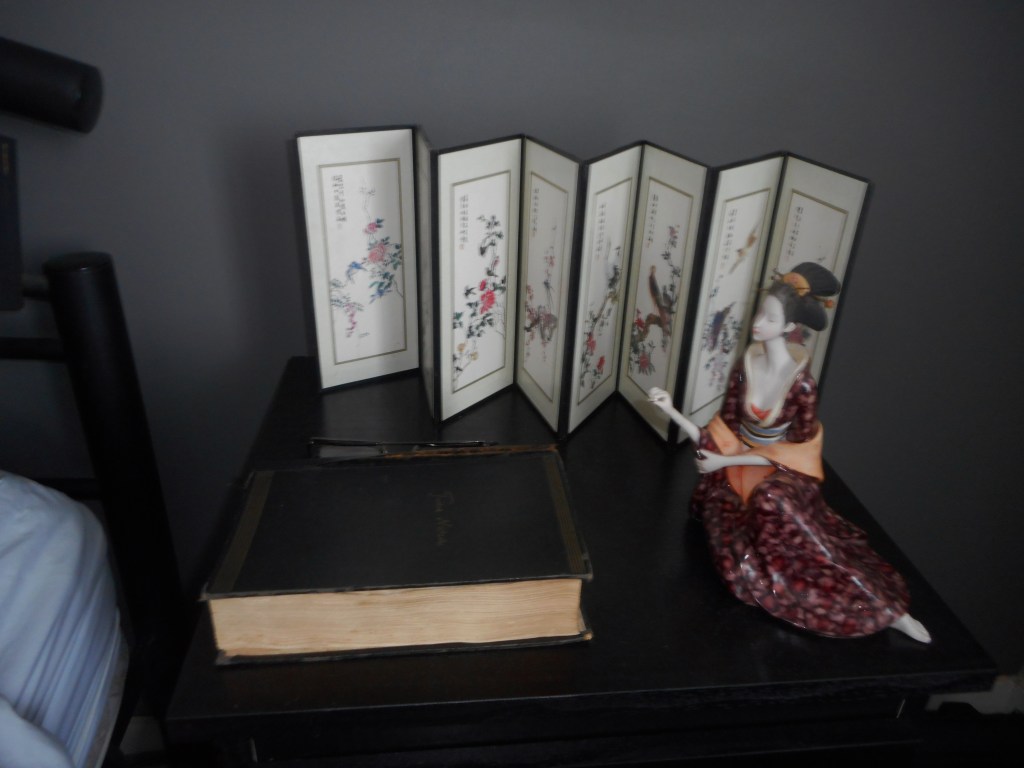
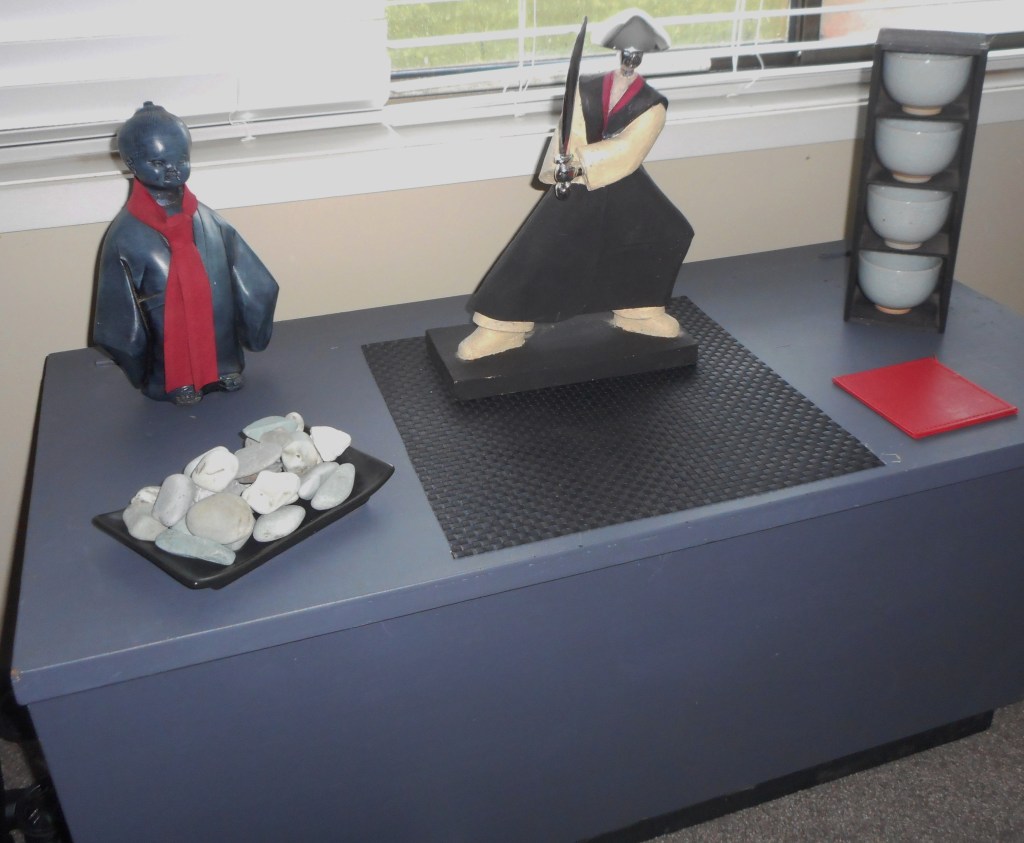
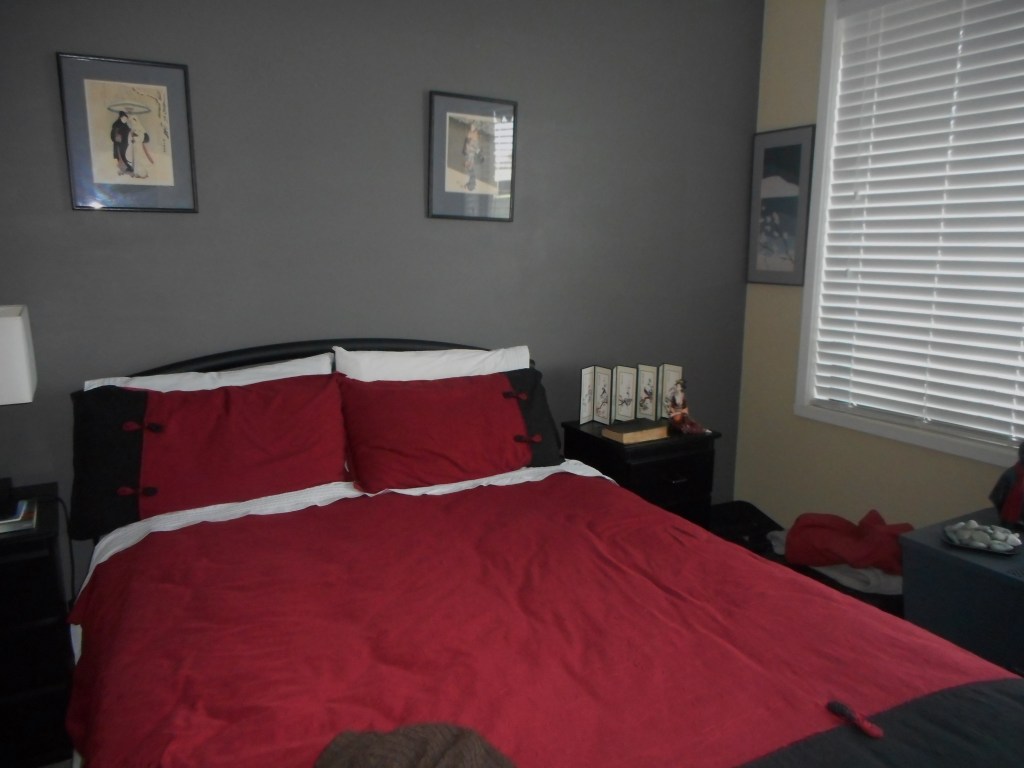
Peter and I were lovingly looked after by our son as always. For the four nights in Benalla we stayed in Martin’s spare bedroom, which is the Japanese room. I show here some pictures of it:
In that bedroom there was also a large built-in wardrobe. And a heater was set up for us. We never felt too cold in Benalla.