DW: Professor Kemfert, you’ve just published a new book. The title is “The Fossil Empire Strikes Back.” What lies behind the title?
Claudia Kemfert: We see that the global energy transformation towards more renewable energy was quite successful in the last years. The cost of renewable energy has declined and after the Paris agreement to reduce global greenhouse gas emissions in December 2015 and the ratification of the climate protocol, we were on a good track. But then we have been completely moved back by the fossil energy sector. They tried to give around some kind of fake news and myths around all the renewable energy, about potential blackouts, cost increases and so forth. We see that especially in the USA. And here with the Trump administration we see a lot of “roll back”, to provide more help for the fossil industry and this is why we have to defend the global energy transformation.

Kemfert says fake news is discrediting the energy transition
What kind of fake news is doing the rounds with regard to the energy transformation?
There is a lot of fake news around. For example, they always claim that renewable energy is responsible for some kind of blackouts. We never saw blackouts, especially not in Germany, on the contrary, we have the safest electricity system in the world. Or it is claimed that renewable energy is extremely costly and will also bring economic disadvantages, although the opposite is true. In my new book I show that these are all myths and fake news, they are not true.
Is it possible to eliminate fake news or to tell what’s true and what’s fake in an age where everybody can be his own journalist, in a way, using social media?
It’s very important to identify fake news. And this is why scientists are so important. To me as a scientist here, I see that there is a dangerous development ongoing. And this is why we need also scientists to say what is going on, what is really fact and what is not fact. But it is also in the responsibility of everybody not to believe every myth, to get transparent information and to question sources.
What has been your personal experience as a scientist, a writer and a public figure? As it happens to many scientists in the world, scientific facts are neglected and doubted. The opponens claim that these kinds of scientific facts are not true. They are also fake news. There is a lot of skepticism and science ay, “it’s not the
hostility. The main aim is to create doubts, spread around myths and fake news.
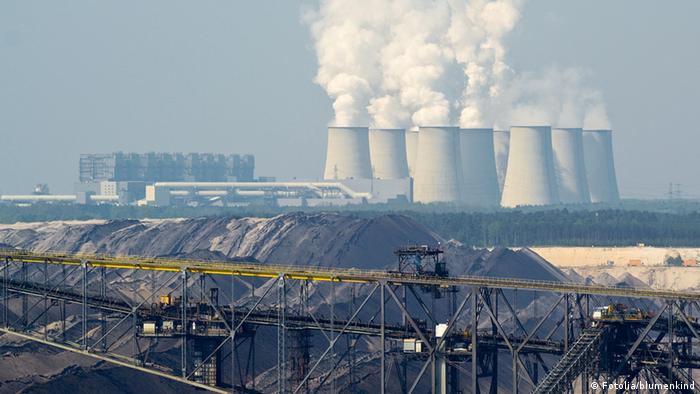
Germany is in danger of losing its leading position on energy transition
When Donald Trump first said that he was going to bring back coal, a lot of people said that will just never happen, the time has passed. Are fossil fuels really making a comeback or is this just a kind of fake news, sort of “alternative facts” created by the fossil fuel giants?
Well there is a danger around this because the politicians decided already towards the fossil technology. For example, in the US, they tried to get back to the past energy policy and support especially coal companies. Because they are not economically efficient, they have to provide subsidies in order to make them economically competitive.We have the same discussions in Germany as well, although there are not many jobs in the coal industry left. Here we see that the fossil industry is quite successful in bringing this fake news into the policy campaigns, and in the US we will see this of course as well. And this is why it’s so dangerous, what’s now going on, because we are losing time to bring the greenhouse gases down and help the planet to survive.
Germany has a reputation internationally for being a leader. The term Energiewende has even made its way into English for the energy transition. Do you think Germany is in danger of losing that leading position?
Indeed. Germany is in danger of losing this position. We had a good start, as we had increased the share of renewable energy from almost zero to approximately 30 percent of electricity production right now.The costs of renewable energy have declined substantially. But then a lot of decisions were made to stop this development. Not only in the electricity sector – to have more time for the coal industry for example – and coal still has a high share of 45 percent of electricity production. And this will not go down if the politicians will not do anything about it. But also we need to see that the energy transition is much more than electricity. In the heating sector we have to do a lot for energy efficiency improvement and increase the share of renewable energy, and also in the transportation sector. Here we are not a leader at all.

Pro-science and environment activists have been protesting in the US against the Trump administration’s hostility to science
You suggest in your book that the traditional energy industry’s struggle to hold onto power and profit and hold up the green energy transition could endanger peace and security. Why is that?
The energy transition is the most important peace and energy security project on earth, because the new energy transition or the movement towards renewable energy would bring more democratic energy transformation. It’s more participatory, and it’s also climate neutral. And all this brings a lot of positive impact also to democracy, to participation, and also to the environment and economy. And this is why it’s such an important project. For example, if we look at the renewable energy sector, the cost has gone down. Now for example solar energy is also feasible in regions in developing countries, where it was not economically feasible in the past. They could also increase their personal well-being and the economic impact was really positive. And this is why it’s so dangerous that the fossil empire lashes back.
There is a whole protest movement growing with scientists marching, climate activists marching, concerned citizens taking to the streets. How important is that? What can it actually achieve?
It’s really important, this kind of protest, because now it’s time to act and we have to show that this development is really dangerous, not only because of the scientifically-unfriendly atmosphere which is being created in the US, in Turkey, in many areas of the world. It’s very important to have a free science globally. And free science is an active part of democracy. We all have to show that we are fighting for this.
Claudia Kemfert is an economics expert on energy research and environmental protection and is a professor of energy and sustainability at the Hertie School of Governance in Berlin.
The book: Das fossile Imperium schlägt zurück is published by Murmann.
The interview was conducted by Irene Quaile-Kersken.







 AuntyUta
catterelAugust 10, 2015 at 7:53 pm Edit #
Fascinating! I’ve always wanted to visit Augsburg properly (I changed trains a few times there but never got beyond the station) – maybe one day I’ll make it.
berlioz1935August 10, 2015 at 8:13 pm Edit #
It is a great place. The main street has buildings reflecting the wealth of the former trading post.
auntyutaAugust 11, 2015 at 8:03 am Edit #
We have some lovely memories of the place, Cat, spending the day with Uncle and Flora. Gee, this goes back to 1977!
berlioz1935August 10, 2015 at 8:26 pm Edit #
I remember the day well. Flora, a Berliner speaking with the out of place accent, was a retired GP who did some work for the Army checking up new recruits. She was a no-nonsense person who liked to be in charge. In the restaurant, she was the queen.
She had ordered a huge platter laden with cheeses and cold cuts. We could not eat all and she ordered all the left-overs being packed up to take home.
The building in the main street seemed to be covered in gold and great churches could be seen. The Fuggers of the 16th century financed half of the known world.
auntyutaAugust 11, 2015 at 8:06 am Edit #
It is quite impressive how rich the Fuggers were. Their housing project is a good example of what can be done for needy people.
auntyutaAugust 11, 2015 at 8:21 am Edit #
Yes, Flora was quite a character. Both she and Uncle were marvellous hosts to us. They walked with us showing us very interesting places around the city centre. After lunch back it was back to their luxurious apartment for coffee and yummy cakes.
Uncle was overjoyed when he could hand us a minuscule grandfather clock to take home as a gift. We loved this little clock because it was given with so much joy and reminded us of that beautiful day we had spent in Augsburg. Alas, sadly in Australia it soon broke to pieces! 🙂
gerard oostermanAugust 11, 2015 at 11:27 am Edit #
Yes, the idea of ‘owning’ own place is fairly new. We had no idea of that concept before we came to Australia. We always rented in Holland and it was as secure as owning.
Social housing has a lot going for it. Just look at what the Fuggerei achieved and it is still going.
Something like that in Australia would now be a shopping mall or a McDonalds.
auntyutaAugust 11, 2015 at 3:31 pm Edit #
This uncle Edmund and his wife lived in a patrician. very spacious apartment. And I am sure they did not own it but paid rent, which they presumably could very well afford. I assume each one would have had a very good pension. As Peter mentioned, Flora substituted her income by doing some casual medical work.
Edmund as well as Flora were widowed when they decided to get married. Edmund seemed to be quite content to have resolute Flora for company in his old age.
stuartbramhallAugust 12, 2015 at 9:32 am Edit #
Very interesting background. Excellent example of German determination to retain the commons. As I understand, resistance to enclosure was strongest in Germany. It was only under the Third Reich that customary rights were abolished in many regions. It’s good to see this institution survived the Nazi regime.
auntyutaAugust 12, 2015 at 4:02 pm Edit #
Yes, it is quite amazing, Stuart, that the institution survived over such a long time. However it says In the Wikipedia that the Fuggerei was heavily damaged by the bombings of Augsburg during World War II, but has been rebuilt in its original style. I am glad that it was rebuilt in its original style! 🙂