Paying the price for India’s appetite for coal

http://www.dw.com/en/paying-the-price-for-indias-appetite-for-coal/av-41362693

DW NEWS

“India is ravenous for energy and much of that comes from coal — the dirtiest of fossil fuels. India plans to double its coal output by 2020. But coal production is already having a disastrous impact on the environment and on people.”

Going to the above link there is a follow up video to the video that was to be found here:

https://auntyuta.com/2017/11/13/the-hellish-coal-fields-of-jharia/


My Diary nearly halfway through November 2017

.https://auntyuta.com/2017/11/14/burning-for-over-100-years-jharkhands-underground-fire-affects-5-lakh-500000-people/

I just published the above post and talked to Peter about it. He says I should say in my own words what I feel about it. It is good advice for I have some rather passionate feelings about it,especially since Peter pointed out to me how the ADANI company is presumably involved in all these dealings. How so?

As far as I know, quite a significant number of Indian power stations are still operated with coal. When I looked under “coal” in THE HINDU, I noticed this article from November 01, 2017:

http://www.thehindu.com/business/Industry/coal-stocks-start-building-up-at-power-plants-says-secretary/article19962323.ece

I understand that the Indian Government wants to see to it that a sufficient power supply is guaranteed.

I have not found out yet, whether at present Australia does export coal to India. But I found in THE HINDU a recent article that Australia wants to export ADANI coal to China:

http://www.thehindu.com/business/Industry/australia-notified-china-of-adani-coal-mine-approvals-in-letter/article19924918.ece

I found the following article from June 2016:

http://www.thehindu.com/business/Industry/Adani-may-abandon-Australian-coal-mine-project/article14386236.ece?gclid=CjwKCAiAoqXQBRA8EiwAIIOWspXkDxMbToHeWP8UR58tDj8l57SCxod9TMG3TmZwB637N5I_UjGcnhoCKpEQAvD_BwE

“Adani may abandon Australian coal mine project
PTI MELBOURNE, JUNE 05, 2016 12:56 IST
UPDATED: SEPTEMBER 16, 2016 10:50 IST
Adani.jpg
In this June 23, 2015 photo, Adani Group chairman Gautam Adani speaks with Australia’s Trade and Investment Minister Andrew Robb at the Australia India CEO Forum in New Delhi.
Gautam Adani tells “The Australian” that the project was yet to receive the green light after six years of environmental assessments and court battles.

Bogged by a six-year delay, Adani may pull out from the proposed $21.5 billion rail and mine project in Australia amid a series of legal challenges from environmental groups against the Indian energy giant’s plans to build one of the world’s largest coal mines.

Stating that he was “disappointed”, the company’s founder and chairman Gautam Adani told The Australian newspaper that the “pit to plug” project was yet to receive the green light after six years of environmental assessments and court battles.

“You can’t continue just holding. I have been really disappointed that things have got too delayed,” Mr. Adani said.

Mr. Adani said he hoped the court challenges to Australia’s largest proposed coalmine would be finalised in early 2017.

However, with one court case yet to be heard in the Federal Court, and at least two groups threatening High Court action, Mr. Adani warned he could not wait indefinitely.

Mr. Adani said that he was already scouting alternatives to feed his power stations in India.

Confirming he had met Australian Prime Minister Malcom Turnbull in December 2015 to seek to deliver greater certainty on such projects, Mr. Adani said, “We were suggesting how to bring in the certainty of the timing.

“We were asking how we get certainty of the time schedules… that is the most important for us in committing all of our resources.”

“It’s just covering up the real fact that what is damaging the reef is an increase in the temperature of the seas through climate change,” he said.

Another new Federal Court challenge to the mining lease for Carmichael, issued by the Palaszczuk Labour government, will be heard this year.

Mr. Adani said he originally believed the approvals process would take two to three years and that he has already spent $3 billion buying the tenements and the Abbot Point port lease.

The company is still exploring the financing issue of the project.

Mr. Adani said if there were no more unexpected delays, he had confidence that the project would get financing and “still be competitive” against other alternative sources of coal in India and Indonesia.

Adani Australia chief executive Jeyakumar Janakaraj said the co-ordinated campaign by anti-coal activists to block the mine had damaged Australia’s international reputation.

He said the business community in India had expressed concern about future investment in Australia. “I think it has already turned off a lot of switches. I am not saying it is going to be permanent, but there has been damage.”

Mr. Turnbull’s office did not comment on Saturday about Mr. Adani’s call for greater certainty to the approvals process. But the government has argued that all commonwealth approvals are in place and there are no remaining federal obstacles to the project proceeding.

Adani’s coal mines plan in Australia has been hampered time and again. A federal court in August 2015 had revoked the original approval due to environmental concerns.

In October 2015, the project got a new lease of life after the Australian government gave its re-approval.

Australia’s Queensland State government in April 2016 gave Adani permission to mine coal reserves estimated at 11 billion tonnes and to build roads, workshops, power lines and pipelines associated with the mine.

Environmentalists are fighting the approvals, saying the project will jeopardise the State’s future and destroy national treasures like the Great Barrier Reef.


More In
BusinessIndustryIndia coal Australia
Related Articles
Three French banks refuse to fund Adani project in Australia
Australia approves $2 bn rail line for Adani project
Adani’s Australia coal mine project cleared
No public funding in Adani’s coal mine: Turnbull
Decks cleared for Adani’s coal project in Australia: Envoy
File picture shows Gautam Adani, Chairman and Founder, Adani Group with Australia’s Investment Minster Andrew Robb during the India-Australia CEOs Forum Meeting, in New Delhi recently. Photo: V. Sudershan
Australian court revokes environmental nod for Adani’s $ 16-bn coal mine project
Three French banks refuse to fund Adani project in Australia
Australia approves $2 bn rail line for Adani project
Adani’s Australia coal mine project cleared
No public funding in Adani’s coal mine: Turnbull
Decks cleared for Adani’s coal project in Australia: Envoy
File picture shows Gautam Adani, Chairman and Founder, Adani Group with Australia’s Investment Minster Andrew Robb during the India-Australia CEOs Forum Meeting, in New Delhi recently. Photo: V. Sudershan
Australian court revokes environmental nod for Adani’s $ 16-bn coal mine project

This article is closed for comments.
Please Email the Editor”


Burning for over 100 years, Jharkhand’s underground fire affects 5 lakh (500000) people

https://yourstory.com/2017/06/jharia-coal-fire/

Jharia coal field has been burning underground for over a hundred years, as residents living across 250 sqkm sit on a ticking time bomb. .  .  .”


Yesterday we saw in a program of the “Deutsche Welle” this story which I copied and published in my blog page:

https://auntyuta.com/2017/11/13/the-hellish-coal-fields-of-jharia/#comment-11962

The question is: Why are these fires not being extinguished?

India creates a record, allows Jharia coalmine fires to burn for a century

Jayanta Gupta| TNN | Feb 10, 2016, 12.18 PM IST

I found the following in the above article. I ask myself, why are governments so weak and are unable or unwilling to do what is necessary for the people and for the environment?

So here I copy the last part of the above article by Iavant Gupta:

“It was recognized by BCCL that some of the fires not only cause severe environmental threat through emission of steam, smoke and noxious gases but also pose a serious health hazard to inhabitants.

 “They bring forth irreplaceable damage to land and scarce water resources. And above all, it endangers surface structures and human lives with the potentiality to cause disaster. The existing fire scenario in Jharia Coalfield continue to be alarming and there is urgent need to address the problem in right perspective,” was admitted by BCCL in 2014, when it invited Expressions of Interest from companies across the world.
Only two companies participated in the process. One of them was from India and the other from Germany. On April 24, 2015, a meeting of the technical committee of BCCL was held in Dhanbad, Jharkhand. The participating companies were asked to clarify queries and give presentations regarding their experience and expertise in the presence of 39 experts from BCCL. The only participant was the company from Germany that has been quenching coal mine fires since 1880.
 “We have quenched coal mine fires in Germany and also in China. In India, we have tracked fires in the Nimcha and Samdih mines of West Bengal under Eastern Coalfields Ltd (ECL). With our expertise, these fires were extinguished. During the presentation, we made it clear that resources can be mined progressively even as the fires are extinguished. No relocation of the population will be required either. Our company would only be providing the technical support.

All other work would be carried out by Indians. It has been over nine months now but we have received no communication from BCCL. Finally, we wrote to the Prime Minister and were directed by his office to take the matter up with the coal ministry. On communicating with the coal ministry, we were asked to get in touch with Coal India Ltd and BCCL. This makes no sense. They were the ones who have remained silent after the 2014 meeting. We are running around in circles here. Now we are hearing convoluted statements that there is no technology in the world to deal with such fires. This is incorrect. The truth is that there seems to be a lack of will in tackling the fires, We could have been told earlier and would not have wasted our efforts here” said a member of the DMT Group of Germany that had participated in the EoI.”


The hellish coal fields of Jharia

http://www.dw.com/en/the-hellish-coal-fields-of-jharia/av-41337524

Savitri Mahto’s morning begins with her shift at the coal mine. There the 17-year-old toils away for hours every day in order to support her family. The toxic fumes are destroying Savitri’s health, but she cannot afford to see a doctor.

Jharia in the Indian state of Jharkhand is home to around 600,000 people. It’s in the middle of the country’s largest coal field. Jharia, named after the city and region of the same name, also has a devastating number of coal seam fires – locally and globally one of the biggest causes of environmental pollution. Coal fires pump enormous quantities of carbon dioxide into the air. Savitri Mahto toils away every day in this toxic atmosphere before going to school. DW reporter Sonia Phalnikar has the story. The Hellish Coal Fields of Jharia A Report by Sonia Phalnikar


Why Germans Can Say Things No One Else Can


German is a wonderfully inventive and bold language, full of gloriously long compound words for emotions and ideas that most languages struggle to allow us to express. If you like our films, take a look at our shop (we ship worldwide): https://goo.gl/wlIcjV Join our mailing list: http://bit.ly/2e0TQNJ Or visit us in person at our London HQ https://goo.gl/RBY7Y5 FURTHER READING “We’re hugely dependent on language to help us express what we really think and feel. But some languages are better than others at crisply naming important sensations. Germans have been geniuses at inventing long – or what get called ‘compound’ – words that elegantly put a finger on emotions that we all know, but that other languages require whole clumsy sentences or paragraphs to express…” You can read more on this and other topics on our blog TheBookofLife.org at this link: https://goo.gl/DKT90f

Container Missile System


Concern Agat, Russia. The Russian 3M-54 Klub missile system Variants: 3M-54E maquette 3M-54E1 maquette 3M-14E maquette 91RE1 maquette 91RTE2 maquette There are two major launching vehicles: the Klub-S, designed for launch from submarines, and the Klub-N, designed for launch from surface ships. These two launchers can be equipped by the following warhead and guidance combinations: 3M-54E – Anti-shipping variant, Basic length 8.22 m, with a 200 kg warhead. Range is 200 km. Sea-skimmer with supersonic terminal speed and flight altitude of 15 fee t (4.6 m) at final stage(2.9 mach). 3M-54E1 – Anti-shipping variant, Basic length 6.2 m, with a 400 kg warhead. Range is 300 km. Sea-skimmer with subsonic terminal speed(0.8 mach). Allegedly capable of disabling or even sinking an aircraft carrier. 3M-14E – Inertial guidance land attack variant. Basic length 6.2 m, with a 400 kg warhead. Range is 275 km. Subsonic terminal speed(0.8 mach). 91RE1 – Submarine-launched anti-submarine variant, with an anti-submarine torpedo. Basic length 8.0 m, with a range of 50 km. Supersonic speed. The torpedo has a warhead weight of 76 kg. Follows a ballistic path into the surface, speed is Mach 2.5. 91RE2 – Ballistically launched anti-submarine variant, with an anti-submarine torpedo. Basic length 6.5 m, with a range of 40 km Supersonic speed. The torpedo has a warhead weight of 76 kg. For surface ship use only. The lightest of all variants, with a launch weight of 1300 kg. Speed is Mach 2.

Uta’s Diary

DSCN3475
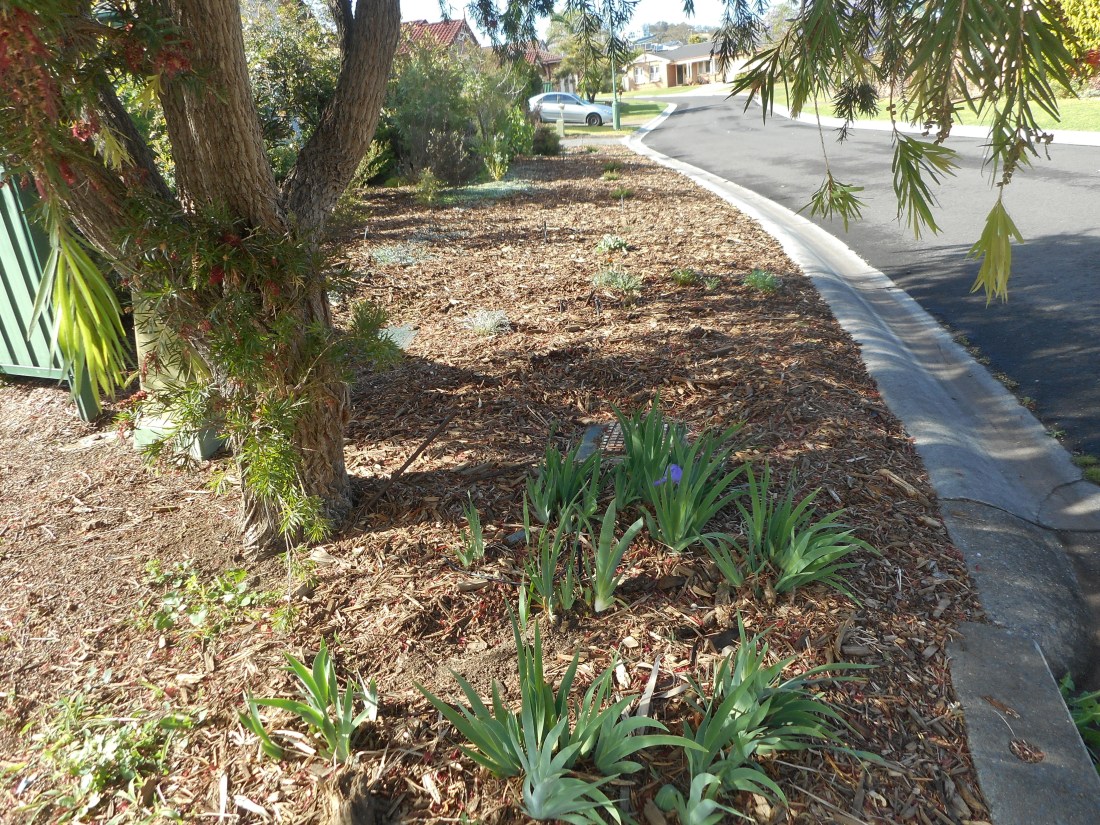
The alternative to having grass everywhere

Just returned from a little walk after having taken the above picture. I wanted to take another picture of a beautifully flowering jacaranda tree. But I took it from too far away and had to drastically crop the pic to make the tree more visible. Next time I’ll walk up closer to the tree to take another photo.

DSCN3476

Here now is a link to an interesting post about Sydney’s jacaranda trees:

http://www.abc.net.au/news/2017-10-28/where-to-see-jacaranda-trees-in-sydney/9084172

The best spots to admire Sydney’s purple sea of jacaranda trees

Posted 

Asia-Pacific Regional Conference

http://aprcperth2017.com/

“The Asia-Pacific Regional Conference was a historic bilateral event, bringing together approximately 1000 international delegates to discuss the most significant industry and policy issues today. . . . .”

About the Event

“From 3 to 5 November at the Crown Convention Centre in Perth, the most significant bilateral conference between Germany and Australia and the wider Asia-Pacific region will redefine the depth of economic linkages between our countries and the wider region. Political and business leaders will explore new investment & trade opportunities with a special focus on the growth in the Asia-Pacific. Germany and Australia share the same values and economic opportunities in both countries and the Asia-Pacific region. Initiatives such as the Australia-Germany Advisory Group recommendations or the Industry 4.0 collaboration demonstrate the ever closer linkages between both countries. The formal negotiations for a comprehensive EU-Australia Free Trade Agreement will start by the end of the year and details will be discussed at APRC.”


http://aprcperth2017.com/about/

“Cool heads must prevail amid the geopolitical turmoil – Peter Jennings PSM

“North Korea’s growing nuclear threat, China’s global ambitions, continuing terrorism strikes: the world order is more unstable than it’s been for generations. Navigating this terrain demands focused and strategic leadership.

North Korea’s entry into the nuclear club is challenging a generation of leaders largely untouched by prolonged major conflict and the shadow of nuclear war. For Australian leaders, this is new and complex territory. Australia must work harder to encourage strong US engagement in the Asia-Pacific and support strategies that bolster the credibility of America’s extended nuclear deterrence to discourage allies (Japan, South Korea) from considering their own nuclear capabilities.

Australia needs to strengthen its own capacity to be a regional leader in security. I’m not sure we are really up to that task. It takes more money, effort and engagement than we are usually comfortable with. A nuclear-armed North Korea underscores the point that we can’t hide from our own region when it comes to major security challenges. So, a key lesson is that we need to do more for our own security interests, as uncomfortable as that might be from a defence spending or foreign policy engagement perspective.

What we need right now is calm, strategic, focused leadership from politicians able to take (and reject) advice and with a capacity to think laterally beyond current policy settings.”.  .  .  .

International LawThe Banality of Crimes against Migrants

http://www.spiegel.de/international/world/editorial-on-crimes-against-migrants-a-1175239.html

Around the world, migrants are locked up in camps, abused and often driven to the brink of starvation. Many die as a result. These crimes should finally be punished, by the International Criminal Court.

A Guest Editorial by  and 

“Agnes Callamard, UN Special Rapporteur on Extrajudicial, Summary, and Arbitrary Executions, presented an important new report to the UN General Assembly on Friday. The report is on “Unlawful Death of Refugees and Migrants” — already an unordinary focus for her mandate. In recent years, her office has focused nearly exclusively on counter-terrorism, particularly on deaths by drone attacks.

As she explains, the report concerns “an international crime whose very banality in the eyes of so many makes its tragedy particularly grave and disturbing.” The contention is rather dramatic, and we believe that it is indeed historic, at least as far as reports by UN bodies are concerned.  . . . . . .”