A literary explorer’s guide to blogging

Ann Morgan's avatarA year of reading the world

In October 2011, I registered the domain name ayearofreadingtheworld.com and started this blog. I didn’t know it then, but the website would change my life.

The original quest to read a book from every country in the world in a year turned out to be mind-blowing in ways I’d never anticipated: it reconfigured my imagination, reading and writing, and brought me into contact with authors, translators and readers around the globe. What’s more, the international following this blog received initiated a stream of thrilling invitations and opportunities that continues to this day.

Highlights from the past eight years include speaking at TED Global and the launch of my career as a published author, now with three books to my name.

With much of the world on lockdown for the foreseeable future as a result of the Covid-19 pandemic, it strikes me that many people might use the time at home…

View original post 1,278 more words

‘A woman ahead of her time’: remembering the Australian writer Charmian Clift, 50 years on

This article is of great interest to me because I was very familiar with Clift’s work in the 1960s! 🙂

particularkev's avatarAt the BookShelf

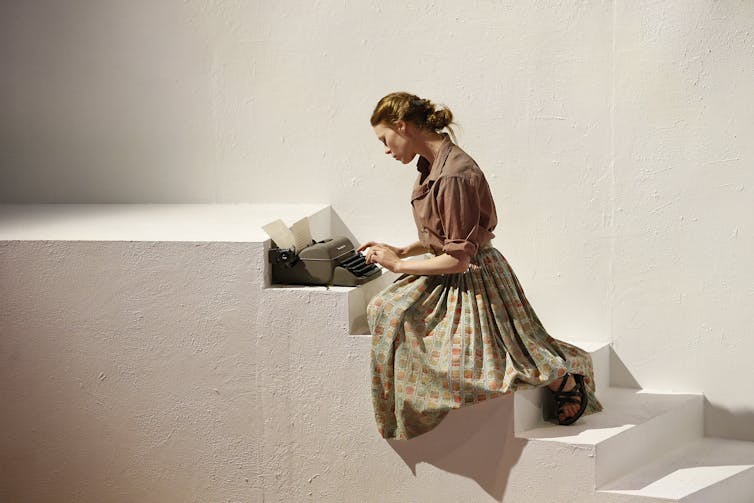
Anna McGahan as Charmian Clift in Sue Smith’s play Hydra. Long overshadowed by her husband George Johnston, recent years have seen a resurgence of interest in Clift’s life and work.
Jeff Busby/Queensland Theatre

Tanya Dalziell, University of Western Australia and Paul Genoni, Curtin University

Fifty years after her death, Australian writer Charmian Clift is experiencing a renaissance. Born in 1923, Clift co-authored three novels with her husband George Johnston, wrote two under her own name, produced two travel memoirs, and had weekly column widely syndicated to major Australia papers during the the 1960s.

Clift has long been overshadowed by the legacy of Johnston, whose novel My Brother Jack is considered an Australian classic. Her novels and memoirs are sadly out of print, yet she is increasingly recognised for her important place in Australian culture.

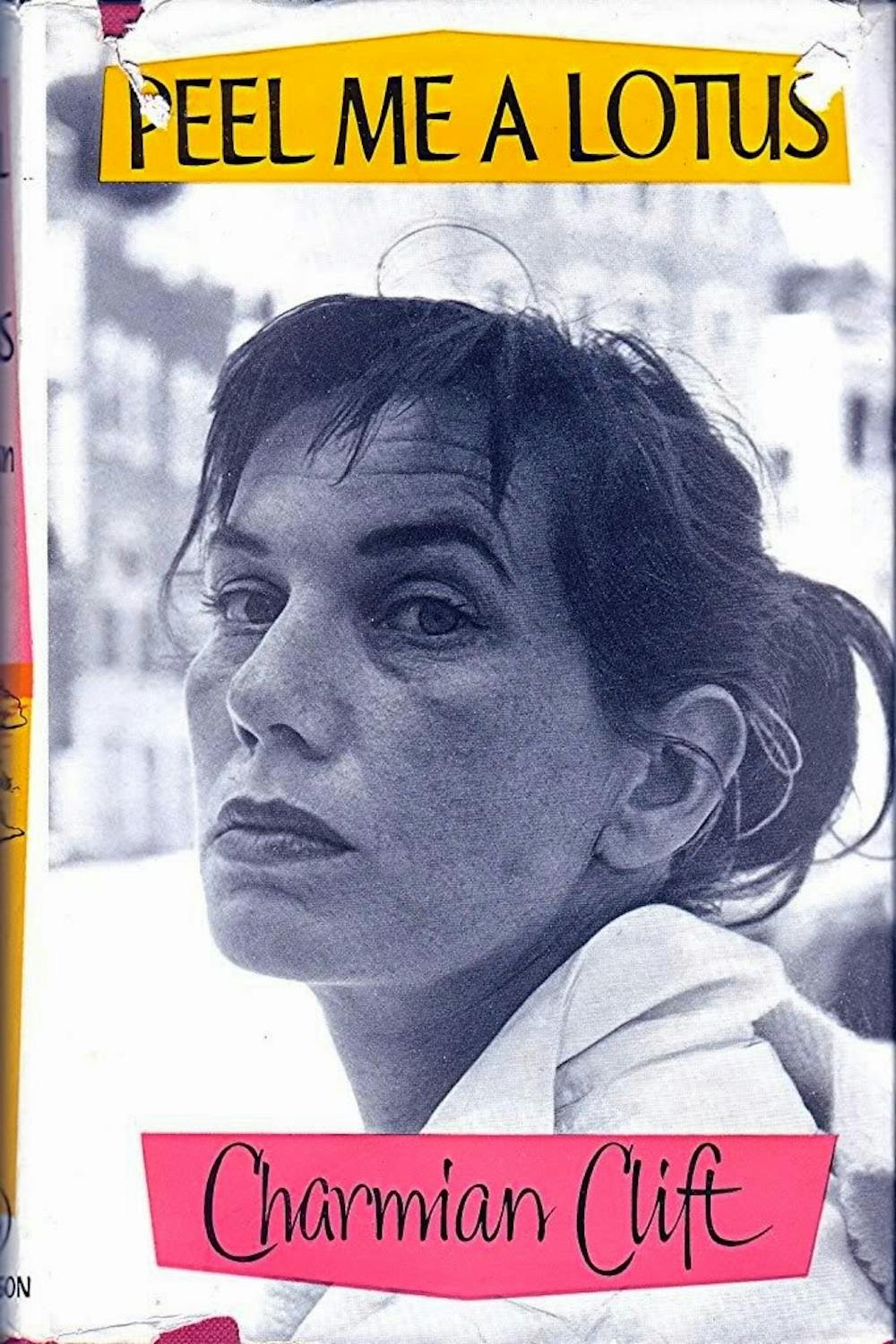
Charmian Clift, pictured on the front cover of her memoir, Peel Me a Lotus.

View original post 1,190 more words

Leonard and Elizabeth Jolley

A Marriage of True Minds: Leonard and Elizabeth Jolley

A Marriage of True Minds: Leonard and Elizabeth Jolley

by JOHN BARNES

I

One of the most unsettling experiences in old age is the discovery, after the death of friends whom you thought that you knew well, that you had been unaware of what had been most central to their lives. We live in an age of revelation, when it is easier than it has ever been before to dig up the past; and the public’s ‘right to know’ is freely invoked to justify intrusions into the private lives of the living. The dead, especially celebrities, have always been fair game: ‘uncovering the past’, ‘telling the true story’, and ‘exposing the lies and deception’ are fairly common claims made by biographers. Less common, perhaps, is the claim to have seen someone’s life in its true proportions and to have seen it whole, though that is probably the claim that most justifies the work of a biographer.

We are now at the beginning of what looks like being an Elizabeth Jolley industry, which will come into full production when her papers in the Mitchell Library eventually become available to the public. In 2008 readers might have thought that in Brian Dibble’s biography of Elizabeth they had the full story of her partnership with Leonard; but in 2012 a memoir, The House of Fiction, written by Leonard’s daughter of his first marriage, Susan Swingler (who, ironically, is likely to be remembered as ‘Elizabeth Jolley’s step-daughter’), has revealed for the first time what the publishers call ‘an ethically complex story’ involving not only Leonard’s tangled sexual relationships but his deliberate deception of his family, with the aid of Elizabeth. Because Elizabeth is a writer, and the relationship between biography and art is a real and legitimate area of discussion, in the media coverage of this book more attention has focused on her than on Leonard. The sentimental image of Elizabeth as (in Andrew Riemer’s phrase) the ‘Grandma Moses of Australian letters’ — a guileless and seemingly unsophisticated housewife who surprisingly discovered an ability to write fiction late in life — is now being undermined by an antithetical image of a calculating and heartless writer, whose life was one long deception. One reviewer of the book even goes so far as to call her ‘ruthless’. Neither of these interpretations comes near the Elizabeth that I knew: a sensitive and caring woman, for whom it was easy to feel affection. Nor do I feel comfortable with the summing-up by Brian Dibble that Leonard was ‘egocentric and arrogant’. I can claim no particular insight into their lives and the motives that determined their actions, but because they were two people who mattered so much in my life and have remained so vividly present in my memory, I want to put on record my version of them. It may be that my impressions of Elizabeth and Leonard as I knew them in Perth in the 1960s have been corrupted, in some measure, by my awareness of her later career as a writer and by the recent revelations; but nothing has weakened the feeling for them formed during those years, when my wife and I came to think of them as ‘family’.


II

The Jolleys arrived in Perth in November 1959, shortly before I returned to Melbourne, having been a temporary Lecturer in English at the University of Western Australia for two years. I did not meet Leonard, who had been appointed University Librarian, until I went back to Perth in 1963, by which time the fruits of his work were already becoming apparent. His deservedly high standing in his profession had been enhanced at UWA where he had successfully fought the battle to get greater library resources. Among the significant events in what was the University’s jubilee year was the opening of the library building — the first time that the library had its own building.

On campus Leonard was an easily recognizable figure, and in memory he was always hurrying along, with the aid of a walking stick. Despite the rheumatoid arthritis that had afflicted him early in adult life, causing swollen joints that must often have been very painful, I never heard him complain. On one occasion when he needed physiotherapy for his hand, he entertained us with accounts of the pretty young female physiotherapist who gave him her hand and exhorted: ‘Squeeze it harder, Mr Jolley, squeeze it harder’. I was fascinated at the first graduation ceremony that I attended to see him clambering on to the Winthrop Hall stage in full academic dress and sandals, the sandals which he always wore presumably being easier than shoes on his feet, deformed by arthritis.

By the time that I came to know him, Leonard had become an influential participant in university affairs. He did not hold back in debate, his opinion carried weight, and his capacity for ridicule made some administrators and academics reluctant to tangle with him. I soon heard stories of his scathing criticism of Academic Board proposals that he did not like. As University Librarian Leonard was entitled to attend meetings of the various faculties. He was probably most at home in the Arts Faculty, where his erudite and ironic contributions to discussion were generally received sympathetically; and some time in the sixties there was a move to put him up for the deanship, a move that was thwarted when someone in administration read the university statute carefully, and pointed out that the dean had to be an academic. He was in the tradition of the scholar librarian, and it often seemed to us in the English Department that, for all intents and purposes, he was an academic colleague. He had a scholarly interest in literature, had always read the latest Times Literary Supplement before we had, was always ready with a literary allusion and would slyly test our knowledge of works that he was most familiar with. So close did he become to the English Department that he did some tutoring (without payment) in an English course that included eighteenth-century authors, in whom he had a special interest. Late in the 1960s, when we invited him to join the small committee that edited Westerly, I don’t think that we knew that he had founded a journal, The Bibliotheck, when he was a librarian at the University of Glasgow.

For someone with his disabilities, Leonard was surprisingly gregarious, and had a wide acquaintance across the university. A criticism that has often been voiced about him is that he ‘did not suffer fools gladly’. Should that be a criticism? Should one suffer fools gladly? I have often wondered how those who so freely make that criticism see themselves. Leonard could produce withering phrases when he felt strongly, and in arguments about university administration he may have ‘tossed and gored several persons’ (as Boswell once told Johnson that he had done). For my part, I always enjoyed talking with him and never felt that he was out to wound, though he was frequently acerbic in his judgments. A Time journalist once wrote of student life at Oxford as ‘jousting with England’s finest minds’; and the word ‘jousting’ seems to me to be exactly right to describe Leonard’s way of conducting a conversation. His face lighted up as he greeted you and produced one of his elegantly turned observations and waited for your reply. He gave the impression of being stimulated by contact with other minds, and he was undoubtedly pleased to display his learning. I had taken it for granted that — unlike myself — Leonard was from a well-educated family; but Susan Swingler reports being told by his sister ‘how ill-educated his family had been and how driven he was’ [p.132]. Knowing now that his grandfather had been illiterate, and his father an autodidact determined that his children should have the best education, I find myself thinking that what some have may have regarded as Leonard’s pedantry or showing-off was a form of self-affirmation.

I quickly got to know Leonard at the university but it was a couple of years before I could say that I knew Elizabeth. The first occasion on which I went to their home was memorable for personal reasons. A few days beforehand, I met Leonard on the campus and told him that I would withdraw from the dinner party to which I had previously accepted an invitation, as Josephine and I had decided to announce our engagement that day. He urged that I should bring Josephine, whom he had never met, and so our first outing as an engaged couple was at the Jolley house in Claremont. It was a very happy occasion, with Leonard toasting us with a shy smile and Elizabeth making us feel that we were old friends of hers. After our marriage at the end of 1965 we lived only a few streets away and saw them often. There was a generational difference, but when we moved to Melbourne in 1970 they were among the Perth friends whom we knew we would miss most.


III

‘My mother is a very strange person’, remarked Sarah, Elizabeth’s eldest daughter, one day while standing in our garden at Warrandyte….


John Barnes is Emeritus Professor of English at La Trobe University. This excerpt has been taken from an edited version of an essay to appear in Partial Portraits: Essays in Remembering, a work in progress.

You can read the full version in Westerly 58:2.

Leave a Reply

The Australian book to read next: My Father’s Moon by Elizabeth Jolley

For Carrie Tiffany, reading the 1989 novel once wasn’t enough. She wanted to carry its narrator inside her as long as she could

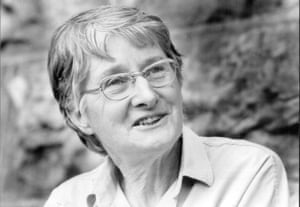
Elizabeth Jolley.
 Elizabeth Jolley received 39 rejections in one year alone. In My Father’s Moon she created a protagonist you’ll want to keep alive forever. Photograph: Fairfax Media Archives/Fairfax Media/Getty Images

It is proof of a fine novel when its characters enter your spirit as you are reading and take up residence there. The experience is akin to falling in love. You are vividly enveloped by thoughts of another. They are alive inside you, perceiving the world with you, breath by breath. It is the most intimate of feelings. Film can’t achieve this, or theatre, or visual art; perhaps music gets closest. It’s only the novel that can show you the grain of another’s soul.

Vera Wright narrates Elizabeth Jolley’s 1989 novel My Father’s Moon.

The streets of suburban Melbourne are silent. I live alone. But here I am with the young nurse Vera in cold, mean London during the second world war, as she clanks around the wards of a training hospital with her ration jars of jam and butter hanging from her belt.

Vera cloaks me as I walk along the railway line at dusk watching the brightly lit carriages slide by on their return from the city – empty, empty, empty, empty. We stand in front of the bare supermarket shelves that have been freshly ransacked by anxious lock-downers. How insubstantial the world feels without its goods.

I read the novel quickly. As soon as I finish it, I begin again. It is told in reverse order in a series of jagged, impressionistic short stories. I think I’m trying to keep Vera alive for as long as possible, but also to enhance her narrative with this circular reading. If the dire events at the beginning of the novel (the result of all of the miss-steps and cruelties that come later) can be recast, perhaps there is a better life for Vera Wright?

I carry Vera around inside me. I want her to be free and to be loved. I want her to be sensually and sexually alive. The borders are closed but I dream of taking her to Queensland and laying her down in a warm green sea, feeding her a pineapple, showing her the whitest and purest of moons. Of course, I want these things for myself too.

The relationship between us isn’t smooth. Vera is meek, naive and loveless. She is also bitter and forlorn. She lies. She is bullied and she bullies others. Happiness must be grasped at and stolen, never shared. Vera is unable to see the world around her outside the narrow punishing hierarchies of the boarding school and the hospital. I love Vera, although at times I would gladly strangle her. She invites her entrapment not just with waywardness, but wilfully.

The young nurse Vera Wright is an aspiring writer. She is engaged in that dual impulse I know so well, to conceal and reveal. Vera’s mother tells her she is too young to be a writer, she has no experience yet. This is from the pen of Elizabeth Jolley who wrote for years without success. In one year alone Jolley received 39 rejections for her writing. She was in her fifties when her work finally found favour.

Read Elizabeth Jolley’s My Father’s Moon. You may want to go on and read the Vera Wright trilogy. You may want to go on and read and re-read Elizabeth Jolley, as I do, and as I will continue to do.

The huge Easter moon, as if within arm’s length, as if it can be reached simply by stretching out both hands to take it and hold it, is low down in the sky, serene and full, lighting the night so that it looks as if everything is snow covered, and the deep shadows lie across pale, moon-whitened lawns. This moon is the same moon that my father will have seen. He always told me when I had to leave for school, every term when I wept when I did not want to leave, he told me that if I looked at the moon, wherever I was, I was seeing the same moon that he was looking at. ‘And because of this,’ he said, ‘you must know that I am not very far away. You must never feel lonely,’ he said. He said the moon would never be extinguished. Sometimes, he said, it was not possible to see the moon, but it was always there. He said he liked to think of it as his.

– Elizabeth Jolley, My Father’s Moon, Penguin, Australia, 1989. p. 26.

Elizabeth Jolley

From Wikipedia, the free encyclopedia

Jump to navigationJump to search

Elizabeth Jolley
Elizabeth Jolley.gif

Professor Elizabeth Jolley
Born
Monica Elizabeth Knight

4 July 1923

Birmingham, England
Died 13 February 2007 (aged 83)

Occupation Novelist, professor of creative writing
Spouse(s) Leonard Jolley
Children 3

Monica Elizabeth Jolley AO (4 June 1923 – 13 February 2007) was an English-born Australian writer who settled in Western Australia in the late 1950s and forged an illustrious literary career there. She was 53 when her first book was published, and she went on to publish fifteen novels (including an autobiographical trilogy), four short story collections and three non-fiction books, publishing well into her 70s and achieving significant critical acclaim. She was also a pioneer of creative writing teaching in Australia, counting many well-known writers such as Tim Winton among her students at Curtin University.[1]

Her novels explore “alienated characters and the nature of loneliness and entrapment.”[2]

Life[edit]

Elizabeth Jolley and (younger) sister Madelaine Winifred reading, ca. 1927

Jolley was born in Birmingham, England as Monica Elizabeth Knight, to an English father and Austrian-born mother who was the daughter of a high ranking Railways official.[3] She grew up in the Black Country in the English industrial Midlands. She was educated privately until age 11, when she was sent to Sibford School, a Quaker boarding school near Banbury in Oxfordshire which she attended from 1934 to 1940.

At 17 she began training as an orthopaedic nurse in London and later in Surrey. She began an affair with one of her patients, Leonard Jolley (1914–1994), and subsequently became pregnant. Leonard Jolley was already married to Joyce Jolley, who was also pregnant. Elizabeth moved in with the Jolleys, and her daughter Sarah was born five weeks before the birth of Susan Jolley, the child of Leonard and Joyce.[4][5]

Elizabeth and Leonard subsequently emigrated to Australia in 1959 after they had married. They eventually had three children and Leonard was appointed chief librarian at the Reid Library at the University of Western Australia, a job he held from 1960–1979. Leonard told his family in England that it was Joyce and Susan with whom he had moved to Australia. For several years, Elizabeth wrote letters purportedly from Joyce and Susan to Leonard’s British relatives. Leonard eventually asked his former wife to tell their daughter Susan that he had died.[4]

Elizabeth and Leonard lived in the riverside Perth suburb of Claremont. In 1970 they also bought a small orchard in Wooroloo, a town in the Darling Ranges approximately 60 kilometres inland from Perth.[6]

Elizabeth Jolley worked at a variety of jobs including nursing, cleaning, door-to-door sales and running a small poultry farm, and throughout this time she also wrote works of fiction including short stories, plays and novels. Her first book was published in 1976, when she was 53.

From the late 1970s, she taught writing at the Western Australian Institute of Technology, later Curtin University, and one of her students was another Australian novelist, Tim Winton.[7] Her students have won many prizes including “several Australian/Vogel Awards (for a first novel), several different Premier’s Awards, the Commonwealth Poetry Prize and the Miles Franklin Award”.[1]

She developed dementia in 2000, and died in a nursing home in Perth in 2007. Her death prompted many tributes in newspapers across Australia, and in The Guardian in the United Kingdom. Her diaries, stored at the Mitchell Library in Sydney, will be closed until after the deaths of her children or 25 years after her death.[8]

Andrew Riemer, the Sydney Morning Herald’s chief book reviewer, wrote in his obituary for her, “Jolley could assume any one of several personas – the little old lady, the Central European intellectual, the nurse, the orchardist, the humble wife, the university teacher, the door-to-door salesperson – at the drop of a hat, usually choosing one that would disconcert her listeners, but hold them in fascination as well”.[9]

On 16 November 2007, the performance of Johannes Brahms‘s A German Requiem by the West Australian Symphony Orchestra, chorus and soloists, under conductor Lothar Zagrosek, was dedicated to Jolley, for whom the Requiem had been a great source of joy and inspiration.[10]

Literary career[edit]

Jolley began writing early in her twenties, but was not recognised until much later. She had many rejections by publishers, 39 in one year alone. Delys Bird suggests that it was the post-modern features of her writing – “motifs repeated within and between novels and short stories, self-reflexivity and open-endedness”[11] – that made it hard for them to be published at that time. She suggests that her eventual success owes a little to “the 1980s awareness of ‘women’s writing'”, which had been catapulted to the mainstream after the success of other Australian female writers such as Helen Garner and Germaine Greer.[11]

In the 1960s some of her stories were accepted by the BBC World Service and Australian journals, but her first book Five Acre Virgin was not published until 1976. Soon following were Woman in a Lampshade and Palomino, but it would not be until much later that these books would receive either positive reviews or high circulation.

She lapsed in her writing, discouraged by earlier failures, and was only to be published again in 1983 with Miss Peabody’s Inheritance and Mr Scobie’s Riddle. The latter won The Age Book of the Year and high acclaim, especially in Australia and the United States. A year later, Milk and Honey was awarded Christina Stead Prize for fiction in the New South Wales Premier’s Literary Awards. In 1986, The Well won the top Australian literary prize – the Miles Franklin AwardThe Sugar Mother was, as Riemer writes, “her characteristically idiosyncratic way of fulfilling a commission to write a novel commemorating the bicentenary of 1988”.[12]

Later in her career she wrote an autobiographical fiction trilogy, “My Father’s Moon” (1989), “Cabin Fever” (1990) and ‘The George’s Wife” (1993). In an article in The Age newspaper, 20 February 2007, written after her death, literary critic Peter Craven, was reported as saying, “She was a master of black comedy and she went on to write a wholly different form of autobiographical fiction that was lucid, luminous and calm”.[13]

Lovesong, her third last novel, is, Riemer suggests, “the riskiest book she wrote”.[12] It deals with the subject of paedophilia and demonstrates “an admirable refusal to be deflected from what she must have seen as the demands of her art and vocation”.[12]

In 1993, a diary she kept before her novels were published which recorded the experience of buying a hobby farm was published as Diary of a Weekend Farmer. A partly autobiographical collection of pieces, Central Mischief, appeared in 1992. She also wrote numerous radio plays broadcast by the Australian Broadcasting Corporation, and several of her poetic works were published in journals and anthologies during the 1980s and 1990s.

Jolley was made a Professor of Creative Writing at Curtin University in 1998.

On 8 February 2008, Curtin University Library launched the online Elizabeth Jolley Research Collection, a virtual research centre for scholars interested in studying her and her work.

Awards and nominations[edit]

Literary works[edit]

Novels[edit]

Short stories and plays[edit]

Non-fiction[edit]

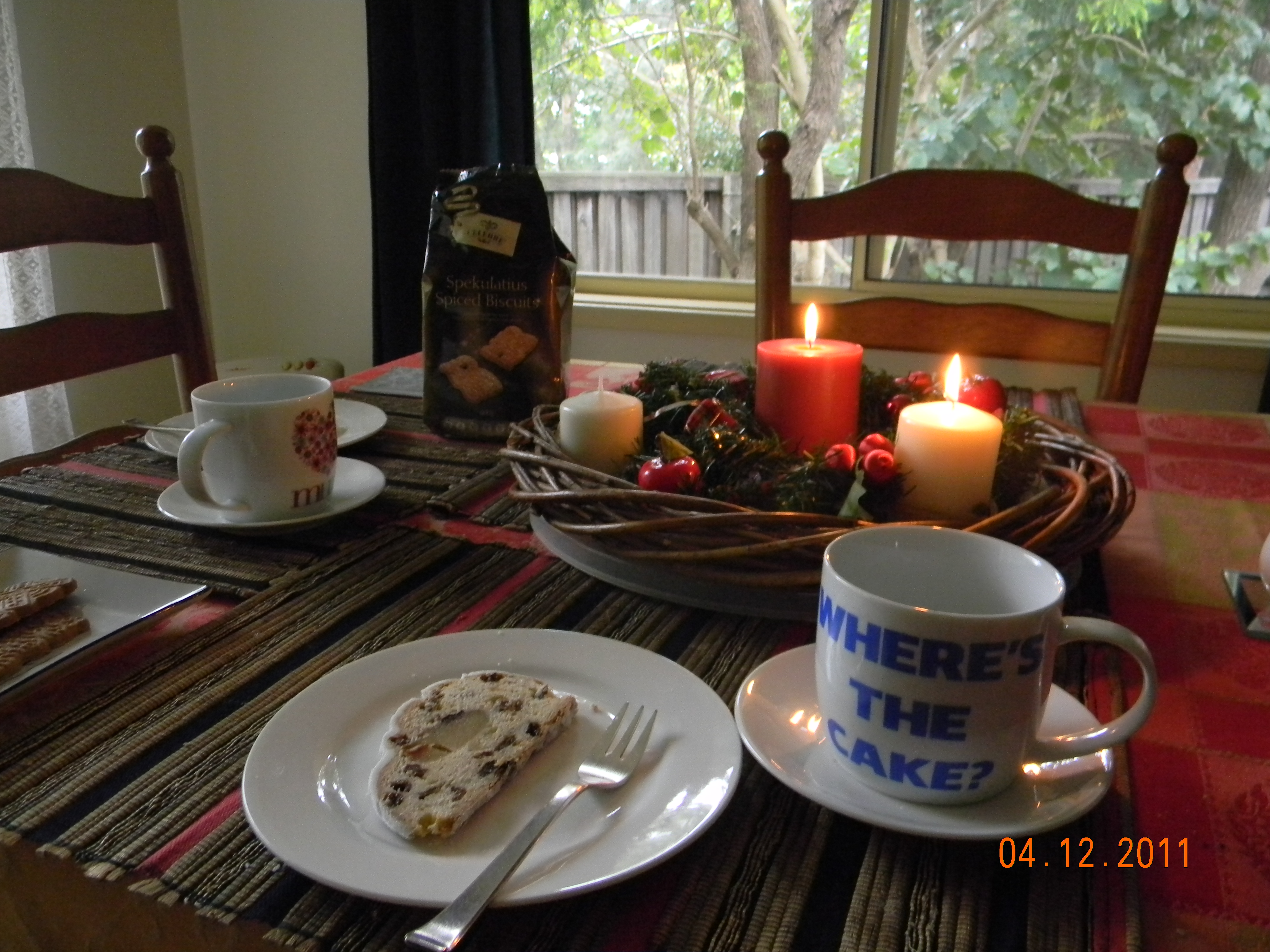
2nd of Advent in December 2011

auntyuta's avatarAuntyUta

8 Responses to “2nd Sunday of Advent 2011”

MOL
December 5, 2011 at 1:30 pm Edit #
Love the coffee cup!

REPLY

auntyuta
December 5, 2011 at 1:44 pm Edit #
I assume you mean the ‘Where’s the Cake ?’ one. Caroline, our youngest deughter, got this for her Dad because she knows he loves cake. I did get the other one with ‘mum’ printed on it. We always get excelltent gifts from Caroline. She frequently wants to please us with something or other.

REPLY

pix & kardz
December 5, 2011 at 4:08 pm Edit #
you are already onto a new day, but it is still the 2nd sunday of advent here. a great post for the ‘waiting’ photo challenge, because advent is all about anticipation.
thank you for your recent visit to my blog and all your kind comments. much appreciated!
happy advent – and happy blogging 🙂

View original post 143 more words

Some Copies of what I published in December 2011

Christmas

Following is something I wrote in November 2007. It sounds like I could have written this today, only now I am four years older!

Time is running out . . . .

At age seventy-three, how much time do I have left? With every year time seems to be getting more precious. Whatever I still want to do in life, I should be doing it soon, very soon. There is no need to panic. It is just this feeling in me that I ought not to waste time; in other words, I should make the best use of it I possibly can. Making time for reflections as I do right now, I do not regard this as a waste of time. It nourishes my soul, it makes me look forward to spend the day in a productive way. There are the Christmas preparations to consider. How can I keep them to a minimum with that special Christmas Spirit in mind? Some spiritual songs usually help me along to get into the mood. Even in shopping centres the odd Christmas song can bring about temporary elation, a feeling of peace and comfort in a buzzing shopping centre! And even if this sort of mood happens only for brief moments while doing the shopping , it is still appreciated and helps to cope with the mad commercialism that surrounds us everywhere.

The special food at Christmas I like very much. On the other hand I hate it, if food is being wasted. I rather have not too much food of everything. How awful, if food has to be thrown out because we cannot keep it fresh enough in the Australian heat once it leaves the fridge. There may be one and a half dozen people at our family gathering. People bring food along. I would like to keep the food that I am going to provide to a strict minimum. Unfortunately I know already that this is an impossibility at Christmas time! I suppose I’ll just have to grin and bear it. I am determined to make the most of the Christmas Spirit where-ever I may come across it and enjoy the closeness of family and friends. Indeed I am looking forward to a Joyful and Happy Christmas. I did not always feel joyful and happy at Christmas time: There are some happy memories about Christmas, but there are also some very unhappy ones . . . . May the truly happy hours at Christmas time be plentiful and greatly outnumber the sad and lonely hours! This is what I wish for everyone.

Memories

Daddy’s Anger

My husband and I lived with our two babies at my father’s place. Our application to migrate to Australia had been successful and we were looking forward to soon be leaving old Germany. Since our fare to Australia was being paid for partly by the German government and partly by the Australian government, we had to pay only a minimal amount for the voyage. Even that was hard to come up with since we had absolutely no savings. So my father volunteered to help us out a bit.

As a matter of preparing for our departure, we were trying to get rid of a few things which we could not take along to Australia. We put an ad in the paper, thinking, if we could sell the baby cots and pram, it would mean an extra bit of money for us.

I had not anticipated my father’s reaction to this. My usually so placid and relaxed father blew his head, when he saw the ad. ‘Why didn’t you tell me, you needed more money?’ he screamed. ‘I would have given you more!’

‘Do you have no consideration at all for what people might think, when they realise, that my own daughter needs to sell things in order to acquire a bit of money? Don’t you think people might wonder why on earth I do not provide for my daughter? Have you thought about my reputation at all?’

‘People in my position normally hand those things over to charity. How dare you ask for money for anything like that!’ He just went on and on about it and got more and more excited. I started to get anxious the poor man might get a heart attack. My timid apologies did stay totally unnoticed until he had calmed down a bit. But once he had calmed down, the matter was forgotten. He never mentioned it again. And we never did sell any of the items. We just left everything behind in my father’s storeroom in the basement of the building where he lived.

Out of last Year’s Files

The following is an edited version of what I wrote about a year ago. I was reflecting on what Mum was like during my early childhood years. I was also reflecting on the way women and men communicate with each other.


MY MOTHER

Mum doted on me. I was her first born child. I am sure I got a lot of attention during the first years of my life, and not just from Mum, but also from her sister Ilse, who had no children of her own. Later on I realised that my mother would very much have loved to have a daughter in her image. What a disappointment it must have been for her that I was in a lot of ways the exact opposite of her! Maybe I did not like to be a girl. I think I wished very much to have been a boy. Girlish things just did not interest me one bit!

On the ninth of June 1938, when I was not quite four yet, I was very excited about the arrival of a baby brother. In August 1939 Mum left us children in the care of our live-in home-help. Why did Mum leave? I remember a phone-call from Mum’s sister who was holidaying in Westerland on the Island of Sylt. I imagine Aunty would have said something like this:

‘Please join me, I am so lonely on that island here, I don’t like to have to spend all the time with that pretentious mother-in-law. She watches me like a hawk! Please, please, come, spend some time with me. It would be so good to have you around here! We can have such a lovely time together. And listen, I’m going to pay for your airfare. You can stay in my room with me. Mother-in-law is in the connecting room.’

Mum promised her sister, she’d fly to Westerland the same day. She was quite excited about this. In her excitement she forgot to ring Dad’s office to let him know about her plans. Or did she deliberately not ring him because she sensed that he would have objections to her leaving. I remember when Dad came home he was furious when he found out that Mum had taken off to join her sister and left us children in the care of an eighteen year old home-help! I believe Mum stayed in Westerland for a whole week. When she returned, she talked excitedly about how she had been spending time with her sister in Westerland.  Come night-time they waited till Auntie’s mother-in-law was fast asleep, pretending they were going to sleep too. However as soon as they thought the old lady was fast asleep, they escaped through their bedroom window and went dancing. I remember seeing pictures of them that were taken on the dance-floor. They had already acquired a nice brown tan from having spent time on the beach. I remember looking at the photos and seeing how very brown their faces looked in sharp contrast to their white dresses. Two young marine officers, smartly dressed in their uniforms, could be seen with them. Later I found out, that one of the officers was Helmut Lorenz who six years later became Aunty’s second husband after her divorce from the first one. And the other officer was no other than Max Tomscick, who after the war became Mum’s friend and whom she would call ‘Bambie’.

I cannot recall that having to stay without Mum for a week did cause us any hardship. So the young home-help must have coped quite adequately. When Baby Brother was about a year old he developed a skin condition called ‘Milch-Schorf’. He was not allowed to drink milk then. When he was a bit older, he could drink milk again.

Mum’s third child, also a boy, was born during the war in October 1941. We had a Polish maid at the time, who soon cared for the new baby as though he was her own. She became his ‘Dada’. She was the main contact person for the first three years of his life. This second brother became a very happy and contented child, whereas the first brother was always highly sensitive and suffering from Asthma through most of his childhood. In lots of ways Mum was a tremendously caring mother. I remember her being always very concerned when Bodo had his Asthma attacks. He outgrew his Asthma eventually, but maybe he never had a close relationship with any of the various live in home-helps we used to have. I think he had a close relationship with me, his older sister, for the first few years of his life and later on with Peter Uwe, his younger brother. My father, when he was around, would pay a lot of attention to us children. But I suspect, Bodo, being very sensitive, noticed that he did not get as much attention as I did or later on Peter Uwe, the new baby in the family. Bodo failed to establish a long lasting relationship with a woman later on in life.


TALKING TO WOMEN AND TALKING TO MEN

Women talking to women is easy, uncomplicated; there is no pretence. The women are just being themselves. Unless of course one woman in the group happens to be very dominant with an abundance of male hormones. When there are several such women in the group, there may be constant fighting for dominant positions. As soon as a male person enters a women’s group, the mood in the group tends to change . . . .

My experience is, that I get on very well with women if the talk centres on womanly things. Of course women tend to discuss also certain male issues from a woman’s point of view. Which is fine with me, and I enjoy participating.

However I ask myself, why is it, that subjects, on which I have formed my own opinions, which are not necessarily mainstream, I rather discuss with a sympathetic man than with a woman? Somehow I get the feeling, it is easier to discuss such a subject with a man, if the man happens to be  interested in such a subject. I often get a better response to my ideas if I open up to a man.

Naturally the number of men who are interested in discussions about philosophical questions is limited. It would be a bliss for me, if I had opportunities to meet such men on a regular basis.

https://auntyuta.com/2011/12/05/2nd-sunday-of-advent-2011/

https://auntyuta.com/2011/12/05/afternoon-of-2nd-of-advent-2011/

https://auntyuta.com/2011/12/04/handels-messiah/

I wrote on the 4th of December 2011:

Yesterday,  Handel’s MESSIAH was performed in the Wollongong Town Hall.  We went there with Caroline and Matthew. The Soprano was Siobhan Patrick, Caroline’s friend, who has been performing professionally for 20 years.

Peter is not religious. But he loves music like this. The text to the music is taken from the bible. It starts with:

THE PEOPLE OF GOD AWAIT THE COMING OF THE MESSIAH, THE REDEEMER IS BORN, CHRIST BEGINS HIS MINISTRY

In Part 2 comes:

CHRIST SUFFERS FOR HIS PEOPLE

I felt weepy when they sang:

He was despised (Alto) . . . .

All that see him laugh him to scorn (Tenor)

Later on:

THE GOSPEL IS PREACHED,  DISCORD ENSUES,  BUT THE LORD GOD REIGNS OVER ALL

The Soprano sang in a very lovely voice: How beautiful are the feet of those . . . .

Then the Bass: Why do the nations so furiously rage together?

And after that the Hallelujah Chorus

Part 3  . . . . THE FAITHFUL SING PRAISE TO THE REDEEMER

I know that my redeemer liveth – Soprano

Since by man came death – Chorus

Behold, I tell you a mystery – Bass

The trumpet shall sound – Bass

Then shall be brought to pass – Alto

O death, where is thy sting? – Alto and Tenor

If God be for us – Soprano

Worthy is the Lamb that was slain. Amen – Chorus


It was a truely memorable performance!


ANTI-INFLAMMATORY FOODS

These are the anti-inflammatory foods I eat every week to reduce inflammation in my body. An anti-inflammatory diet can help with reducing joint pain and arthritis, healing the gut (key if you have celiac, ulcerative colitis, Crohn’s or IBS), getting rid of eczema and psoriasis, and keeping other autoimmune conditions such as diabetes, rheumatoid arthritis and multiple sclerosis in check. It’s also beneficial if you suffer from anxiety or depression. I became well versed in wholesome, anti-inflammatory foods several years ago when I embraced a whole foods diet. After being diagnosed with four autoimmune diseases in two years I realized my body was fighting massive immune system inflammation and I needed to provide reinforcements. Those reinforcements came in the form of groceries. Watch the video for the list of anti-inflammatory foods – it’s what I eat every week. And enjoy the full blog post below all the healthy recipes on my website! 8 Anti-Inflammatory Foods I Eat Every Week: https://bit.ly/2Utpni0

Identical Twins: One Goes Vegan, One Does Not

What happens when identical twins eat two completely different diets? Hugo and Ross Turner wanted to know. For 12 weeks, Hugo went vegan while Ross continued eating meat and dairy. What happened during that time was amazing! They join “The Weight Loss Champion” Chuck Carroll to talk about how their experiences differed. One lost more weight, one gained more energy, one lowered his cholesterol, and that’s just the start!