For a start they do need an environment that stays THE SAME at all times. Any slight change in the environment can be upsetting! Reasonable cleanliness, yes, of course. But not that sort of cleanliness where everything gets changed around all the time!
When help is offered, preferably it should be offered in the most simple way with a minimum amount of bureaucratic rules but with simple explanations provided so that the aged person can understand what the rules are!
I do stop here for today, but I would like to recommend to have a look at what Ita Buttrose’s talk was about at yesterday’s National Press Club Address:
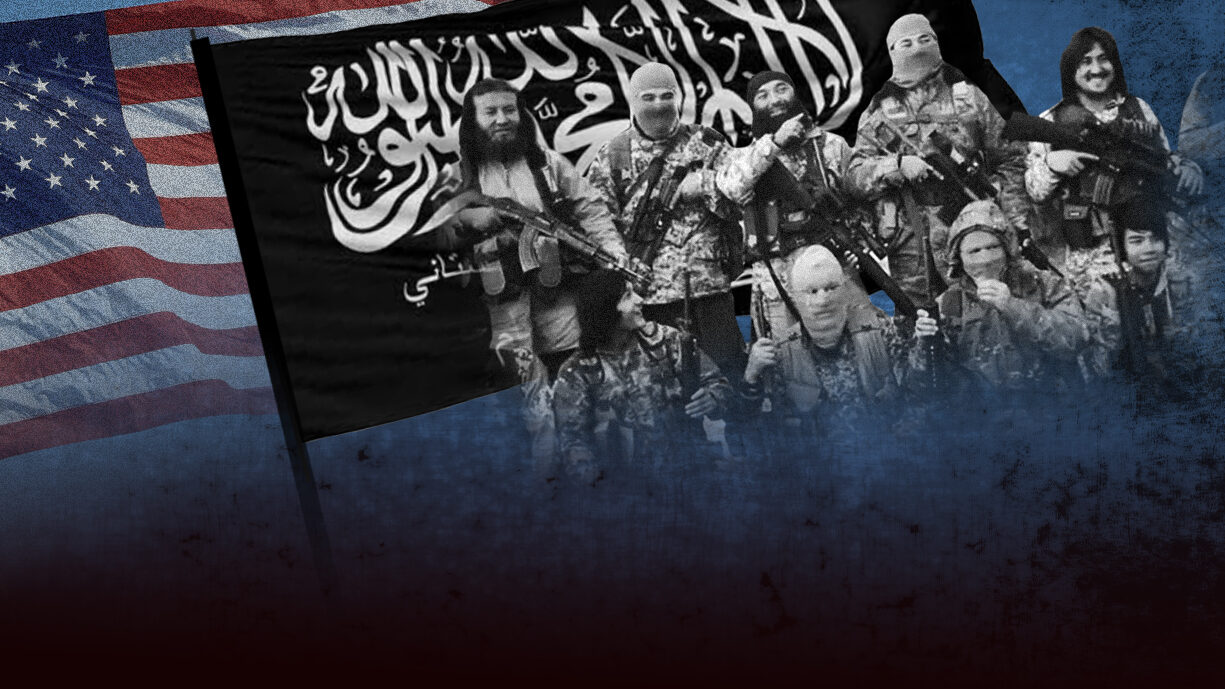
WASHINGTON — In the dying months of his administration, President Donald Trump removed from the United States terrorist list a little-known paramilitary organization called ETIM, an acronym that stands for either the East Turkestan Independence Movement or the East Turkestan Islamic Movement, depending on whom one asks. The group is also sometimes known as the [East] Turkestan Islamic Party (TIP or ETIP).
Explaining the decision, the State Department said that “ETIM was removed from the list because, for more than a decade, there has been no credible evidence that ETIM continues to exist.” The move was hailed by a wide range of Uyghur groups in the United States, who saw it as a step towards blocking China’s actions against Uyghurs in Xinjiang…
One hundred years ago the most terrible of wars began. Up to that time there had been no war like this. I blame the industrial societies for it. In their search for growth potential they did not allow any restrictions; “markets, customers and resources,” was the cry for the “promised land”.
My Granddad, Otto Hannemann, was a carpenter foreman in the growing city of Berlin. Born in the small town of Lukenwalde, south of Berlin, he looked for work in the big city to support his growing family. In the first picture we see him with one of his two daughters and my dad. It seems they are all dressed up for a Sunday outing. In July 1907 my father was six years old.
July 1907
These were the years of peace and future well being. I don’t know much about my Granddad. My father seemed to be proud of him and proclaimed that “he built all the bridges” over the railway lines out of Berlin to the South. In the next picture we see him with some workers on a building site. I have been assured that he is in the picture. I think it is him on the far left with his hat on. The occasion is most likely a “Richtfest”, the celebration of the erection of the roof supports.
When the war started he was not called up straight away. Only later, in the beginning of 1916, he was called upon as he was a reservist (Landjäger). In the picture he looks rather serious, probably anticipating what lay ahead of him.
Early 1916, it is still Winter
It is the same picture my Grandmother had in a large frame on the wall of her bedroom. It seems he had his training in Schwerin, the capital of Mecklenburg.
The next picture was taken on the 15th February 1916. He was sending the card as a birthday gift. For whom, I don’t know. You can see him on the left in the back row.with the arrow pointing at him.
15.2.1916
In the next picture you can see him second from the left in the centre row. On the back he wrote that those are the men from room 13 and he added, which mystifies me, “the ‘washer children’ are not in the picture”. Whatever this means?
14.4.1916
The next picture could be from the same period. The soldiers in “drill uniforms” usually worn on work duties. It looks to me they are waiting to be issued with food. He is in the centre and is marked with a red cross.
I have no idea when he was sent to the Western Front. Perhaps he was even opposite Australian forces.
The following photo was made on Sunday 14th May 1916. It tells on the sign “Rat-Goulash on the menu for the day”.
14 th of May 1916
On the 15th of July 1916 he wrote at the back of the photo that he sent to his loved ones, that really they don’t have to eat rat-goulash yet. The picture has been staged he assured the readers, but still there are lots of rats to be seen. And they say Germans have no sense of humour.
I don’t know what happened to him after his arrival at the front. We know from the war reports and history books that it was hell. On the 2. 12. 1916 he fell. Some reports tell of cold and frosty days. He is buried in a war cemetery just outside Lille.#
Granddad’s final resting place.
When the fighting stopped all soldiers hoped they saw the last of it. But the struggle was not over. World War Two, the next conflict, was even worse.
The Cultural Cold War: The CIA and the World of Arts and Letters
Intelligence in Recent Public Literature
By Frances Stonor Saunders. New York: The New Press, 2000. 509 pages.
Reviewed by Thomas M. Troy, Jr.
If The Cultural Cold War had been published in the 1960s or 1970s, it most likely would have caused a sensation and been a best seller. It would have provoked anguished editorials in major Western newspapers and a barrage of “we-told-you-so” items in the communist-controlled media. Published at the turn of the century, however, the book is something of a curiosity.1 It contains a long cry of moral outrage over the fact that the CIA committed “vast resources to a secret program of cultural propaganda in western Europe.”2 At the same time, the author, an independent filmmaker and novelist, has produced a well-written account of a basically unfamiliar story with a cast of…
This is what Peter published about his grandfather Otto HANNEMANN:
One hundred years ago the most terrible of wars began. Up to that time there had been no war like this. I blame the industrial societies for it. In their search for growth potential they did not allow any restrictions; “markets, customers and resources,” was the cry for the “promised land”.
My Granddad, Otto Hannemann, was a carpenter foreman in the growing city of Berlin. Born in the small town of Lukenwalde, south of Berlin, he looked for work in the big city to support his growing family. In the first picture we see him with one of his two daughters and my dad. It seems they are all dressed up for a Sunday outing. In July 1907 my father was six years old.
July 1907
These were the years of peace and future well being. I don’t know much about my Granddad. My father seemed to be proud of him and proclaimed that “he built all the bridges” over the railway lines out of Berlin to the South. In the next picture we see him with some workers on a building site. I have been assured that he is in the picture. I think it is him on the far left with his hat on. The occasion is most likely a “Richtfest”, the celebration of the erection of the roof supports.
When the war started he was not called up straight away. Only later, in the beginning of 1916, he was called upon as he was a reservist (Landjäger). In the picture he looks rather serious, probably anticipating what lay ahead of him.
Early 1916, it is still Winter
It is the same picture my Grandmother had in a large frame on the wall of her bedroom. It seems he had his training in Schwerin, the capital of Mecklenburg.
The next picture was taken on the 15th February 1916. He was sending the card as a birthday gift. For whom, I don’t know. You can see him on the left in the back row.with the arrow pointing at him.
15.2.1916
In the next picture you can see him second from the left in the centre row. On the back he wrote that those are the men from room 13 and he added, which mystifies me, “the ‘washer children’ are not in the picture”. Whatever this means?
14.4.1916
The next picture could be from the same period. The soldiers in “drill uniforms” usually worn on work duties. It looks to me they are waiting to be issued with food. He is in the centre and is marked with a red cross.
I have no idea when he was sent to the Western Front. Perhaps he was even opposite Australian forces.
The following photo was made on Sunday 14th May 1916. It tells on the sign “Rat-Goulash on the menu for the day”.
On the 15th of July 1916 he wrote at the back of the photo that he sent to his loved ones, that really they don’t have to eat rat-goulash yet. The picture has been staged he assured the readers, but still there are lots of rats to be seen. And they say Germans have no sense of humour.
July 1907
On the 2. 12. 1916 he fell. Some reports tell of cold and frosty days. He is buried in a war cemetery just outside Lille.
A pictures of his grave can be viewed here just towards the end of Peter’s post:
REPLYHaving just reblogged this post Aunty Uta, I feel I would like to make some more comments, for instance on ‘Social Distancing’. Isn’t it true, that we cannot be sure who might be spreading the Coronavirus, the one that is called Covid19. Anybody can accidentally have picked up the virus somewhere. It is easy to pass it on if you do not keep a social distance. This is a fact, isn’t it? Well, with the flu, I reckon it is a bit different. Somehow we have mostly learned to live with it. Sure, a lot of people get infected during the flu season. We try to stay away from people who have obviously a bad cold. Most people do not end up in hospital if they happen to infect themselves with a bit of the flu virus. The medical profession and the hospitals are not overloaded just because a certain number of people happen to have the flu. But now, isn’t this a bit different with this present Coronavirus? You cannot protect yourself from this virus unless you practice strict Social Distancing and avoid touching surfaces where the virus might be present. So you are not allowed to touch your face before you washed your hands thoroughly! And if you say I do not like all these restrictions, therefore I do not care if I spread the virus around. Well, this may be so, but please, do you say the same about the flu virus? If you have a bad cold, do you go around and let your droplets reach others by coughing and sneezing regardless how close other people are to you? I agree, generally speaking dying is something all of us can expect sooner or later. However is it not obvious that the infection and dying en masse because of a virus we ought to prevent as much as possible? Sure, a lot of us are extremely upset when Social Distancing is necessary over an extended period of time, but are you not concerned how overloaded all our medical facilities become when Social Distancing is less and less observed and when millions and millions of people die at a time when they would otherwise not have died?Like
AUNTYUTAREPLYReblogged this on AuntyUta and commented: I am 85. I do not mind dying. But please let my die naturally. Do not try to keep me alive when my time is up, let me die peacefully in natural surroundings, and possibly let me say farewell to my loved ones.
In this episode of the New Lyre’s Podcast “Escaping the Brave New World,” David Gosselin and Cynthia Chung discuss William Sargant’s (a British psychiatrist linked to British intelligence, the Tavistock Institute, MK Ultra and Ewen Cameron’s LSD experiments at McGill) work in the field of mind control and how these techniques have been utilised in today’s forms of mass brainwashing. In a world where the information we are exposed to is increasingly controlled, it is not only valid but is imperative that we ask ourselves the question, where do our personal beliefs and convictions truly stem from? In a world that is becoming increasingly divided, where we are told that we must choose a side in a matter, it is crucial that we are aware of what is governing our thoughts and actions throughout such tumultuous processes, otherwise, we risk these decisions being made for us. These questions and more will be discussed in this episode titled “Taking Back Control of Your Mind” and how one can begin the journey of exiting Plato’s Cave. To view other New Lyre podcasts in this series, visit: https://www.youtube.com/channel/UCAcE… To know more about the Rising Tide Foundation, visit: http://www.risingtidefoundation.net
There are a lot of very interesting thoughts in this post!
It starts with some thoughts by -James Fenimore Cooper:
“Whenever the government of the United States shall break up, it will probably be in consequence of a false direction having been given to public opinion. This is the weak point of our defenses, and the part to which the enemies of the system will direct all their attacks. Opinion can be so perverted as to cause the false to seem true; the enemy, a friend, and the friend, an enemy; the best interests of the nation to appear insignificant, and the trifles of moment; in a word, the right the wrong, the wrong the right. In a country where opinion has sway, to seize upon it, is to seize upon power. As it is a rule of humanity that the upright and well-intentioned are comparatively passive, while the designing, dishonest, and selfish are the most untiring in their efforts, the danger of public opinion’s getting a false direction is four-fold, since few men think for themselves.”
Then Cynthia Chung writes:
Democracy is something that has been completely taken for granted here in the West. There is an ongoing triumph over past laurels, without paying heed to the road we have strayed from. We criticize others for failing to uphold a standard we consider ourselves the leaders of, but democracy is not something simply “acquired” and subsequently “retained,” it is not a “possession.” This is because a system of democracy is at every moment of its existence defined by the character of its citizenry. Democracy only exists if it is upheld, and if a citizenry fails to do so, it renders itself defenseless to an ever-creeping tyranny. . . .
“Whenever the government of the United States shall break up, it will probably be in consequence of a false direction having been given to public opinion. This is the weak point of our defenses, and the part to which the enemies of the system will direct all their attacks. Opinion can be so perverted as to cause the false to seem true; the enemy, a friend, and the friend, an enemy; the best interests of the nation to appear insignificant, and the trifles of moment; in a word, the right the wrong, the wrong the right. In a country where opinion has sway, to seize upon it, is to seize upon power. As it is a rule of humanity that the upright and well-intentioned are comparatively passive, while the designing, dishonest, and selfish are the most untiring in their efforts, the danger of public opinion’s getting a…


 The Politics of Terror: With China now in the U.S. crosshairs, the ETIM has moved from being an adversary to being a potential asset.



 Having just reblogged this post Aunty Uta, I feel I would like to make some more comments, for instance on ‘Social Distancing’.

 AuntyUta