“We owe it to ourselves and to the next generation to conserve the environment so that we can bequeath our children a sustainable world that benefits all.” ~ Wangari Maathai[1].
COVID-19 has presented an opportunity for a positive response to the environmental challenge we are facing. The recovery effort will necessitate considerable stimulus investment. If that investment is made in an environmentally friendly manner, such as sustainable solar and wind power generation rather than in bailing out carbon-based corporations, it can be a win for everyone. Otherwise, it will set us on a pathway to environmental catastrophe.
Unfortunately, Donald Trump saw it differently voicing his “1,000 percent” support of the oil and gas industry[2] setting the U.S. back by considerably more than just his four years in office. Historically, recessions are typically followed by sharp rebounds in emissions, hopefully, this time…
I think, it is not hard to understand, that from the Russians point of view, it is of the utmost importance, that they create all around Russia sufficient buffer zones in order to secure Russian borders as much as possible.
They are very powerful country now! This gives them the means for securing all their borders!
I think they are not out for any wars: They just want to b e able to keep securing all their borders!
All people, that study history objectively, should find it obvious, why the Russians, with Putin as their leader, right now act the way they do!
Hasn’t the West fed them lie upon lie? I don’t see, why they should have any reason to trust us!
Volodymyr Zelensky meets with Bernard-Henri Levy, 2019COURTESY THE AUTHOR
Idon’t know if, by the time this article appears, Volodymyr Zelensky will still be alive.
We do know that he is in Kyiv, surrounded by his generals, in a bunker that the Sukhoi fighter jets seek.
And we have just seen him in a video where he appears helmetless, outside, like a young Churchill walking in the poor neighborhoods of London during the Nazi Blitz of September 1940.
But I also know that he is at the top of the Kremlin’s kill list, according to the English-language press.
His recent farewells come to mind—on Friday, Feb. 25, to his counterparts over Zoom during a special meeting of the European Union: “This is maybe the last time that you will see me alive.”
What is greatness?
True greatness, as taught by European chivalry?
Perhaps it is that.
That heroism, calm and proud.
A touch of Allende the night before the assault of the Moneda by Pinochet’s death squads.
The way he told President Biden, who offered up an exfiltration—“I need weapons, not a taxi”—and Putin, today’s Pinochet: “You can try to kill me, I am ready for it, since I know that the idea lives in me and will survive me.”
The first time I met him was on March 30, 2019, the night before the first round of his stunning election, in a seafood restaurant near the Maidan.
I had just performed, at the Taras Shevchenko National University of Kyiv, Looking for Europe, the theatrical monologue that I was bringing then to the European capitals. My friend Vladislav Davidzon, one of the last American journalists still in Ukraine—reporting for Tablet—had arranged the meeting.
Volodymyr Zelensky was, at the time, a very young man. Looking like a paper boy in jeans, old sneakers, and a black T-shirt with a worn neckline, he had spent the night celebrating the final performance, in an old Kyiv skating rink turned café-theater, of “Servant of the People,” the one-man show that had made him famous.
We talked about Beppe Grillo, that other cabaret actor, and founder of the Five Star movement in Italy, whom Zelensky hated being compared to.
About French Coluche, whose story he didn’t know well and whose final pirouette, a decision to retire from the presidential election, he did not quite understand: “Maybe because there was now a great man in France, François Mitterrand, so his service was no longer needed?”
About Ronald Reagan, by contrast, he knew everything; hadn’t he just done—for the Ukrainian TV channel 1+1, which belongs to the Israeli-Ukrainian Igor Kolomoyskyi, Zelensky’s sponsor—the voice-over for a docudrama on the destiny of this actor in bad Westerns who became a great president?
We also spoke about Putin, the other Vladimir, about whom he had no doubt: If he would come face to face, he would make Putin laugh, just as he had made all Russians laugh. “I act in the Russian language, you know; the kids love me, in Moscow; they double over with laughter at my sketches; the only thing is …”
He hesitated …
Then, over the table, in a low voice: “There is one thing … this man does not see; he has eyes, but does not see; or, if he does look, it’s with an icy stare, devoid of all expression.”
The other subject of our conversation was his Judaism.
How could a young Jew, born into a family decimated by the Shoah, in the oblast of Dnipropetrovsk, become president of the country of Babi Yar?
It’s simple, he answered, with a hoarse laugh: “There is less antisemitism in Ukraine than in France; and, above all, less than in Russia where, hunting for the Nazi mote in thy brother’s eye, they end up missing the beam in thine own eye; wasn’t it Ukrainian units of the Red Army that liberated Auschwitz, after all?”
Our second meeting took place at the annual Yalta European Strategy conference, the Ukrainian mini-Davos created by the philanthropist Victor Pinchuk.
Like every year, there were distinguished geopoliticians, American officials, NATO representatives, acting or former European heads of state, and intellectuals.
Zelensky, now president, gave a strong speech in which he laid out his plan for combatting corruption, the scourge of his country’s economy.
The time came for the traditional closing dinner, where the host would, over pears and cheese, offer a “surprise” to anchor the event: one year, Donald Trump, candidate … another, Elton John or Stephen Hawking …
This time the surprise, arriving on the stage, in front of the tables, is the troupe of actors who had performed with the new head of state, up to his election.
One does an impersonation of Angela Merkel.
Another plays a supposed WhatsApp exchange, hilarious and salacious, between Trump and Hillary Clinton.
And here was a third, made up like Zelensky, playing a rustic Ukrainian who speaks poor English searching for someone to interpret for him and pointing, as if by chance, at the real Zelensky, who without being asked twice, bounds out of his chair to join his comrades on stage.
That was the situation.
A fake Zelensky, playing the real one.
The real Zelensky, playing the interpreter of the fake.
The fake, translated by the real, offers up howlers that the other is forced to translate, which make fun of him.
In short, an incredible show.
The room, faced with this quid pro quo, this joyful blurring of original and copy, faced with the self-effacement of a president swallowed by his avatar, hesitates among laughter, uneasiness, and amazement.
That night, Zelensky was Woody Allen inviting us, like in The Purple Rose of Cairo, into his film, or, better, into his TV series.
When the show was over, I went to ask him what Putin, in Moscow, might think of this enemy disappearing behind his mask and allowing himself to be silent within his simulacrum. He told me this: “It’s true! The attitude is surely unheard of in the main repertoire of the FSB! But laughter is a weapon that is fatal to men of marble! You shall see.”
We met again, once more, last year.
I was coming back from reporting in the Donbas, where I had run the front lines from Mariupol to Luhansk, with elite troops of the new Ukrainian army. And while my photographers, Marc Roussel and Gilles Hertzog, had laid out some of their best shots on the coffee table in the room where we were being received, a whole other Zelensky revealed himself.
In one of the photos, taken at Novotroitske, Zelensky recognized Major General Viktor Ganushchak, the leader of the 10th Battalion of the Alpine Chasers brigade, mildly paunchy in a chicane jacket straight out of frozen Verdun.
About another photo, taken in the Myroliubovka zone, near Donetsk, he commented to Andriy Yermak, his close adviser, to his right, on the vulnerability of three 155 mm cannons, positioned like prehistoric iron monsters in the middle of a field.
About a third, taken near Donetsk, on a gutted road in the ghost town Pisky, he knew the exact number of brave souls who, dug into the mud and snow, held the line.
And then, in Zolote, not far from Luhansk, in a maze of trenches made from an assembly of planks planted in the black earth, he knew by name, having just inspected them, most of the overequipped Rambos, their faces muddy or hooded, who stood guard every 30 feet and seemed hypnotized by the no man’s land before them.
Did Volodymyr Zelensky already know, on that day, that Putin had decided he’d had enough of the Ukrainian democratic exception, and of his clowning?
Did he understand that he would never, after all, laugh with the cold-eyed man with an assassin’s soul?
At that moment, things became clear.
I understood that this former artist of the LOL and the stand-up, whose true nature I thought I had found at the gala dinner in Kyiv, had transformed himself into a warrior.
I saw him join the exemplary company of the men and women that I’d revered my whole life—from republican Spain to Sarajevo and Kurdistan—who are not made for the part that befalls them, but who take it up with panache and learn to make war without loving it.
And in his silhouette grown heavier, on his features once young like French republican drummer boy Francois Joseph Bara, now resembling the French revolutionary Georges Danton, I saw the resistance fighter whose courage amazes the world today.
This man prefers to die fighting than to suffer the dishonor of forced surrender.
The Forum of Young Global Leaders, or Young Global Leaders (YGL), was created by Klaus Schwab, Founder and Executive Chairman of the World Economic Forum. It is a non-profit organization managed from Geneva, Switzerland, under the supervision of the Swiss government.
The program was founded by Klaus Schwab of the World Economic Forum in 1993 under the name “Global Leaders for Tomorrow” and was renamed to Young Global Leaders in 2004.[1]
Schwab created the group with $1 million won from the Dan David Prize,[2] and the inaugural 2005 class comprised 237 young leaders.
People recognized as a Young Global Leader are allowed to attend one meeting of the World Economic Forum for free.[3]
Reception
BusinessWeek‘s Bruce Nussbaum describes the Young Global Leaders as “the most exclusive private social network in the world”,[4] while the organization itself describes the selected leaders as representing “the voice for the future and the hopes of the next generation”.
Denise Booth tends to her sister’s grave every evening before the sun goes down.
“We miss her,” Denise says quietly.
“Miss her ways. And her smiles and that.”
WARNING: Aboriginal and Torres Strait Islander readers are advised that this article contains images of a person who has died, used with the permission of their family.
So many graves in Doomadgee cemetery belong to young people like Yvette “Betty” Booth.
Just two months before she died, the teenager was diagnosed with an illness that has all but disappeared in most of Australia.
Betty (centre) was just 18 years old when she died.(Supplied/Four Corners: Nick Wiggins)
Denise has the illness too. It’s called rheumatic heart disease (RHD).
Betty was supposed to get weekly check-ups and urgent surgery, but that never happened.
She visited Doomadgee Hospital’s emergency department 12 times in under two months.
On some of those occasions, she was given Panadol through a security grate and sent away.
Her family is heartbroken and angry.
Denise Booth at her sister’s grave.(Four Corners: Louie Eroglu ACS)
“We are human beings, you know?” says Betty’s uncle, Martin Evans.
“We want to get the same treatment as the next person.
“What happened at that hospital — it’s just not right.”
Betty’s death is one of three in the space of a year uncovered by Four Corners in an investigation into health care in this remote town.
Diagnosis
When doctor Bo Remenyi visited Doomadgee in July 2019 to screen children for RHD, she recognised Betty Booth and her family right away.
Dr Remenyi started her medical career in the remote north-west Queensland town and the plight of RHD patients had inspired her to specialise in paediatric cardiology.
She had treated Betty as a baby 18 years earlier and even babysat her.
When she examined Betty, now aged 18, Dr Remenyi quickly realised Betty had severe RHD.
Doctor Bo Remenyi (centre) with Betty and her mother Norma Mick.(Supplied/Four Corners: Nick Wiggins)
Betty needed urgent surgery to repair the valves in her heart.
Dr Remenyi’s team left detailed instructions for her care and multiple health bodies — including Doomadgee Hospital’s doctors and director of nursing — were emailed Betty’s referral to a cardiology service.
Despite this, no record of her illness was kept on Doomadgee Hospital’s file.
Betty was supposed to be reviewed weekly, but that never happened.
‘The shut-up pill’
Betty first went to the hospital four days after her diagnosis, at 11pm with a cough, fever and vomiting.
She was given Panadol and treatment for dehydration and sent home to return in daylight hours.
On that occasion, staff took her temperature and pulse, but that wouldn’t always be the case.
Dr Remenyi says it’s not unusual for patients who go to the hospital on weekends and after hours not to be properly assessed.
“The conversation takes place over a cage, without actually touching the patient or examining the patient or giving that real opportunity to discuss the symptoms,” she says.
Betty would go on to visit the emergency department 12 times, with symptoms including difficulty breathing, fever, an abnormally high heart rate, and coughing up blood.
But she was given paracetamol (and once, antibiotics) – often handed through the locked after-hours security window – and sent away.
Betty went to the hospital several times with symptoms like coughing up blood and difficulty breathing.(Four Corners: Louie Eroglu ACS, Nick Wiggins)
On some of these occasions, hospital staff did not carry out basic vital signs observations that are routine in other hospitals – taking temperature, pulse, oxygen saturations.
“How many times can you present, with the same symptoms, pressing symptoms, coughing up blood, shortness of breath, tachycardia, and each time the outcome is not different?” Dr Remenyi says.
She says Betty’s care represents “clearly, a failure of the health system”.
An independent review of Betty’s care would later say, “generally patients do not present in the middle of the night for no reason, and it is rare for them to present frequently at that time”.
Vicki Wade, director of lobby group RHD Australia, says the use of paracetamol in this way is disappointingly widespread in remote Aboriginal communities.
“We know that it’s not the right treatment, but unfortunately, Panadol’s easy to give out, so you know, people will get the Panadol and we’ll say, ‘oh, that’s the shut-up pill’,” she says.
Four Corners investigates how the health system has failed women like Betty, tonight on ABC TV and iview.
‘They are supposed to be professionals’
After multiple presentations to Doomadgee Hospital in August 2019, Betty went to Townsville, where her mother was having an operation.
Townsville Hospital was also aware of Betty’s diagnosis and while there was toing and froing between medical services and Betty to try to set a date for her surgery, it never happened.
When Betty returned to Doomadgee after three weeks, she fell desperately ill again.
Marilyn Haala, a relative who was staying at Betty’s house that weekend, noticed Betty’s face and neck were “all swollen”. Swelling can be a serious warning sign of heart failure.
“She was sick, she just kept coughing — she didn’t look good,” Ms Haala says.
“She was struggling to breathe.”
Marilyn Haala encouraged Betty to go to the hospital.(Four Corners: Louie Eroglu ACS)
The family decided Betty should go to the hospital, but when Betty’s sister took her to the emergency department, her family says she was again sent home with Panadol.
“An 18-year-old girl should not be sent home with Panadol,” Mr Evans says.
“They are supposed to be the professionals, check her file for goodness sake.”
Weenie George, the mother of Betty’s best friend, says this practice was commonplace at the hospital.
“They don’t treat them and check them,” Ms George says.
“They just send them home. They don’t do their job at night.”
Monday, September 23
Weenie’s husband Terrence and daughter Shakaya both had rheumatic heart disease, so when Betty turned up to their house, they knew the signs of a very unwell patient.
“She was looking a bit puffy in the face. She was breathless talking to me and Terrence,” Weenie George says.
Weenie George says it’s common at night for the hospital to send people home without checking them.(Four Corners: Louie Eroglu ACS)
Terrence George says when Betty sat down on their verandah, he said: “You look sick, Bubba, you better go to the hospital”.
That’s what Betty did. She never came home.
In the afternoon, a nurse recorded Betty had a fever and a fast and irregular heartbeat.
But critically, yet again, there was no alert on the hospital’s online system to show Betty had severe RHD and required urgent surgery.
By 4:45pm, Betty had been waiting for hours, seriously ill, and staff finally decided she should fly out, but she was categorised as “low dependency”, meaning staff had up to six hours to get her on a flight.
An hour later, a plane was ordered from Townsville, 850 kilometres away, instead of the closest big hospital, Mount Isa.
Betty waited for hours before staff decided to fly her out of Doomadgee.(Supplied/Four Corners: Nick Wiggins)
Marilyn Haala and her husband Clennon Bob were pacing around outside the hospital, “stressing out”.
“I wanted to go in to see her,” Mr Bob says.
“No-one would let me go in, even the nurse or the doctors.”
Within an hour, Betty deteriorated badly.
By the time a Royal Flying Doctor Service plane finally landed at Doomadgee, Betty Booth had been dead for almost two hours.
“[The] doctor that was treating her, came out and gave us the bad news: Betty didn’t make it,” Mr Bob says, slowly shaking his head.
“It broke both of our hearts,” Ms Haala says, weeping.
She says it is still painful to talk about Betty, but she hopes it will help other young people in the Doomadgee community with RHD.
“Because what they did there, they just going to keep killing people,” Ms Haala says.
“They going to keep killing them. And get away with it.”
A long wait for answers
Just three months after diagnosing Betty, Dr Remenyi returned to Doomadgee for the teenager’s funeral.
“To see Betty, who was a young, enthusiastic, caring, compassionate young woman with a bright future – to see her in a coffin … devastating,” Dr Remenyi says.
“I felt angry that in 20 years, nothing had changed.
“I became a paediatric cardiologist because I wanted to stop young women, specifically, dying from rheumatic heart disease.
“When I diagnosed Betty with rheumatic heart disease, I felt really positive.
“I felt like I could change the trajectory of her life.
“Now I’m seeing her in a coffin … I felt responsible.”
A community protest followed Betty’s death. Locals were angry and demanded answers.
Locals staged a protest outside the hospital in September 2019.(Supplied: Aiden Green/Four Corners: Nick Wiggins)
The local area health service promised an independent review into what went wrong, but the family heard nothing for almost two years.
In August 2021, shortly after Four Corners began making calls about this story, Betty’s mother Norma Mick suddenly heard from the local area health service, asking her to come for a meeting to discuss a report into Betty’s death.
Ms Mick was shocked to see the report was dated March 2020 – 17 months before.
In all that time, nobody at Doomadgee Hospital or in the health department had thought to share the report with the family.
It catalogued a series of failures that preceded Betty’s death.
Treated ‘like dogs’
The “Betty’s Story” report found Doomadgee Hospital had “clinical risk and poor governance”, low expectations for Aboriginal patients’ health, and an unwelcoming hospital environment.
“[It feels] like they treat us like animals,” Ms Haala says, angrily.
“It’s the truth.”
Other locals cited in the report said the hospital treated them “like dogs”.
Dr Remenyi hoped Betty’s diagnosis would change her life.(Four Corners: Louie Eroglu ACS)
Dr Remenyi says there’s a division between health services and the community.
“It’s racism … one group of people thinking potentially that they are better than the other,” she says.
Pat Turner, who heads the National Aboriginal Community Controlled Health Organisation (NACCHO), the peak body in indigenous community health, says it’s inexcusable for a patient to be repeatedly turned away like Betty was.
“If I present to an emergency department and I’ve got serious symptoms, I don’t want to be handed Panadol through the grate.”
“I want a full triage and I want to have all the work done that any other Australian has a right to expect.
“The racism is absolutely out there, and it has to stop.”
RHD thrives in communities with poor housing and living conditions.(Four Corners: Louie Eroglu ACS, Nick Wiggins)
Despite the high incidence of RHD in Doomadgee for decades, the “Betty’s Story” report found staff at the hospital had “limited understanding of rheumatic heart disease”.
The disease, which had all but disappeared in white Australia by the 1990s, now almost exclusively affects Aboriginal Australians.
What is RHD?
It’s caused when repeated strep A infections in the throat or skin sores are not adequately treated, and they develop rheumatic fever
Getting rheumatic fever repeatedly damages the valves in the heart and leads to RHD, which can cause heart failure, stroke and death
It thrives in poverty – where poor housing and living conditions can allow the strep bug to spread
Rates of RHD have risen from 67 cases in 100,000 in 2014 to 81 cases in 100,000 in 2019.
But the incidence of RHD in Doomadgee’s children is far greater — 4,400 cases in 100,000.
That’s higher than sub-Saharan Africa.
“It is an appalling statistic in a country as capable and competent as Australia,” Pat Turner says.
“We stand back and watch children, time after time again, year after year, decade after decade, having still the same end result,” Dr Remenyi says, “Which is dying far too young.”
Within a year of Betty Booth’s death, two other young women with RHD died after seeking treatment in Doomadgee.
One of them was 17-year old Shakaya George, daughter of Weenie and Terrence George, the other was Shakaya’s aunt, Adele Sandy.
“They’re not helping us,” Ms Haala says of the hospital.
“They’re killing us.”
After being contacted by Four Corners, the Queensland coroner announced on Friday it would hold an inquest into the women’s deaths, including “the adequacy of the care and treatment received”.
Queensland Health Minister Yvette D’Ath told Four Corners in a statement that all three cases were under investigation by North West Hospital and Health Service.
“I would also expect any allegations about the standard of care delivered at Doomadgee Hospital to be investigated,” she said.
Follow the investigation into the deaths of these three women tonight on Four Corners on ABC TV and ABC iview.
It is interesting that she passed away on the night of our wedding anniversary. A wedding she had originally not liked taking place. In later years she changed her tune and we were good friends. When we saw her last before she suffered her stroke she suffered severely from dementia. She actually did not know who we were. But I must say she was at that stage a very easy going lovely old lady. I think, without her memory her real good self became dominant. She was immortalised in the film about the Olympic Games in 1936 when the camera, probably scanning the crowd, caught her image. I made this into a fictional story and published it in a blog of my own.
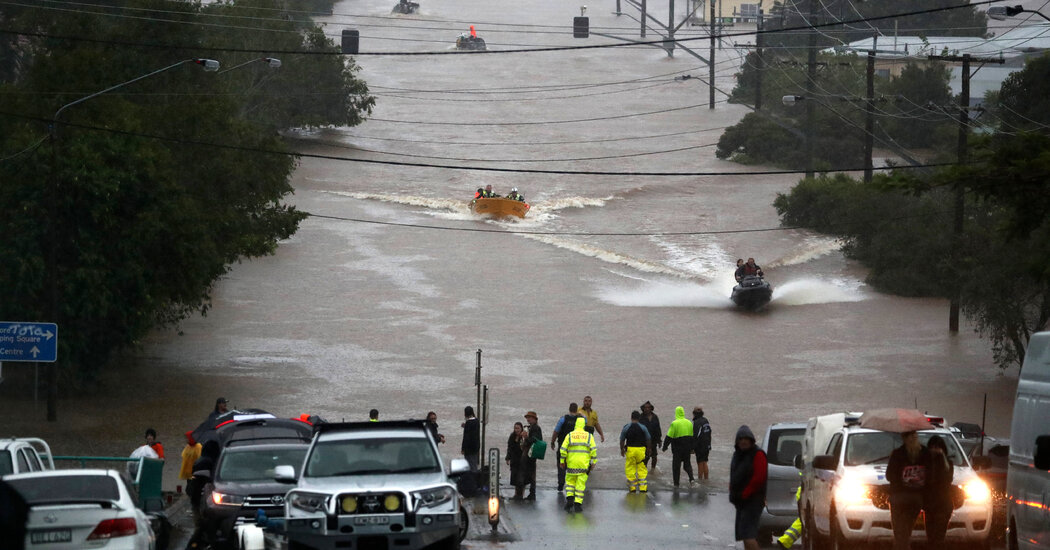
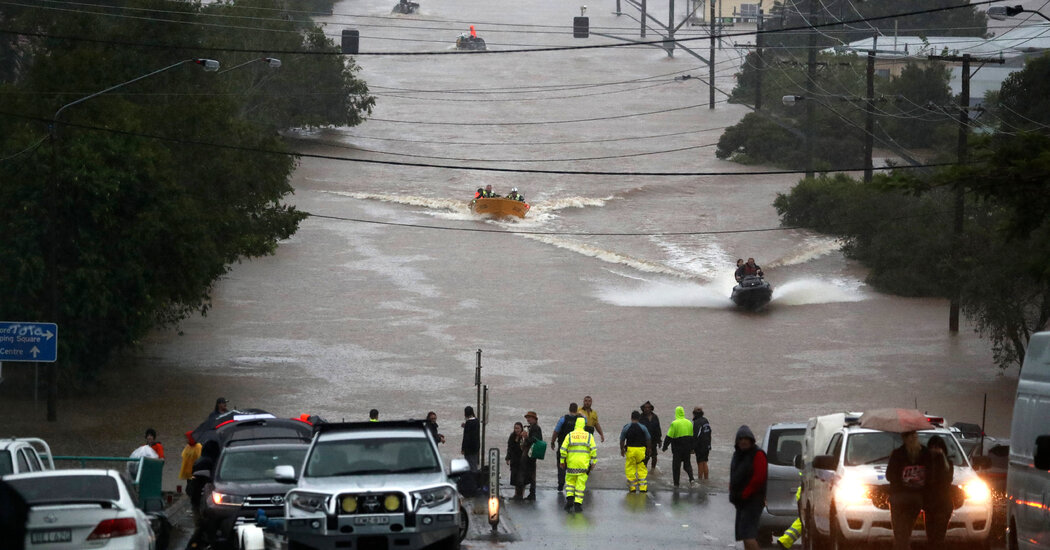
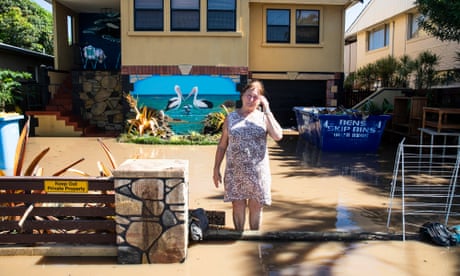
02-03-2022: As the corporate media narrative suspiciously switches from one fake bogeyman (Covid) to another (Russia), Australia’s East Coast has been swamped by a real threat which is already taking lives – extreme climate change. Over the last weekend in February, 1.5 metres of rain fell over three days, mostly around Brisbane and South East Queensland (QLD), in what was dubbed a “Rain Bomb”. In the consequent rising floods, at least 8 people were swept away to watery graves,[1] some of them being unable to escape their vehicles while attempting to navigate their way home. 18 000 homes in QLD have been fully or partially damaged,[2] with many owners and residents now attempting to clean through the muddy residue left by floodwaters which rose rapidly to submerge parts of their houses. All public transport in Brisbane has been shut down, and while there is a temporary reprieve from the driving non-stop rain, it is expected to return during the week,[3] causing more chaos.
“Rare” Weather Phenomenon?
With the “Rain Bomb” rapidly moving south into New South Wales (NSW), some media outlets are describing it as a “rare weather phenomenon”, while admitting that the current floods are the worst to hit Brisbane since 2011, when that was referred to as a “once in a century event”.[4] Yet many workers can see with their own eyes and through their own experience, that when several or more “once in a century weather events” seem to occur every few years – it is NOT a one-off. Moreover, many are now aware that these extreme weather events are not only more frequent, they are increasingly dangerous and take the lives of innocents each time they arrive. While the politicians act as if nature is simply at work, it is plain to see that the decades of warnings about carbon emissions from the burning of fossil fuels – alongside other dire environmental warnings – should have been heeded and acted upon long ago.
One doesn’t need to be a climate scientist to understand the dynamics which lead to the increased frequency of flooding. As global temperatures rise, clouds that can hold a lot of rain become more common in a warmer atmosphere. Warmer oceans leads to gigatonnes more evaporation, which leads to more atmospheric moisture, which in turn leads to more intense rainfall.[5] In colder climates, such as parts of North America, this increased moisture can also lead to more intense snow falls.[6] Think of a pot of water on the stove: the more heat is applied, and for a longer period, the more water simply bubbles away through evaporation. A similar effect takes place for the blue planet. During previous ice ages, carbon dioxide in the atmosphere were around 200 parts per million (ppm) and was around 280 ppm before the industrial revolution. Yet in 2013, carbon ppm topped 400 for the first time ever,[7] and has continued rising since then. The rise in carbon emissions mirrors the rise in the burning of fossil fuels, which has led many scientists to name a new geologic era – the “Anthropocene”.
Humans not to blame
Yet “anthropogenic global warming” is a misnomer, in that it implies that humans alone are the cause of climate change, which is just one of the pressing environmental emergencies. Environmental degradation is largely caused by industrial development, which is a necessity both of capitalism and its socialist successor. However, it is only with collectively owned, democratic and planned economies that the needs of the natural (including human) environment can be genuinely taken into consideration on its own account. Capitalism, with private ownership of the means of production and anarchistically unplanned economic competition domestically and internationally – can never be constrained by “external” reasons such as a healthy environment for people to habitate. Socialism, on the other hand, based on public ownership and control of the means of production – has no need for cutthroat economic competition, with its resulting extreme disregard for the soil and natural conditions.
Millions across the globe have mobilised over the last two years against the virtual abolition of liberal democracy under the false guise of “fighting Covid”. This movement for freedom correctly rejects the fraudulent claimed basis of a “health” emergency, as Covid repression clearly worsened health outcomes for many workers – with millions losing their jobs. At the same time, many in the freedom movement also reject the concept of climate change, believing it to be another essentially fictional narrative alongside Covid. This is a mistake, though perhaps motivated by healthy instincts. “Covid” as supposedly the most dangerous disease in history has no scientific basis whatever and is a cover for political repression. Yet climate change does have a scientific basis and is confirmed almost universally by climate scientists.[8] However, many in the freedom movement see the same people and the same forces who shrieked about the “danger” of Covid, likewise shrieking about the danger of climate change – and assume both are false alarms.
Liberal politics at fault, not climate science
Covid “health” fascism was driven not by far-right ultra-nationalism – this task was entrusted to liberal capitalist politics. It was reinforced primarily by already existing parliamentary parties who were aggressively backed by the old Trade Union officials alongside civil libertarians, feminists, “progressives”, and many utterly fake “socialist” and “Marxist” parties. The abject treachery against the working class of these layers which claimed for decades to be “revolutionary” has understandably resulted in some in the freedom movement rejecting everything else “leftists” ever stood for – including climate change. While it is true that the liberal left were animated by the danger of climate change, it was only their prescriptions for a solution that were fictitious. That is, it was fantastic to imagine that production could switch from fossil fuels to so-called renewable energy (primarily solar and wind power), switch to electric vehicles – and the system would right itself. Liberal political forces drove the “climate change” movement because they were concerned above all to save the capitalist system. The peak environmental groups were completely tied to the governments of the Western imperialist states, and thus the “climate change” movement could never achieve any of its fundamental goals due to its resolutely cross-class composition.
Just as the Covid left drove the working class into the ultimate cross-class alliance in the supposed interests of “public health”, the liberal left drives working people towards “their own” ruling class on climate, and then complains when people can see that such a movement is going nowhere. The Covid left consciously whipped up support for the police of the capitalist state, the existing parliamentary parties, the armed forces (!), the wealthiest billionaires in history, Big Pharma, Big Tech and Big Media – under the guise of a fake “pandemic”. This open and brazen genuflection before imperialist wealth and power grossly undermined whatever standing they may have had before lockdowns became a part of the vocabulary. Workers could see that this “left” were undisguised servants of the super elite.
The cardinal lesson which needs to be learnt and re-learnt is that the working class cannot ally itself with “its own” ruling class (via capital’s agents of Trade Union officials, liberals and the fake “left”) on Covid, on climate, on NATO’s war on Russia or ANY issue whatsoever! This is largely due to the fact that the war on Covid, the war on the natural environment, the war on Russia, the war on China, the war on Iran etc., is in fact part of ONE war – the war that private finance capital is waging against the international working class for its own survival. The Western imperialist class, as we have seen, will not hesitate to impose fascism (“Covid”) OR to potentially unleash nuclear war against Moscow (over Ukraine or some other trigger). At the very least, this is why they CANNOT be allies in the struggle for a safe climate!! Any climate movement which arises now must break with the liberal political forces which openly collaborates with imperialism on “Covid” and on possible nuclear war.
While climate change is certainly an existential threat to life on Earth, it cannot be separated from the other forms of capitalist exploitation, especially the exploitation of labour power, i.e., working people themselves, and also the scourge of imperialist war. The vegetation and foliage obviously cannot be mobilised in its own interest, so Marxists must concentrate on organising the only real class in society which has no material interest in the maintenance of capitalism, either in its previous form of liberal democracy, or its current form of Covid “health” fascism – the workers. Vanguard parties, linked internationally, can help lead the working class through the dregs of “Covid” and imperialist war to a new society, where those who labour will rule collectively for the true benefit of all.
0 thoughts on ““Rain Bomb” Hits Australia’s East Coast”
auntyutaYour comment is awaiting moderation.I am a slow, 87 year old reader! So far I read perhaps only on third of your blog. However, what I did read so far, does make absolute sense to me!I would like to study a bit more, what you say in this post. I try therfore to reblog it now to my site. I hope, you don’t mind.Sincerely, Aunty UtaLikeREPLY
auntyutaYour comment is awaiting moderation.Reblogged this on AuntyUta and commented: A very interesting blog! I read only some of it so far, and would like to have a closer look at it on this, my site. This is why I re-blog it here.LikeREPLY
Archives Select Month March 2022 February 2022 January 2022 December 2021 November 2021 October 2021 September 2021 August 2021 July 2021 June 2021 May 2021 April 2021 March 2021 February 2021 January 2021 December 2020 November 2020 October 2020 September 2020 August 2020 July 2020 June 2020 May 2020 April 2020 March 2020 February 2020 January 2020 December 2019 November 2019 October 2019 September 2019 August 2019 July 2019 June 2019 May 2019 April 2019 March 2019 February 2019 January 2019 December 2018 November 2018 October 2018 September 2018 July 2018 June 2018 May 2018 April 2018 March 2018 January 2018 December 2017 November 2017 October 2017 September 2017 July 2017 June 2017 May 2017 April 2017 March 2017 February 2017 January 2017 December 2016 November 2016
02-03-2022: As the corporate media narrative suspiciously switches from one fake bogeyman (Covid) to another (Russia), Australia’s East Coast has been swamped by a real threat which is already taking lives – extreme climate change. Over the last weekend in February, 1.5 metres of rain fell over three days, mostly around Brisbane and South East Queensland (QLD), in what was dubbed a “Rain Bomb”. In the consequent rising floods, at least 8 people were swept away to watery graves,[1] some of them being unable to escape their vehicles while attempting to navigate their way home. 18 000 homes in QLD have been fully or partially damaged,[2] with many owners and residents now attempting to clean through the muddy residue left by floodwaters which rose rapidly to submerge parts of their houses. All public transport in Brisbane has been shut down, and while there is a temporary reprieve from the driving non-stop rain, it is expected to return during the week,[3] causing more chaos.
“Rare” Weather Phenomenon?
With the “Rain Bomb” rapidly moving south into New South Wales (NSW), some media outlets are describing it as a “rare weather phenomenon”, while admitting that the current floods are the worst to hit Brisbane since 2011, when that was referred to as a “once in a century event”.[4] Yet many workers can see with their own eyes and through their own experience, that when several or more “once in a century weather events” seem to occur every few years – it is NOT a one-off. Moreover, many are now aware that these extreme weather events are not only more frequent, they are increasingly dangerous and take the lives of innocents each time they arrive. While the politicians act as if nature is simply at work, it is plain to see that the decades of warnings about carbon emissions from the burning of fossil fuels – alongside other dire environmental warnings – should have been heeded and acted upon long ago.
One doesn’t need to be a climate scientist to understand the dynamics which lead to the increased frequency of flooding. As global temperatures rise, clouds that can hold a lot of rain become more common in a warmer atmosphere. Warmer oceans leads to gigatonnes more evaporation, which leads to more atmospheric moisture, which in turn leads to more intense rainfall.[5] In colder climates, such as parts of North America, this increased moisture can also lead to more intense snow falls.[6] Think of a pot of water on the stove: the more heat is applied, and for a longer period, the more water simply bubbles away through evaporation. A similar effect takes place for the blue planet. During previous ice ages, carbon dioxide in the atmosphere were around 200 parts per million (ppm) and was around 280 ppm before the industrial revolution. Yet in 2013, carbon ppm topped 400 for the first time ever,[7] and has continued rising since then. The rise in carbon emissions mirrors the rise in the burning of fossil fuels, which has led many scientists to name a new geologic era – the “Anthropocene”.
Humans not to blame
Yet “anthropogenic global warming” is a misnomer, in that it implies that humans alone are the cause of climate change, which is just one of the pressing environmental emergencies. Environmental degradation is largely caused by industrial development, which is a necessity both of capitalism and its socialist successor. However, it is only with collectively owned, democratic and planned economies that the needs of the natural (including human) environment can be genuinely taken into consideration on its own account. Capitalism, with private ownership of the means of production and anarchistically unplanned economic competition domestically and internationally – can never be constrained by “external” reasons such as a healthy environment for people to habitate. Socialism, on the other hand, based on public ownership and control of the means of production – has no need for cutthroat economic competition, with its resulting extreme disregard for the soil and natural conditions.
Millions across the globe have mobilised over the last two years against the virtual abolition of liberal democracy under the false guise of “fighting Covid”. This movement for freedom correctly rejects the fraudulent claimed basis of a “health” emergency, as Covid repression clearly worsened health outcomes for many workers – with millions losing their jobs. At the same time, many in the freedom movement also reject the concept of climate change, believing it to be another essentially fictional narrative alongside Covid. This is a mistake, though perhaps motivated by healthy instincts. “Covid” as supposedly the most dangerous disease in history has no scientific basis whatever and is a cover for political repression. Yet climate change does have a scientific basis and is confirmed almost universally by climate scientists.[8] However, many in the freedom movement see the same people and the same forces who shrieked about the “danger” of Covid, likewise shrieking about the danger of climate change – and assume both are false alarms.
Liberal politics at fault, not climate science
Covid “health” fascism was driven not by far-right ultra-nationalism – this task was entrusted to liberal capitalist politics. It was reinforced primarily by already existing parliamentary parties who were aggressively backed by the old Trade Union officials alongside civil libertarians, feminists, “progressives”, and many utterly fake “socialist” and “Marxist” parties. The abject treachery against the working class of these layers which claimed for decades to be “revolutionary” has understandably resulted in some in the freedom movement rejecting everything else “leftists” ever stood for – including climate change. While it is true that the liberal left were animated by the danger of climate change, it was only their prescriptions for a solution that were fictitious. That is, it was fantastic to imagine that production could switch from fossil fuels to so-called renewable energy (primarily solar and wind power), switch to electric vehicles – and the system would right itself. Liberal political forces drove the “climate change” movement because they were concerned above all to save the capitalist system. The peak environmental groups were completely tied to the governments of the Western imperialist states, and thus the “climate change” movement could never achieve any of its fundamental goals due to its resolutely cross-class composition.
Just as the Covid left drove the working class into the ultimate cross-class alliance in the supposed interests of “public health”, the liberal left drives working people towards “their own” ruling class on climate, and then complains when people can see that such a movement is going nowhere. The Covid left consciously whipped up support for the police of the capitalist state, the existing parliamentary parties, the armed forces (!), the wealthiest billionaires in history, Big Pharma, Big Tech and Big Media – under the guise of a fake “pandemic”. This open and brazen genuflection before imperialist wealth and power grossly undermined whatever standing they may have had before lockdowns became a part of the vocabulary. Workers could see that this “left” were undisguised servants of the super elite.
The cardinal lesson which needs to be learnt and re-learnt is that the working class cannot ally itself with “its own” ruling class (via capital’s agents of Trade Union officials, liberals and the fake “left”) on Covid, on climate, on NATO’s war on Russia or ANY issue whatsoever! This is largely due to the fact that the war on Covid, the war on the natural environment, the war on Russia, the war on China, the war on Iran etc., is in fact part of ONE war – the war that private finance capital is waging against the international working class for its own survival. The Western imperialist class, as we have seen, will not hesitate to impose fascism (“Covid”) OR to potentially unleash nuclear war against Moscow (over Ukraine or some other trigger). At the very least, this is why they CANNOT be allies in the struggle for a safe climate!! Any climate movement which arises now must break with the liberal political forces which openly collaborates with imperialism on “Covid” and on possible nuclear war.
While climate change is certainly an existential threat to life on Earth, it cannot be separated from the other forms of capitalist exploitation, especially the exploitation of labour power, i.e., working people themselves, and also the scourge of imperialist war. The vegetation and foliage obviously cannot be mobilised in its own interest, so Marxists must concentrate on organising the only real class in society which has no material interest in the maintenance of capitalism, either in its previous form of liberal democracy, or its current form of Covid “health” fascism – the workers. Vanguard parties, linked internationally, can help lead the working class through the dregs of “Covid” and imperialist war to a new society, where those who labour will rule collectively for the true benefit of all.
0 thoughts on ““Rain Bomb” Hits Australia’s East Coast”
auntyutaYour comment is awaiting moderation.I am a slow, 87 year old reader! So far I read perhaps only on third of your blog. However, what I did read so far, does make absolute sense to me!I would like to study a bit more, what you say in this post. I try therfore to reblog it now to my site. I hope, you don’t mind.Sincerely, Aunty UtaLikeREPLY
auntyutaYour comment is awaiting moderation.Reblogged this on AuntyUta and commented: A very interesting blog! I read only some of it so far, and would like to have a closer look at it on this, my site. This is why I re-blog it here.LikeREPLY
Archives Select Month March 2022 February 2022 January 2022 December 2021 November 2021 October 2021 September 2021 August 2021 July 2021 June 2021 May 2021 April 2021 March 2021 February 2021 January 2021 December 2020 November 2020 October 2020 September 2020 August 2020 July 2020 June 2020 May 2020 April 2020 March 2020 February 2020 January 2020 December 2019 November 2019 October 2019 September 2019 August 2019 July 2019 June 2019 May 2019 April 2019 March 2019 February 2019 January 2019 December 2018 November 2018 October 2018 September 2018 July 2018 June 2018 May 2018 April 2018 March 2018 January 2018 December 2017 November 2017 October 2017 September 2017 July 2017 June 2017 May 2017 April 2017 March 2017 February 2017 January 2017 December 2016 November 2016
02-03-2022: As the corporate media narrative suspiciously switches from one fake bogeyman (Covid) to another (Russia), Australia’s East Coast has been swamped by a real threat which is already taking lives – extreme climate change. Over the last weekend in February, 1.5 metres of rain fell over three days, mostly around Brisbane and South East Queensland (QLD), in what was dubbed a “Rain Bomb”. In the consequent rising floods, at least 8 people were swept away to watery graves,[1] some of them being unable to escape their vehicles while attempting to navigate their way home. 18 000 homes in QLD have been fully or partially damaged,[2] with many owners and residents now attempting to clean through the muddy residue left by floodwaters which rose rapidly to submerge parts of their houses. All public transport in Brisbane has been shut down, and while there is a temporary reprieve…
NSW flood: Sydney residents in west and north-west evacuate as Warragamba Dam spill
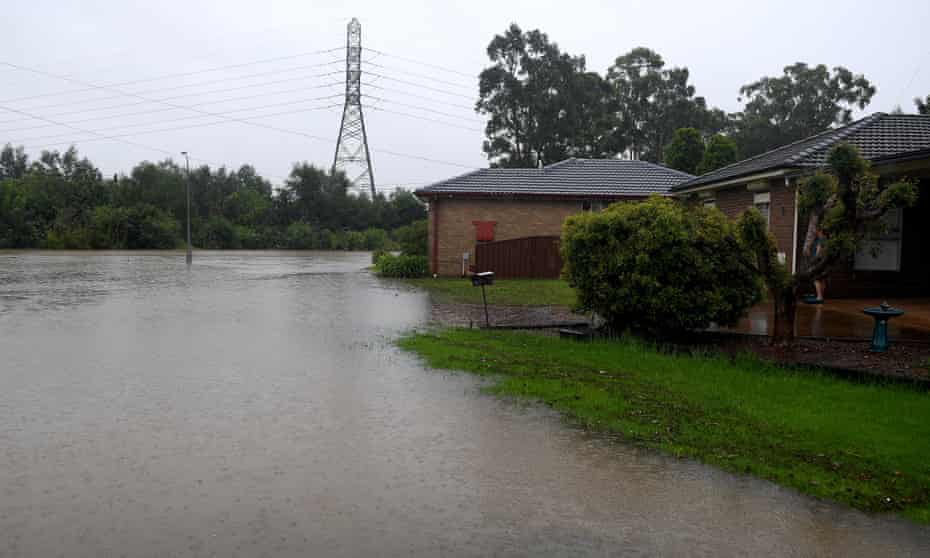
NSW flood: a flooded street in Penrith in Sydney’s west. More severe weather is expected overnight and Thursday, with NSW authorities warning communities at risk to evacuate as Warragamba Dam spills. Photograph: Dan Himbrechts/EPA
New South Wales authorities have warned communities at risk of major flooding in the Sydney region to evacuate or prepare to evacuate as the Hawkesbury, Nepean and Georges rivers continue to rise.
Warragamba Dam, Sydney’s main reservoir, was spilling at a rate in excess of 70 gigalitres a day on Wednesday after torrential rainfall over its catchment exceeded earlier predictions, according to a NSW government official.
The spill, which began at about 3am, was expected to peak on Thursday. The previous expectation of an upper range of the spill at 350GL a day has now been lifted to match or exceed the 440GL/day rate experienced during the March 2021 floods. That event caused widespread damage to areas to Sydney’s north and west.
“Major flooding is occurring in south-west Sydney exceeding March 2021 levels with major flood warnings in place. It’s raining, with some areas hit harder than others and more rain on its way. Keep a serious eye on the warnings and forecasts,” the NSW Bureau of Meteorology tweeted before 9pm.
“This is our worst fear,” the NSW deputy premier, Paul Toole, said earlier on Wednesday evening. “It will get worse before it gets better.”
In a worst-case scenario, Warragamba’s spill rate could peak at 600GL/ day, Toole told a media conference. A potential evacuation could involve “quite a few hundred thousand people”, NSW State Emergency Service commissioner, Carlene York, said.
Sydney Harbour holds roughly 500GL. More flood water, too, is entering the Hawkesbury-Nepean region from other tributaries that enter the flood plain below the dam.
There were also concerns Redbank Dam could fail, prompting the SES to direct people in some parts of North Richmond, north-west of Sydney, to evacuate.
“We just recently issued an evacuation order for the area in North Richmond downstream of the Redbank Dam because it may fail,” York said. “I want all those residents to make sure they do evacuate from that area.”
Residents were told to evacuate in some areas of Agnes Banks, Bligh Park, Camden, Cattai, Chipping Norton, Georges Hall, Lansvale, Leets Vale, Milperra, Moorebank, Sackville, Warwick Farm and other suburbs.
Authorities also told thousands more residents who were affected by Sydney’s 2021 floods to be on standby to leave.
NSW Health told people isolating due to Covid they should still evacuate their home if threatened by rising flood waters.
“If you are told to evacuate, you must evacuate,” NSW acting chief health officer Dr Marianne Gale said. “An emergency evacuation is a valid reason to leave your home.”
The Bureau of Meteorology shifted its forecast for when Sydney’s heaviest falls may land, predicting 120mm to 150mm on Thursday, up from 50 to 70mm. Since 9am on Wednesday, the city had only collected about 10mm, although inland sites were much wetter, with about 84mm up to 5pm at Richmond.
The bureau has also issued a major flood warning for the Nepean and Hawkesbury rivers.
“Significant river level rises have been observed along the Nepean River where major flooding is possible from early Wednesday evening,” the BoM said.
“Along the Hawkesbury and Lower Nepean rivers major flooding is also possible from overnight Wednesday into Thursday at Penrith, North Richmond, Windsor and downstream based on forecast rainfall.”
Sign up to receive an email with the top stories from Guardian Australia every morning
“We are going to be getting massive, like torrential rainfall,” Stephanie Heard, a spokesperson for the NSW SES, said.
“We want the community to start preparing for the potential for evacuation. We really need to make sure that the community listens and will follow our advice. Basically, it’s really quite a dangerous weather system that we’re seeing.”
There had already been 18 flood rescues in the Sydney region by Wednesday afternoon. Rainfall totals could reach 150mm to 200mm over the Hawkesbury region, Heard said.
While Sydney itself had been spared most of the heavy rain from the developing east coast low, inland areas including the Warragamba catchment had been receiving big falls.
Ben Domensino, a senior Weatherzone meteorologist, said the rain gauge at Warragamba had collected almost 100mm from 9am to 3pm. By comparison, Sydney’s Observatory Hill near the CBD had only about 30mm in the 30 hours to 3pm on Wednesday.
“This system has continued to surprise as to the extent of the rainfall,” Domensino said, noting its evolution from a so-called “rain bomb” over south-east Queensland and northern NSW into a low pressure system near the NSW central coast.
“This system at the moment is causing much heavier rain on the ranges than it is near the coast. There’s likely to be some heavy rain near the coast especially as the low pressure system comes in overnight into Thursday morning.”
People who may need to be evacuated should prepare an emergency pack and gather pets, which evacuation centres will be able to accommodate, the SES’s Heard said. The kit should include key valuables but also Medicare and other ID. More details can be found here.
Not surprisingly given the spill from Warragamba, the dam is 100% full, WaterNSW said. The entire dam network is sitting at 99.2% and it’s likely they will all be spilling by the end of this rain event.
Along with the warnings about floods and heavy rain, there are strong wind gusts and dangerous surf forecast, the latter up and down the NSW coast, the BoM said.
The truth, they say, is the first casualty of war, more so at a time when misinformation spreads so rapidly. But with correspondents on the ground on both sides of the Ukraine-Russia border, in Kyiv, Moscow, Brussels and other European capitals, the Guardian is well placed to provide the honest, factual reporting that readers will need to understand this perilous moment for Europe and the former Soviet Union.
The Guardian has an illustrious history of persistent, independent reporting in the region. We know there is no substitute for being there, and were on the ground at all the critical moments – from the 1917 revolution and the Ukrainian famine of the 1930s, to the collapse of 1991 and the first Russo-Ukrainian conflict in 2014. And we will stay on the ground through this frightening period as well.
As a Guardian supporter, you will know that since we started publishing 200 years ago, tens of millions have placed their trust in the Guardian’s fearless journalism, turning to us in moments of crisis, uncertainty, solidarity and hope. More than 1.5 million supporters, including you, from 180 countries, now power us financially – keeping us open to all, and fiercely independent.
And thanks to your support, we are able to provide all of this for free, for everyone. We do this because we believe in information equality. Greater numbers of people can keep track of the global events shaping our world, understand their impact on people and communities, and become inspired to take meaningful action. Millions can benefit from open access to quality, truthful news, regardless of their ability to pay for it.
If you can, we hope you’ll consider making an extra contribution to the Guardian today – you can do so from just $1. Every contribution, however big or small, sustains our future. You’re helping to power independent Guardian journalism that everyone can rely on.Thank you.
There is a lot to get your head around with the weather at the moment.
But here are the answers to five quick questions about the floods.
1. How unusual is this rain?
Very unusual.
The rainfall totals from this event have been staggering.
From 9am Thursday to 9am Monday three stations recorded over a metre of rain:
– 1637mm at Mount Glorious, QLD – 1180mm at Pomona, QLD – 1094mm at Bracken Ridge
Brisbane has absolutely smashed its three-day rainfall record with 677mm, by recording over 200mm each day for three days in a row.
Before this week it had never even had two consecutive days over 200mm and had only ever recorded eight in total.
The mean annual rainfall for Brisbane is 1011.5mm and it recorded 741mm in just the four days from 9am Thursday and 9am Monday.
Speaking of records, Weatherzone is reporting Dunoon in NSW recorded the second-highest daily rainfall total in NSW when 775mm fell in just the 24 hours to 9am Monday.
If you are not sick of stats yet, Doon Doon in NSW picked up a whopping 1040mm of rain in just the 48 hours to 9am Tuesday. That is over a metre of rain in just two days.
But it is not just the big totals that have made this rainfall event unusual.
Bofu Yu of Griffith University’s School of Engineering and Built Environment and Australian Rivers Institute observed that while the rainfall amount over south-east Queensland from Thursday to Sunday was huge and widespread, the intensity of rain was moderate at around 50mm per hour.
“This is distinct from the 2011 event when rainfall was concentrated in the western part of the Brisbane River Basin with a much higher peak rainfall intensity,” Dr Yu said.
The result is the rainfall has been spread far more liberally around the catchment this time and more water is flowing down the small creeks and tributaries, which has a flow-on effect further downstream.
Skinner and Lowes Heritage Wharf, Murwillumbah, Tweed River.(Supplied: Fran Silk)
“The peak discharge may not be as high compared to the 2011 flood, but high flows will persist over a much longer period of time,” Dr Yu explained.
South-east Queensland and northern NSW are historically flood prone and have certainly flooded before but this event is definitely different from those we have seen in the past.
2. Is climate change involved?
Attributing any one event to climate change is tricky, especially in the case of rain, which has many contributing factors.
But there is a clear link between a warming atmosphere and its ability to hold more moisture and deliver that moisture in the form of heavy rain.
“With each degree increase in the atmospheric temperatures, air can hold roughly 7 per cent more water vapour that is eventually available to fall as rain,” as Nina Ridder, research associate in the UNSW Climate Change Research Centre, explained.
“This means that under future conditions which are likely to be higher than what we have seen in the past.
“Over the past decades we have already seen an increase in the number and intensity of extreme rainfall events and we are expecting this trend to continue into the future.”
Another major climatic factor at play at the moment is the La Niña, which the BOM declared last year. It has been busy enhancing the rainfall over Australia all summer.
When La Niña conditions are in place warm tropical waters in the north and strong trade winds from the east encourage moisture onto Australia.
So, when individual weather systems come through it gives them another moisture kick.
David Karoly, Honorary Professor in the University of Melbourne School of Geography, Earth and Atmospheric Sciences, concludes that both climate change and the occurrence of La Niña are likely to have contributed to the increased risk of heavy rainfall in south-east Queensland in the current event.
“The difficult part is to precisely quantify the increase in risk or the contribution to the amount of rainfall, both of which are uncertain,” he said.
Brisbane has experienced an extraordinary amount of rain over the past few days.(ABC News: Michael Rennie)
3. What is a rain bomb?
This event has been commonly referred to as a “rain bomb” over the past few days.
But while it may have felt like the rain has been bombing down, a “rain bomb” is not a meteorological term.
There is a thing called “bomb cyclogenesis”, which is when a low pressure system develops unusually quickly, but that is not what happened this week.
Likewise there is another phenomena called a “wet microburst”, which is when a huge amount of rain drops suddenly from a storm, but that is generally over a small area.
What has been going on over the past week has been a surface trough, with upper atmosphere enhancement funnelling tropical moisture off the Coral Sea onto the coast which was blocked from moving off.
This created a large area of prolonged heavy rain.
Flooded canals at the Gold Coast.(Supplied: Reign Scott Drone Imagery)
4. What’s to come?
More extreme weather is forecast over the coming days as an east coast low develops off the NSW coast.
Severe thunderstorm warnings are in place for large parts of New South Wales this evening and flood watches are in place for parts of the NSW coast from Newcastle to Bega, pushing down into Victoria.
Wind gusts are forecast to be up around 90kph and could uproot trees and powerlines.
Where exactly the worst of the impacts will be felt in the coming days will largely depend on where the low moves to.
But heavy rainfall is expected on the southern side of the low, and Sydney residents have been urged to brace for flooding.
Impacts along the NSW coast are expected to linger until Thursday.
Back up in northern NSW and south-east Queensland it looks like showers and storms could return as soon as Wednesday afternoon.
The BOM is saying there is the potential for severe thunderstorms, heavy rainfall, damaging winds and large hail.
With catchments already on the edge, it is a worrying time for low lying areas
Longer term, summer may be over but there are still two months left of the tropical wet season.
The autumn outlook suggests wetter-than-average conditions are likely to remain across much of the country.
BOM’s autumn outlook indicates above median rainfall is likely for much of the county while fairly average conditions are likely elsewhere. (Supplied: Bureau of Meteorology)
There is still plenty of time for more tropical moisture to make its way south, bringing more heavy rain with it.
With the catchments so sodden, it won’t take much now to trigger more flooding.
If you are in a potential risk zone and have not yet thought about what you would do in a flood situation, this would be the time.
5. Where can I find the latest information?
ABC Emergency is the go-to place for up-to-date local emergency warnings.
The website also has a number of resources on how to prepare for and protect yourself from different disasters and emergencies.
It also release near daily severe weather updates during big events on its YouTube page.
If you would like the latest updates on rainfall numbers and where all the river levels are sitting across the country that can also be accessed through the BOM website here: http://www.bom.gov.au/australia/flood/?ref=ftr
Flood maps for your local area should be available on your local council website.












 AuntyUta