
I think this is a fascinating article in the International Spiegel. How could it come to these ‘misunderstandings’ between Europe and Russia? There is a war in the Ukraine now. Why?
Category: Article
Overcoming Indigenous Disadvantage in Australia
http://www.abc.net.au/news/2014-11-20/green-broken-promises-and-tests-of-character/5904892
This is what it says in the above article:
“Clearly we are far from achieving that healing. The Productivity Commission report released this week, Overcoming Indigenous Disadvantage, details a people in a state of psychological crisis. A people amongst whom suicide, self-harm and mental injury are rife.”
So, this is the world we live in. Why is there this kind of disadvantage? Sometimes we hear some very well chosen words that sound as though there is some hope that things are going to change for the better. Sooner or later we find out that nothing is changing very much. Changes do take time and more time. Meanwhile there are a lot of people who just do not get a chance in life.
11th November, Rememberance Day 2014
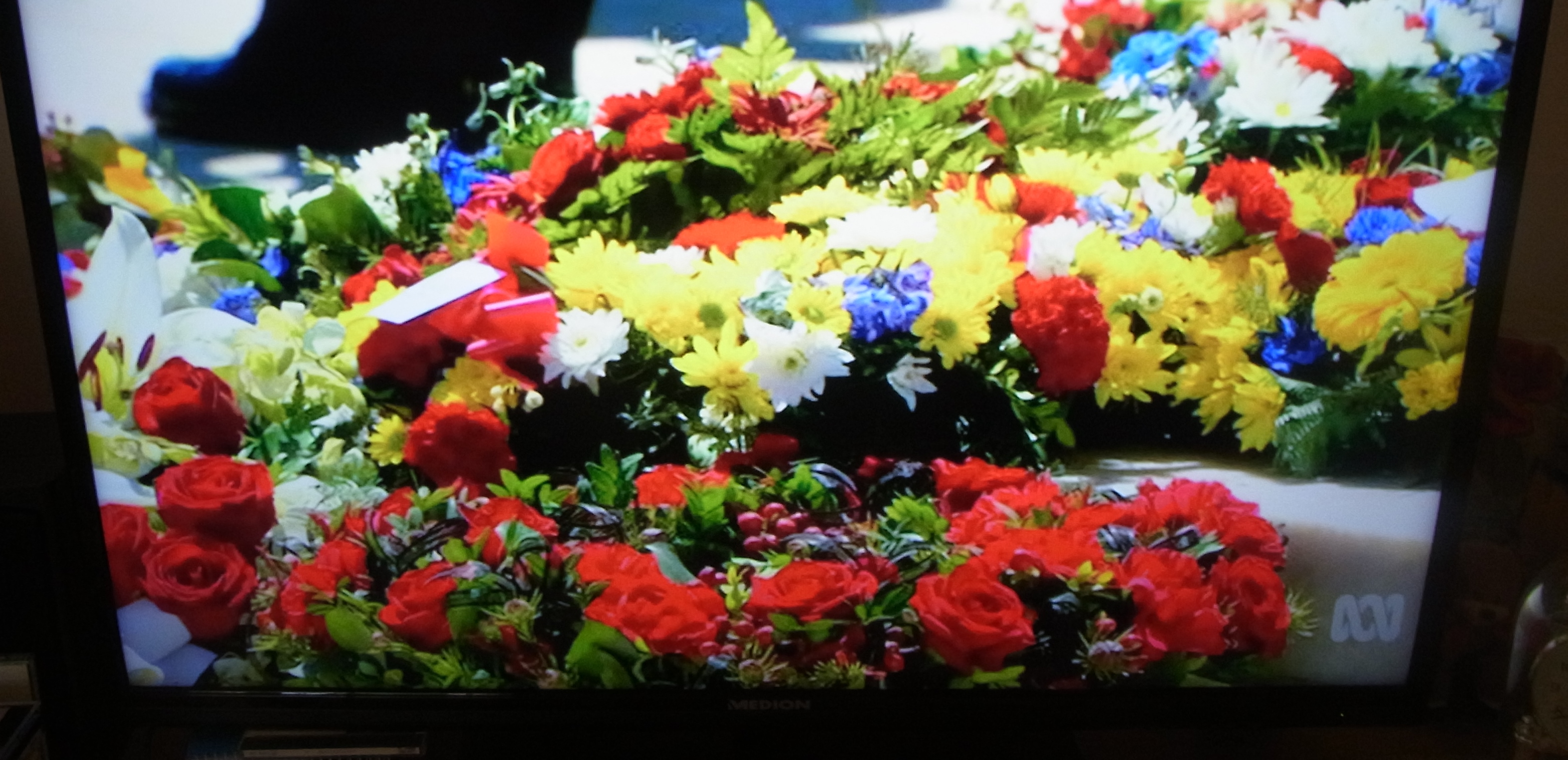
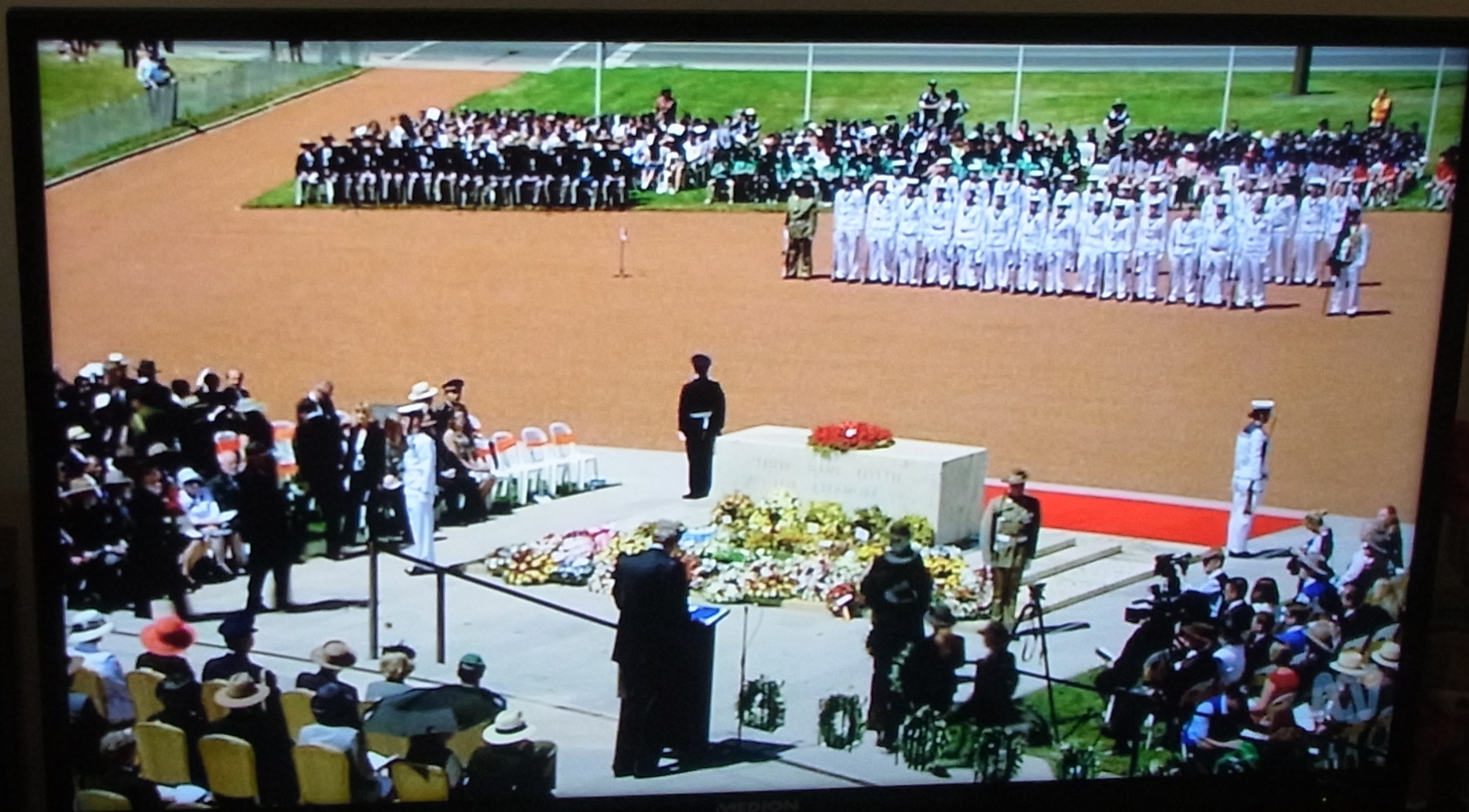
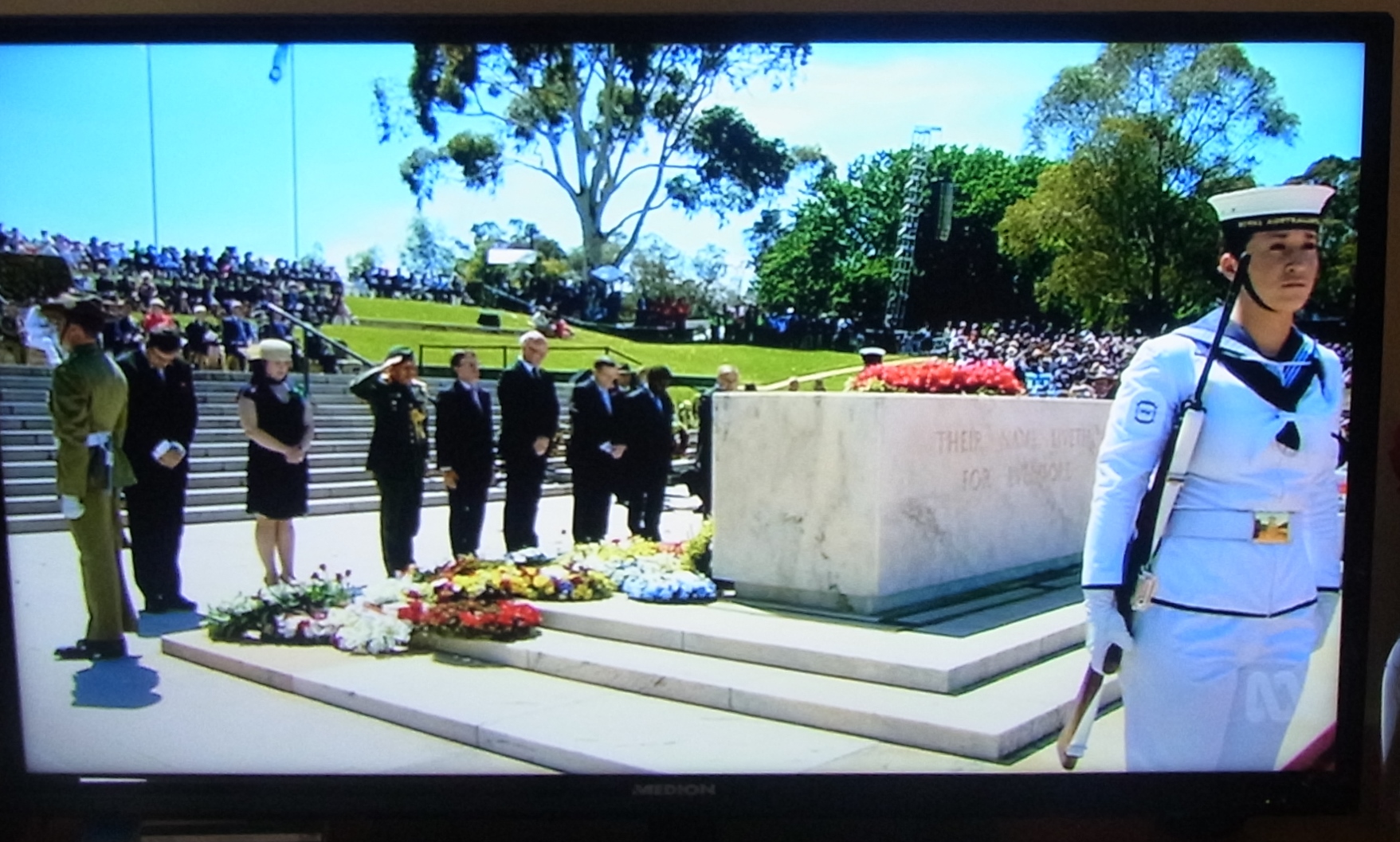
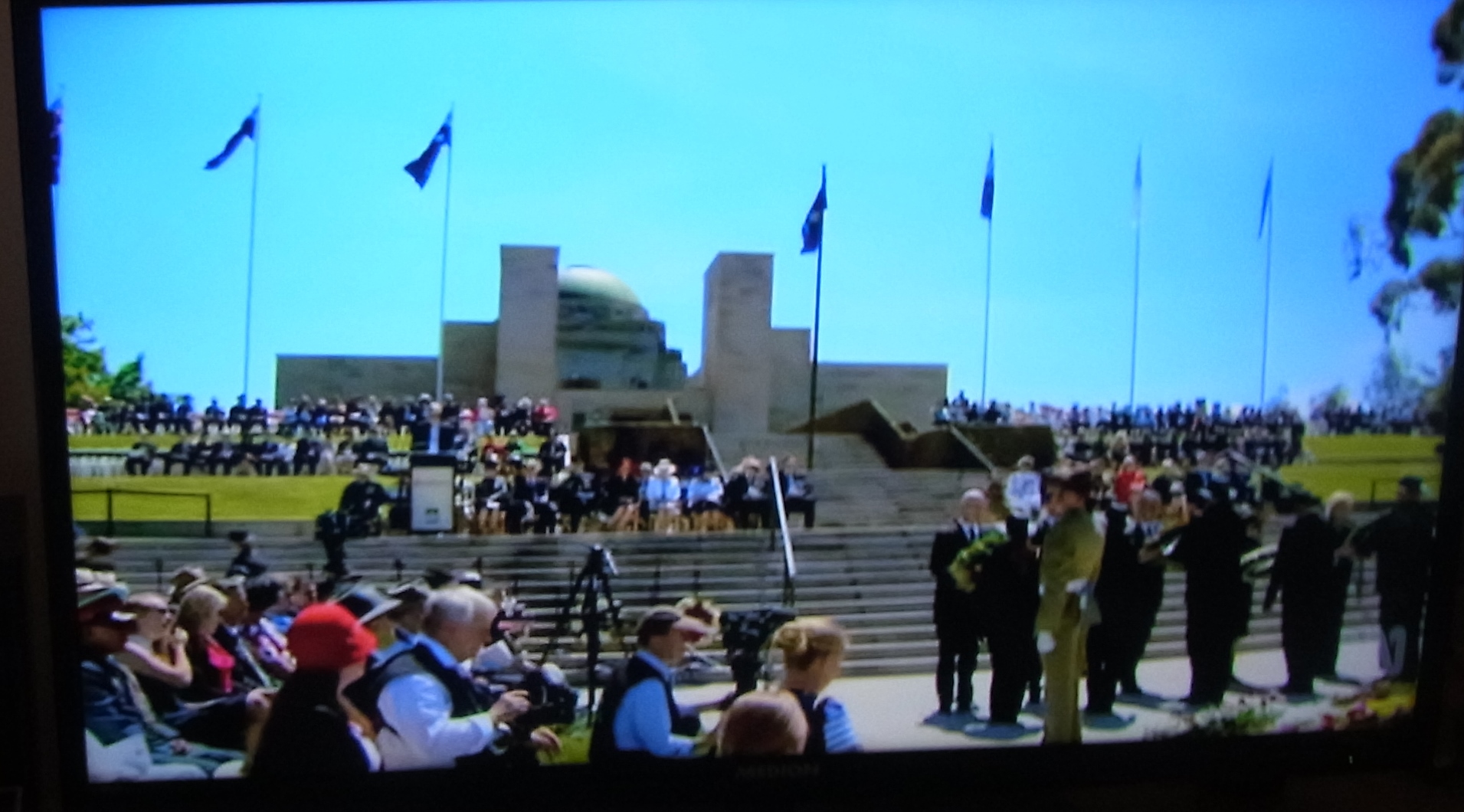
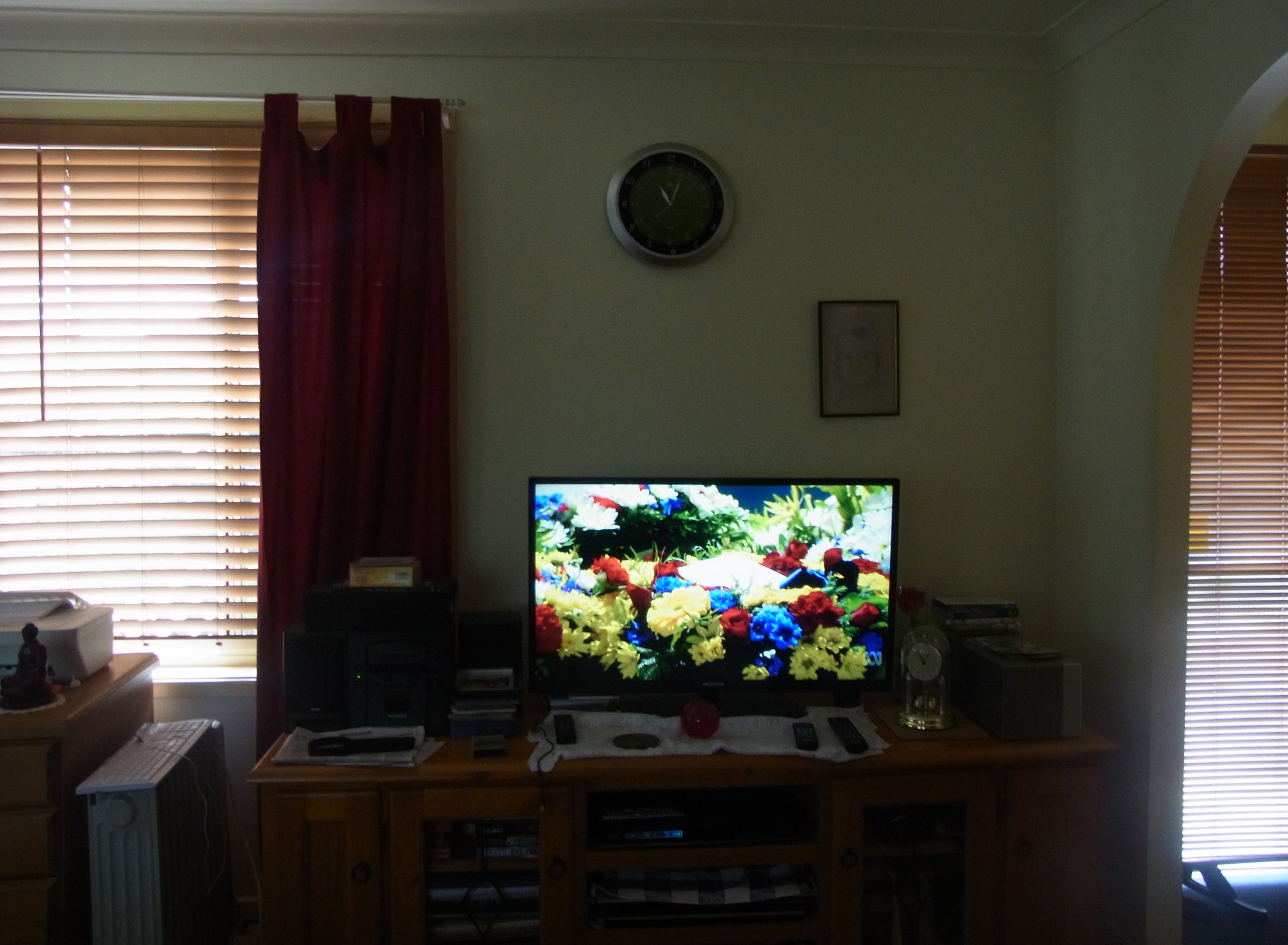
All the above pictures I took from our TV screen this morning during a special ABC broadcast from the Australian War Memorial in Canberra.
http://www.abc.net.au/news/2014-11-11/rememberance-day/5881352
Remembrance Day ceremonies are being held throughout the country to commemorate the Australians who have died serving their country.
Director of the Australian War Memorial Brendan Nelson said it was important to reflect on the lives lost in conflict, particularly those lost during The Great War.
Mr Nelson said the number of Australians killed in World War I and the impact it had on the nation was beyond comprehension.
“Today, I think it shouldn’t be too much to ask every Australian to perhaps set the alarm on your phone for 10:59am AEDT; and what you’re doing at 11:00am AEDT, just stop for a moment and think,” he said.
“You know, we sing our national anthem regularly, ‘Australians all let us rejoice for we are young and free’.
“Just reflect on the fact that we are young and free in no small way because 102,700 Australians have given their lives in our uniform, in our name.”
The Great War was the crucible in which our nation’s identity was forged.
Prime Minister Tony Abbott
In a recorded video message, Prime Minister Tony Abbott called on all Australians to pause and “remember the suffering and loss that’s occurred in all wars”.
“This Remembrance Day marks 96 years since the guns fell silent at the end of The Great War. The Great War was the crucible in which our nation’s identity was forged,” he said.
“From a population of under 5 million, 417,000 enlisted, 332,000 served overseas, 152,000 were wounded and 61,000 never came home.
“Today we will remember the courage, achievements, pain and loss of all who have served in our name and we draw strength from their memory. Lest we forget.”
In Canberra, former prime minister John Howard delivered a commemorative address before a minute’s silence at 11:00am AEDT.
“We honour first and foremost the extraordinary sacrifice of more than 102,000 Australians who have died in the defence of the values of this country and in defence of this country,” he said to the crowd.
“We also gather to honour the spirit of Australia which has moved this nation not to go to war to conquer and subjugate, but rather to go to war and defend the vulnerable, and defend the values of which this nation has always proudly stood.
“The sacrifice of Australians that we honour today is quite remarkable. It is a sacrifice as we contemplate the beginning of World War I, a sacrifice in that war which reached extraordinary proportions.”
In Victoria a $45 million redevelopment of Melbourne’s Shrine of Remembrance will be unveiled as part of that state’s commemorations.
A new gallery and education space will be opened to mark the 80th anniversary of the shrine, and will be officially dedicated after the Remembrance Day ceremony.
The Shrine of Remembrance Foundation’s chief executive Denis Baguley said the Galleries of Remembrance was an important addition.
“It really will ensure that the shrine will remain relevant for future generations. After all, our World War II veterans have passed on. So it’s a very important project in the sense of not only commemoration but education,” he said.
A day to remember returned veterans from recent conflicts
The Returned and Services League of Australia (RSL) urged people to use Remembrance Day to also reflect on those young veterans who have returned from recent conflicts with mental health and substance abuse issues.
President of the Tasmanian RSL, Robert Dick, said almost half of all Tasmanian men fought in the war.
“The Tasmanian presence was very strong, for an area that had a very small population at the time,” he said.
“Of the Tasmanians that actually went and served at the Western Front and at Gallipoli and the Middle East, one in four did not come home, they actually died either of wounds or were killed outright.”
New South Wales RSL president Don Rowe said many young veterans in their 20s and 30s were struggling to return to civilian life after tours of duty in Afghanistan, Iraq and Timor.
He said the sale of red poppies on Remembrance Day was part of an RSL fundraising drive to give returned soldiers the support and services they needed.
“Mental illness obviously is a very large issue. We’re also finding that the homeless issue is another one that’s happening out there to those who’ve served,” he said.
“A number of them just need help and support out there to just get their lives back into order … after serving in our defence forces.”
http://www.abc.net.au/news/2014-11-11/rememberance-day/5881352
This is a link to the above article.
Australians are being asked to pause for a second minute of silence to honour those veterans who have taken their own lives after returning from battle.
“[Australians should pause] to remember those who have come back and unfortunately succumbed to their wounds,” John Bale, a 30-year-old veteran said.
Berlin, a City undivided
http://www.theguardian.com/world/2014/nov/09/berlin-wall-fall-remembered-residents-25-anniversary
A city undivided: the fall of the Berlin Wall commemorated 25 years on
Germans recall the ‘sheer madness’ of the night in 1989 when thousands of East Berliners streamed across the border
Philip Oltermann in Berlin
The Guardian, Monday 10 November 2014 07.56 AEST
Jump to comments (42)
Germany Celebrates 25th Anniversary Of The Fall Of The Berlin Wall
The Brandenburg Gate stands illuminated during celebrations on the 25th anniversary of the fall of the Berlin Wall. Photograph: Sean Gallup/Getty Images
As the long row of helium-filled white balloons lifted off one by one into the night sky over Berlin, Tina Krone managed to gulp down a tear and lit a sparkler. “I haven’t seen that many people on the streets for 25 years,” she said, surveying the crowds at Bernauer Strasse.
On 9 November 1989, when she and thousands of other East Berliners streamed across the border into the west shortly before midnight, only those old enough to remember the building of the wall had cried.
Krone and her friends, on the other hand, had simply been lost for words: “‘Madness, sheer madness’. I know it’s not very original of me, but I must have said that a thousand times that night.”
An active member of the East German dissident movement, she had received a call from a friend in the west at about 10.30pm: “Have you seen the news? They’re saying the wall is open.”
Illuminated balloons, part of the so-called Border of Light, rise into the sky at the Potsdamer Platz in Berlin.
Illuminated balloons, part of the so-called Border of Light, rise into the sky at the Potsdamer Platz in Berlin. Photograph: Soeren Stache/Corbis
Because the closest border crossing to her at Bornholmer Strasse was already crowded, she and her partner jumped into their Trabant car to head to Kreuzberg.
When she had passed through the checkpoint at Heinrich Heine Strasse, a West Berliner thrust a bottle of beer into her hand, but she says she did not need to take a single sip to feel intoxicated.
In a bar, she and her partner met long-lost friends, who gave them a pile of western newspapers and a small colour TV as a welcoming gift. By daybreak, they were back at the checkpoint – there had been rumours that the border would close again at 8am.
Only when the guards waved them through for a second time did the reality sink in. “Then I knew there was no way back for the party bigwigs,” Krone says. “After that, it felt like our Trabi was flying us home.”
Whatever one’s views of the handling of the aftermath of the wall’s fall, memories of 9 November 1989 still have power. And while fall-of-the-wall anniversaries come and go, this year’s art installation, conceived by brothers Christopher and Marc Bauder, managed to create a rare thing: a memorial that felt both poignant and playful, thought-provoking but not maudlin.
People watch balloons marking the former border flying away in front of the Reichstag building.
People watch balloons marking the former border flying away in front of the Reichstag building. Photograph: Steffi Loos/AP
Since Friday morning, a so-called Lichtgrenze or “border of light”, made up of 8,000 balloons, has traced a section of the fallen wall across central Berlin for 15km (nine miles).
On Friday and Saturday night, thousands of Berliners old and young were out on the streets to walk along the old border.
Those who grew up in a divided Berlin are unlikely to ever forget the precise route of the old dividing line.
Krone says she still feels a bit queasy when she passes from east to west and recalls that it “hurt” the first time she passed under the Brandenburg Gate. The driver of the taxi in which she was travelling turned around and did it again, three times in total, “until it stopped hurting”.
But for tourists, it is surprisingly hard to tell these days where West Berlin used to start and East Berlin used to end. On Potsdamer Platz and near the central station, the area where the wall of light ran this weekend has been wholly renovated and is unrecognisable from the wasteland of 1989. In the hipper parts of Kreuzberg, the installation has reminded more recent arrivals that a country used to end right outside their doorstep.
German chancellor Angela Merkel walks along a section of the former Berlin Wall during celebrations for the 25th anniversary of its fall.
German chancellor Angela Merkel walks along a section of the former Berlin Wall during celebrations for the 25th anniversary of its fall. Photograph: Imago / Barcroft Media
At 7.20pm, with a considerable delay, the first balloon floated into the night sky in front of the Brandenburg Gate. The Berlin State Orchestra played Beethoven’s stirring Ninth Symphony and outgoing Berlin mayor, Klaus Wowereit, gave a short speech. “Walls made of concrete and walls in our heads are surmountable when people come together and take their fate into their own hands,” he said.
At Bernauer Strasse, the row of balloons took a sharp left into Mauerpark, once a section of the death strip, now a giant park for residents. Some people had climbed on to the strip of wall in front of the Friedrich-Ludwig-Jahn sports stadium to get a better view, as if in tribute to the pictures that were transmitted around the world in 1989.
Back then it was here, in the Prenzlauer Berg district, that the power of crowds forced the first border point to open. On Sunday, the locals’ famed impatience was once again on display: a number let go of their balloons early.
This year’s commemoration of the fall of the Iron Curtain may also feel more poignant because there is a palpable sense that peace in Europe in 2014 is more fragile than it was at the 20th anniversary in 2009.
People attend a memorial activity to commemorate the 25th anniversary of the fall of the Berlin Wall.
People attend a memorial activity to commemorate the 25th anniversary of the fall of the Berlin Wall. Photograph: Xinhua/Landov/Barcroft Media
In her speech at the wall memorial on Bernauer Strasse on Saturday afternoon, Germany’s chancellor, Angela Merkel, had explicitly emphasised the geopolitical resonances of the event, instead of indulging in personal reminiscences.
“We have the strength to shape things, to turn things from bad to good, that is the message of the fall of the wall,” she said. “These days, that message is directed at Ukraine, Syria, Iraq and many, many other regions in the world.”
Merkel, who on 9 November 1989 had walked over into the west at the Bornholmer Strasse checkpoint on her way back from the sauna, with her wet towel still in her bag, said: “If one thing was wonderful about those days, it was the imagination that was being set free after having been suppressed for so many years.”
Jean-Claude Juncker, the president of the European commission, issued a statement on the anniversary, warning that “Europe must once again become a thing of the heart”. He said: “It was with passion and courage that the people tore down that which divided them, in search of peace, freedom, unity, democracy and prosperity. Two decades later, we must not forget that peace is not a given in Europe. More than ever, Europe must live up to its responsibility to safeguard freedom and peace.”
Hulda, 3, places flowers in between slats of the former Berlin Wall at the Berlin Wall Memorial at Bernauer Strasse.
Hulda, 3, places flowers in between slats of the former Berlin Wall at the Berlin Wall Memorial at Bernauer Strasse. Photograph: Sean Gallup/Getty Images
On Saturday, the former Russian president Mikhail Gorbachev warned of a “new cold war”, brought about by the west’s mishandling of the aftermath of the fall of the wall.
“Instead of building new mechanisms and institutions of European security and pursuing a major demilitarisation of European politics … the west, and particularly the United States, declared victory in the cold war,” said the man behind the Soviet Union’s glasnost and perestroika reforms, speaking at a symposium near the Brandenburg Gate.
“Euphoria and triumphalism went to the heads of western leaders. Taking advantage of Russia’s weakening and the lack of a counterweight, they claimed monopoly leadership and domination in the world.”
The enlargement of Nato, Kosovo, missile defence plans and wars in the Middle East had led to a “collapse of trust”, said Gorbachev, now 83. “To put it metaphorically, a blister has now turned into a bloody, festering wound.”
Uta’s Diary, 6th November 2014
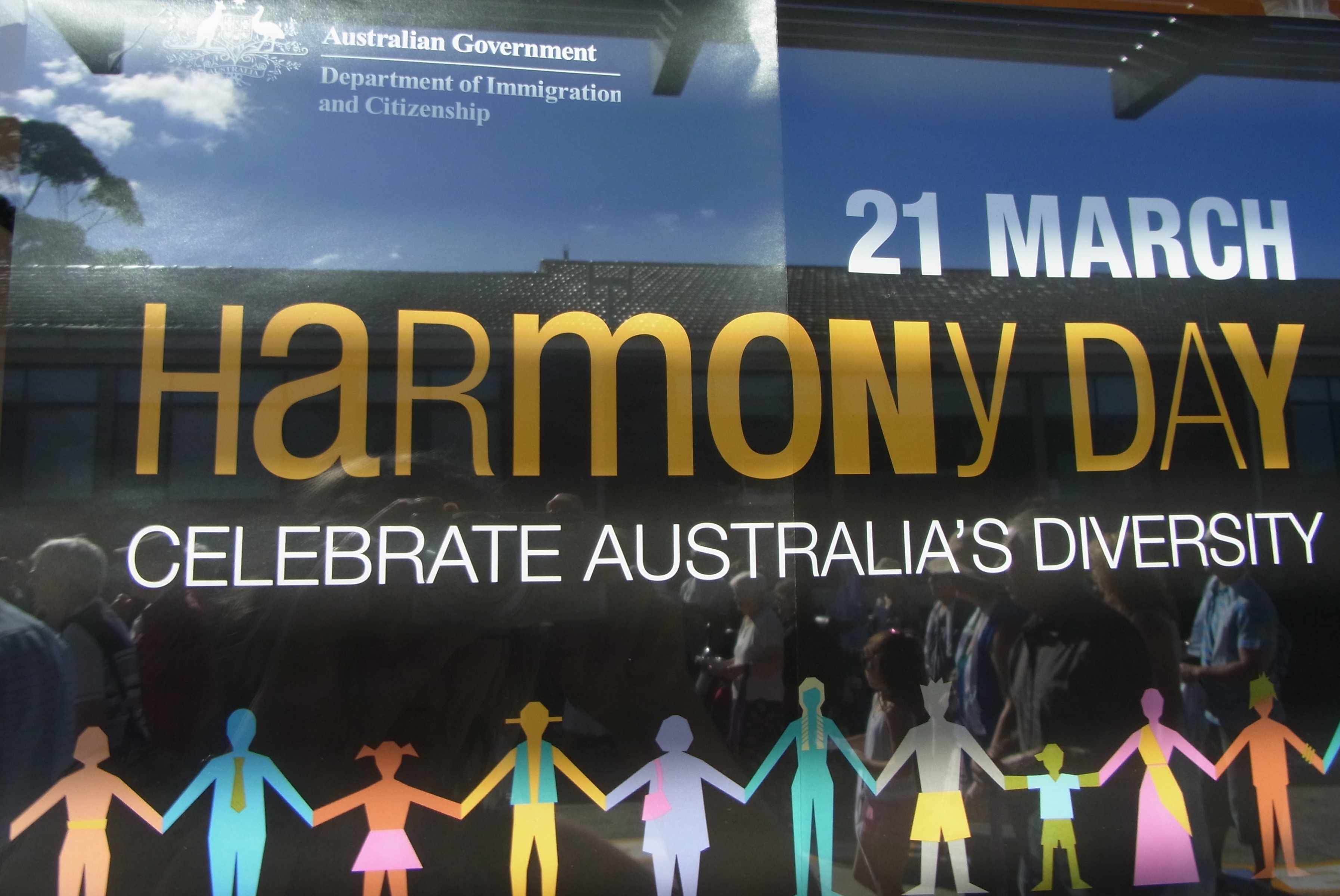

I found these two posters in my media library. They are from 2013.
My thoughts today are still very much with everything about yesterday’s Memorial Service for Gough Whitlam. Gough was 98 when he died.
He had chosen the music and I think also the speakers for this service. He could not have chosen any better. The music was the best and so were the speakera.
The service concludes with the Sydney Philharmonia Choir and Sydney Symphony Orchestra performing Hubert Parry’s Jerusalem by Hubert Parry
Gough Whitlam praised by Noel Pearson, 5th Nov 2014
Indigenous leader Noel Pearson’s powerful eulogy for Gough Whitlam at his state memorial service is being hailed on social media as a one of the best political speeches of our time.
The chairman of the Cape York Group paid tribute to “this old man” Whitlam, praising his foresight and moral vision in striving for universal opportunity in Australia.
He even channelled Monty Python as he listed Whitlam’s achievements, saying: “And what did the Romans ever do for us anyway?”, to laughter and clapping from the audience. He then answered his own question, reeling off a great list of Whitlam’s achievements, including Medibank, the abolition of conscription, the introduction of student financial assistance and Aboriginal land rights.
 Noel Pearson received rave reviews for his tribute to Gough Whitlam. Photo: Peter Rae
Mr Pearson said as a person born into poverty and discrimination, he spoke of “this old man’s legacy with no partisan brief”.
“Only those born bereft truly know the power of opportunity,” Mr Pearson said.
“We salute this old man for his great love and dedication to his country and to the Australian people.
“When he breathed he truly was Australia’s greatest white elder and friend without peer to the original Australians.”
Thousands of those gathered outside Sydney’s Town Hall sang along to From Little Things, Big Things Grow, about the Indigenous struggle for land rights and recognition in Australia.
Within minutes of his speech, #noelpearson was trending on Twitter in Australia and his oration was being heaped in praise.
Gough Whitlam memorial: Tony Abbott, former PMs and dignitaries farewell titan of Australian politics
Updated

Gough Whitlam, Australia’s 21st prime minister, has been lauded at a memorial service in Sydney as a giant of politics and a man who devoted his talents to public service.
Sydney’s Town Hall and many of the streets surrounding it overflowed with people wanting to be a part of the memorial service for Mr Whitlam, who died at the age of 98 on October 21.
There were cheers, and some jeers, for the six former prime ministers and current leader Tony Abbott as they filed into the hall to join the capacity crowd of almost 2,000.
“Gough chose this venue,” said master of ceremonies Kerry O’Brien. “Of course he did. The people’s hall. But it wasn’t his first choice. His first choice was to have a funeral pyre in the Senate.
“Big man, big heart, big vision, big hurdles, big flaws, big outcomes, a big life dedicated to public service.”
The service was also beamed live into Melbourne’s Federation Square and to Cabramatta in Mr Whitlam’s former western Sydney electorate.
There were cheers as Indigenous leader Noel Pearson listed Mr Whitlam’s achievements while in office.
“My single honour today, on behalf of more people than I could ever know, is to express out immense gratitude for the public service of this old man,” Mr Pearson said.
“We were at last free from those discriminations that humiliated and estranged our people.”
Other speakers included Academy Award-winning actor Cate Blanchett, Mr Whitlam’s speechwriter Graham Freudenberg, Labor senator John Faulkner and Antony Whitlam QC, Mr Whitlam’s eldest son.
“He touches us in our day-to-day lives, in the way we think about Australia, in the way we see the world,” Mr Freudenberg said.
“He touches, still, the millions who share his vision for a more equal Australia, a more independent, inclusive, generous and tolerant Australia, a nation confident of its future in our region and the world.”
Blanchett said Mr Whitlam’s reforms, including free tertiary education and health care, helped her pursue a career as an actor.
“I was but three when he passed by, but I shall be grateful till the day I die,” she said.
“The effect on the geo-cultural political map of Australia made by Gough Whitlam is so vast that wherever you stick a pin in you get a wealth of Gough’s legacy.”

The Sydney Philharmonic Choir and the Sydney Symphony Orchestra provided music throughout the service, while Paul Kelly and Kev Carmody performed From Little Things Big Things Grow, a song that tells the story of Gurindji man and Aboriginal rights activist Vincent Lingari and the creation of the Aboriginal Land Rights Act in 1976.
The Gurindji people have never forgotten the man they call Kulum Whitlam, who returned their traditional lands in what became known as the Wave Hill hand-back.
A group of Gurindji people travelled to Sydney from their traditional home, about 800 kilometres south of Darwin, for the service.
Groups gathered outside the hall and watched the broadcast of the service at other locations, including Cabramatta, in Mr Whitlam’s former seat of Werriwa in Sydney’s west.

Mr Whitlam was the member for Werriwa for 26 years, after serving in the Royal Australian Air Force during World War II.
One mourner outside the hall wore a T-shirt with Whitlam’s famous slogan from the 1972 federal election campaign, “It’s Time”.
Mr Whitlam left a legacy of unprecedented and unmatched change in Australian politics, but he is perhaps most remembered for his part in the constitutional crisis of 1975 known as The Dismissal.
Mourner Chris Foran said he attended to pay tribute to Mr Whitlam’s legacy.
“I don’t think we’ll see another person like that, as a leader of this country, he was just one in a million,” he said.
More than 100 people also gathered at Old Parliament House in Canberra to pay their respects.
There was laughter, applause and some tears as the group watched a live broadcast of the national service.
Christopher Chenoweth reflected on the significance of watching the service at Old Parliament House, near the halls of power during Mr Whitlam’s time as prime minister.
“He made changes that could never be turned back, he made mistakes, he had some extraordinary characters in his ministry, but it was a revolutionary time in Australia I believe,” he said.

‘A great man with a great legacy’
Authorities struggled to accommodate the crowds that gathered for the service.
About 6,000 people registered to attend, but there were only 1,000 general public seats, which were allocated on a first-come, first-served basis.
Max McCleod, from Corrimal in northern Wollongong, became emotional after being told he could not get into the service.
“I got out of bed at five o’clock this morning, where I live at Corrimal,” he said.
“I caught the six o’clock bus and I’ve come all the way in here and I can’t see the man I know.”
Ahead of the memorial, Mr Shorten told Channel Seven that Mr Whitlam was a great man with a great legacy.
“It’s sad because a great Australian has left us,” Mr Shorten said.
“But it’s also a happy day because we recognise that he was a politician, unlike many others, who not only served the nation, but he changed Australia for the better,” he said.

A NEW PARTY FOR AUSTRALIA
Disillusioned with both Labor and Liberal. I am sure this applies to many Australian voters. I hope the “Progressives” are going to become a viable alternative.
The Australian Progressives Team
Meet the Australian Progressives team. As we annouce more team members on our Facebook page we will update our list below.

Tim Jones
Party President
I am a ‘career tradesman’ who has worked as an underground fitter, on power stations, ships and factories around Australia.
I did my degree in psychology and linguistics in the 90s and worked as a nurse for a few years after.
I have two grown sons and a grandson who deserve a country which celebrates them and the future they will share.
As a co-founder of ‘March in March’ I wanted to fight for that future and co-founding The Australian Progressives is my natural next step.
Progress is what we do with hope. Without hope we are lost.

Fariza Fatima
I am a student of Law and Media at Macquarie University. I am currently a project officer at a grass roots community organization. I believe in working towards justice by empowering people – in pursuit of this I have dabbled in volunteering at five different non-government organizations and 3 university societies.
I am a founder and deputy editor of Youthink a Youth magazine. I live by two maxims “You must be the change you wish to see” and “let yourself be silently drawn by what you really love”.
I’m part of the Australian Progressives because we are part of a global system, with global economies – global measures of efficiency. I believe that this process needs global empathy. The current discourse allows great debate but on a very narrow spectrum – this stagnation needs to be resolved. We need new policies and structures in light of our globalized world. We need compassionate policies that connect us to other people. We need Change.

Brenden Prazner
I’m a self-confessed geek at heart. I embrace technology, what it can do and how it can make life better (and more fun!).
I’ve worked for the past 17 years in the decorated apparel industry (11 of which in software development), and have enjoyed a variety of technical and commercial roles in a range of businesses from small owner-operators to large national leading apparel suppliers.
I’m a father of two and hope for a future where our nation is governed by logic and reason, and policies created around facts and not fiction.
I’ve joined the Australian Progressives because I believe in a nation that embraces positive change, and realises the possibilities that an informed and science-literate nation can deliver.

Emma Watt
I am studying Law and International Relations at UNSW. I’m passionate about social justice, and politics, and in the past two years I have been the community director of the UNSW United Nations Society and the Co-Deputy Convenor for the Amnesty International Australia NSW Student’s Conference.
I’m in the Australian Progressives because I don’t want to wait to be a ‘leader of tomorrow’. It’s time to act now – raw and uninhibited.
I am deeply passionate about youth voices and I want to see more youth participating in and contributing to the political agenda.

Candy Lawrence
Facebook administrator
I am a retired educator with nearly 30 years’ experience teaching and caring for children from birth to 18 years. My passion for teaching is based on respect for children’s individuality, competence and potential. I have expertise and experience in gifted education and hope to see a day when ‘tall poppy syndrome’ is recognised as an impediment to our progress as a nation.
As a writer in my spare time, I strive to improve children’s welfare through my blog ‘Aunt Annie’s Childcare’ which has a world-wide following. I have also been active locally in the fight against unconventional gas mining on the Far North Coast as an advocate for children’s rights.
I joined the Australian Progressives because they have given me hope. The lack of personal respect exhibited by our current politicians in question time dismays me. The lack of human decency, particularly with respect to children’s welfare and rights, disgusts me. The destruction of our planet due to human greed frightens me. As a member of the Australian Progressives I will fight to build a society where our politicians behave with dignity and a high standard of ethics, and where our children inherit a living planet.
Ayn Rand in “The Life of I” by Anne Manne
This is a book review by BY in
“The Life of I” by Anne Manne
Among other things she says in her review:
“If the right-wing terrorist Breivik is the poster boy for part one of The Life of I (‘Narcissism and the Individual’), Ayn Rand (1905–82) is the pin-up girl for part two (‘Narcissism and Society’). Rand was the precocious child of a prosperous Russian family that was forced into poverty and exile by the communist revolution of 1917. When Rand finally escaped to the US in 1926, she “wept tears of splendour”.
She created a cult around herself and her philosophy, Objectivism. In her personal relationships, Rand was ruthlessly self-serving, erupting in vengeful rages when denied that to which she felt entitled (including lovers). As expressed through Rand’s novels like The Fountainhead and Atlas Shrugged, Objectivism seeks to purge capitalism of all elements of altruism, social justice and humanitarianism. To care for the weak and the poor was to do Karl Marx’s work and to endanger capitalism itself. Rich people, society’s winners, were more deserving than the poor (society’s “refuse”). If anyone was a victim, it was the rich, beset by taxation and the envy and hatred of life’s losers. It was, Manne says, “the very first populist philosophy of narcissism”.
In the 1940s and ’50s, Rand was “dismissed as a crank”. Her promotion of selfishness over loyalty and service put her at odds with nearly all philosophical thought and religious doctrine. But with the rise of neoliberalism, her moment has come. Alan Greenspan, the chairman of the US Federal Reserve from 1987 to 2006, was a member of her inner circle. The Tea Party adores her. Gina Rinehart is a fan.”
About the Author of “The Life of I”:
Anne Manne is a Melbourne writer. She has been a regular columnist for the Australian and the Age. More recently her essays on contemporary culture such as child abuse, pornography, gendercide and disability have all appeared in The Monthly magazine. Her essay ‘Ebony: The Girl in the Room’, was included in The Best Australian Essays: A Ten- Year Collection. Her book, Motherhood: How Should We Care for Our Children, was a finalist in the Walkley Award for Best Non-Fiction Book of 2006. She has written a Quarterly Essay, ‘Love and Money; The Family and the Free Market’, and a memoir, So This is Life: Scenes from a Country Childhood.
Linda Jaivin is an Australian translator, essayist and novelist. She was born in New London, Connecticut, and migrated to Australia in 1986. Wikipedia
About the ‘Clash of Civilisations’
http://www.abc.net.au/news/2014-10-31/dal-santo-are-we-creating-the-clash-of-civilizations/5856832
Matthew Dal Santo writes in the DRUM:
Are we creating the ‘clash of civilisations’?
In his famous and controversial Clash of Civilizations, Harvard political scientist Samuel Huntington argued that the 21st century would be the era not of the nation-state but civilisations, transcending state borders and uniting in a common culture and shared values the energies and aspirations of diverse peoples and polities.
. . . . . . . .
Dal Santo argues that language matters. And Huntington wrote:
“The security of the world requires acceptance of global multi-culturality,”
I reckon the above article is worth reading and trying to think about what we want to accomplish with our “Western” values.
 AuntyUta