
Category: Books
About the Book ‘Who will cry when I die?’
Today I read again what Arun Singha’s thoughts were after her had read the book. It looks to me that these are wonderful guidelines to live by:
- We should do what we love to.
- Separate the essential and non essential activities.
- Be humble, forgiving, and thankful.
- Increase deposits into your love account.
- Be Kind and joyous.
- Worry less and live more.
- Think positive and attract positivity.
- Prioritize your Time.
- Carry a Goal Card
- Pain is Teacher
- Take care of your Body and Mind.
A Book of Serenades and Regrets
This is a wonderful book written by Joe Carli
Here is one example of that book:
The Agony & The Ecstasy.
A couplet of poems.
Part #2..The Ecstasy.

A new love.
Faith!…hold true, sweet Aphrodite,
For what you have brought to me.
The raptured joy of new love,
A celebration of joined ecstasy.
But this woman is so precious,
With eyes deep, dark, mysterious,
As black, black pearls from the depths,
Of the deepest of the Euxine Sea!
Her lips a red voluptuousness,
Would kiss the life from me!
Reborn me then with her body lush.
In a rush of pure, heightened ecstasy.
The erotic..Eros..has taken me,
To a place of concealed beauty,
That place where unfeigned lovers go,
Each other to other embracing,
Without shame, without fear, all aglow.
Her long hair falling just right,
Covering those curves of pure delight,
Impertinent in desire to see thee
Naked in sensual erotica, forgive me,
A man who has bask’d his eyes,
Upon vision splendid and desires more,
More of thou’s adorned bodily delights,
To drink thirstily your well of sweet water,
To banquet gluttonously of thou’s gourmet body.
To see your peachy cheeks shining into my eyes,
A full moon in clear skies..took my breath away,
I kiss it..I kiss it!….fair maid I swoon I must say.
I am but a man who hungers the absolution,
Of thy woman’s erotic, sexual blessings.
On Wednesday the 7th of February I watched a NETFLIX Video that used to be very controversial
Wikipediahttps://en.wikipedia.org › Lady_Chatterley’s_Lover
Lady Chatterley’s Lover is the last novel by English author D. H. Lawrence, which was first published privately in 1928, in Italy, and in 1929, in France.
What was so controversial about Lady Chatterley’s lover?
The book was also banned for obscenity in the United States, Canada, Australia, India and Japan. The book soon became notorious for its story of the physical (and emotional) relationship between a working-class man and an upper-class woman, its explicit descriptions of sex and its use of then-unprintable profane words
Here is the official trailer of that movie that I watched yesterday:
Nov 4, 2022Connie, born into wealth & privilege, finds herself married to a man she no longer loves. When she meets Oliver, the estate’s gamekeeper, their secret trysts lead her to a sexual awakening. She faces a decision: follow her heart or return to her husband and endure what society expects of her. Starring Emma Corrin & Jack O’Connell. Directed by Laure de Clermont-Tonnerre.
The Real-Life Philomena: ‘You See So Much Hurt Caused by Anger’
The Real-Life Philomena: ‘You See So Much Hurt Caused by Anger’
Forced to give up her child for adoption as a teenager, the woman who inspired the Oscar-nominated film starring Judi Dench talks about forgiveness and keeping her faith.By Nolan Feeney
FEBRUARY 8, 2014SHARE
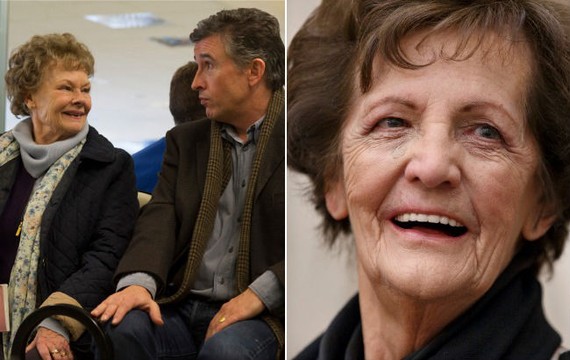
For decades, Philomena Lee didn’t think there was anything interesting about her life story.
After becoming pregnant out of wedlock in Ireland in 1951, a teenage Lee was disowned by her father and sent to live and work in a convent alongside other unmarried mothers. When her son Anthony was three years old, the convent’s nuns, in exchange for a generous donation, gave him up for adoption to Americans, who were told he was an orphan. A distraught Lee watched from an upstairs window as strangers drove off with her child.
For the next 50 years, Lee told nobody about Anthony. That’s just how life went for sinners in the Catholic Church, she thought.
But one day, she told her secret to her daughter, Jane Libberton, who quickly began the search for Lee’s long-lost child. It wasn’t easy: Irish law makes it extremely difficult for adopted children to learn about their parents and birth records, and the nuns at the convent where Lee lived stonewalled her requests for information. Eventually, Libberton pieced together the identity of Anthony: Renamed Michael Hess by his American parents, he’d grown up to be a top attorney for the Republican National Committee.
RECOMMENDED READING
- Are Siblings More Important Than Parents?BEN HEALY
- How the Bobos Broke AmericaDAVID BROOKS
- When Gut Bacteria Change Brain FunctionDAVID KOHN
By the time Lee and Libberton solved the mystery, however, they were too late: Hess had died of AIDS in 1995. His ashes had been buried at the the convent at Hess’s request—he hoped that his mother would return and find him. Just as the nuns wouldn’t give Lee and Libberton any answers about what happened to Anthony, Hess himself had journeyed to Ireland to ask about his mother—with no luck.
Acclaim and Oscar nominations for Philomena, based off journalist Martin Sixsmith’s book, The Lost Child of Philomena Lee, have brought international attention to the stories of Lee and the thousands of women just like her. Last month, Lee partnered with the Adoption Rights Alliance to launch The Philomena Project, which will advocate for changes to Ireland’s adoption-records policies and help connect mothers and children separated by the country’s history of forced adoptions. In late January, Lee, Libberton, and Mari Steed, U.S. coordinator of the ARA, traveled to Washington D.C. to meet with senators and diplomats about the project, and they spoke to The Atlantic about the film, faith, and forgiveness.
This interview has been condensed and edited.
When you started your journey a decade ago, did you ever think it would bring you to Washington?
Philomena: No way whatsoever.
Jane: When mom first met Martin, she didn’t even really want it to be a book, did you? You didn’t really want the story.
Philomena: Oh no. When I told my daughter after 50 years, I said, “No, I can’t.” Because I kept it a secret so long. No way. So then I just decided, well, look, if it can help a lot of mothers my age, I’m nearly 80—
Jane: You are 80!
Philomena: We were ostracized in them days because we had babies out of wedlock, because that was a very awful thing to do. Women my age kept it a secret and wouldn’t tell their families. A lot of the babies born, their offspring, they’re now looking for them. A lot of ladies my age still haven’t come out to say it. So many people responded to the film, and a lot of them actually were women like me coming out. People like Mari and her colleagues have been trying for years to get the government in Ireland to give people rights to their records.
Is the project more about helping adopted children here connect with parents in Ireland, or about putting pressure on Ireland to change its policies?
Mari: Both. Some of the senators and congressmen we met are from the states where a lot of the babies were placed to—in Anthony’s case, Missouri—so we met with Senators Roy Blunt and Claire McCaskill. Somebody might go to their local representatives and say, “I was born in Ireland and am a citizen here, what do I do?”
Likewise, we met the Irish ambassador [Anne Anderson] and it’s the same thing. “If one of our citizens should happen to come to the Irish Embassy or call one of the consulates, would you be able to give them these resources and point us in the right direction?” We don’t want to do any hard-hitting political lobbying, but we would like them to lend their voices and their support if at all possible. I think the response was very positive.
Jane: It was very positive! Obviously my mom and I have no experience of being here in Washington and meeting senators, that’s like—
Philomena: Wow-wee!
Jane: We had no idea what to expect. Each and every one was different, but very positive. We felt like we were following in Anthony’s footsteps because he worked in these buildings.
That must have been special.
Philomena: Very much so. This was his world.
Activists have said you’d need to drag Ireland to the United Nations to see these changes happen. Have you had more success going the political route than through the Church?“We’re just telling the truth of what happened. It was never, ever from the start meant to be an attack on the Church.”
Mari: Absolutely. With the Church, you really will get nowhere. I’m not saying that’s a negative or a positive. That’s simply what it is. They’re not going to change their mind or suddenly change their policies. And not only that, but all of the records, as of this year, have finally been transferred out from under the ownership of Church agents and are now under the government’s Health Service Executive in Ireland, so we’ve almost removed the Church from the picture, at least as far as the records are concerned. But I think eventually it may take a UN case similar to the Magdalenes cause in Ireland. We’ve got the right players, we’ve got people affiliated with the project. If we have to go that route, we will.
Have the ways the Catholic Church has changed in the past several decades made it any easier?
Mari: Yeah, not really. Their attitudes really haven’t changed.
Jane: In Ireland.
Mari: Yeah, absolutely not in Ireland. Here in the States, we tend to get a lot more encouragement and sympathy. In Ireland, it’s still this stubborn willfulness. They’d rather stay silent and take the bad press than issue apologies, because they know that will open them up to legal liabilities.
Jane: My mom still very much has her faith and is still quite protective of the Church, so you find it a bit awkward sometimes.
Philomena: Sometimes. You just believed everything you were told. You didn’t query it, you just didn’t query it. People would say, “Are you against the Catholic Church?” No, I’m not. At the time they did it, they took me in, they gave me a home for my baby. They gave us a home. It was the Church that caused all the problems because the Church made a baby out of wedlock a mortal sin. So we firmly believed we were sinners. That’s the teaching of the Church.
Were you worried people would take an anti-Catholic message away from the movie?
Jane: I don’t think we even thought about the Catholic stance at all, this is just my mom’s story and what happened to her. Obviously people have come out and said, “This is an anti-Catholic film.” It was never intended to be. This is what happened.”People can’t understand how I could have been so forgiving.”
Philomena: No! It’s my story.
Jane: There are other Catholic groups that are in support of it, [saying] that it isn’t an anti-Catholic film because she retains her faith all the way through it. We’re just telling the truth of what happened. It was never, ever from the start meant to be an attack on the Church. Steve Coogan [who plays Martin Sixsmith] says the same thing. He’s from an Irish-Catholic family. He spent a lot of time with women my mom’s age when he was a child. He never set out at all to make an anti-Catholic film. It’s just different people who have different views. As mom said, yes, they did take her in. Where else would she have gone? But they kind of caused the problem in the first place. They were part of the solution, but they were part of the problem.
Did you feel surprised that so many people found your commitment to your faith inspiring?
Philomena: We did, actually. People can’t understand how I could have been so forgiving. But I mean, Anthony would have been 61 last year. When he was adopted and taken away, I went to Liverpool, two years I stayed there, and then I went down and did psychiatric nursing for 30 years. Now, you don’t work in a psychiatric hospital and not see some awful, sad faces. You see so much hurt and pain caused by anger. I was angry in the beginning, and I used to think, why did this happen to me? And then nursing the patients, sitting down and talking with them, helping them with their problems—it made my own slide into the background. I’ve seen so much hurt caused through anger. And I thought, “I couldn’t go through my whole life being angry.” It’s just not in my nature to be angry. I was upset and very sad and very hurt. But I just went on with life and got married and had children. Working with psychiatric patients, it helped me to heal a lot of the pain I had.
One of the most powerful scenes in the movie is the moment of forgiveness near the end. Steve Coogan, as Martin, seems confused by it, asking, “Just like that?” But Judi Dench, as you, says it actually takes everything inside you to forgive.
Philomena: When my daughter first found out about this story, she was very angry, and I think Steve Coogan took on her anger.
Jane: Martin was a political journalist, and he wasn’t particularly angry. He’s seen all sort of things in his career. Steve asked a particular question of whether you forgive the nuns, and you did. I said, “I don’t,” so he took the anger and put it in his character. Martin wasn’t an angry character, he was a journalist.
Were the nuns as big of an obstacle in learning about Anthony as they appeared in the movie?
Jane: When we went the first time, they didn’t help. They were very pleasant very nice.
Philomena: Lovely.
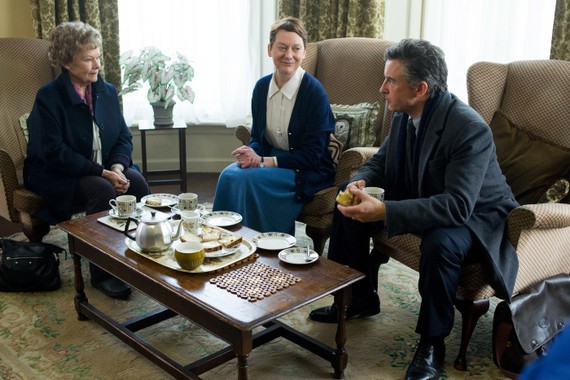
Jane: We sat down to tea like this. We knew Anthony’s grave was there. But they didn’t give us any information about the American side of things. When we went back the second year, I’d said we found Anthony’s partner and we found Mary, who was adopted with Anthony, and then they went to the cupboard and gave me papers they could have given me before. Without those papers, there never would have been a book. They just weren’t helpful.”We were ostracized so much. We had to lose our identities. I wasn’t Philomena Lee anymore. I got a name called Marcella. For three and a half years, I was Marcella.”
Did they not fully understand?
Jane: Oh, they understood. [The character] Sister Margaret was [based off] the present-day nun we met with Martin. She was delightful. She’s English like I am, so she knew where I was coming from, because in the United Kingdom, at 18 years old, you can find out your history if you’re adopted. In Ireland, you can’t. I didn’t get angry with her. I was angry, but I didn’t shout out her like Steve Coogan shouts at Sister Hildegard [in the movie]. She knew exactly what I meant when I said, “To me, what you’re doing is completely wrong.” She did sit there kind of stony-faced. She was in the position where she felt she couldn’t give me the information because that’s what she’d been taught by the Church. And we’re only talking about seven years ago. It wasn’t a long time ago.
Did you have a sense of how widespread this was?
Philomena: You mean everybody having babies? Women having babies?
The forced adoptions across the country, I mean.
Philomena: I was a teenager at the time. I didn’t know anything about that. I didn’t know about babies being gone abroad and getting donations for them. I didn’t know the first thing about that. How would we know? The nuns wouldn’t tell you. We were Catholic, we went to church, we went to mass, that’s all we did. I worked in the laundry for three and a half years.
Mari: There were many Irish families who might have had a mother and baby home just up the road and didn’t even know it. They just knew it was the nuns who ran their business. Nobody really knew what went on behind the walls or dared ask. I think they had an inkling, it just wasn’t discussed.
Philomena: And often the mother’s parents were glad to get rid of you, because it was such a shame on them. We were ostracized so much. We had to lose our identities. I wasn’t Philomena Lee anymore. I got a name called Marcella. For three and a half years, I was Marcella. Some of the women now come forward and say, “Did you remember me when I was there?” I wouldn’t have remembered them because they’d have another name. From the day I went in till the day I came out I was Marcella, not Philomena Lee.”And the whole of my life, all I wanted was to find him. Finding out he was dead was very hard, but at least I found him.”
Tell me about the first time you told Jane about Anthony.
Philomena: I go home to Ireland every year. I call it home still even though I’ve lived 56 years in England. My brother, he was a young lad. He was 18 months older than me when I went to the home. He drove me when they discovered I was pregnant. He bounced him on his knees and hugged him and loved him. My father was out signing papers with the nuns—in them days you didn’t query what they were doing—and my brother was out with me in the halls. For years he felt so guilty. “I should have run away with him.” But with the police, the guards, we call them guards in Ireland, [he] wouldn’t have gotten away with it. I went home in 2003, was it? He said, “For goodness’ sake, go back home and tell them.” My son is older than Jane. I went home and sat them down and told them.
Jane: Well, you told me. You came out to see me. I’d just moved house and renovated it. And my mom, you’d [just] been to Ireland, and you said, “Oh, I’ll pop around and see you.” It was slightly unusual because we normally meet in the day, and you were feigning interest in my decor. I just had some new light switches. I remember it very clearly. You looked at them said, “They’re very nice.” You’re not really into that kind of thing.
Philomena: Not decorating, no.
Jane: So she sat down, and we did open a bottle of wine, and she just came out with it. “I had a baby in Ireland,” I think is what you said. But immediately I knew who this child was because we always had his photograph in with all the other family photos. He always looked like he was in an odd place because he’s got nuns with him, or he looks like he’s in a hospital. I had asked you once when I was a child, and you said it was a cousin’s son, and I didn’t think anything more of that. But I felt immediately sorry for her, because I’ve got children, and he was three and a half when he was adopted. I couldn’t imagine having to give a child away at that age. It would just be awful.
Philomena: Awful, awful.
Jane: Clearly you would have bonded with him because they’re little people at that age.
Philomena: He was a lovely, lovely little boy.
What was it like seeing the movie for the first time?
Philomena: We didn’t know what to make of it, did we? We saw it together.
Jane: It was very hard to judge whether it was good or not because we’d been so involved in it. We met the next day at lunch and I said, “I think it’s okay? I think we’ll be alright with this film.” But we couldn’t tell. People asked me if it was good and I said, “I don’t know. I couldn’t tell you if it was good.”
Philomena: We couldn’t!
Jane: It took a couple viewings. Then it went to the Venice Film Festival and received such fantastic reviews. I started reading the reviews to mom, and we could see why people liked it. But it took other people to point us in the right direction.
But you’ve come to enjoy it?
Jane: Yes, we certainly laughed.
Philomena: Oh yes, it’s very funny.
Jane: Life’s not all doom and gloom.
It was already such a tough, emotional movie to watch, it would have been a lot harder without those funnier moments.
Philomena: The thing is, I found him. And the whole of my life, all I wanted was to find him. Finding out he was dead was very hard, but at least I found him. I used to think over the years he could be in Vietnam, he could be on Skid Row. It’s the not knowing. But once I found out how successful he was, then I was able to put my heart to rest and my mind to rest. At least he had a very good life and a wonderful partner. And I’m sure, up there, he helped me to start this 10 years ago. I believe that.
Mari: He’d be so pleased.
Jane: I think he’d be pleased, being a political man.
Philomena: I’m sure he is. The thing is, I’m sure because about one year [before finding him], maybe less than that, I started going back to mass. I had given up going to mass and communion and confession. Somehow or another I said, “I think I’ll start going back.” I went to mass at the beautiful abbey near where we lived. They had a Catholic mass every Friday morning. I joined that and got back in there, and I’d go down and light my candle in this beautiful place. Somehow after this, my brother said to me, “Will you go back home and tell your daughter?” after I started [getting that] feeling. I’m sure Anthony was up there.
Nolan Feeney is a former producer for TheAtlantic.com.
Essential Conversations

John Gottman, PhD and Julie Schwartz Gottman, PhD
Doug Abrams and Rachel Carlton Abrams, MD
From the country’s leading relationship experts, authors of the million-copy bestseller The Seven Principles for Making Marriage Work, and founders of the world-renowned Love Lab, comes Eight Dates: Essential Conversations for a Lifetime of Love by John Gottman and Julie Schwartz Gottman.
This program of eight lively, conversation-based dates will result in a lifetime of understanding and commitment, whether you’re newly in love or have been together for decades.
Eight Dates is like having two of the world’s leading relationship scientists at your table coaching you on how to address the topics—from trust to money to dreams—that make or break relationships.
Welcome to date night.
pics—from trust to money to dreams—that make or break relationships.
Welcome to date night.
What I want to read next
The Eighth Sister: A Thriller (Charles Jenkins Book 1) Kindle Edition
by Robert Dugoni (Author) Format: Kindle Edition
I, Uta, borrowed a large print edition of this thriller from the local library here in Dapto, NSW, Australia. It looks to me like Robert Dugoni is dealing here with a very interesting subject. I am very much looking forward to start reading this thriller!
An Amazon Charts, Washington Post, and Wall Street Journal bestseller.
A pulse-pounding thriller of espionage, spy games, and treachery by the New York Times bestselling author of the Tracy Crosswhite Series.
Former CIA case officer Charles Jenkins is a man at a crossroads: in his early sixties, he has a family, a new baby on the way, and a security consulting business on the brink of bankruptcy. Then his former bureau chief shows up at his house with a risky new assignment: travel undercover to Moscow and locate a Russian agent believed to be killing members of a clandestine US spy cell known as the seven sisters.
Desperate for money, Jenkins agrees to the mission and heads to the Russian capital. But when he finds the mastermind agent behind the assassinations—the so-called eighth sister—she is not who or what he was led to believe. Then again, neither is anyone else in this deadly game of cat and mouse.
Pursued by a dogged Russian intelligence officer, Jenkins executes a daring escape across the Black Sea, only to find himself abandoned by the agency he serves. With his family and freedom at risk, Jenkins is in the fight of his life—against his own country.
A beautiful Day at BERKELOUW’s Book Barn, 22nd January 2016
auntyutaDiary, Life in Australia, Old Age January 22, 2016 1 Minute
Today we had another look at Berkelouw’s Book Barn after we had not visited it for many years. It was a very good place to meet up again with Gerard and Helvi.
In one of Berkelouw’s pamphlets it says:
WE BUY BOOKS AND PRINTS IN LARGE LOTS OR SMALL
The Book Barn at Berrima is the first of its kind in Australia and responds to the demand of the reading public for inexpensive fine quality secondhand books . . . . ”
After not having visited the Book Barn for a number of years, we were astounded, how the facilities have improved. There is a huge restaurant area as well as a well established winery and a magnificent place for wine tasting!


I very much liked the pizza and the salad with flowers for lunch and later on a glass of wine at the cellar door.


The poplars that lead to the book barn look as healthy as ever!
bookbarn@berkelouw.com.au
On the way home we had a quick stop at Robertson Pie Shop.

And then we had to drive down MacQuarie Pass in dense fog and rain!
All the way home it rained steadily. Luckily the rain was not as heavy as it had been the day before. Last night we had some flooding in our home. When we arrived home today, there was still a bit of rain but thankfully no more flooding. Also after yesterday’s heat-wave with temperatures well over 35C, it is very much cooler today. Australia Day is coming up next Tuesday. Already today, Friday, a lot of traffic was building up for people going South to have a long holiday weekend.
Related
The End of the Year 2012December 28, 2012In “Diary”
Tuesday, 9/11/2021November 9, 2021In “Diary”
This is a Blog Peter published on 12/10/2017October 8, 2021In “Life in Australia”
Edit”A beautiful Day at BERKELOUW’s Book Barn, 22nd January 2016″

8 thoughts on “A beautiful Day at BERKELOUW’s Book Barn, 22nd January 2016”
The C-Sweet EditThe salad looks delicious – what a nice little surprise to find all the upgrades to the little bookshop, including of course, the wine bar!!! It’s hard to believe the fog/rain photo was taken the same day.Reply
auntyuta EditThanks for commenting, C. Berkelouw Books are well established. They still have about eight book stores in NSW, and one in Queensland. Apart from secondhand books they also sell a few newly published books..To us it is a well known fact that towards the top of the pass a lot of fog can develop. Luckily the pass is well signed all the way. Peter, my husband, is 80, but he has long practice negotiating along the pass, that is, there were times when his work required that he drove up and down the pass on a daily basis. So I am proud to say, that he hasn’t lost his touch yet and drove confidently around all the bends in fog and rain! Reply
I was very happy with this drink.
gerard oosterman EditWe enjoyed sharing food and wine too at Berkelouw’s. Uta. We drank some of their Semillon Blanc last night. We had a great day and pleased Peter still manages all those S bends down the Pass.Reply
Debra EditOh my goodness! I would love the Book Barn. This is my kind of place for sure. I have very little self-control when given an excellent used book shop, and this one really appeals to me. It’s probably good I don’t live nearby. LOL!Reply
Uta’s Diary


Yesterday I looked at a lot of Peter’s books and also at some of my books. I wanted to make a decision, which books I definitly wanted to keep, just to keep, and then which books I also wanted to read. I came up with a plan! So, my plan is to aim at reading two books every week, meaning over the year I should be able to read about 100 books!
Hopefully I’ll be able to read about 100 books every year that I am still alive!
Recently I already read ‘HOLY SMOKE’: https://www.publishersweekly.com/978-0-7868-6349-5
I do like stories where there is a lot of dialogue to read, especially when it comes to a more meaningful dialogue. There is quite a bit of it in ‘HOLY SMOKE’. The book I just started today, seems also to be full of very meaningful dialogue. It is a historical novel. I am very much looking forward to reading it. It is written in German by Renate Feyl and called ‘Aussicht auf bleibende Helle’.
Here in German what it says about this book:
“Königin Sophie Charlotte und Gottfried Wilhelm Leibniz – eine Liebe im GeisteDer letzte Universalgelehrte und die schöngeistige Königin: Mit diesem Buch kehrt Renate Feyl auf das Terrain zurück, auf dem sie mit überaus erfolgreichen Büchern geglänzt hat: die historische Romanbiographie. Sie erzählt die Geschichte einer Beziehung, die aus dem lebendigen Austausch der Gedanken Funken der Leidenschaft schlägt – und die Leibniz die fünf glücklichsten Jahre seines Lebens beschert.Sophie Charlotte, geboren 1668 auf Schloss Iburg im Fürstenbistum Osnabrück, begegnet Leibniz am elterlichen Hofe in Hannover, wo er in kurfürstlichen Diensten steht. Mit sechzehn Jahren heiratet sie Friedrich III., den Sohn des Großen Kurfürsten, und geht mit ihm nach Berlin. Hier besucht sie Jahre später der weithin berühmte Mathematiker und Philosoph, um sie für den Plan zu gewinnen, eine Akademie der Wissenschaften zu gründen. Während ihr Gatte mit großem diplomatischem Geschick das Ziel seiner Krönung zum König in Preußen erreicht, fördert sie die schönen Künste und Wissenschaften. Im Laufe der zahlreichen anregenden und geistreichen Gespräche entwickelt sich eine enge Beziehung, und Leibniz wird zum Gefährten ihrer Gedanken. Sophie Charlotte animiert den universellen und genialen Gelehrten zu einer systematischen Ausarbeitung seiner Ideen, die letztendlich in die berühmte Theodizee mündeten.Renate Feyl erzählt mit großem Gespür für die Sprache des Barock und die leisen Zwischentöne vom Zauber einer »mariage mystique« – einer geistigen Liebe voller Esprit und Dezenz. Und es gelingt ihr, die Atmosphäre des Berlin im Aufbruch, die Zwänge des höfischen Protokolls und die Freiheit des intellektuellen Austauschs in eindrucksvollen Bildern einzufangen – und zugleich das Porträt einer faszinierenden jungen Frau zu zeichnen, die eine eigenständige Rolle sucht und das geistige Klima am Hofe prägt.”
From Wikipedia, the free encyclopedia:
Renate Feyl (born 30 July 1944) is a Prague-born writer living in Germany.[1]
Born in Prague (at that time Protectorate of Bohemia and Moravia), she grew up in Jena and went on to study philosophy at Humboldt University. Since 1970, Feyl has lived in Berlin working as a freelance writer.
Selected works[1][3][edit]
- Bau mir eine Brücke, novel (1972)
- Der lautlose Aufbruch, essays (1981)
- Idylle mit Professor, novel (1986)
- Sein ist das Weib, Denken der Mann, essay (1991)
- Ausharren im Paradies, novel (1992)
- Die profanen Stunden des Glücks (1996)
- Das sanfte Joch der Vortrefflichkeit (1999)
- Aussicht auf bleibende Helle (2006)
The Rise of the Meritocracy
The Rise of the Meritocracy is a book by British sociologist and politician Michael Dunlop Young which was first published in 1958.[1] It describes a dystopian society in a future United Kingdom in which intelligence and merit have become the central tenet of society, replacing previous divisions of social class and creating a society stratified between a merited power-holding elite and a disenfranchised underclass of the less merited. The essay satirised the Tripartite System of education that was being practised at the time.[2] The book was rejected by the Fabian Society and then by 11 publishers before being accepted by Thames and Hudson.[3]
Meritocracy is the political philosophy in which political influence is assigned largely according to the intellectual talent and achievement of the individual. Michael Young coined the term,[1] formed by combining the Latin root “mereō” and Ancient Greek suffix “cracy”, in his essay to describe and ridicule such a society, the selective education system that was the Tripartite System, and the philosophy in general.[2]
The word was adopted into the English language with none of the negative connotations that Young intended it to have and was embraced by supporters of the philosophy. Young expressed his disappointment in the embrace of this word and philosophy by the Labour Party under Tony Blair in The Guardian in an article in 2001, where he states:It is good sense to appoint individual people to jobs on their merit. It is the opposite when those who are judged to have merit of a particular kind harden into a new social class without room in it for others.[2]
Journalist and writer Paul Barker points out that “irony is a dangerous freight to carry” and suggests that in the 1960s and ’70s it was read “as a simple attack on the rampant meritocrats”, whereas he suggests it should be read “as sociological analysis in the form of satire”.[4]
 AuntyUta