On 19 February 1942, the Japanese mounted two air raids on Darwin and mainland Australia came under foreign attack for the first time since white settlement.
Admiral Chūichi Nagumo (1887 – 1944), the mastermind of the Pearl Harbor attack on 7 December 1941, planned the Darwin raids, which involved 54 land-based bombers and 188 aircraft launched from four aircraft carriers operating in the Timor Sea. The Japanese, who were preparing to invade Timor, correctly surmised that a disruptive air attack on the Darwin base would hinder any Allied counteroffensive.
Admiral Chūichi Nagumo
The first attack began just before 10.00 am and lasted 40 minutes. Heavy bombers struck harbour installations and the town, while dive bombers, escorted by Zero fighters, attacked shipping in the harbour, the military and civil aerodromes and the hospital at Berrimah. The second raid began an hour later and involved high altitude bombing of the Royal Australian Air Force (RAAF) base at Parap. This raid lasted about 20 minutes.
Singapore had fallen to the Japanese only days earlier and the civilian population of Darwin, believing that an invasion was imminent, panicked. Looting and disorder was rife and approximately half the city fled south in an event which became known as the ‘Adelaide River Stakes’. Hundreds of Australian servicemen abandoned their posts. Three days after the attack 278 servicemen were still missing.
Together the two raids killed at least 243 people and between 300 and 400 were wounded. Twenty military aircraft were destroyed, eight ships at anchor in the harbour were sunk, and most civil and military facilities in Darwin were destroyed. The Australian government, concerned at the effect of the bombing on national morale, played down the event and claimed that only 17 people had been killed.
Australian soldiers survey the damage inflicted by Japanese bombers.
In the coming months other northern Australia towns, such as Townsville, Katherine, Wyndham, Derby, Broome and Port Hedland, would suffer from Japanese air attack. Further south, Sydney and Newcastle were attacked by submarines. Darwin would be bombed a total of 64 times, the last raids occurring in November 1943. None of these subsequent raids would, however, match the ferocity of those on 19 February 1942.
Labor and the Coalition may be broadly in agreement about the risks and threats of China and the volatility of geopolitics. But they have very different approaches and they use very different language, writes Stan Grant.
Posted 23h ago23 hours ago / Updated 19h ago19 hours ago
On Monday, the world — at least the free thinking, non-authoritarian world — was shocked when Canada’s prime minister, Justin Trudeau, declared dictatorial powers over the people of Canada by invoking wartime powers. He then labelled the peaceful protesters terrorists, claimed they were carrying out an “illegal occupation,” claimed the ability to seize their assets without due process using private banks, and empowered police and military to help him carry out those orders.
To anyone who has ever studied history, they see these moves by the Canadian government as a massive step to transform their parliamentary democracy into a fascist state. Freezing assets and government taking money from citizens over a peaceful protest, is a direct affront to any semblance of a free society.
During another interview on Wednesday night, Canada’s Justice Minister David Lametti told a reporter that anyone who donated money to the Canadian Freedom Convoy, should “be worried” about having their bank accounts frozen.
Days after Canadian Prime Minister Justin Trudeau said he would invoke emergency orders to crack down on demonstrators by freezing their bank accounts, five major Canadian banks went offline on Wednesday night, as customers reported their funds were unavailable, according to technology website Bleeping Computer.
There were countless stories of banking customers who experienced trouble accessing their funds yesterday evening. No bank explained the source of the outrage, but essential to note the outage comes, as we said above, days after Trudeau invoked the Emergencies Act.
The question I walked in on my husband watching porn and now I feel extraordinarily hurt and abandoned.
My grown-up children have left home and I have managed to have a rewarding career. However, having a good relationship always eluded me until I was in my 50s.
I have been married before and I am in my early 60s now. We have been together for a while. I thought we were ecstatically happy and that, at last, I was in a truly fulfilling and equal relationship. I now doubt all this, and have lost respect for my husband. We have tried to talk about it, and he is only sorry that I am upset and doesn’t seem sorry that he used porn. He must know women are often exploited and always objectified in these situations. He says his love for me is as it ever was, and says he’ll stop if I want, but I want him to want not to do it
You’ve discovered that you and your husband have different views about porn – and this may have triggered your teenage trauma
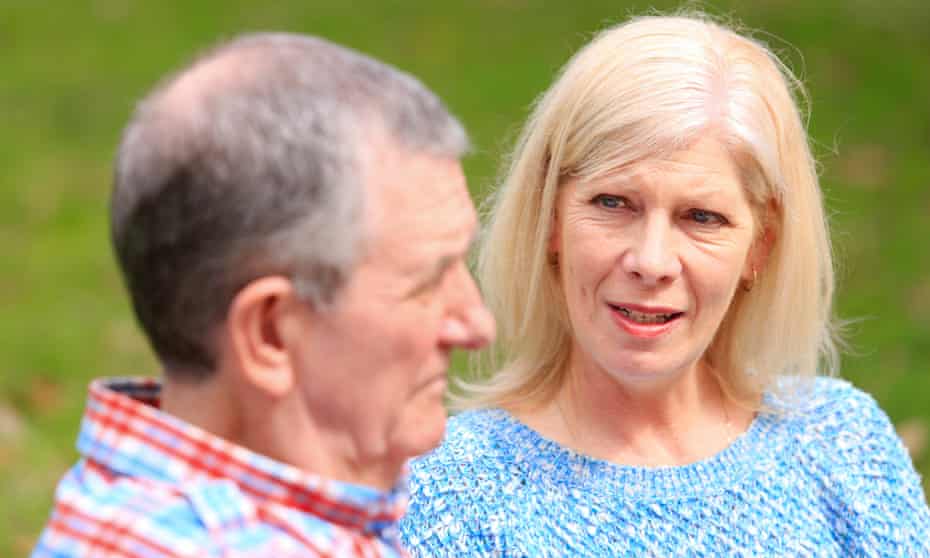
‘It is important that you have sympathy for each other’s points of view.’ Photograph: John Kirk/Getty Images
The question I walked in on my husband watching porn and now I feel extraordinarily hurt and abandoned.
My grown-up children have left home and I have managed to have a rewarding career. However, having a good relationship always eluded me until I was in my 50s.
I have been married before and I am in my early 60s now. We have been together for a while. I thought we were ecstatically happy and that, at last, I was in a truly fulfilling and equal relationship. I now doubt all this, and have lost respect for my husband. We have tried to talk about it, and he is only sorry that I am upset and doesn’t seem sorry that he used porn. He must know women are often exploited and always objectified in these situations. He says his love for me is as it ever was, and says he’ll stop if I want, but I want him to want not to do it.
I experienced a serious trauma when I was in my teens and have had bouts of depression since then. I have not been good at choosing the right men to have relationships with, but with years of counselling I managed to turn my life around. I really thought that this time, by being with a kind and interested man I had at last got it right, but now I’m unsure.
I feel betrayed by my husband using porn. It is as though he has been cheating on me.
Philippa’s answer I’m not saying using porn is right or wrong, because me declaring judgment on it won’t change anyone’s behaviour. It is more useful to understand it. And yes, I dislike the objectifying, potentially exploitative side of the porn industry. But I can also understand it’s nice to have a little private pleasure. A bit like having a lovely, satisfying poo that you wouldn’t necessarily tell anyone about.
You mentioned your teenage trauma, so I’m thinking it is still relevant. What trauma can do is shatter previously held beliefs such as: “Most people are good and trustworthy.” After the trauma, you may have developed rigid rules like emergency measures that come with new beliefs such as, “I shouldn’t trust anyone.” I’m wondering whether discovering something new about your husband which is hard for you to understand means you’ve reverted to this type of emergency-mode way of thinking – thinking in very “all or nothing” terms. You’ve gone from “ecstatically happy” to what sounds like panic – that marrying was a mistake, as though your discovery may have reactivated this old trauma and tipped you into an emergency trauma-mode mindset.
What you are doing is discovering something new about him. It’s a part of him, it’s not all of him. Some of us tend to assume that sex means the same thing to our partners that it does to us. This is not done consciously but in a sort of take-it-for-granted way, and it is often left unsaid. This is why it can be a great shock when differences are found. You might be feeling excluded because he kept this part of his sexual life a secret. Maybe you find it disgusting and feel contaminated by it. It might be tantamount to him having sex with someone else. But for him, porn is probably nothing to do with his real-life relationship with you, but instead about his relationship with himself.
Beware of seeing the issue in terms of just right and wrong
The thing to remember is that each of you will have formed different attitudes to relationships and to sex and to porn: this might be difficult to explain or talk about because both of you might not have been in the habit of putting non-conscious assumptions about sex or porn into words (perhaps not even to yourselves). But I want to encourage you to keep trying, so that each of you can understand the other. I don’t think you’ll ever be on exactly the same page, but I do think it is important that you both really understand what is on your respective pages and have sympathy for each other’s points of view.
He has probably been watching porn in private moments all the time you have been together, and all the while you loved and trusted him and felt “ecstatically happy”. He may need private time to masturbate, but whether you want this to be kept secret from you is something else to talk about. There is a difference between privacy and secrecy. The former is OK and the latter can feel like betrayal. I hope you can find a way of talking about how you each do privacy, how you need it and how you use it. It might enrich your relationship.
Porn can be destructive when it is addictive, but as he offered to give it up if you wanted him to, it does not sound like he has an addiction to it.
Beware of seeing this issue in terms of just right and wrong, and keep the dialogue open. Porn is what the genitals enjoy in private. This might be very different to who we each are with each other.
You’ve discovered that you and your husband have different views about porn – and this may have triggered your teenage trauma
‘It is important that you have sympathy for each other’s points of view.’ Photograph: John Kirk/Getty Images
The question I walked in on my husband watching porn and now I feel extraordinarily hurt and abandoned.
My grown-up children have left home and I have managed to have a rewarding career. However, having a good relationship always eluded me until I was in my 50s.
I have been married before and I am in my early 60s now. We have been together for a while. I thought we were ecstatically happy and that, at last, I was in a truly fulfilling and equal relationship. I now doubt all this, and have lost respect for my husband. We have tried to talk about it, and he is only sorry that I am upset and doesn’t seem sorry that he used porn. He must know women are often exploited and always objectified in these situations. He says his love for me is as it ever was, and says he’ll stop if I want, but I want him to want not to do it.
I experienced a serious trauma when I was in my teens and have had bouts of depression since then. I have not been good at choosing the right men to have relationships with, but with years of counselling I managed to turn my life around. I really thought that this time, by being with a kind and interested man I had at last got it right, but now I’m unsure.
I feel betrayed by my husband using porn. It is as though he has been cheating on me.
Philippa’s answer I’m not saying using porn is right or wrong, because me declaring judgment on it won’t change anyone’s behaviour. It is more useful to understand it. And yes, I dislike the objectifying, potentially exploitative side of the porn industry. But I can also understand it’s nice to have a little private pleasure. A bit like having a lovely, satisfying poo that you wouldn’t necessarily tell anyone about.
You mentioned your teenage trauma, so I’m thinking it is still relevant. What trauma can do is shatter previously held beliefs such as: “Most people are good and trustworthy.” After the trauma, you may have developed rigid rules like emergency measures that come with new beliefs such as, “I shouldn’t trust anyone.” I’m wondering whether discovering something new about your husband which is hard for you to understand means you’ve reverted to this type of emergency-mode way of thinking – thinking in very “all or nothing” terms. You’ve gone from “ecstatically happy” to what sounds like panic – that marrying was a mistake, as though your discovery may have reactivated this old trauma and tipped you into an emergency trauma-mode mindset.
What you are doing is discovering something new about him. It’s a part of him, it’s not all of him. Some of us tend to assume that sex means the same thing to our partners that it does to us. This is not done consciously but in a sort of take-it-for-granted way, and it is often left unsaid. This is why it can be a great shock when differences are found. You might be feeling excluded because he kept this part of his sexual life a secret. Maybe you find it disgusting and feel contaminated by it. It might be tantamount to him having sex with someone else. But for him, porn is probably nothing to do with his real-life relationship with you, but instead about his relationship with himself.
Beware of seeing the issue in terms of just right and wrong
The thing to remember is that each of you will have formed different attitudes to relationships and to sex and to porn: this might be difficult to explain or talk about because both of you might not have been in the habit of putting non-conscious assumptions about sex or porn into words (perhaps not even to yourselves). But I want to encourage you to keep trying, so that each of you can understand the other. I don’t think you’ll ever be on exactly the same page, but I do think it is important that you both really understand what is on your respective pages and have sympathy for each other’s points of view.
He has probably been watching porn in private moments all the time you have been together, and all the while you loved and trusted him and felt “ecstatically happy”. He may need private time to masturbate, but whether you want this to be kept secret from you is something else to talk about. There is a difference between privacy and secrecy. The former is OK and the latter can feel like betrayal. I hope you can find a way of talking about how you each do privacy, how you need it and how you use it. It might enrich your relationship.
Porn can be destructive when it is addictive, but as he offered to give it up if you wanted him to, it does not sound like he has an addiction to it.
Beware of seeing this issue in terms of just right and wrong, and keep the dialogue open. Porn is what the genitals enjoy in private. This might be very different to who we each are with each other.
Dr Ruth: ‘Nobody has any business being naked in bed if they haven’t decided to have sex’
Sex therapist, child of the Holocaust, former sniper… Dr Ruth Westheimer has lived more than most. Now 90, she’s as busy as ever – and still has strong opinions on pornography and consentSun 12 May 2019 21.03 AEST
Early this spring, the Smithsonian Museum in Washington DC, famous as a time capsule of American history and culture, reached out to Dr Ruth Westheimer and asked her to donate an object to its vast collection. It’s there that you can find such iconic totems of Americana as the glittery red shoes Judy Garland wore in The Wizard of Oz, or influential TV cook Julia Child’s kitchen, fully reassembled. Soon you will also be able to find the microphone that Westheimer used at WYNY, the New York radio station that helped cement her fame as a frank-talking sex therapist in 1981, in no small part thanks to her unmistakable accent.
“I’m very lucky, because it’s a combination of the German, the Hebrew, the Swiss, the French, and that accent helped because as soon as people heard it they knew it was me,” she says as she directs me around her tiny kitchen, filling the kettle for tea, retrieving a knife to cut a cheesecake. If you find yourself on TV talking about vaginas, penises and clitorises, an accent like Westheimer’s might also feel like a blessing. It’s hard to feel indignant or vexed when the person dishing advice on erectile dysfunction is a 90-year-old Jewish lady with long rolling R’s and a Munchkin giggle.
Humour and charm has long been Westheimer’s reflex for diffusing anxiety and shame. “In the Talmud, it says that a lesson taught with humour is a lesson retained,” she says. “I came from an Orthodox Jewish home so sex for us Jews was never considered a sin.” Has she never felt flummoxed by a question, or found herself blushing? Westheimer thinks for a moment. “The best answer to that is that when someone asked me a question about sex with animals, and I responded: ‘I’m not a veterinarian.’” She peers into a cupboard and frowns. “I want to find some tea, but I don’t find tea,” she muses. Not a problem, I assure her. Whatever is easiest. “Orange juice is easiest,” she says, producing a carton of Tropicana from the fridge.
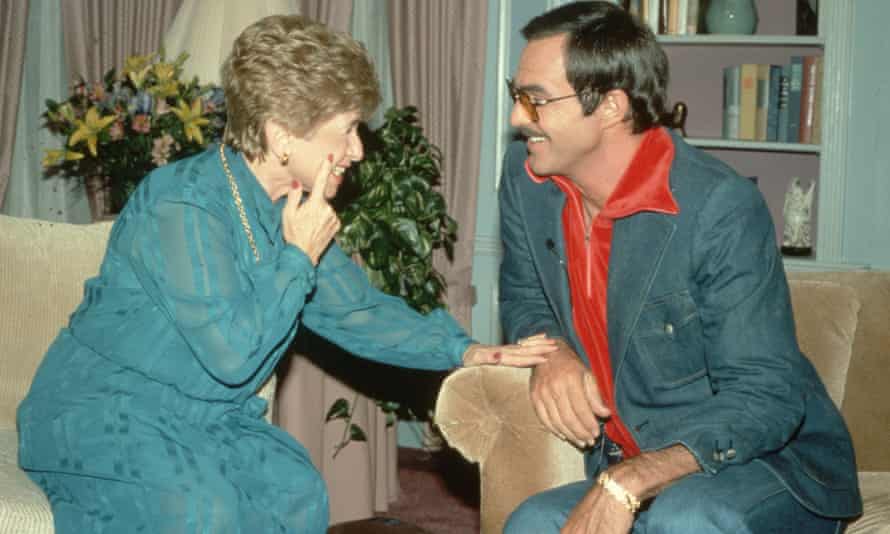
Star quality: chatting with Burt Reynolds. Photograph: Getty Images
We are in Manhattan where Westheimer has lived for 55 years in a two-bedroom apartment overlooking the Hudson River. From the window, she points to the other bank – a steep escarpment known as the Palisades. “That used to be for nuns, over there,” she says, indicating a monastery-style building. “And when it snows it’s beautiful.” In the wake of her ascent to fame, friends urged her to move to Fifth Avenue, but Westheimer always resisted. She likes the neighbourhood’s European flavour, the fact that it was settled by German Jews. And besides, in the nearby Fort Tryon Park, one of the city’s most beautiful, sits a bench named in honour of her third husband, Fred Westheimer, who died in 1997. She has added an inscription from the Bible: “My beloved has gone down to his garden to gather lilies.” Today she gets a kick whenever she sees couples kissing there. Being a widow, she says, is harder than being an orphan. Children are resilient, adults less so.
These are busy days for Westheimer, the subject of a new documentary, Ask Dr Ruth, that receives its European premiere at Sundance Film Festival London later this month. She will be visiting Japan for a screening, before hitting Oxford University to debate pornography (she’s a fan), in addition to annual trips to Switzerland, where she spent the war in an orphanage, and Israel. There are also her teaching schedules at Hunter and Columbia universities in New York, and a prodigious publishing output, including a column for Time, an upcoming children’s book, and a new edition of her bestselling guide, Sex for Dummies, that will include chapters addressing millennials and the metastasising issue of loneliness. Immediately after our interview she is due at the opening of an exhibition at the Museum of Jewish Heritage titled “Auschwitz: Not Long Ago, Not Far from Here.” Westheimer, who is on the board of the museum, is proud of the name. “It’s for the Holocaust deniers and those people who have Holocaust fatigue, who say, ‘Stop talking about it, it’s so long ago.’”
Everyone’s on the phone now, instead of concentrating on their relationship
We tour the living room, a jumble of tchotchkes and books – a copy of Michael Wolff’s Trump exposé, Fire and Fury, Ruth Bader Ginsburg’s autobiography. There are mementoes of Shirley Temple, Westheimer’s favourite actor, and photos of her with the Obamas, with the Clintons and one of her dancing with the conductor Zubin Mehta, a memory that provokes particular delight. She was at a fundraiser for the Israel Philharmonic Orchestra. “I was dancing with a Japanese guy, and a man came and tapped me on the shoulder and said: ‘The Maestro wants to dance with you.’ I dropped the Japanese like a hot potato and danced with Zubin.”
Advertisement
Just inside the entrance, in pride of place, is a photo of David Ben-Gurion and Golda Meir, the first and fourth prime ministers of Israel. Westheimer was a member of the Jewish underground after the war, operating as a sniper (she learned to shoot by imagining Hitler was her target), and fighting the British, until she almost lost her legs in an explosion. But she would like readers to know she is grateful to Britain for organising the Kindertransport that brought 10,000 children to the UK. “Some of the children were able to save their parents, by going from house to house and asking for help in finding them work. When I was in Switzerland, I still had the fantasy I could have saved my parents and family if I’d stayed in Germany.” She shakes her head. “All nonsense. If they had not made the sacrifice to send their only child to Switzerland, I wouldn’t be alive.”
A powerful scene in Ask Dr Ruth, rendered into animation, shows young Westheimer waving goodbye to her mother and grandmother at Frankfurt station. It’s the last time she would see them. Her parents gave her life twice, she says: “Once when I was born, and once when they sent me to Switzerland.” When the war ended the children at her orphanage were gathered together while names of surviving parents were read aloud. Her parents were not among them. Put on a train, she was sent to Marseille, where she boarded a ship to Palestine. She was 17.
Frank talking: addressing newspaper editors. Photograph: Scott Stewart/AP
In the 1950s she returned to France, divorced her first husband, married a second time, and booked a passage to New York, travelling fourth class. Although she intended to return to Israel the arrival felt like a homecoming. She never left. Her marriage did not survive, although they had a daughter, Miriam. For Westheimer, the failure of marriage two was an important lesson: not having a satisfying sex life could be a problem, but intellectual boredom was insurmountable.
At this year’s New York Pride, Westheimer will ride on a carnival float to mark the 50th anniversary of Stonewall, a tribute to her outsize presence in the 1980s when her empathy cut through a miasma of bigotry. In the long, dark years of the Aids panic, she was among the few pinpricks of light. It was Dr Ruth who insisted there was no such thing as “normal” – everything was normal, as long as it involved two consenting adults in the privacy of their home. She recalls attending the Institute for Human Identity in the 1980s. “I wanted to learn how to work with homosexuals,” she says. “There were no lesbian couples coming; maybe lesbians didn’t need sex therapy. Maybe one woman knew better how to give another woman an orgasm.”
Time has finally caught up with Dr Ruth. Her attitudes no longer seem atypical. But if her approach to sex is now mainstream, anxiety around sexual desire and consent threaten to place her at odds with the very people who once welcomed her sex-positive thesis. “This idea that once you are aroused and have already started that you should then ask, ‘Can I touch your left breast, or your right breast?’ is just nonsense,” she says. “Nobody has any business being in bed, naked – two guys, two women, or a man and a woman – if they haven’t decided to have sex.”
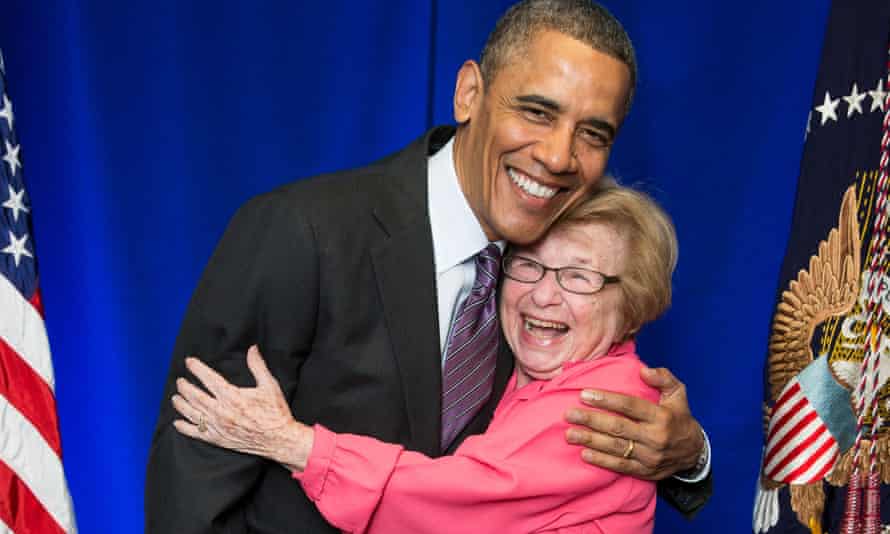
Tall tales: a hug with Barack Obama in 2013. Photograph: Pete Souza/The White House
She frets, also, that innocent compliments risk being stigmatised. “You can’t tell a woman any more that you like her blouse,” she says, and then gestures to herself. “By the way, do you like my blouse?”
Although no technophobe – in the documentary we see her conversing with Alexa – Westheimer believes our phones may be eroding our talents for conversation. “You walk into a restaurant these days, and what you see is everyone with their phone next to them,” she says. “That is terrible. Instead of concentrating on the relationship, on the needs and activities and interests of the other person, they are constantly looking at their phone.”
And she is sceptical of the idea that millennials are too busy to form relationships. “Don’t put sexual experience on the back burner,” she says. “Make time. After all, immigrants to this country worked much harder. They had to come in on Saturdays, even if they were observant Jews, otherwise they were told, ‘Do not come in Monday.’
Westheimer has a rule about not talking politics, but she also knows sex is political. Endorsing homosexuality or championing a woman’s right to choose, puts her firmly on one side of America’s culture wars. The one issue on which she will not stay silent is the one she feels compelled to speak about from personal experience. “I do say how upset I am when I see children being separated from their parents,” she says. “I have in my bones, and in my blood, the knowledge that you have to help the people who are persecuted.”
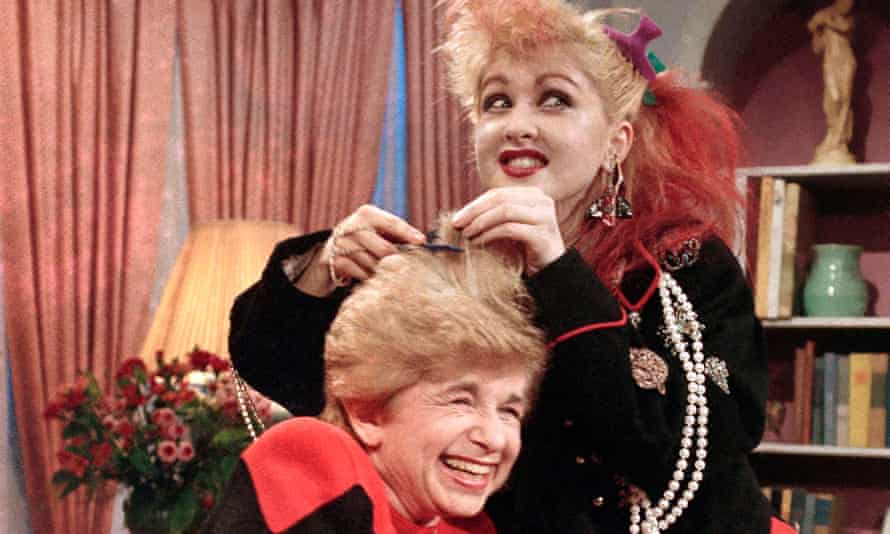
Reaching the young: having her hair done, punk style, by Cyndi Lauper. Photograph: Nancy Kaye/AP
In spite of her curtailed childhood, Westheimer fizzes with energy. She fetches a leather frame on which is embossed in gold letters, It Can Be Done. “I love this,” she says. “It really is my motto in life.” She reads out the brand: “A-S-P-R-E-Y. I got it for free,” she says.
Does she think she’ll ever slow down? “No,” she says, then gestures to my notepad: “Write that down.” On 4 June, Westheimer turns 91. “This time I’m not going to make a big party,” she says. By not big, she means around 30 to 40 people. Last year there were more than 300.
In her chatty 2015 book, The Doctor is In, Westheimer offers a useful insight into how she lives with the trauma of her childhood. The solution, she says, is to focus on the present: “Pay attention to the people around you. Ask questions and listen to the answers. Tell everyone what happened to you during the day and make it as amusing as possible. Accentuate the positive, try to bring everyone’s spirits up; by doing that, you’ll find your own elevated.”
It’s a philosophy that has guided Westheimer through life. In the lobby of her building, the doorman pinches his fingers together, and brings them to his lips in a kiss when I mention I am coming from Dr Ruth’s. “A sweetheart,” he says. “If there were more people like that we’d never be at war. She’s nothing but a good-hearted person.”
Dr Ruth’s top 15 tips
Sex before dinner, afterplay, and fun with onion rings…
1. People are not Siamese twins. They don’t want to have sex, or the same amount of sex, at the same time. The important thing is that a couple adjusts to it.
2. I do suggest that people have sex before they go out to dinner.
3. Many people grow jealous of their partner’s fantasy lovers. That’s a big mistake. After years of being together, many people need fantasy to become sufficiently aroused for sex… with their partner!
4. If you’re always waiting for that orgasm, you won’t enjoy the rest of the lovemaking as much. You risk being goal oriented, impatiently waiting for that orgasm.
5. You don’t have to share your fantasies. If you have sex with your partner, and the woman thinks about a whole football team in bed with her, that’s OK, but keep your mouth shut about it.
6. Your sex life is not supposed to come to an end just because you’ve hit a certain age.
7. Men, want stronger sperm? Eat walnuts.
8. Make up your own events. Like an onion ring tossed on to an erect penis!
9. Put down the screen and get to know each other.
10 A good sexual experience needs time: for arousal as well as for hugging and kissing after sex. Afterplay is part of the arousal phase for the next encounter.
11. The more women engage in sex, the less severe the symptoms of menopause related to good sexual functioning will be.
12. In nursing homes, I would like to make sure that there’s a dating room, with a sign like in a hotel that says do not disturb. There’s a need for caressing and being held at every age.
13. Parade your body in front of your partner, show it off, try to feel good about it.
14. You’re on a business trip; you go out to dinner with a coworker; you each have too much to drink… and end up having sex, even though you’re both married. You have no feelings for this person, you both regret what happened, and you promise yourself that you will never let this happen again. Do you tell your spouse? I say you don’t. No matter how well your spouse takes this news, it’ll leave a scar on your relationship.
15. Older people have to be sexually literate. No sex in the evening when they’re tired. The best way for older people to engage in sex is after a good night’s sleep.
Ask Dr Ruthhas its European premiere at Sundance Film Festival: London on 2 June, at Picturehouse Central. Tickets are available at
The Prime Minister surprised the nation when he whipped out a ukulele during an interview on 60 Minutes this week. Now 7.30’s resident satirists Mark Humphries and Evan Williams have the behind-the-scenes story of that unforgettable musical moment.
4K Cozy Coffee Shop with Relaxing Jazz Piano Music for Studying, Working, Sleeping. Watch snow falling outside from the comfort of a cozy coffee shop. You can work from here, or you can study. But this room is also perfect for relaxing after a long day. This video is filmed at 4K with a high-quality camera, so feel free to watch it in full screen and enjoy the best quality! The artwork, animation and audio on the Cozy Coffee Shop channel were created by the channel owner.
UMG (on behalf of Craft Recordings); PEDL, ASCAP, LatinAutor – PeerMusic, UMPG Publishing, MINT_BMG, UNIAO BRASILEIRA DE EDITORAS DE MUSICA – UBEM, ARESA, LatinAutorPerf, and 9 Music Rights SocietiesSHOW LESS
In 2008, Uhlmann switched to television, and was political editor for The 7.30 Report, ABC News, and ABC News channel. In December 2010, he was appointed as co-host of the ABC Television current affairs program, 7.30.[1] In 2012, the show was revamped again, with Uhlmann returning to the political editor role, and Leigh Sales hosting the program.[3]
In 2013, Uhlmann stepped down as 7.30‘s political editor. He announced that he would be working on a documentary about the Rudd and Gillard Governments for the ABC.[4]
In February 2014, Uhlmann became the 14th presenter of AM, the ABC Radio news and current affairs program.[5] He took over after Tony Eastley resigned to take up a senior presenter role with ABC News 24.
In January 2015, Uhlmann was appointed in a newly-created position as ABC News political editor.[6] As a result of the new position Uhlmann left his role as presenter of AM, and was replaced by Michael Brissenden.
In August 2017, Uhlmann announced that he would be leaving the ABC to join Nine News as political editor, replacing Laurie Oakes.[8]
Uhlmann is also a fill-in presenter on Today. In August 2018, amid the 2018 Liberal Party leadership spill, Uhlmann gained popularity again on social media when he appeared on Today, where he stated that the Sky News television channel, 2GB radio station and News Corp were “waging a war” against Prime Minister of Australia Malcolm Turnbull. When asked how he expected presenters on Sky or 2GB to respond, he said he “couldn’t give a rat’s arse”, adding “If you dish it out, you have to be prepared to take it”.[9]
Uhlmann unsuccessfully contested the ACT 1998 general election for the electorate of Molonglo with the Osborne Independent Group.[12] The conservative group was named after Paul Osborne, who was strongly pro-life and advocated blocking both euthanasia legislation and any attempt to decriminalise abortion.[13] Osborne and Uhlmann fell out when Osborne moved to severely restrict abortion in the ACT.[14] Six years earlier, Uhlmann had written in support of establishing an abortion clinic in the territory.[15]
With Steve Lewis, Uhlmann has written a series of political novels set in Canberra: The Marmalade Files (2012), The Mandarin Code (2014) and The Shadow Game (2016).[16] These feature a political reporter, Harriet Dunkley, investigating a conspiracy involving China, the US and Australian security organisations. In 2016 the first two books were adapted as the Australian television series Secret City.






 AuntyUta