What sort of Tax Laws do we have?

This morning an article by the Sydney Morning Herald caught my eye:

http://www.smh.com.au/business/the-economy/big-business-shirks-fair-share-of-tax-load-20140928-3gtm2.html


A lot of big companies avoid paying tax and it is all legal!

I wonder whether our government can do anything about this. If for instance a company is registered in a tax haven country how on earth can they then be taxed in their own country? Really, does anyone know, what can be done about this? Do any governments care to change all this? Is there a way to change it?

Sunday, the 28th of September

Yesterday, on the 27th of September 2014, Baby Alexander Robert, a brother for two year old Lucas, was born in Wollongong Hospital. Ryan and Ebony made it to the hospital barely an hour before little Alex was born. Twelve hours later they were already on their way back home, where the first family visits soon arrived.

Today, on Sunday, Caroline came from Sydney to see the new baby. Peter and I picked her up from Dapto Station. Caroline arrived on a rail bus. There were no trains today because of track work. Towards 3 o’clock in the afternoon Peter, Caroline and I could see  the new baby for the first time. He is such a sweetie! The baby had been born soon after midnight on Saturday. So this afternoon he would have been going towards forty hours, that means he is still less than two days old! It was great that Ebony was allowed to go home already.

RIMG0226

RIMG0227

RIMG0225

RIMG0225 (2)

RIMG0240

RIMG0241

RIMG0242

RIMG0243

RIMG0244

RIMG0245

RIMG0248

RIMG0249

RIMG0223

RIMG0231

IMG_0435

IMG_0437

IMG_0441

IMG_0442

IMG_0444

RIMG0219RIMG0224

IMG_0448

Grandmother Monika, Great-Grandparents Uta and Peter with Baby Alex

RIMG0236

Lucas has a look at the cheese-cake.
Soon there were cups of coffee and cheese-cake for everyone.

In the morning I had been going to church. I noticed some beautiful yellow roses and took some pictures of them after Mass.

RIMG0217

RIMG0218

RIMG0217 (2)

It was a lovely, balmy sunny morning. In the afternoon the temperature reached 28 Degrees Celsius. We felt that this was a bit like a summer day already. I have not been to the swimming pool for a while. If we have some more weather like we had today, I might have the courage to go for a swim some time soon. So far we had either clouds and a bit of rain or very strong winds. But maybe the next few days are going to be very pleasant. I hope so! 🙂

From David Hardaker’s Opinion Page 24 Sep 2014

http://www.abc.net.au/news/2014-09-24/hardaker-its-not-enough-to-simply-be-tough-on-terror/5766390It’s not enough to simply be ‘tough on terror’

Updated yesterday at 4:00pmWed 24 Sep 2014, 4:00pm

A military and security response might win the battle against terrorism, but not the war. Western powers also need to address the pervasive sense of victimhood, whether it’s justified or not, giving rise to Islamic State, writes David Hardaker.

Prime Minister Tony Abbott has a way with words. It’s his great strength but at the same time his great weakness. Slogans like “debt and deficit disaster” and “budget emergency” have the power to cut through the political white noise, but they undermine his credibility when they are revealed for the hyperbole they are.

What applies domestically is now being played out on the international stage with Mr Abbott’s description of the so-called Islamic State movement as a “death cult”. It’s a memorable slogan and the author himself seems impressed with it. But like its domestic cousins, it is ultimately worthless.

There’s no doubt that the rise of the so-called “Islamic State” represents one of the most serious issues to confront Middle Eastern countries and Western policy makers. It is true that the movement is prepared to use extreme violence to achieve its aims and that there is little alternative – in the short term – to a tough military response to stop the movement killing anyone it defines as its enemy.

But as they used to say about the leader of Al Qaeda: you can kill Bin Laden, but not Bin Ladenism. Similarly, the current military action might “degrade” (to use the term du jour) the Islamic State. But what of the longer term future and the conditions which keep giving rise to fundamentalist movements which are prepared to call for and use violence against the West?

A security response alone is not enough. It might win the battle but not the war. If anything, it serves to ramp up fundamentalist action and enlist more recruits.

And what applies in Iraq and Syria also applies domestically: by all means strengthen anti-terrorism laws and deploy 800 police to detain 15 people or so. But what of the causes and motivations?

It is tempting for politicians (of all stripes) to rush to a security response, whether by military action internationally or a stiffened local policing initiative such as Operation Hammerhead. Indeed, proving the old adage that every cloud has a silver lining, the Islamic State “death cult” has become something of a popularity lifeline for a Prime Minister who has threatened to sink in his first term.

But there is a certain circularity about being “tough on terror” as your sole response: it almost guarantees there will be more terror to be tough on in the future, and more popularity to be gained by being tough on terror. And so on, ad infinitum.

The most dangerous aspect of the “Islamic State” movement (and Al Qaeda, for that matter) is the hard-core sense of victimhood that it represents in the Middle East region, especially among the young. It is beside the point whether this sense of victimhood is justified or not. The serious issue confronting Western powers – and indeed the Australian Government and Muslim community locally – is how to deal with it and defeat it.

About 50 per cent of Arab populations are under the age of 25. Many of them are poor and without opportunity. Many feel a sense of helplessness and alienation from their governments who they have seen as corrupt and self-interested – and, most importantly, as clients of the United States.

The Arab Spring appeared to offer a way out, to a future of (possibly religious) self-determination, if not democracy. Yet that promise has unravelled and in its place there has been an increasingly ferocious crackdown on movements such as the Muslim Brotherhood – again at the seeming behest of the United States or at least regional governments with close relations with the USA.

This sense of victimhood is reflected in the common view in the Middle East that the attacks of September 11, 2001, were orchestrated not by Al Qaeda but by the CIA (and Israel’s security agency, Mossad, depending on the version you get). When you challenge this view, some will tell you that only the United States has the ability to organise such an attack.

These are but some of the grievances, real and/or imagined. The issue is not whether they are justified or not – but how to turn a sense of victimhood into something else which does not involve violent action.

So we can talk about “death cults” and send troops to “degrade” the Islamic State movement. As a short-term fix, it may work. And it will certainly lead to a jump in the polls.

But when we hear the murderous words of the “Islamic State” and its call to kill the “unbelievers” wherever they are and by whatever means possible, we need to pay attention to more than just the rhetoric. And in Australia the last thing we want is for those words to resonate with a young Muslim.

What we desperately need to hear now is a new plan, couched in new language. This applies not only internationally but also locally.

Yes, it’s a tall order with such a complex set of problems besetting the Middle East, but it will demand a new form of leadership, new alliances and new “de-victimising” actions.

David Hardaker is a television producer and a Walkley award winning journalist. He is a former ABC Middle East correspondent and has lived and worked in Egypt. View his full profile here.

Topics: terrorism, islam, world-politics, unrest-conflict-and-war

First posted yesterday at 3:52pmWed 24 Sep 2014, 3:52pm

Wednesday, 24th of September 2014

RIMG0181

This picture is from yesterday (Tuesday) morning. Marion, one of my neighbours, came along to ask for our gardener’s phone number. Peter gave her the number. I showed Marion in the computer the photos that we had taken on Monday morning at the lake.

RIMG0197

Here is another photo that I tried to shoot with my camera from the computer screen. It shows part of that beautiful playground near the lake.

RIMG0198

Marion asked me whether I still felt to be in a celebratory mood. “Very much so,” was my reply. Tuesday morning was a lovely morning: Wonderful sunshine, the air felt balmy. When Marion arrived we had already finished our morning tea outside in front of the house.

A little bit of Sunday's ice-ream cake was still left. Peter and I  enjoyed this before we had our cup of tea.
A little bit of  ice-ream cake had still been left from Sunday. Peter and I enjoyed this before we had our cup of morning tea.

RIMG0195

Sitting outside in the sun I decided I would wear this hat.
 I wore this hat sitting outside in the sun.
I had tried the hat on in the bathroom to see what it looked like.
Before I got dressed I had taken another picture in the bathroom. My aim was to take a picture of the flowers when I noticed I could also be seen in the mirror!
So I stepped back - but surprise, surprise: the mirror did still catch me!
Later I took a picture stepping back a bit – but surprise, surprise: the mirror did still catch me!
Looking through my birthday cards again I felt like I wanted to take a picture of them.
Looking through my birthday cards again and again I felt I wanted to take a picture of them.

RIMG0208

RIMG0209

These are the names of the ladies who gave me these beautiful flowers. Joan came a bit later after work. Her name is missing on the card. Anyhow these are the flowers I received from the ladies on Monday. Aren’t they beautiful?

RIMG0151

So Tuesday morning I went around enjoying all the flowers. I kept shifting them to different places and took  pictures of them from different angles. I just love taking pictures of beautiful things!

RIMG0175

RIMG0176

Here you can see Peter in the kitchen busily fixing the curtain rod.

RIMG0177

RIMG0178

RIMG0179

RIMG0182

RIMG0184

Breakfast Time
Breakfast Time

RIMG0186

Sparkling Apple Juice for Lunch
Salad for Lunch
Salad for Lunch
This in Lunch
This in Lunch

RIMG0206

RIMG0210

RIMG0211

RIMG0212

RIMG0205

Here is this week’s TIME magazine. On page 14 it says:

ON A HUMID MID-SEPTEMBER NIGHT,
SECRETARY OF STATE JOHN KERRY
ARRIVED AT THE ROYAL PALACE ON SAUDI
ARABIA’S RED SEA COAST TO BEG
THE FAVOR OF A KING

The writer of this article says that Abdula bin Abdulazis is perhaps the most powerful man in the Middle East.

It is said in this article that the U.S. has built a fragile web of alliances to fight ISIS.
The question is being asked: WILL THIS SHAKY GROUP OF PARTNERS HOLD?

I, Uta, ask myself, how can we as ordinary citizens possibly grasp all the complications? It’s of no use working myself up, right? But I still want to know as much as possible where we are at at present.

Back to my flowers. Here is another glance at them:

RIMG0214

Under the above picture it says: Diplomatic dance Kerry leaves a photo op with leaders of the Gulf Cooperaton Council in Jidda, Saudi Arabia, on Sept. 11
Under the above picture it says: Diplomatic dance
Kerry leaves a photo op with leaders of the Gulf Cooperation Council in Jidda, Saudi Arabia, on Sept.11 

Action on Climate Change

http://www.theguardian.com/environment/southern-crossroads/2014/sep/16/peoples-climate-march-350-new-york-blair-palese

The People’s Climate Mobilisation — your chance to commit to real climate action
On Sunday 21 September, tens of thousands of people in Australia will join the global people’s march. Find out why from 350.org’s Blair Palese.
Share 133

inShare
0
Email
Members of Occupy Wall Street celebrate after learning they can stay in Zuccotti Park in New York
New York will be the focus of global “people’s marches” for climate action. Photograph: Emmanuel Dunand/AFP/Getty Images
350.org is a global climate organisation that has rapidly expanded to become a leading voice across the world for action on climate change. Blair Palese is the Australian CEO of 350.org, and she has enormous experience in fossil fuel and oceans campaigning. 350.org is one of the primary organisers for the people’s march on 21 September, and Blair has written this guest blog to explain why tens of thousands of Australians will be marching.

The People’s Climate Mobilisation — your chance to commit to real climate action

This weekend will see be the biggest public climate event in history. More than 100,000 people will march in New York alone and hundreds of thousands of others will join them on the streets of 150 countries around the world, all calling for climate change action.

RT @350: Exactly 1 week to the #PeoplesClimate March worldwide – Will you be there? pic.twitter.com/gjrPZVf9Ud

— 350Australia (@350Australia) September 15, 2014

This weekend also will see the heads of state from more than 125 countries, including Barack Obama and David Cameron gather in New York for a summit on climate change organised by Ban Ki Moon. This is the first time world leaders have come together on the issue since the landmark Copenhagen summit in 2009 and the UN Secretary General hopes the summit will inject new momentum to reach a global deal on cutting greenhouse gas emissions in Paris at the end of 2015.

Amazingly Australia’s our own prime minister, Tony Abbott, will be in New York for the UN Security Council meeting – no doubt to talk about war – but refuses to attend the Climate Summit. Although this may have come as a disappointment for the EU Commissioner for climate action, few in Australia are surprised as this government has already made its priorities and prejudices abundantly clear.

The fact that the Prime Minister of Australia, the world’s second largest exporter of coal, has chosen to shun this summit speaks volumes about why we need the People’s Climate Mobilisation. With global leaders so far failing to act in the world’s best interest to address climate change, it’s time for the global public to not only show that it is demanding change but that we will also act together to bring about the change we need.

People’s Climate events are planned in almost every continent in the world. In Bogata, Columbia, over 10,000 people are expected to join in a march through the capital calling for action. In rural Papua New Guinea, students from a primary school will march to a nearby lighthouse, recently semi-submerged due to rising sea levels. In Tanzania, the Maasai people plan to march, calling for action to protect their ancient homeland in the Serengeti. On the other side of the world, on the border between Vancouver and Seattle, thousands of people will link hands across the boundary to show that climate change knows no borders.

In Australia, an epic Climate March will convene in Melbourne with a group committed to walking 700 km along the eastern seaboard to Canberra, arriving at Parliament to raise awareness about climate impacts. There are over 30 People’s Climate events taking place in Melbourne, Sydney, Adelaide, Perth, Canberra and Brisbane, as well as on Magnetic Island on the Great Barrier Reef, in Alice Springs, Darwin and the remote mining town of Mount Isa. Organisations such as Get Up!, Avaaz, the Australian Youth Climate Coalition, Our Land Our Water Our Future and the Leard Alliance are working nationally to organise and support large and small events alike.

One of the most impressive things about the day and the 2,000 plus events taking place across the globe is not just the individuals organising and taking part but the thousands of organisations – including unions, medical professionals, faith, social justice and community groups and those fighting for the rights of immigrants, refugees and indigenous peoples, that have signed on. The People’s Climate Mobilisation is about how we use this opportunity to build the networks we need to demand global leadership and real action on climate change.

Together, on Sunday, we’ll be calling for Action Not Words and we’ll be hoping to sign up hundreds of thousands of people to stand up for the planet they care about. Whether it’s divesting your bank, super fund, university or church from fossil fuels, supporting the shift to renewable energy at your home or in your community or taking action on the ground at places like the Leard Blockade at Maules Creek, the Galilee Basin or the proposed gas fields of WA, we all need to get involved to overcome the influence and dominance of the fossil fuel industry working to stop movement on climate change.

People around the world, and especially Australians, realise that we can’t leave the fate of the planet up to our politicians. We need to work together around the world, raise our voices, and apply pressure where it counts if we are going to see tangible change. This is why we are calling on all Australians, regardless of political allegiance, cultural background or profession, to join us on Sunday and show that, contrary to the opinions of many of our politicians, we DO care about the planet and what happens to it beyond our generation

Sea Level Rises

Sea level rises due to climate change could cost Australia $200b, Climate Council report finds

Updated 25 minutes agoWed 17 Sep 2014, 6:18am

Future sea level rises could put more than $200 billion of Australian infrastructure at risk, a report by the Climate Council has found.

The report, Counting the Costs: Climate Change and Coastal Flooding, showed sea levels were likely to rise by between 40 centimetres and one metre over the next century.

The Climate Council succeeded the Australian Climate Commission, which was axed after the Federal Government took office last year.

The report’s lead author, Professor Will Steffen, warned national income would suffer huge losses if action was not taken to protect against rising sea levels and extreme weather events.

“You’re looking at anywhere from three tenths of a per cent of loss of GDP per year, all the way up to 9 per cent loss of GDP per year,” Professor Steffen said.

Coastal flooding report:

At least $226 billion of infrastructure exposed to flooding and erosion (with a 1.1m sea level rise), including:

  • $81b – commercial buildings
  • $72b – residential
  • $67b – road and rail
  • $6b – light industrial buildings

Source: Climate Council

“That upper scenario is higher than the growth rate of GDP per year, so you’re looking basically at staggering economic costs if we don’t get this under control.”

The Victorian coast, the south-east corner of Queensland and Sydney would be the hardest hit by rising sea levels, the report found.

With more than 75 per cent of Australians living near the coast, Professor Steffen said large swathes of infrastructure were at risk.

“Much of our road, rail, port facilities, airports and so on are on the coast,” he said.

“If you look at a 1.1 metre sea level rise – which is the high-end scenario for 2100 but that’s what we’re tracking towards – you’re looking at more than $200 billion worth of infrastructure that’s at risk.”

Professor Steffen said so-called once-in-a-lifetime natural events could become regular occurrences.

“If you look at some of our most vulnerable areas, and the Sydney region is one of those, you would say toward the end of this century that a one-in-100-year flood is going to be happening every few days,” he said.

“That’s an impossible situation to cope with.”

Professor Steffen said infrastructure projects, like the new runway planned for Brisbane’s airport, needed to factor in future sea rises.

“The people who are investing actually went to the best scientists here in Australia, experts of sea level rises, and took the best science into account and decided they were going to build that third runway higher than previously planned,” he said.

If sea level rises were ignored, by 2050 the report predicted the global the impact of coastal flooding would cost $US1 trillion per year – the same size as the Australian economy.

Climate change impacting insurance premiums

The Climate Council warned sea level rises would put pressure on home insurance premiums, as rising sea levels fed coastal erosion.

Australian Local Government Association president Felicity-Ann Lewis said erosion was already causing problems for home owners.

National infrastructure within 200 metres of the coastline:

  • 120 ports
  • five power stations/substations
  • three water treatment plants
  • 258 police, fire and ambulance stations
  • 75 hospitals and health services
  • 11 emergency services facilities
  • 41 waste disposal facilities

“The insurance industry is very interested in this because some of the insurance premiums are becoming such that people can’t afford to take out insurance on their properties,” Dr Lewis said.

“This is a very big issue.”

Dr Lewis said a lack of coordination across all levels of government was impeding action.

“It’s a very mixed bag; there is no consistent view or approach for local government to try to deal with this,” she said.

“Each state and territory association is trying to deal with different guidelines; there is no consensus around that, so for us it’s a very big challenge.”

Uta’s Diary, Monday, 15th September 2014

SIXTY-year-old grandmother Myra Gold was asleep when four police officers raided her home.

They were deployed to confiscate her phone, dig through her rubbish and search her car.

For stickers.

Anti-G20 stickers.

If ou want to read more about this please go to

http://aussiejustice.wordpress.com/2014/09/13/big-brother-watch-out-forget-about-the-g20-sticker-blitz-another-kind-of-revelry-may-be-a-thorny-issue-cairns-post/

I glanced over newly published blogs that I had not seen yet when I came across the above one. It made me realise that more and more we are not allowed to say any more what we think. I want to point out here that I am in principle not against the G20, not at all. I mean I too may have some objections but I want the G20 to go ahead. However, I do not believe the meeting is going to be stopped by some people displaying a few stickers.  I am very concerned when people are not allowed to voice their objections any more.  What sort of a world do we live in when security forces over react to such an extent? Does our government want to stay in power by scaring us to death?

On a lighter note, we had a lovely day in Sydney yesterday. We saw Caroline and Matthew. We also saw quite briefly Matthew’s daughter Alex who came with her boyfriend to take Matthew out for lunch for a belated Father’s Day meeting. Caroline and Matthew showed us heaps of beautiful photos from their short stay in Bali. They packed a lot of things into the few days there including their friends’ Wedding Reception, which was the reason for this trip.

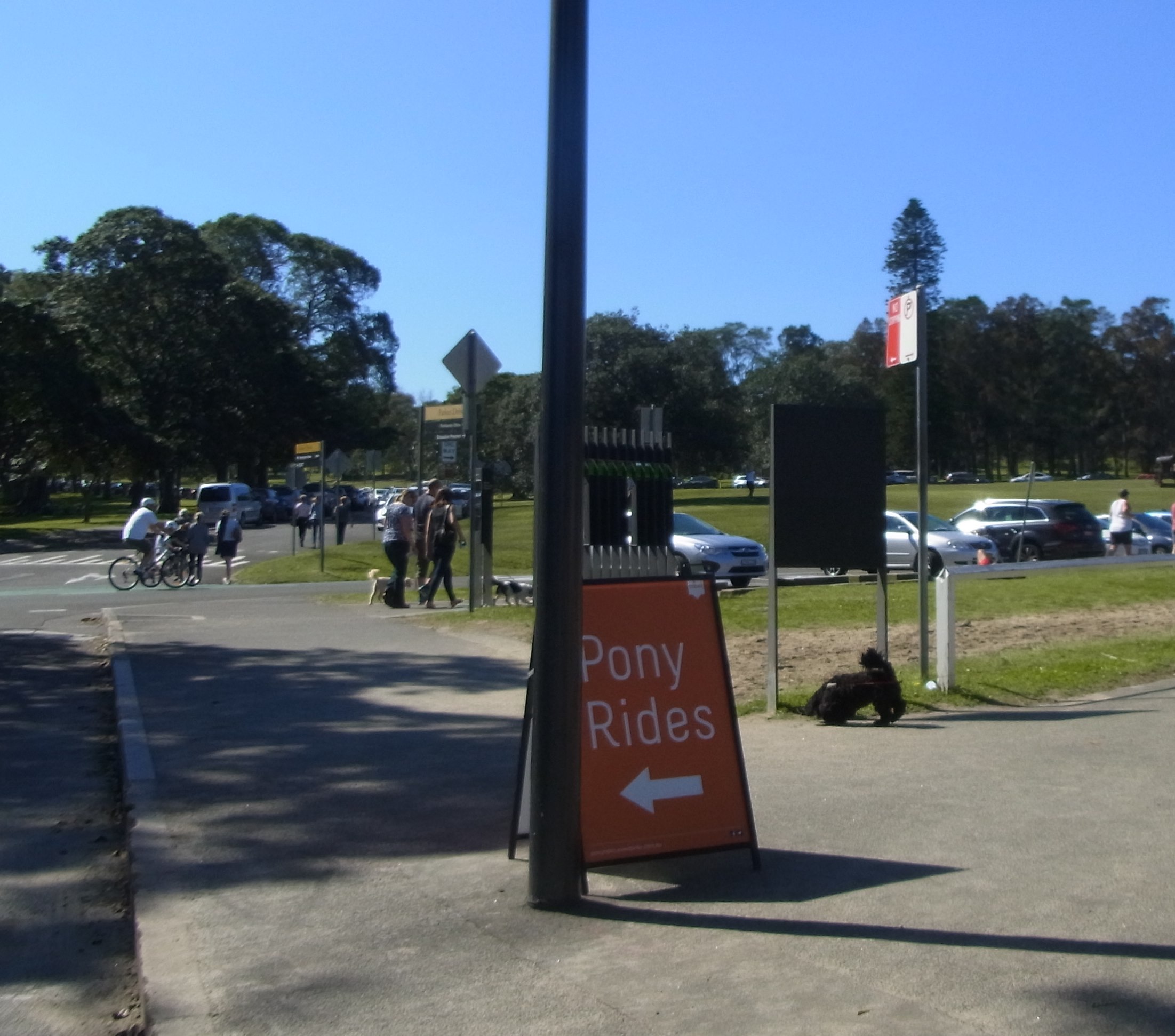
After we had some coffee Matthew left for his lunch and we had lunch with Caroline. Rather than go to the park for a picnic lunch, we did eat our salads at Caroline’s place and had a cup of tea also. We assumed the park would be packed full of people since it had turned out to be a beautiful sunny day. After lunch Caroline drove us to Centennial Park. She soon managed to find a parking spot. There were  hardly any spots left, even though it is a huge park with parking all along the different drive-ways that go through the park.

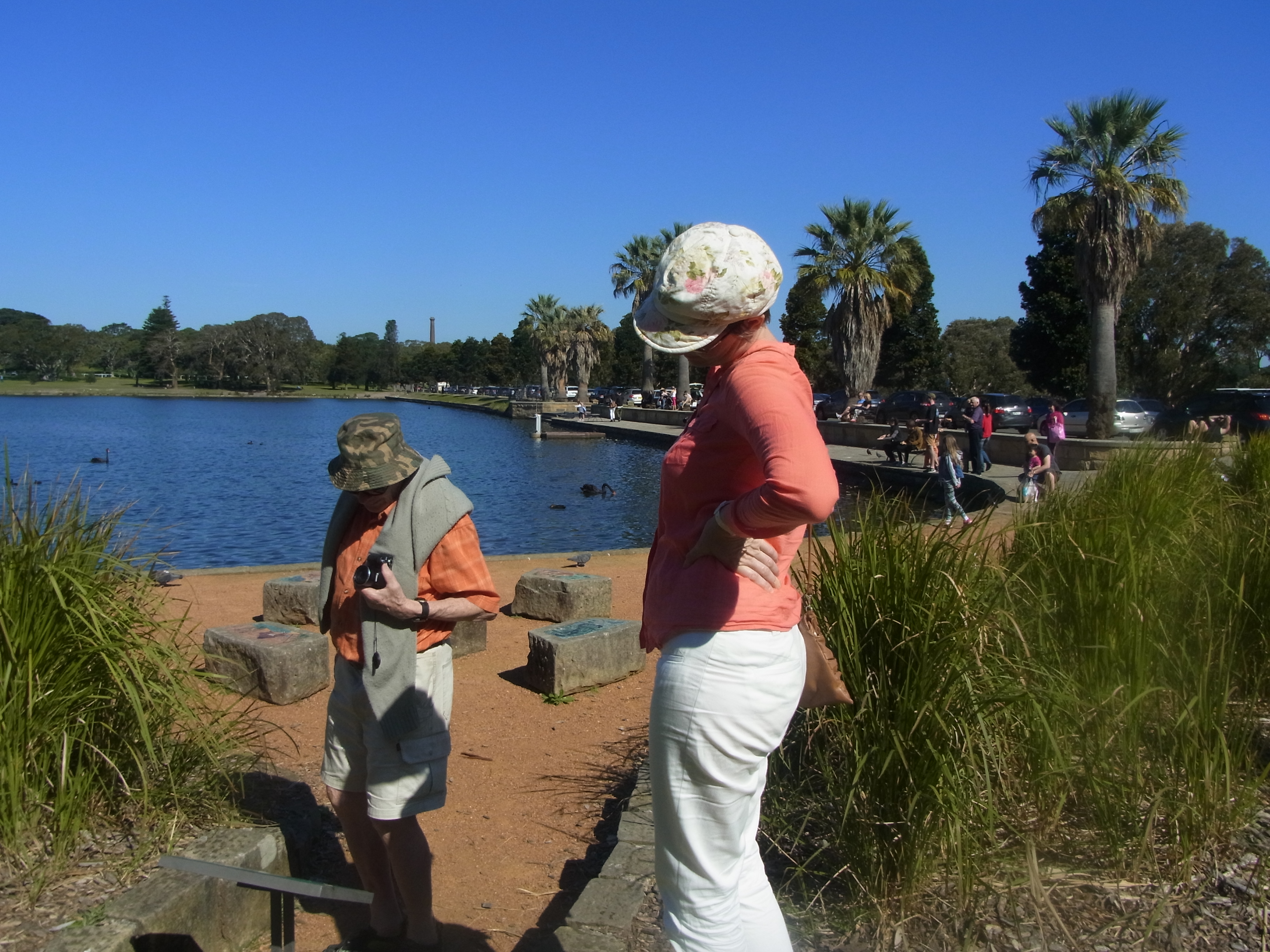
We then had a lovely walk  in our toe shoes. A few hours later Matthew had arrived back home and we had tea and excellent pieces of cake with him before driving back to Dapto.

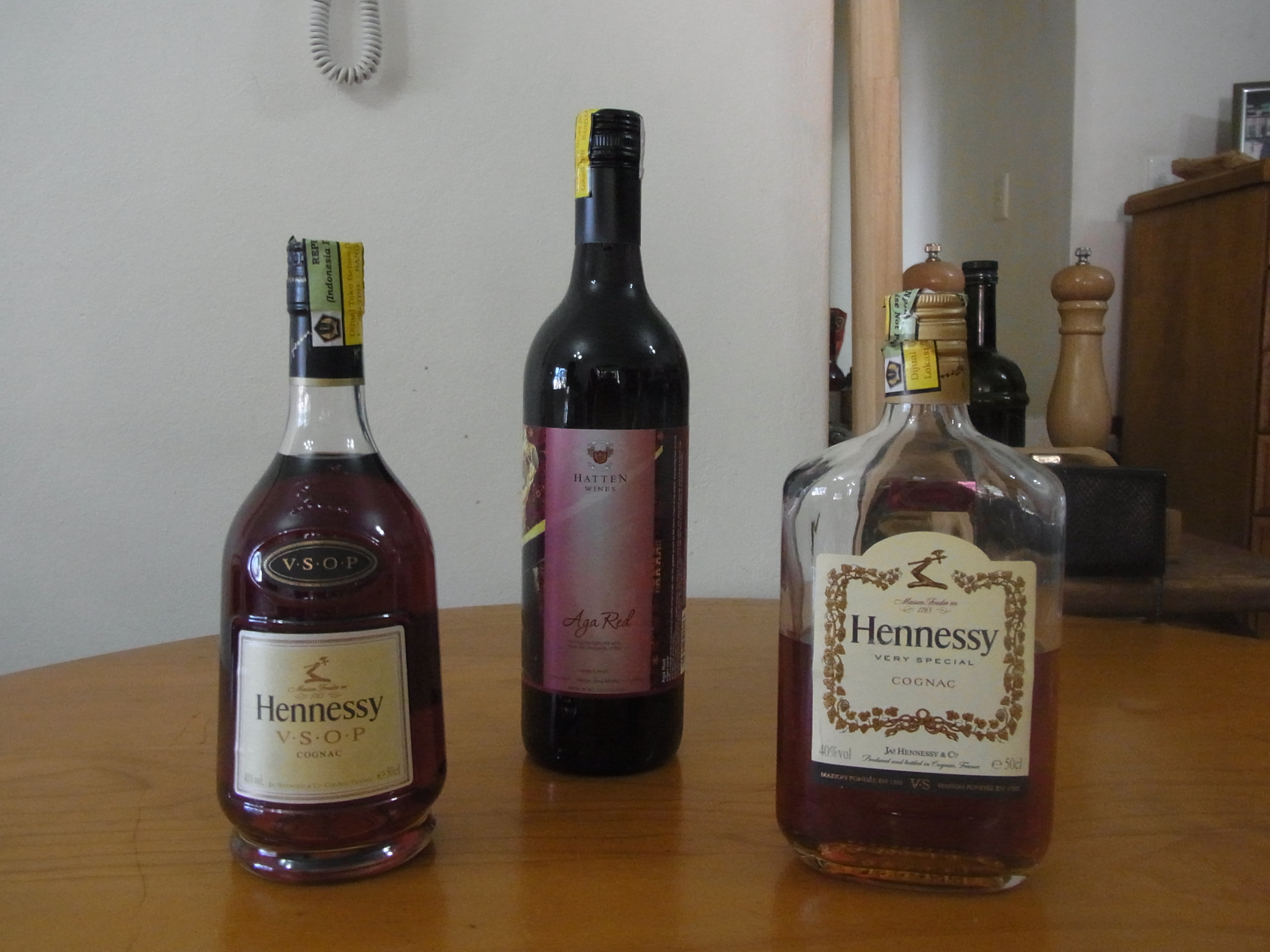
Caroline and Matthew had given Peter a bottle of duty free Hennessey as a belated Father’s Day gift. It was great that we could go on this outing to Sydney and meet Caroline and Matthew after their exciting trip. I had been somewhat concerned that maybe Bali was not such a safe place to visit. But it turned out that my concerns had been totally unwarranted.

RIMG0045

Caroline's Toe Shoes
Caroline’s Toe Shoes

RIMG0022

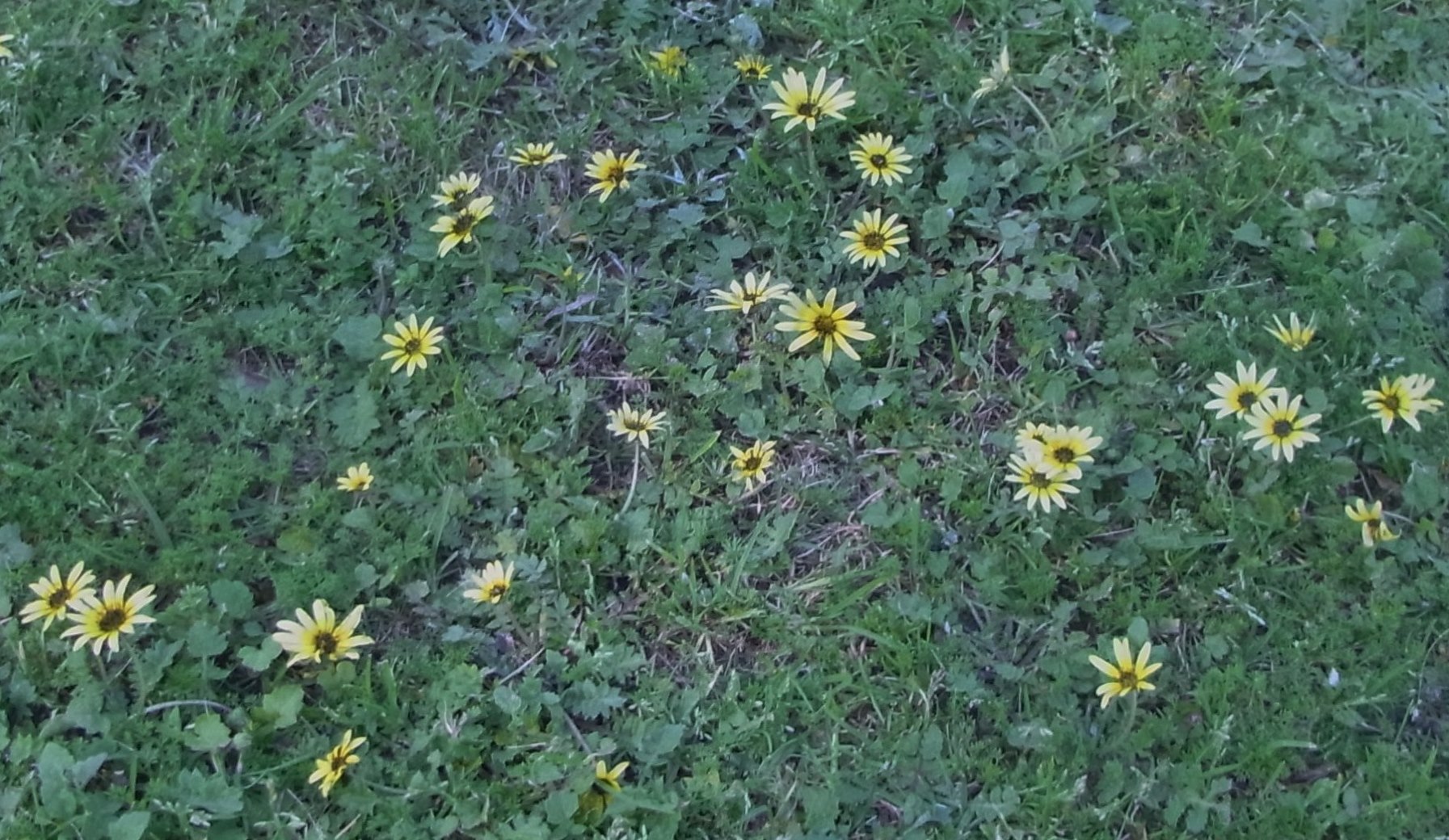
There were a lot of these flowers in the grass where we were walking.
One of these flowers got stuck between my toes.
Peter takes a photo of Caroline.

RIMG0015

RIMG0016

RIMG0017 (2)

RIMG0020

RIMG0027

RIMG0028

RIMG0011

RIMG0008

RIMG0031

RIMG0032

RIMG0033

RIMG0043

RIMG0034

RIMG0044

RIMG0041

Duty Free?
Duty Free?

PS: Here is another update.

http://tompride.wordpress.com/2014/09/14/blair-urges-air-strikes-against-scotland-in-event-of-yes-vote/

Does this make your mind boggle?

A picture that Peter took on Fathers Day 2014

IMG_0391

Peter took this picture on the morning of Sunday, the 7th of September 2014. This was Fathers Day in Australia. There were blue irises as well as a bottle of Peter’s favourite port-wine. The cake made with ground almonds was for the afternoon. Monika arrived in the afternoon with sons and daughters as well as two year old grandson Lucas. Monika brought gifts along for her Papa: A lovely bottle of wine, chocolates, scratchies and a card.

Son Martin rang from Melbourne at night-time. This call was diverted to our interim mobile phone that Telstra had sent us to use while our landline phone was out of order. This mobile phone had no ringing sound. Instead a computerised female voice always announced to us when we had a phone call.

Caroline and Matthew had been going away for a few days to attend the wedding of their friends. They are back now and we are going to see them on Sunday. They probably made a lot of pictures and are going to tell us a lot about their trip.

Peter thought he had a lovely Fathers Day last Sunday. We are looking forward to seeing Caroline and Matthew very soon.

Fathers Day in Australia in 2014

Today is Fathers Day here in Australia. I just want to give a short message via hotspot from Peter’s mobile  phone. This use of the internet can become expensive. However next Friday, the 12th of September, we’ll be connected to the National Broadband Network (NBN), meaning we are then going to have a proper phone and internet connection. At the moment our landline phone is dead. We have been given an interim mobile phone that means any landline calls are being diverted to this interim phone.