We’ve just been watching this movie from 1937. The actress, Grethe Weiser, reminded me a lot of Australian actress – Jacki Weaver. Peter and I, we both thought this old movie was a very well made, pleasant comedy. It was very interesting for us to see fashions from that area, as well as the way middle class people lived during this time. A lot of what I saw in this movie looked very familiar to me since I grew up in Berlin during this time.
Published on May 18, 2012 by youtube (for URL look in comments, please)
Fröhliche Filmkomödie mit zahlreichen Verwicklungen, in der es die “Kodderschnauze” darauf anlegt, sich einen attraktiven Flieger anzulachen, obschon sie nur ein armes Zimmermädchen ist.
https://translate.google.com.au/translate?hl=en&sl=de&tl=en&u=https%3A%2F%2Fde.wikipedia.org%2Fwiki%2FGrethe_Weiser
Grethe Weiser, born Mathilde Ella Dorothea Margarethe Nowka (* 27. February 1903 inHannover; † 2. October 1970 in Bad Tolz), was a German stage and film actress.
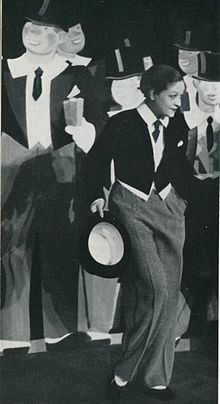
Grethe Weiser, appearance in the Berlin Conservatory (1932)

The grave of Grethe Weiser and her husband Dr. Hermann Schwerin in the cemetery Heerstraße in Berlin (2006)
The daughter of a construction entrepreneur grew in Klotzsche and Dresden on. She attended the girls’ secondary school and the Friedel private school in Blasewitz.
At age 17, she married the confectionery wholesalers and -Fabrikanten Josef Weiser. The couple first lived in Dresden; In 1922 their son was born. After her husband the cabaret -Theater “Charlott” on Kurfürstendamm in Berlin had leased, Grethe Weiser graduated there first appearances as Diseuse.
A short time later broke the marriage, but it was only divorced 1934th Grethe Weiser was now placed as a single mother to be, she took singing – and acting lessons and graduated from appearances as a soubrette and comedienne in numerous cabarets, revues and operettas. From 1928 to 1930 she was at the Volksbühne active in Berlin, then stepped in several Berlin cabarets,as well as chanson singer on. Self she had, for example, at the Thalia Theater in Hamburg or at Komödienhaus in Dresden.
Grethe Weiser made her film debut in 1927 nor the silent era as unnamed Supporting Actress.As a film actress she appeared regularly from 1932. She was very much in demand in important supporting roles as “quick-witted maid on duty”, for example in Escapade (1936). At the same time she had a successful singer hits with songs like “The Vamp” or “Emil’s hands”.
The final breakthrough came in 1937 with Erich Waschnecks film Divine Jette. Weiser shines therein as a young singer, who viewed with a healthy self-confidence and Berlin Kodderschnauzeclaims and ascends to the celebrated star.
After that, they played almost only supporting roles in films of all genres, in which they, however, was able to show the entire repertoire of her comic talent, so among other things, Rolf Hansenthe love (1942), in Helmut Käutner We make music (1942), in Carl Froelich Familie Buchholz(1944) or in Georg Jacoby The woman of my dreams (1944).
Pressures, the board of the Ministry of Arts and thus the NSDAP join, they successfully resisted.
In post-war film Grethe Weiser was soon joined and played in numerous entertainment films with, often as a prevailing widow resolute aunt or mother dreaded. Her trademark was to continue: Heart with snout. She was seen in Hans Deppe’s holiday from I (1952) – as recreation vulnerable stage star Käthe Greiser -. My children and I (1955), Lemke sel Widow (1957) or How to Marry a husband (1959) and appeared in a total of more than 100 films. Among her few appearances atradio comedy part you can tell me a lot with Heinz Rühmann and Elfriede Kuzmany of 1949 by director Ulrich Erfurth.
Since 1934, she was with the Ufa -Produktionschef Hermann Schwerin romantically involved, but whom she married after 24 years on March 21, 1958th
In 1949 she played under the direction of her friend Ida Ehre in Hamburg for the first time on stage, the role of Mary Miller in the comedy The odd one of Irma and Walter Firner which became her signature role. She played this role every ten years and called it therefore jokingly “my Oberammergau Passion Play”. Also on stage they had in 1953 success as Mother Wolff inGerhart Hauptmann’s classic caper comedy The Beaver Coat. In 1966 she ventured into the German premiere of Friedrich Dürrenmatt’s play The Meteor at the Thalia Theater Hamburg as a dying woman toilet Nomsen the excursion to the serious character roles. In this role she beat unusually quiet, to serious and angry tones. This excursion into serious specialist remained the exception in her long career as a popular actress.
Heitere plays found in the later 1960s and the way to television. The ZDF transferred numerous pieces with Grethe Weiser. One of the most successful pieces, which is repeated until today occasionally on the cultural theme channels ZDF, was no corpse without Lily, the German adaptation of the criminal grotesque Busybody the British playwright Jack Popplewell.
1969 began preparations for a new edition of The Cuckoo’s Egg, which was also broadcast on ZDF time. The trade to the six-car filming TV series Theatre dressing room after screenplays byHorst Pillau preceded. Weiser played in a resolute dresser, which acts as a good spirit, the actor behind the scenes and for every situation a suitable Council on the lips.
Grethe Weiser died as a result of a traffic accident in which died and her husband. It was under the name of Grethe Weiser-Schwerin next to her husband at the cemetery Heerstraße in Berlin-Westend in an honorary grave buried the city of Berlin in the box 18-L-228 / 229th
http://www.imdb.com/title/tt0029290/fullcredits?ref_=tt_ov_st_sm
See also
Release Dates | Official Sites | Box Office/Business | Company Credits | Filming Locations |Technical Specs | Literature
http://www.imdb.com/title/tt0029290/reviews?ref_=tt_ov_rt
1 out of 1 people found the following review useful:

The chambermaid did it
Author: Chip_douglas from Rijswijk, ZH, Netherlands
7 August 2004
Why do we love comedies starring scrupulous liars out to gain a lover (or a fortune) by taking advantage of others? Presumably because deep down we all would like to be that inventively naughty and still come out on top. Or maybe it’s just that everybody wants to be loved (or rich). Chambermaid Hanni works for Dr. Fuergartner and his wife Lissy, and is taking full advantage of residing in their big fancy house (twice a week she has her piano lesions there). She also knows the Fuergartners are friends with Herbert Gaspari, a famous flyboy she fancies, and has been corresponding with him under the assumed name of Isabella. Unbeknown to her, Lissy Fuergartner is planning to marry off the pilot to her sister.
When ‘Isabella’ (wearing one of Lissy’s dresses) finally meets her Herbert at a bar, Herr Doktor accidentally arrives on the scene and blows her cover. The pilot does not seem to mind, but Frau Fuergartner, mistakingly believing her husband and the maid are having an affair, has Hanni fired immediately. Still, her husband needs the girl to stay close to Mr. King, a man he has to impress at any cost (most comedies have a character like this, too). Dirty old King is about to divorce his forth wife and fancies Hanni as the next one. So everyone reunites at a big dinner party (one of the few signs that this was based on a play). Hanni, now engaged to King (which does not seem to matter to the pilot either), is now trying to hook the old man up with her not so refined best friend. Since both of them are dressed up in Mrs Fuergartner’s fine clothes, the Mrs. winds up playing the maid.


_Grethe_Weiser.jpg)

 AuntyUta