It Was Class Warfare. And it Sucks.

This article says it all, what class warfare is all about.

johnlord2013's avatarThe Australian Independent Media Network

cLASS WARFARE1

Many pages have been written about the budget and as one bled into the next one thing became abundantly clear: It was about class warfare.

It was about who should pay in the long-term for the necessary corrections to budget fiscal policy. Corrections that either side of politics would eventually have to make. There was no immediate budget crisis to correct in the short-term. They were lying about it and the public – to their credit – didn’t take the bait. The Conservatives had decided that the privileged would be protected. One example hidden deep within the labyrinth of the budget papers was that Private School funding would be quarantined from education cuts. There were many others, like the School Chaplaincy program.

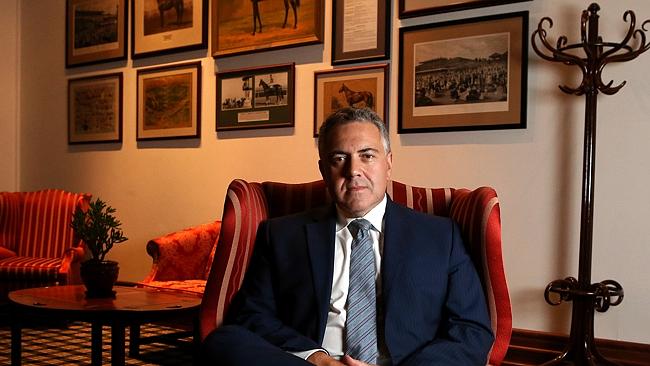
The cigar smoking toff, Jolly Joe, and the Prime Minister decided that it would be the poor and the middle class who should pay the price. Certainly not…

View original post 1,550 more words

What is there to know about Liberia?

http://www.thedailybeast.com/articles/2014/05/19/liberia-s-child-prostitutes.html

What sort of a world is this? Can anybody explain this, understand it?


Reading this story about conditions in Liberia really made me wonder, why, why, why some people do get such a bad deal.

Then I read another, very long story. It shows what it means to be born with black skin in America. How is it possible that people are treated in such a way? How is it possible that this sort of treatment is still going on? Maybe it takes many generations before people’s thinking at the grass-root level is going to change for the better. I don’t know. I am very confused. I want to believe in the basic goodness of every human being. How then is it possible to treat your fellow human being like this?

If you feel like reading a very long story, here it is:

http://www.thedailybeast.com/articles/2014/05/21/the-cost-what-stop-and-frisk-does-to-a-young-man-s-soul.html

HALF OF A YELLOW SUN

We saw this movie yesterday, on Monday. It is adapted from an award winning novel with the same titel. Here is what can be found in google:

http://www.palacecinemas.com.au/movies/halfofayellowsun/

”  . . . .   an impassioned struggle to establish Biafra as an independent republic, ending in chilling violence which shocked the entire country and the world.

A sweeping romantic drama, HALF OF A YELLOW SUN takes the sisters and their lovers on a journey through the war which is powerful, intensely emotional and, as the response of readers around the world has shown, it is a story which can touch everyone’s heart.”

It is a very dramatic love story. Expressions of joy seem to come very naturally to the Nigerian people. The movie starts in the 1960s. Soon the whole country suffers from the outbreak of civil war. The war scenes are absolutely shocking. I cannot help it, I have to ask myself, why, why, why do people fight like this?

But the movie was not just about war. It was about human relationships and the life of people in Nigeria which ordinarily I think we really do not know much about. I was very moved by the way the scenes were shot and the great performances of the actors.

The Ukraine Crisis

This article is from the English section of DER SPIEGEL:

“Following the apparent failure of the Geneva agreements, the inconceivable suddenly seems possible: the invasion of eastern Ukraine by the Russian army. Fears are growing in the West of the breakout of a new war in Europe.

These days, Heinz Otto Fausten, a 94-year-old retired high school principal from Sinzig, Germany, can’t bear to watch the news about Ukraine. Whenever he sees images of tanks on TV, he grabs the remote and switches channels. “I don’t want to be subjected to these images,” he says. “I can’t bear it.”

When he was deployed as a soldier in the Ukraine, in 1943, Fausten was struck by grenade shrapnel in the hollow of his knee, just outside Kiev, and lost his right leg. The German presence in Ukraine at the time was, of course, part of the German invasion of the Soviet Union. But, even so, Fausten didn’t think he would ever again witness scenes from Ukraine hinting at the potential outbreak of war.For anyone watching the news, these recent images, and the links between them, are hard to ignore. In eastern Ukraine, government troops could be seen battling separatists; burning barricades gave the impression of an impending civil war. On Wednesday, Russian long-range bombers entered into Dutch airspace — it wasn’t the first time something like that had happened, but now it felt like a warning to the West. Don’t be so sure of yourselves, the message seemed to be, conjuring up the possibility of a larger war.

‘A Phase of Escalation’

Many Europeans are currently rattled by that very possibility — the frightening chance that a civil war in Ukraine could expand like brushfire into a war between Russia and NATO. Hopes that Russian President Vladimir Putin would limit his actions to the Crimean peninsula have proved to be illusory — he is now grasping at eastern Ukraine and continues to make the West look foolish. Efforts at diplomacy have so far failed and Putin appears to have no fear of the economic losses that Western sanctions could bring. As of last week, the lunacy of a war is no longer inconceivable.

On Friday, leading Western politicians joined up in a rare configuration, the so-called Quint. The leaders of Germany, France, Britain, Italy and the United States linked up via conference call, an event that hasn’t happened since the run-up to the air strikes in Libya in 2011 and the peak of the euro crisis in 2012 — both serious crises.

Germany’s assessment of the situation has changed dramatically over the course of just seven days. Only a week ago, the German government had been confident that the agreements reached in Geneva to defuse the crisis would bear fruit and that de-escalation had already begun. Now government sources in Berlin — who make increasing use of alarming vocabulary — warn that we have returned to a “phase of escalation.”

Polish Prime Minister Donald Tusk spoke of a “worst-case scenario” that now appears possible, including civil war and waves of refugees. Ukrainian interim Prime Minister Arseniy Yatsenyuk has even gone so far as to claim that “Russia wants to start a Third World War.” (Though, of course, Yatsenyuk also wants to instill a sense of panic in the West so it will come to the aid of his country.)

There may not be reason to panic, but there are certainly reasons for alarm. After 20 years in which it was almost unimaginable, it seems like a major war in Europe, with shots potentially being fired between Russia and NATO, is once again a possibility.

“If the wrong decisions are made now, they could nullify decades of work furthering the freedom and security of Europe,” German Foreign Minister Frank-Walter Steinmeier of the center-left Social Democratic Party (SPD) told SPIEGEL in an interview. Norbert Röttgen, a member of Angela Merkel’s conservative Christian Democratic Union (CDU) party and the chairman of the Foreign Affairs Committee in the German parliament, said, “The situation is getting increasingly threatening.” His counterpart in the European Parliament, Elmar Brok of the CDU, also warned, “There is a danger of war, and that’s why we now need to get very serious about working on a diplomatic solution.”

‘Against the Law and without Justification’

Friday’s events demonstrated just how quickly a country can be pulled into this conflict. That’s when pro-Russian separatists seized control of a bus carrying military observers with the Office of Security and Cooperation in Europe (OSCE) and detained the officials. As of Tuesday, seven observers were still in detention, including four Germans — three members of the Bundeswehr armed forces and one interpreter.

The same day, Vyacheslav Ponomaryov, the de facto mayor of Slavyansk, told the Interfax news agency that no talks would be held on the detained observers, whom he has referred to as “prisoners of war,” if sanctions against rebel leaders remain in place. On Monday, Chancellor Angela Merkel’s spokesman, Steffen Seibert, condemned the detentions, describing them as “against the law and without justification.” He called for the detainees to be released, “immediately, unconditionally and unharmed.” German officials have also asked the Russian government “to act publicly and internally for their release.”

The irony that these developments and this new threat of war comes in 2014 — the 100th anniversary of the outbreak of World War I and the 75th of the start of World War II — has not been lost on anyone. For years, a thinking had prevailed on the Continent that Europe had liberated itself from the burdens of its history and that it had become a global role model with its politics of reconciliation. But the Ukraine crisis demonstrates that this is no longer the case.”

Read the conclusion of this article here:

http://www.spiegel.de/international/europe/how-the-ukraine-crisis-is-stoking-fears-of-war-in-europe-a-966504.html

The Report of the National Commission of Audit

the report of the National Commission of Audit

Read more: http://www.smh.com.au/comment/audit-commissions-rationalist-market-approach-a-glimpse-into-a-less-caring-future-20140506-zr5hv.html#ixzz31FY4HaAH


The report fits perfectly with a wry observation from John Kenneth Galbraith, as paraphrased by the late John Button: ‘‘The rich need more money as an incentive and the poor need less money as an incentive.’’

What is your comment on this?

An appeal to young Aussies

This post makes you think about what state Australia is in right now.

Barry Tucker's avatarThe Sniper

The Sniper*

Australia is in trouble. Young Australians will have to save it, if you decide it needs saving.

Australia was a democracy. It has slowly become a Corporatocracy: government by Big Business. You will have to change that, if you think it is a bad thing. I will not tell you what to think.

You could argue that Australia is still a democracy. Australians vote in free and fair elections to decide who will run things until the next election.

You could argue that Australia believes in the principle of a free Press (or news media generally). The British parliament, the model for ours, recognised the Press as the Fourth Estate, granting it the right to sit in the parliament and report on the affairs of government.

You could argue that nothing has changed and all is sweet in the land of Oz. You could look more closely, dig…

View original post 981 more words

A Fair Go

I like this blog very much. I could not agree more about what it says about a Fair Go and conditions in Australia right now.
I am going to reblog it on auntyuta!

infinite8horizon's avatarinfinite8horizon - peter d barnes

“A fair go” could be Australia’s motto.

It’s a phrase that’s uniquely Australian, and one on which we pride ourselves: Fair go, mate!

There are other versions that nobody but an Australian would understand: “Fair dibs”, and of course “Fair suck of the sauce bottle”, but they all mean roughly the same thing.

Fairness, and balance.

View original post 851 more words