


The Permalink goes to digitalcatharsis which is Nelson’s blog. I copied the above verse from Nelson’s blog. I think these words are very inspirational. I would like to share them with other bloggers. Thank you, Nelson, for publishing such beautiful words!
Category: Uncategorized
My Friends in 1947
I made a few changes to this blog. This is why I think some people might perhaps want to have another look.

I’m surprised that Franziska isn’t in that birthday photo from 1947, when I turned thirteen. Dr Petzel used to give Franziska ‘preferential’ treatment because her father had a doctor title. I remember I used to climb with her and her younger brother on chestnut trees to pick nice ripe chestnuts. This must have been in autumn of 1946.
So Franziska is not in the picture. Gisela (16), Jutta (14), Lilo (14) and Irene (still 13) are in the picture from right to left.
Cordula had turned 12 on the 20th May of that year, whereas Eva would turn 12 in December of 1947.
There are four school-friends in the birthday photo. Gisela was already sixteen and seemed very mature to us. She had to do all the housework at home because her mother had died. Her father worked as a truck-driver. Gisela was an excellent reader. When a teacher had…
View original post 994 more words
Treatment of Asylum seekers by Sayomi Ariyawansa
I urge all politicians to look at the conditions in detention centers and to raise their voices so that necessary changes can be made. This is a long overdue matter!

UNExtract by Sayomi Ariyawansa From Future Leaders
Detention-centre advocates tell us that our tough attitude towards “boat people” is a deterrent for others who may consider seeking asylum here. They tell us these people are a burden that we don’t want, and the best way to stop them is to show them that Australia is not an open country and will not accept everyone. However, there is a line between tough and inhumane, a line that is blurred in terms of our refugee policy. Our current system humiliates and psychologically damages innocent people and goes against UN conventions.
There must be a better way to treat this issue, and we should consider the systems in place by other countries. The UN International Refugee Convention requires host countries to treat asylum seekers with dignity and respect while
Australia’s Treatment of Refugees is Unnecessarily Harsh
their claims for asylum are processed. There…
View original post 525 more words
CCLaP Fridays: Sick Justice: Inside the American Gulag, by Ivan G. Goldman
Cranky Old Man

 When an old man died in the geriatric ward of a nursing home in an Australian country town, it was believed that he had nothing left of any value. Later, when the nurses were going through his meager possessions, They found this poem. Its q…uality and content so impressed the staff that copies were made and distributed to every nurse in the hospital.
One nurse took her copy to Melbourne. The old man’s sole bequest to posterity has since appeared in the Christmas editions of magazines around the country and appearing in mags for Mental Health. A slide presentation has also been made based on his simple, but eloquent, poem.
And this old man, with nothing left to give to the world, is now the author of this ‘anonymous’ poem winging across the Internet.
Cranky Old Man
What do you see nurses? . . .. . .What do you see?
View original post 631 more words
Photos for David
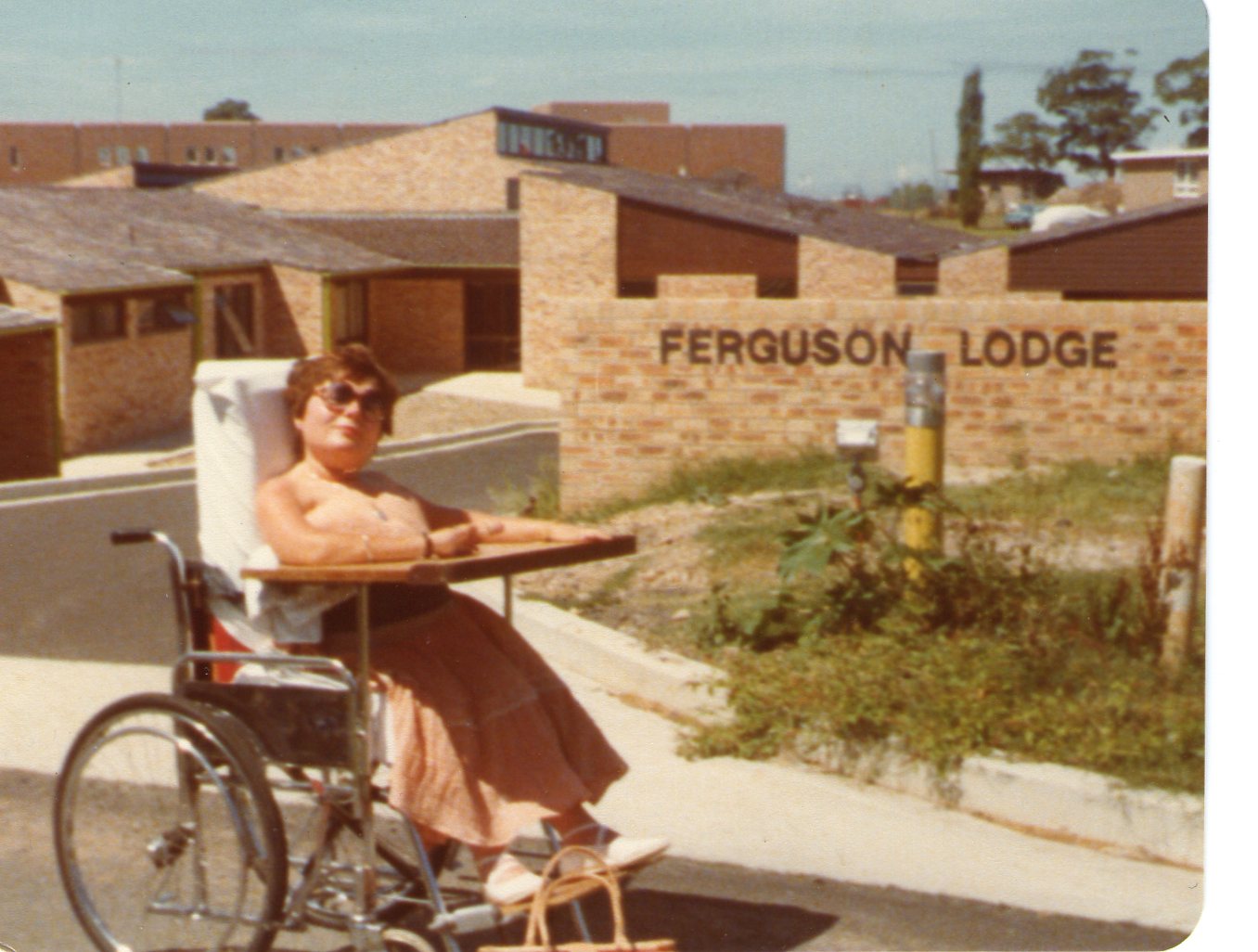
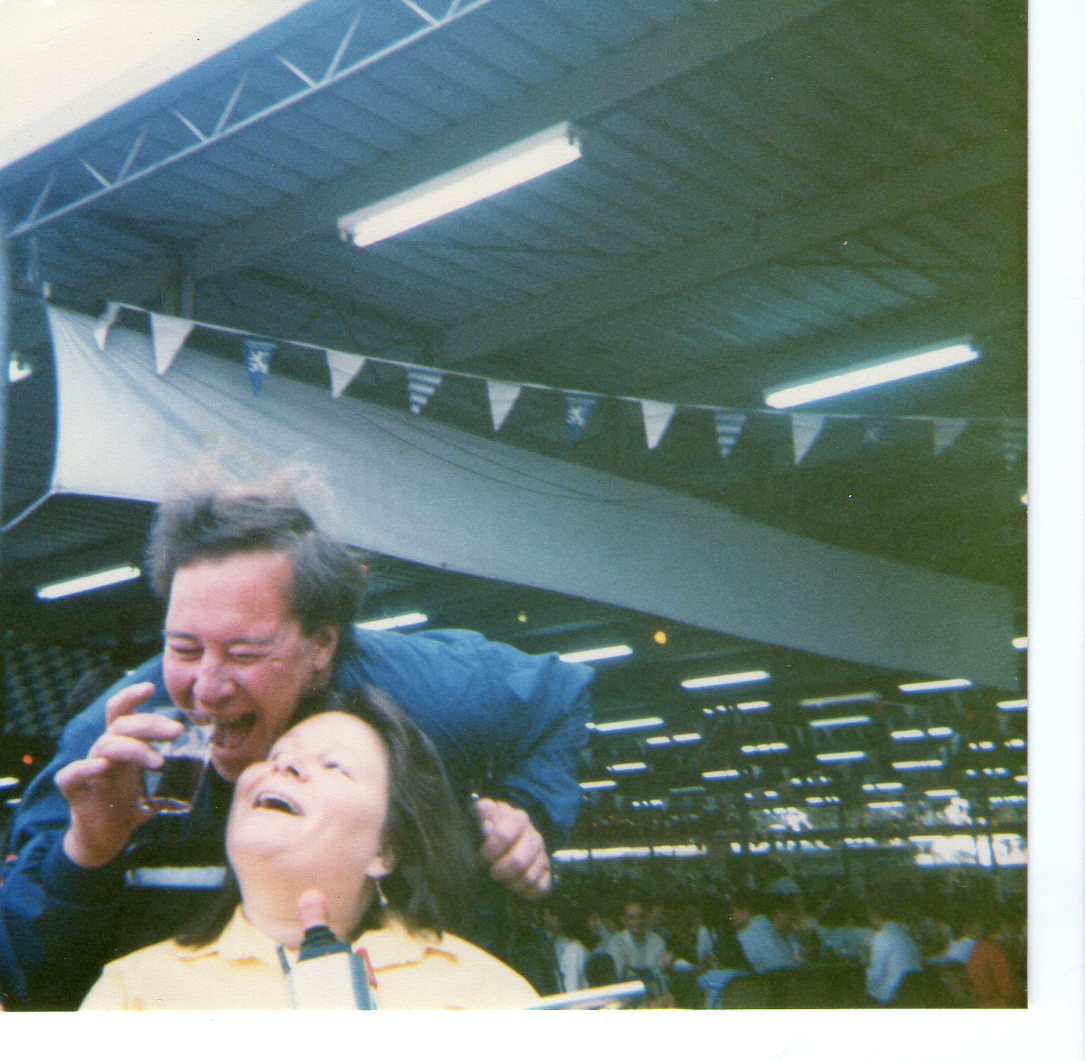
Today I selected a few photos to give to David when we next see him. Before I inserted the photos in a little photo album, I scanned them all. I want now to share these photos with my blogger friends. David did get to know Gaby while she lived in Ferguson Lodge which is a place for disabled people in a wheelchair. In this place people were well looked after. However it was institutionalized care. Gaby was very happy when in 1989 David made it possible for her to move into her own home. She was 32 at the time and Davidwas 40.
The picture of Peter holding baby Caroline was taken ca. March 1979, visiting Gaby at Ferguson Lodge with friend Ron Bates.






Chance Meeting across Time and History

The 9:27am Intercity Express from Central to Kiama was due to depart.
At the last moment a young Corporal from the Australian Army jumped on the train. The carriage door closed shut behind him, almost catching his gear.
“Saved again,” he thought. He walked up a couple of steps to the upper level of the double decker carriage, threw his pack on a single seat and slumped down with a sigh on the other single seat in front of it. The “Oscar” train slowly moved out of the platform.
At first he sat with the back to the front of the train but after a moment of deliberation, he got up, turned the back of the seat around and and sat down, facing the front of the carriage.
Across the aisle was an old couple sitting on a three seater bench and as the old…
View original post 988 more words
Mike Carlton writes
This is a Reblog from a column by Mike Carlton:
. . . . . A great Australian died last Sunday. I want to finish this column by telling you about him.
Arthur “Blood” Bancroft was a strapping 19-year-old when he joined the navy in 1940. He left a good job with a bank in Perth, farewelled his girlfriend Mirla Wilkinson and went off to war because it was the right thing to do. His shipmates gave him the nickname for his shock of flaming red hair.
Blood was an ammunition loader in the cruiser HMAS Perth when it was sunk by the Japanese off West Java in March 1942. Half the crew were lost but he survived, to endure the atrocities of the Burma-Siam Railway.
In 1944 he and hundreds of Australian prisoners were packed off to Japan in a hell ship named the Rakuyo Maru, only to be torpedoed by an American submarine in the South China Sea. For six days Blood and a handful of mates floated on a makeshift raft in a sea strewn with corpses and wreckage.
Then came the miracle. Another US submarine appeared out of a rain squall and they were rescued. Burnt by the sun, near naked and starving, covered in stinking fuel oil, weighing perhaps 50 kilograms, Blood struggled to attention on the sub’s foredeck and saluted her captain with proper naval courtesy.
“Ordinary Seaman Arthur Bancroft, Royal Australian Navy. Request permission to come aboard, sir!” he said.
With his war over, Blood returned to Perth, married Mirla and raised a happy family. Every year on the anniversary of his rescue, he would phone the sub’s executive officer in the States, John Bennett, to chat over old times.
He was 91 when he died peacefully in his sleep. Deeply mourned by all who knew him.
smhcarlton@gmail.com
Twitter: @MikeCarlton01
Clarification: The original version of this story said John McGuigan and John Atkinson were from the global law firm Baker and McKenzie. In fact they left in 1998.
Have you fed your household spirits? Word of warning…you might want to think about that!

For more than a week I have certainly been preoccupied. It’s been almost impossible to find even small snippets of available time to post personal updates or spend any significant time visiting others.
Looking back, I think my troubles started while we were still at the beach. I just didn’t acknowledge him.

I’ll explain.
Last week Kate Shrewsday introduced me to the Domovoi. This little house spirit, according to Slavic folklore, serves, among his many roles, as the keeper of peace and order in a home. He typically lives under the threshold, or maybe under the stove, but we didn’t know. Apparently he’s sensitive, and sadly we’ve been ignoring him.
Had we been more aware, we might have benefitted from his potential good will. He rewards a well-maintained household. He likes peace and order, you see. Lately I’ve felt we could work a little harder at that.
Some families…
View original post 431 more words
ESCAPE FROM PARIS
‘Escape from Paris’, a novel written by CAROLYN HART. The time is WW II during the German occupation of Paris. I’ve just read this novel as an e-book. I felt very much for the characters in the book. I wonder whether this story has been made into a movie yet? Americans, English, French and Germans, all of them are main characters. The writing brings vividly to life how the war affects all of them. There is so much viciousness, suffering, outright hunger being depicted, but also great love and compassion amongst some people.
I was very moved by what the experiences of people were during this time. It makes me wonder again why there have to be wars and suffering which people inflict on each other. However it also makes me believe in the goodness of people and how they sometimes put their own lives in danger to help somebody else.
CAROLYN HART is a well established author and has written many other books.

