Heatwave Records in Australia

https://www.theguardian.com/australia-news/2017/feb/10/australia-swelters-in-heatwave-and-argues-about-energy-future

I just found the following in The Guardian:

“Sydney airport recorded its hottest February day ever at 42.9C, breaking a 37-year record. Wood said the month was on track to be the hottest on record in both Sydney and Brisbane, following on from their hottest January on record.”


Here is an article by the ABC about Australia’s heatwave:

http://www.abc.net.au/news/2017-02-11/states-ready-for-extreme-heatwave/8261520

We live in Dapto, 100 km south of Sydney. Today, Saturday, we expect 41c.  Right now it is still early morning and the outside temperature is only about 23C. We plan on driving to Warrawong later on, spending some time in the shopping centre and in the afternoon we want to visit the GALA Cinema to see a French movie: Rosalie Blum.

Yesterday afternoon my lady friends came over to my place. It was our Friday games afternoon. Erika is away in Geelong, Victoria, visiting some friends. But Barbara, Irene and Marion did come despite the heat and I not having any air-conditioning. I had our ceiling fans in the living room going the whole time. Blinds and curtains were in front of all the windows.  We started playing at 2 pm. I think our inside temperature was then only about 28C. But three hours later, when the ladies left, the inside temperature had climbed to 32C.


ALETTA HENRIETTE JACOBS 1854 – 1929

https://jwa.org/encyclopedia/article/jacobs-aletta-henriette

by Harriet Feinberg

A pioneer in many realms—birth control, women’s suffrage, peace activism, and envisioning a wider future for women—Aletta Henriette Jacobs was born on February 9, 1854, in the small town of Sappemeer, Netherlands, the eighth of eleven children of Abraham Jacobs, a country doctor, and Anna de Jongh. Her assimilated Jewish family maintained social and intellectual ties with other Jewish families in the area.

When still a child, accompanying her adoring father on his visits to patients, she already yearned to be a doctor, but as she grew older she was constrained and disheartened by the schooling then available for young women. Two Jewish physicians who were close family friends provided support: Dr. L. Ali Cohen guided her to start training for pharmacy as an interim goal; after Jacobs received crucial letters of permission from the liberal minister J.R. Thorbecke, Dr. S.S. Rosenstein, rector of the University of Groningen, welcomed her admission to the faculty of medicine.

She began her studies in 1871 at the University of Groningen, where she and her sister Charlotte were the first female students. Overcoming bouts of illness, she graduated on March 8, 1879 as the first woman physician in the Netherlands. She promptly traveled to London and, while pursuing further clinical training, soon moved into the orbit of various British radicals and freethinkers, including birth-control advocates and suffrage leaders.

She set up her medical practice in Amsterdam and began to have a significant impact on women’s health. She introduced the pessary (diaphragm) to the Netherlands despite intense opposition from male colleagues, held a free clinic for poor women two mornings a week, and campaigned to change the unhealthy working conditions of salesgirls.

A small and slender woman, she married Carel Victor Gerritsen, a Dutch grain merchant, legislator and reformer, in 1892, after a long acquaintance. They enjoyed an egalitarian relationship, their otherwise happy and productive life together marred only by one devastating loss: the child they longed for lived only a day.

The International Council of Women’s 1899 meeting in London had a galvanizing effect on Jacobs. There she met inspiring leaders such as Susan B. Anthony with whom she had been acquainted only through correspondence. In 1903 she gave up her medical practice and committed herself to the struggle for women’s suffrage, becoming in that year president of the Dutch suffrage organization. When the International Woman Suffrage Alliance (IWSA) came into being in Berlin in 1904, she further expanded her activities . After her husband’s death in 1905 from cancer and a period of depression, she resumed her suffrage work, traveling through the Austro-Hungarian empire in the fall of 1906 with IWSA president Carrie Chapman Catt. She hosted a brilliantly successful IWSA conference in the Netherlands in 1908. She also brought feminist social and economic theory to the Netherlands by translating Charlotte Perkins Gilman’s Women and Economics (1900), and Olive Schreiner’s Women and Labor (19l0).

She and Catt traveled together again in 1911–12 on a sixteen-month itinerary including South Africa, the Middle East, India, Ceylon, the Dutch East Indies, Burma, the Philippines, China and Japan. They looked into the situation of women and, when they could, encouraged women to improve their lot. Throughout the journey Jacobs wrote lively reports for the Dutch paper De Telegraaf.

After the outbreak of war in 1914, Jacobs strove to use her international network to try to stop the slaughter. With a small group of planners, she called for an international women’s conference at the Hague and invited the acclaimed American reformer Jane Addams to chair the proceedings. Despite the resistance of governments and the hazards of wartime travel, a resilient group of women from belligerent and neutral nations convened at the Hague from April 28 to May 1, 1915, and passed farsighted resolutions. Jacobs participated in one of the two small post-conference delegations, her group traveling through a war-obsessed Europe, meeting with leaders of the belligerent nations to encourage mediation. In September 1915 she voyaged to the United States in an unsuccessful attempt to persuade President Woodrow Wilson to mediate the conflict.

During and after the war she continued to lead Dutch women in their struggle for suffrage. Victory came in 1919. That year she and others from the Hague group founded the Women’s International League for Peace and Freedom. Her health weakened and her finances straitened, she spent her later years in close contact with her dear friends the Broese van Groenous, still traveling to conferences and speaking her mind, and receiving honors and appreciation from Dutch women and from abroad. She died on August 10, 1929, in Baarn, Netherlands.

SELECTED WORKS

Over localisatie van physiologische en pathologische verschijnselen in de groote hersenen. Dissertation, Rijksuniversiteit Groningen, 1879

Jacobs chose an aspect of brain physiology as the subject for her medical dissertation. This was an unusual choice at the time, as the subject had been little studied.

De vrouw, haar bouw en haar inwendige organen. Deventer: 1897

A pioneering explanation for the ordinary reader of the anatomy of women, including detailed description of the entire reproductive system. Many illustrations.

Vrouwenbelangen. Drie vraagstukken van aktuelen aard. Amsterdam: 1899.

A compilation of three articles setting forth Jacobs’s strongly held positions on controversial issues: women’s need for economic independence, the regulation of prostitution, and the importance of family planning.

Uit het leven van merkwaardige vrouwen. Amsterdam: 1905.

A collection of seven biographical sketches first published in 1903–1905 in the Dutch suffrage journal Maandblad voor Vrouwenkiesrecht . They portray British and American women reformers and suffrage leaders Jacobs admired and knew personally. The subjects include her close friends Anna Howard Shaw and Carrie Chapman Catt.

Gerritsen, C.V. and Aletta H. Jacobs. Brieven uit en over Amerika. Amsterdam: 1906.

A collection of the articles Jacobs and her husband Carel Victor Gerritsen wrote for Dutch publications during their 1904–05 visit to the United States when they first traveled through the country with a group of delegates to the 1904 St. Louis conference of the Interparliamentary Union and subsequently traveled on their own. Gerritsen’s pieces usually focus on political and economic matters, while Jacobs deals with the condition of women, prison reform, and other social issues.

Reisbrieven uit Afrika en Azië, benevens eenige brieven uit Zweden en Noorwegen. 2 vols. Almelo: 1913.

A collection of the articles Jacobs wrote for the Dutch paper De Telegraaf during the sixteen- month trip she and United States suffrage leader Carrie Chapman Catt took in 1911–12 through Africa and Asia. Includes observations of women’s situation, accounts of efforts by the two travelers to organize and energize local women, impressions of local notables and of tourist attractions, and informal ethnographic and sociological observations.

Memories: My Life as an International Leader in Health, Suffrage, and Peace. Translated by Annie Wright. Edited by Harriet Feinberg. New York: 1996.

English translation of Jacobs’s autobiography Herinneringen, first published in 1924. Includes a literary analysis of the memoir by the editor, a historical perspective by Harriet Pass Freidenreich, notes that contain brief biographical data on many European feminists, and a wide-ranging bibliography that includes many works in Dutch and some in German.

Bibliography

[The Aletta Jacobs Papers are housed at the Internationaal Informatiecentrum en Archief voor de Vrouwenbeweging (IIAV) in Amsterdam.]

Addams, Jane, Emily Balch and Alice Hamilton. Women of the Hague: The International Congress of Women and Its Results. New York: l9l5.

Vivid accounts by three key participants in the Hague conference and its aftermath, including their reflections on the war and on the role of media in molding public opinion, and their impressions of the European leaders of belligerent and neutral nations with whom they had personal encounters. Appendices include the set of resolutions adopted at the congress.

Blackburn, Susan. “Western feminists observe Asian women: an example from the Dutch East Indies” . In Women Creating Indonesia. The first fifty years, edited by Jean Gelman Taylor, 1–21. Clayton, Australia: 1997.

Focuses on the articles Jacobs wrote for De Telegraaf during the three months she and Catt spent in the Indies, where Jacobs, a Dutch woman with relatives and many contacts in the islands, played a special role. Emphasis on the tension between her positive view of Dutch colonial rule and her espousal of international feminism. Bibliography includes works in English and Dutch about Indonesian women and Indonesian history.

Bonner, Thomas N. To the Ends of the Earth: Women’s Search for Education in Medicine. Cambridge, Mass: l992.

Traces women’s struggle to study medicine in Paris, Zürich, Bern, St. Petersburg, and other centers of medical learning—their achievements, their setbacks, and the perseverance of the pioneers, particularly the first Americans who went to Europe to study. Does not treat Jacobs directly but gives a nuanced international context for her achievements. Extensive bibliography includes many works in German and Russian.

Bosch, Mineke. Een onwrikbaar geloof in rechtvaardigheid. Aletta Jacobs, 1854–1929. Amsterdam: 2005.

The first full-length scholarly biography of Jacobs, published by Uitgeverij Balans in Amsterdam.

Bosch, Mineke. “Aletta Jacobs and the Women’s International Congress at the Hague, l9l5: Peace, internationalism and the discourse of Dutch nationalism.” Paper delivered at the conference: Hull-House as a Resource for Teaching U.S. and World History. September 22–23, 2000. University of Illinois at Chicago.

Presents Jacobs’s peace initiative within its Dutch context, with a focus on how the Dutch saw their small nation and its colonial policies in relation to the other great colonial powers. Bosch argues that Jacobs’s initiative actually brought her suffrage work closer to fruition because of the special nature of Dutch nationalism at the time.

Bosch, Mineke. “Colonial Dimensions of Dutch Women’s Suffrage: Aletta Jacobs’s Travel Letters from Africa and Asia.” Journal of Women’s History, Vol. 11 #2 (1999): 8–34.

Critical reinterpretation. in light of post-colonial and feminist theory, of Jacobs’s articles in De Telegraaf for Dutch readers. Her acceptance, indeed advocacy of the idea of ‘benevolent’ colonial role is according to Bosch not really in conflict with her international feminism but rather a way of asserting a key role for Western feminists in outreach to other nations and cultures.

Bosch, Mineke, with Annemarie Kloosterman. Politics and Friendship. Letters from the International Woman Suffrage Alliance, 1902–1942. Columbus: l990.

Focuses on the evolution and development of the International Woman Suffrage Alliance (IWSA), including the upheavals brought about in the organization by World War I and by the rise of fascism in the l930s. Emphasis on the inextricably entwined personal and professional lives of the women involved. Each explanatory chapter is followed by a selection of letters among five key participants: Aletta Jacobs, Carrie Chapman Catt, Rosa Manus, Anna Howard Shaw and Rosika Schwimmer. Appendices include boards and officers of the IWSA from 1904 to 1942. Bibliography of works in English and Dutch, some in German.

This book is a translation and adaptation of Mineke Bosch and Annemarie Kloosterman, Lieve Dr. Jacobs: Brieven uit de Wereldbond voor Vrouwenkiesrecht 1902-42. Amsterdam: 1985.

Feinberg, Harriet. “Aletta Jacobs’s Reisbrieven uit Afrika en Azië.” Unpublished paper. Cambridge, Mass: l995.

Overview, with vignettes and extended quotations, of the articles Jacobs wrote for De Telegraafduring the journey she and Catt took in l9ll–12. Highlights Jacobs’s impressions of different nations’ colonial rule, then the near-epiphany she and Catt experienced in China, and seeks to assess whether her views of nonwhite women changed during the journey.

Feinberg, Harriet. “ A Pioneering Dutch Feminist Views Egypt: Aletta Jacobs’s Travel Letters.” Feminist Studies 10 (2) (Fall l990): 65–77.

Describes Jacobs’s impressions in the articles she wrote from Egypt and Mandate Palestine, and finds an interplay of two modes of discourse: ‘encouraging our peers’— based on an idea of universal sisterhood—and ‘lifting up our native sisters’—based on an assumption of white Western superiority. Argues that her suffrage work pulls Jacobs toward the egalitarian mode.

Posthumus-van der Goot, W.H. Vrouwen vochten voor de vrede. Arnhem: l961.

Broad exploration of the growth of peace activism in Europe and the United States during the nineteenth century, before and during World War I, in the interwar years, and after World War II. Jacobs and her circle are considered mainly in chapters l3–15. Reflections and speculations on the role of Quakers and other peace groups and on future prospects for peace. No bibliography.

Posthumus-van der Goot, W.H. and Anna de Waal, eds. Van Moeder op Dochter: De maatschappelijke positie van de vrouw in Nederland vanaf de Franse tijd. Revised edition, Nijmegen: l977.

Pioneering in-depth study of the social position of women in the Netherlands from 1798 to the l960s. Jacobs is prominent in the sections on suffrage and on health; she is considered within a rich context of other early Dutch feminists. Appendices include Dutch women’s organizations, Dutch women elected to the legislature. No bibliography.

Randall, Mercedes. Improper Bostonian: Emily Greene Balch. Nobel Peace Laureate l946. New York: l964.

Biography by a younger close associate of Balch which explores the development of her commitment to pacifism. The book gives a detailed and emotional account of her participation in the Hague conference and its aftermath, of her subsequent pacifist activities during the war, and of the founding meeting in Zurich of the Women’s International League of Peace and Freedom.(WILPF). Much material is drawn from private correspondence and unpublished papers.

Rupp, Leila. Worlds of Women: The Making of an International Women’s Movement. Princeton: l997.

Focuses on the International Council of Women (ICW), the International Alliance of Women (IAW) [formerly IWSA] and the Women’s International League for Peace and Freedom (WILPF) in a broad inquiry into the personal relationships and issues that shaped these and other groups. Considerable attention is given to Jacobs and her Dutch cohorts. Extensive bibliography includes many manuscript collections, conference proceedings, and dissertations, as well as an international range of primary and secondary sources.

Tilburg, Marja et al, ‘Op mij rusten grooter en ernstiger plichten.’ Dr. Aletta Jacobs’

zorg voor de wereld.’ RUG: Werkgroep Vrouwenstudies Letteren Groningen, l992.

A group of three articles prepared in connection with a 1992 exhibit honoring Jacobs at the University of Groningen’s museum.The booklet includes a biographical sketch by Mineke Bosch, an assessment of Jacobs’s contribution as a physician by Annita Deen, and an analysis of her belief in progress by Claudia Vrieling. Photographs, illustrations, bibliography.

Van Brakel, Nouchka, film producer. Aletta Jacobs, het hoogste streven. Netherlands, Circe Films, l995.

An appealing, somewhat fictionalized film focusing on Jacobs’s medical training, her early years of practice, and her relationship with Carel Gerritsen. Includes flashbacks to her childhood and glimpses of her in old age.

Van Voris, Jacqueline. Carrie Chapman Catt: A Public Life. New York: l987.

Biographical study emphasizing Catt’s growth toward internationalism and her feminist networks. Chapters 10 and 11 cover Catt and Jacobs’s 1911–1912 trip through Africa and Asia and form a useful complement to Jacobs’s own account in her Reisbrieven, particularly because Van Voris quotes from Catt’s private diary while Jacobs’s articles were intended for publication in a Dutch newspaper.

Wenger, Beth. “Radical politics in a reactionary age: the unmaking of Rosika Schwimmer, l9l4–l930.” Journal of Women’s History, Vol.2 #2 (fall l990): 66–99.

Biographical study of Jacobs’s Hungarian Jewish friend and associate in suffrage and peace work, from whom she was later estranged. Wenger chronicles Schwimmer’s ascendance as an outspoken pacifist and feminist and her difficult, often desperate, later years in the United States.

Wilde, Inge de. “ Aletta Jacobs en het geluk van de wereld.” In In de vaart der volken. Nederlanders rond 1900, 161–171. H. Belién, M. Bossenbroek and G.J. van Setten (eds). Amsterdam: l998,

Succinct biography integrating much recent Jacobs scholarship into a balanced, clear account of Jacobs’s aspirations and multiple achievements.

Wilde, Inge de . Nieuwe deelgenoten in de wetenschap: Vrouwelijke studenten and docenten aan de Rijksuniversiteit Groningen l871–1919. Dissertation, University of Amsterdam. Assen: l998.

Traces the history of women’s presence at the University of Groningen. The second chapter, pp. 40–84 is devoted to Aletta Jacobs and her sister Charlotte Jacobs, the first two female students. De Wilde provides corroboration and enhancement for some of Jacobs’s assertions in her autobiography, questions and modifies others. The extensive bibliography on higher education for women, particularly in the Netherlands, includes all de Wilde’s prior published work on Jacobs and her circle and on other academic women and women’s organizations.

Wilde, Inge de, ed. “Er is nog zooveel te doen op de wereld.” Brieven van Aletta H. Jacobs aan de familie Broese van Groenou. Zutphen: l992.

Personal letters from Jacobs to various members of this family who were very dear to her give insights often absent from her more public writings. General introduction plus comments and notes on most letters. Many photographs.

Wilde, Inge de. Aletta Jacobs in Groningen. Groningen: Studium Generale/Universiteitsmuseum/Rijksuniversiteit te Groningen, l979.

Examines the currents of thought in Groningen intellectual circles about higher education for women, and traces Jacobs’s progress from her preparations for admission to completion of her dissertation. Reproduces key documents and letters. Bibliography of Jacobs’s articles on medical and social problems.

Wiltsher, Anne. Most Dangerous Women: Feminist Peace Campaigners of the Great War. Connecticut: l985.

Narrative of the tumultuous events within the suffrage movement, particularly among the British suffrage leaders, leading up to the Hague conference and beyond. Focuses on Jacobs’s fiery friend Rosika Schwimmer, from whom she was later bitterly estranged. Written by a journalist, the book creates vital scenes and moments that embody key issues.

2 Comments

re: “[The Aletta Jacobs Papers are housed at the Internationaal Informatiecentrum en Archief voor de Vrouwenbeweging (IIAV) in Amsterdam.]”

The IIAV has changed its name to Aletta: Institute for Women’s History, named after her. English-language website: http://www.aletta.nu/aletta/en….

seems like no way to contact the author ;(

HOW TO CITE THIS PAGE

Feinberg, Harriet. “Aletta Henriette Jacobs.” Jewish Women: A Comprehensive Historical Encyclopedia. 1 March 2009. Jewish Women’s Archive. (Viewed on February 8, 2017) <https://jwa.org/encyclopedia/article/jacobs-aletta-henriette&gt;


The Crucible of Global War.

http://christopherpetitt.com/about-the-book/


Demand the Impossible


Demand the Impossible!: A Radical ManifestoPaperback – September 20, 2016

February 2017, Uta’s Diary continued

OLYMPUS DIGITAL CAMERA
Edible things from the garden
OLYMPUS DIGITAL CAMERA
Yesterday’s lunch
OLYMPUS DIGITAL CAMERA
Yesterday’s lunch, I added hot chilly to mine

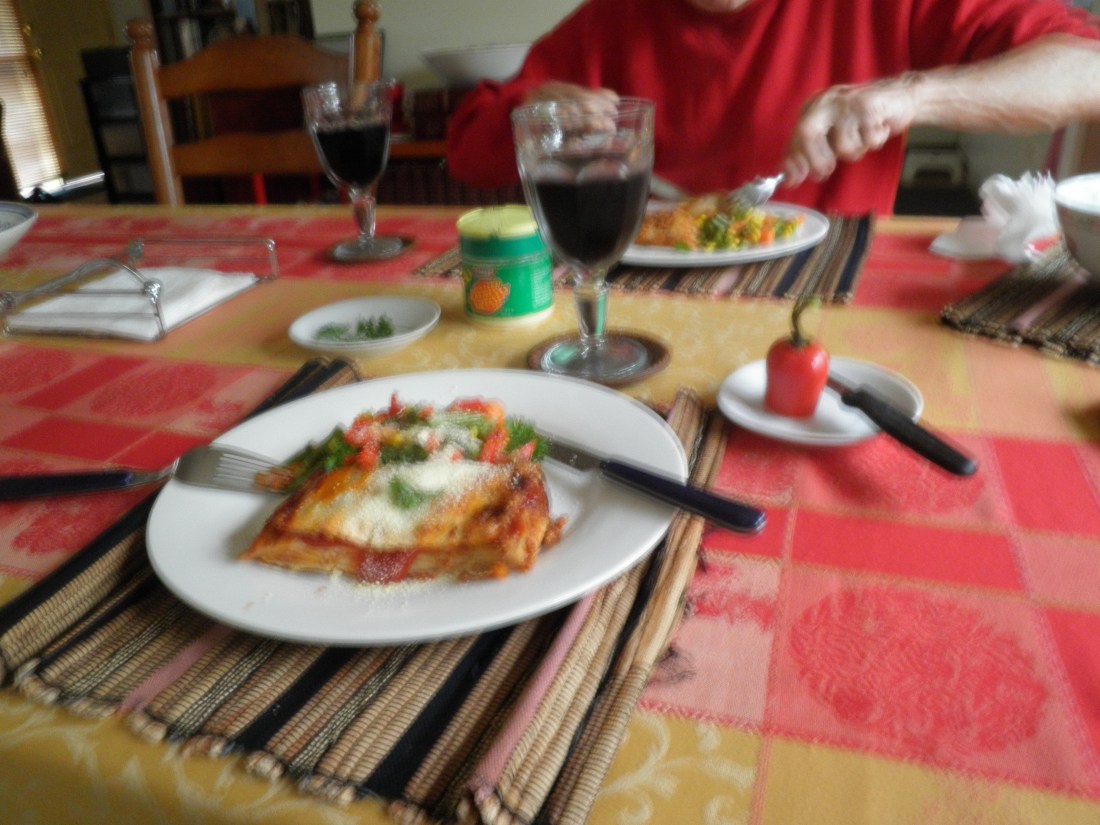
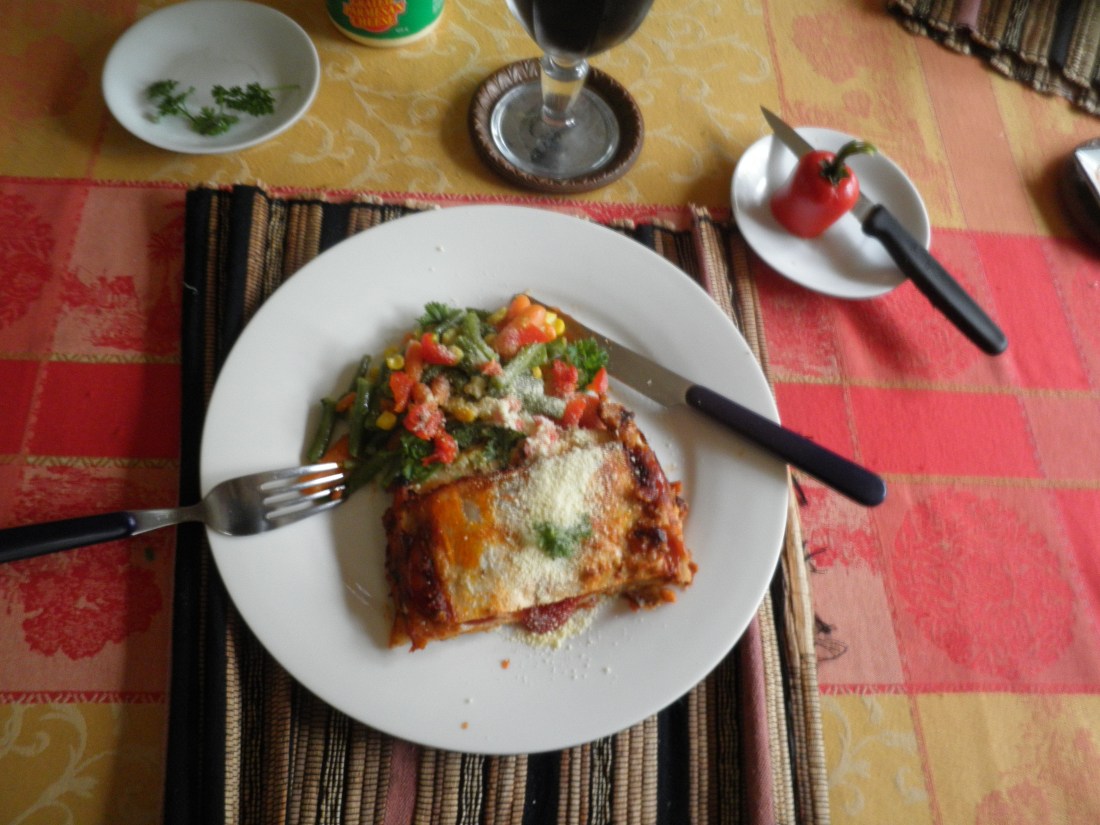
Yesterday’s lunch tasted very good. Since it had not been so hot any more, we could turn the oven on to bake some lasagne. The red wine went very well with it. To the mixed vegies we added some parsley from the garden and parmesan cheese.

Yesterday afternoon we went shopping. Among other things we bought some fresh English spinach. I want to cook this today for lunch, serving it with some boiled potatoes and scrambled eggs. For desert we are going to have some Greek style natural yogurt to which we add some mixed berries.

If the Noose is Still Tightening and, you Still Think It’s Austerity, the Former Governor of the Bank of England Will Tell You*

I think it would be interesting to know a bit more about the Banking System and why people and countries accumulate debt.

Spirit Song's avatarHwaairfan's Blog

If the Noose is Still Tightening and, you Still Think It’s Austerity, the Former Governor of the Bank of England Will Tell You*

“Capital must protect itself in every possible way, both by combination and legislation. Debts must be collected, mortgages foreclosed as rapidly as possible.

“When, through process of law, the common people lose their homes, they will become more docile and more easily governed through the strong arm of the government applied by a central power of wealth under leading financiers.

“These truths are well known among our principal men, who are now engaged in forming an imperialism to govern the world. By dividing the voter through the political party system, we can get them to expend their energies in fighting for questions of no importance.

“It is thus, by discrete action, we can secure for ourselves that which has been so well planned and so successfully…

View original post 452 more words

Doctors List 50 Reasons Why You Must Stop Drinking Fluoridated Water Now*

How can I stop drinking fluoridated water?

Spirit Song's avatarHwaairfan's Blog

Doctors List 50 Reasons Why You Must Stop Drinking Fluoridated Water Now*

The Last Drop!

By Alex Pietrowski

Public water fluoridation continues to be one of the most controversial health topics in the United States and in other parts of the world. The American Dental Association (ADA) has been, and continues to be, one of the biggest proponents of water fluoridation, although even the government has recently admitted that fluoride may not actually be helping teeth. More scientific studies point-out that fluoride is actually very dangerous, yet this practice continues in many countries.

In Europe, only Ireland (73%), Poland (1%), Serbia (3%), Spain (11%), and the U.K. (11%) fluoridate any of their water. Most developed countries, including Japan and 97% of the western European population, do not consume fluoridated water.

In the U.S., about 70% of public water supplies are fluoridated. This equates to approximately 185 million people, which is over half…

View original post 1,378 more words

Thursday, 2nd of February 2017 was different from Heatwave of Monday, 30th January 2017

Today, Thursday, 2nd of February 2017, we had some very pleasant temperatures. Below is a copy of what the ABC published.

Dapto, NSW Change

THURSDAY

25°CMIN 19°

Currently22°

Feels like22°

And here is what the ABC page said  last Monday:

http://www.abc.net.au/news/2017-01-30/heatwave-fire-bans-in-place-in-australia-south-east/8222638

Updated Mon at 6:22pm

“There are fire bans across the country’s south-east, with Victoria, New South Wales and the ACT all heading for sweltering temperatures in the high 30s and even 40s.

In NSW, the Bureau of Meteorology issued a fire warning for much of the state’s south and the far western region, with the Rural Fire Service declaring a total fire ban for those areas.

Bureau spokesman David Barlow said the hottest temperatures would be recorded in the state’s west, with Wilcannia predicted to hit 46 degrees Celsius and Menindee 45C.

“But even near the coast, in western Sydney and the Hunter, temperatures are getting to around 40C to 41C,” he said.

In Sydney, temperatures were expected to get to 32C today. The city will get a slight reprieve on Tuesday night before temperatures get back into the 30s at the weekend.

The town of Moree in northern NSW was set for its 33rd day in a row over 35C.

The city broke the previous state record for the most days in a row over 35C — 17 — about two weeks ago, and is expected to continue to break its own record for at least the rest of the week. . . .  “

VOODOO ECONOMICS: A well-kept open secret, Washington is behind India’s brutal experiment of abolishing most cash

Source – norberthaering.de

– “…If you have the power to bankrupt the largest banks even of large countries, you have power over their governments, too. This power through dominance over the financial system and the associated data is already there. The less cash there is in use, the more extensive and secure it is, as the use of cash is a major avenue for evading this power”:
This is something to contemplate!

SM's avatarRIELPOLITIK

Source – norberthaering.de

“…If you have the power to bankrupt the largest banks even of large countries, you have power over their governments, too. This power through dominance over the financial system and the associated data is already there. The less cash there is in use, the more extensive and secure it is, as the use of cash is a major avenue for evading this power”:

(A well-kept open secret: Washington is behind India’s brutal experiment of abolishing most cash)

In early November, without warning, the Indian government declared the two largest denomination bills invalid, abolishing over 80 percent of circulating cash by value. Amidst all the commotion and outrage this caused, nobody seems to have taken note of the decisive role that Washington played in this. That is surprising, as Washington’s role has been disguised only very superficially.

US-President Barack Obama has declared the strategic partnership with India a priority…

View original post 2,637 more words

Trump’s Chief Strategist: I want to bring everything crashing down

I ask myself, why, why, is all this happening? Are we too afraid, to stand up for our beliefs? Do most people not try to find out what is really happening? Are a lot people deliberately being told things that are not true?

Dr Jennifer Wilson's avatarNo Place For Sheep

Steve Bannon Steve Bannon

In a revealing 2013 interview with The Daily Beast, US President Donald Trump’s Chief  Strategist and Senior Counselor, Steve Bannon, gives insight into his long-term goals:

He never called himself a “populist” or an “American nationalist,” as so many think of him today. “I’m a Leninist,” Bannon proudly proclaimed. Shocked, I asked him what he meant.
“Lenin,” he answered, “wanted to destroy the state, and that’s my goal too. I want to bring everything crashing down, and destroy all of today’s establishment.” Bannon was employing Lenin’s strategy for Tea Party populist goals. He included in that group the Republican and Democratic Parties, as well as the traditional conservative press…

His goal was to bring down the entire establishment including the leaders of the Republican Party in Congress.

The relationship between Donald Trump and Steve Bannon is an unholy alliance, in which the shared goal is the…

View original post 612 more words