Exercise Noble Jump 2017


http://www.eur.army.mil/AtlanticResolve/


https://auntyuta.com/2017/06/26/nato-exercises-in-romania/

Nearly two months ago I mentioned the ‘Nato Exercises in Romania’ in a  post. Today I had another look at some of the YouTube videos. It is hard to describe what I feel when I watch these videos. After World War Two I grew up thinking that it was possible that mankind should live in peace. That World Wars could be prevented because people did not like these wars. People wanted to live in peace, didn’t they? What do people want now, really?

BuJazzO – Maria Baptist is fascinated by big cities.

http://archiv2.berlinerfestspiele.de/en/archiv/festivals2011/07_jazzfest11/jazz11_programm/jazz11_programmlistedetailseite_27753.php

“The BuJazzO, Germany’s Youth Jazz Orchestra, sponsors qualified and talented young jazz musicians in Germany. The current concert repertoire is rehearsed with changing line-ups in working modules that take the form of an intensive musical training in a professional master course atmosphere. The artistic directorship of rehearsals and stage work alternates and is performed by renowned artists. The working modules are followed by guest performances at home and abroad, where the results are presented to an international audience.

To encourage high qualified young female musicians BuJazzO has put a focus on women as conductors and instructors, starting with pianist Maria Baptist, composer/arranger and professor at the Berlin Music Conservatory ‘Hanns Eisler’. She has been conducting the 47th working phase of BuJazzO in March 2011.

Maria Baptist is fascinated by big cities. Together with BuJazzO she presents the programme City Grooves. It reflects the different moods and the mutability of a big city. Powerful energetic music alternates with concertante moments.”

“Her music is a gift, infused with all the creativity, power,  . . . ”

https://en.wikipedia.org/wiki/Maria_Baptist

“Maria Baptist was born in 1971 in East Berlin in a very musical family. Her grandfather was an orchestra musician and composer, her father himself is a pianist. Maria discovered very early her fascination for music and at the age of six she began playing the piano. At the age of eleven she composed her first pieces. Maria developed her desire to become a classical concert pianist. At the age of fifteen Maria listened to recordings of Dave Brubeck and Keith Jarrett and discovered for the first time the world of jazz and improvisation. Impressed by the musical expression, Maria felt that she had to continue on this path. She began studying piano at the music university in Berlin and won her first international piano competitions on improvisation. During this period, the Berlin Wall fell, which meant a great personal change in Maria’s life. She took the opportunity to move to New York. Here Maria experienced the freedom, space and magic, which opened up whole new musical worlds to her. Maria’s artistic work was significantly influenced and inspired by the tremendous creativity, energy, living will, the strength and melancholy of the metropolis. . . . .  ”

. . . .  ”


DEFA (Deutsche Film-Aktiengesellschaft) was the state-owned film studio of the German Democratic Republic (East Germany) throughout the country’s existence.

https://www.goethe.de/ins/au/en/kul/sup/kio/cal.cfm?fuseaction=events.detail&event_id=21030159

ONLINE STREAMINGDEFA FESTIVAL

Her Third© DEFA-Stiftung, Ingo Raatzke, Heinz Wenzel

Tue, 01.08.2017 –
Thu, 31.08.2017

The films in this online program deal with the longings of a generation that seeks fulfilment beyond the norms and conformist expectations of socialist society.
The Goethe-Institut New York selected six important films for the DEFA summer film festival. Presented in cooperation with the DEFA Film Library at UMass Amherst.

Her Third (Der Dritte)
Solo Sunny
Our Short Life (Unser kurzes Leben)
The Bicycle (Das Fahrrad)
Coming Out
Herzsprung

All films are in German with English subtitles and will be available for free streaming throughout the month of August at kanopy streaming by using the following information:
Login: goetheinstitut
Password: defasummer

Our Short Life

Posted: October 16, 2015 in FeminismLove
Tags: ,

Our Short Life
As mentioned elsewhere on this blog, East Germany was way ahead of the West when it came to feminist issues. Back when American women were still expected to stay in the kitchen and be good housewives, East Germany had women in nearly every profession. By the seventies over half the judges in the GDR were women. They were also better at bringing feminist issues to the big screen with films such as The Destinies of Women and Her Third. Even so, East German was as guilty as everyone else when it came to offering women the opportunities to make movies. This started to change in the seventies (but only slightly), with the introduction of directors such as Evelyn Schmidt and Iris Gusner, and writers such as Anne Pfeuffer, Gabriele Herzog, and Regine Kühn. Still, when it came time to make the very feminist film, Our Short Life (Unser kurzes Leben), the duties were handed over to a man. Whether the film loses anything for this choice is hard to say. It is filmed with a keen eye and great sensitivity, and certainly gets its message across.

Our Short Life (Unser kurzes Leben) tells the story of Franziska, a young architect who is looking for meaningful connections in a world where few exist. She wants to make sure that her new buildings are an integral part of the community, and not mere Plattenbauen—those featureless high-rises common to East Germany that were erected to house workers as economically as possible. After hours, she hangs out at the local pub with its proprietress Frau Helwig, and tries to makes friends with the women in her rooming house, but finds it difficult due to the status and cultural differences that the state supposedly eliminated.

Our Short Life is based on Franziska Linkerhand, a heavily autobiographical book by Brigitte Reimann. During the late fifties, Riemann was the darling of the East German literary scene, lauded by no less than Walter Ulbricht as one of the leading lights of the Bitterfelder Weg (Bitterfelder Way), a movement sponsored by the East German government to encourage socialist thinking in the arts. As time went on, however, Riemann followed same arc as many other East German creative people, growing increasingly disillusioned with the government’s betrayal of basic socialist principles in favor of an intractable band of authoritarians who brooked no dissent. Riemann died of cancer in 1973, and the book was published posthumously. After the Wende, it was found that some parts of the book, in particular its references to the Stasi, had been removed before publication. A restored version was published in 1998.

Unser kurzes Leben

Playing Franziska is Simone Frost, whose height at just over 5’ (1.53m) suggests that the film’s title has an additional meaning. The size difference between her and the rest of the cast is emphasized throughout the film, giving her battles against the powers that be a certain Jack the Giant Killer quality. Before the Wende, much of Frost’s non-theatrical work was on television, and the same held true after the Wende. Most notably, she was a regular on the long-running kids’ show, Schloss Einstein (Castle Einstein) on the KiKa channel (similar to Nickelodeon). Shortly before the Wall fell, she and her husband Hans-Joachim Frank, created Theater 89 as a place to put on plays that the state wouldn’t touch. The theater is still going strong today. Tragicallly, Frost died of cancer at the age of 51 in 2009.

The rest of the cast is equally exceptional. Playing the level-headed Frau Helwig is Barbara Dittus, who is always a joy to watch. Franziska’s boss, Schafheutlin, is played by Hermann Beyer, brother to the East German film director, Frank Beyer. Franziska’s caddish love interest, Trojanowicz, is played by Gottfried Richter, who has done very little on screen since the Wende, preferring to work on stage (and who has the distinction of being one of the few East German actors who has not appeared on In aller Freundschaft). Playing Franziska’s office partner is Christian Steyer, who is best remembered as Paula’s caddish lover in The Legend of Paul and Paula. In a small role, playing Schafheutlin’s secretary is Christine Schorn, who has gone on to have a very successful career in unified Germany, and is best known to Western audiences for her turn as Frau Schäfer in Goodbye Lenin!

Barbara Dittus and Simone Front

Director Lothar Warneke’s road to becoming a director was more circuitous than most. He initially studied theology at the Karl Marx University in Leipzig, changing pursuits after the local vicar resigned. He got his first chance to direct as part of a team on Not to Me, Madam!, sharing directorial duties (but apparently not film stock) with Roland Oehme. Warneke achieved his greatest success for his 1987 film Bear Ye One Another’s Burdens. Two years later, the Wall came down and Warneke found it hard to get work after French and West German entrepreneurs dismantled DEFA and its film community. He then became a teacher at the film school in Potsdam-Babelsberg.

The original screen treatment for this film was by Regine Kühn. Her career got off to a strong start with Time of the Storks (Zeit der Störche). Directed by her husband, Siegfried Kühn. Time of Storks was a big hit and brought Heidemarie Wenzel and Winfried Glatzeder together for the first time. That film was a hit, but Kühn’s next screenplay, The Dove on the Roof, directed by Iris Gusner, was met with resistance by the film authorities and was quickly shelved. After that, she only wrote one more script during the seventies—Die Wahlverwandtschaften (Elective Affinities) for her husband. Most of her subsequent dramatic scripts were for films by her husband, including The Actress and Die Lügnerin (The Liar). Our Short Life, was one of the few screenplays she wrote for someone else. Reportedly, she found the whole affair disagreeable and could never watch the movie.1

Later, Kühn started writing and directing her own films, primarily documentaries. In 1994, she won the Deutscher Drehbuchpreis—a prize given for unproduced screenplays of merit—for Zarah L., her screenplay about the infamous Third Reich era singer, Zarah Leander. To date this film has yet to be produced.

Our Short Life did well at the box office and garnered a few awards and nominations. It was also a hit with the East German critics, who were always happy to see a film that could discuss sensitive topics without getting shelved. If they thought this signaled a relaxation of the restrictions on sensitive film topics, they would have been wrong. It was only a few months later, the film review board would come down hard on Jadup and Boel.

IMDB page for the film.

Buy this film.

1. Spur der Filme by Ingrid Poss, Peter Warnecke; Christoph Verlag (May 1, 2006)

Behind the Wall: The Inner Life of Communist Germany, Hans-Joachim Maaz

https://books.google.com.au/books/about/Behind_the_Wall.html?id=PGpoQgAACAAJ&redir_esc=y

“In Behind the Wall, East German psychiatrist Hans-Joachim Maaz reveals why the most difficult problem of adjustment after the fall of Communism in East Germany, as in the former Soviet Union, is not political or economic but psychological. In his impassioned account, based on his work with 5,000 patients in the last decade of the Communist regime, he describes the pervasive fear, historical amnesia, and “blocked emotionality” of life in the former Communist state. These deprivations, he argues, have only worsened the rigidity and compulsiveness that were already present in the German character. The author is also concerned that Germany, in its rush to reunification, has not done the proper reckoning with its Nazi past. Behind the Wall is a devastating look at how forty years of repressive Communist rule crippled the psychological life of people in Eastern Germany. At the same time it is a warning that the two Germanies, in their rush to reunification, have failed to come to grips with their separate – and inextricably linked – pasts.”


My Diary, August 2017

https://www.broadsheet.com.au/sydney/guides/guide-marrickville

Wikipedia Copy:
“Marrickville is a suburb in the Inner West of Sydney 7 kilometres south-west of the Sydney central business district in the state of New South Wales, Australia. It is the largest suburb in the Inner West Council local government area. ”

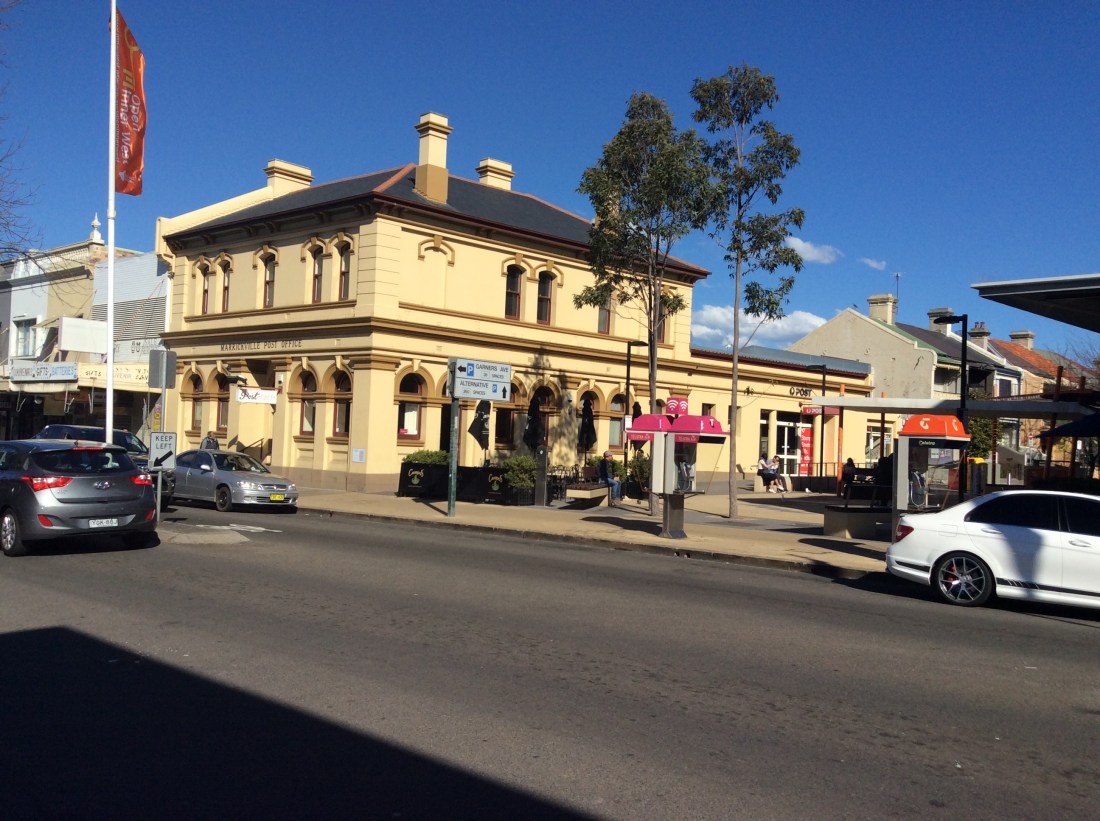
IMG_1529
There is a cafe in the old Marrickville Post Office building.

We had lunch in the Post Cafe with Caroline and Matthew. It was a sunny day and we were sitting outside under an umbrella. Peter had lamb’s fry with bacon. He was very happy that this was available. And I had haloumi burger and a huge salad with it. I liked my meal very much. I also had a chai tea.

https://www.yelp.com.au/biz_photos/post-cafe-marrickville?select=eFK6Ovd4E4ZFDUK8AtcjOw

I never went inside to have a look. However the above photos give me an idea what the place looks like inside.


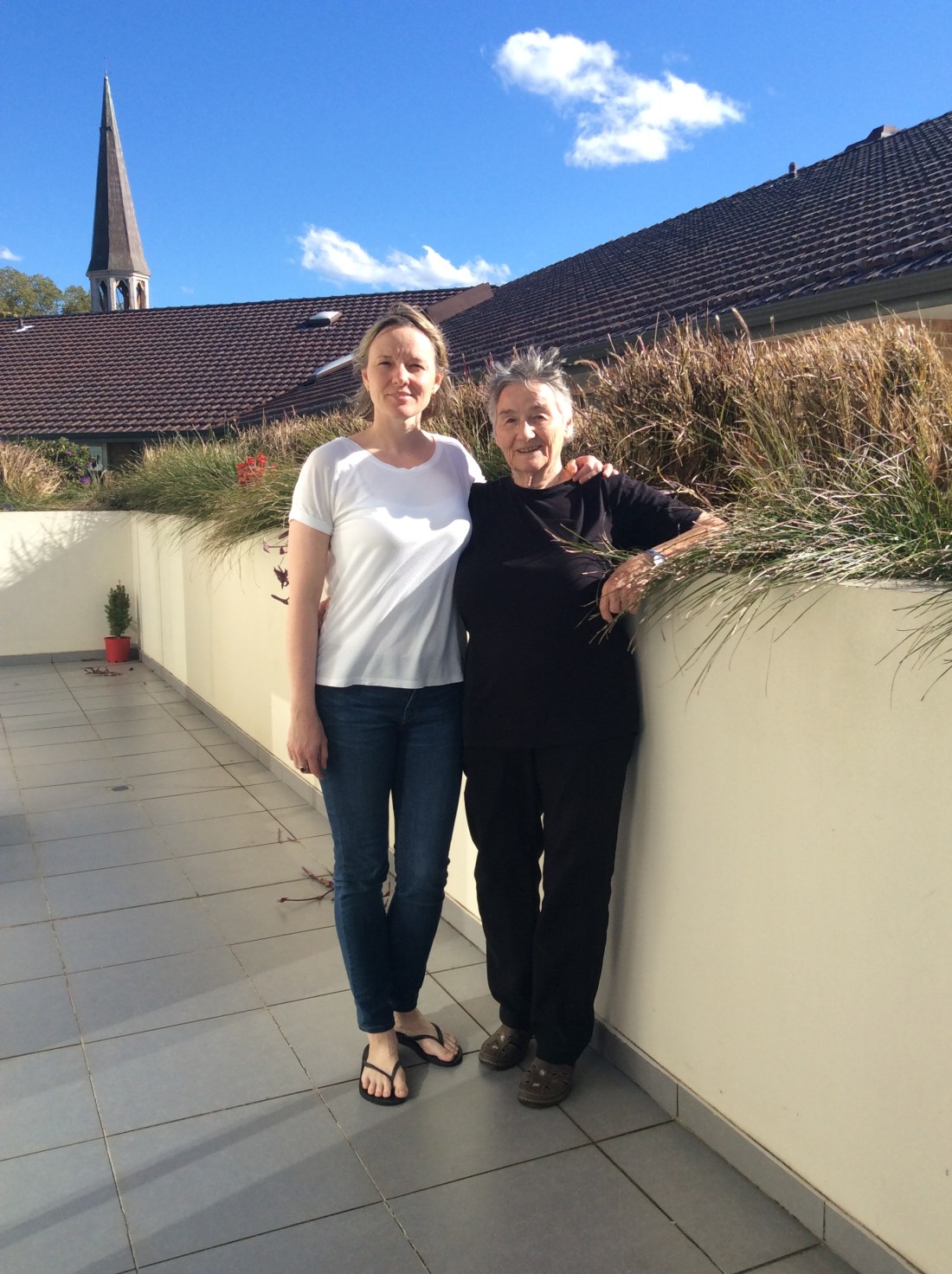
IMG_1532
With Caroline on the balcony of their studio apartment in Marrickville


DSCN3087
Apartment Building in Marrickville 

There are no lifts in this building. But we had to climb only two floors up to get to their apartment, which was great exercise for us. From Caroline and Matthew’s apartment one has a great view to the city. The apartment is surrounded by a large balcony!

IMG_1527
View towards the City


Fuggerei

Whenever I think about the housing crisis and that so many people in this world have to live without adequate housing, I think of the Fuggerei in Augsburg. My father’s older brother used to live in Augsburg. In 1977 Peter and I visited this uncle and his wife. They showed us the Fuggerei which is still maintained to this day.

I just looked up the blog I published about it some time ago. Here it is:

https://auntyuta.com/2015/08/10/the-fuggerei-is-the-worlds-oldest-social-housing-complex-still-in-use/

Here I copy the comments it got to this post about the Fuggerei:

10 Responses to “The Fuggerei is the world’s oldest social housing complex still in use.”

  1. catterelAugust 10, 2015 at 7:53 pm Edit #

    Fascinating! I’ve always wanted to visit Augsburg properly (I changed trains a few times there but never got beyond the station) – maybe one day I’ll make it.

    • berlioz1935August 10, 2015 at 8:13 pm Edit #

      It is a great place. The main street has buildings reflecting the wealth of the former trading post.

    • auntyutaAugust 11, 2015 at 8:03 am Edit #

      We have some lovely memories of the place, Cat, spending the day with Uncle and Flora. Gee, this goes back to 1977!

  2. berlioz1935August 10, 2015 at 8:26 pm Edit #

    I remember the day well. Flora, a Berliner speaking with the out of place accent, was a retired GP who did some work for the Army checking up new recruits. She was a no-nonsense person who liked to be in charge. In the restaurant, she was the queen.

    She had ordered a huge platter laden with cheeses and cold cuts. We could not eat all and she ordered all the left-overs being packed up to take home.

    The building in the main street seemed to be covered in gold and great churches could be seen. The Fuggers of the 16th century financed half of the known world.

    • auntyutaAugust 11, 2015 at 8:06 am Edit #

      It is quite impressive how rich the Fuggers were. Their housing project is a good example of what can be done for needy people.

      • auntyutaAugust 11, 2015 at 8:21 am Edit #

        Yes, Flora was quite a character. Both she and Uncle were marvellous hosts to us. They walked with us showing us very interesting places around the city centre. After lunch back it was back to their luxurious apartment for coffee and yummy cakes.
        Uncle was overjoyed when he could hand us a minuscule grandfather clock to take home as a gift. We loved this little clock because it was given with so much joy and reminded us of that beautiful day we had spent in Augsburg. Alas, sadly in Australia it soon broke to pieces! 🙂

  3. gerard oostermanAugust 11, 2015 at 11:27 am Edit #

    Yes, the idea of ‘owning’ own place is fairly new. We had no idea of that concept before we came to Australia. We always rented in Holland and it was as secure as owning.
    Social housing has a lot going for it. Just look at what the Fuggerei achieved and it is still going.
    Something like that in Australia would now be a shopping mall or a McDonalds.

    • auntyutaAugust 11, 2015 at 3:31 pm Edit #

      This uncle Edmund and his wife lived in a patrician. very spacious apartment. And I am sure they did not own it but paid rent, which they presumably could very well afford. I assume each one would have had a very good pension. As Peter mentioned, Flora substituted her income by doing some casual medical work.
      Edmund as well as Flora were widowed when they decided to get married. Edmund seemed to be quite content to have resolute Flora for company in his old age.

  4. stuartbramhallAugust 12, 2015 at 9:32 am Edit #

    Very interesting background. Excellent example of German determination to retain the commons. As I understand, resistance to enclosure was strongest in Germany. It was only under the Third Reich that customary rights were abolished in many regions. It’s good to see this institution survived the Nazi regime.

    • auntyutaAugust 12, 2015 at 4:02 pm Edit #

      Yes, it is quite amazing, Stuart, that the institution survived over such a long time. However it says In the Wikipedia that the Fuggerei was heavily damaged by the bombings of Augsburg during World War II, but has been rebuilt in its original style. I am glad that it was rebuilt in its original style! 🙂

      REPLY

The Global Hemp Renaissance

I think we should make an effort to find out more how hemp may be used. You can see in one of Dr Bramhall’s repblogs more about it: https://stuartjeannebramhall.com/2017/08/03/hempcrete-could-change-the-way-we-build-everything/

stuartbramhall's avatarThe Most Revolutionary Act

John and Charles

Taranaki hemp farmer John Earney with organic enthusiast HRH Prince Charles

Where the people lead, the leaders will follow – Ghandi

Nothing honors Ghandi’s vision more stunningly than the citizens movement to legalize marijuana and industrial hemp. At the time former Congressman Ron Paul introduced his 2011 Industrial Hemp Farming Act Bill, five states (North Dakota, Hawaii, Kentucky, Maine, Oregon, California, Montana, West Virginia and Vermont) had enacted laws authorizing industrial hemp cultivation. Without Obama’s support, the bill died in committee. Fast forward to November 2012, when Colorado voters passed Amendment 64 to legalize hemp cultivation.Last week the Denver Post reported on the Colorado farmer who made history by harvesting the first commercial hemp crop in the US in 56 years.

Growing industrial hemp is still illegal under the 1970 federal Controlled Substances Act. The law makes no sense whatsoever – scientifically, environmentally, or economically. First the hemp plant contains…

View original post 1,134 more words

Is the Empire striking back?

http://www.dw.com/en/fossil-fuels-is-the-empire-striking-back/a-38574879

CLIMATE CHANGE

Fossil fuels: is the empire striking back?

A fossil fuel revival and fake news discrediting the energy transition could endanger progress on climate protection, says economist Claudia Kemfert. 100 days into Trump’s administration, renewables can’t be complacent.

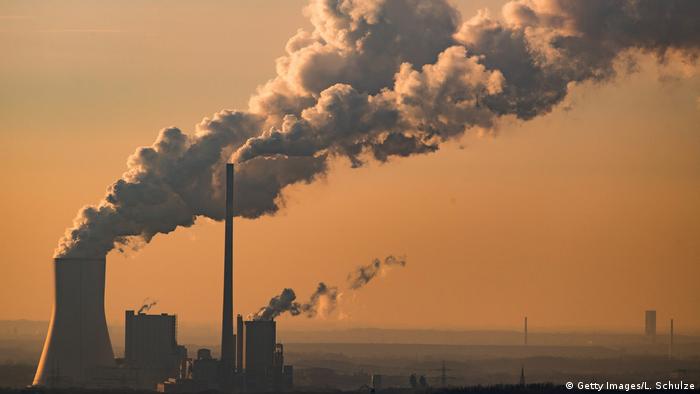
Kraftwerk Oberhausen Wasserdampf Abgase (Getty Images/L. Schulze)

DW:  Professor Kemfert, you’ve just published a new book. The title is “The Fossil Empire Strikes Back.” What lies behind the title?

Claudia Kemfert: We see that the global energy transformation towards more renewable energy was quite successful in the last years. The cost of renewable energy has declined and after the Paris agreement to reduce global greenhouse gas emissions in December 2015 and the ratification of the climate protocol, we were on a good track. But then we have been completely moved back by the fossil energy sector. They tried to give around some kind of fake news and myths around all the renewable energy, about potential blackouts, cost increases and so forth. We see that especially in the USA. And here with the Trump administration we see a lot of “roll back”, to provide more help for the fossil industry and this is why we have to defend the global energy transformation.

Author and expert Claudia Kemfer at a conference. Photo credit: picture-alliance/dpa/B. Wüstneck.Kemfert says fake news is discrediting the energy transition

What kind of fake news is doing the rounds with regard to the energy transformation?

There is a lot of fake news around. For example, they always claim that renewable energy is responsible for some kind of blackouts. We never saw blackouts, especially not in Germany, on the contrary, we have the safest electricity system in the world. Or it is claimed that renewable energy is extremely costly and will also bring economic disadvantages, although the opposite is true. In my new book I show that these are all myths and fake news, they are not true.
Is it possible to eliminate fake news or to tell what’s true and what’s fake in an age where everybody can be his own journalist, in a way, using social media?

It’s very important to identify fake news. And this is why scientists are so important. To me as a scientist here, I see that there is a dangerous development ongoing. And this is why we need also scientists to say what is going on, what is really fact and what is not fact. But it is also in the responsibility of everybody not to believe every myth, to get transparent information and to question sources.
What has been your personal experience as a scientist, a writer and a public figure? As it happens to many scientists in the world, scientific facts are neglected and doubted. The opponens claim that these kinds of scientific facts are not true. They are also fake news. There is a lot of skepticism and science ay, “it’s not the

hostility. The main aim is to create doubts, spread around myths and fake news.
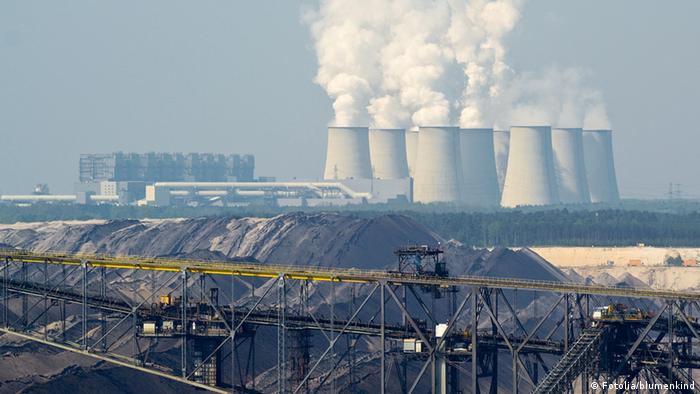
 

A power station in Germany. Photo credit: Fotolia/blumenkindGermany is in danger of losing its leading position on energy transition

When Donald Trump first said that he was going to bring back coal, a lot of people said that will just never happen, the time has passed. Are fossil fuels really making a comeback or is this just a kind of fake news, sort of “alternative facts” created by the fossil fuel giants?

Well there is a danger around this because the politicians decided already towards the fossil technology. For example, in the US, they tried to get back to the past energy policy and support especially coal companies. Because they are not economically efficient, they have to provide subsidies in order to make them economically competitive.We have the same discussions  in Germany as well, although there are not many jobs in the coal industry left. Here we see that the fossil industry is quite successful in bringing this fake news into the policy campaigns, and in the US we will see this of course as well. And this is why it’s so dangerous, what’s now going on, because we are losing time to bring the greenhouse gases down and help the planet to survive.

Germany has a reputation internationally for being a leader. The term Energiewende has even made its way into English for the energy transition. Do you think Germany is in danger of losing that leading position?

Indeed. Germany is in danger of losing this position. We had a good start, as we had increased the share of renewable energy from almost zero to approximately 30 percent of electricity production right now.The costs of renewable energy have declined substantially.  But then a lot of decisions were made to stop this development. Not only in the electricity sector – to have more time for the coal industry for example – and coal still has a high share of 45 percent of electricity production. And this will not go down if the politicians will not do anything about it. But also we need to see that the energy transition is much more than electricity. In the heating sector we have to do a lot for energy efficiency improvement and increase the share of renewable energy, and also in the transportation sector. Here we are not a leader at all.

Science march in Washington. Photo credit: CQ-Roll Call,Inc./Bill Clark.Pro-science and environment activists have been protesting in the US against the Trump administration’s hostility to science

You suggest in your book that the traditional energy industry’s struggle to hold onto power and profit and hold up the green energy transition could endanger peace and security. Why is that?

The energy transition is the most important peace and energy security project on earth, because the new energy transition or the movement towards renewable energy would bring more democratic energy transformation. It’s more participatory, and it’s also climate neutral. And all this brings a lot of positive impact also to democracy, to participation, and also to the environment and economy. And this is why it’s such an important project. For example, if we look at the renewable energy sector, the cost has gone down. Now for example solar energy is also feasible in regions in developing countries, where it was not economically feasible in the past. They could also increase their personal well-being and the economic impact was really positive. And this is why it’s so dangerous that the fossil empire lashes back.

There is a whole protest movement growing with scientists marching, climate activists marching, concerned citizens taking to the streets. How important is that? What can it actually achieve?

It’s really important, this kind of protest, because now it’s time to act and we have to show that this development is really dangerous, not only because of the scientifically-unfriendly atmosphere which is being created in the US, in Turkey, in many areas of the world. It’s very important to have a free science globally. And free science is an active part of democracy. We all have to show that we are fighting for this.


Claudia Kemfert is  an economics expert on energy research and environmental protection and is a professor of energy and sustainability at the Hertie School of Governance in Berlin. 

The book: Das fossile Imperium schlägt zurück is published by Murmann.

The interview was conducted by Irene Quaile-Kersken.

DW RECOMMENDS

WWW LINKS