Photos from June 2016, Berlin Memories

Quite a few years ago this place used to be a cinema. Now it is a cafe with lots of books for customers  to read.


DSCN0976

DSCN0960
Among people at Berlin Alexander Platz  on the first Sunday in June 2016
DSCN0959
Here is Peter with our son on the left, next to him our daughter, and the daughter’s partner on the right

Yes, this picture is taken by me, also at Alexander Platz. The five of us had arrived  from Australia only the day before! After our first night at the apartment we all went to a nearby baker for breakfast. We talked the other day about what had been available there  for breakfast. One very memorable thing were the bread rolls  with fresh raw minced meat!

DSCN0946 (2)

I think we had an early breakfast at The WOLKE, WHICH WAS A BAKERY and also  a coffee shop. Later on we went by S-Bahn from Bahnhof Friedenau to Alexander Platz. Did we have a Curry wurst at Alexander Platz? We definitely had something to eat and a drink. Then we went by U-Bahn to Rosenthaler Platz where we met my niece Corinna and her son Carlos. So, we went with them on a tour of the neighbourhood. This district, called Prenzlauer Berg, is popular with  tourists. Actually, this is the district, where Corinna went with all of us to have coffee in that converted cinema. Before that we went with Corinna and Carlos for a Mexican lunch. Then after coffee we went to a park where there was music and dancing. By that time Carlos, who was already pretty grown up, 15 I think, excused himself and went off somewhere else, probably to spend time with his friends.

DSCN0962
Here we came out of the underground.

DSCN0984DSCN0990

DSCN0987


The above pictures are taken in the park where the music and the dancing was. Oops. I forgot the pictures from our Mexican lunch. Here they are:


DSCN0974
Peter with Corinna and Carlos at the Mexican place where we had lunch.


DSCN0967

Peter’s Iphone Pictures from our Berlin Visit in June 2016

I want to start rebloggen some blogs from our visit to Berlin just one year ago! Looking at all these pictures brings back memories.

auntyuta's avatarAuntyUta

Haxenhaus in Tegel (Northern Suburb of Berlin) Haxenhaus in Tegel (Northern Suburb of Berlin)

IMG_0477

Matthew, Caroline and Martin Matthew, Caroline and Martin

Inside of Haxenhaus Inside of Haxenhaus

IMG_0473

IMG_0468

House in Tegel A House in  Friedenau

Caroline in Klaudia's apartment Caroline in Klaudia’s apartment

Klaudia and Caroline Klaudia and Caroline

Martin in Klaudia's apartment Martin in Klaudia’s apartment

Sakorn, Matthew, Caroline and Daniel in Alt-Spandau   Sakorn, Matthew, Caroline and Daniel in Alt-Spandau (Western Suburb of Berlin)
Sakorn, Matthew, Caroline and Daniel in Alt-Spandau (Western Suburb of Berlin)

It had been Daniel’s birthday and he invited all his family for lunch in Alt-Tegel.

IMG_0501

IMG_0502

Some more pictures of that family lunch I’ll publish in another blog.

We had tickets for the Komische Oper in Berlin. We had tickets for the Komische Oper in Berlin. We saw a modern production of the “Magic Flute”

IMG_0506

This sign we saw outside a charity shop in Rubensstrasse. This sign we saw outside a charity shop in Rubensstrasse.

We went with Martin to U-Bahnhof Rathaus Schoneberg. We went with Martin to U-Bahnhof Rathaus Schoneberg.

Quite a collection close to where  we came out of the underground station. Quite a collection close to where we came out of the underground station.

View down Innsbrucker Strasse towards Inssbrucker Platz. View down Innsbrucker Strasse towards  Bayerischer Platz.

It was a rainy day. None the less we walked passed the duck pond through the Stadpark towards our destination: Die Pusteblume Cafe!

This duck pond is close to where I used to live as a child. This duck pond is…

View original post 260 more words

Eggs Benedict

http://www.myrecipes.com/recipe/eggs-benedict-florentine

We shared a serving of Eggs Benedict with spinach leaves. They were as bit like the recipe in the above link. but the leaves were not  sauteed, which is all right by me. The hollandaise sauce that went with the poached eggs was just perfect, simply delicious!

We had also some flat white coffee, very good Campos coffee.

DSCN2885


DSCN2886

We thought to go to the Campos Cafe for Brunch in the Warrawong Shopping Centre was a good choice. We had left out car for service at the K-Mart Service Centre. This was at 9 o’clock in the morning. We thought we would use the time while the car was being serviced to go to the GALA Cinema. The movie we wanted to see was to start at 10 o’clock. That gave us one hour to have a bit of a bite before the movie started. The movie was “The Zookeeper’s Wife”.

Books I read in June 2017

Fletcher, John, 1934- Dust of the land

March, Mia The Meryl Streep movie club

Coelho, Paulo Adultery

The library sent me an email to remind me that I have to return the above three books by Thursday, the 8th of June 2017.

They say:

” Please return them, by the due date, or renew at: . . . . ”

And there is the URL of the Wollongong Library as well as their phone number. That means it is possible to renew by email or phone.  I can renew the books if I have not finished reading them by next Thursday.

It is a reminder only as follows:

“04 Jun 2017

Dear borrower,
Reminder Only:Your items are due soon”


The reminder was sent off 4 days early, which is quite helpful in case I want to renew.

To me these emails are a good record to see what sort of books I have been borrowing. All the above books happen to be large print books. I find large print is so much easier for me to read. When I read something on the computer,  I usually enlarge the print. To read small print, tends to tire my eyes.

The novel “Dust of the Land” by John Fletcher I did borrow for a second time, since I  very much liked reading it when I borrowed it the first time. I was happy to read it once more! It is an epic novel set in Australia. I am always on the lookout for good Australian novels.

I find Paulo Coelho is a very good author. I like his style of writing very much. The main character in the novel “Adultery” is a married woman,  who is going through a major depression. This is psychologically very interesting and written in a very sensitive way.

Mia March’es novel shows me something about contemporary life in America. For instance how a certain family deals with a tragic car accident,  cancer treatment, single motherhood and adultery. It is all there. And some interesting discussions about Meryl Streep movies!


And of course I recently read “The Dry” by Jane Harper as mentioned in this post:

https://auntyuta.com/2017/05/30/utas-may-2017-diary-2/

Uta’s June 2017 Diary

Today is Saturday, the 3rd of June. In Australia this means we are officially well into winter. The temperature here is right now definitely wintry.

Despite the ‘freezing’ temperature, we very much enjoyed today our visit to Berry. Here are some highlights from:

http://www.visitnsw.com/destinations/south-coast/jervis-bay-and-shoalhaven/berry?nst=0&gclid=Cj0KEQjwmcTJBRCYirao6oWPyMsBEiQA9hQPbgfm

Flq2IeqYs6nU5NzxZuPDuZnDn3MzTnuE86NxJCkaAgwP8P8HAQ&gclsrc=aw.ds

BERRY
HIGHLIGHTS

“Berry is a rustic yet sophisticated village surrounded by rich dairy country and is home to some great food and markets. Enjoy the fresh produce and award-winning restaurants that have built a reputation for outstanding cuisine. . . . ”

Yes, it is rustic all right. It has a very special atmosphere. We regret now, that we had no chance to show it to Peter-Uwe and Astrid when they were here in Australia a few weeks ago. I mean, we were able to take them to quite a few great places in our area, however their stay here just was not long enough to cover everything. There are overall too many fantastic places to show to visitors, and time was running out much too soon.

So, today Peter and I drove to Berry to have Brunch at this cafe:

http://www.visitnsw.com/destinations/south-coast/jervis-bay-and-shoalhaven/berry/food-and-drink/berry-sourdough-cafe

We had been to this cafe a few years ago and loved it. Today we were not disappointed. This cafe is still as good as ever.

This what it says in the write up about the cafe:

“The Berry Sourdough Bakery and Cafe isn’t your average bakery. They have an Alan Scott oven, a mixer, a crew of talented bakers on the bench and all loaves are hand crafted with no moulding machinery used. The bakery makes the most of the location, maintaining a relationship with other local organic food producers. . . . ”

So I must say, it is very much worth a visit. The drive from Dapto to Berry is mainly along some freeways, a lot of them having been constructed fairly recently.  Today we noticed a lot of workers very busily working on some more roads that are to  offload some more of the increasing holiday traffic going through towns down south. Soon the heavy traffic through Berry is going to be a thing of the past. It means, people driving into Berry are to be mainly residents and visitors only. All other traffic further south will bypass Berry on some additional freeway.

Our ancient AUDI very much liked the drive along freeways and accordingly used fuel extremely sparingly which Peter enjoyed tremendously!

DSCN2875DSCN2876 (2)

DSCN2876
This is a very busy corner with all the traffic going through Berry.
DSCN2874.JPG
This is our Brunch.

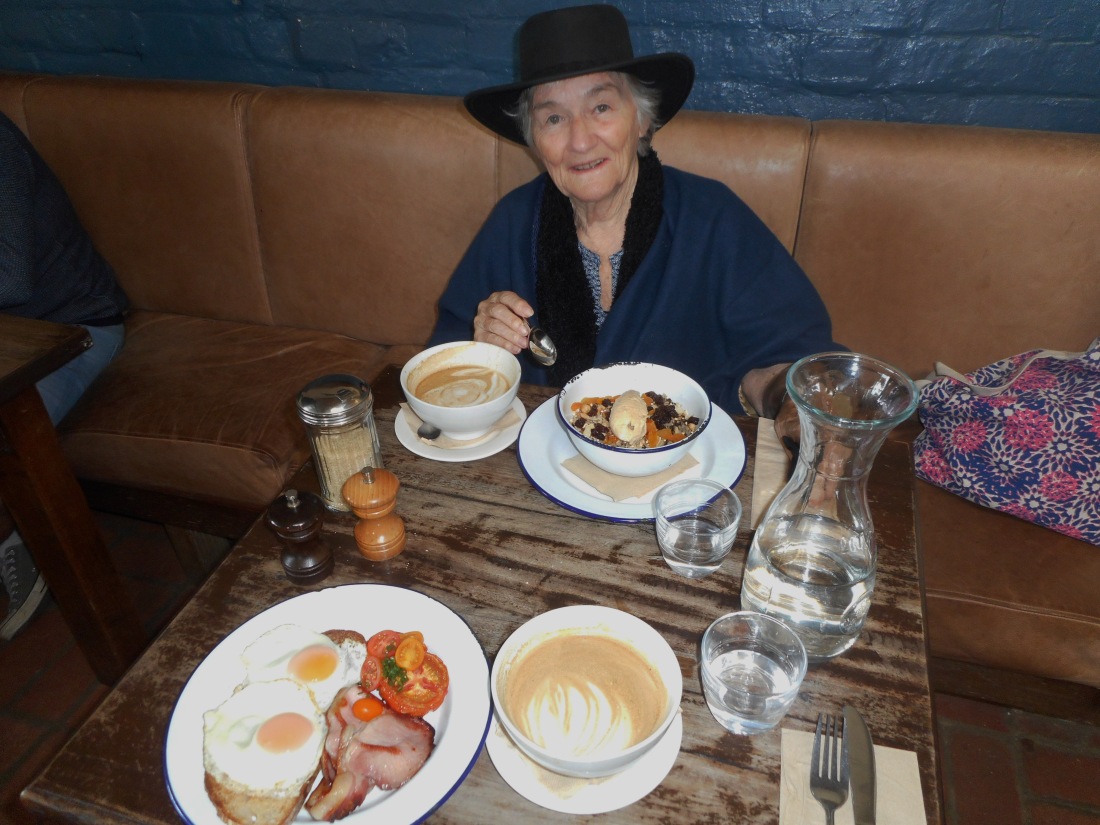
I had a bowl with barley porridge, fruit, nuts and a bit of cream. Delicious! Peter liked his bacon and eggs and tomatoes on some fresh rye bread. We both had flat white coffee out of soup bowls! I think a large cup of coffee like this for breakfast is a French tradition.

DSCN2873

DSCN2878
I think to discourage the use of plastic bags is a great idea.

DSCN2879

IMG_1738
Love Eating Asian Food – LEAF = is in this building

DSCN2880

Some more pictures from Berry we took today:


DSCN2877
When we stood here, we had a choice which way to go to the toilet.

And here some pictures from this morning before we left home:


Yesterday afternoon I had four friends over for our games of Scrabble and Rummy. I took some pictures before the ladies arrived:

DSCN2868
I left some snacks on the box with the Rummikub tiles.

Top 10 Countries With The World’s Biggest Oil Reserves

http://gulfbusiness.com/top-10-countries-with-the-worlds-biggest-oil-reserves/#.VT9R4tKqpHw

Top 10 Countries With The World’s Biggest Oil Reserves
South American nation Venezuela tops the list, followed closely by Saudi Arabia.

Insights

Brent crude oil spot price is expected to fall from an average of $112 per barrel in 2012 to annual averages of $108 per barrel in 2013 and $101 per barrel in 2014, according to report released by US-based Energy Information Administration (EIA) last week.

The price shift reflects the increasing supply of liquid fuels from non-OPEC (Organization of Petroleum Exporting Countries) countries, it stated.

However, OPEC nations continue to overshadow the world in terms of reserves, holding more than 80 per cent of the world’s proven oil reserves, according to current estimates. The bulk of OPEC oil reserves – 66 per cent – are in the Middle East.

OPEC’s proven oil reserves currently stand at 1,199.71 billion barrels.

Here are the top countries with the biggest proven oil reserves, as reported by EIA.

1. Venezuela
Proven oil reserves in 2013 (billion barrels): 297.6

Total oil supply in 2012 (thousand barrels per day): 2,489.2

Venezuela surpassed Saudi Arabia last year to become the holder of the largest oil reserves in the world. However, annual oil production of the OPEC supplier is considerably less than the Kingdom.

2. Saudi Arabia
Proven oil reserves (billion barrels): 267.91

Total oil supply in 2012 (thousand barrels per day): 11,545.7

Saudi Arabia has almost one-fifth of the world’s proven oil reserves and ranks as the largest producer and exporter of oil in the world.

3. Canada
Proven oil reserves: 173.105

Total oil supply in 2012 (thousand barrels per day): 3,854.4

Canada’s oil sands are a significant contributor to the recent growth in the world’s liquid fuel supply and comprise the vast majority of the country’s proven oil reserves.

4. Iran
Proven oil reserves: 154.58

Total oil supply in 2012 (thousand barrels per day): 3,538.4

International sanctions have drastically impacted Iran’s energy sector – the country’s oil production fell dramatically in 2012, from over 35 million barrels per day in 2011 to just over 3.5 million bpd in 2012.

5. Iraq
Proven oil reserves: 141.35

Total oil supply in 2012 (thousand barrels per day): 2,986.6

Despite having large proven oil reserves, increases in oil production have fallen behind ambitious targets because of infrastructure constraints and political disputes, says EIA.

6. Kuwait
Proven oil reserves: 104

Total oil supply in 2012 (thousand barrels per day): 2,796.8

Kuwait boasts the second largest oil reserves in the GCC, behind Saudi Arabia and is also among the world’s top 10 largest exporters of total oil products.

7. United Arab Emirates
Proven oil reserves: 97.8

Total oil supply in 2012 (thousand barrels per day): 3,213.2

Enhanced oil recovery techniques continue to underpin strong crude oil production totals and are an important strategy for extending the life of the country’s aging oil fields, states EIA.

8. Russia
Proven oil reserves: 80

Total oil supply in 2012 (thousand barrels per day): 10,397

Russia, which also holds the world’s largest natural gas reserves and the second-largest coal reserves, is the second biggest oil supplier in the world after Saudi Arabia.

9. Libya
Proven oil reserves: 48.01

Total oil supply in 2012 (thousand barrels per day): 1,483

The holder of Africa’s largest proven oil reserves, Libya saw a disruption in oil production in 2011 due to conflict, but the country has recovered, and subsequently, has begun to increase supplies.

10. Nigeria
Proven oil reserves: 37.2

Total oil supply in 2012 (thousand barrels per day): 2,524.1

Nigeria’s hydrocarbon resources are the mainstay of the country’s economy, but EIA states that development of the sector is often constrained by instability in the Niger Delta

Colonialism Alive and Well, Better Say as Bad as Ever! Part 2 – Der Kolonialismus lebt und feiert fröhliche Urständ! Teil 2

Who controls the oil industry?

Schlüter's avatarWiPoKuLi

Deutsche Version unten

See also:

Colonialism Alive and Well, Better Say as Bad as Ever! Part 1 – Der Kolonialismus lebt und feiert fröhliche Urständ! Teil 1”: https://wipokuli.wordpress.com/2017/05/27/colonialism-alive-and-well-better-say-as-bad-as-ever-part-1-der-kolonialismus-lebt-und-feiert-froehliche-urstaend-teil-1/

Colonialism Alive and Well, Better Say as Bad as Ever! Part 2

Soon the Monroe_Doctrine was interpreted by the US Power Elite the way: “all of the Americas belongs to the US (Power Elite)! Almost all countries of the Double-Continent experienced that interpretation, leaving even aside that one third of the US territory was stolen from Mexico. Especially the countries with a high majority of Indigenous Americans or Black people like in Haiti or Grenada got the least formal respect for their sovereignity. Haiti has been ruined not only by the US including the US directed UN but also by the Clinton_Foundation.

monroe-doctrine-interpretation

Killing_Hope” was and still is the principle of the US Power Elite in general towards the…

View original post 514 more words

Venezuela Not Paying $2.8 Billion Bonds Now Held by Goldman Sachs

“Venezuela threatens to stop Goldman Sachs from making ‘a quick buck’ off its suffering people”
Why, why, why can nothing be done to stop this exploitation?

GeoPolitics101's avatarCovert Geopolitics

Venezuela continues to defy western financial attack by never knelling to western banks seeking to profit on the agony of its citizens. Goldman Sachs is betting on the current low priced state oil firm stocks, while the other arm of the Deep State is doing all it can to put in power Venezuelan opposition parties under its thumb.

View original post 344 more words

1967 and Mabo – Moving Forward

http://www.abc.net.au/tv/qanda/txt/s4655309.htm

Last night we watched the Q & A program on ABC TV.

Monday 29 May, 2017

1967 and Mabo – Moving Forward

and these were the panellists to answer questions:

Noel Pearson

Noel Pearson comes from the Guugu Yimidhirr community of Hopevale on South Eastern Cape York Peninsula. Noel, as founder of the Cape York Institute for policy and leadership, is one of Australia’s most articulate and charismatic Indigenous leaders.

Since 1999 Noel has campaigned for welfare reform in Indigenous communities. He is the founder of the Cape York Partnership and was instrumental in helping establish Apunipima Health Council, Balkanu Cape York Development Corporation and Indigenous Enterprise Partnerships. In 2008 the Welfare Reform Project, driven by the Cape York Institute and Cape York Partnership, was implemented in four pilot communities in Cape York. Noel’s goal is to enable Cape York’s Indigenous people to have the capacity to choose the life they have reason to value by reinstating the rights of Aboriginal people to take responsibility for their lives. Descriptions of these ideas can be found in his monograph Our Right to Take Responsibility as well as his numerous published works.

Noel is Co-Chair of Good to Great Schools Australia (GGSA). Good to Great Schools Australia’s education program was developed by the Cape York Academy for its three primary schools – Aurukun, Coen and Hope Vale and is now supporting 40 schools in rural and remote communities across Australia. It is responsible for delivering significant improvements in literacy and numeracy in these schools.

Noel is a history and law graduate of the University of Sydney. In 1990 he co-founded the Cape York Land Council and was Executive Director until 1996. In 1993 he acted as representative to the traditional owners in the first successful land claim. Following the Mabo decision of the High Court of Australia, he played a key part in negotiations over the Native Title Act 1993 as a member of the Indigenous negotiating team.

Pat Anderson - Panellist

Pat Anderson

Pat Anderson is an Alyawarre woman known nationally and internationally as a powerful advocate with a particular focus on the health of Australia’s First Peoples. She has extensive experience in all aspects of Aboriginal health, including community development, advocacy, policy formation and research ethics.

Pat currently serves as the Chairperson of the Lowitja Institute and as co-chair of the Prime Minister’s Referendum Council. She has spoken before the United Nations Working Group on Indigenous People, has been the CEO of Danila Dilba Health Service in Darwin, Chair of the National Aboriginal Community Controlled Health Organisation, Executive Officer of the Aboriginal Medical Services Alliance Northern Territory (AMSANT) and was the Chair of the CRC for Aboriginal Health from 2003 to 2009.

Pat has published many essays, papers and articles, including co-authoring with Rex Wild QC Little Children Are Sacred, a report on the abuse of Aboriginal children in the Northern Territory.

In 2007 she was awarded the Public Health Association of Australia’s Sidney Sax Public Health Medal in recognition of her achievements. She was awarded the Human Rights Community Individual Award (Tony Fitzgerald Memorial Award) in 2012 and the Human Rights Medal in 2016 by the Australian Human Rights Commission.

In 2013 she received an honorary doctorate from Flinders University and in 2017 Edith Cowan University conferred on her a Doctor of Medical Science honoris causa. In 2015, Pat won the public policy category in The Australian Financial Review and Westpac 100 Women of Influence Awards.

Pat Anderson was appointed Officer of the Order of Australia (AO) in 2014 for distinguished service to the Indigenous community as a social justice advocate, particularly through promoting improved health, and educational and protection outcomes for children.

Megan Davis - Panellist

Megan Davis

Megan Davis is a Cobble Cobble Aboriginal woman who grew up in the North Burnett, in Hervey Bay and Eagleby (Logan City). Megan is UNSW’s first Pro Vice-Chancellor Indigenous, a Professor of Law, Faculty of Law, UNSW and a Commissioner of the NSW Land and Environment Court. Professor Davis is a Fellow of the Australian Academy of Law and a member of the NSW Sentencing Council.

Megan is the current Chair and expert member of the United Nations Permanent Forum on Indigenous Issues which is the peak United Nations body coordinating indigenous issues across the UN system that includes over 200 UN agencies and 195 member states.

Professor Davis has extensive experience as a UN lawyer, participated in the drafting of the UNDRIP text from 1999-2004 and is a former UN Fellow of the UN High Commissioner for Human Rights in Geneva. Megan teaches for UNITAR on diplomacy in its Peacemaking and Preventive Diplomacy course in Switzerland and the DTP in Australia.

Professor Davis’ current research is in the area of sentencing laws, violence against Aboriginal women and constitutional design and deliberation. In 2011, Megan was appointed to the Prime Minister’s Expert Panel on the Recognition of Aboriginal and Torres Strait Islander Peoples in the Constitution and in 2016 was appointed by the Prime Minister to the Referendum Council.

She is the co-author with Prof George Williams of ‘Everything you Need to Know About the Referendum to Recognise Indigenous Australians’ (NewSouth Books) and co-author with Prof Marcia Langton of “It’s Our Country: Indigenous Arguments for Meaningful Arguments for Constitutional Recognition and Reform” (MUP).

Megan is an admitted Legal Practitioner of the Supreme Court of the A.C.T. although currently not practising.

Megan supports the North Queensland Cowboys and the Queensland Maroons.

Nakkiah Lui - Panellist

Nakkiah Lui

Writer and actor Nakkiah Lui is a Gamillario/Torres Strait Islander woman and a young leader in the Australian Aboriginal community. She is a co-writer and star of the ABC’s Black Comedy. She has been an artist in residence at Griffin Theatre Company (2013) and was playwright in residence at Belvoir in 2012-14.

In 2012 Nakkiah was the first recipient of The Dreaming Award from The Aboriginal and Torres Strait Island Arts Board of the Australia Council. The same year she was also the inaugural recipient of the Balnaves Foundation Indigenous Playwright award, and in 2014 won the Malcolm Robertson Prize and a Green Room Award for Best Independent Production.

Nakkiah’s previous works include This Heaven, Sovereign Wife, Black Comedy, Blak Cabaret and Kill the Messenger.

Nakkiah has been a featured panellist for the Sydney Writers Festival (2014) and has appeared on The Drum on ABC. She has also appeared on Q&A and wrote a play about it, The Green Room.

Stan Grant - Panellist

Stan Grant

Stan Grant, a Wiradjuri man, is one of Australia’s most distinguished journalists and won the 2015 Walkley award for his coverage of Indigenous affairs.

Stan spent 11 years working for CNN where he began in 2001 as an anchor in Hong Kong, before relocating to Beijing as correspondent. Over the past two decades he has covered some of the world’s biggest news events, including the wars in Iraq, Pakistan and Afghanistan, the release of Nelson Mandela and the troubles in Northern Ireland. He also covered the death of Princess Diana, the hand-over of Hong Kong, conflict in the Middle East and terrorism in South-East Asia.

Before joining CNN, Stan worked in the United Arab Emirates hosting the weekly news program Prism from Abu Dhabi. Stan’s career began as a news presenter with the Macquarie Radio Network. He then joined ABC TV in 1987 as federal political correspondent, then became State political correspondent in NSW.

His television credentials also include SBS and the Seven Network where he presented a variety of current affairs programs. His work in the news industry has been repeatedly recognised with a string of national and international awards. In 1993 he won a Logie for Most Popular Current Affairs Program.

In 2013 he published The Tears of Strangers, a memoir which examined the political and social changes experienced by Indigenous Australians over Stan’s lifetime. His second book, Talking to My Country (2016), grew out of the racial abuse being endured at that time by AFL player Adam Goodes. The book, said Stan, was about ‘shared history and our failure to reconcile.’

Stan joined the ABC in December 2016 as Indigenous Affairs Coverage Editor. He currently presents The Link, a current-affairs program which looks at the background to issues in the news, on ABC TV on Friday nights.

Uta’s May 2017 Diary


DSCN2852
A view from Peter’s hospital window


“The Dry” by Jane Harper. I was able to get this novel from the library and started reading it last week on Wednesday when Peter had his treatment day in Wollongong Hospital. Last weekend I finished reading this book in between sleeping a lot. I needed a lot of extra rest for I had a tummy upset. Still, it was good that I could use the resting time to finish reading “The Dry”. I was really interested to find out how this crime novel would end. It is a first novel by Australian author Jane Harper. The novel is set in a small country town in outback very dry and hot Victoria. A family is being murdered during the hot summer month of February. Who is the murderer? I thought there were very interesting clues and characters in this novel. After a while I just could not put it down anymore.

My tummy ache had already started early in the morning last Saturday. But this was the day when we had planned lunch with our friends at the club’s Treasure Court Restaurant. I actually managed to eat my vegetables with ginger/shallot sauce and boiled rice.

DSCN2856

These vegetable were very crisp and fresh. I think this sort of meal was just the right thing for me to eat on that day.

Yesterday, Monday, I felt much better. But to be on the safe side, I stayed home all day. Today was different. Peter and I left early in the morning to go to Warrawong to see a movie in the GALA CINEMA. Our choice to see was

VICEROY’S HOUSE, a movie about the partition of India in 1947.


In the review by

  • Paul Byrnes

    it is said towards the end:

” . . .  This last bit is where Chadha may have taken liberties. She relies on a book by former Indian diplomat Narendra Singh Sarila, a junior member of Mountbatten’s staff. Sarila contends that Churchill decided two years earlier that partition was necessary to ensure that a newly created Pakistan would become a strong bulwark against the USSR, thus protecting the Middle East oilfields. . . . ”

http://www.smh.com.au/entertainment/movies/viceroys-house-review-entertaining-but-misleading-20170517-gw6og6.html

I wonder now, whether film director Chadha has taken liberties or not.