

I just had a look at this photo gallery. These pictures do tell a story about what global warming does to us.
Saturday, 14th of March 2015
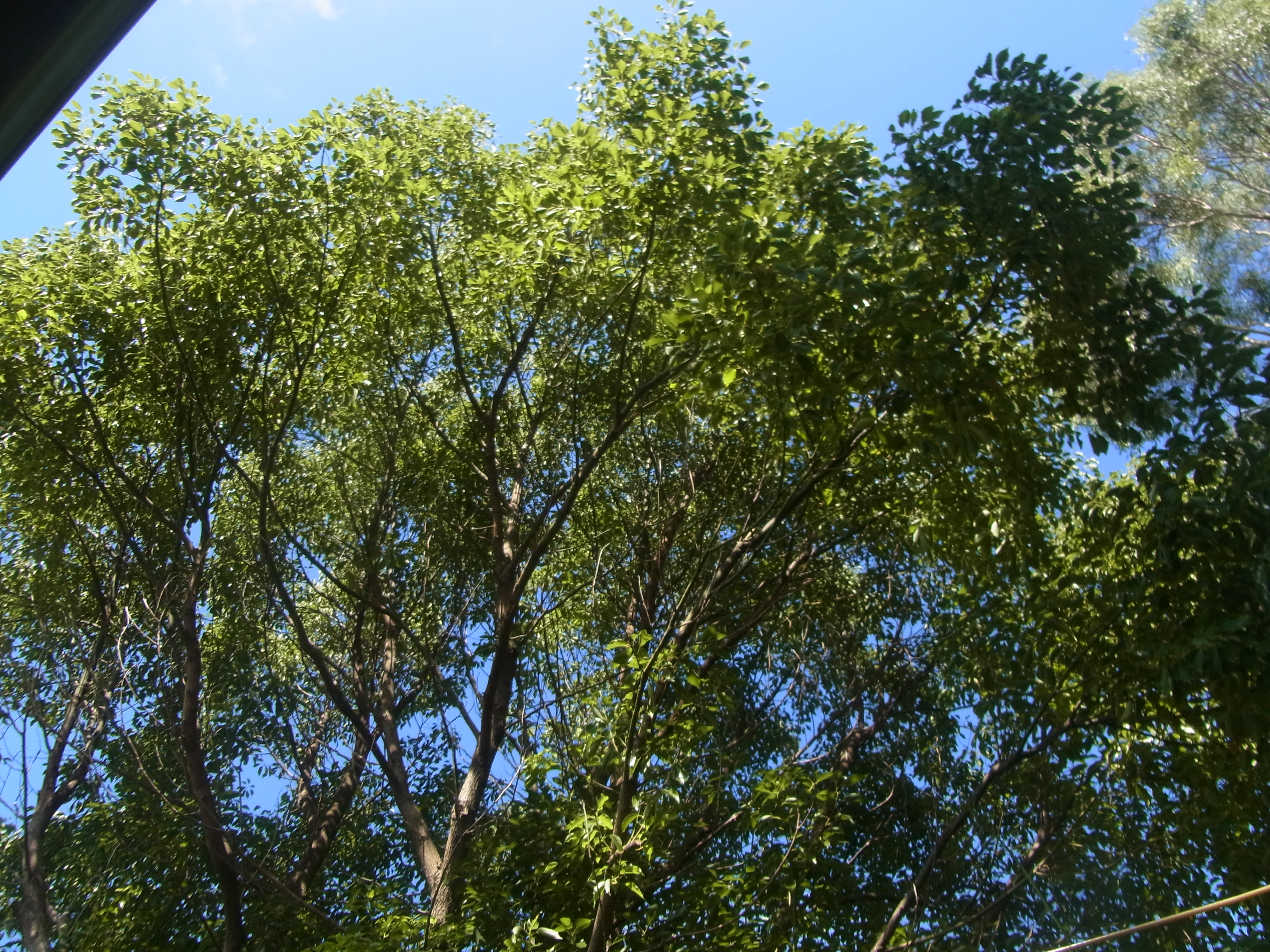
This is a picture of a tree at the back of our house. I took this picture about two months ago, at the same time taking a few more pictures that show how I got ready to cut into a bit of grass on one side of the house. 


Above the pictures show what I needed for the cutting. Well, this was in January. It is March now, two months later. The grass has kept growing quite a bit more over the past few weeks. Some mornings I love to go out into the sun. While I catch a bit of sun, I try to cut the grass a bit shorter. It is always growing faster than I manage to cut it! But I don’t mind this one bit. I remember the years when there was hardly any rain and the grass would not grow at all. I did not like this, when there was only bare hard soil to be seen. After a lot of growth during this rather wet summer, I think the growing has slowed down now. So maybe by Easter (in three weeks time) the grass will look all right to walk on. And maybe some Easter bunnies are going to find a way to hide a few Easter eggs? The thought of this makes me feel happy. I think how wonderful it is that we have this bit of private grass land! We do not call it a lawn, we rather like to think of it as our little meadow.
All the trees and bushes near our house have recently had a lot more growth too. Some branches, that reach too close to the house, need constant trimming. It keeps Peter off and on quite busy!
This bit of a grapevine is still to be found near the house close to the rosebush.
and further down some wildlife near our house.





The Obligation of Beauty
I like this quote by Elizabeth Gilbert: “the appreciation of pleasure can be an anchor of one’s humanity…You were given life; it is your duty…to find something beautiful within life, no matter how slight.”
Thank you for this beautiful post, Diana. I am going to reblog it on auntyuta

It took me over a quarter of a century to realize beauty is not something frivolous. We need beauty in our life. This truth still takes my breath away. With no particular aesthetic gift or impulse, I was for much of my life satisfied if my purchases were functional. They didn’t have to be pretty. And so neither did I, because my brain got me around. It was my mind, not how I dressed, that helped me achieve in school and life and build relationships. I now look with patience upon the black-and-white assertions we draw in youth.
In Eat, Pray, Love, Elizabeth Gilbert borrows from The Italians by Luigi Barzini to tease out “why the Italians have produced the greatest artistic, political and scientific minds of the ages, but have still never become a major world power. [His answers] have to do with a sad Italian history of…
View original post 607 more words
Oppose Corporate Rule?
http://www.localfutures.org/democrats-republicans-uniting-oppose-corporate-rule/
Democrats & Republicans Uniting to Oppose Corporate Rule?!
By Paul Cienfuegos
There is a huge political divide between the Democrat Party’s leadership and its local voters. There is an equally huge political divide between the Republican Party’s leadership and its local voters. In a nutshell, the divide can be summed up like this. Voters from across the political spectrum oppose global corporate trade treaties like NAFTA and the current outrage called Trans-Pacific Partnership. Voters from across the political spectrum oppose bank bailouts using public funds. Voters from across the political spectrum oppose the corporate takeover of our entire society.
On the other hand, the vast majority of our congress people, our senators, and certainly our President, support corporate trade treaties, support the bank bailouts, and generally support the corporate takeover of the country. It doesn’t matter which of the two mainstream parties they’re from. Republican and Democrat elected leaders stand together against the will of the American people and for corporate power. The latest example is Obama pushing for fast track authority for the Trans-Pacific so-called Partnership agreement. If we had an honest mass media in this country, this fact would be obvious to everybody. But our media is now corporate too. In other words, on the issue of corporate power, it’s not a left vs right political struggle, although that’s what the 1% would like all of us to believe. The real political struggle is between the ruling elite and the rest of us, regardless of our party affiliation.
Tragically, most activists tend to either ignore or not understand this fact. So liberal advocacy groups endlessly attack conservative politicians, and conservative advocacy groups endlessly attack liberal politicians. It’s great for fundraising, but it doesn’t do much to build a movement of We The People taking our country back from corporate rule. What left vs right bashing does accomplish quite effectively is something that the 1% has been doing since there was a 1% – a strategy called “divide and conquer”.
From the American Revolution till the end of slavery, the ruling elite quite successfully kept their white indentured servants fearful of the African people who they had enslaved, in order that the two groups not realize how similar were their situations, and thus join together to end their oppressive conditions.
The same thing happened with the various waves of immigrants throughout the early 20th century, ensuring that each wave would distrust the next wave to ensure that they would not organize together and demand a better life for all poor working people.
The 1% has referred to We The People for 200 years now as “the rabble” and “the mob”, so it’s pretty obvious what they think of us. Let’s not forget – the 99% isn’t just the left or just the right. It’s almost the entire population of this country. So of course we’re a threat – especially if we can stop being on auto-pilot with this divide and conquer crap, and instead start mobilizing to create a real participatory democracy – across class, across race, and across political party boundaries.
Five years ago this month, in the Citizens United decision, the Supreme Court decided to further expand the so-called constitutional “rights” that they had been granting to corporations ever since 1819 – that’s 195 years ago. The Citizens United decision made it even easier for large corporations to donate massive amounts of money to influence elections, and to hide where the money was coming from. 75% of Republican voters and 86% of Democrat voters were opposed to the Supreme Court’s decision. So you would hope that voters from both parties would have immediately thrown off their conceptual shackles and started organizing across party lines to end corporate rule once and for all. But that didn’t happen anywhere. Why? Because divide and conquer still works. The two political party machines just kept up their constant attacks on each other, and the voters from both so-called “sides” stayed obedient to the propaganda from their respective party leaderships. And of course, this story was not reported on the evening news, because our news institutions are now also almost entirely owned by five giant corporations.
One poll after another continues to confirm this fact that is hidden in plain sight – that most Americans oppose corporate power. Here’s a recent example. In 2014, Democracy Corps asked Americans what they thought about the Supreme Court. It turns out that an overwhelming majority of Democrats, Republicans and Independent voters disliked the court’s performance, believing that judges are influenced more by their own personal beliefs and political leanings than by a strict legal analysis.
Perhaps even more remarkably, a similar cross-partisan consensus exists to support a wide range of reforms for our nation’s highest court. So even in this time of intense political polarization, there is broad cross-partisan consensus on these issues. Two recent decisions on campaign finance have only served to intensify Americans’ dissatisfaction with the Court. An overwhelming majority of Americans still disagree with the Citizens United ruling, including Democrats, Independents and Republicans and among every demographic group, while Americans of nearly every stripe believe the recent McCutcheon ruling will make our political system more corrupt – again with broad consensus across Democrats, Independents, and Republicans.
Perhaps most intriguingly, the survey found overwhelming approval for a series of seven reforms that would make the Supreme Court a more transparent and accountable body, with large, cross-partisan majorities supporting most proposals. The most popular reform would require Supreme Court justices to adhere to the U.S. Judicial Code of Conduct, which of course most of us thought they already had to do! But it turns out that the judges of the Supreme Court are the only judges who are not required to disclose who is buying them flights on private airplanes, or paying them speaking fees, or giving them gifts.
Abolishing lifetime appointments in favor of setting term limits also proved popular with the public, including a specific limit of 18 years or a single term of office. Television and audio broadcasts of the court’s proceedings were also supported by a super-majority of all Americans. The least popular reform, that the justices post a summary of their financial disclosures online, was still supported by 59% of Americans. You can read more about this poll by going to DemocracyCorps.com and typing “Supreme Court” in the search box.
What would it take for Republicans and Democrats and Greens and Libertarians to work together on the urgent issue of corporate power? To move outside of our comfort zones and realize how much we have in common. We have no time to lose.
___________
Paul Cienfuegos will be speaking at The Economics of Happiness Conference, February 27-March 1 in Portland, Oregon. Paul is a leader in the Community Rights movement which works to dismantle corporate constitutional “rights” while enshrining local self-governance. Based in Portland, Oregon, he travels widely giving talks and workshops. His speeches have been broadcast nationally on David Barsamian’s show, ‘Alternative Radio’. He co-founded CommunityRightsPDX.org. More info: PaulCienfuegos.com.
___________
This post was originally broadcast on January 27, 2015 as part of Paul Cienfuegos’ weekly commentaries every Tuesday on the KBOO Radio Evening News. Listen HERE
Fresh Water Shortages
http://www.theguardian.com/environment/2015/mar/08/how-water-shortages-lead-food-crises-conflicts
Water The Observer
This article is written by Robin McKie, science editor!
“Why fresh water shortages will cause the next great global crisis
Last week drought in São Paulo was so bad, residents tried drilling through basement floors for groundwater. As reservoirs dry up across the world, a billion people have no access to safe drinking water. Rationing and a battle to control supplies will follow
Sunday 8 March 2015 11.05 AEDT Last modified on Monday 9 March 2015 07.12 AEDT
Water is the driving force of all nature, Leonardo da Vinci claimed. Unfortunately for our planet, supplies are now running dry – at an alarming rate. The world’s population continues to soar but that rise in numbers has not been matched by an accompanying increase in supplies of fresh water.
The consequences are proving to be profound. Across the globe, reports reveal huge areas in crisis today as reservoirs and aquifers dry up. More than a billion individuals – one in seven people on the planet – now lack access to safe drinking water.
Last week in the Brazilian city of São Paulo, home to 20 million people, and once known as the City of Drizzle,drought got so bad that residents began drilling through basement floors and car parks to try to reach groundwater. City officials warned last week that rationing of supplies was likely soon. Citizens might have access to water for only two days a week, they added.
In California, officials have revealed that the state has entered its fourth year of drought with January this year becoming the driest since meteorological records began. At the same time, per capita water use has continued to rise.
In the Middle East, swaths of countryside have been reduced to desert because of overuse of water. Iran is one of the most severely affected. Heavy overconsumption, coupled with poor rainfall, have ravaged its water resources and devastated its agricultural output. Similarly, the United Arab Emirates is now investing in desalination plants and waste water treatment units because it lacks fresh water. As crown prince General Sheikh Mohammed bin Zayed al-Nahyan admitted: “For us, water is [now] more important than oil.”
Water stress and climate change Facebook Twitter Pinterest
Water stress and climate change. Click here for full size image. Illustration: Giulio Frigieri
The global nature of the crisis is underlined in similar reports from other regions. In south Asia, for example, there have been massive losses of groundwater, which has been pumped up with reckless lack of control over the past decade. About 600 million people live on the 2,000km area that extends from eastern Pakistan, across the hot dry plains of northern India and into Bangladesh, and the land is the most intensely irrigated in the world. Up to 75% of farmers rely on pumped groundwater to water their crops and water use is intensifying – at the same time that satellite images shows supplies are shrinking alarmingly.
The nature of the problem is revealed by US Geological Survey figures, which show that the total amount of fresh water on Earth comes to about 2,551,100 cubic miles. Combined into a single droplet, this would produce a sphere with a diameter of about 170 miles. However, 99% of that sphere would be made up of groundwater, much of which is not accessible. By contrast, the total volume from lakes and rivers, humanity’s main source of fresh water, produces a sphere that is a mere 35 miles in diameter. That little blue droplet sustains most of the people on Earth – and it is under increasing assault as the planet heats up.
Changing precipitation and melting snow and ice are already altering hydrological systems in many regions. Glaciers continue to shrink worldwide, affecting villages and towns downstream. The result, says the Intergovernmental Panel for Climate Change, is that the fraction of global population experiencing water scarcity is destined to increase throughout the 21st century. More and more, people and nations will have to compete for resources. An international dispute between Egypt and Ethiopia over the latter’s plans to dam the Nile has only recently been resolved. In future, far more serious conflicts are likely to erupt as the planet dries up.Even in high latitudes, the one region on Earth where rainfall is likely to intensify in coming years, climate change will still reduce water quality and pose risks due to a number of factors: rising temperatures; increased levels of sediments, nutrients, and pollutants triggered by heavy rainfall; and disruption of treatment facilities during floods. The world faces a water crisis that will touch every part of the globe, a point that has been stressed by Jean Chrétien, former Canadian prime minister and co-chair of the InterAction Council. “The future political impact of water scarcity may be devastating,” he said. “Using water the way we have in the past simply will not sustain humanity in future.”
About Climate Change
I like very much this article in The Guardian about Climate Change:
http://www.theguardian.com/environment/2015/mar/08/how-will-everything-change-under-climate-change
Here is what Naomi Klein says in this article:
“It is our great collective misfortune that the scientific community made its decisive diagnosis of the climate threat at the precise moment when an elite minority was enjoying more unfettered political, cultural, and intellectual power than at any point since the 1920s. Naomi Klein
Naomi Klein
Sunday 8 March 2015 23.00 AEDTThe second in a major series of articles on the climate crisis and how humanity can solve it. In this extract taken from the Introduction to This Changes Everything by Naomi Klein, the author calls the climate crisis a civilisational wake-up call to alter our economy, our lifestyles, now – before they get changed for us.
You can read the first extract here.
THIS CHANGES EVERYTHING is published this week in paperback by Penguin, £8.99
Sunday 8 March 2015 23.00 AEDTThe second in a major series of articles on the climate crisis and how humanity can solve it. In this extract taken from the Introduction to This Changes Everything by Naomi Klein, the author calls the climate crisis a civilisational wake-up call to alter our economy, our lifestyles, now – before they get changed for us.
You can read the first extract here.
THIS CHANGES EVERYTHING is published this week in paperback by Penguin, £8.99
The alarm bells of the climate crisis have been ringing in our ears for years and are getting louder all the time – yet humanity has failed to change course. What is wrong with us?
Many answers to that question have been offered, ranging from the extreme difficulty of getting all the governments in the world to agree on anything, to an absence of real technological solutions, to something deep in our human nature that keeps us from acting in the face of seemingly remote threats, to – more recently – the claim that we have blown it anyway and there is no point in even trying to do much more than enjoy the scenery on the way down.
Some of these explanations are valid, but all are ultimately inadequate. Take the claim that it’s just too hard for so many countries to agree on a course of action. It is hard. But many times in the past, the United Nations has helped governments to come together to tackle tough cross-border challenges, from ozone depletion to nuclear proliferation. The deals produced weren’t perfect, but they represented real progress. Moreover, during the same years that our governments failed to enact a tough and binding legal architecture requiring emission reductions, supposedly because cooperation was too complex, they managed to create the World Trade Organisation – an intricate global system that regulates the flow of goods and services around the planet, under which the rules are clear and violations are harshly penalised.
The assertion that we have been held back by a lack of technological solutions is no more compelling. Power from renewable sources like wind and water predates the use of fossil fuels and is becoming cheaper, more efficient, and easier to store every year. The past two decades have seen an explosion of ingenious zero-waste design, as well as green urban planning. Not only do we have the technical tools to get off fossil fuels, we also have no end of small pockets where these low carbon lifestyles have been tested with tremendous success. And yet the kind of large-scale transition that would give us a collective chance of averting catastrophe eludes us.
Is it just human nature that holds us back then? In fact we humans have shown ourselves willing to collectively sacrifice in the face of threats many times, most famously in the embrace of rationing, victory gardens, and victory bonds during world wars one and two. Indeed to support fuel conservation during world war two, pleasure driving was virtually eliminated in the UK, and between 1938 and 1944, use of public transit went up by 87% in the US and by 95% in Canada. Twenty million US households – representing three fifths of the population – were growing victory gardens in 1943, and their yields accounted for 42% of the fresh vegetables consumed that year. Interestingly, all of these activities together dramatically reduce carbon emissions.
Yes, the threat of war seemed immediate and concrete but so too is the threat posed by the climate crisis that has already likely been a substantial contributor to massive disasters in some of the world’s major cities. Still, we’ve gone soft since those days of wartime sacrifice, haven’t we? Contemporary humans are too self-centered, too addicted to gratification to live without the full freedom to satisfy our every whim – or so our culture tells us every day. And yet the truth is that we continue to make collective sacrifices in the name of an abstract greater good all the time. We sacrifice our pensions, our hard-won labour rights, our arts and after-school programmes. We accept that we have to pay dramatically more for the destructive energy sources that power our transportation and our lives. We accept that bus and subway fares go up and up while service fails to improve or degenerates. We accept that a public university education should result in a debt that will take half a lifetime to pay off when such a thing was unheard of a generation ago.
The past 30 years have been a steady process of getting less and less in the public sphere. This is all defended in the name of austerity, the current justification for these never-ending demands for collective sacrifice. In the past, calls for balanced budgets, greater efficiency, and faster economic growth have served the same role.”
You might perhaps like to have a look at this interview by The Spiegel:
http://www.spiegel.de/international/world/global-warming-interview-with-naomi-klein-a-1020007.html
The US is Failing at War for Failure’s Sake
I think this is a very interesting post.

Financial Collapse Leads To War
By Dmitry Orlov
 Scanning the headlines in the western mainstream press, and then peering behind the one-way mirror to compare that to the actual goings-on, one can’t but get the impression that America’s propagandists, and all those who follow in their wake, are struggling with all their might to concoct rationales for military action of one sort or another, be it supplying weapons to the largely defunct Ukrainian military, or staging parades of US military hardware and troops in the almost completely Russian town of Narva, in Estonia, a few hundred meters away from the Russian border, or putting US “advisers” in harm’s way in parts of Iraq mostly controlled by Islamic militants.
The strenuous efforts to whip up Cold War-like hysteria in the face of an otherwise preoccupied and essentially passive Russia seems out of all proportion to the actual military threat Russia poses…
View original post 1,311 more words
Sunday Diary, March 2015
We are well into March now. It seems a bit like autumn already here in Australia. Last Thursday afternoon Monika came to see us with Lucas. After coffee we decided we could all go with Lucas to the playground near the lake. Two year old Lucas enjoyed the playground very much even though it turned out to be very, very windy that afternoon. When we arrived, Peter took a picture of a flock of corellas sitting on the grass near the lake.


Not so long ago Peter and I drove up Mount Brown to have a look at the new sub-divisions. A lot of buildings have already gone up. People who buy a block of land up there have a beautiful view towards the lake.


What Timothy Egan says about Hillary Clinton
Timothy Egan worked for 18 years as a writer for The New York Times, first as the Pacific Northwest correspondent, then as a national enterprise reporter.
In 2006, Mr. Egan won the National Book Award for his history of people who lived through the Dust Bowl, “The Worst Hard Time.” The book also became a New York Times best seller.
In 2001, he won the Pulitzer Prize as part of a team of reporters who wrote the series “How Race Is Lived in America.” He has done special projects on the West and the decline of rural America, and he has followed the entire length of the Lewis and Clark Trail.
Mr. Egan is the author of five books, including “The Good Rain: Across Time and Terrain in the Pacific Northwest,” and “Lasso the Wind, Away to the New West.” He lives in Seattle. Mr. Egan’s column appears every Friday.
ON MARCH 6, 2015 Timothy Egan writes in the New York Times Opinion Pages a piece titled: HILLARY’S STEP.
In conclusion to this article he says:
” . . . . One hopes that Hillary has been using her time out of the limelight, such as it is, to do some hard thinking about the serious structural flaws of the United States. We are creating more wealth, at an astonishing rate, for a select few, while also creating more poverty. The issues of great consequence — health care for all, affordable education that is a ladder to a better life, a middle class with security, not the fear of being one paycheck from panic — are mired in the deadened cast of our politics.
If Clinton hasn’t been looking for answers to the Big Questions, if she hasn’t been using the best and brightest around her to present something fresh, original and unifying, she will be stuck at the Hillary Step — close enough to taste the top of the world, but with no way to get there.”
About Health and Disease
|
Drug firms ‘inventing diseases’
|
|||
Pharmaceutical firms are inventing diseases to sell more drugs, researchers have warned.Disease-mongering promotes non-existent diseases and exaggerates mild problems to boost profits, the Public Library of Science Medicine reported. Researchers at Newcastle University in Australia said firms were putting healthy people at risk by medicalising conditions such as menopause. But the pharmaceutical industry denied it invented diseases.
Report authors David Henry and Ray Moynihan criticised attempts to convince the public in the US that 43% of women live with sexual dysfunction. They also said that risk factors like high cholesterol and osteoporosis were being presented as diseases – and rare conditions such as restless leg condition and mild problems of irritable bowel syndrome were exaggerated. The report said: “Disease-mongering is the selling of sickness that widens the boundaries of illness and grows the markets for those who sell and deliver treatments. Campaigns “It is exemplified mostly explicitly by many pharmaceutical industry-funded disease awareness campaigns – more often designed to sell drugs than to illuminate or to inform or educate about the prevention of illness or the maintenance of health.” The researchers called on doctors, patients and support groups to be aware of the marketing tactics of the pharmaceutical industry and for more research into the way in which conditions are presented. They added: “The motives of health professionals and health advocacy groups may well be the welfare of patients, rather than any direct self-interested financial benefit, but we believe that too often marketers are able to crudely manipulate those motivations. “Disentangling the different motivations of the different actors in disease-mongering will be a key step towards a better understanding of this phenomenon.” But Richard Ley, of the Association of the British Pharmaceutical Industry, said the research was centred on the US where the drugs industry had much more freedom to promote their products to the public. “The way you can advertise is much more restricted in the UK so it is wrong to extrapolate it. “Also, it is not right to say the industry invents diseases, we don’t. It is up to doctors to decide what treatment to give people, we can’t tell them.” |
|||
 by the BBC

