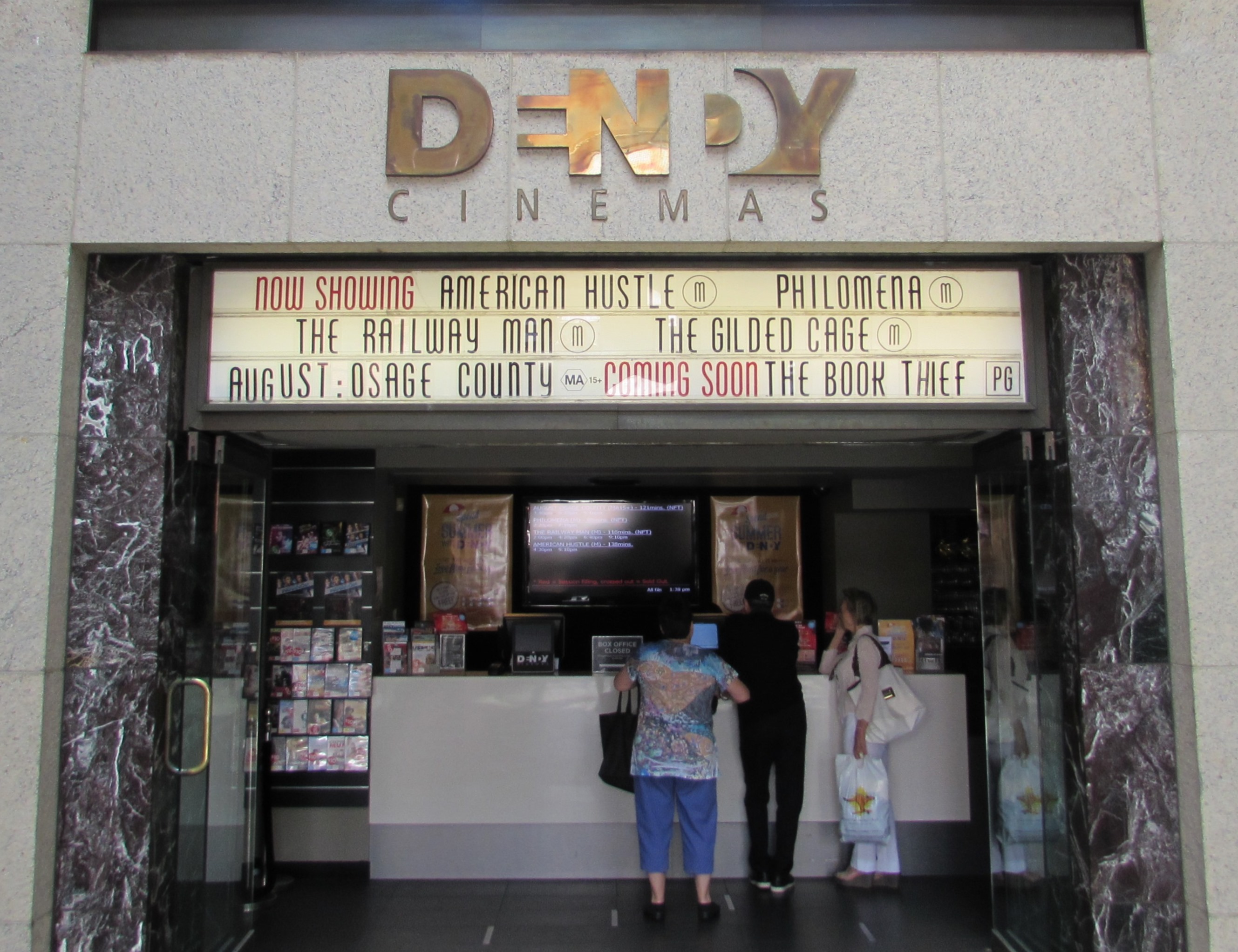
Seeing “The Railway Man” at the DENDY on Sunday, 5th Jan.2014

“The Railway Man” is a movie with Colin Firth and Nicole Kidman. We saw recently another movie with Colin Firth and Nicole Kidman: “Before I go to sleep”

auntyuta's avatarAuntyUta

IMG_0235

Yesterday, Peter and I  went to see the ‘The Railwnay Man‘ at the Dendy Cinemas at the Quay, Sydney Harbour.

This movie is based on the best selling book by Eric Lomax. Colin Firth plays the older Eric Lomax and Jeremy Irvine is in the role of the young one who got captured by the Japanese in Singapore in 1942 and sent with his mates to the notorious ‘Death Railway’ in Thailand.

Patti Lomax (Nicole Kidman) turns out to be a wonderfully supportive wife of the older Eric.  Eric, as a 21 year old, is a British Signals Engineer and railway enthusiast. And of course he is in the British Army. The film depicts the sufferings that war veterans undergo even decades after the events. The sufferings occur on both sides, the oppressed as well as the oppressors. It shows the absolute trauma that wars can inflict on the…

View original post 228 more words

Our Saturday, 25 Oct 2014

RIMG0343

Maxim Gorki’s play “Children of the Sun” was shown at the Drama Theatre in Sydney’s Opera House. We saw this play last Saturday. There was a matinee performance at 2 pm which suited us for we prefer to be home at nighttime. Before we went to the theatre we met Caroline for lunch in the city.

RIMG0307

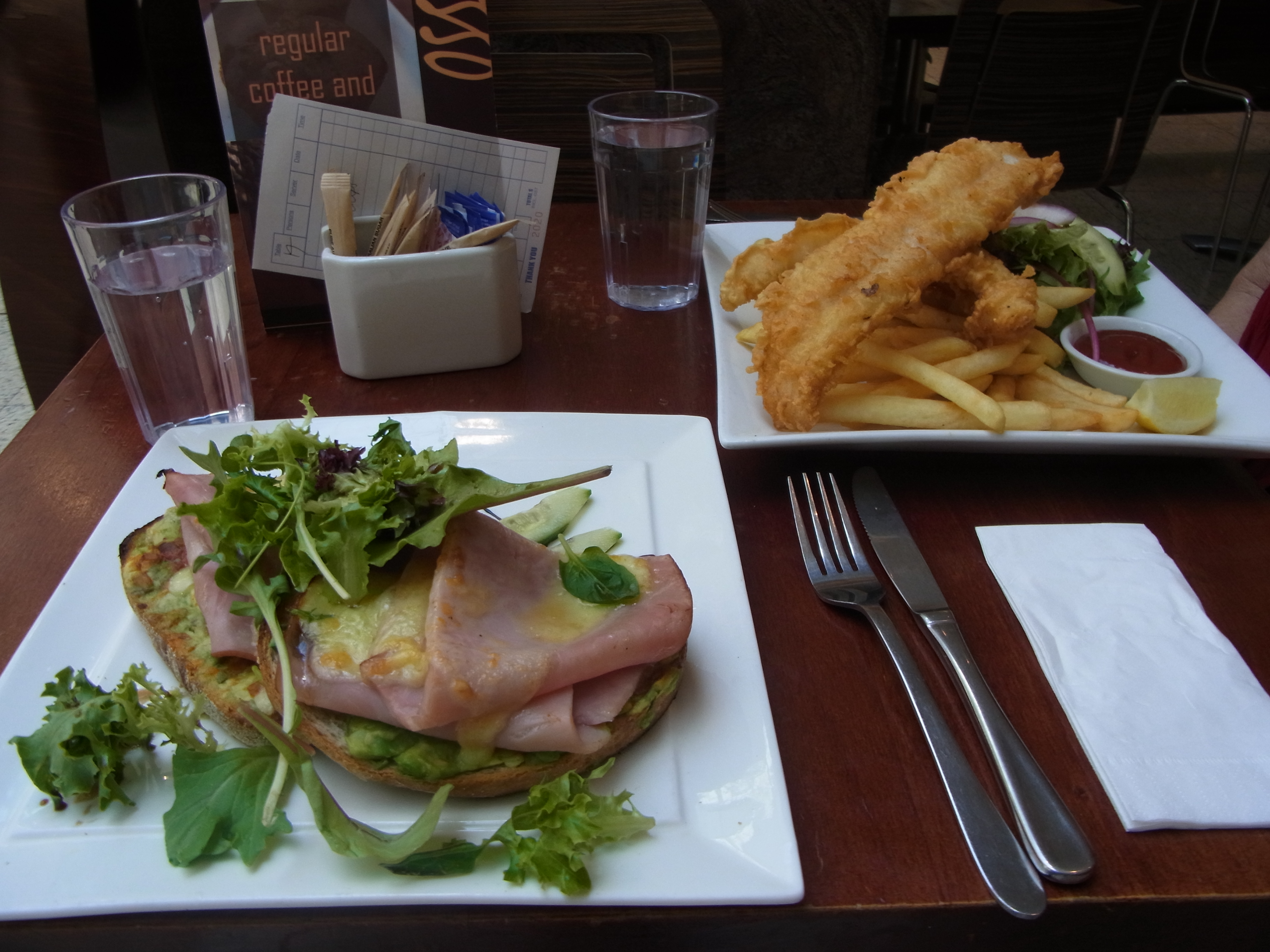
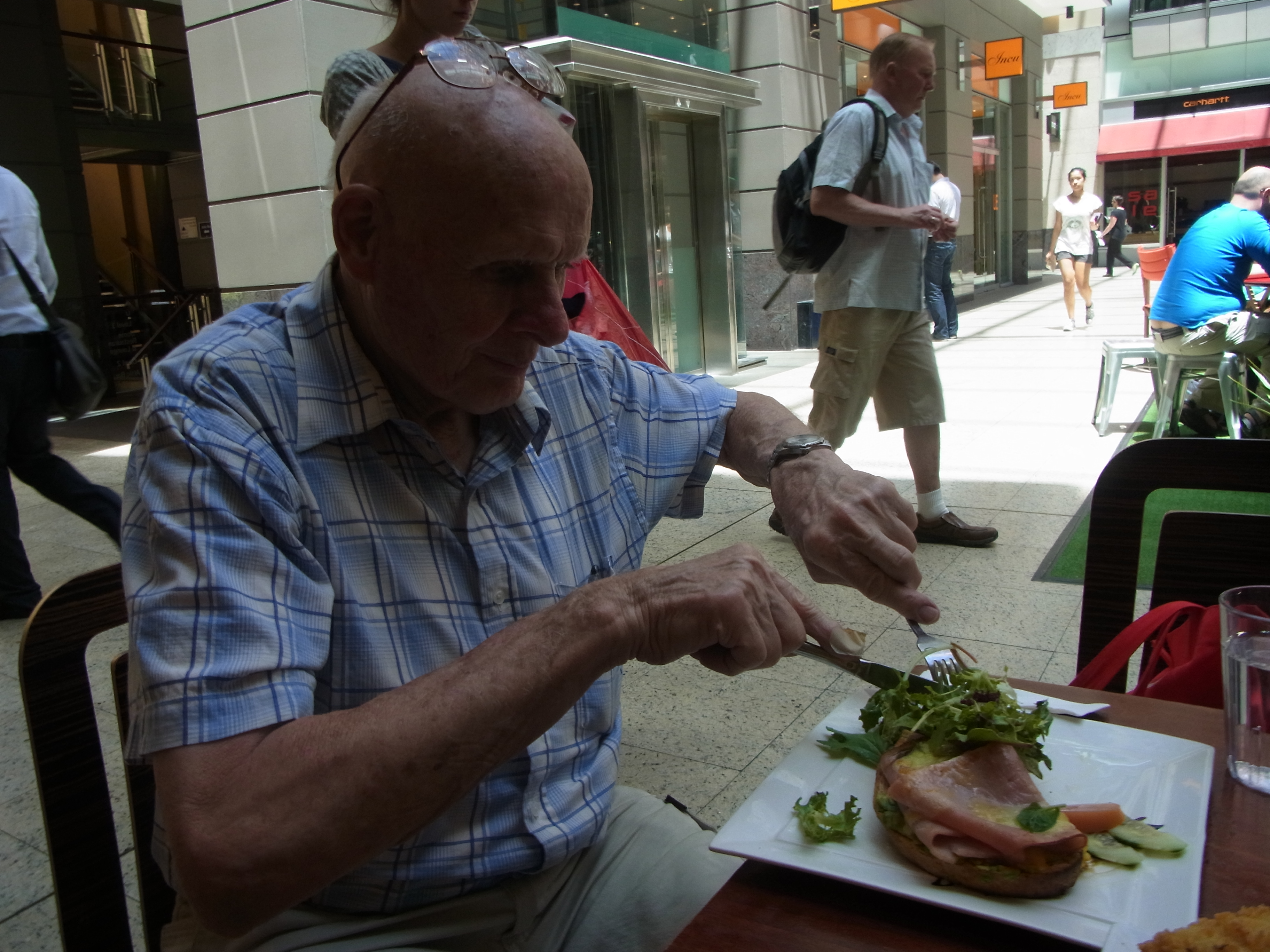
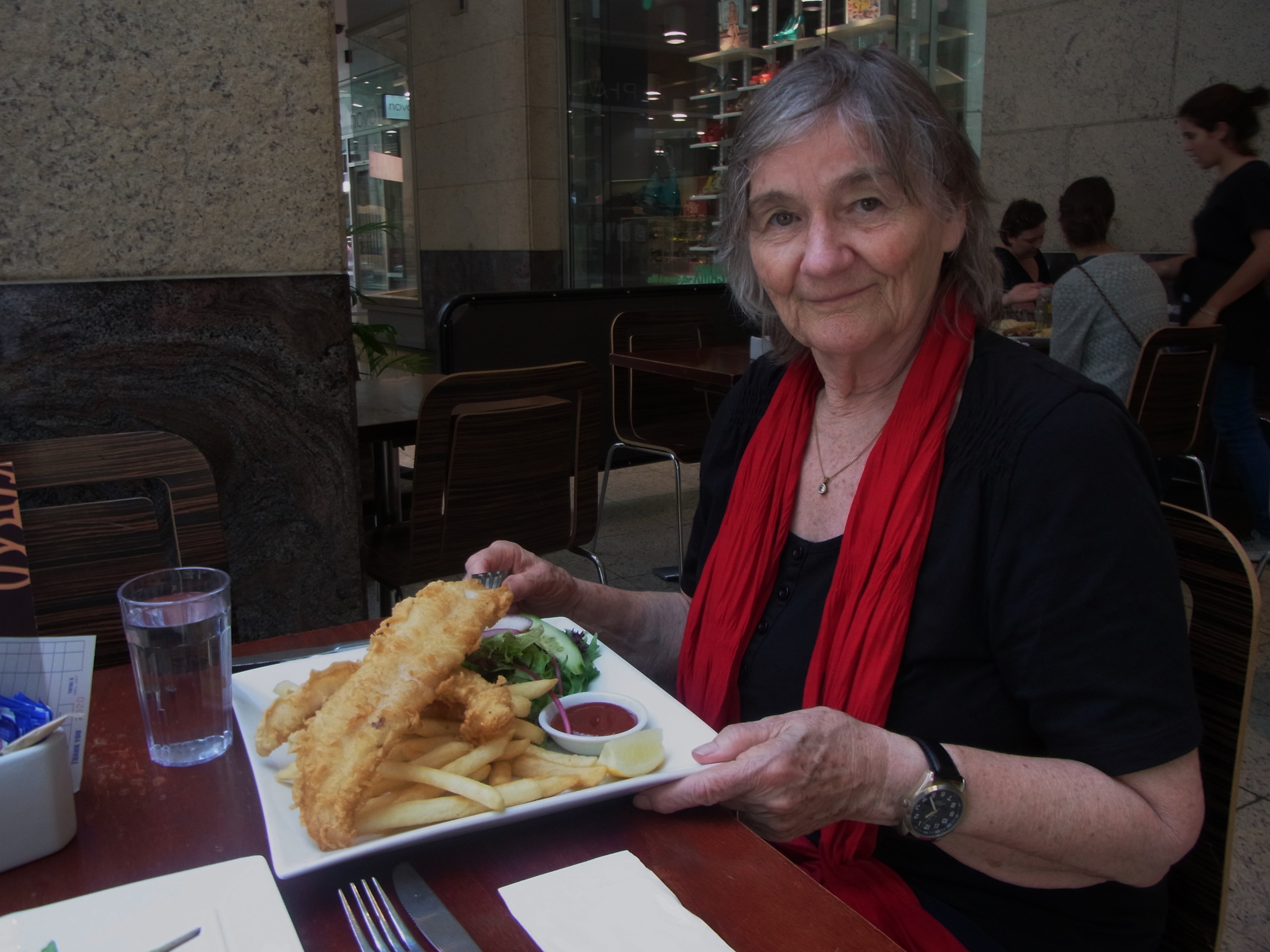
Caroline had a salad and Peter and I had beer battered fish and chips.

We told Caroline that we had lunch at the same place on the last day of the year 2012. Later at home I looked up the post I published from that day. Sure enough I did find the lunch pictures and was able to republish them.

RIMG0110

RIMG0112

RIMG0113

Last Day of the Year 2012

I  want to publish again what we did on the last day of 2012! Our day started with a trip to Bondi Junction, where we met our daughter. We had a cup of coffee with Caroline. Then Caroline had to go shopping. We strolled back to the station. This time to a different entrance of the station, one that we weren’t familiar with yet. A beautiful large rest asrea opened up in front of us. Lots of different food and drinks were on offer at different outlets. In the middle of the plaza some delicious looking (homemade) ice-cream caught our eye. Peter and I each had a cup full of this very refreshing treat. It wasn’t expensive but tasted wonderful. There were plenty of seats everywhere to have a rest. We took the lift down to the platform. Only a few minutes and our train departed. We got off at Town Hall Station. We had a lovely lunch near Town Hall Station. I had ordered Fish and Chips. The fish was delicious! Peter had ordered something with meat.


Later on we looked at the displays of some cake-shops. We were hoping we would find some Berliners. It is our tradition to eat Berliners on New Year’s Eve. We had no luck. We couldn’t find any.  In due time we went to Town Hall Station to catch our train to Dapto.  While we were waiting for the train we took some photos. The trip to Dapto took nearly two hours.


This picture was taken on the 31st December 2012 in Sydney near the place where we had lunch.

RIMG0110

RIMG0112

RIMG0114

RIMG0113

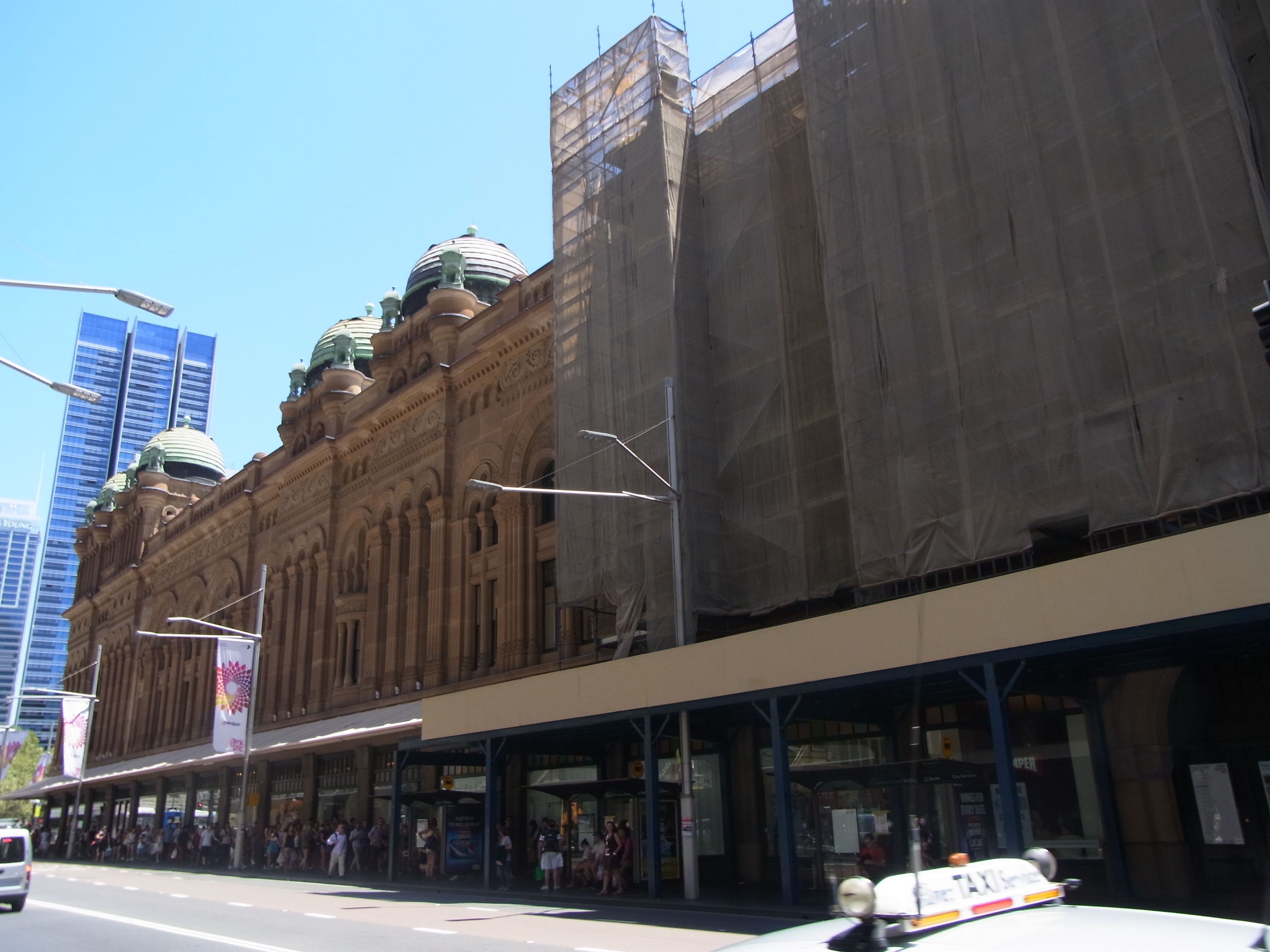
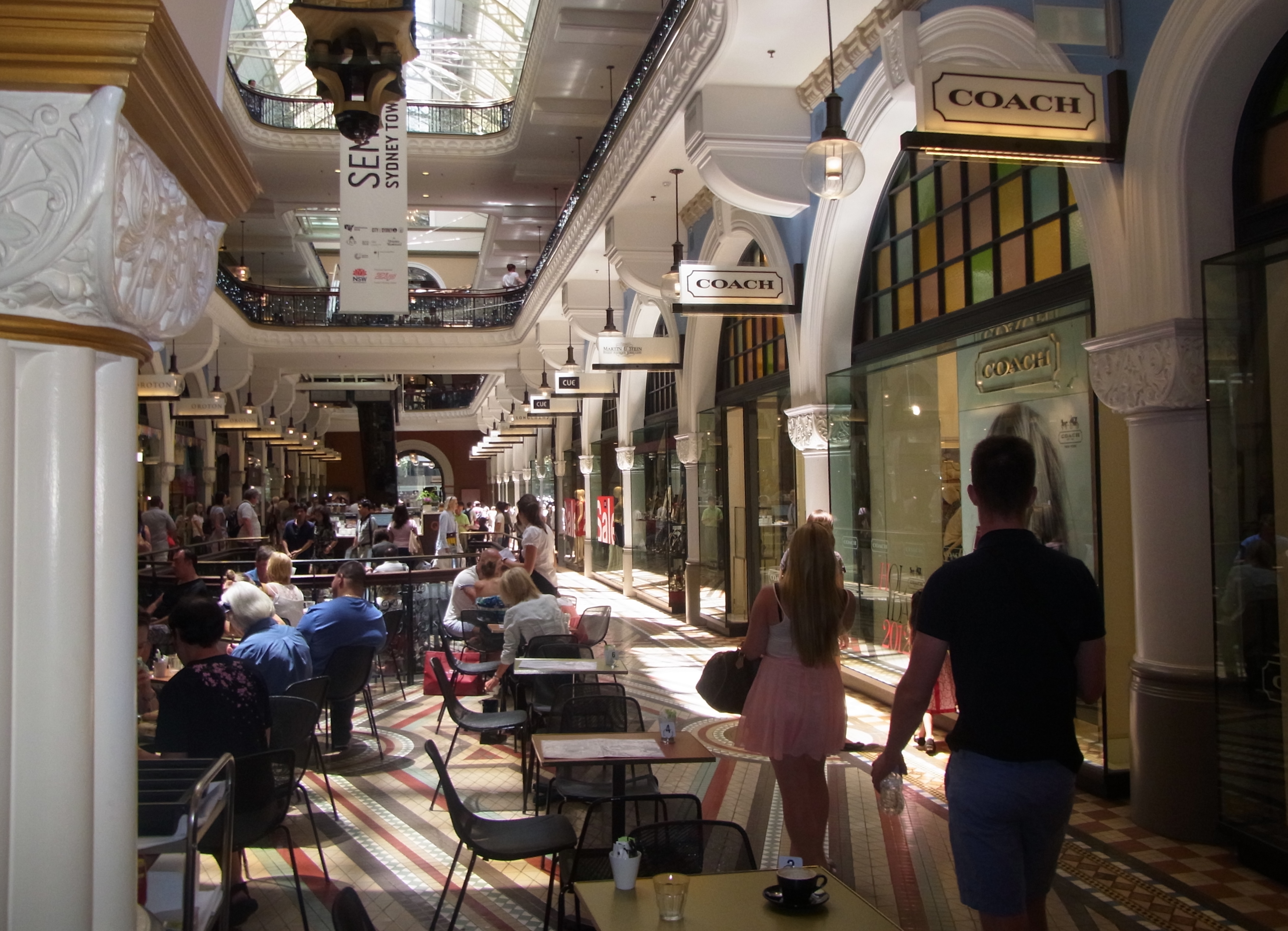
After lunch we strolled to the Queen Victoria Building.
The huge clock inside of Queen Victoria Building.
This is the huge clock inside of Queen Victoria Building.

RIMG0127

RIMG0124

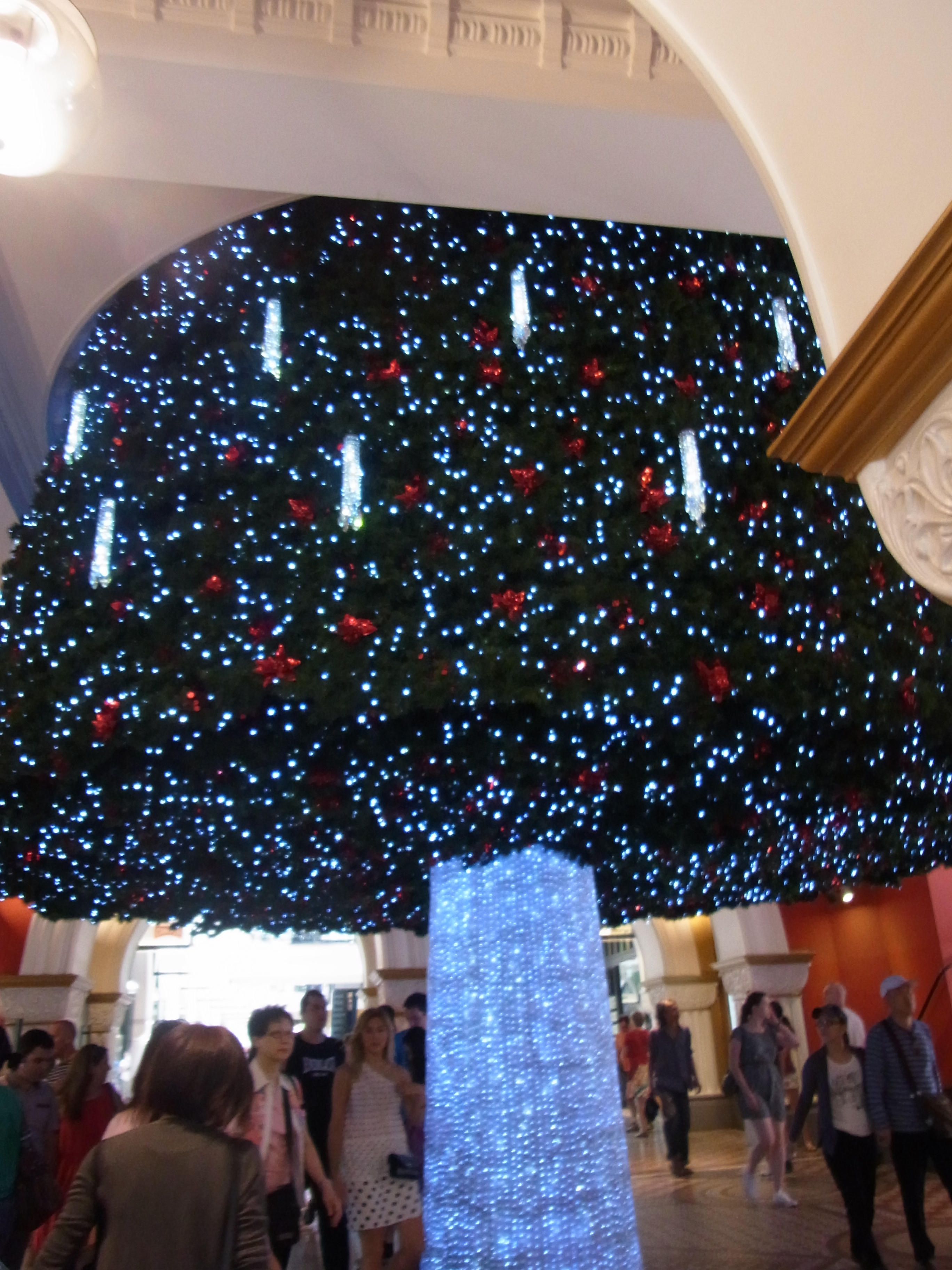
We thought this Christmas Tree looked quite impressive.
We thought this Christmas Tree inside of Queen Victoria Building looked quite impressive.

RIMG0121

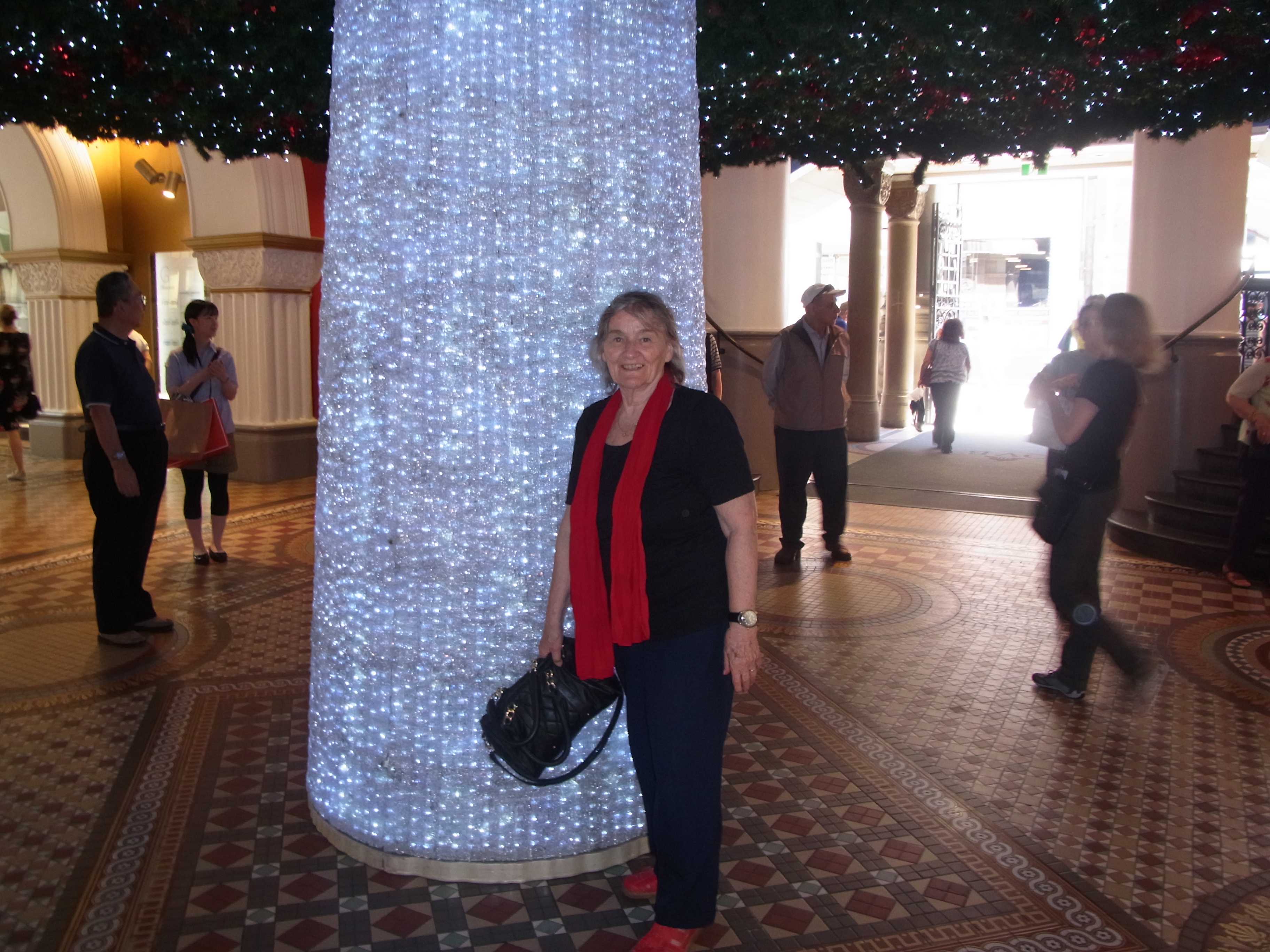
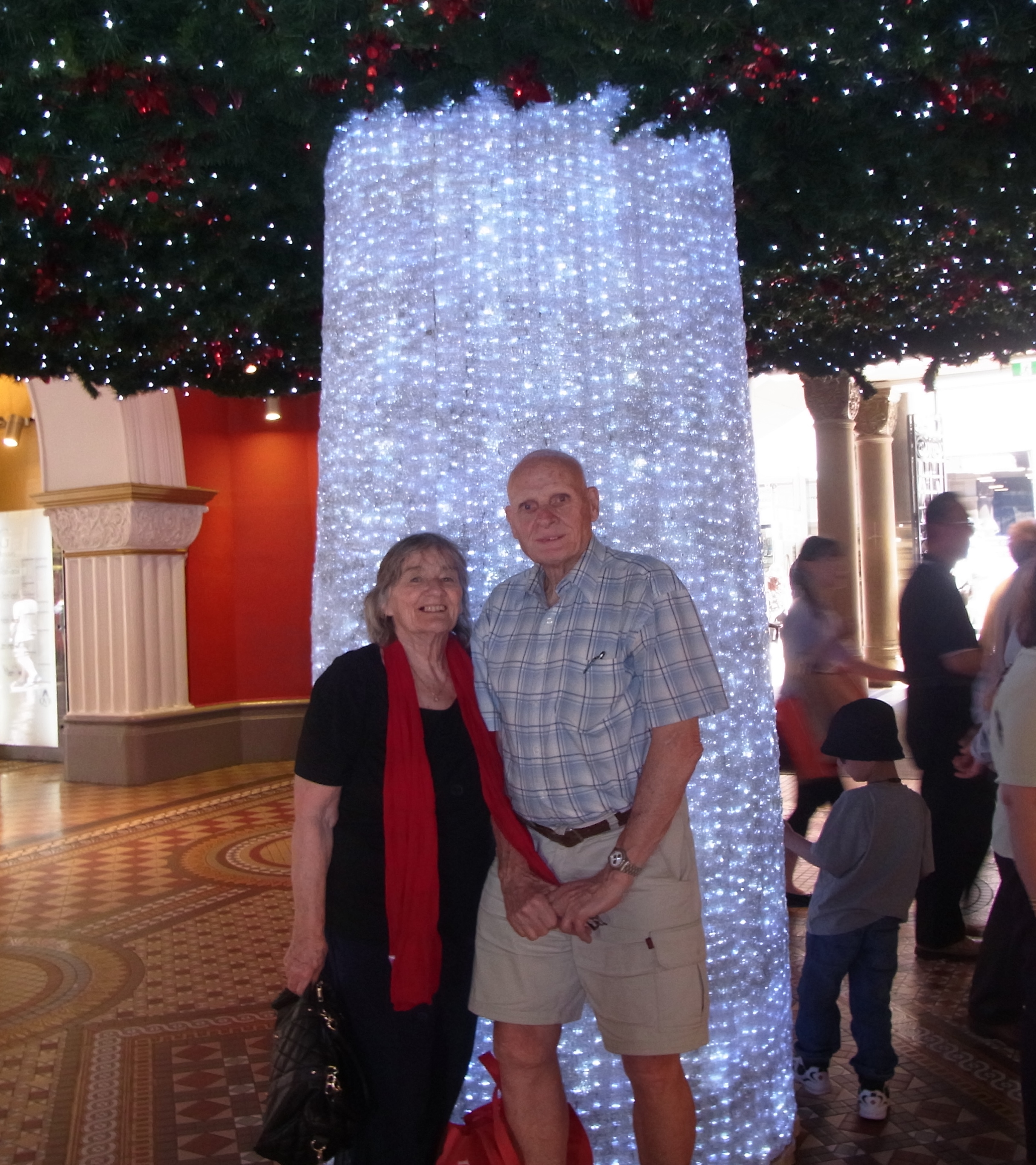
Then a lady had offered to take a picture of the two of us.
A very nice lady had offered then to take a picture of the two of us.
At Townhall Station we caught the Kiama train via Wollongong to Dapto.
People waiting for the train.


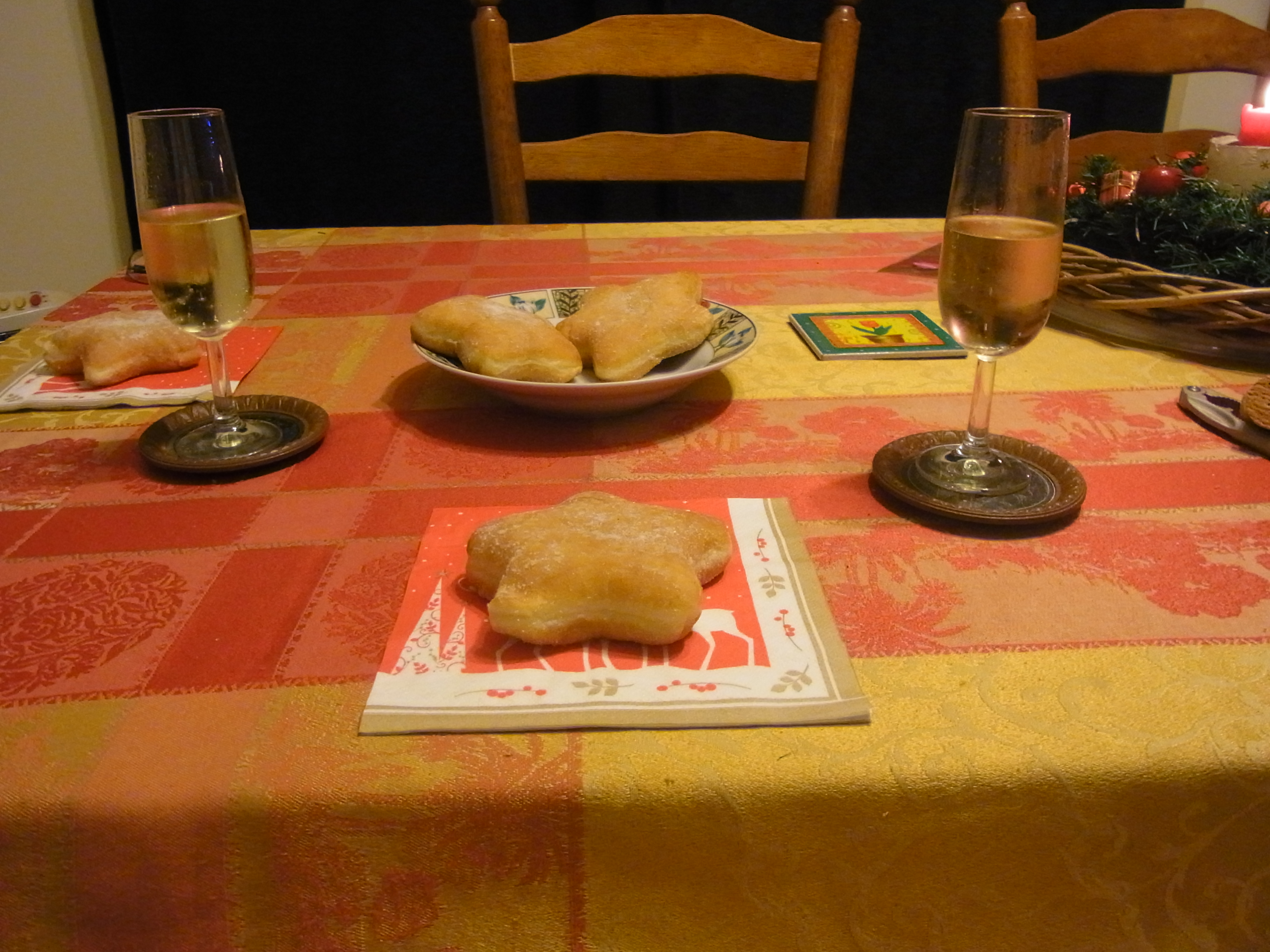
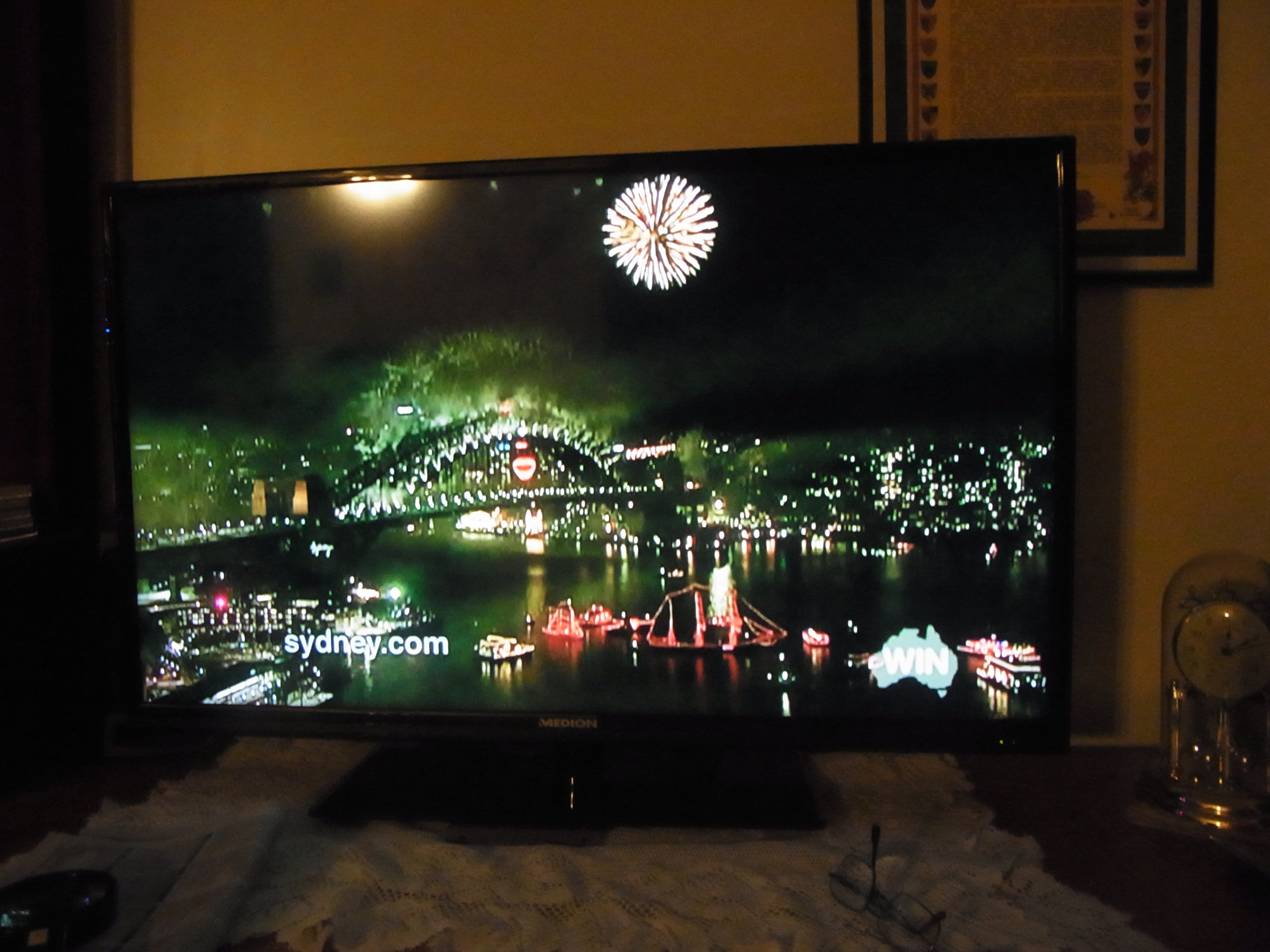
Some shops in Dapto Shopping Center were already about to close when we arrived there. We knew we had a bottle of Bubbly at home in the fridge for our end of year celebrations. But we were still without any Berliners. I felt a bit tired and was sitting down for a while. In the meantime Peter rushed into another shop that was still open. Surprise, surprise, he came out with some delicious looking Berliners in the form of stars! He got them at half price for they were the last ones that were left! At home we watched “Dinner for One”, which is a tradition with us to watch on New Year’s Eve. It is a sketch about Miss Sophie’s 90th Birthday. Very, very funny! We’ve seen it so often and every time we laugh our heads off again. Peter tried out to take a few pictures from the TV showing Sydney Harbour. At midnight he took also some pictures of the fireworks. Soon after we went to bed. But of course we did have our Bubbly and did eat the heated up little stars with it. They tasted delicious, just as good as the balls, called Berliners, do taste. Of course we did get messages and phone calls from our children before we went to bed, wishing us a HAPPY NEW YEAR.

RIMG0151

RIMG0156


If you go to

Last Day of the Year

you can see some more photos from that day.


A Columnist’s analysing the peddling of Fear

Are we peddling fear just for the sake of it?

Posted about 4 hours agoFri 24 Oct 2014, 6:46am

As disturbing as the events in Ottawa were we are entitled to ask whether the political response here in Australia, on the other side of the world, was helpful or merely exploitative, writes Barrie Cassidy.

The threat of terrorism is real, but is it exaggerated?

The need to be vigilant is obvious, but do we have to live in fear?

Every time someone goes berserk overseas, do we have to behave as if it happened around the corner?

Why in 2014 is every act by a crazed gunman immediately interpreted as an act of terrorism?

And when does the rhetoric of politicians cross the boundaries from sensible public safety and security warnings to fear for the sake of it?

As disturbing as the events in Ottawa were, they could have been the actions of a “lone wolf” with a criminal history. Even if it turns out he was part of some sort of organised global terror attack – what the Prime Minister, Tony Abbott, described in the Parliament as part of Islamic State’s “war on the world” – we are still entitled to ask whether the response here in Australia, on the other side of the world, was helpful or merely exploitative.

The politicians rushed to the microphones to draw the links with Australia, to underline the similarities between the two countries, and to emphasise how the same thing could so easily happen here.

The presiding officers of almost every parliament in the country put out statements on security. Tony Abbott gave an interview and followed up with a statement to the Parliament. The Opposition Leader Bill Shorten fell in behind. There was a minute’s silence. How often does that happen when a soldier in another country dies at the hands of a gunman?

Of course Australian authorities charged with the safety of the public should be impacted and instructed by the shootings in Ottawa. Of course everybody is disturbed and alarmed when these shootings happen.

But even so, why did the politicians on both sides of the aisle feel the need to see to it that every Australian shared the fear that they were so ready to express? What are we supposed to do?

Why did the politicians tell us that threats of a 17-year-old Year 10 student should leave us “chilled?” The Courier Mail, by contrast, ran a headline: “ISIS Aussie terror threat backfires. He’s just a very naughty boy.” A “naughty boy” that one senator – David Leyonhjelm – dismissed as “an absolute dickhead.”

Eminent social researcher Hugh Mackay in a 2007 speech entitled “Be Afraid” said:

Fear is a complex emotion but it comes in two main forms. There’s anticipatory fear where we perceive a threat, know what to do about it, and take the necessary evasive action.

That happens when you see a dangerous situation looming on the road, or someone threatens you with violence.

Then there’s inhibitory fear, where the threat is too great, too amorphous or too appalling for us to know how to deal with it. Because there’s no way to discharge the fear through action, we are inhibited rather than energised. The term ‘paralysed by fear’ is a good description of inhibitory fear at work.

Terrorism is an inhibitory fear, and yet that never seems to guide the rhetoric of the politicians.

Mackay went on:

It’s no wonder we are afraid and unfocused in our fear. We’re jumpy about everything because we can’t quite get a handle on what is going on, what will happen next, or even what should happen next.

And that’s the point. The politicians ram this home to the public at every opportunity, and yet the safety mechanisms, the essential responses, are not a matter for them. Indeed, quite often after they’ve been told how serious is the risk, they are then told to go about their lives as normal.

Fear sells, and certainly anxiety wins support for anti-terrorism laws no matter how much they infringe on civil liberties.

Fear is the currency of both sides of politics, and not just fear of terrorism.

Labor for years exploited the fear of WorkChoices. They still do. Tony Abbott was elected off the back of a fear campaign over the carbon tax.

One day though – who knows when – terrorism and the fear of it won’t be the central issue. The Abbott Government needs to be better prepared for when that day arrives.

For example, just this week the ABS announced what the Environment Minister Greg Hunt described as “the largest quarterly fall in electricity prices in Australian history”.

“It’s likely,” he said, “that it stretches back to the Second World War, maybe stretches back further.”

In fact, prices dropped by 5 per cent between July and September. That’s a fact. And yet the perception in an Essential Poll coincidentally released this week showed that just 7 per cent of Australians believe electricity is getting cheaper.

Perhaps worse than that, only 6 per cent believe the cost of living is improving and just 6 per cent believe their jobs are more secure than they were 12 months ago.

There is a gulf between reality and perception that at some stage the government will have to tackle.

In opposition Tony Abbott skilfully stoked anxiety about power prices. He’ll find it much harder to persuade the electorate that their bills are coming down – and by extension – their cost of living is improving.

Australians might fear terrorism, but worryingly for the government, they are at the same time – in the words of Sydney Morning Herald columnist Peter Hartcher – stuck in a “pessimism trap”.

Hartcher drew on Ipsos research based on 12 discussion groups to observe that the electorate acknowledges the Abbott Government is trying to address a serious problem with debt and deficit.

But he then quotes the research director of the forthcoming Mind and Mood Report, Laura Demasi:

The government’s rhetoric that we’re living beyond our means, that we have to make cuts … doesn’t inspire confidence.

Coupled with that, we have the government saying “we have to make young people pay tens and tens of thousands of dollars for a degree, and to wait for unemployment benefits, and we need you to work until you’re 70. It’s that bad that we have to hit young people and old people.”

That doesn’t make people feel confident about the future.

Clearly, behind the clouds of terrorism, the government has some work to do.

Hugh Mackay’s 2007 speech ended with this advice to voters:

Above all, be afraid of the corrosive and paralysing effect of fear itself. If we allow it to dull the clarity of our focus on the local issues facing us in this election campaign, that will be a huge victory for terrorism.

John Howard lost that election. Perhaps Mackay’s words should be heeded by both the electorate – and Tony Abbott.

Barrie Cassidy is the presenter of the ABC program Insiders. View his full profile here.

Edward Gough Whitlam, 1916-2014

From: PoliticOz
Date: 21 October 2014 12:58
Subject: Edward Gough Whitlam, 1916-2014

Edward Gough Whitlam, 1916-2014
Prime minister for only three years, the Whitlam legacy is legendary. Universal health insurance; multiculturalism; diplomatic relations with China; no-fault divorce and the Family Court; Aboriginal land rights; the Racial Discrimination Act; environmental and consumer protection; Blue Poles; outer-suburban sewering; and ‘Advance Australia Fair’ are still cogs in the national framework. Free education was revolutionary, but ultimately too expensive. His Royal Commission into Human Relationships was world-unique, and represented a high point in the faith in social democratic governments to solve social problems and protect the most vulnerable.

“It’s time”, the Whitlamites sang in 1972, and in the end, timing is everything. Whitlam’s social democratic “Program” coincided with a OPEC-sparked world recession and a rapid loss of faith among policymakers in the role of governments, especially big-spending ones. We credit the Hawke-Keating governments with the pro-market “modernisation” of the Australian economy, but it was the Whitlam government’s 25 per cent tariff cuts in 1973 which ushered in the new era.

After crashing through, Whitlam crashed. No government has since come to office with a “Program” of such broad reform, and Labor’s fear of being seen as “economically irresponsible” still constrains its ambitions. Paul Keating may have learned politics from Jack Lang, but his experience on Whitlam’s front bench during the loans affair helped encourage his own economic orthodoxy.

But now, nearly 40 years since the Dismissal, Australian public life is so nasty that Malcolm Fraser – formerly “Kerr’s cur” – is more Green than blue-blood, and is now politically much closer to Whitlam than he is to his former party. And just as he did during his (free) university career, Tony Abbott came to the prime ministership still railing against the Whitlam legacy. His campaign from opposition framed Rudd and Gillard as the Whitlams of their time. They weren’t, but the carbon price would have sat with the best of Whitlam’s Program.

Whitlam made tremendous errors of judgement. But in the end, Whitlam’s legacy is informed by his expansive vision for the nation. The possibility of that vision is what is most missed.

Russell Marks
Editor

Whitlam’s time

The best of the rolling coverage of the events and tributes following Gough Whitlam’s death this morning can be found at Fairfax and the Guardian.

Former Labor leaders Julia Gillard (Guardian) and Mark Latham (Australian) have penned tributes, as has Race Mathews (Guardian) and the Conversation has a number of ‘experts’ assess Whitlam’s legacy. Thea Hayes (Drum) was there when Whitlam poured soil into Vincent Lingiari’s hands at Wave Hill.

The Guardian is running an archive piece from 11 November 1975, and News.com.au has an excellent comparison of the Whitlam legacy and the Abbott government’s program. Michelle Grattan at the Conversation compares the first years of Australian prime ministers from Whitlam to Abbott.

Coalition mates on the MRT

Scott Morrison appears to have made two overtly political appointments – one a former staffer in Tony Abbott’s office, the other a one-time Liberal candidate – to the Migration Review Tribunal, the body which reviews departmental decisions to not grant protection visas to asylum seeker applicants (Guardian).

And Fairfax reports that the annual cost of Australia’s offshore detention centres has hit $1 billion.

Biffo poll

The Labor Party has received an unexpected bounce in the latest Newspoll (Guardian), though the Australian emphasises the fact that Tony Abbott’s threat to shirtfront Vladimir Putin went down well among 63 per cent of respondents.

Supermarket monsters

Barnaby Joyce’s cabinet-approved agriculture Green Paper signalled more dams and more protections for farmers in their dealings with the supermarket giants (Australian).

In the Business Spectator, Cliona O’Dowd analyses the ACCC’s pursuit of Coles.

Teachers on 457s

A Fairfax exclusive this morning reports that foreign teachers are being employed on 457 visas despite a “growing glut of unemployed Australian teaching graduates”.

If you like this newsletter, we’d love you to share it with your friends. They can sign up for free here.

http://www.themonthly.com.au/politicoz/october/1413939797/well-may-we-say

Uta’s October Diary continued

Over the weekend Peter and I talked and talked about two different movies that we saw a few days ago. The first movie was DAS WEISSE BAND (The White Ribbon). This one we watched online. The other movie was BEFORE I GO TO SLEEP. Both movies were very thought provoking. After we saw BEFORE I GO TO SLEEP on Saturday morning at the GALA Cinema in Warrawong we had lunch – (not just desert!) – in this Cafe which used to be a book shop previously.

IMG_0129

DAS WEISSE BAND is set in a village in northern Germany before World War One. To me the way religion was regarded in this village looked very much like fundamentalism. Normal village life suffered because of this. Built up frustrations among adults as well as children resulted in evil deeds. Significantly nobody wanted the culprits to be found. Really strange behaviour! The Authority of the baron, the doctor, the pastor was accepted as a God given by the farmers and village workers. Nobody ever questioned the authority of these people.

The village teacher and the 17 year old nanny of the baron’s children were from the city, meaning they were outsiders and being treated as such. The midwife, who acted as housekeeper to the widowed doctor, suffered terrible abuse from him. The baroness was an altogether different person. She spent most of her time living in great style in Italy with her two children and a lot of servants, having a great time there. Once she returned to the baron’s manor with all her servants. This is when she employed the 17 year old nanny. However the baroness did not stay for very long. She asked the baron for a divorce for she had met someone in Italy and wanted to go back to Italy.

The pastor made his two eldest pubescent children wear a white band to remind them that they had to stay pure. The boy’s hands were tied to the bed at night so he would not be able to touch himself! All the poor families in the village (including the pastor) had too many children and were constantly in fear they would not be able to feed that many children.

Then World War One started.

See more here: http://en.wikipedia.org/wiki/The_White_Ribbon

http://en.wikipedia.org/wiki/Before_I_Go_to_Sleep_(film)

Before I go to sleep: “This psychological thriller is based on the worldwide best-selling novel about a woman who wakes up every day remembering nothing – the result of a traumatic accident in her past – until one day, new terrifying truths emerge that force her to question everyone around her…”

As I said we watched this movie in the GALA Cinema. So many things in the plot we did not quite understand at first. I read up a bit now about it, also about the plot in the novel. In the movie the woman, Christine, speaks every day onto a camera as opposed to keeping a journal as in the novel. Christine is played by Nicole Kidman . Mark Strong plays Dr. Nash. Colin Firth plays Ben Lucas, the husband of Christine. Anne-Marie Duff plays Claire, a good friend of Christine’s. Can Christine trust her? She admits to having had a brief affair with Ben and that she then stayed away from Ben and his son for she did not want to upset her friend Christine.

Christine decides to trust Claire. She also wants to trust, Ben, her husband. Then it becomes doubtful that she can trust him. There were some scenes when Christine had reason not to completely trust Dr Nash. In the end she is very confused and does not know whom to trust.

Presumably, Christine was for a number of years in hospital after her traumatic accident. When the movie starts, she was at home with her husband Ben, but maybe only for about the last four months or so. Living with Christine becomes quite frustrating for Ben for every morning Christine has forgotten everything that went on the day before. After sleeping she does not know that Ben is her husband.

Dr. Nash gets in touch with her. He rings her every morning telling her where she has hidden her camera. Christine meets Dr. Nash but is not allowed to tell her husband about it. It is a suspense drama all right.

And how the story ends is really mind boggling. There are a lot of contradictory things that Ben tells Christine. What sort of accident has she actually been in and what or who caused it? I ask the question, why has this horrific “accident” not been conclusively investigated? Who is telling the truth? If Christine’s son is alive (according to Claire), why is she being told by her husband that he is dead?

Both movies had to do with human relationships and they raise for me the question why act people in a certain way? I tend to contemplate about what influences play a part in their lives? The photography, directing and acting in both movies was outstanding.

Lola Wright, a living Treasure

http://www.illawarramercury.com.au/story/2600053/the-ballad-of-living-treasure-lola-wright/

The Illawarra Mercury published the above story about Lola Wright, written

The following is part of the article which I copied:

“Nothing went to waste in the Queensland bush tent where Lola lived for two years of her transient childhood.

Lola, still smoking away, living in a tiny community in central-western NSW.

Lola, still smoking away, living in a tiny community in central-western NSW.

Each day, her mother would sprinkle the dirt floor with water then sweep it, until the surface underfoot felt as solid as concrete.

The drawers and the kitchen sink were made of split kerosene tins and the legs of the cupboards were cotton reels, stood inside old condensed milk cans filled with kerosene, to deter ants.

Lola slept in a bush bunk made from a chaff bag suspended between two forked tree branches.

The hammock-style arrangement was a marvel of 1930s bush ingenuity, though its frailties were exposed on stormy nights when the family’s frightened collie dog would take refuge underneath, only to later stand up and butt against the bag’s underside, expelling the sleeping child.

The tent had only two real pieces of furniture – a double bed for Lola’s mother and father and a wind-up, Gramophone-style record player. Whatever would come, with Lola there would always be music.

Lola was taught to play the piano by nuns at her school but taught herself the accordion she played in the bush band.

Lola was taught to play the piano by nuns at her school but taught herself the accordion she played in the bush band.

‘‘When [the record player] ran out of needles, you’d use a straw out of the broom,’’ Lola remembers.

From her current home in tiny Morundah, a town near Narrandera consisting of little more than a hotel, some silos and houses for 22 residents, Lola looks back on the bush tent as the last real home of her childhood. She, her mother and little brother Billy had long followed her father from job to job, arriving at the camp in Dotswood Station, where the family’s ‘‘gypsy’’ patriarch cut timber for the railway, in 1934. But her parents soon divorced, and life became more uncertain. Lola was sent to boarding school and never knew where she would spend her holidays, or with which relative. Looking back, she attributes her decision to marry young – at 21, to a man she would later divorce (‘‘a good choice who just went bad as he got older’’) – to a want for stability. ‘‘I lived in a suitcase until I was married,’’ she said. ‘‘Then I had my own flat, my own things in my place – and it was very important to me.’’

Billy had been unwell for much of his childhood and was in care when Lola went to boarding school. Unbeknown to the family then, the eight-year-old had Hunter Syndrome, a rare and serious genetic disorder that mostly affects boys. The condition is caused by a lack of the enzyme iduronate sulfatase. Without this enzyme, compounds build up in various body tissues, causing damage. Lola’s father came to collect her one day, telling her: ‘‘we’ve got to go and bury Billy, he died’’. ‘‘I was a little bit sad but he had nothing to live for, poor little fellow,’’ Lola said.

Tragedy arrived again in 1942 when Lola’s father, Harvey Cowling, became a prisoner of war during the Japanese invasion of Ambon, in Indonesia. Cowling went to Ambon as part of the field ambulance and was captured almost immediately. He remained a prisoner for three years before he emerged weighing about 40kgs, with a pot belly from beriberi. Lola was there to greet him when he stepped off a ship onto Australian soil again, in 1946.

‘‘I couldn’t feel the sad things about him, I just knew it was my father,’’ she said. ‘‘It was just overwhelming to even think about meeting him when he got off the ship. All the love I had for him just flowed out, I couldn’t think about anything else. We were really good mates.’’

Nuns had taught Lola to play piano at boarding school and she later taught herself to play the accordion. She could often play a song after a single listen and had an uncanny ability to remember songs, from the very old songs her grandmother passed down, to the traditional Australian folk songs she picked up around the campfires of her family’s transient days in the 1920s and 1930s. During the 1950s and 1960s, when she campaigned for women’s rights and aligned herself with Communism, she favoured anthems about solidarity and women’s rights.

Her incredible internal archive – estimated to include 600 songs – brought her to the attention of the National Library, whose recordings were discovered by Randwick producer and musical director Christina Mimmocchi. Mimmocchi was struck by the story ‘‘of a very resilient woman’’ and the ‘‘great character’’ that started to emerge alongside the music-focused recordings. The resulting play, Lola’s Keg Night, is a musical memoir adapted by Mimmocchi and Sutherland playwright Pat Cranney, who recognised in Lola a role model and early feminist. In the 1950s nad 1960s she had helped popularise a song called The Equal Pay Song, written to support the campaign for female teachers to be paid the same as their male colleagues. ‘‘She didn’t take being treated badly by husbands,’’ Cranny said. ‘‘She left them if the relationship wasn’t working – she was quite a strong women.’’

Mimmocchi and Cranney drew directly from the library recordings, and Lola’s unpublished autobiography, to develop a verbatim play that will premiere at the Illawarra Performing Arts Centre on October 9. They named it after the keg nights Lola and her long-term escort, Bill, would host in their Horsley Road, Oak Flats home in the late 1970s. Lola’s teaching friends, Bill’s fellow wharfies and various Labor Party mates had a tradition of meeting in an area pub on Fridays. But the gatherings were moved to Lola’s when the group’s relationship with the publican broke down. Bill would procure the kegs and Lola would take her piano accordion out on the front porch and oversee rousing sing-alongs. She was encouraging, with a schoolteacher’s authority and a knack for getting everyone involved. ‘‘People follow her instructions, so if she said ‘you’re not to touch that keg until you’ve sung Solidarity Forever’, they’d listen,’’ Mimmocchi said. To the bad singers she gave a set of spoons to play, or a lagerphone.

They were instruments she was well familiar with by then. In 1958, inspired by an appearance by Australia’s first bush band in the musical Reedy River, she formed the South Coast Bush Band with a group of friends and her second husband, Coledale Labor Union icon Jack Wright.

The South Coast Bush Band  was in demand for union demos, fund-raisers and dances.

The South Coast Bush Band was in demand for union demos, fund-raisers and dances.

Lola was the only one with any musical knowledge, but the band was in demand at local dances and miners’ strikes, school fundraisers and trade union functions. In 1959 they played in Petersham Town Hall to celebrate Dame Mary Gilmore’s 90th birthday. In her autobiography, Lola describes how the others compensated for their lack of musical training. ‘‘The blokes were all extroverts with good voices, good presentation and a sense of rhythm,’’ she wrote. ‘‘Normal Mitchell, Winifred’s better half, played the lagerphone – better than any I had heard before or since. Jack Wright played bones that he rattled like a professional. Merv Haberly played mouth organ and Johnny Chalmers played bass – bush bass, that is. That needed no expertise, but his voice was as magnificent as his huge frame.Our band was formed, not to make money, but to spread Australian folk songs. At the time we were being inundated with Yankie Folk Songs and ours, which are equally as good, were being ignored.’’

Lola was a champion for Australian culture and carried this into the classroom over a 40-year teaching career that took her to about 10 Illawarra primary schools. In a submission to a book published in March 2012 to mark the Centenary of Coledale Public school, former student Michelle Harvey recalled her ‘‘incredible teacher’’ from the 1950s. ‘‘She introduced us to a love of learning. We learnt much of our own country and some of its culture. She became an inspiration to me for the way she radiated warmth and responsiveness to us kids.’’ She liked to get kids singing and playing percussion instruments, and led giant sing-alongs in the schoolyard. She was always looking out for the underdog and ‘‘the child who needed extra love’’, said colleague and friend Lenore Armour.

Lola Troy (later Wright) and her first daughter Denise.

Lola Troy (later Wright) and her first daughter Denise.

‘‘But she didn’t muck around. She wasn’t soft, she was absolutly respected’’.

‘‘She was a risk taker, she would bend the rules a bit. She cared about the learner, not the subject, and she had results.’’

Lola had two daughters (her son, Peter, died in infancy), and had two marriages behind he when she started seeing Bill Everill.

Their attraction sparked at a progressive bush dance in Wollongong.

‘‘How are you?’’ asked Lola.

‘‘Any better and I’d be dangerous,’’ Bill replied.

‘‘That’s how I like my men.’’

The dance separated them, but Bill arranged a later introduction. It was love.

‘‘The first thing that struck me was the way his blue eyes could twinkle,’’ Lola said.

‘‘He was a man who was well read, loved music, was gentle and understanding.’’

Bill was married to a Catholic woman who wouldn’t give him a divorce, so he and Lola weren’t married until 1986, 13 years into their courtship. They moved together to an acre of land in little Morundah and had 14 good years together before Bill’s heath started to fail.

Lola nursed him through a suite of illnesses for the last six years of his life, including dementia towards then end.

Bill stayed at home until seven days before he died. At the hospital, a nurse told Lola she had performed the work of five nurses in caring for him.

Lola sat quietly at Bill’s bedside and stroked his hand until he died.

‘‘There was no drama about it except I had a friend with me who was a clairvoyant,’’ Lola said.

‘‘We were in a hospital room and of course it was air conditioned, but she went and opened the window. I asked her why, and she said, ‘to let the spirits in to take Bill’s soul away’.

‘‘A week later she walked in and saw a photo on the table and said: ‘who are they?’. I said, they’re Bill’s maternal grandparents. She said ‘oh my goodness, they’re the ones that came to take him away’.’’

Lola looks back on her bush upbringing and thinks it taught her to be friendly. There weren’t many people around, so was important to get along. ‘‘Often you need things and you can share things – your life and our time and your abilities. I think that it’s the sharing and caring that I got from living in the bush.’’ In Morundah, Lola was still mowing her own lawn until six months ago, when she started making socks for the younger residents, so they will do it for her. She buys her bread from the pub, which doubles as a corner store. On Friday nights you may find her there.

‘‘There’s a good crowd,’’ she said.

‘‘There’s only 22 of us but we’re all good mates.’’

UTA’S DIARY

RIMG0038

I copied the following from this website:   http://www.illawarrafolkfestival.com.au/lola-wrights-keg-night  and  http://bushmusicclub.blogspot.com.au/2014/07/lolas-keg-night-story-of-lola-wright.html

“Lola Wright’s Keg Night” is a musical memoir adapted by PP Cranney & Christina Mimmocchi from the autobiography of Lola Wright. It’s a new verbatim play with music based on the passionate life and times of former Illawarra resident, Lola Wright – teacher, activist, performer, wife, mother, lover. For over forty years, from the 1940s to the 1980s, Lola contributed to the Illawarra’s vibrant social history. Whether teaching nursery rhymes to primary students, establishing the South Coast’s first bush band, playing piano at local dances, singing The Red Flag at miners’ strikes, or leading a sing-along of The Internationale at one of her infamous Oak Flats Keg Nights, Lola’s passion for music, and social justice, left its mark on all who knew her. This is her story in her own words and the music that she loved – an entertaining, audience-participation reading-in-progress performed by Vashti Hughes, Laura Bishop and others.
With thanks to the Alistair Hulett Memorial Fund, the NSW Teachers’ Federation, the National Library of Australia, the Bush Music Club, the Illawarra Folk Club and Merrigong Theatre.

Lola’s keg night? Well, Lola was famous for her parties, where the keg was not broached until sufficient songs were sung! And no one could say they didn’t know the songs as the words were projected onto a screen. After all, she was a teacher.”


Mrs. Wright (Lola Wright)  was principal of Oak Flats Primary School in the 1960s. This is how our children know and remember her. She is 88 now and lives in Morundah, a small town in the South West of NSW with 22 dwellings, a pub and an Opera Centre. (See: http://www.morundahopera.com.au/contacts.html) In April 2013 we stayed in Fig Tree Motel in Narrandera for one night. It’s a pity we did not know then that Mrs. Wright lives in Morundah very close to Narrandera! https://auntyuta.com/2013/04/page/3/

Christina Mimmocchi, the producer of Lola’s Keg Night, says that she had the pleasure of delving into the National Library of Australia’s oral history and folklore archive to seek out old songs . . . . Christina listened to all fourteen hours of Lola’s interviews and recordings for the NLA. So everything in the play has been either said by Lola in her National Library interviews or has been written by her in her unpublished autobiography. http://trove.nla.gov.au/work/22720011?selectedversion=NBD24494996

  • Folkloric recording.
  • Lola Wright was born in Childers, Queensland. She recalls her childhood years frequently moving around the country because of her father’s work as a sleeper cutter &​ bushman; graduating from Armidale Teacher’s College, N.S.W, rising to the position of School Principal for Oaks Flats.; settling in the Illawarra, N.S.W. &​ becoming involved with the Communist and Union movement; the local communist party branch’s involvement in local folklore; working conditions for women in the 1950s; her actions as a feminist fighting for equal pay in the education system. She recalls forming &​ running the South Coast Bush Band in the mid-1950s after a visist from the original Bushwhackers to Wollongong; life during mining strikes.


Our family was very interested to see Lola’s Keg Night.  Caroline booked tickets online for six of us  for Saturday night, 11th of October 2014,  at the Merrigong Studio in Wollongong.

http://bushmusicclub.blogspot.com.au/2014/07/lolas-keg-night-story-of-lola-wright.html

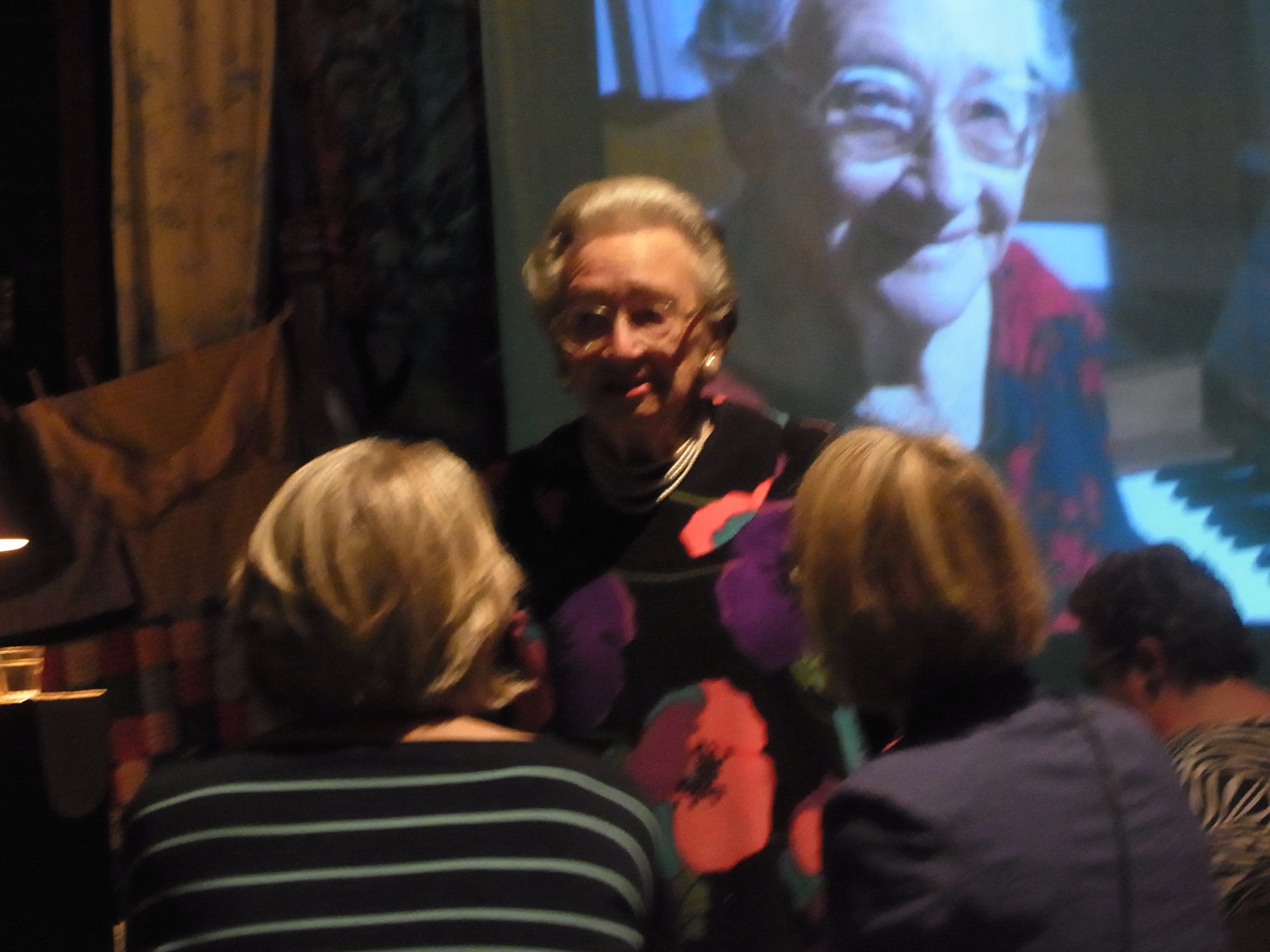
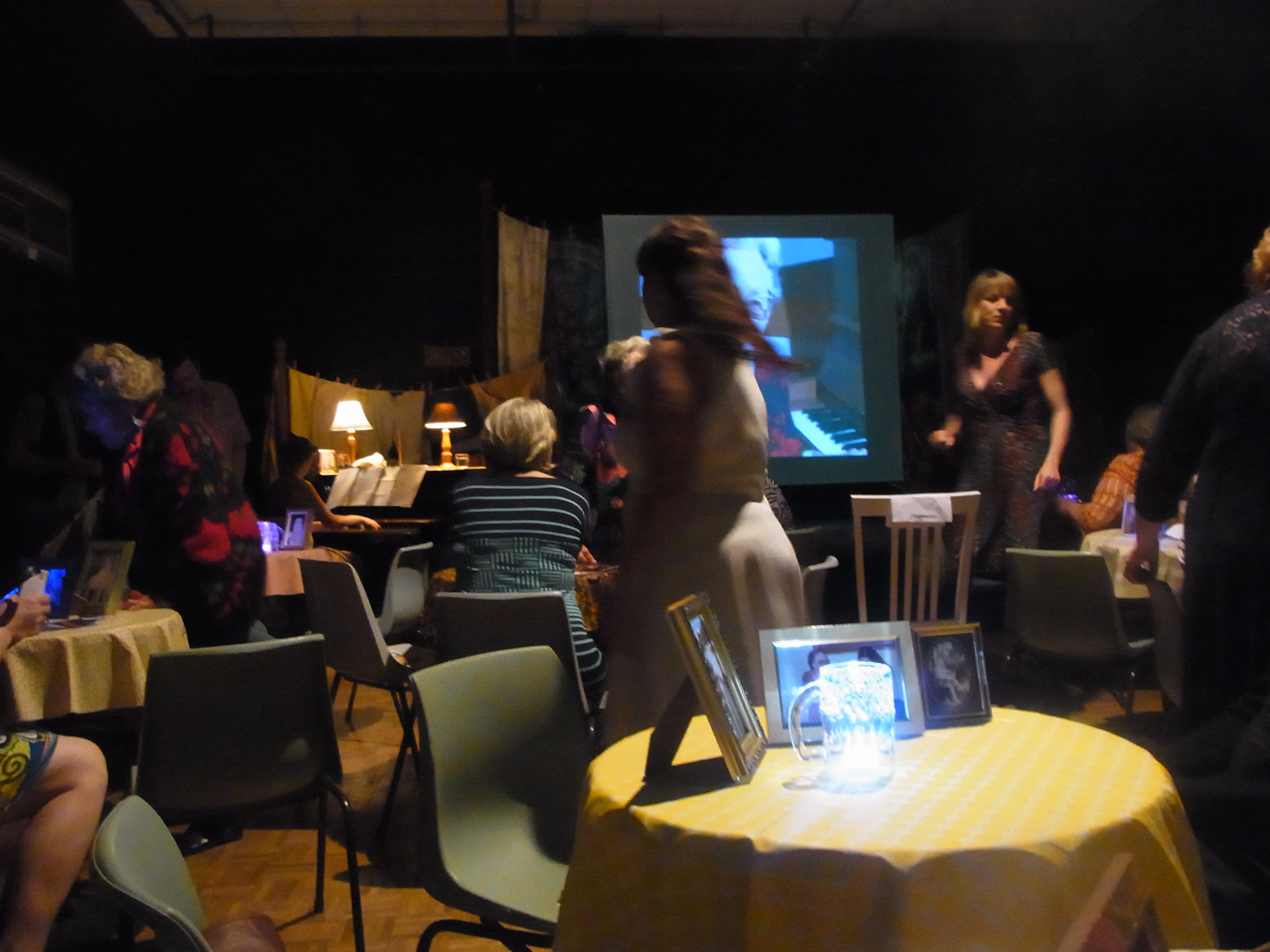
The above website shows pictures from the Merrigong Studio. There were individual small tables for the theater goers. There were candles and pictures on each table. Matthew organised the pushing together of some tables for our family group: There were Monika and Mark, Caroline and Matthew as well as Peter and myself. All of us had a terrific evening. In time I warmed up enough to join in the singing of some of the bushsongs. The texts were always displayed on the screen above the stage. Our group took to drinking beer. During intermission I felt that I’d rather have some hot tea to drink.  Matthew soon arrived with a lovely wooden tray with an old fashioned tea-pot on it plus a beautiful cup and a creamer and sugar. I enjoyed this tea very much.

IMG_0119.JPG (2)

RIMG0296

RIMG0295

RIMG0300

RIMG0299

An Article in The Washington Post from January 27, 2013

By Bob Woodward January 27, 2013
Bob Woodward is an associate editor of The Post. His latest book is “The Price of Politics.” Evelyn M. Duffy contributed to this column.
In the first months of the Obama presidency in 2009, Chuck Hagel, who had just finished two terms as a U.S. senator, went to the White House to visit with the friend he had made during the four years they overlapped in the Senate.

So, President Obama asked, what do you think about foreign policy and defense issues?

According to an account that Hagel later gave, and is reported here for the first time, he told Obama: “We are at a time where there is a new world order. We don’t control it. You must question everything, every assumption, everything they” — the military and diplomats — “tell you. Any assumption 10 years old is out of date. You need to question our role. You need to question the military. You need to question what are we using the military for.

“Afghanistan will be defining for your presidency in the first term,” Hagel also said, according to his own account, “perhaps even for a second term.” The key was not to get “bogged down.”

Obama did not say much but listened. At the time, Hagel considered Obama a “loner,” inclined to keep a distance and his own counsel. But Hagel’s comments help explain why Obama nominated his former Senate colleague to be his next secretary of defense. The two share similar views and philosophies as the Obama administration attempts to define the role of the United States in the transition to a post-superpower world.

This worldview is part hawk and part dove. It amounts, in part, to a challenge to the wars of President George W. Bush. It holds that the Afghanistan war has been mismanaged and the Iraq war unnecessary. War is an option, but very much a last resort.

So, this thinking goes, the U.S. role in the world must be carefully scaled back — this is not a matter of choice but of facing reality; the military needs to be treated with deep skepticism; lots of strategic military and foreign policy thinking is out of date; and quagmires like Afghanistan should be avoided.

The bottom line: The United States must get out of these massive land wars — Iraq and Afghanistan — and, if possible, avoid future large-scale war.

Although much discussion of the Hagel nomination has centered on his attitudes about Iran, Israel and the defense budget, Hagel’s broader agreement with Obama on overall philosophy is probably more consequential.

Hagel has also said he believes it is important that a defense secretary should not dictate foreign policy and that policy should be made in the White House.

He privately voiced reservations about Obama’s decision in late 2009 to add 51,000 troops to Afghanistan. “The president has not had commander-in-chief control of the Pentagon since Bush senior was president,” Hagel said privately in 2011.

If Hagel is confirmed, as appears likely, he and the president will have a large task in navigating this new world order. Avoiding war is tied directly to the credibility of the threat to go to war.

Hagel’s experience provides two unusual perspectives. The first is as a former E-5 Army sergeant in 1968, which he has described as “the worst year of the Vietnam War.” In summation, another Vietnam must be avoided.

The second is the Georgetown University class that he taught called “Redefining Geopolitical Relationships.” He asks the class the basic question: Where is all this going?

For example, he has said that one result of the Iraq war has been to make Iran the most important country in the Middle East, and he worried that Iraq could become an Iranian satellite.

When I interviewed President Obama in the summer of 2010 for my book “Obama’s Wars,” his deeply rooted aversion to war was evident. As I reported in the book, I handed Obama a copy of a quotation from Rick Atkinson’s World War II history, “The Day of Battle,” and asked him to read it. Obama stood and read:

“And then there was the saddest lesson, to be learned again and again . . . that war is corrupting, that it corrodes the soul and tarnishes the spirit, that even the excellent and the superior can be defiled, and that no heart would remain unstained.”

“I sympathize with this view,” Obama told me. “See my Nobel Prize acceptance speech.”

I had listened to the speech when he gave it, Dec. 10, 2009, and later read it, but I dug it out again. And there it was:

“The instruments of war do have a role to play in preserving the peace. And yet this truth must coexist with another — that no matter how justified, war promises human tragedy. The soldier’s courage and sacrifice is full of glory, expressing devotion to country, to cause, to comrades in arms. But war itself is never glorious” — Churchill had called it that — “and we must never trumpet it as such. So part of our challenge is reconciling these two seemingly irreconcilable truths — that war is sometimes necessary and war at some level is an expression of human folly.”

That is probably the best definition of the Obama doctrine on war. Applying such a doctrine in today’s dangerous and unpredictable world will be daunting — but on these issues Obama seems to have found a soul mate.

Read more on this debate:

Robert Satloff: The message Hagel carries on Iran

Jim Inhofe: The wrong man to be defense secretary

David Ignatius: Hagel and the revival of Eisenhower’s doctrine