
Images for Manus Island Detention Centre
I googled the above and was surprised that there were many, many photos about the Detention Centre to be seen.
The following is a copy of what I wrote last year about Palm Sunday. Tomorrow is going to be another Palm Sunday. I can’t believe how quickly one year has passed!


“Palm Sunday morning was a glorious morning for me. A few minutes after seven o’clock, when the sun had just started coming up a bit, I slowly walked to the church carrying my piece of palm which Peter had cut off for me from our palm tree. I arrived at 7,30. People were already walking towards an outside table where the priest started blessing the palms. After a few minutes everyone assembled in the church for the Palm Sunday mass.
During mass the passion of our Lord Jesus Christ according to Luke was read. Some parts were read by a narrator, then there were other parts being read by a different person; in bold types was printed out on the overhead screen what the crowd (the congregation) had to read, and Father read the part of Jesus.
Towards the end Jesus said: Father, into your hands I commit my spirit.
And the narrator said: With these words he breathed his last.”
I wrote last year in response to one comment: “We have a priest who’s always coming up with new ideas how to beautify the church and its surrounds. His enthusiasm is uplifting. On Good Friday there were Hot-cross buns for everyone who participated in walking to the fourteen Stations. I had asked Peter to come and pick me up. This is why I could not stay for refreshments. And further on I did not make it to go to Saturday’s Vigil. We had visitors. Somehow I also did not make it to go to Easter Sunday Morning Mass. It was a lovely Easter anyway. I like it when we have visitors.”
Well, this was last year. This year Palm Sunday is on the 13th of April and Easter Sunday is not till tge 20th of April. We are very lucky that this year too we are going to have visitors again staying with us over the Easter holidays. I am very much looking forward to this. Nobody in my family is Catholic. That means I ought to make an effort to go to church by myself.
Unequal Society

A couple of months ago, in the bleakest of the bleak Berlin midwinter when the temperatures fell seriously below “Friendly” (or during those only two weeks when it actually got cold), we were approached by a lovely French lady working on a short documentary about Berlin-Kreuzberg for ecoplus.TV to talk about the borough and the directions in its evolution.
The interview took place in the courtyard of Betahaus in Prinzessinnenstrasse. It was so cold that our faces were going into freeze-mode as we were talking. Still, the two of us had it better than the interviewer´s friend who was our camerawoman and sound-technician. When we met at Moritzplatz her hair was still wet from the shower she had taken before. By the way we started the interview it was frozen solid.
Yet she never complained and in no way suggested she was uncomfortably numb because of the frost. She soldiered on and went…
View original post 90 more words
In March 1879 American Henry George published in San Francisco: PROGRESS AND POVERTY. It is a big read, more than 500 pages. We have had this book for many years. Still, I never took time to read it properly.
You may have noticed that I googled a lot these past few days. It all had to do with where past civilisations and our civilisation are headed for.
The unequal distribution of wealth and privilege is examined. Progress as well as poverty, how can this be? THIS IS THE QUESTION.
In 1979 Agnes George de Mille, the granddaughter of Henry George, published this:
w.progwwress.org/tpr/who-was-henry-george/
I found the above when I googled ‘Henry George‘. There are many more links to Henry George in Google!
Click to access ecp14096050.pdf
Proceedings of the 10th International ModelicaConference
March 10-12, 2014, Lund, Sweden
I think people with some knowledge in mathematics would be interested in studying this report!
To give you an idea what this study is about, I give you here the heading to the 6 different sections:
Abstract
1 Introduction
2 Growth without Limitations
3 A Predator-Prey Model with Limitations in Prey Animal Population
4 A Minimal Human-Nature Dynamical Model with Economic Stratification
5 A short Look at the World3 Model
6 Conclusion
See here: http://www.theguardian.com/environment/earth-insight/2014/mar/21/climate-change-scienceofclimatechange?INTCMP=ILCNETTXT3487
What about the HANDY model itself? Is it too simplistic? Kloor’s modelling expert turns out to be an obscure student in Mathematical Ecology specialising in the modelling of Plankton, who pooh-poohs the study as oversimplistic as it has only four equations. But this simply misses the point.
An academic conference paper on the HANDY model by a cross-disciplinary team of natural and social scientists led by Dr Rodrigo Castro of the Department of Environmental Systems Science at ETH Zurich, Switzerland, delivered earlier this month, explains in detail why the HANDY model is so useful:
“It is our predicament that we live in a finite world, and yet we behave as if it were infinite. Steady exponential material growth with no limits on resource consumption and population is the dominant conceptual model used by today’s decision makers. This is an approximation of reality that is no longer accurate and started to break down. The World3 model, originally developed in the 1970s [aka the ‘Limits to Growth’ project which despite Kloor’s dismissals has turned out quite accurate according to American Scientist], includes many rather detailed aspects of human society and its interaction with a resource limited planet. However, World3 is a rather complex model. Therefore it is valuable for pedagogical reasons to show how similar behavior can be also realized with models that are much simpler. This paper presents a series of world models, starting with very simple exponential growth and predator-prey systems, then investigates a minimal human-nature model, Handy, and ends with a brief account of the World3 model. For the first time, a simple human-nature interaction model is made available in Modelica that distinguishes between dynamics of Elite and Commoner social groups. It is shown that Handy can reproduce rather complex behavior with a very simple model structure, as compared to that of world models like World3.”
The HANDY model’s utility, in other words, is precisely its ability to reproduce complex behaviour despite a simple model structure. Its most unique feature is described as follows:
“An interesting feature of Handy is that it introduces the accumulation of economic wealth, and divides the human population into rich and poor according to their unequal access to available wealth…
Social inequality is not only explicitly considered but also plays a key role in the sustainability analyses of the model. This makes Handy the first model of its kind that studies the impacts of inequality on the fate of societies, a capability seldom found even in complex world models.
Handy establishes a useful general framework that allows carrying out ‘thought experiments’ about societal collapse scenarios and the changes that might avoid them.
The model is a very strong simplification of the human-nature system, which results in many limitations. Despite its simplicity, such a model is easy to understand and offers a more intuitive grasp of underlying dynamical phenomena compared to more complex and less aggregated models.”
It is precisely this unique feature which enabled the HANDY model to depart from the work of Tainter to explore the potential instabilities of the rampant inequality in today’s global economy.
I, Aunty Uta, did get the following from a reply to:
posted February 1, 2014 at 10:21 am by d0tski
I do not know how to contact d0tski to get his permission to reblog. I did find what he wrote an excellent contribution. I wished I was articulate and knowledgeable enough to write something similar myself. d0tski wrote this:
“Here’s what I’ve been thinking about lately:
Polling shows that 59% of people polled do NOT believe that most asylum seekers who arrive by boat are genuine refugees. Only 30% believed that most boat arrivals are genuine refugees.
Now, those of us who get our news from someone other than Murdoch know this not to be true. We know that greater than 90% of people who arrive by boat will later (much later), be recognised as ‘genuine refugees’.
Of the 1000 people surveyed, 60% felt that boat-arrivals should be treated more harshly.
59% of those surveyed felt that boat-arrivals should not receive financial government assistance.
All these figures tell us that the majority of Australians have no idea who is on these boats. No concept of the types of persecution they are fleeing. No idea that there is no ‘queue’ for asylum seekers to be processed and re-settled. They don’t realise that (for example), in 2011, only 0.7% of the worlds refugees were resettled. These figures also show us that people do not know, or do not believe, that the conditions on Manus and Nauru are tantamount to torture.
Personally, I refuse to believe that people don’t care. I’m convinced that the problem is that people DON’T KNOW.
This needs to change. Television shows such as those shown on the ABC’s “4 Corners”, and SBS’ “Go Back To Where You Came From” are great. I always watch them. But truly, they are preaching to the choir.
Add to that the fact that it is nigh-on impossible to get decent reportage out of these places. Successive governments have made it increasingly difficult for us to know what is going on. For the Abbott government, it’s pretty much their modus operandi.
How do you get the rest of Australia to listen and learn? I don’t know. If we knew that, we wouldn’t have this problem.
I don’t have any answers here, so if you read this far hoping for a revelation, I apologise 🙂 I just think it’s important to know what the problems are before trying to come up with a solution.
Actually, there’s one other thought I’ve had. Have you heard of Maslow’s Hierarchy of Needs? If you did psych in highschool, you probably covered it. It’s basically the idea that humans have a hierarchy of needs that looks like a pyramid. The greatest needs are at the bottom, and include physiological needs like breathing, food, water etc. We move up the pyramid through Safety, Belonging, Esteem, and eventually (so the theory goes) we reach Self Actualisation at the top.
Now, it’s my personal theory that governments like to try and keep most of their constituents near the bottom of the pyramid. If we’re all worrying about where our next meal may come from, job security, and mundane things like that, we’re never going to get to a point where our greatest needs are ones like morality, truth and creativity. It is in the governments’ (not just in Oz, but all over) best interest that we live in a permanent state of fear. They want us to always worry that someone is going to come and take what is ‘rightfully ours.’ They appeal to our most basic emotions of fear and greed.
Once again, I don’t know how you change that.”
Aunty Uta’s Comment to this Post by Dotski:
On the first of March, 2014, that is just a few weeks ago, I published the above under the heading: Apologies to the Author.
Today I came across it once more and read it again with great interest. In my opinion this is a very well written article. I like it so much that I post it here again. I feel it is very saddening that so many people do not know the true facts about Asylum Seekers. Dotski says he does not know how to change that. Does anybody know?
Here is another post I reblog from Ajaytao. Apparently Psychologists say about these 7 examples that they are given to try to understand people …. I would like to think about this a bit.
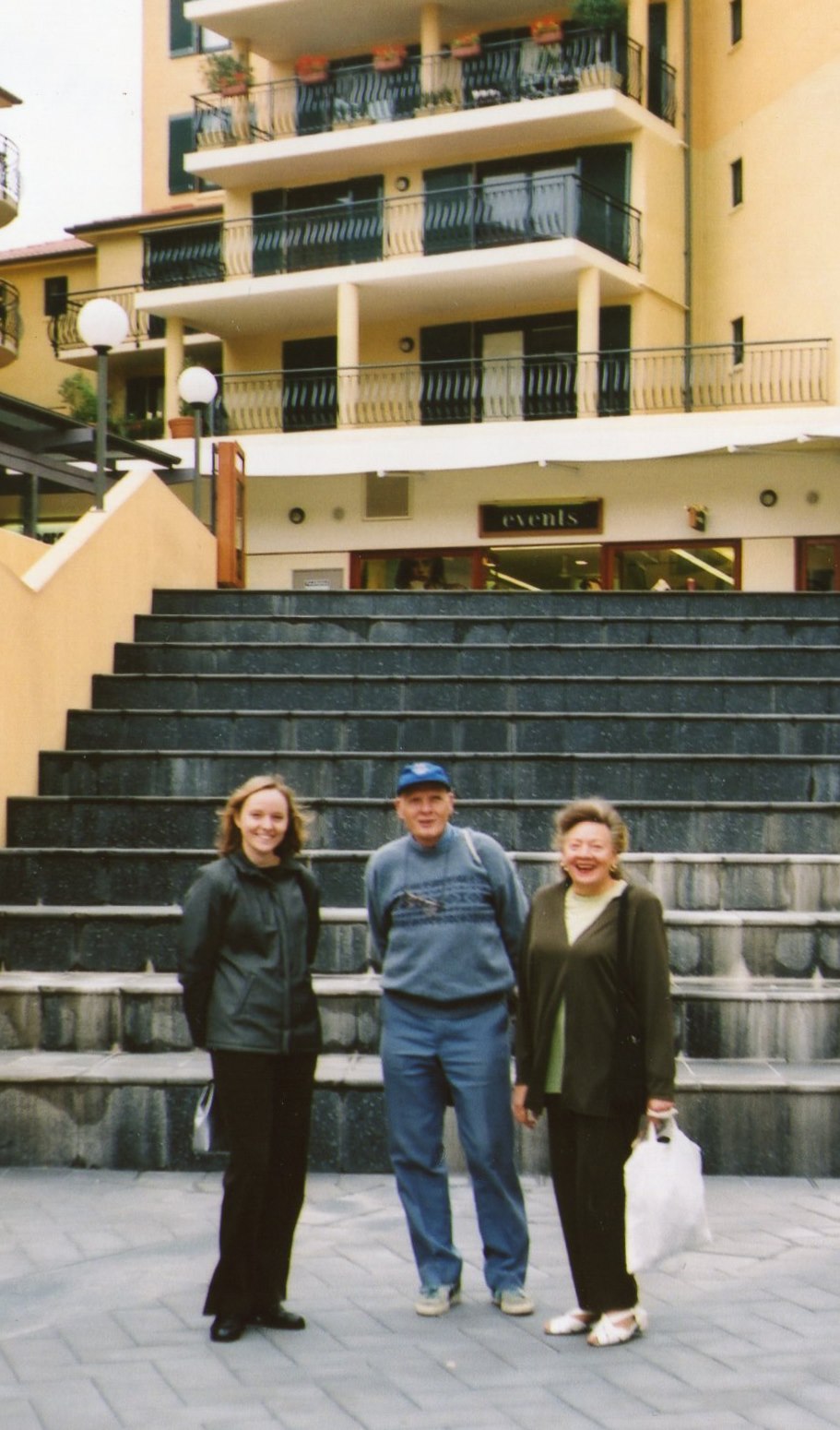
Probably around the beginning of the year 2000 an Italian Forum was established in Leichardt, an inner Western suburb of Sydney. We had a look at the Forum towards the end of May 2000. It was still pretty new then.


Caroline, Peter and I enjoyed gelato and a cup of coffee. A year later, in 2001 all three of us went with Ilse to the Forum. The Forum looked still fairly new!
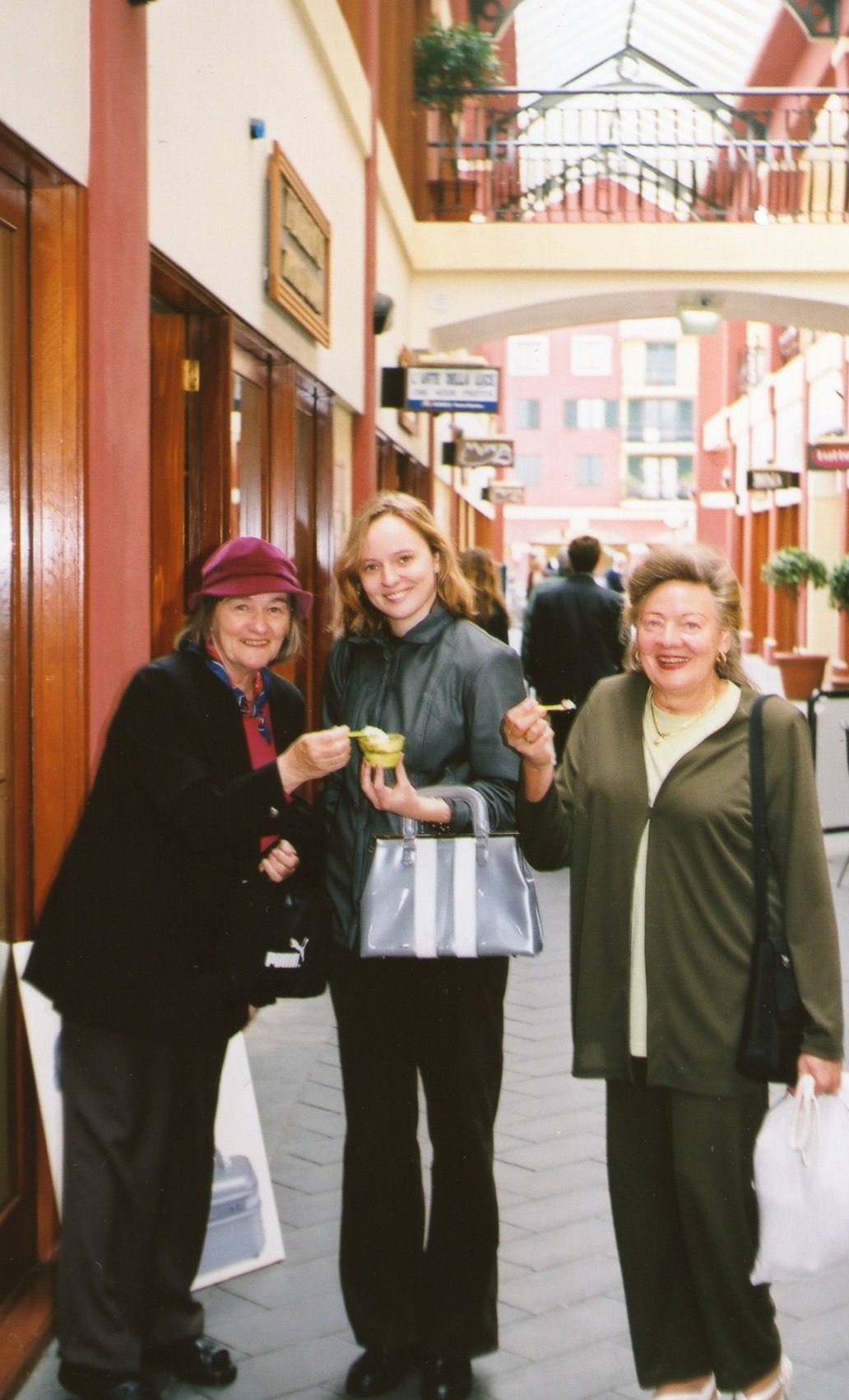 I wear my favourite hat again!

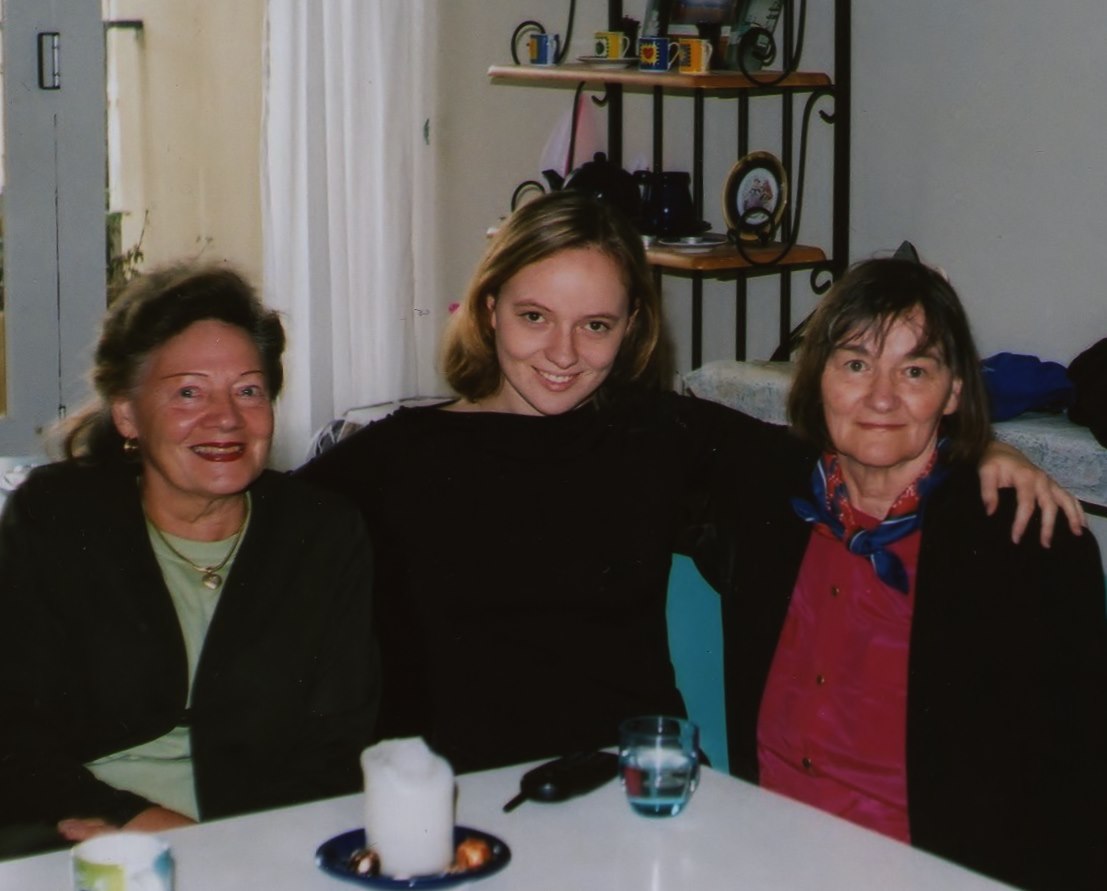
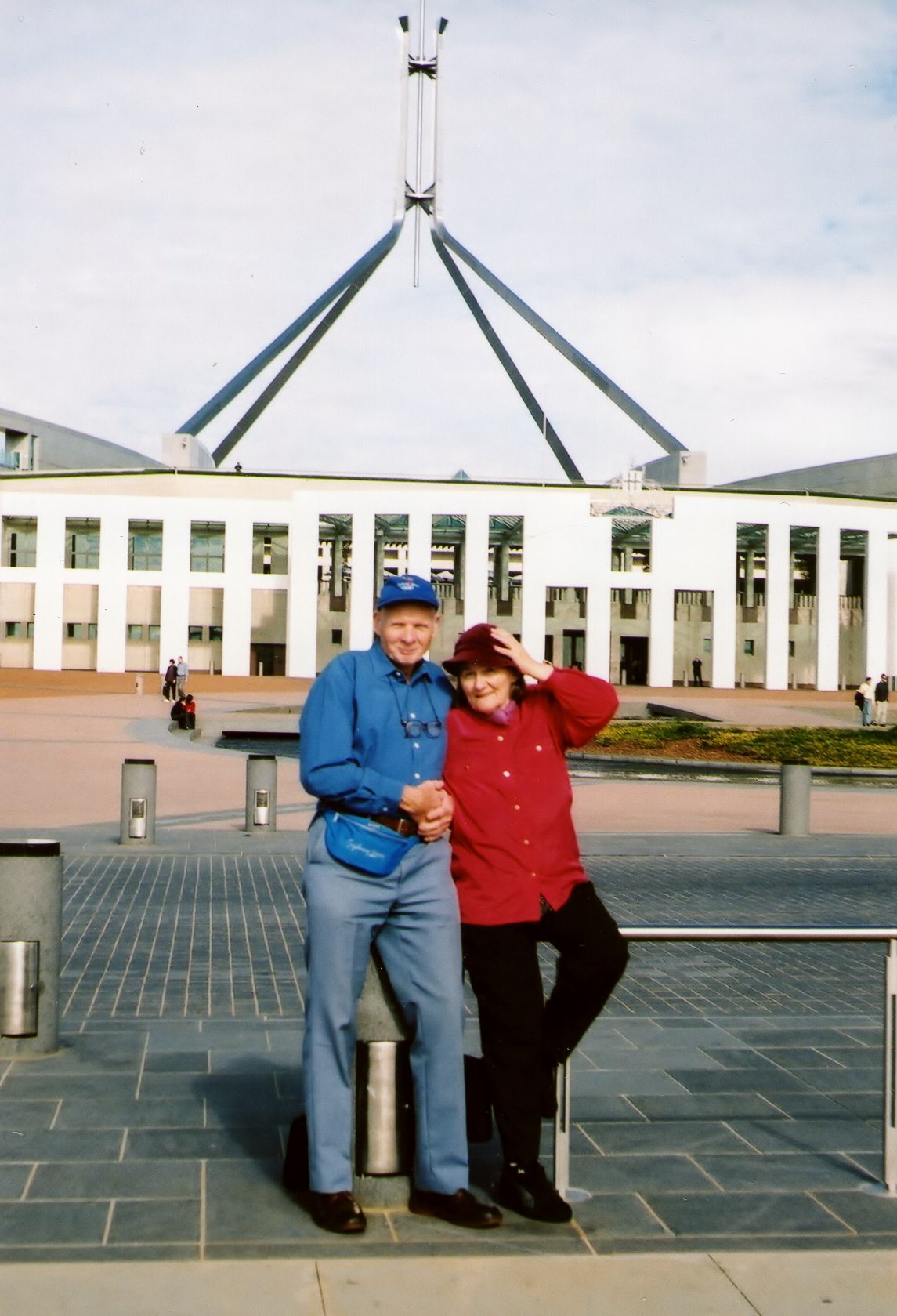
It was probably April 2001 when we drove with Ilse to Canberra. We stayed there in the Formula One Hotel for one night. This time Ilse made sure that we booked for her a separate room. When we had previously stayed with her in Newcastle in another Formula One Hotel we had booked only one room for the three of us, and Ilse did not like this at all! There was only one double bed and a single bunk above the bed. Peter climbed – with difficulty I might say – into the bunk bed. Ilse had to sleep with me – horror of horrors – in the queen-sized double bed. I did not mind this at all. I kept well to my side of the bed. Ilse did not disturb me at all. But I do not blame Ilse for wanting her own bed when we stayed at Formula One in Canberra.
In Canberra we had a good look around at Parliament House, also a lovely lunch there in the canteen. Going back home the following day we drove towards Batemans Bay and from there along the coastal road.
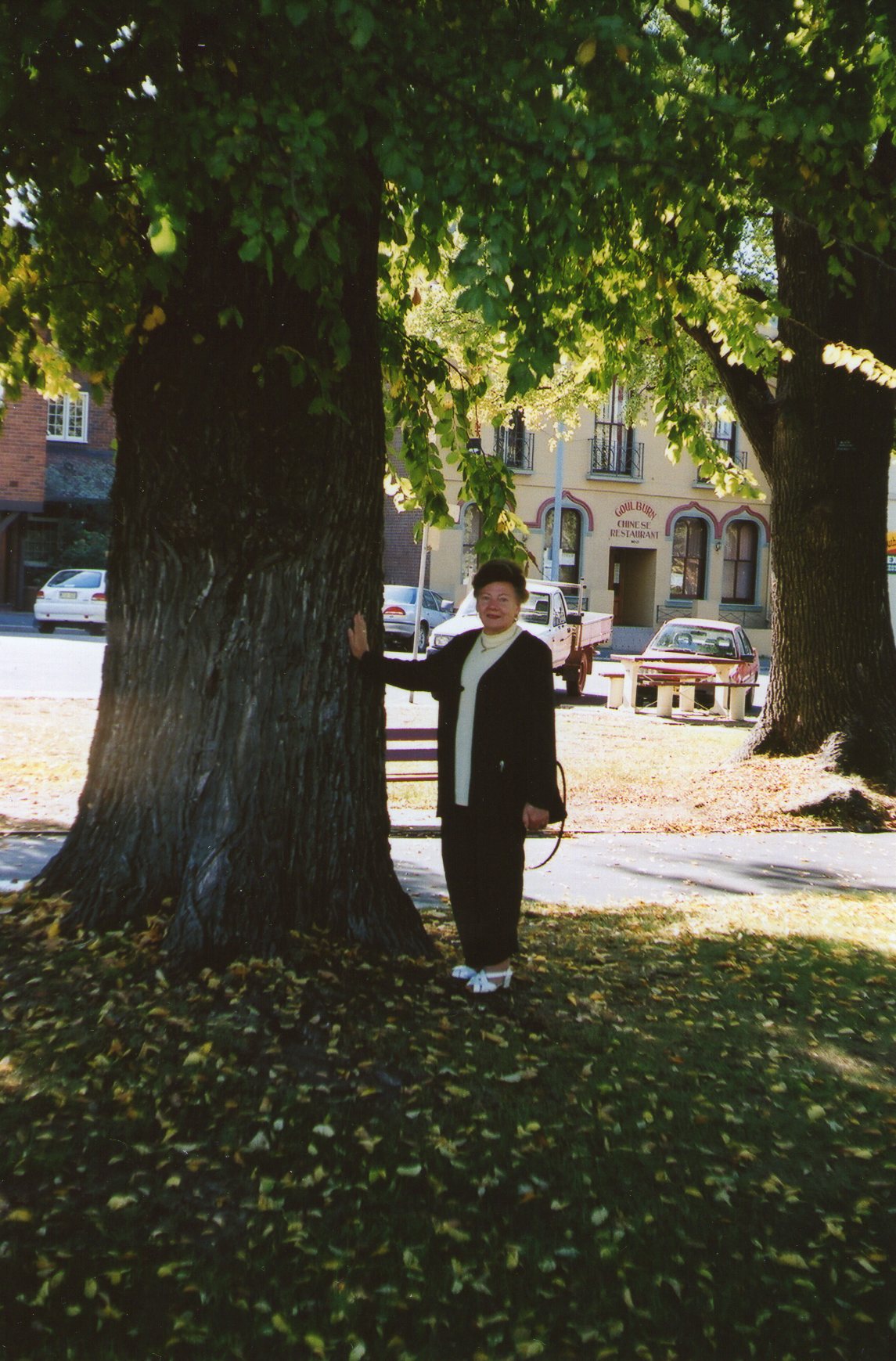
On the way to Canberra we went along the Hume Highway via Goulburn.

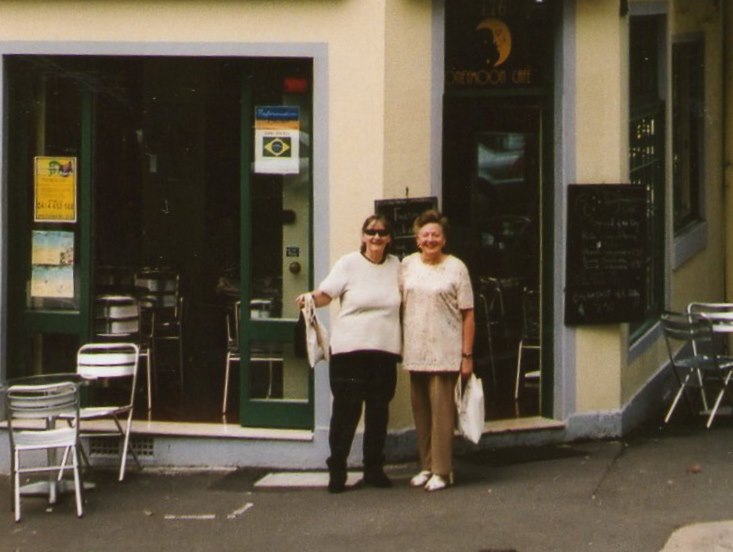
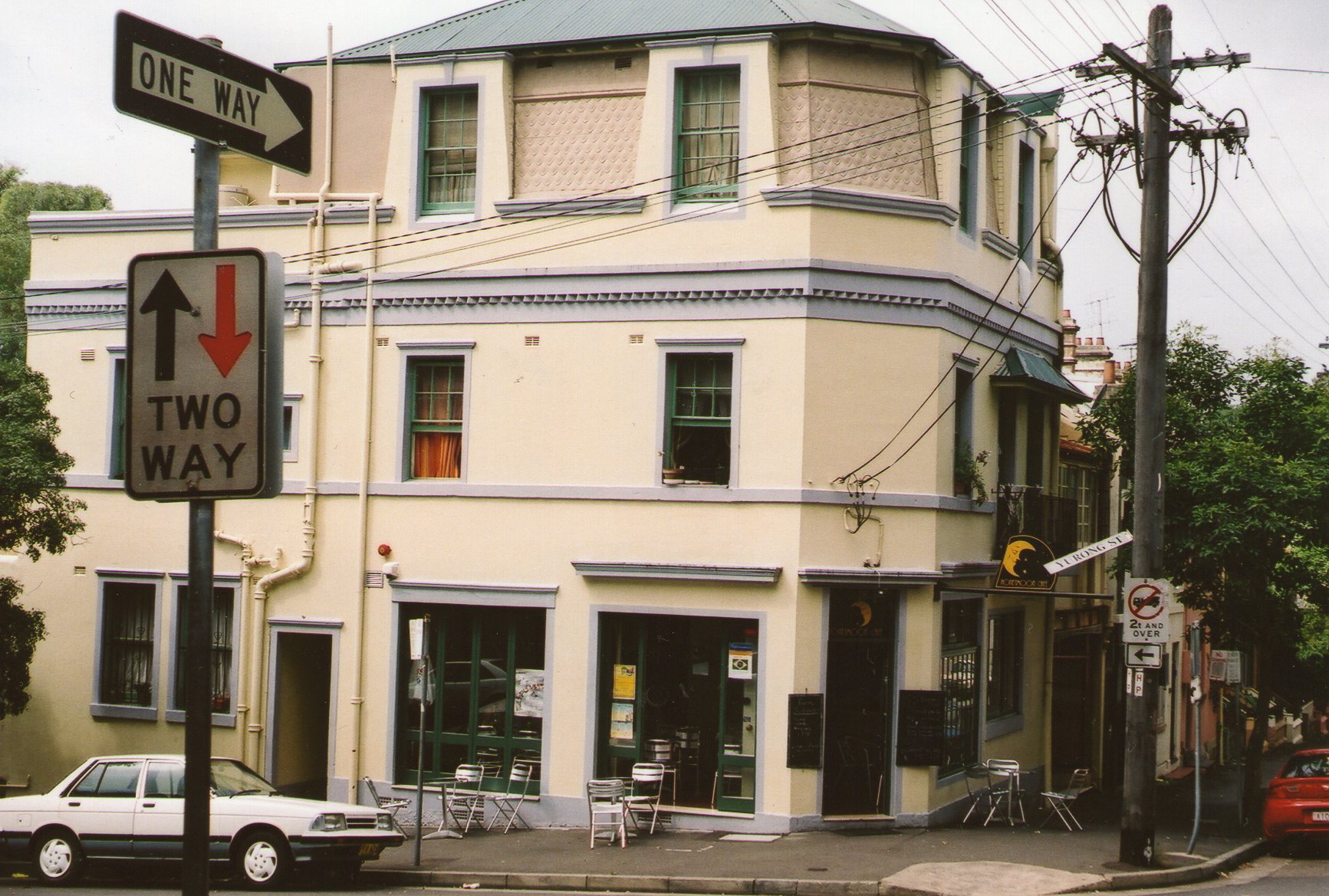
Looking through one photo album I came across two pictures that were taken on Saturday, 10th of March, 2001. On that day we had lunch with Ilse at a cafe near the Parkridge Apartments in Sydmey. We had booked a very nice apartment at the Parkridge. If I remember right it was on the seventh floor and had two bedrooms. We stayed there for three nights. This gave us the opportunity to explore Sydney a little bit. The apartment was right in the centre of Sydney and quite reasonably priced. Our apartment was in the main road. But where we had lunch that was in a back road behind the Parkridge Apartments.
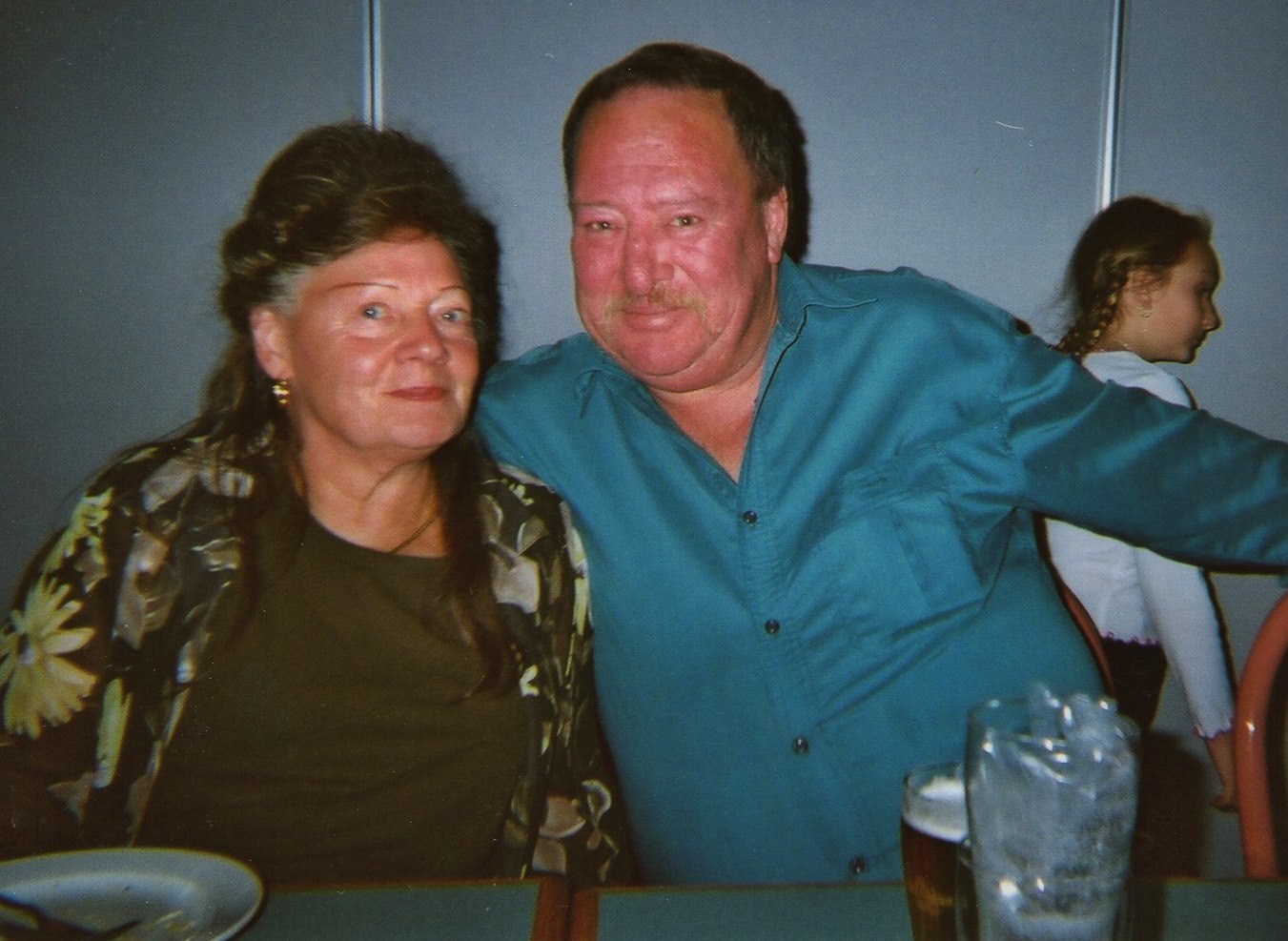
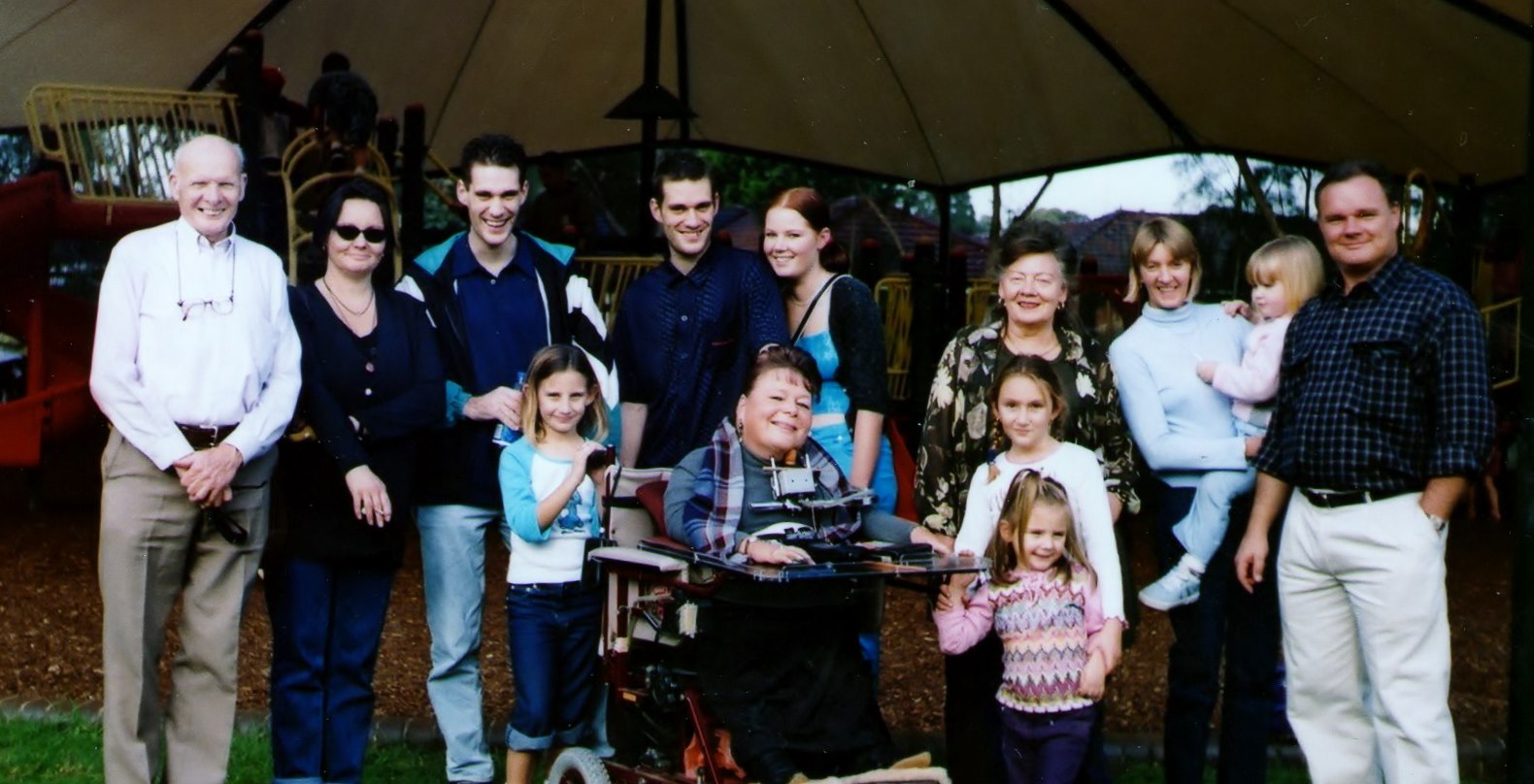
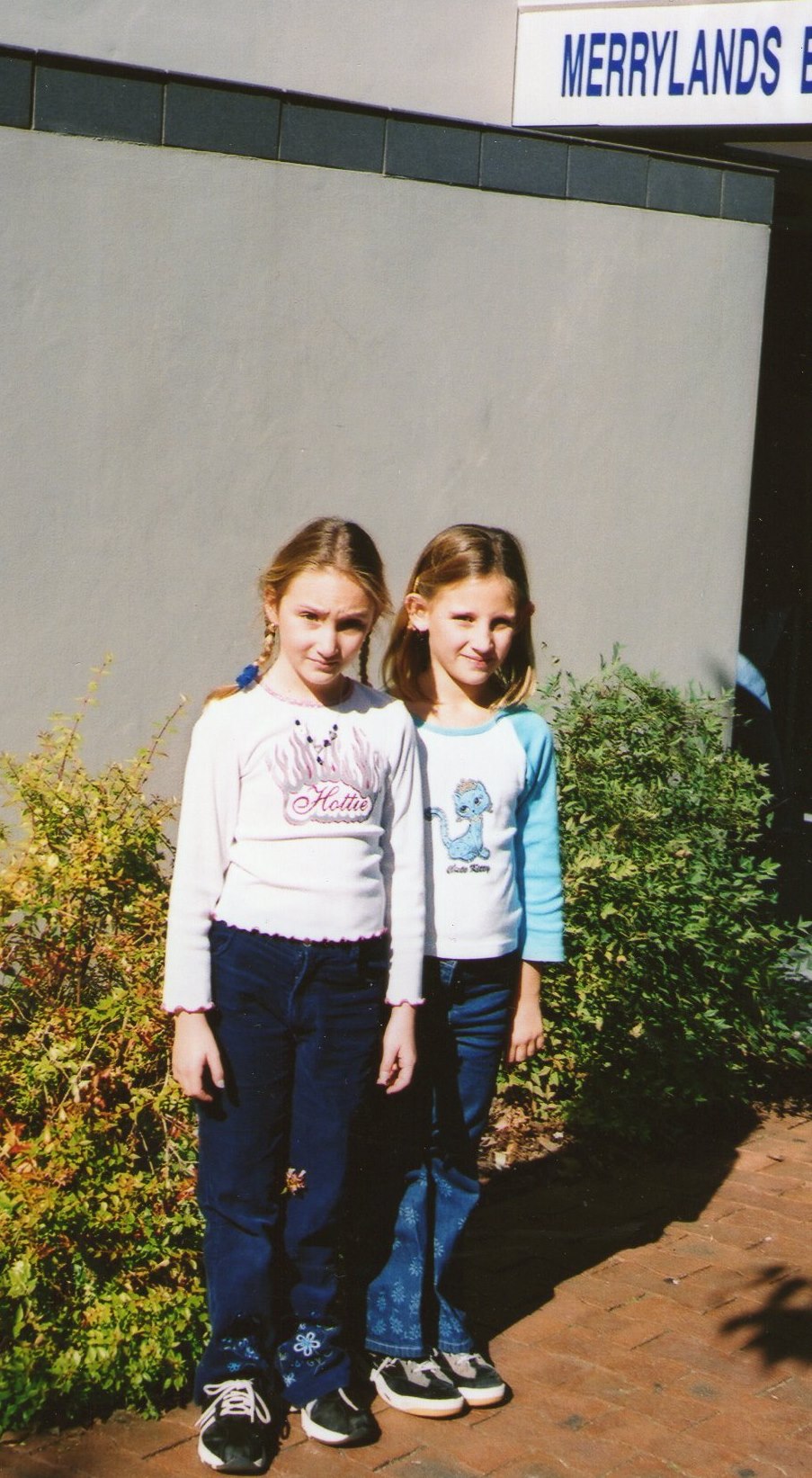
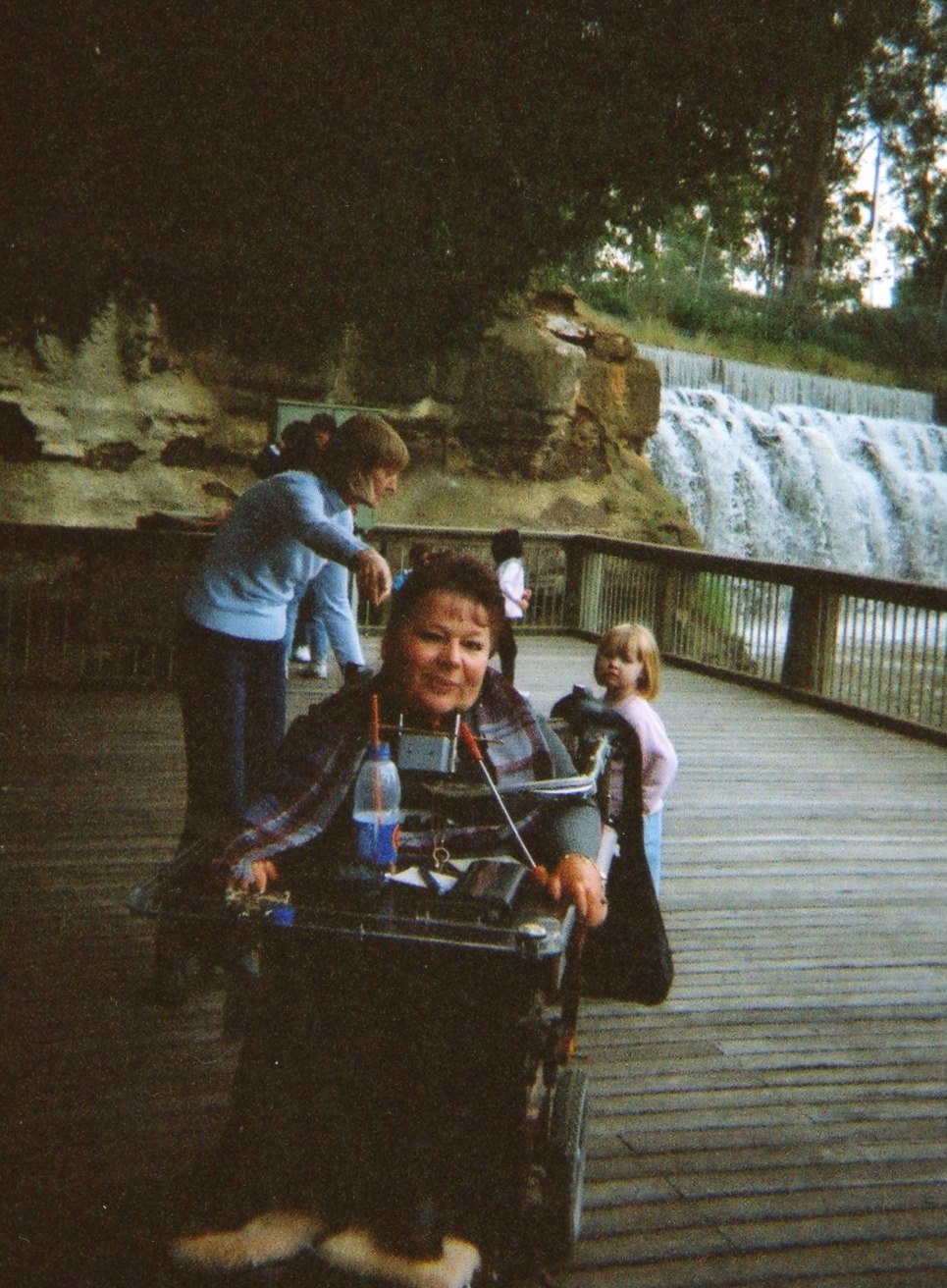
On the second Sunday of May is always Mothers’ Day. In May there are also the birthdays of Ilse and Peter. Ilse always points out that she is one year and three days older than Peter! I think Ilse was still with us for both birthdays. On Mothers’ Day we met the whole family in Merrylands, a Western Suburb of Sydney, where Gaby and David lived. David came with us to the Merrylands Bowling Club for lunch. Here he is with Ilse. I think he liked her quite a lot. Who wouldn’t?
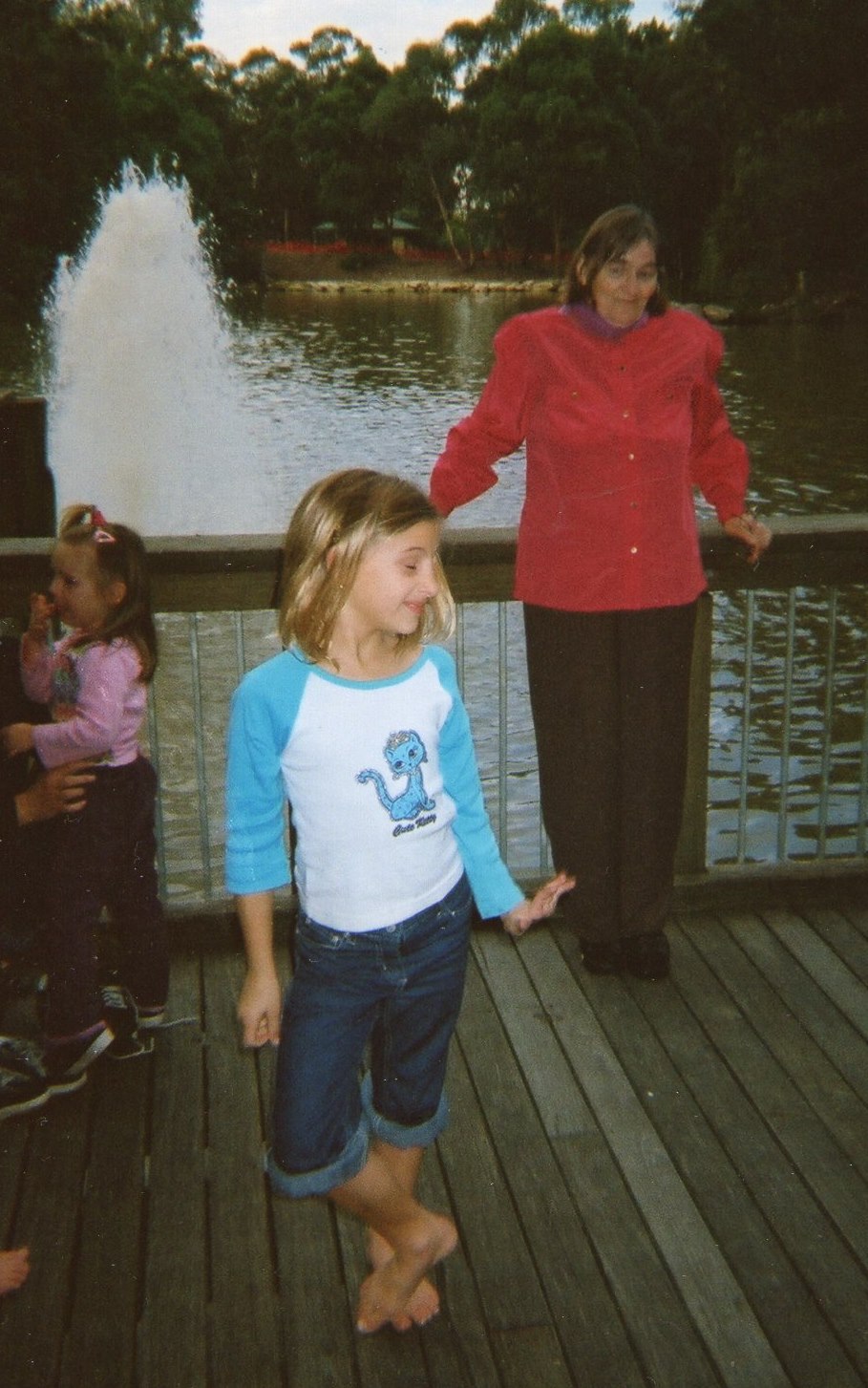
I took the following picture in Central Park, Merrylands. David did not come with us to the park. He had gone home already.


.
 AuntyUta