It’s Time again

I copied the following from:

http://wolfessblog.wordpress.com/2012/06/12/war-or-revolution-every-75-years-its-time-again/

JUNE 12, 2012 BY LEEN61
War or Revolution Every 75 Years. It’s Time Again.
http://www.commondreams.org/view/2012/06/11-3

by Paul Buchheit
When Charles Dickens wrote “It was the best of times, it was the worst of times” to begin “A Tale of Two Cities,” he compared the years of the French Revolution to his own “present period.” Both were wracked with inequality. But he couldn’t have known that 75 years later inequality would cause the Great Depression. Or that 75 years after that, in our own present period, extreme inequality would return for a fourth time, to impact a much greater number of people. He probably didn’t know that the cycles of history seem to drag the developed world into desperate times about every 75 years, and then seek relief through war or revolution.

It’s that time again.

It was the best of times, it was the worst of times; it was the age of wisdom, it was the age of foolishness; it was the epoch of belief, it was the epoch of incredulity; it was the season of Light, it was the season of Darkness; it was the spring of hope, it was the winter of despair; we had everything before us, we had nothing before us; we were all going directly to Heaven, we were all going the other way. — CHARLES DICKENS

Three cycles (225 years) ago, in the years before the French Revolution, inequality was at one of its highest points ever. While it’s estimated that the top 10% of the population took almost half the income, as they do today, the Gini Coefficient was between .52 and .59, higher than the current U.S. figure of .47. The French Revolution began a surge toward equality that lasted well into the 19th century.

Two cycles ago, in Dickens’ day of the 1860s, European inequality was again at a nearly intolerable level. It took the second industrial revolution and the U.S. Civil War to start correcting the economic injustices.

One cycle ago was the Great Depression. The New Deal, World War 2, and the laborious process of war recovery put an end to this third period of extreme inequality.

Now, nearly 75 years after we started World War 2 production, we again feel the agony of a wealth gap expanding, like grotesquely stretched muscle, to intolerable limits. If history repeats itself, we will be part of another revolution of long-subjugated people. Indeed, it has already begun, in Europe and Canada and with the Occupy Movement.

The face of plutocracy has changed, but not the consequences. Just before the French Revolution, Paris and London were dismal places for the masses, with islands of unimaginable splendor for aristocrats, who, like the multi-millionaires of today, found it hard to relate to the commoners. Dickens portrayed it well. Exclaimed the Marquis St. Evremonde to a gathering crowd: “It is extraordinary to me that you people cannot take care of yourselves and your children. One or the other of you is for ever in the way. How do I know what injury you have done to my horses?” This he said after his carriage had struck and killed a young child.

Today the two cities could be Los Angeles and Chicago, both among the ten most unequal metropolitan areas in the United States. Instead of lords and noblemen, we have CEOs and hedge fund managers. The economic injustices are fashioned in more civilized ways. Insidious ways.

Los Angeles is the biggest city in a state with a $9-16 billion budget deficit. It is facing severe cuts in education, health care, social services, and the court system. College tuition increased 50% in two years. Public schools are down to one counselor for every 800 students.

But California’s deficit wouldn’t exist if corporations had paid their state taxes. Apple is a prime example of nonpayment. While the company’s 10% federal tax rate has been widely publicized, its 2% state payment (rather than the required 9%) is less well known. For state avoidance purposes, they claim residency in Nevada. And despite conducting most of its research and development in the United States, they channel much of their sales through Luxembourg and Ireland and the Caribbean.

What about Chicago? It has the highest sales tax in the country. Illinois cut 2012 education spending by a greater percentage than any other state. The state tax rate was just increased by 66%. Property taxes went up by about $300 per homeowner. Illinois was recently named one of the ten “Most Regressive State Tax Systems,” with the third-highest “Taxes on the Poor.”

Yet if just 20 large Illinois companies had paid state taxes at the required statutory rate over the past three years, an additional $7.5 billion would have come back to the state, or about half of the state’s current deficit.

Just as Los Angeles loses out to technology, Chicago is victimized by finance. The Chicago Mercantile Exchange (CME), with billions of untaxed contracts worth well over a quadrillion dollars, and whose profit margin over the past three years is higher than any of the top 100 companies in the nation, demanded and received an $85 million per year tax break.

“A man grown grey in treachery…who once when it was objected, to some finance scheme of his, ‘What will the people do?’ – made answer, in the fire of discussion, ‘The people may eat grass.’” — Thomas Carlyle, “The French Revolution,” the main source for Dickens’ novel.

In our ‘civilized’ times people aren’t being run down by noblemen or forced to eat grass. The aristocracy has learned a lot about suppressing crowds in 225 years. But they need to fear the growing revolution. They need to fear, as Dickens put it, “the remorseless sea of turbulently swaying shapes, voices of vengeance, and faces hardened in the furnaces of suffering until the touch of pity could make no mark on them.”

Paul Buchheit is a college teacher, an active member of US Uncut Chicago, founder and developer of social justice and educational websites (UsAgainstGreed.org, PayUpNow.org, RappingHistory.org), and the editor and main author of “American Wars: Illusions and Realities” (Clarity Press). He can be reached at paul@UsAgainstGreed.org.

Action on Climate Change

http://www.theguardian.com/environment/southern-crossroads/2014/sep/16/peoples-climate-march-350-new-york-blair-palese

The People’s Climate Mobilisation — your chance to commit to real climate action
On Sunday 21 September, tens of thousands of people in Australia will join the global people’s march. Find out why from 350.org’s Blair Palese.
Share 133

inShare
0
Email
Members of Occupy Wall Street celebrate after learning they can stay in Zuccotti Park in New York
New York will be the focus of global “people’s marches” for climate action. Photograph: Emmanuel Dunand/AFP/Getty Images
350.org is a global climate organisation that has rapidly expanded to become a leading voice across the world for action on climate change. Blair Palese is the Australian CEO of 350.org, and she has enormous experience in fossil fuel and oceans campaigning. 350.org is one of the primary organisers for the people’s march on 21 September, and Blair has written this guest blog to explain why tens of thousands of Australians will be marching.

The People’s Climate Mobilisation — your chance to commit to real climate action

This weekend will see be the biggest public climate event in history. More than 100,000 people will march in New York alone and hundreds of thousands of others will join them on the streets of 150 countries around the world, all calling for climate change action.

RT @350: Exactly 1 week to the #PeoplesClimate March worldwide – Will you be there? pic.twitter.com/gjrPZVf9Ud

— 350Australia (@350Australia) September 15, 2014

This weekend also will see the heads of state from more than 125 countries, including Barack Obama and David Cameron gather in New York for a summit on climate change organised by Ban Ki Moon. This is the first time world leaders have come together on the issue since the landmark Copenhagen summit in 2009 and the UN Secretary General hopes the summit will inject new momentum to reach a global deal on cutting greenhouse gas emissions in Paris at the end of 2015.

Amazingly Australia’s our own prime minister, Tony Abbott, will be in New York for the UN Security Council meeting – no doubt to talk about war – but refuses to attend the Climate Summit. Although this may have come as a disappointment for the EU Commissioner for climate action, few in Australia are surprised as this government has already made its priorities and prejudices abundantly clear.

The fact that the Prime Minister of Australia, the world’s second largest exporter of coal, has chosen to shun this summit speaks volumes about why we need the People’s Climate Mobilisation. With global leaders so far failing to act in the world’s best interest to address climate change, it’s time for the global public to not only show that it is demanding change but that we will also act together to bring about the change we need.

People’s Climate events are planned in almost every continent in the world. In Bogata, Columbia, over 10,000 people are expected to join in a march through the capital calling for action. In rural Papua New Guinea, students from a primary school will march to a nearby lighthouse, recently semi-submerged due to rising sea levels. In Tanzania, the Maasai people plan to march, calling for action to protect their ancient homeland in the Serengeti. On the other side of the world, on the border between Vancouver and Seattle, thousands of people will link hands across the boundary to show that climate change knows no borders.

In Australia, an epic Climate March will convene in Melbourne with a group committed to walking 700 km along the eastern seaboard to Canberra, arriving at Parliament to raise awareness about climate impacts. There are over 30 People’s Climate events taking place in Melbourne, Sydney, Adelaide, Perth, Canberra and Brisbane, as well as on Magnetic Island on the Great Barrier Reef, in Alice Springs, Darwin and the remote mining town of Mount Isa. Organisations such as Get Up!, Avaaz, the Australian Youth Climate Coalition, Our Land Our Water Our Future and the Leard Alliance are working nationally to organise and support large and small events alike.

One of the most impressive things about the day and the 2,000 plus events taking place across the globe is not just the individuals organising and taking part but the thousands of organisations – including unions, medical professionals, faith, social justice and community groups and those fighting for the rights of immigrants, refugees and indigenous peoples, that have signed on. The People’s Climate Mobilisation is about how we use this opportunity to build the networks we need to demand global leadership and real action on climate change.

Together, on Sunday, we’ll be calling for Action Not Words and we’ll be hoping to sign up hundreds of thousands of people to stand up for the planet they care about. Whether it’s divesting your bank, super fund, university or church from fossil fuels, supporting the shift to renewable energy at your home or in your community or taking action on the ground at places like the Leard Blockade at Maules Creek, the Galilee Basin or the proposed gas fields of WA, we all need to get involved to overcome the influence and dominance of the fossil fuel industry working to stop movement on climate change.

People around the world, and especially Australians, realise that we can’t leave the fate of the planet up to our politicians. We need to work together around the world, raise our voices, and apply pressure where it counts if we are going to see tangible change. This is why we are calling on all Australians, regardless of political allegiance, cultural background or profession, to join us on Sunday and show that, contrary to the opinions of many of our politicians, we DO care about the planet and what happens to it beyond our generation

Sea Level Rises

Sea level rises due to climate change could cost Australia $200b, Climate Council report finds

Updated 25 minutes agoWed 17 Sep 2014, 6:18am

Future sea level rises could put more than $200 billion of Australian infrastructure at risk, a report by the Climate Council has found.

The report, Counting the Costs: Climate Change and Coastal Flooding, showed sea levels were likely to rise by between 40 centimetres and one metre over the next century.

The Climate Council succeeded the Australian Climate Commission, which was axed after the Federal Government took office last year.

The report’s lead author, Professor Will Steffen, warned national income would suffer huge losses if action was not taken to protect against rising sea levels and extreme weather events.

“You’re looking at anywhere from three tenths of a per cent of loss of GDP per year, all the way up to 9 per cent loss of GDP per year,” Professor Steffen said.

Coastal flooding report:

At least $226 billion of infrastructure exposed to flooding and erosion (with a 1.1m sea level rise), including:

  • $81b – commercial buildings
  • $72b – residential
  • $67b – road and rail
  • $6b – light industrial buildings

Source: Climate Council

“That upper scenario is higher than the growth rate of GDP per year, so you’re looking basically at staggering economic costs if we don’t get this under control.”

The Victorian coast, the south-east corner of Queensland and Sydney would be the hardest hit by rising sea levels, the report found.

With more than 75 per cent of Australians living near the coast, Professor Steffen said large swathes of infrastructure were at risk.

“Much of our road, rail, port facilities, airports and so on are on the coast,” he said.

“If you look at a 1.1 metre sea level rise – which is the high-end scenario for 2100 but that’s what we’re tracking towards – you’re looking at more than $200 billion worth of infrastructure that’s at risk.”

Professor Steffen said so-called once-in-a-lifetime natural events could become regular occurrences.

“If you look at some of our most vulnerable areas, and the Sydney region is one of those, you would say toward the end of this century that a one-in-100-year flood is going to be happening every few days,” he said.

“That’s an impossible situation to cope with.”

Professor Steffen said infrastructure projects, like the new runway planned for Brisbane’s airport, needed to factor in future sea rises.

“The people who are investing actually went to the best scientists here in Australia, experts of sea level rises, and took the best science into account and decided they were going to build that third runway higher than previously planned,” he said.

If sea level rises were ignored, by 2050 the report predicted the global the impact of coastal flooding would cost $US1 trillion per year – the same size as the Australian economy.

Climate change impacting insurance premiums

The Climate Council warned sea level rises would put pressure on home insurance premiums, as rising sea levels fed coastal erosion.

Australian Local Government Association president Felicity-Ann Lewis said erosion was already causing problems for home owners.

National infrastructure within 200 metres of the coastline:

  • 120 ports
  • five power stations/substations
  • three water treatment plants
  • 258 police, fire and ambulance stations
  • 75 hospitals and health services
  • 11 emergency services facilities
  • 41 waste disposal facilities

“The insurance industry is very interested in this because some of the insurance premiums are becoming such that people can’t afford to take out insurance on their properties,” Dr Lewis said.

“This is a very big issue.”

Dr Lewis said a lack of coordination across all levels of government was impeding action.

“It’s a very mixed bag; there is no consistent view or approach for local government to try to deal with this,” she said.

“Each state and territory association is trying to deal with different guidelines; there is no consensus around that, so for us it’s a very big challenge.”

Food for Thought

http://macedoniaonline.eu/content/view/25981/53/


.”A letter sent by a prominent Dutch Professor to Russian president Vladimir Putin has attracted much media attention in Europe. The letter was written by Professor Cees Hamelink and signed by dozens of Dutch intellectuals and professors. Below is the letter in its entirety.”


http://oosterman.wordpress.com/2014/09/05/an-apology-to-mr-putin-food-for-thought/


Gerard Oosterman put this up after reading about it in Bob Ellises blog.


Here is the letter sent by Professor Cees Hamelink:


“Dear Mr. President Putin,

Please accept our apologies on behalf of a great many people here in the Netherlands for our Government and our Media. The facts concerning MH17 are twisted to defame you and your country.

We are powerless onlookers, as we witness how the Western Nations, led by the United States, accuse Russia of crimes they commit themselves more than anybody else. We reject the double standards that are used for Russia and the West. In our societies, sufficient evidence is required for a conviction. The way you and your Nation are convicted for ‘crimes’ without evidence, is ruthless and despicable.

You have saved us from a conflict in Syria that could have escalated into a World War. The mass killing of innocent Syrian civilians through gassing by ‘Al-­‐Qaeda’ terrorists, trained and armed by the US and paid for by Saudi Arabia, was blamed on Assad. In doing so, the West hoped public opinion would turn against Assad, paving the way for an attack on Syria.

Not long after this, Western forces have built up, trained and armed an ‘opposition’ in the Ukraine, to prepare a coup against the legitimate Government in Kiev. The putschists taking over were quickly recognized by Western Governments. They were provided with loans from our tax money to prop their new Government up.

The people of the Crimea did not agree with this and showed this with peaceful demonstrations. Anonymous snipers and violence by Ukrainian troops turned these demonstrations into demands for independence from Kiev. Whether you support these separatist movements is immaterial, considering the blatant Imperialism of the West.

Russia is wrongly accused, without evidence or investigation, of delivering the weapons systems that allegedly brought down MH17. For this reason Western Governments claim they have a right to economically pressure Russia.

We, awake citizens of the West, who see the lies and machinations of our Governments, wish to offer you our apologies for what is done in our name.
It’s unfortunately true, that our media have lost all independence and are just mouthpieces for the Powers that Be. Because of this, Western people tend to have a warped view of reality and are unable to hold their politicians to account.

Our hopes are focused on your wisdom. We want Peace. We see that Western Governments do not serve the people but are working towards a New World Order. The destruction of sovereign nations and the killing of millions of innocent people is, seemingly, a price worth paying for them, to achieve this goal.

We, the people of the Netherlands, want Peace and Justice, also for and with Russia.
We hope to make clear that the Dutch Government speaks for itself only. We pray our efforts will help to diffuse the rising tensions between our Nations.

Sincerely,

Professor Cees Hamelink “

Uta’s Diary, Monday, 15th September 2014

SIXTY-year-old grandmother Myra Gold was asleep when four police officers raided her home.

They were deployed to confiscate her phone, dig through her rubbish and search her car.

For stickers.

Anti-G20 stickers.

If ou want to read more about this please go to

http://aussiejustice.wordpress.com/2014/09/13/big-brother-watch-out-forget-about-the-g20-sticker-blitz-another-kind-of-revelry-may-be-a-thorny-issue-cairns-post/

I glanced over newly published blogs that I had not seen yet when I came across the above one. It made me realise that more and more we are not allowed to say any more what we think. I want to point out here that I am in principle not against the G20, not at all. I mean I too may have some objections but I want the G20 to go ahead. However, I do not believe the meeting is going to be stopped by some people displaying a few stickers.  I am very concerned when people are not allowed to voice their objections any more.  What sort of a world do we live in when security forces over react to such an extent? Does our government want to stay in power by scaring us to death?

On a lighter note, we had a lovely day in Sydney yesterday. We saw Caroline and Matthew. We also saw quite briefly Matthew’s daughter Alex who came with her boyfriend to take Matthew out for lunch for a belated Father’s Day meeting. Caroline and Matthew showed us heaps of beautiful photos from their short stay in Bali. They packed a lot of things into the few days there including their friends’ Wedding Reception, which was the reason for this trip.

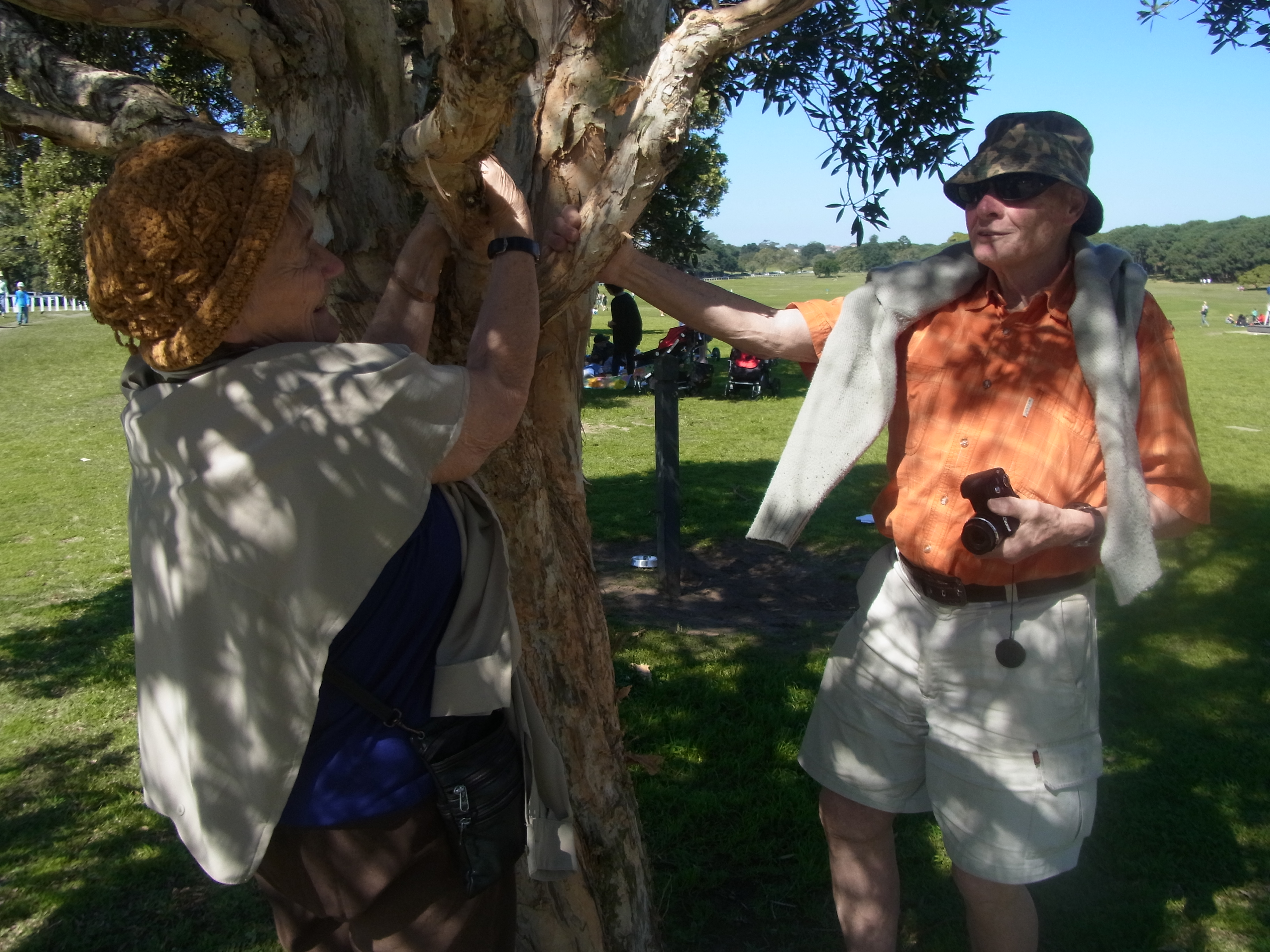
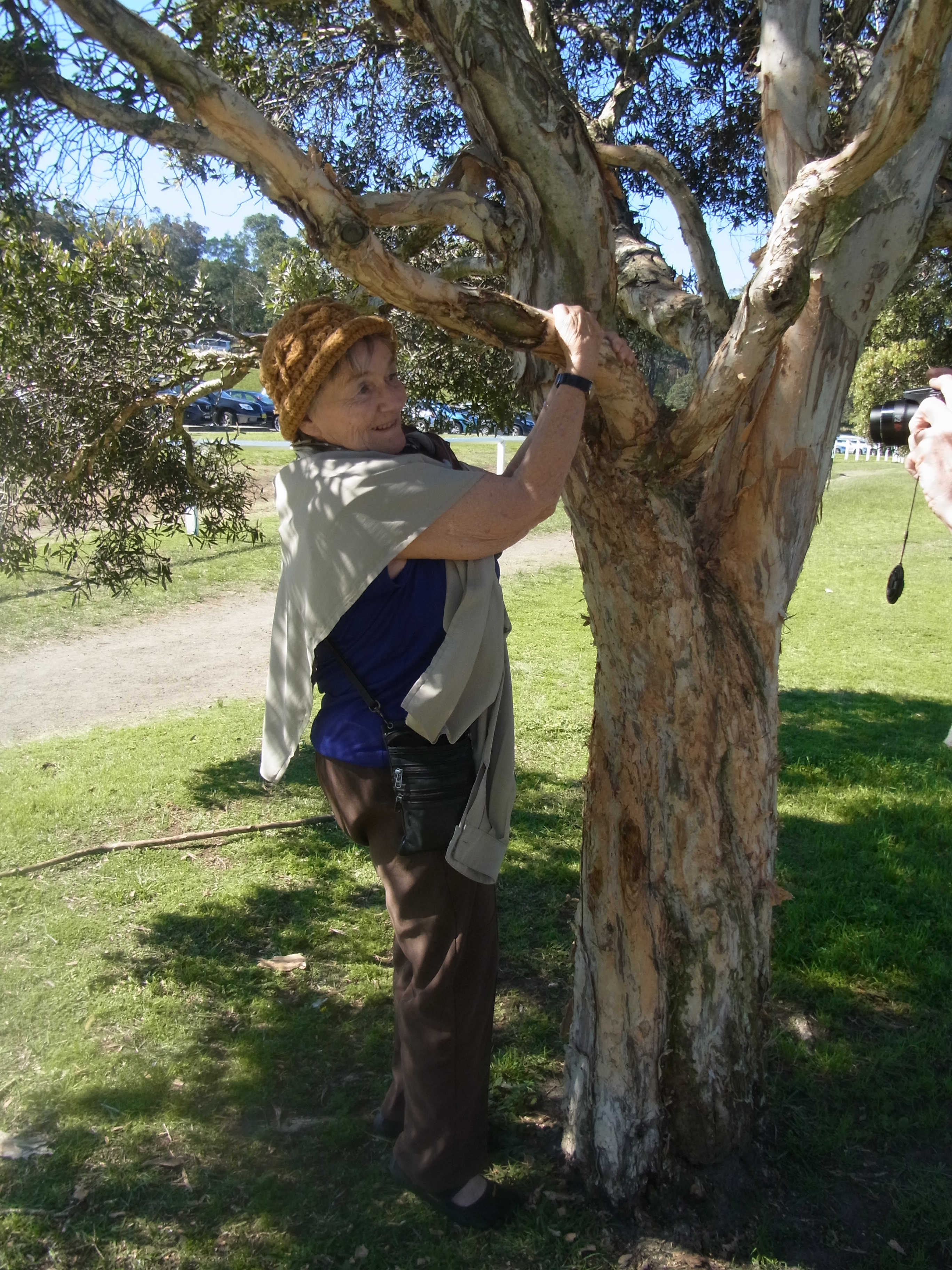
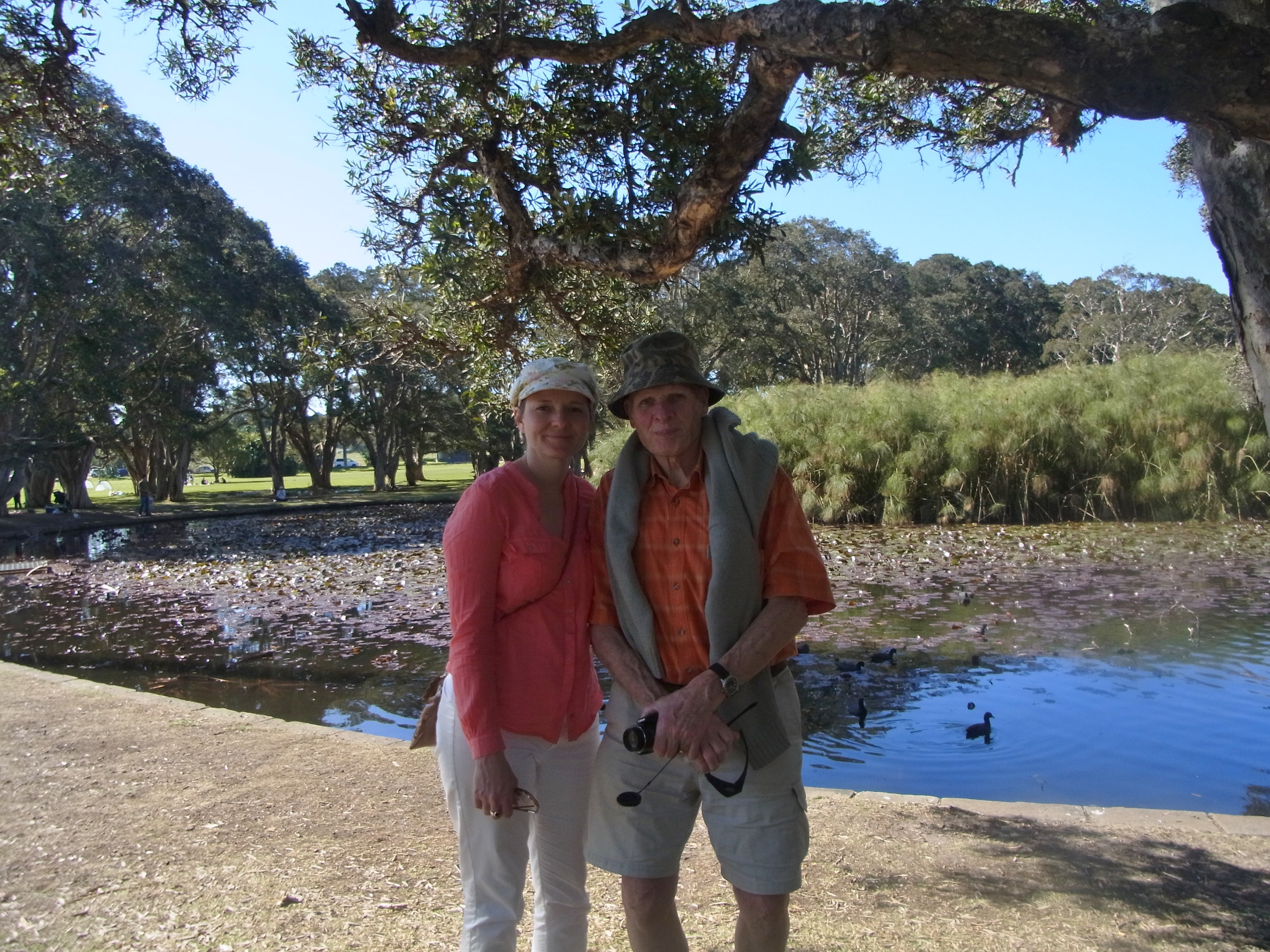
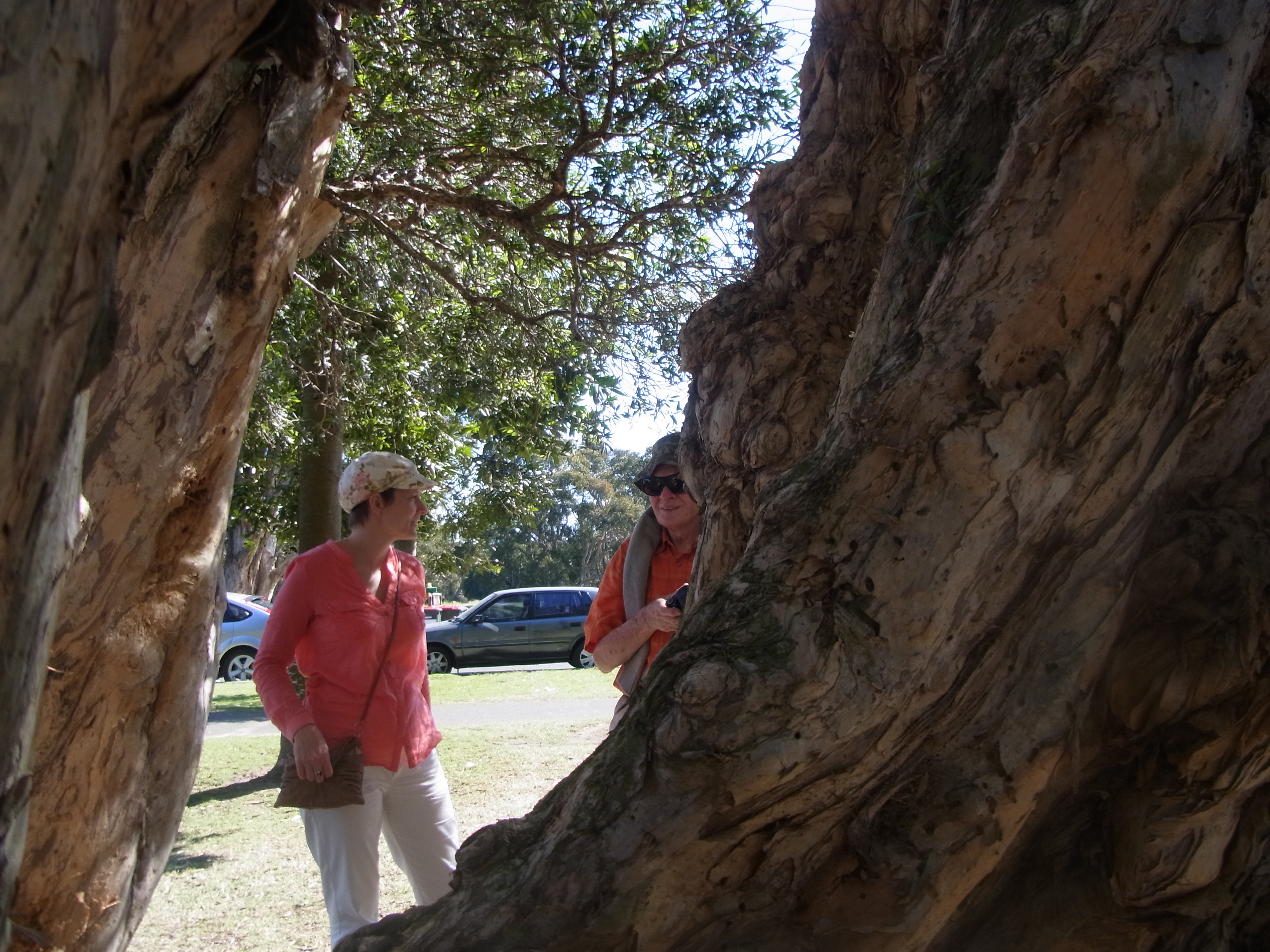
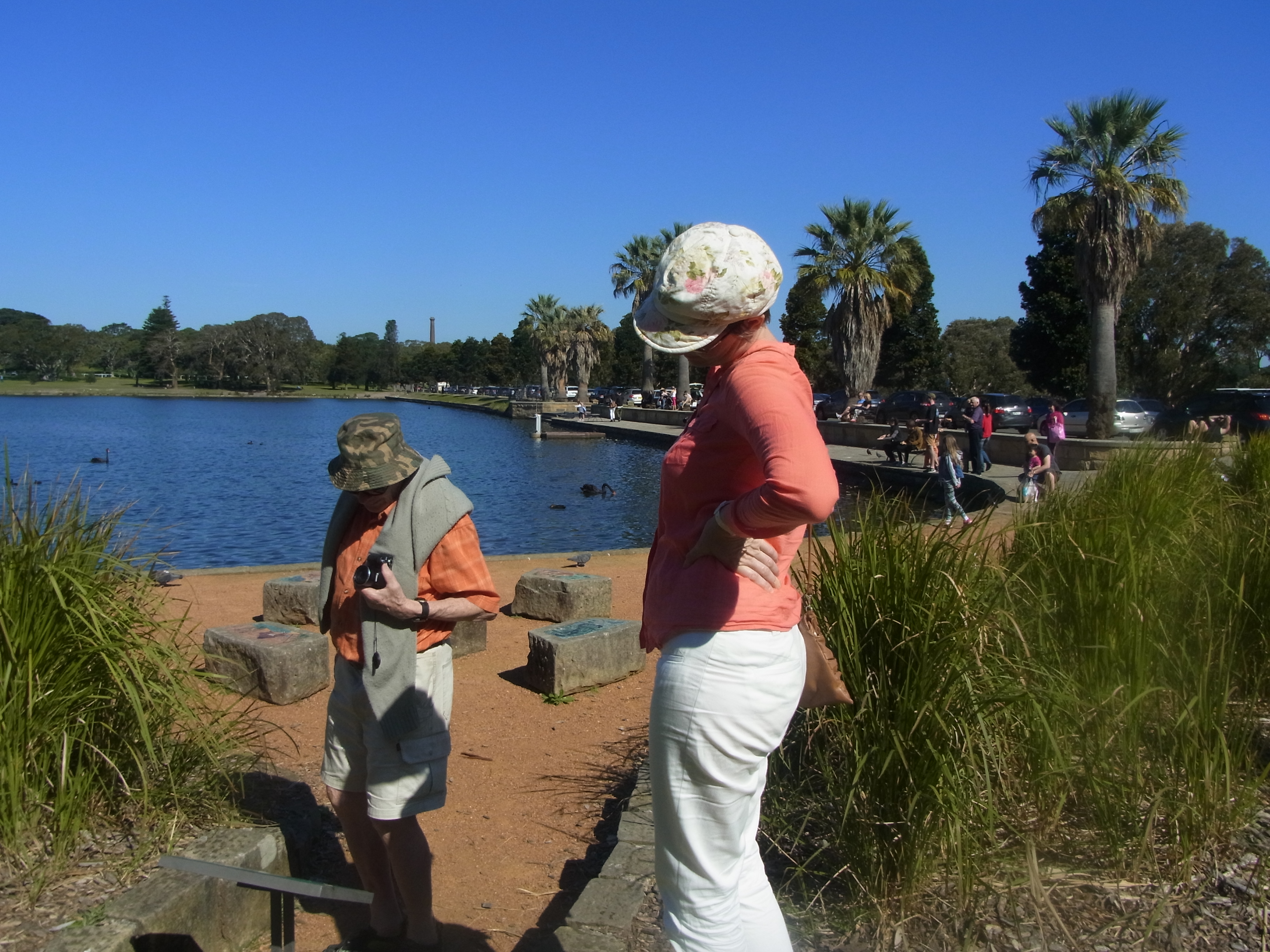
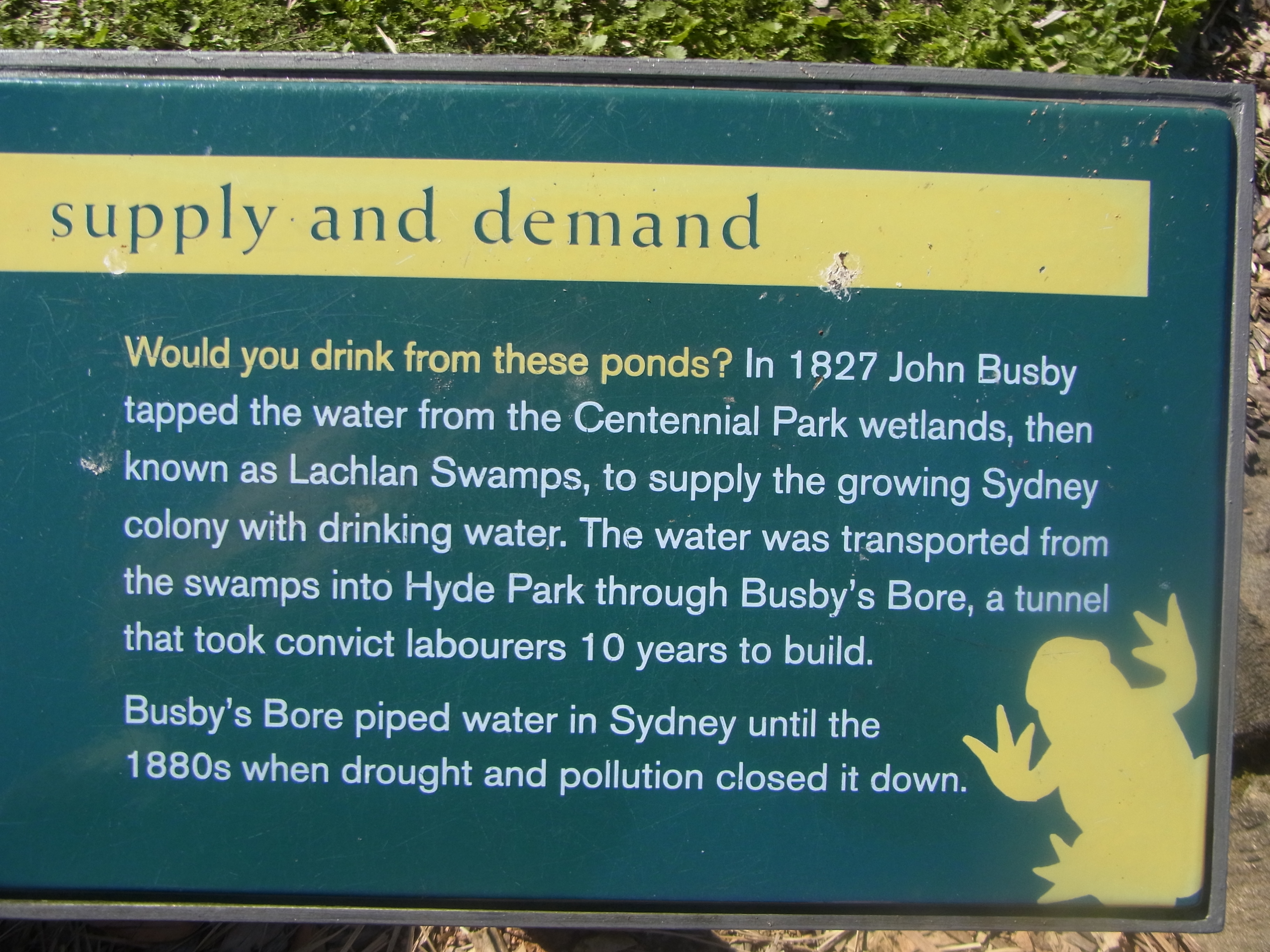
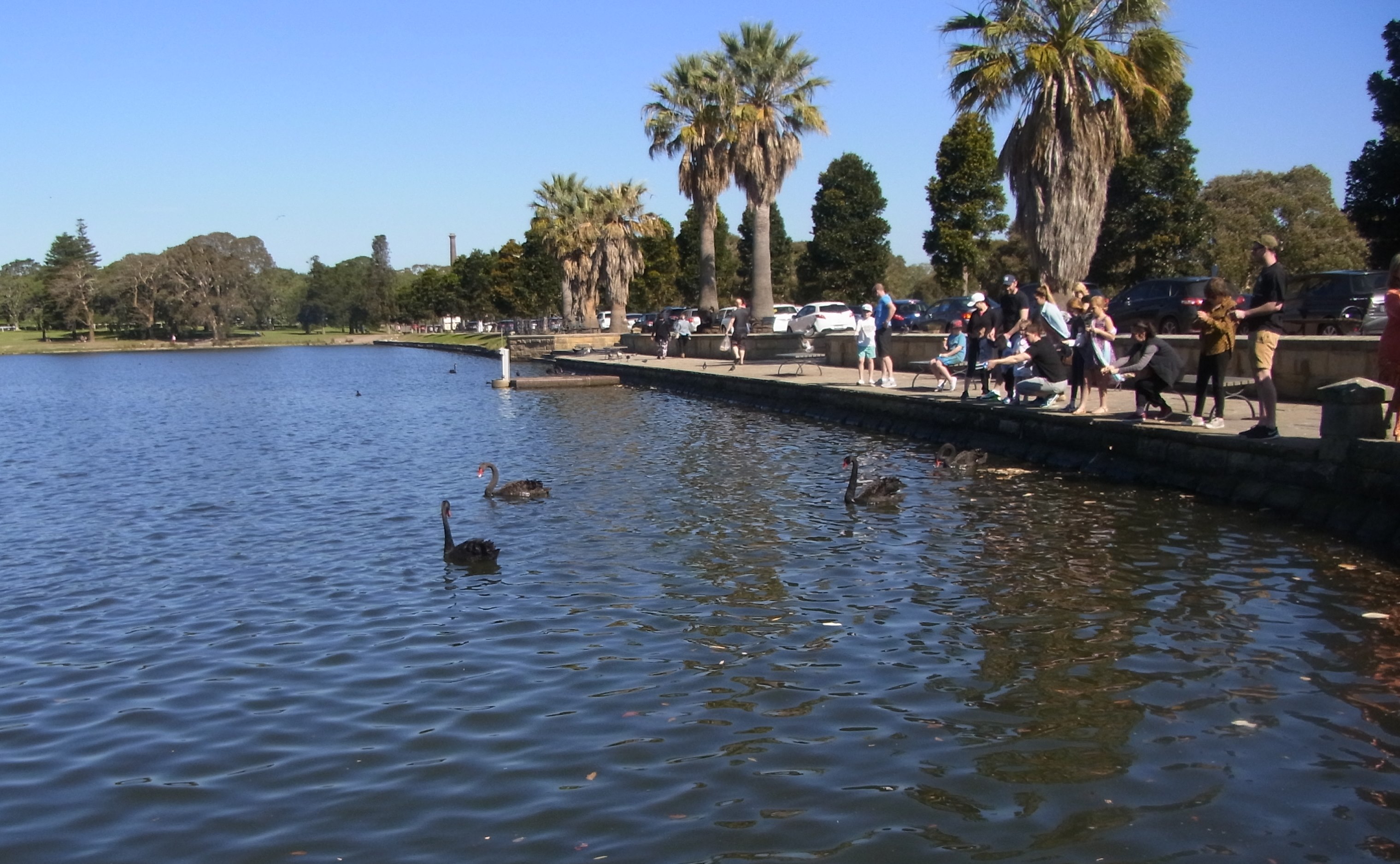
After we had some coffee Matthew left for his lunch and we had lunch with Caroline. Rather than go to the park for a picnic lunch, we did eat our salads at Caroline’s place and had a cup of tea also. We assumed the park would be packed full of people since it had turned out to be a beautiful sunny day. After lunch Caroline drove us to Centennial Park. She soon managed to find a parking spot. There were  hardly any spots left, even though it is a huge park with parking all along the different drive-ways that go through the park.

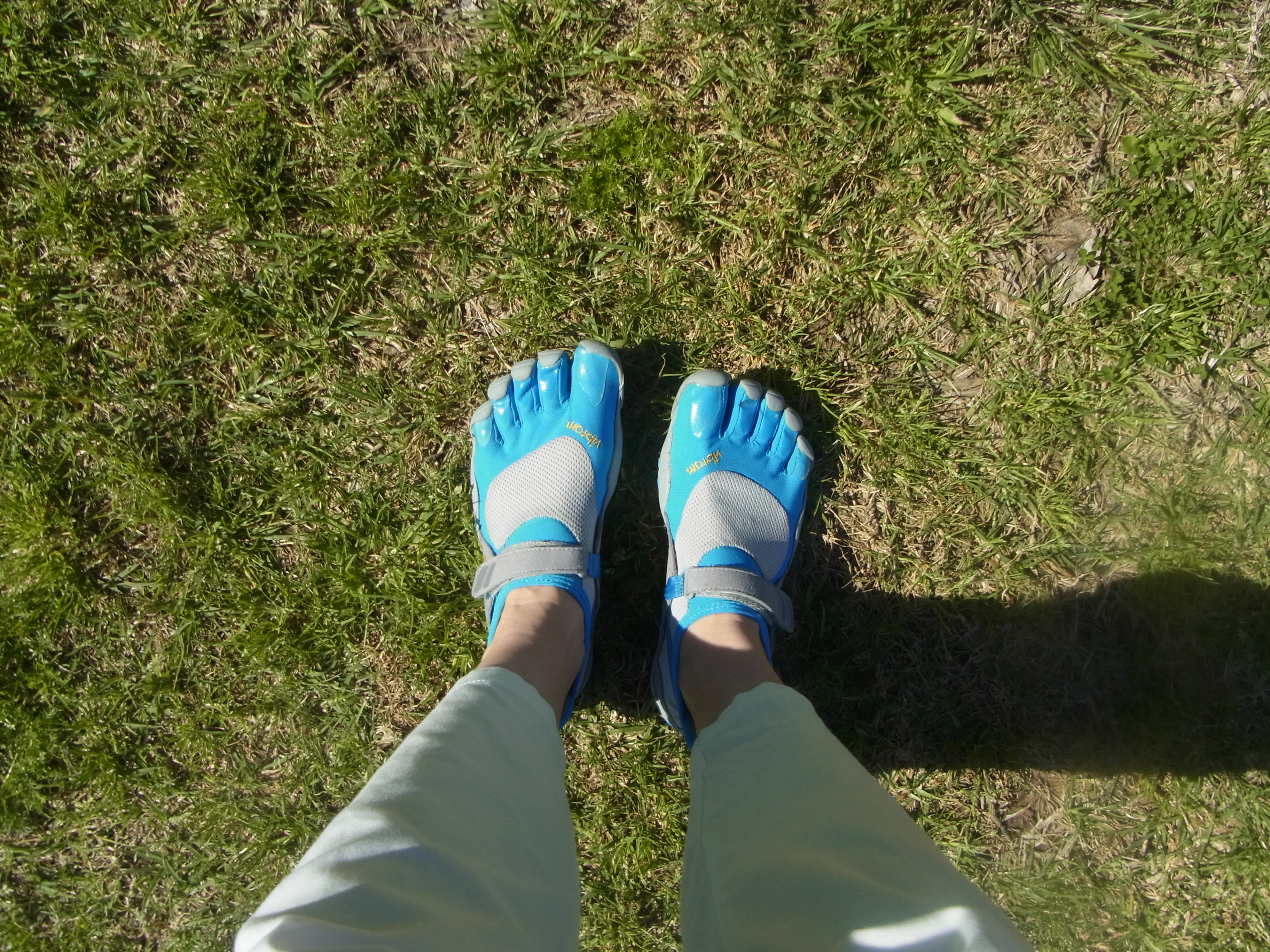
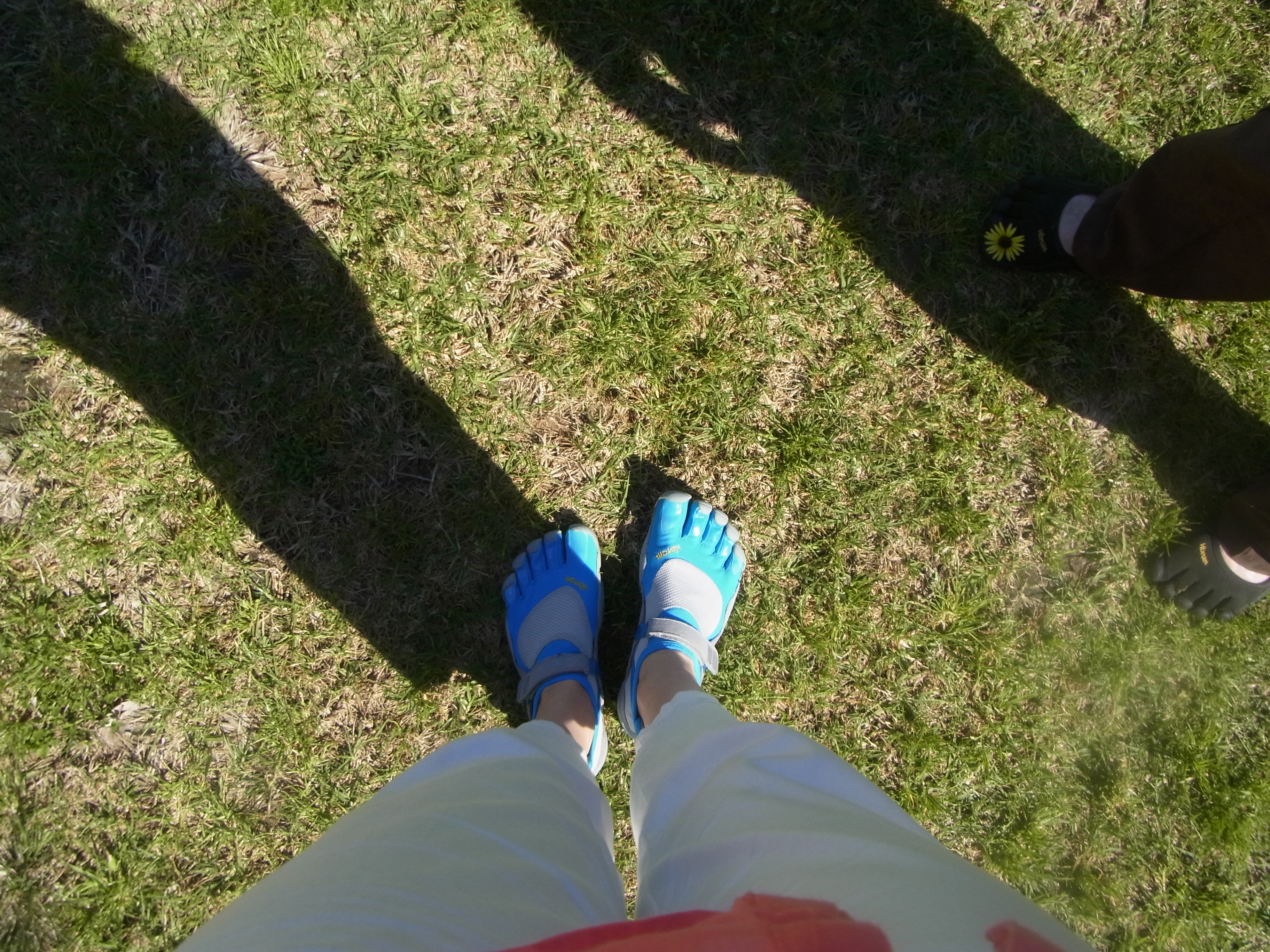
We then had a lovely walk  in our toe shoes. A few hours later Matthew had arrived back home and we had tea and excellent pieces of cake with him before driving back to Dapto.

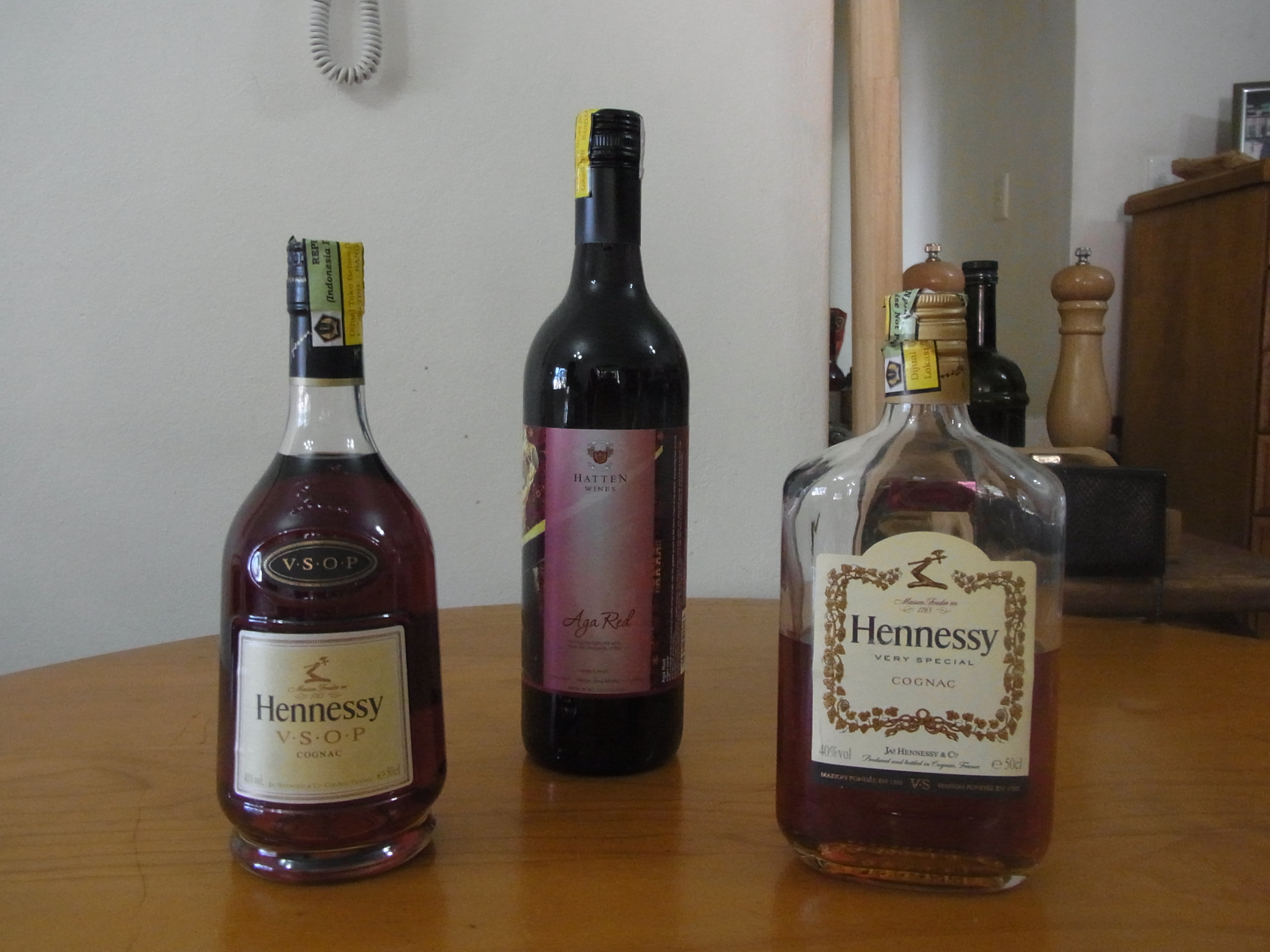
Caroline and Matthew had given Peter a bottle of duty free Hennessey as a belated Father’s Day gift. It was great that we could go on this outing to Sydney and meet Caroline and Matthew after their exciting trip. I had been somewhat concerned that maybe Bali was not such a safe place to visit. But it turned out that my concerns had been totally unwarranted.

RIMG0045

Caroline's Toe Shoes
Caroline’s Toe Shoes

RIMG0022

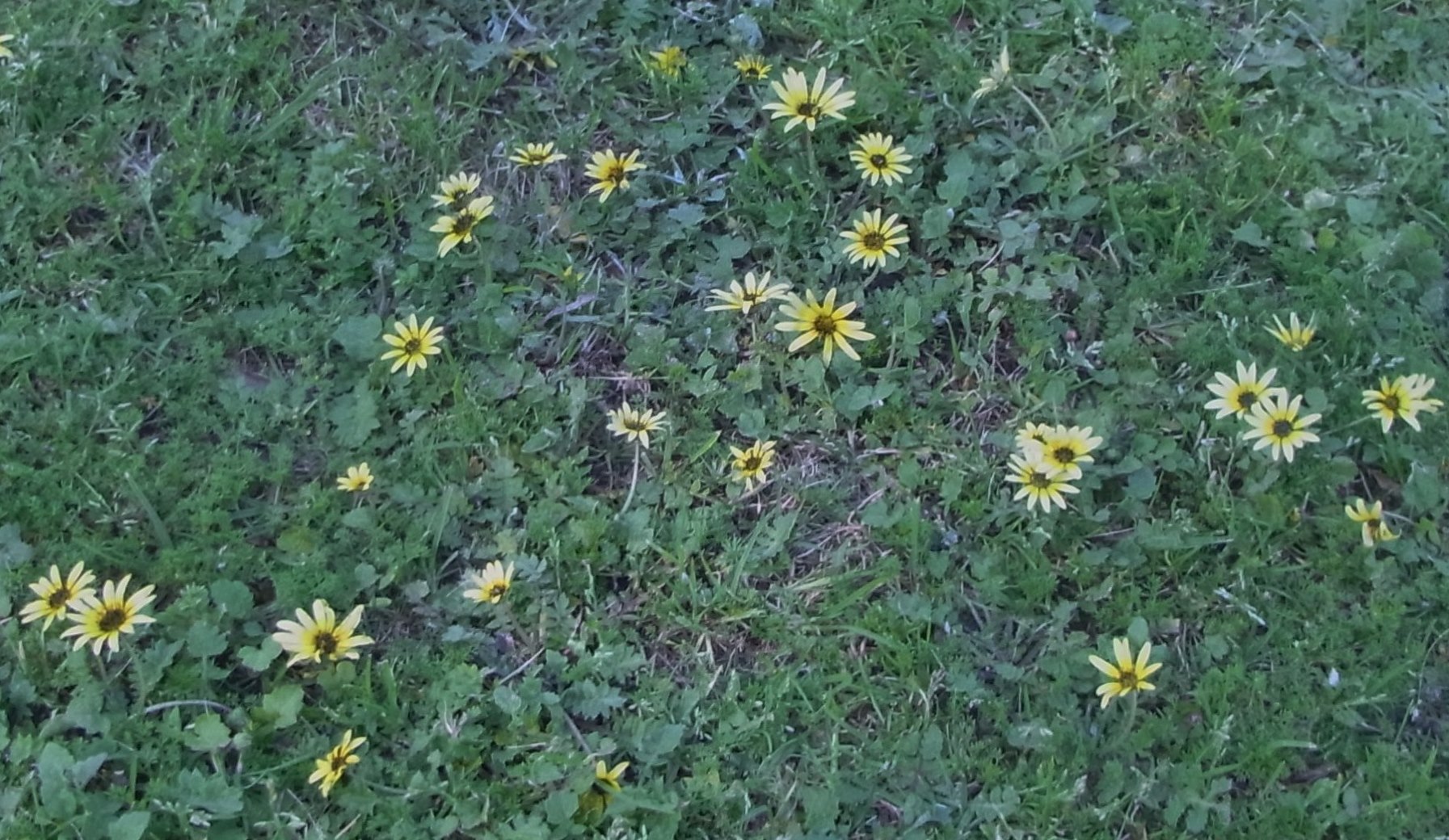
There were a lot of these flowers in the grass where we were walking.
One of these flowers got stuck between my toes.
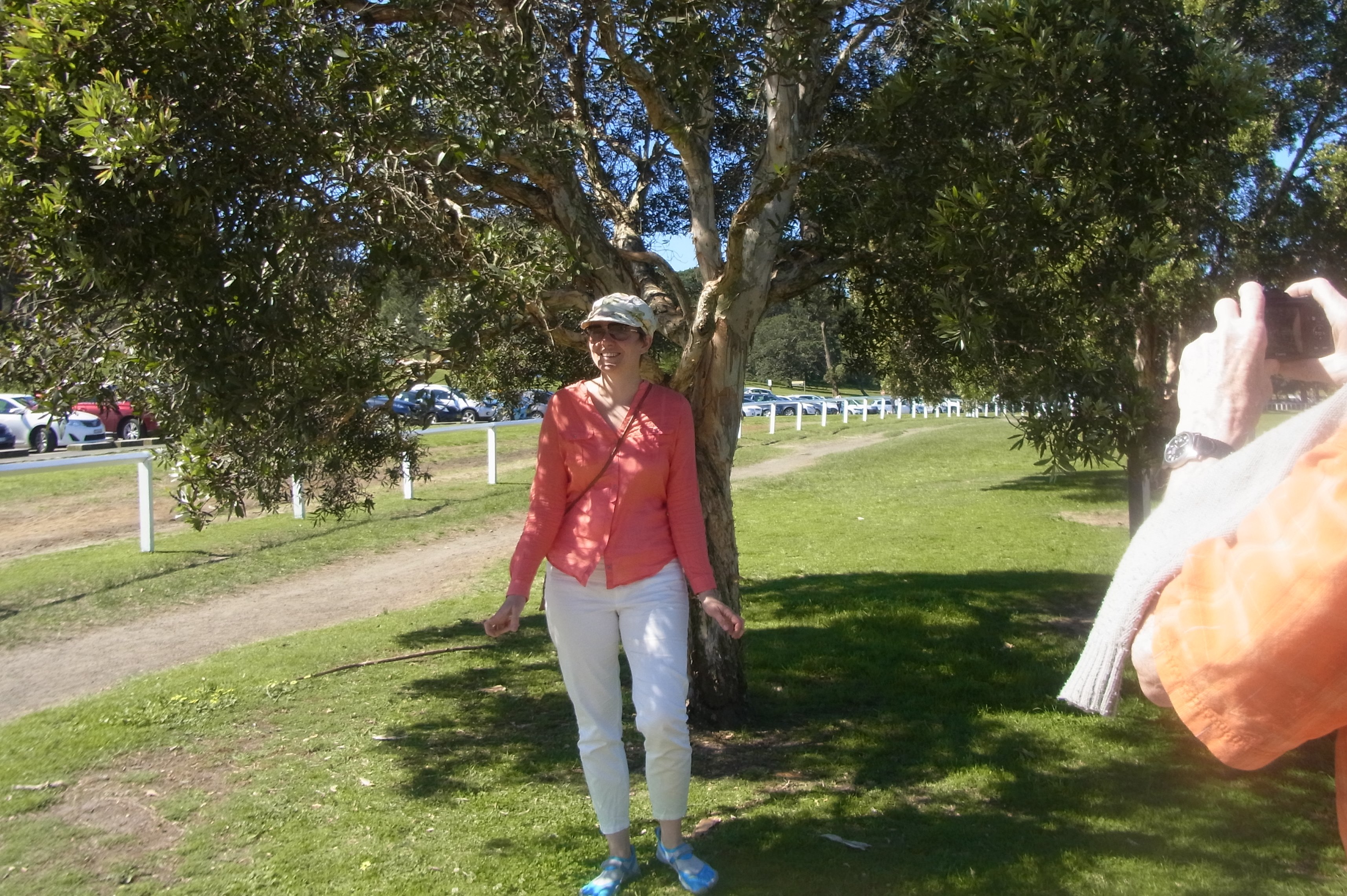
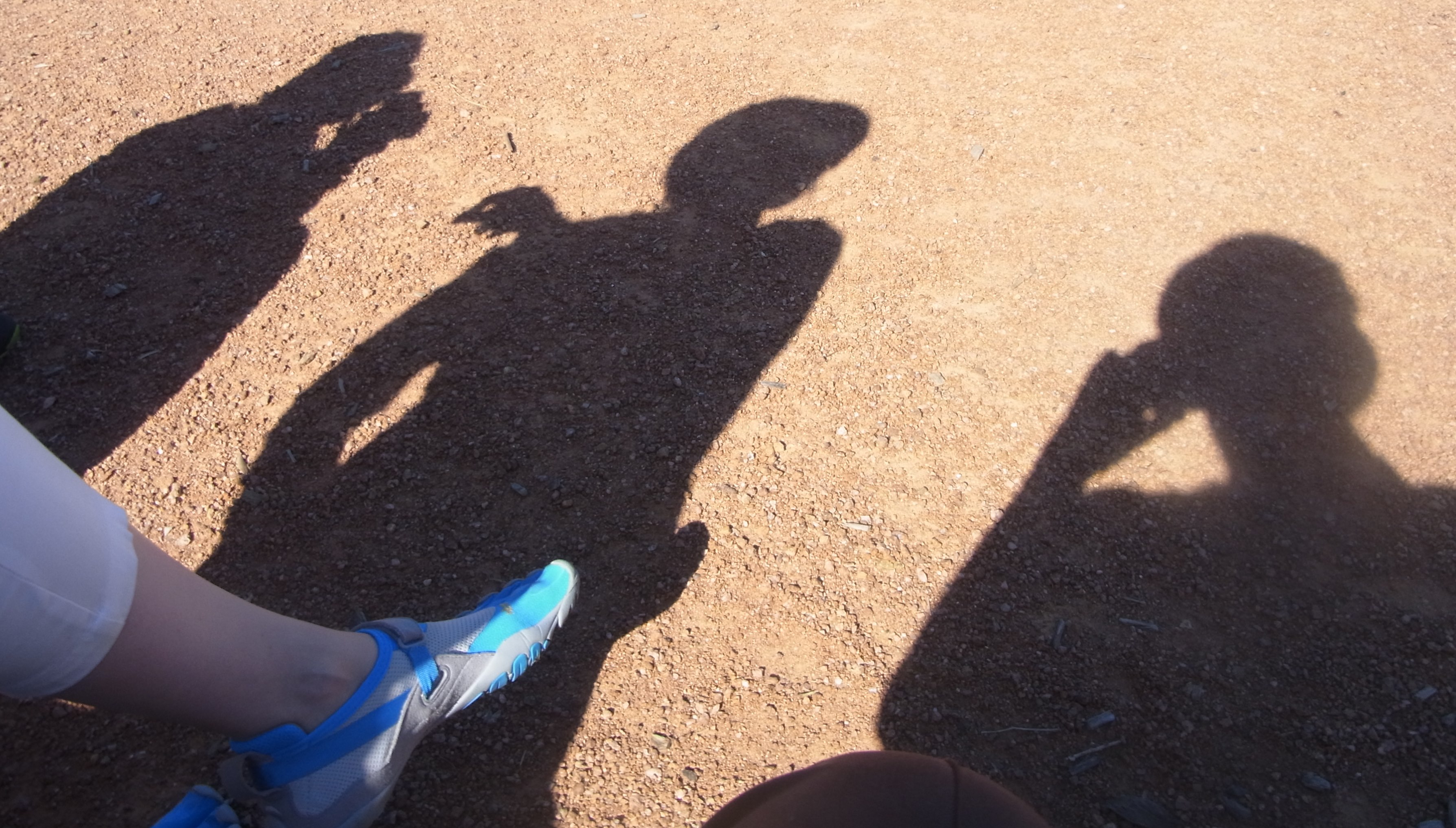
Peter takes a photo of Caroline.

RIMG0015

RIMG0016

RIMG0017 (2)

RIMG0020

RIMG0027

RIMG0028

RIMG0011

RIMG0008

RIMG0031

RIMG0032

RIMG0033

RIMG0043

RIMG0034

RIMG0044

RIMG0041

Duty Free?
Duty Free?

PS: Here is another update.

http://tompride.wordpress.com/2014/09/14/blair-urges-air-strikes-against-scotland-in-event-of-yes-vote/

Does this make your mind boggle?

Reflections: UN Forum On The Culture Of Peace

I reckon to think about PEACE is most important. And not just think about it but actually doing something about it to keep the peace. Why can’t we all have governments who only want peace and not war?

Eliz@MirthandMotivation's avatarMirth and Motivation

“Peace is more than the end of armed conflict. Peace is a mode of behavior.” It is a “deep rooted commitment to the principles of liberty, justice, equality and solidarity among all.”  Yamoussoukro Declaration

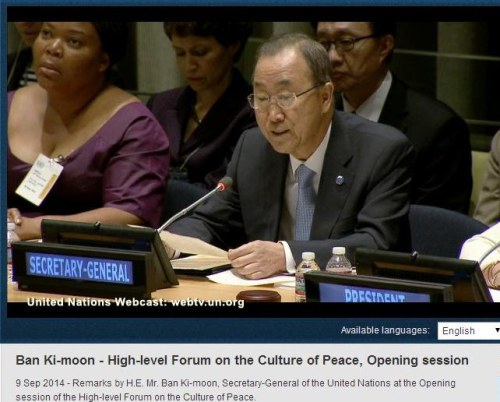
Reflections: UN Forum On The Culture Of Peace - UN Sec Gen, Ban Ki-Moon speaks Reflections: UN Forum On The Culture Of Peace – UN Sec Gen, Ban Ki-Moon speaks
Ban Ki-moon, Secretary General of the UN – High-level Forum on the Culture of Peace, Opening session (Video)
Remarks: By H.E. Mr. Ban Ki-moon, Secretary-General of the United Nations at the Opening session of the High-level Forum on the Culture of Peace.

The Culture Of Peace: 25 years ago, in Yamoussoukro, capital of Côte d’Ivoire (Ivory Coast), the concept of a global culture of peace was initiated by the UNESCO-supported International Congress of Peace. UNESCO declared that peace must be “nurtured through the dignity, rights and capacities of every man and woman.” Today, at the UN High-level Forum on the Culture…

View original post 897 more words

NO-BAG LADIES: FIRST WRAPPING-FREE SUPERMARKET OPENS IN THE KIEZ

Thank you. You have excellent ideas!

Berlin Companion's avatarKREUZBERGED - BERLIN COMPANION

With each of us producing some 250 kg of plastic wrapping rubbish a year, it might sound like a good idea to stop. But how do you do this if almost every single grocery shop and every supermarket in town – including the organic ones – offers its products pre-packed and pre-wrapped in plastic?

For someone who grew up in the 1980s Eastern Europe, where practically every shop looked like an environmentally-conscious Bio-Laden with goods offered in big boxes, barrels or crates to be filled into own bags and baskets, it might not be hard to envision a solution: you do just that. But Sara Wolf and Milena Glimbowski, the women behind the new Berlin-Kreuzberg packaging-free supermarket Original Unverpackt (Originally Unpacked), could tell you long stories about trying to start trading with wrapping-free goods and often hitting another plastic wall.

After the massive crowd-funding success which brought them well over…

View original post 640 more words

Our World Tour in 1990 (reblogged)

The Mont Blanc Tunnel turned out to be an absolute horror for us. I guess when this tunnel was built they had no idea by how much traffic would increase, and especially how much these big trucks would pollute the air. I reckon these days they make sure that ventilation remains okay. Certainly they would not any more build a tunnel with only one lane in each direction. The Mont Blanc Tunnel goes for 11 kilometres without any interruptions!!    We had liked it in France and in Switzerland but  we were happy when we finally arrived in Italy.  Our beautiful 2CV had made it!

The following I copied from a Google page.

Tin snail, or timely saviour? The Citroen 2CV was mocked by many in its 40-year lifespan, but in the impact it had on cheap personal transportation it ranks alongside other greats like the Mini, Beetle and Land Rover.
The last ‘official’ 2CVs were built by Citroen in 1990, but now, against a background of rigorously policed speeds and closely scrutinised running costs, restored versions of the four-seat convertible are once again being built – in Wiltshire. And they’re finding a ready market among drivers looking for character, fun and an escape from depreciation.

This is a picture of the Mont Blanc Tunnel.

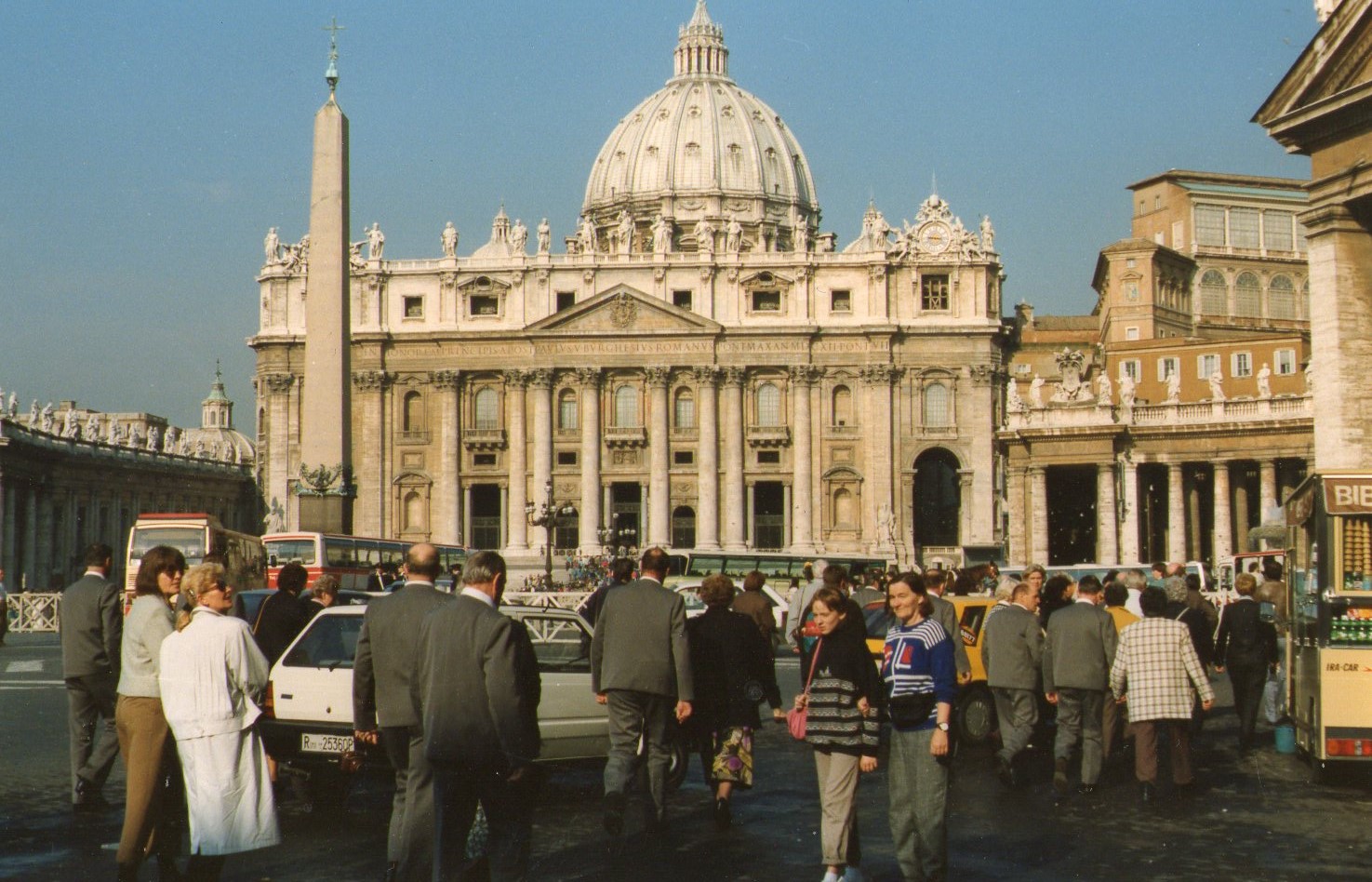
We stayed in different hotels during our trip through Italy. In Rome we found a very reasonably priced hotel close to the Vatican.

It was a Wednesday when we turned up at the Vatican. Lots of tourists had arrived in buses from Germany on that day. They thought we had come with them from Germany. The Pope greeted the tourists in German. We could hardly see him for he was a great distance away from us.

img038

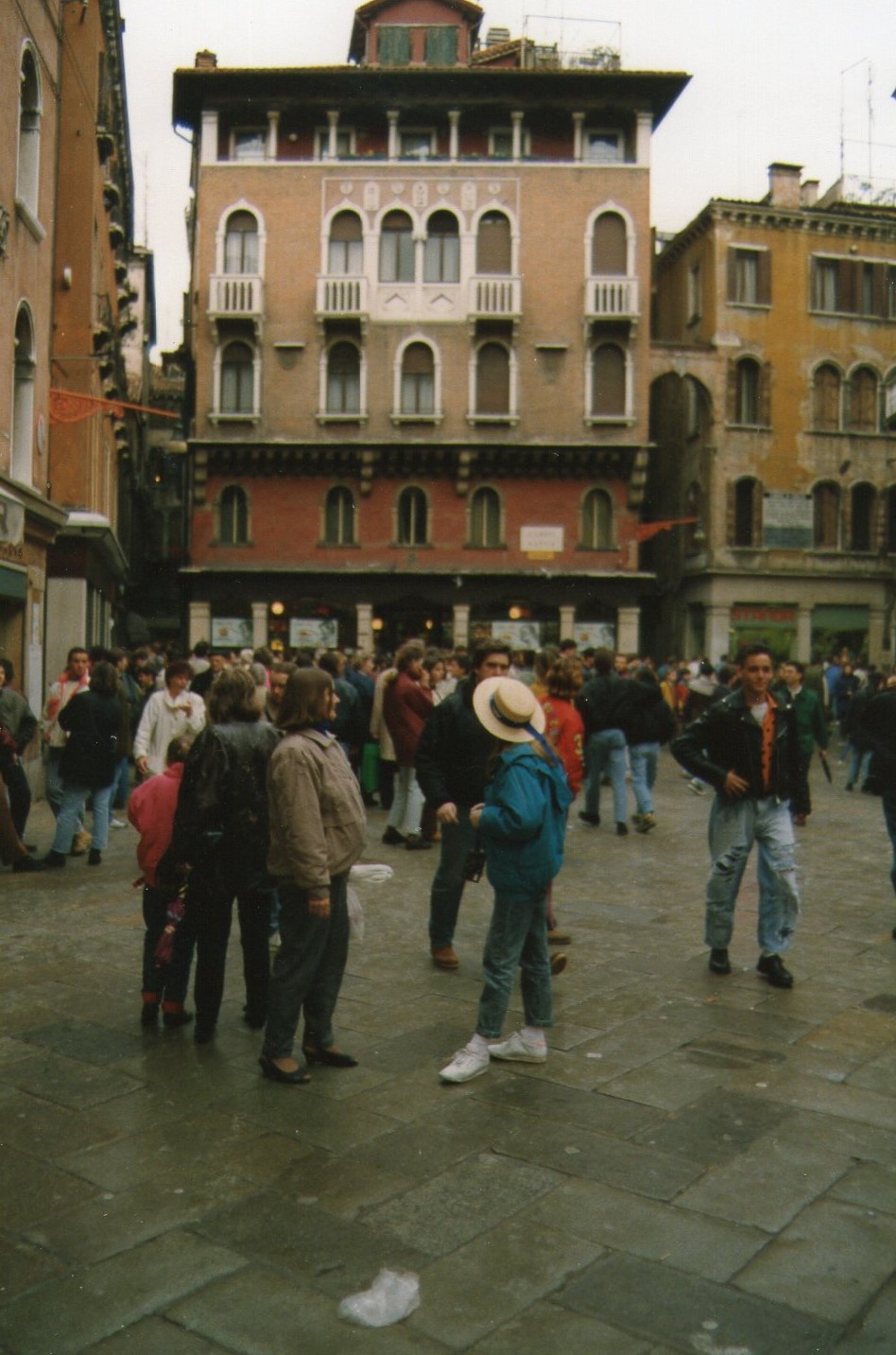
We spent a lovely day in Venice, we also had a look at the leaning tower of Pisa. But I have no picture of it. Here is another picture with Caroline and me in Venice.

img046

From Italy we went to Austria and from there for a trip to Bayrischzell along the Alpenstrasse. On the way we had a look at Salzburg, the birthplace of Mozart. On the Alpenstrasse we were caught in a blizzard. After a stay over at Bayrischzell we tried to reach the Zugspitze, the highest mountain in Germany. But it was bad weather. This is why the cable cars to the top of the Zugspitze were not in operation.

Here is what I Wikipedia says about the cable cars:

“Three cable cars run to the top of the Zugspitze. The first, the Tyrolean Zugspitze Cable Car, was built in 1926 and terminated on an arête below the summit before the terminus was moved to the actual summit in 1991. A rack railway, the Bavarian Zugspitze Railway, runs inside the northern flank of the mountain and ends on the Zugspitzplatt, from where a second cable car takes passengers to the top. The rack railway and the Eibsee Cable Car, the third cableway, transport an average of 500,000 people to the summit each year. In winter, nine ski lifts cover the ski area on the Zugspitzplatt. The weather station, opened in 1900, and the research station in the Schneefernerhaus are mainly used to conduct climate research.”

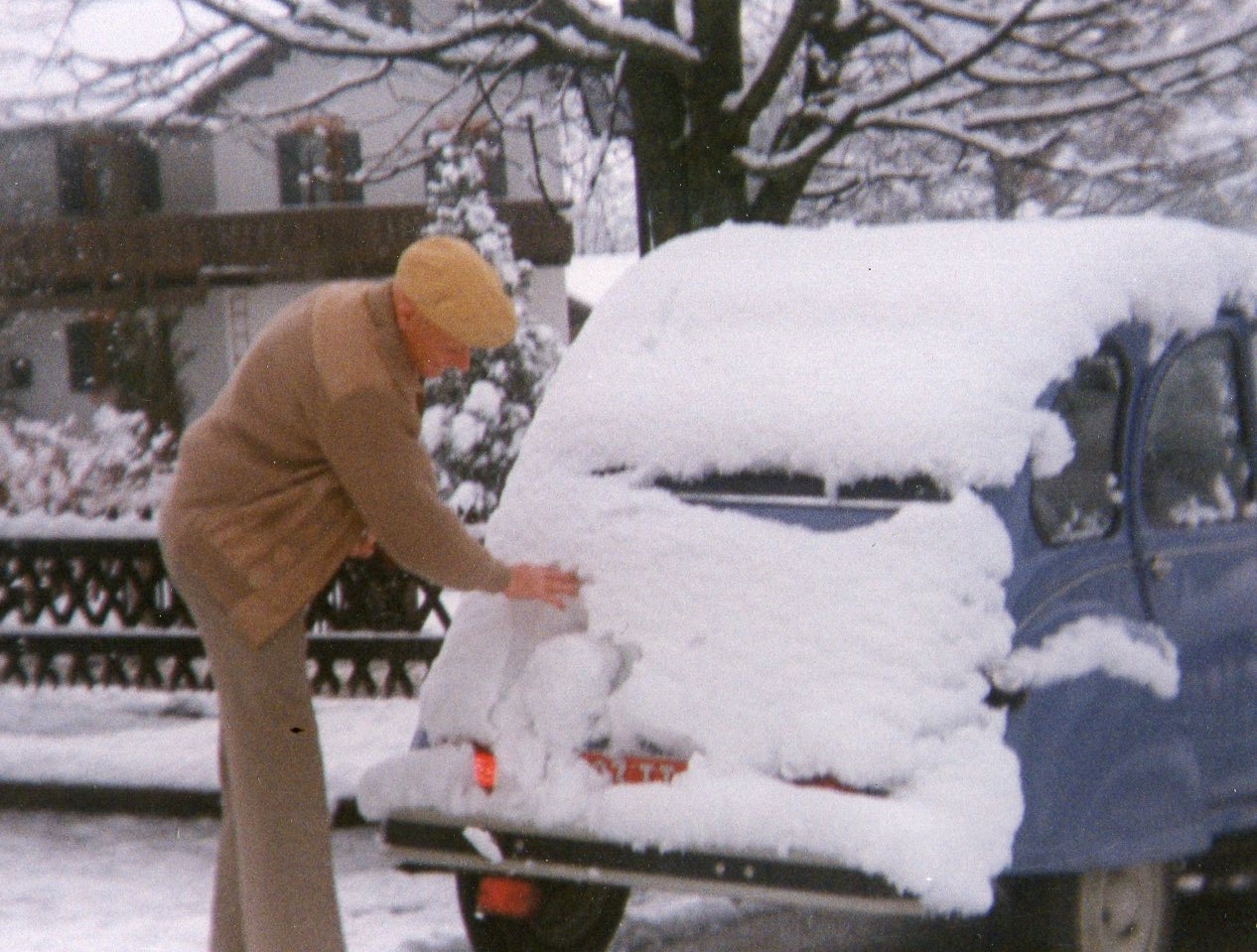
We made it to Neuschwanstein Castle just a few minutes before they were about to close. O our way back to Austria we stayed near Ober-Ammergau. We had accommodation in a pleasant hotel. When we woke up in the morning, our car was covered in snow.

img007

Then back to Windischgarsten where Peter’s sister Eva lives with Harald, her husband. Harald built this house all on his own:

img018

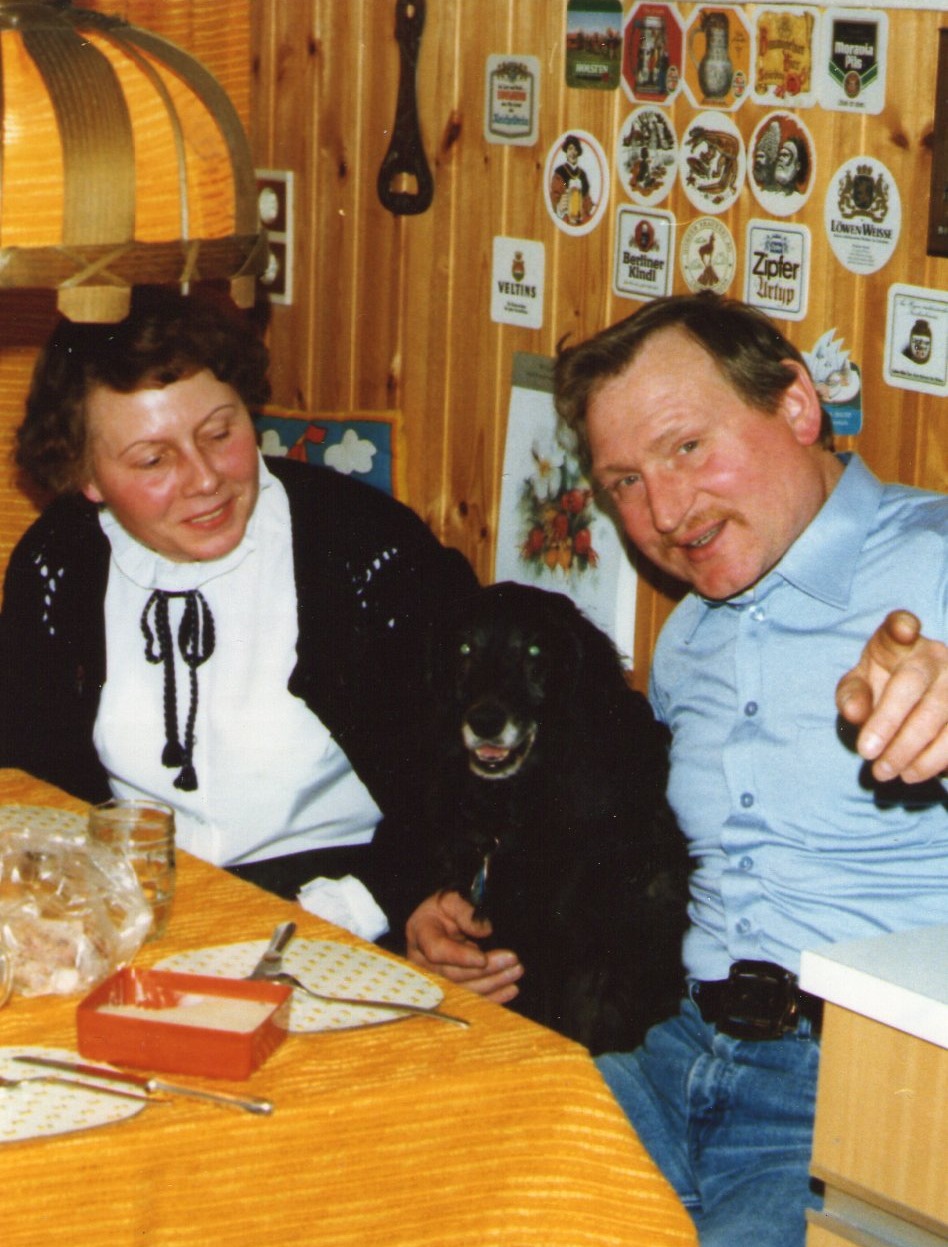
Eva and Harald with their dog Blinki in early 1983.

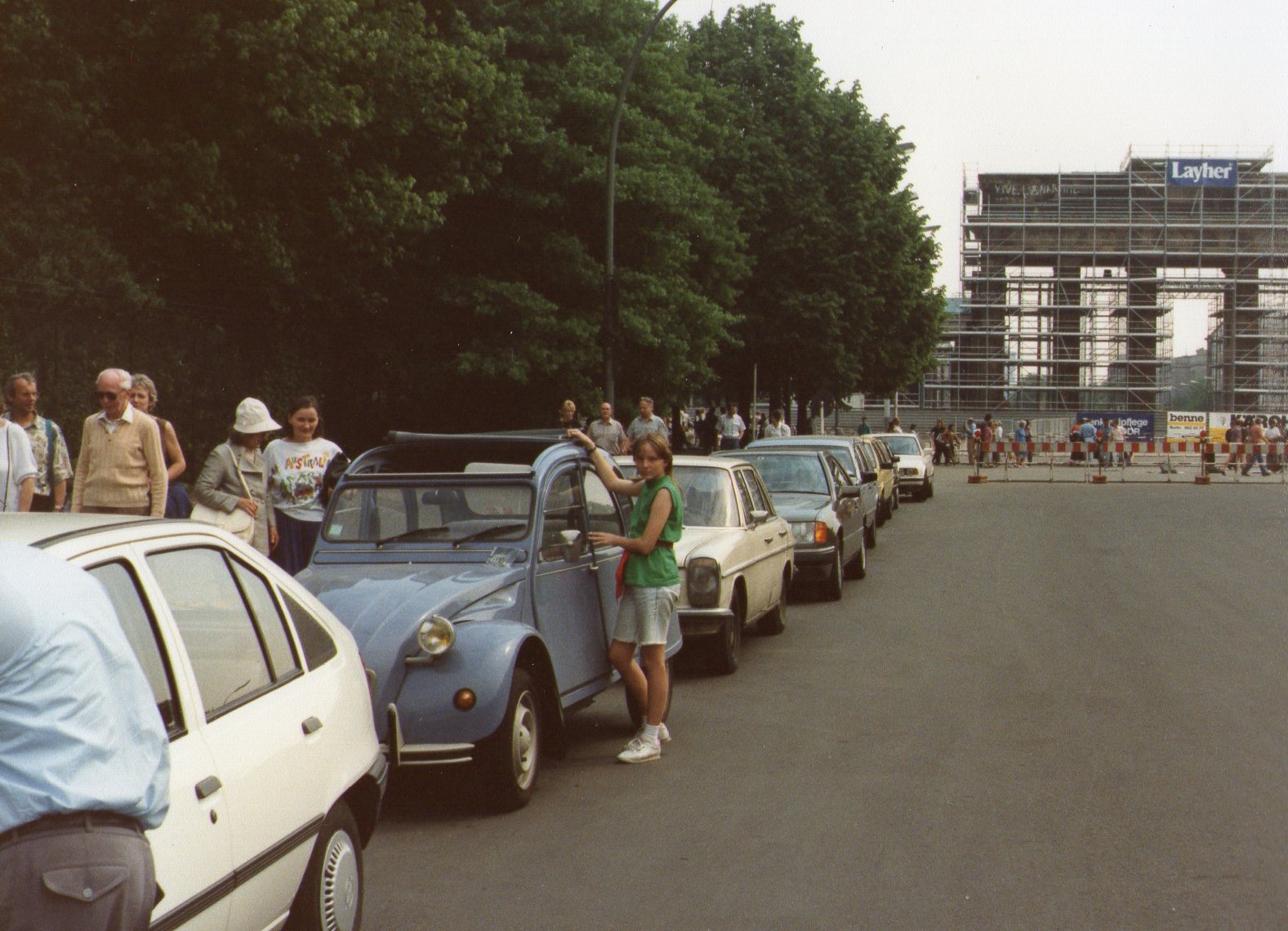
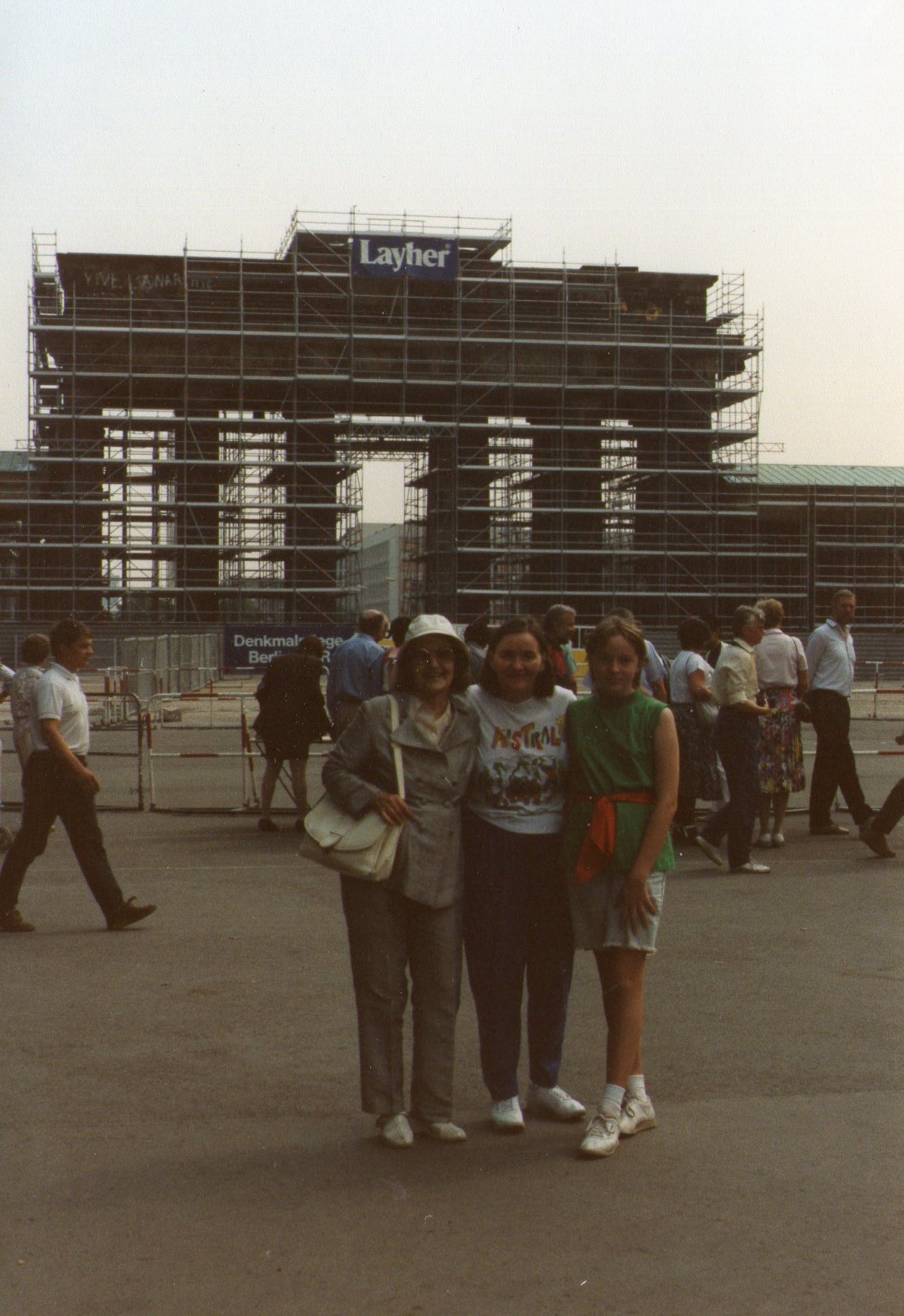
We stayed with Eva and Harald over Easter. Peter’s other sister, Ilse, had come also with husband Klaus and sons Daniel and Stefan. Ilse and her family live in Berlin. They all still live there. After Easter we travelled to Berlin. My Mum lived in a seniors’ home unit at the time. We took her in our 2CV to the Brandenburg Gate which was being restored after the Fall of the Wall a few months earlier.

img045

img044

img033

24 years ago Mum was 79,  about the same age that I am now!

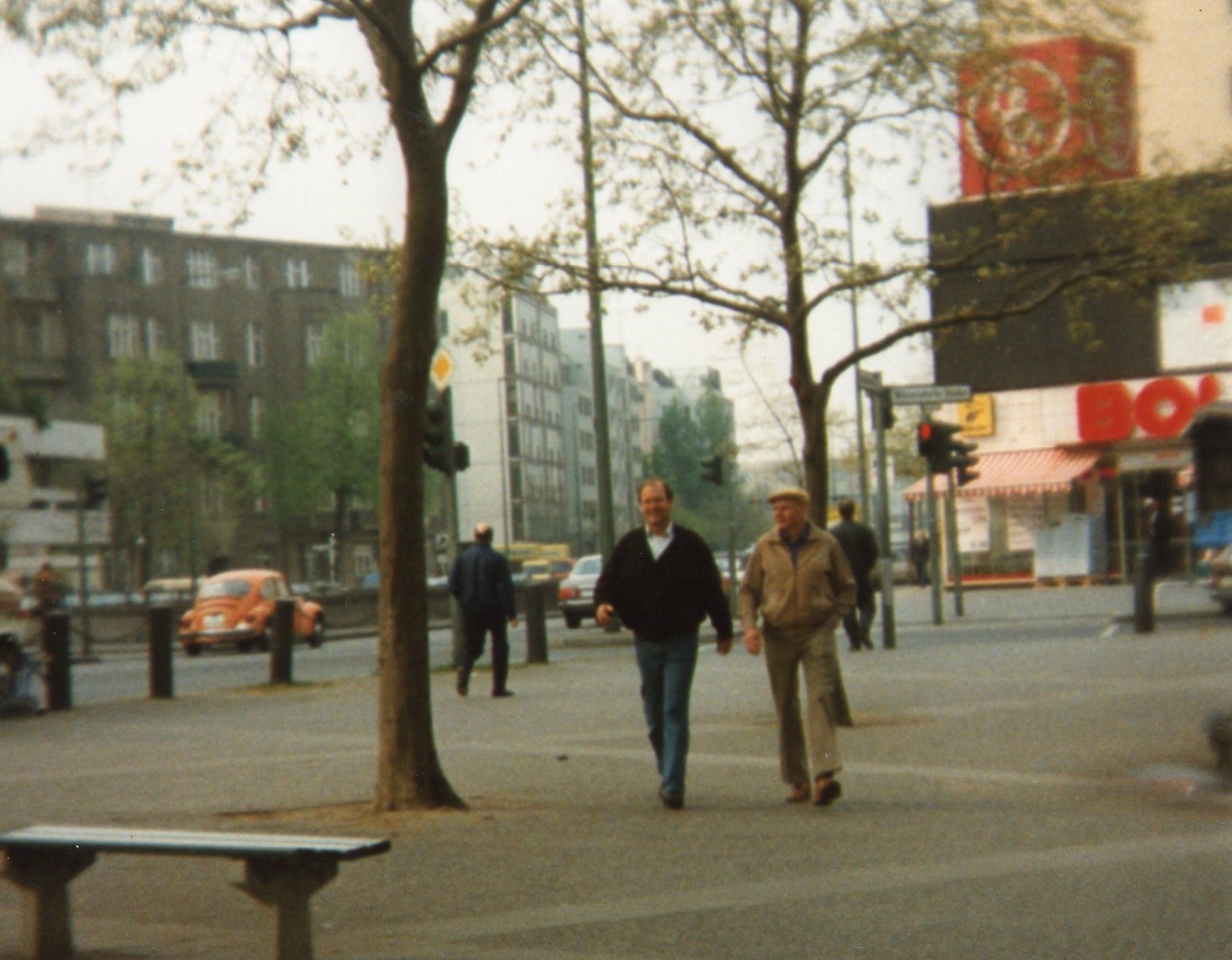
Here is Peter with my brother Peter Uwe in Berlin, Adenauer Platz.

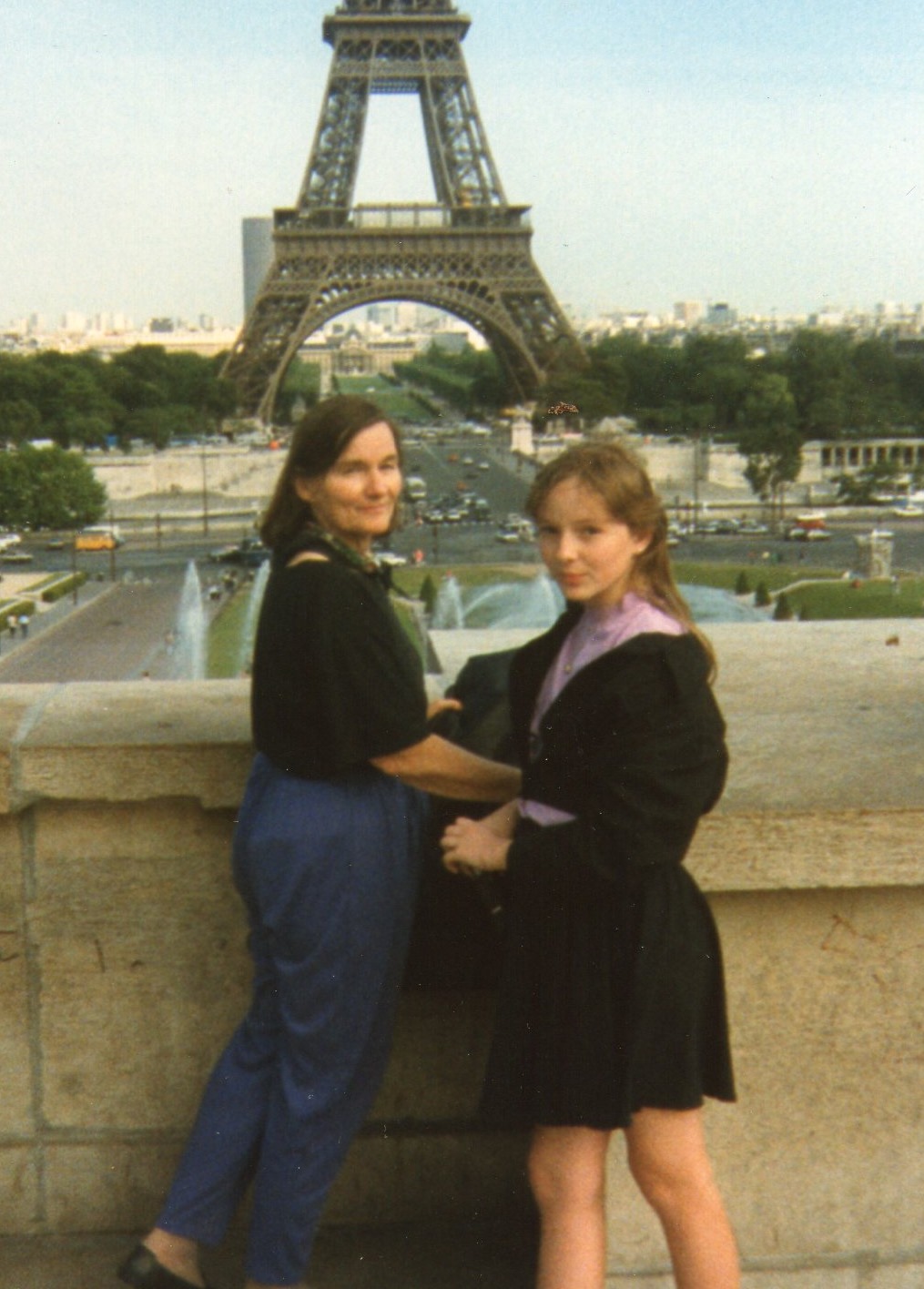
After returning our car in Paris we spent a few great days exploring the city, staying in a lovely old hotel.

Caroline is only eleven. I think she looks pretty grown up already!
Caroline and Peter did get into the shot I took!
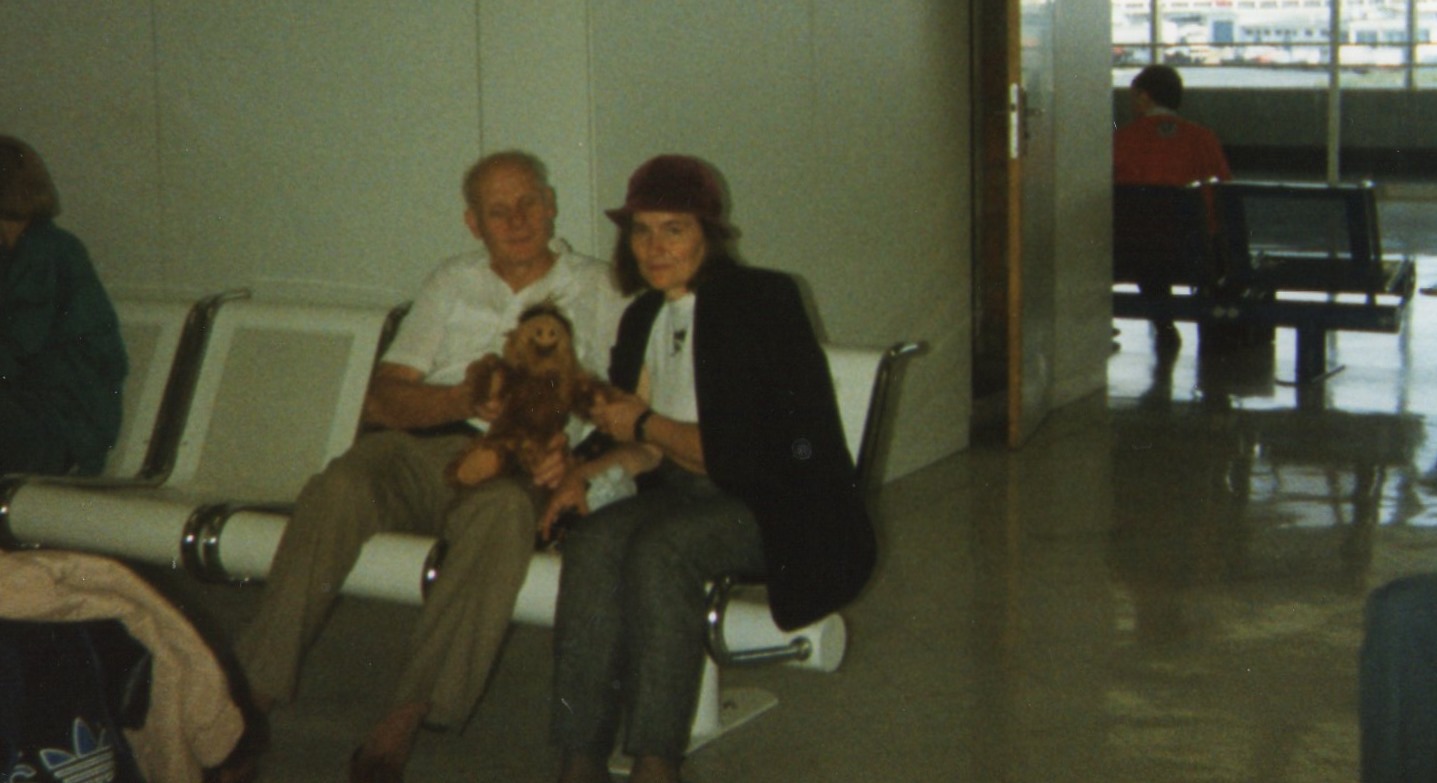
Waiting for our flight at the airport. Caroline took this picture. This hat I wear was still pretty new then. I still have it and wear it sometimes!

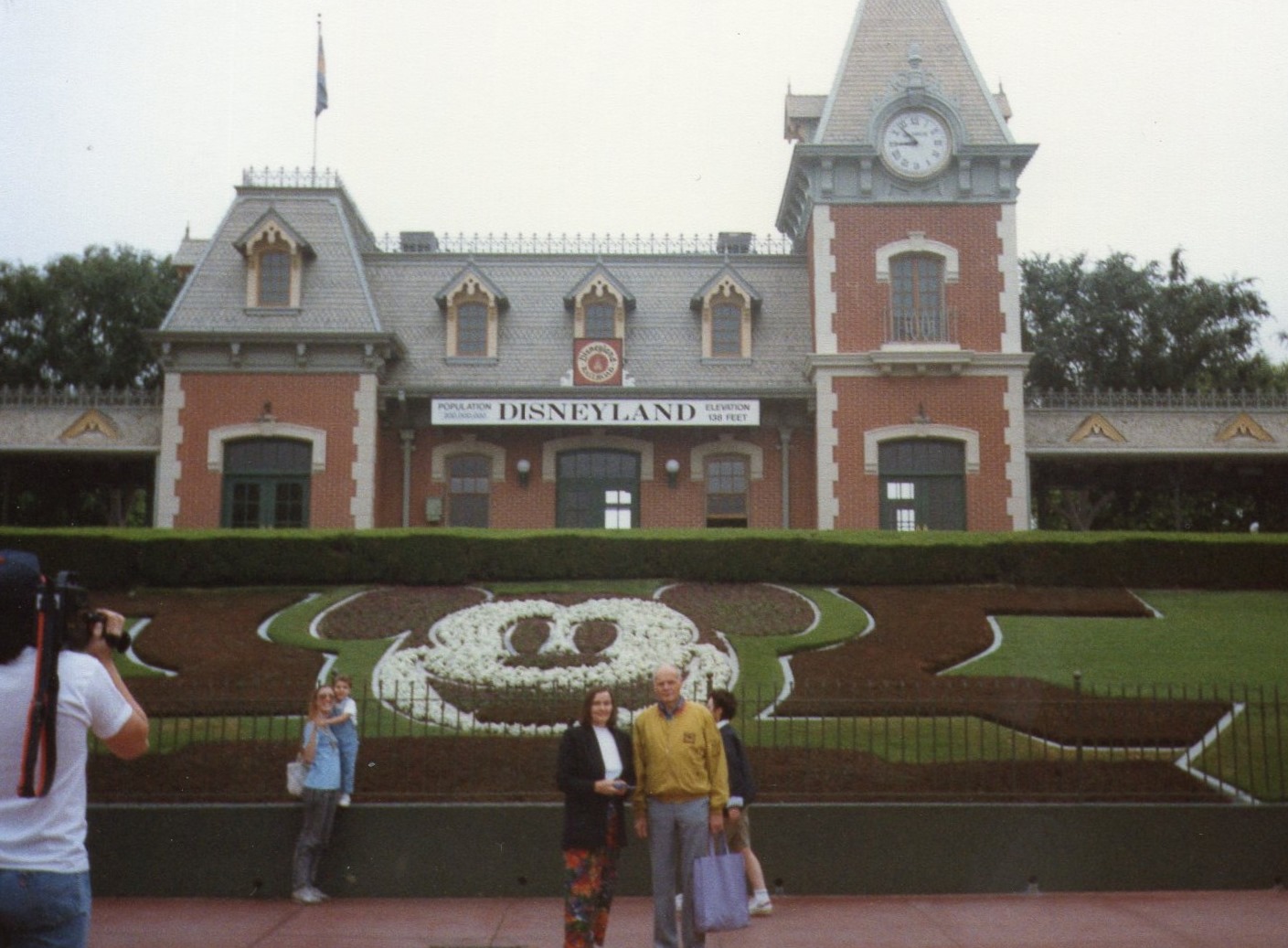
As I mentioned in the first Part, we spent three days in Anaheim to visit Disneyland. Here is just a sample of some Disneyland photos.

img042

img040

You can see Caroline in the cup to the right.

Our Trip in 1990 (reblogged)

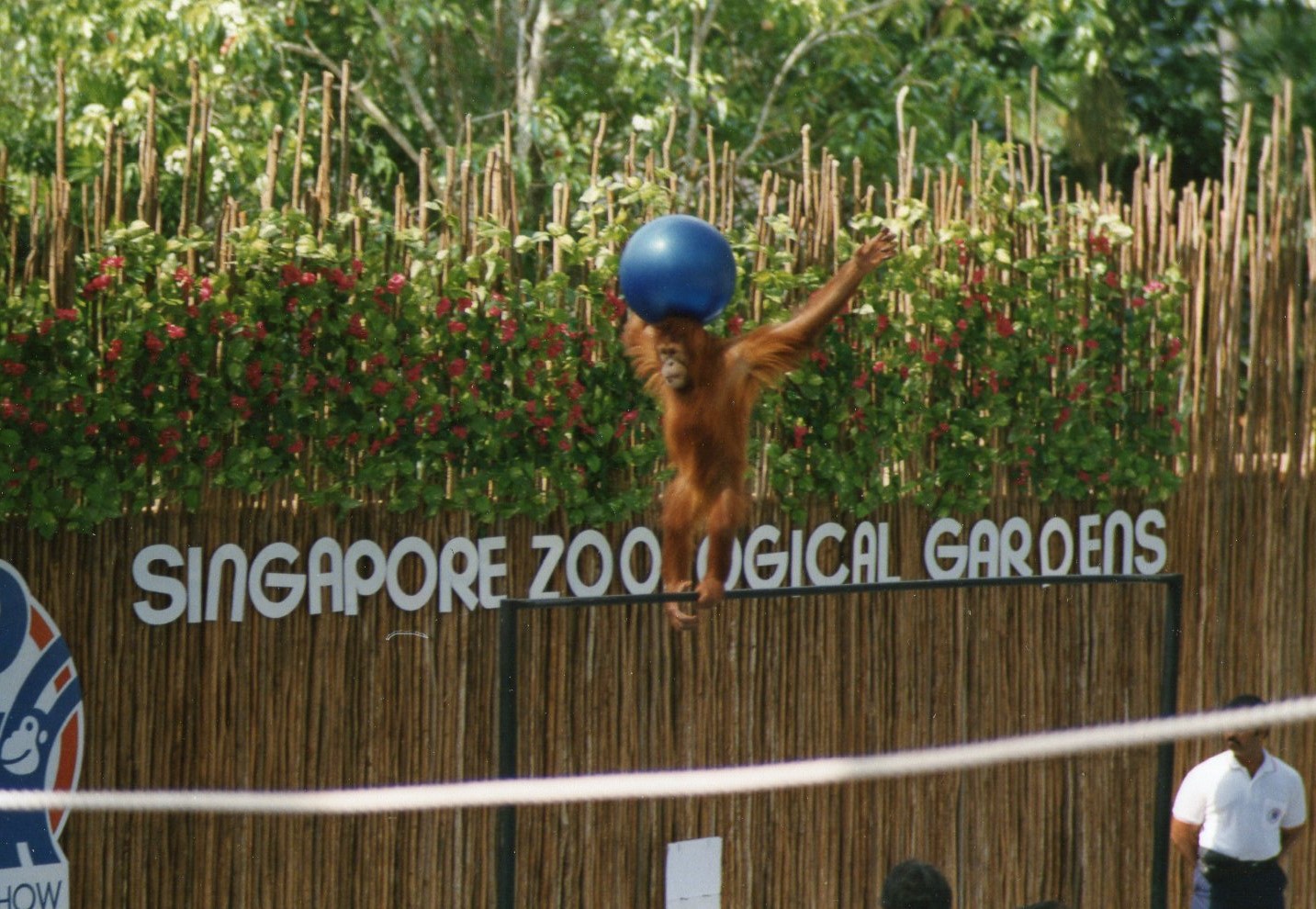
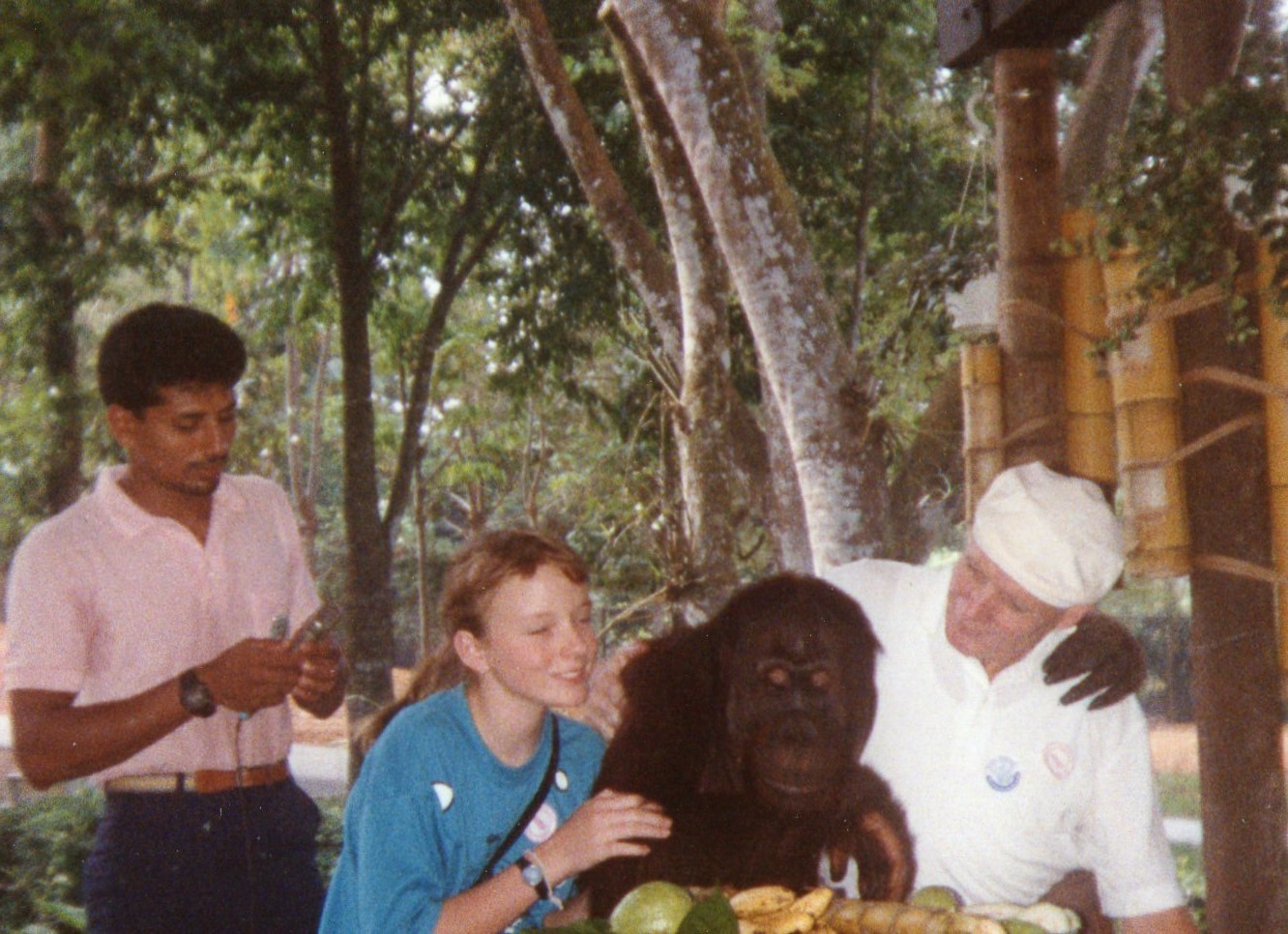
In Singapore we went to the Zoological Gardens. Peter and Caroline had breakfast with an Orangutan.
In Singapore we went to the Zoological Gardens.
Peter and Caroline had breakfast with an Orangutan.

img013

This is a picture that Caroline took at Sydney Airport before our Departure.

Gaby had come with David. Also Monika was there to farewell us. This was 24 years ago, meaning that none of Monika’s girls had been born yet, but Monika had  of course already Troy and Ryan. They were ten at the time.

Here, Caroline is in the picture  too, meaning we are to be seen here with all three daughters!
Here, Caroline is in the picture too, meaning we are to be seen here with all three daughters!
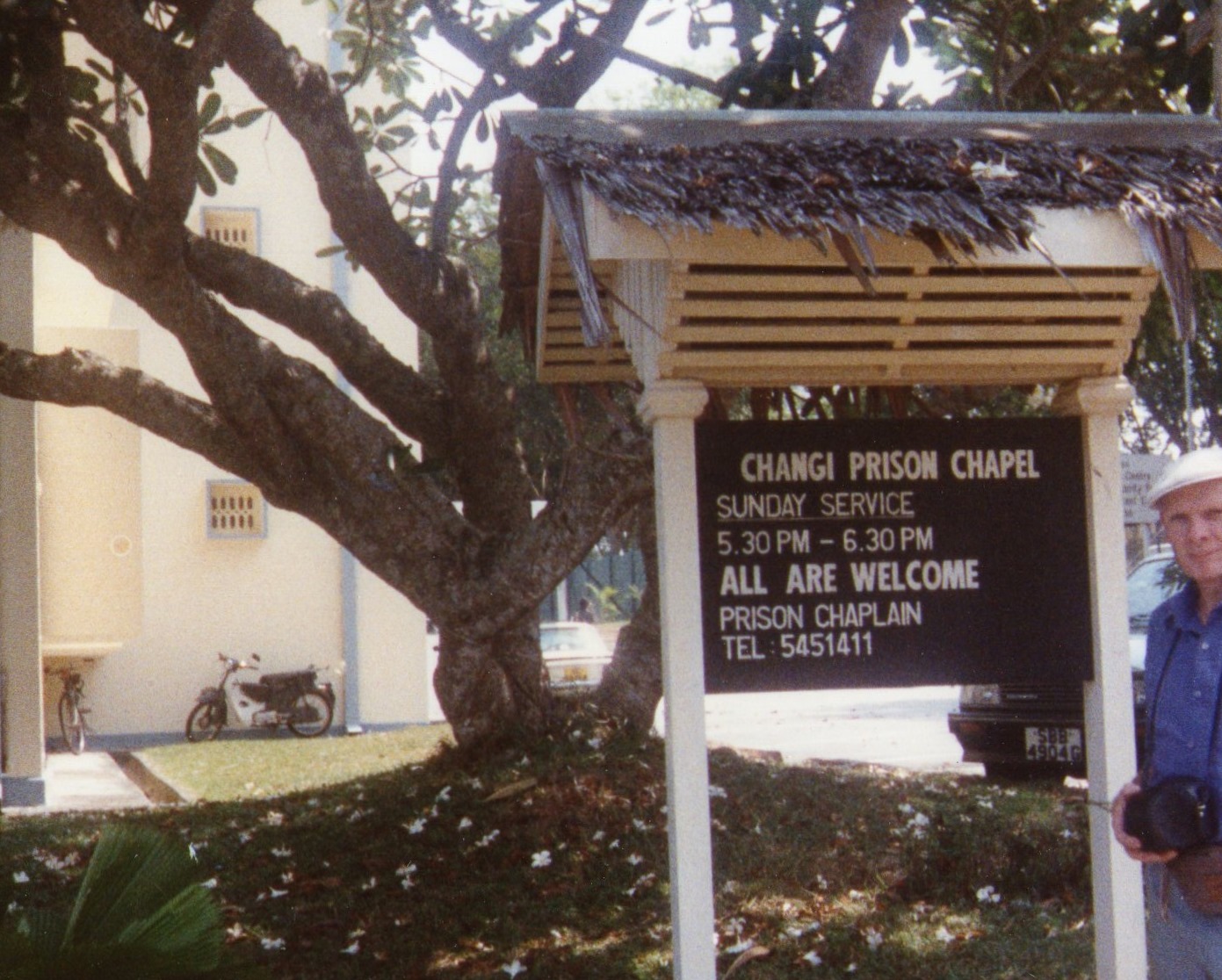
In  In Singapore we went to this Chapel.
In
In Singapore we went to this Chapel.
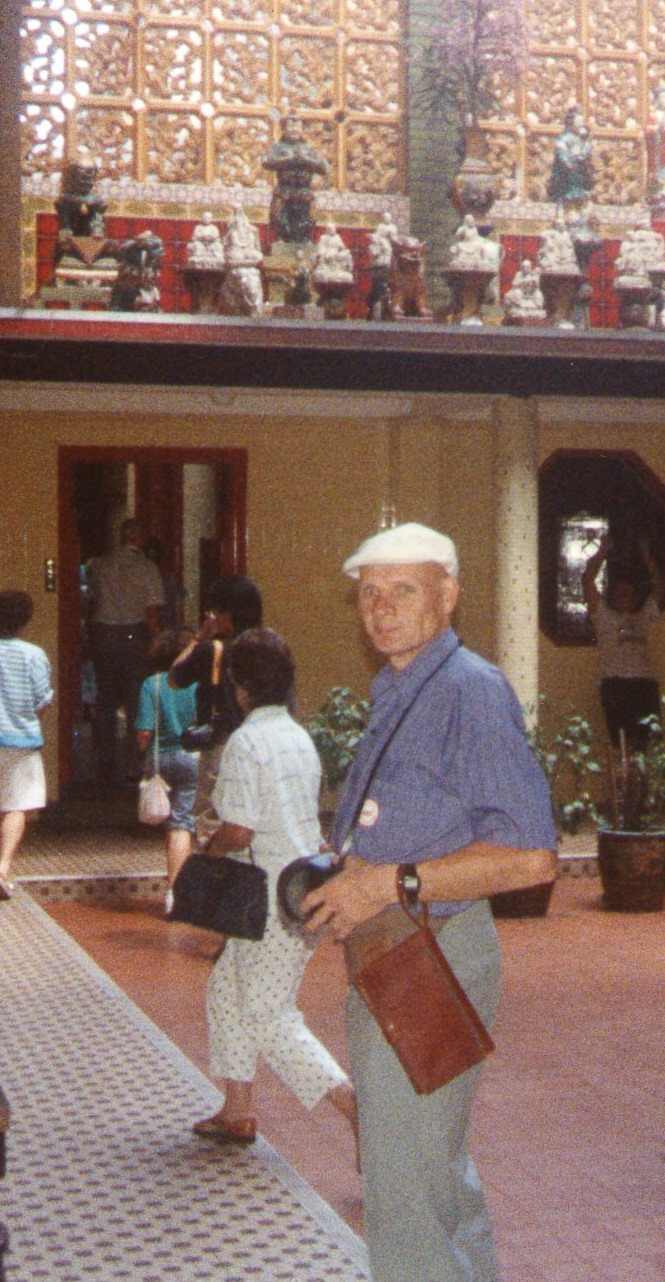
We also went on a temple tour
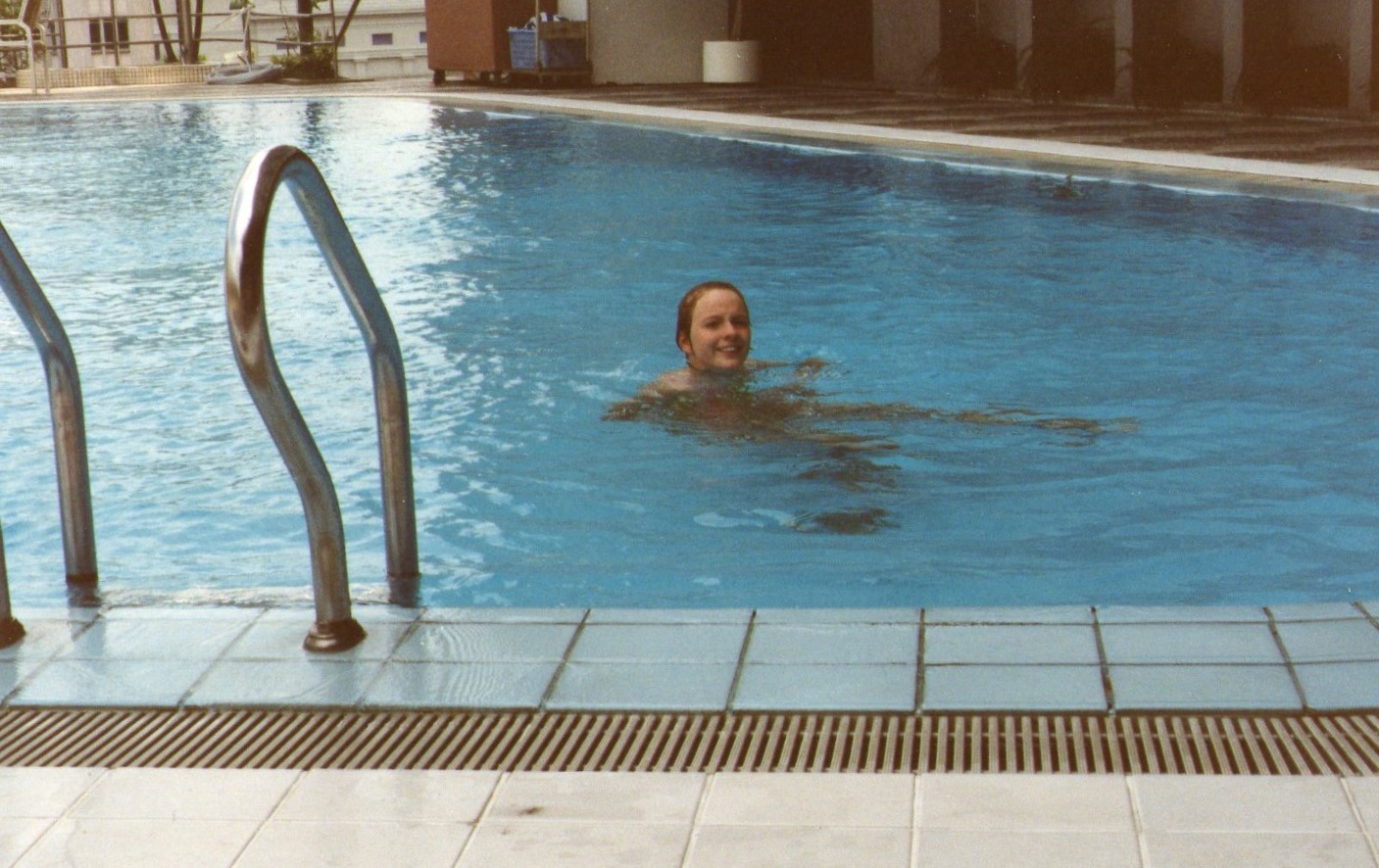
Our Hotel had a Swimming Pool at the Top of the building.
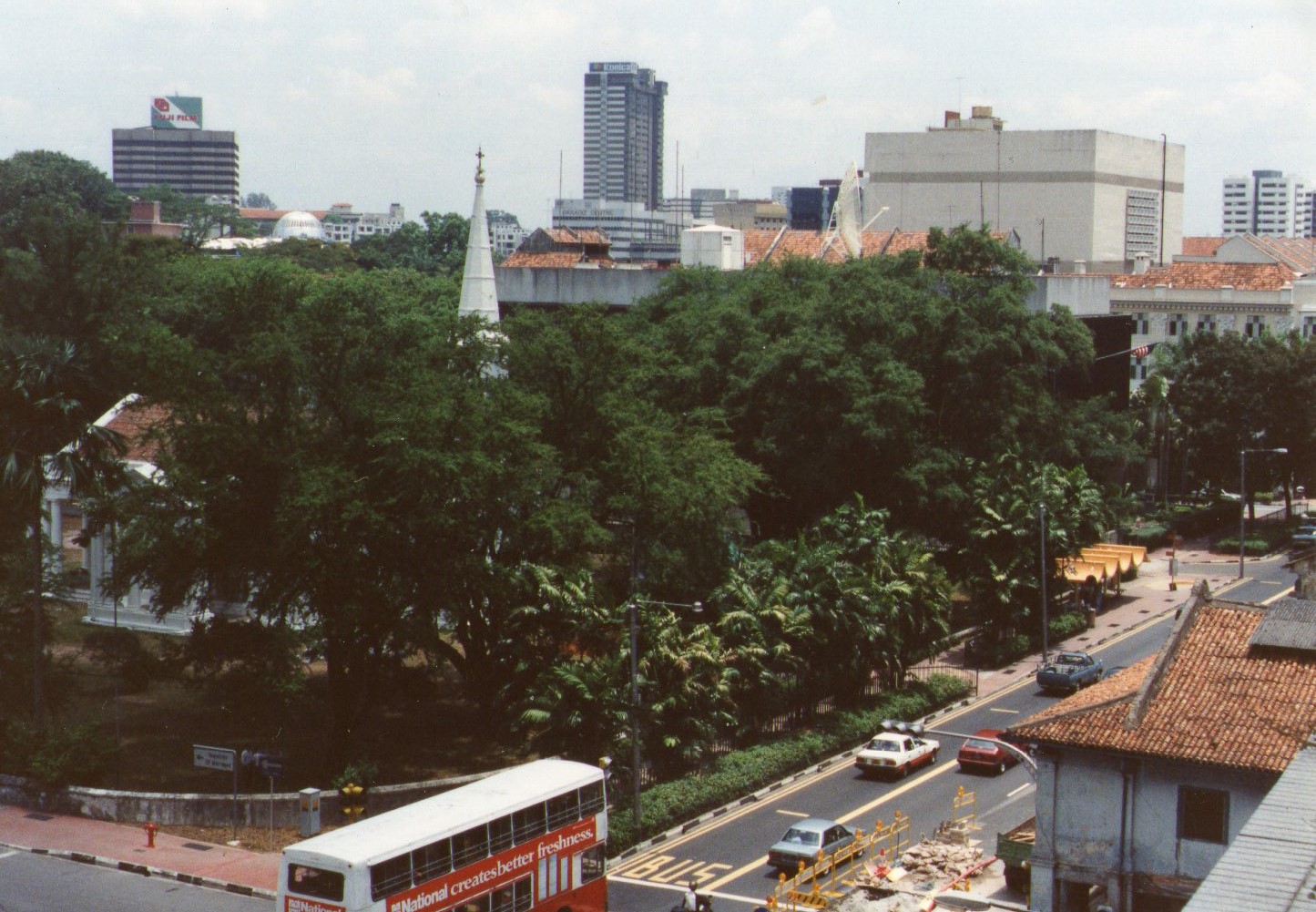
This was the View from the Top of the Building.
I enjoyed our Stay in Singapore.

img019

img026

img028

After Singapore our next destination was Paris. I already mentioned in Part One that we picked up a 2CV in Paris.
We did a bit of sightseeing in Paris, where we had booked a hotel for two nights. Then we did drive through country area. Close to where the Mt Blanc Tunnel leads towards Italy we had some overnight stops at a hotel which had very basic accommodation. The good thing was, that from there it was not far to Switzerland. We had a few excursions to Geneva. I am sure we made some pictures there but unfortunately cannot find them at present. I have no idea, why they are not in the books with all the other pictures from this trip.

We arrived at this hotel in the evening and were happy to stay there for it was reasonably priced and the owners were very friendly.

img031

A picture that Peter took on Fathers Day 2014

IMG_0391

Peter took this picture on the morning of Sunday, the 7th of September 2014. This was Fathers Day in Australia. There were blue irises as well as a bottle of Peter’s favourite port-wine. The cake made with ground almonds was for the afternoon. Monika arrived in the afternoon with sons and daughters as well as two year old grandson Lucas. Monika brought gifts along for her Papa: A lovely bottle of wine, chocolates, scratchies and a card.

Son Martin rang from Melbourne at night-time. This call was diverted to our interim mobile phone that Telstra had sent us to use while our landline phone was out of order. This mobile phone had no ringing sound. Instead a computerised female voice always announced to us when we had a phone call.

Caroline and Matthew had been going away for a few days to attend the wedding of their friends. They are back now and we are going to see them on Sunday. They probably made a lot of pictures and are going to tell us a lot about their trip.

Peter thought he had a lovely Fathers Day last Sunday. We are looking forward to seeing Caroline and Matthew very soon.