
This is a beautiful sounding video with Greek singer Vicky Leandros
https://wordpress.com/read/post/feed/1550119/751954679
The above is a link to a blog that Pethan published today and that contains also the
Vicky Leandros video.
This is a beautiful sounding video with Greek singer Vicky Leandros
https://wordpress.com/read/post/feed/1550119/751954679
The above is a link to a blog that Pethan published today and that contains also the
Vicky Leandros video.
hehhttp://www.counterpunch.org/2015/07/13/the-problem-of-greece-is-not-only-a-tragedy-it-is-a-lie/
JULY 13, 2015
An historic betrayal has consumed Greece. Having set aside the mandate of the Greek electorate, the Syriza government has willfully ignored last week’s landslide “No” vote and secretly agreed a raft of repressive, impoverishing measures in return for a “bailout” that means sinister foreign control and a warning to the world.
Prime Minister Alexis Tsipras has pushed through parliament a proposal to cut at least 13 billion euros from the public purse – 4 billion euros more than the “austerity” figure rejected overwhelmingly by the majority of the Greek population in a referendum on 5 July.
These reportedly include a 50 per cent increase in the cost of healthcare for pensioners, almost 40 per cent of whom live in poverty; deep cuts in public sector wages; the complete privatization of public facilities such as airports and ports; a rise in value added tax to 23 per cent, now applied to the Greek islands where people struggle to eke out a living. There is more to come.
“Anti-austerity party sweeps to stunning victory”, declared a Guardian headline on January 25. “Radical leftists” the paper called Tsipras and his impressively-educated comrades. They wore open neck shirts, and the finance minister rode a motorbike and was described as a “rock star of economics”. It was a façade. They were not radical in any sense of that cliched label, neither were they “anti austerity”.
For six months Tsipras and the recently discarded finance minister, Yanis Varoufakis, shuttled between Athens and Brussels, Berlin and the other centres of European money power. Instead of social justice for Greece, they achieved a new indebtedness, a deeper impoverishment that would merely replace a systemic rottenness based on the theft of tax revenue by the Greek super-wealthy – in accordance with European “neo-liberal” values — and cheap, highly profitable loans from those now seeking Greece’s scalp.
Greece’s debt, reports an audit by the Greek parliament, “is illegal, illegitimate and odious”. Proportionally, it is less than 30 per cent that of the debit of Germany, its major creditor. It is less than the debt of European banks whose “bailout” in 2007-8 was barely controversial and unpunished.
For a small country such as Greece, the euro is a colonial currency: a tether to a capitalist ideology so extreme that even the Pope pronounces it “intolerable” and “the dung of the devil”. The euro is to Greece what the US dollar is to remote territories in the Pacific, whose poverty and servility is guaranteed by their dependency.
In their travels to the court of the mighty in Brussels and Berlin, Tsipras and Varoufakis presented themselves neither as radicals nor “leftists” nor even honest social democrats, but as two slightly upstart supplicants in their pleas and demands. Without underestimating the hostility they faced, it is fair to say they displayed no political courage. More than once, the Greek people found out about their “secret austerity plans” in leaks to the media: such as a 30 June letter published in the Financial Times, in which Tsipras promised the heads of the EU, the European Central Bank and the IMF to accept their basic, most vicious demands – which he has now accepted.
When the Greek electorate voted “no” on 5 July to this very kind of rotten deal, Tsipras said, “Come Monday and the Greek government will be at the negotiating table after the referendum with better terms for the Greek people”. Greeks had not voted for “better terms”. They had voted for justice and for sovereignty, as they had done on January 25.
The day after the January election a truly democratic and, yes, radical government would have stopped every euro leaving the country, repudiated the “illegal and odious” debt – as Argentina did successfully — and expedited a plan to leave the crippling Eurozone. But there was no plan. There was only a willingness to be “at the table” seeking “better terms”.
The true nature of Syriza has been seldom examined and explained. To the foreign media it is no more than “leftist” or “far left” or “hardline” – the usual misleading spray. Some of Syriza’s international supporters have reached, at times, levels of cheer leading reminiscent of the rise of Barack Obama. Few have asked: Who are these “radicals”? What do they believe in?
In 2013, Yanis Varoufakis wrote: “Should we welcome this crisis of European capitalism as an opportunity to replace it with a better system? Or should we be so worried about it as to embark upon a campaign for stabilising capitalism? To me, the answer is clear. Europe’s crisis is far less likely to give birth to a better alternative to capitalism …
“I bow to the criticism that I have campaigned on an agenda founded on the assumption that the left was, and remains, squarely defeated …. Yes, I would love to put forward [a] radical agenda. But, no, I am not prepared to commit the [error of the British Labour Party following Thatcher’s victory].
“What good did we achieve in Britain in the early 1980s by promoting an agenda of socialist change that British society scorned while falling headlong into Thatcher’s neoliberal trip? Precisely none. What good will it do today to call for a dismantling of the Eurozone, of the European Union itself …?”
Varoufakis omits all mention of the Social Democratic Party that split the Labour vote and led to Blairism. In suggesting people in Britain “scorned socialist change” – when they were given no real opportunity to bring about that change – he echoes Blair.
The leaders of Syriza are revolutionaries of a kind – but their revolution is the perverse, familiar appropriation of social democratic and parliamentary movements by liberals groomed to comply with neo-liberal drivel and a social engineering whose authentic face is that of Wolfgang Schauble, Germany’s finance minister, an imperial thug. Like the Labour Party in Britain and its equivalents among former social democratic parties such as the Labor Party in Australia, still describing themselves as “liberal” or even “left”, Syriza is the product of an affluent, highly privileged, educated middle class, “schooled in postmodernism”, as Alex Lantier wrote.
For them, class is the unmentionable, let alone an enduring struggle, regardless of the reality of the lives of most human beings. Syriza’s luminaries are well-groomed; they lead not the resistance that ordinary people crave, as the Greek electorate has so bravely demonstrated, but “better terms” of a venal status quo that corrals and punishes the poor. When merged with “identity politics” and its insidious distractions, the consequence is not resistance, but subservience. “Mainstream” political life in Britain exemplifies this.
This is not inevitable, a done deal, if we wake up from the long, postmodern coma and reject the myths and deceptions of those who claim to represent us, and fight.

Author: gradyharp from United States
29 September 2005
*** This review may contain spoilers ***
DE TWEELING (TWIN SISTERS), based on the highly successful novel by Tessa de Loo and adapted brilliantly for the screen by Marieke van der Pol, is assuredly one of the most touching films to date about the strength of family bonds decimated by the horrors of WW II. Director Ben Sombogaart follows Dutch writer de Loo’s lead in making this story about the differing fates of twin girls separated at the death of their parents more of a parallel tale than capitalizing on the grim reality of Hitler’s influence. The result is a cinematically magnificent, gently hued verismo style of film that succeeds even more in its impact than if it were constantly doused in the dark side of its subject.
Germany 1920. Lotte Bamberg (played by three actresses though a long life – child Julia Koopmans, young woman Thekla Reuten and aged woman Ellen Vogel) and Anna Bamberg (child Sina Richardt, young woman Nadja Uhl and aged woman Gudrun Okras) are inseparable twins at age six, living life to its fullest until suddenly both parents are gone and they are split up: the consumptive Lotte goes to live with her upper class Dutch aunt in Holland and the healthy Anna remains in Germany with her poor uncle on a pig farm. Lotte lives a life of privilege, recovers form tuberculosis, studies German at University and sings Schumann (‘Frauen Lieben und Leben’ appropriately!) accompanied by her soon to be husband David (Jeroen Spitzenberger) who happens to be Jewish. As the war threatens Hitler’s invasion on Holland, David is sent to Auschwitz and brokenhearted Lotte marries David’s kind brother and has a child. Meanwhile Anna leads an abused life on the poor and filthy farm, is beaten by her heinous uncle when she begins dating a young handsome Austrian Martin (Roman Knizka) and runs away to work as a maid. Martin believes in Socialism and joins Hitler’s army, and is killed.
Throughout the years of separation each twin writes to the other but their guardians for varying reasons never mail the letters. Anna finally finds Lotte and they have a brief time together in Lotte’s elegant surroundings. But when Anna observes German dinner guests berating Jews she flees. The two sisters find it difficult to separate the losses of their husbands: Lotte blames Anna’s siding with the Nazis as a cause of David’s death. Anna defends Martin’s role as one of idealism that had nothing to do with the genocide of the Jews. They part, seemingly to never meet again. But as old women bedraggled Anna seeks out the elegant Lotte and the two come to understand their opposite opinions of what the war did to destroy their happiness.
The entire cast is so fine that it is difficult to single any one actor out for distinction: this is truly ensemble acting. Never pushing the story to the edge of saccharine or excess of war violence, director Sombogaart keeps his focus on the dialogue between the sisters central, embroidered with the opposing dichotomies of class and political commitment visceral but understated. The cinematography of Piotr Kukla and the radiant musical score by Fons Merkies are astonishingly effective. This is one of the powerful movies about the Holocaust from an entirely different stance – one that grabs you by the heart and holds on for the 135 minutes of the film…and beyond. In Dutch, German and English with subtitles. Very Highly Recommended. Grady Harp
Nonsmokingladybug wrote in a comment to Oosterman Treats Blog yesterday the following:
” . . . . We streamed a movie on netflix called “De Tweeling” (Twin Sisters). Great movie, one of the foreign films that got awards her in the US. So worth watching, . . . . ”
Several scenes from that movie you can find on youtube.
Peter and I saw this movie several years ago. It is one of those movies that stay in one’s memory.
Since our last episode, the crisis in Greece has escalated further. Negotiations between the government and its creditors collapsed over the weekend, and restrictions on bank withdrawals will now follow.
The next step is for the government to issue the equivalent of IOUs to pay salaries and pensions. The country is seemingly on the slippery slope to exiting the euro.
Many of us doubted that it would come to this. In particular, I doubted that it would come to this.
Nearly a decade ago, I analyzed scenarios for a country leaving the eurozone. I concluded that this was exceedingly unlikely to happen. The probability of a Grexit, or any Otherexit, I confidently asserted, was vanishingly small.
My friend and UC Berkeley colleague Brad DeLong regularly reminds us of the need to “mark our views to market.” So where did this prediction go wrong?
My analysis was based on a comparison of economic costs and benefits of a country exiting the euro. The costs, I concluded, would be severe and heavily front-loaded.
Raising the possibility, however remote, of exit from the euro would ignite a bank run in said country. The authorities would be forced to shutter the financial system. Economic activity would grind to a halt. Losing access to not just their savings but also imported petrol, medicines and foodstuffs, angry citizens would take to the streets.
Not only would any subsequent benefits, by comparison, be delayed, but they would be disappointingly small.
With the government printing money to finance its spending, inflation would accelerate, and any improvement in export competitiveness due to depreciation of the newly reintroduced national currency would prove ephemeral.
In Greece’s case, moreover, there is the problem that the country’s leading export, refined petroleum, is priced in dollars and relies on imported oil, which is also priced in dollars. So much for the advantages of a depreciated currency.
Agricultural exports for their part will take several harvests to ramp up. And attracting more tourists won’t be easy against a drumbeat of political unrest.
How did Greece end up in this pickle? Some say that the specter of a bank run was no longer a deterrent to exit once that bank run started anyway due to the deep depression into which the Greek economy had sunk.
But what is remarkable is how the so-called bank run remained a jog – it was still perfectly manageable until the Greek government called its referendum on the terms of the bail out deal offered by international creditors, negotiations broke down and exit became a real possibility.
Nonperforming loans — ones that are in default or close to it — were already rising, to be sure, but the banks still had all the liquidity they needed. The European Central Bank supported the Greek banking system with emergency liquidity assistance (ELA) right up to the very end of June. Only when Greece stopped negotiating did the Central Bank stop increasing ELA. And only then did a full-fledged bank run break out.
So I stand by the economic argument. Where I need to mark my views to market, however, is for underestimating the role of politics. In particular, I underestimated the extent of political incompetence – not just of the Greek government but even more so of its creditors.
In January Syriza had run on a platform of no more spending cuts or tax increases but also of keeping the euro. It should have anticipated that some compromise would be needed to square this circle. In the event, that realization was strangely late in coming.
And Prime Minister Alexis Tsipras and his government should have had the courage of its convictions. If it was unwilling to accept the creditors’ final offer, then it should have stated its refusal, pure and simple. If it preferred to continue negotiating, then it should have continued negotiating. The decision to call a referendum in midstream only heightened uncertainty. It was a transparent effort to evade responsibility. It was the action of leaders more interested in retaining office than in minimizing the cost to the country of the crisis.
Still, this incompetence pales in comparison with that of the European Commission, the ECB and the IMF.
The three institutions opposed debt restructuring in 2010 when the crisis still could have been resolved at low cost. They continued to resist it in 2015, when a debt write-down was the obvious concession to Mr Tsipras & Company. The cost would have been small. Pretending instead that Greece’s debts could be repaid hardly enhanced their credibility.
Instead, the creditors first calculated the size of the primary budget surpluses that Greece would have to run in order to hypothetically repay its debt. They then required the government to raise taxes and cut spending sufficiently to produce those surpluses.
They ignored the fact that, in so doing, they consigned the country to an even deeper depression. By privileging their own balance sheets, they got the Greek government and the outcome they deserved.
The implication is clear. Never underestimate the ability of politicians to do the wrong thing. I will try to remember next time.
Peter just contemplated what could be done to help Greece. He said, “why not debt relief?”
Then he cam across this article in The Guardian. It was already published in January this year. The writer, Jeffrey Sachs, is the director of The Earth Institute at Columbia University and author of ‘The Price of Civilization”.
http://www.theguardian.com/commentisfree/2015/jan/21/greece-profit-german-history-1953-debt-relief
The overwhelming truth about the Greek debt crisis is that it’s a massive distraction. Greece accounts for a mere 2% of the eurozone economy and the EU population. This doesn’t mean that Greece should be pushed around, still less pushed out of the eurozone. It means the very opposite: the crisis should be resolved, and largely on Greece’s terms.
The problem with a currency union is that seeds of doubt can destroy the economic area, if not the common currency. The euro is infected with doubt: will Greece remain? If Greece goes, will Portugal be next? And if they go, why not Spain, Italy, and who knows who else?
These doubts don’t just fester; they lead to capital flight that in turn aggravates the very doubts that prompted them. Greece’s precarious position in the eurozone long ago led to a withdrawal of funds from the Greek banks. The resulting illiquidity, in turn, pulled Greece into a near-fatal economic crisis. A more interventionist European Central Bank under Mario Draghi averted a crash, but the crisis hasn’t ever fully gone away. Several bailouts have been little more than patch-ups to get Greece through a few months at a time.
Anybody who does the Greek debt arithmetic (and it sometimes seems that in Berlin nobody actually does) knows that it cannot repay its external debts, now around 170% of GDP, without a level of pain that is simply beyond the tolerance of democratic societies. The leftwing party Syriza is no anomaly; it is telling the financial and political truth in the runup to Sunday’s elections, however unpleasant that may be to politicians in Berlin and Brussels.
John Maynard Keynes taught us this 96 years ago, after the Versailles treaty, in the The Economic Consequences of the Peace: “Will the discontented peoples of Europe be willing for a generation to come so to order their lives that an appreciable part of their daily produce may be available to meet a foreign payment, the reason of which … does not spring compellingly from their sense of justice or duty?” he asked.
And his answer: “In short, I do not believe that any of these tributes will continue to be paid, at the best, for more than a very few years. They do not square with human nature or agree with the spirit of the age.” Of course he was right, but only after disaster struck.
Some Germans today insist that a debt is a debt, and that Greece must repay in full. They should know better from their own history, starting with Keynes’s unsuccessful plea to lower Germany’s reparations burden. They should recall the relief that Germany was granted through the Marshall plan, and the 1953 London agreement on German debts. Did Germany “deserve” the relief in 1953? That was not the right question. Germany’s new democracy needed the relief, and Germany needed a fresh start. It played a major role in the economic recovery and construction of Germany’s democratic institutions.
Greece is resisting its creditors demands for even more austerity measures and reforms in Brussels tonight, as bailout talks go to the wire
We are, thank God, not in any great drama of a postwar settlement. Europe is rich, prosperous, and democratic. Yet French and German banks made too many loans to Greece a decade ago, and Goldman Sachs facilitated accounting legerdemain to hide the rapid buildup of Greece’s sovereign debt. Greece’s private creditors have already taken a deep haircut on the debt. The bigger challenge – and one that could be much more easily solved – is the debt owed to official creditors, sums that are large for Greece but very small for Europe.
Does Greece “deserve” the debt relief? Greek politicians behaved badly; so did German, French, and US banks; and so have many Greek tycoons who hid their wealth abroad, out of reach of the tax authorities.
Who “deserves” what remains a difficult question. Yet as with Germany in 1953, the proper question is whether Greece needs debt relief, and whether Germany and the other creditors should give it. On that the answer is unequivocal. The eurozone is heading either for a constructive debt-relief agreement or for a political crash with potential ramifications vastly larger than Greece.
The solution would not be difficult technically. Greece’s outstanding external debts should be restructured as very long-term loans at a fixed and low euro-interest rate, say 0.5% for the next five years, rising to 1% in the 2020s and beyond. Rather than pulling exact numbers out of the air, some straightforward debt arithmetic would help to identify a realistic trajectory for Greece’s recovery.
Debt relief will not solve Greece’s economic problems, but it would open the door to a solution. The real solution involves hard work by young Greeks to open new businesses and find new export markets, and for Europe as a whole to launch an investment-led recovery by building a new, smart, 21st-century European infrastructure – one that could, for example, enable Greece’s fabled Mediterranean sunshine and wind to provide some of Europe’s low-carbon energy needs. The first step is to stop the pain.
The other day we moved some furniture around. We decided that we could have both our computers in our little computer room. That way we would be close to each other while sitting at our computer tables. This little room is easy to heat. So we save up on heating expenses. For sure this is another bonus, especially now that we suffer such an arctic cold spell!

I love to add little slices of ginger to my ginger tea. It makes for a very good tasting, healthy and warm drink. I only need to cut off tiny, tiny bits of my lovely piece of ginger to make a wonderful drink! 🙂

Our camellia flowers seem to thrive in the cold weather:



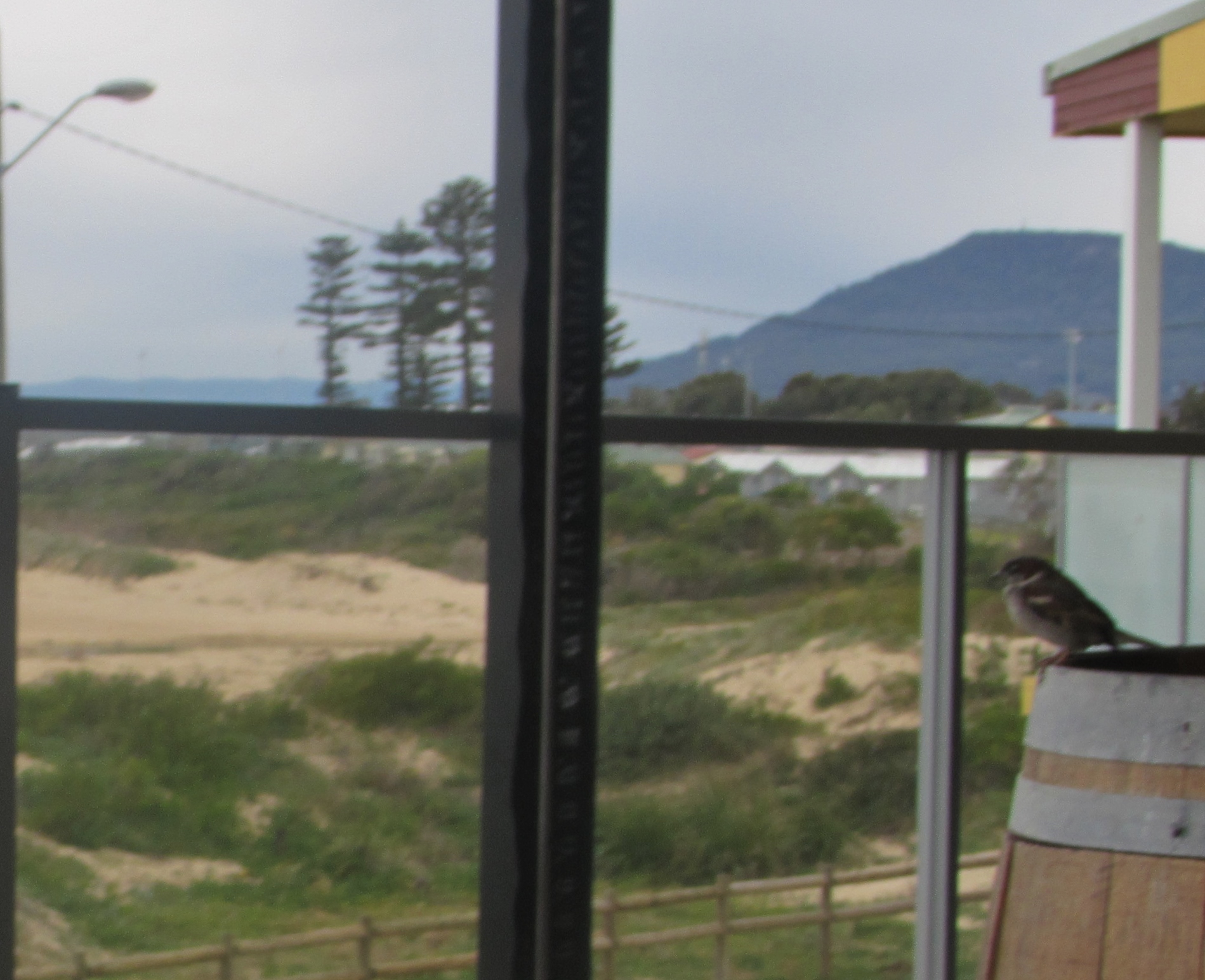
As we were waiting for the food buzzer to ring, we observed a few sparrows flying in and out of the restaurant space. Peter tried to catch them with the camera, however they always flew away too quickly to take a proper photo.

I was sneaky and took a picture of Peter as he entered the Cafe.

The special offer on one of the blackboards looked quite enticing. But the offer was for the evening. We had come just for a simple lunch. This was yesterday, Friday the 10th. Peter just tells me, “coldest weather is on its way”. I wonder, how much colder it can get. Isn’t it cold enough by now?
We took some seats inside and studied the menu. Breakfast was only till 11 am, and it was already well past 11. Then we discovered a section “breakfast all day”. Under this section we found some special offers.

Peter had gone to pick up my salad and had to wait for the buzzer to ring to go and get what he had ordered. It did not take long and his huge 10 Dollar burger was ready to be picked up. We had asked for an extra: small

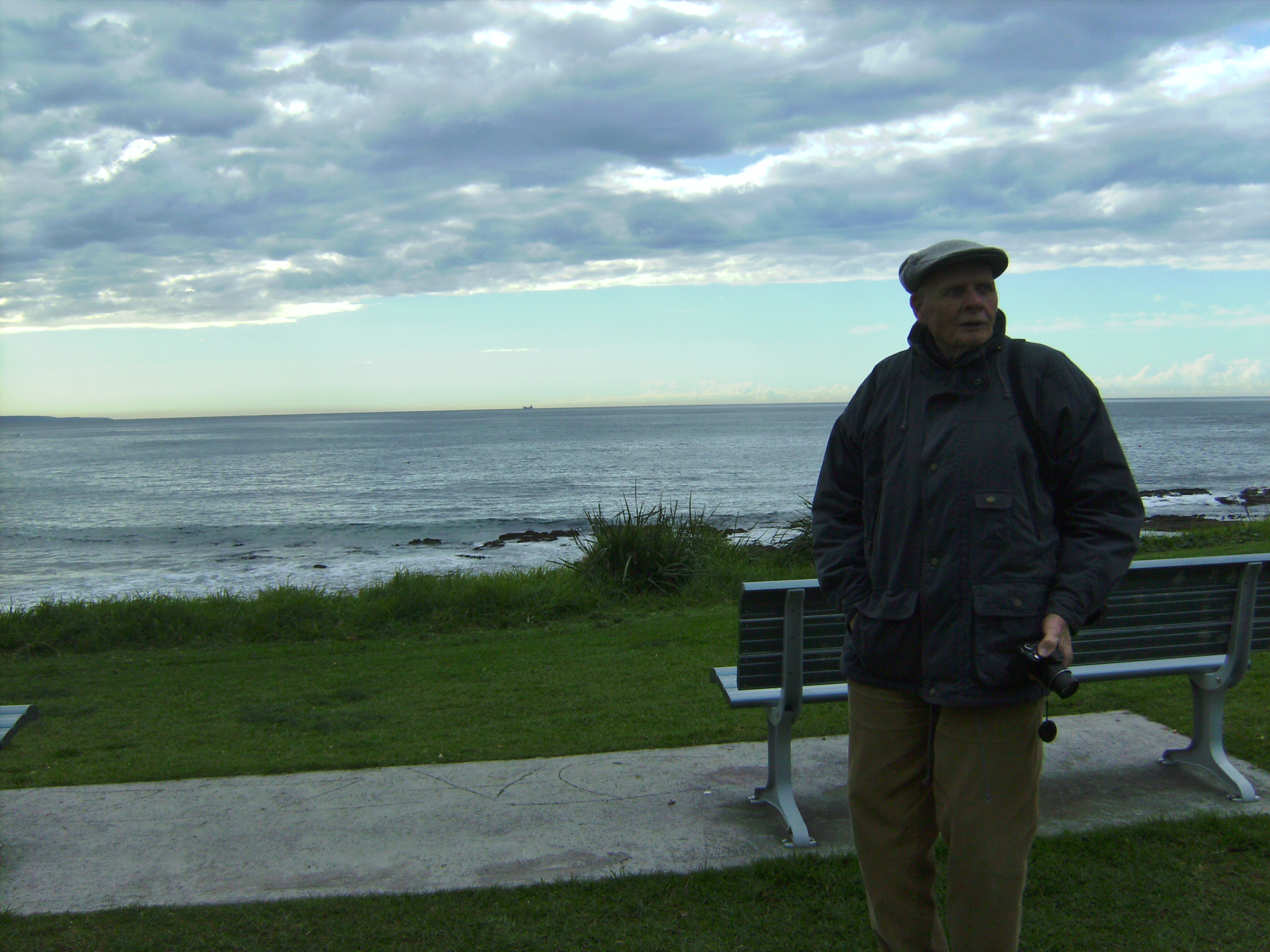
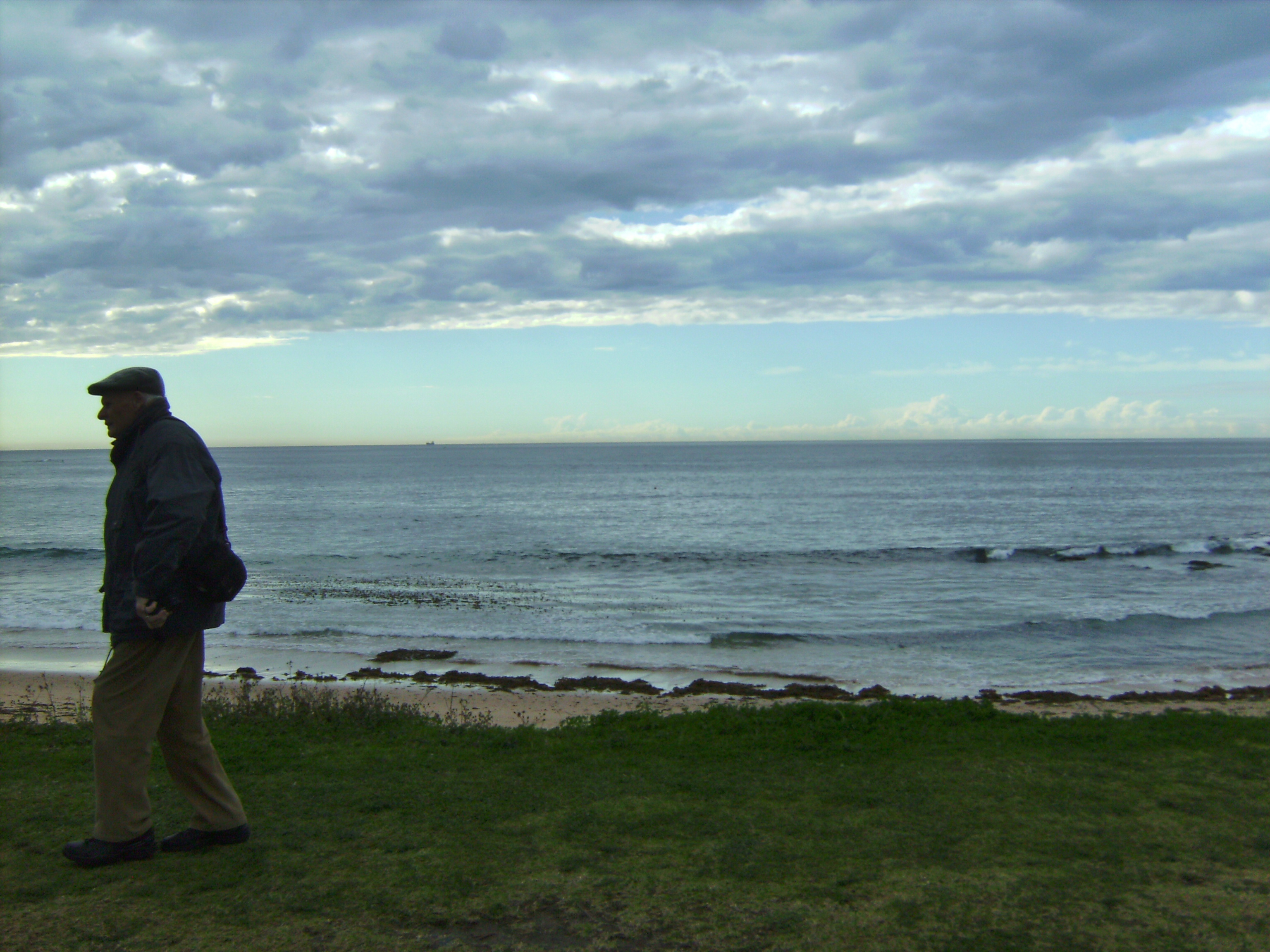
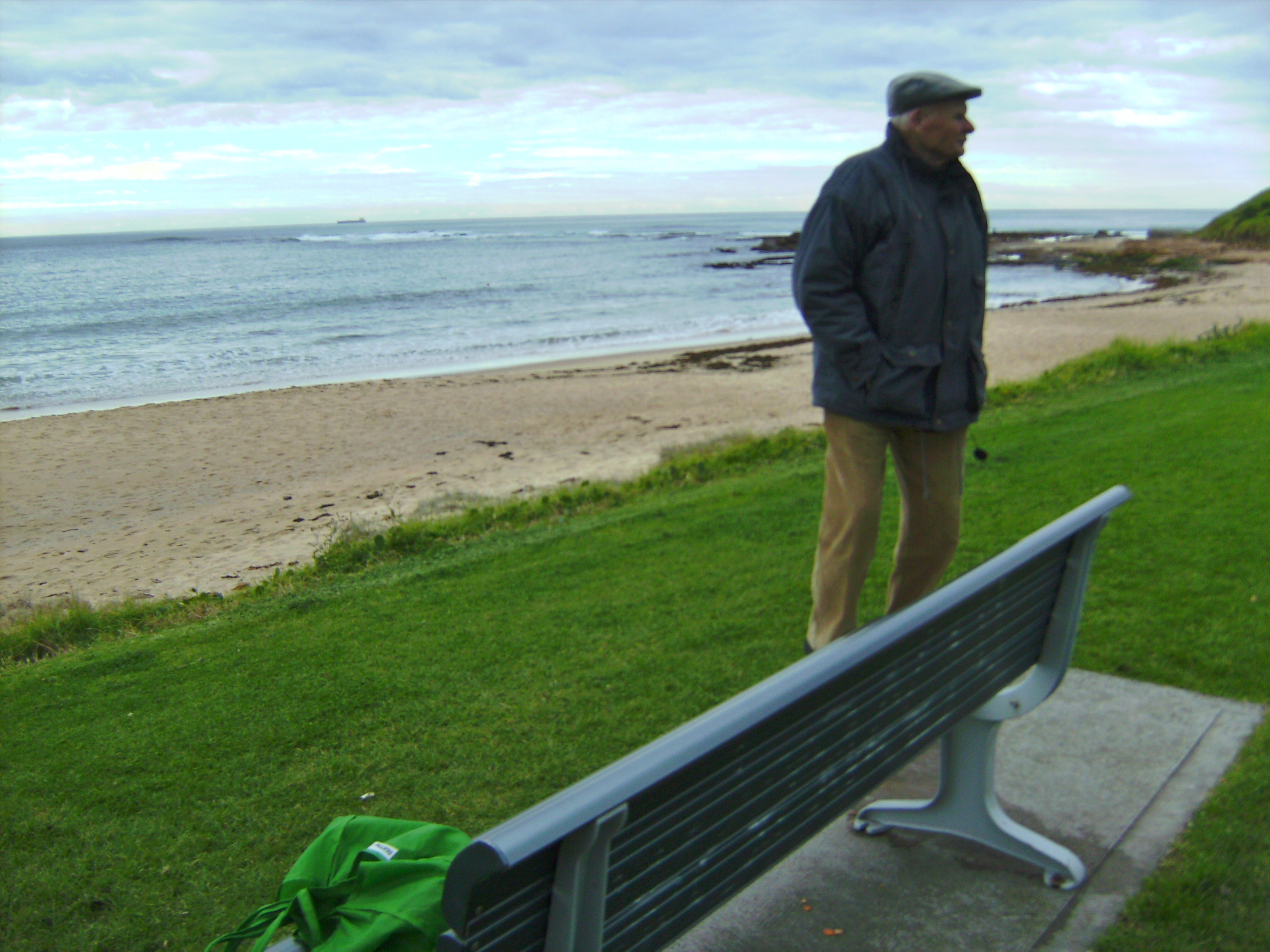
Later on I had a pot of Earl Grey tea and Peter had some coffee. We were very happy with our lunch. Earlier on we had already gone for a walk. We thought it was not too cold since there was absolutely no wind. Unfortunately there was no sun either. At least it did not rain.
We really enjoyed our little walk even though we both felt a little pain in our knees.
I took quite a few pictures. Here are some of them:








http://gcrinstitute.org/gcr-news-summary-june-2015/
Pope Francis issued an encyclical saying the natural environment is “the patrimony of all humanity” and calling for a “new dialogue about how we are shaping the future of our planet”. Pope Francis warned that we are warming the planet, depleting its reserves of clean water, and destroying its biodiversity:
Doomsday predictions can no longer be met with irony or disdain. We may well be leaving to coming generations debris, desolation and filth. The pace of consumption, waste and environmental change has so stretched the planet’s capacity that our contemporary lifestyle, unsustainable as it is, can only precipitate catastrophes, such as those which even now periodically occur in different areas of the world. The effects of the present imbalance can only be reduced by our decisive action, here and now.
“Never have we so hurt and mistreated our common home as we have in the last two hundred years,” the encyclical said.
Lloyd’s of London released a report for the insurance industry on the risk of an “acute disruption of the global food supply” in the near future. The report said that because of population growth and changing consumption patterns in the developing world, food production will have to more than double by 2050 to keep pace with demand. As a result, the report said, “the global food system is under chronic pressure to meet an ever rising demand, and its vulnerability to acute disruptions is compounded by factors such as climate change, water stress, ongoing globalization and heightening political instability”.
The US is considering stationing tanks and heavy weapons in its Baltic and Eastern European members. NATO also announced it wouldincrease the size its response force to 40,000 troops, more than triple the previous number of troops. The move would be meant to signal the US’ readiness to defend newer member nations that are close to Russia. The US has never before stationed heavy military equipment in member nations that use to be in the Soviet sphere of influence. The move would go against NATO’s pledge in the 1997 Founding Act not to permanently station “substantial combat forces” in those countries.
Russian General Yury Yakubov said Russia would respond bystationing new heavy weapons of its own in the region. Russia later announced it would deploy 40 new intercontinental ballistic missiles (ICBMs) “capable of overcoming any, even the most technically sophisticated, missile defense systems”. “The nuclear messaging of Russia is destabilizing, it’s unjustified, and it’s dangerous,” NATO Secretary General Jens Stoltenberg said. “It should scare people,” former US Ambassador to NATO Ivo Daalder added. “Now we are in a situation where it’s not inconceivable that there might be a military confrontation, and this kind of bluster contributes to the possibility of miscalculation.”
Fiona Hill and Steven Pifer wrote in The New York Times that NATO and Russia need to work together to reduce the risk of escalation from military encounters. The Russian military has been engaging recently in a greater number provocative close encounters with the militaries and civilians of other countries. Although there are Cold War agreements designed to reduce the chance of escalation, they do not cover the entire range of possible encounters between Russia and NATO countries. “Limiting the risks of miscalculation between NATO and Russian military units would seem to be a no-brainer,” Hill and Pifer wrote. “No one wants an accidental war. But, given Mr. Putin’s desire to intimidate the West, would the Kremlin permit such a dialogue to go forward?”
NASA and the NSA agreed to work together to keep comets and asteroids large enough to threaten cities or cause a global catastrophe from hitting Earth. The two agencies have studied the threat separately, but the agreement should improve their joint ability to respond to threats from extraterrestrial objects. Advocates for better planetary defense declared June 30 “Asteroid Day” to mark the anniversary of the 1908 Tunguska Event, when a large meteor exploded over the Siberian taiga with about 1,000 times the energy of the nuclear bomb dropped on Hiroshima.
NASA Goddard research scientist Neel Savani developed a model for predicting a day in advance how coronal mass ejections will affect the Earth’s magnetosphere. When coronal mass ejections—clouds of charged particles emitted by the sun—are aligned the wrong way, they cause geomagnetic storms that can damage satellites and power lines. Right now there is no way to predict more than an hour in advance whether a coronal mass ejection will cause a serious storm. But if Savani’s model is sufficiently robust, it could be used by the National Oceanic and Atmospheric Association (NOAA) to warn military forces, airlines, and utility companies before major storms occur.
Although the number of new cases of Ebola have fallen slightly, the disease is not much closer to eradication in Guinea and Sierra Leone. Médecins Sans Frontières (MSF) International President Joanne Liu criticized the G7 countries for not doing more to prepare for the next serious epidemic. Liu said that while World Health Organization (WHO) should have responded to the Ebola outbreak in West Africa more decisively, WHO member states did not take enough responsibility for the slow response. Liu also said that improving disease surveillance is not enough. “Despite not having complete data,” Liu said. “We still had enough to know that we had to scale up our response.” Liu added that countries need to be rewarded rather than punished for declaring an outbreak. The low-income countries that are most vulnerable to outbreaks of infectious diseases are also the countries that are hurt the most by travel bans and trade declines. “The reality today is if Ebola were to hit on a scale it did in August and September, we would hardly do much better than we did the last time around,” Liu said.
This news summary was put together in collaboration withAnthropocene. Thanks to Tony Barrett, Seth Baum, Kaitlin Butler, andGrant Wilson for help compiling the news.

Robert de Neufville has degrees in political science and political theory from Harvard and Berkeley. Robert is an associate of the Global Catastrophic Risk Institute, which was recently covered in Quartz.
It might seem pedantic, but there’s a big difference between what was the Greek crisis and what’s now Greece’s crisis.
When Greece’s massive debt hit the fan five years ago as the result of dumb bankers being blind to industrial-scale tax evasion, grandiose government spending and insanely indulgent social security topped by widespread rorting, it was the Greek crisis that quickly morphed into the PIGS or PIIGS crisis – Portugal, Ireland, Italy, Greece and Spain.
In any event, there’s a strong case made for Greece being better off by in effect declaring bankruptcy and leaving the euro zone.
When markets were panicking then, most of the Greek debt was owed to banks. The possibility of Greek default threatened Europe’s banks with a contagion effect that would have spread through the world.
As Band-Aids were applied to Athens and various half-hearted promises were made about reform, there were plenty of commentators suggesting that Greece’s debt could not be fixed. Even with bond holders taking a sharp haircut, the debt was simply too large for the little Greek economy to work its way out from under – and that was without the impact of greater austerity.
But the refinancing and emergency funds weren’t really about solving the Greek debt problem. They were about kicking the Greek can down the road until the threat of contagion was contained, until the other PIIGS members were stabilised, and most of the Greek debt was transferred from banks that couldn’t handle the loss to institutions that could.
Five years later, it is primarily Greece’s crisis, rather than the Greek crisis. There are still concerns of course – markets are all interconnected and don’t like uncertainty, fear is a reason for international investors to seek what they consider is relative safety – but it’s now Greece that is doomed to suffer most of the pain whatever deal is done or not done in Brussels.
It is a big, colourful story that is getting disproportionate play here, partly because of the large Greek population in Australia, partly because the idea of Western country’s banks being closed and cash rationed is rather frightening. Barring some institutional catastrophe, there are almost no economic links between Australia and Greece that matter.
Indeed, much of the story is being covered from the social and political angles rather than the economic. The protests, the genuine tales of people suffering a slide back to Second World status, the dramatic politics make good television. And in some quarters, the idea of a brave left-wing government taking on the evil capitalists stirs hearts. . . . .
To read on please go to the above link.
On the first of July Peter and I drove up MacQuarie Pass. It was a cold, but beautiful sunny day. On reaching the highlands, we took the tourist road. Our destination was the cafe of the Bradman Museum where we were to meet our blogger friends. We arrived early and ordered already some refreshments.
The pumpkin muffin was huge and we shared it. It tasted yummy. Our tea arrived in pots. It was leaf tea with milk on the side. Very nice! Our friends soon arrived and ordered some refreshments too. Sorry, we have no more pictures from that day. It was lovely, to meet our blogger friends in person, and we hope to see them soon again.


 AuntyUta