This is a fairly long article with very interesting data. I copy here only one small part, but to be more up to date with Australian migration programs please go to the above link! So this is what it says towards the end of the article:
We’ve seen more refugees — and the sky didn’t fall in
“One big change in recent Australian immigration policy — receiving little fanfare from the Prime Minister — was the increase in the annual humanitarian (refugee) intake from 13,750 to more than 18,000.
In addition, then PM Tony Abbott in 2015 announced an additional one-off intake of 12,000 refugees from the Syrian conflict. Most of these arrived in 2017 and were Christians from Syria and Iraq.
This meant an effective doubling of refugee intake in 2017. The sky didn’t fall in. While the service providers to newly arrived refugees were stretched, they coped well.”
Looking at this article I am amazed that this fruit has that many benefits as for instance for the heart. It says: ” Because dragon fruits are loaded with fiber and antioxidants, they both contribute to keeping the heart healthy and young. They fight against plaque clogging up in the arteries, maintaining the blood circulation in the body.”
After reading this, I am determined now to buy more of this amazing fruit and use them for instance in salads and with yoghurt.
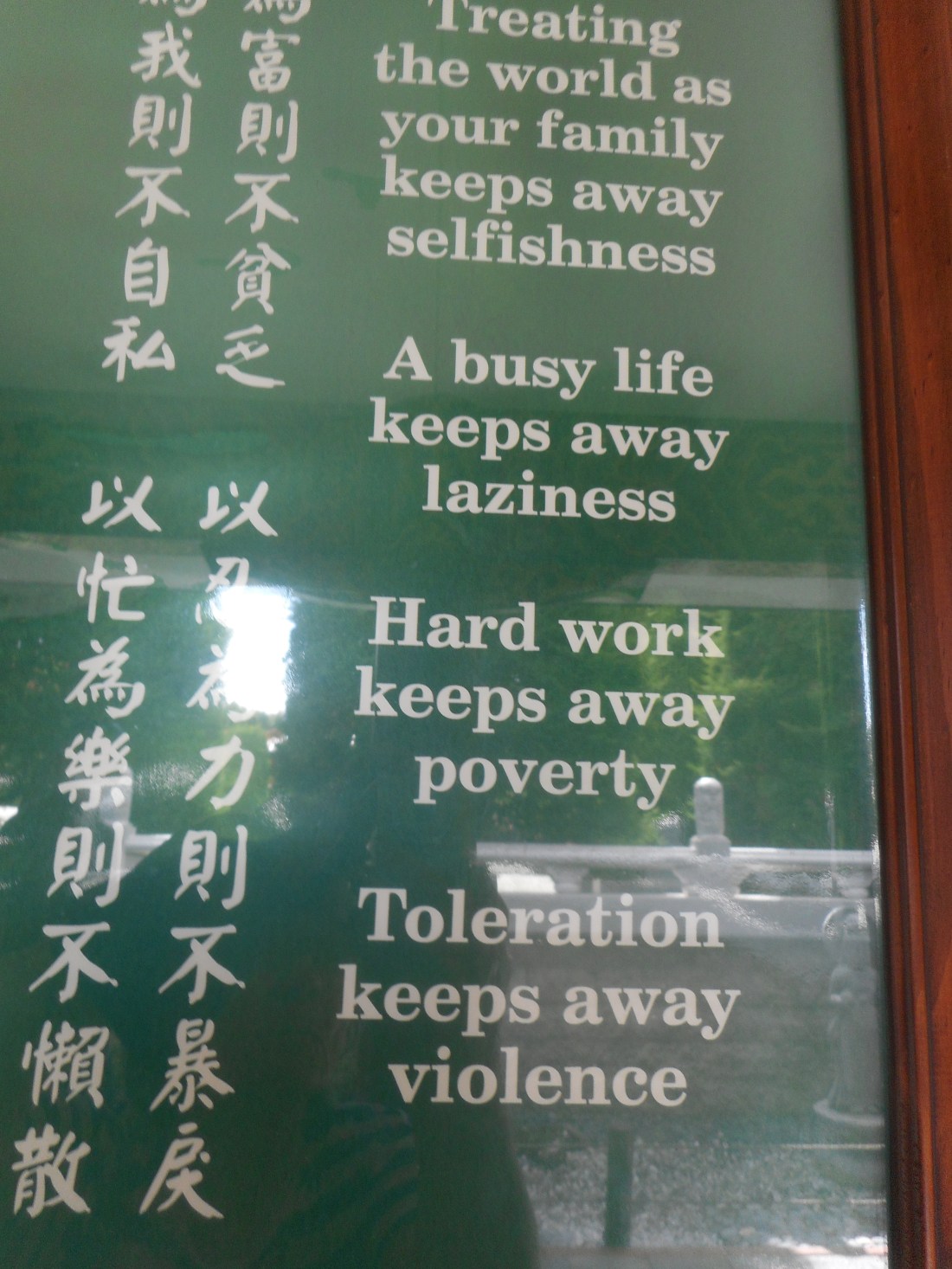
The other day I published a picture of some verses. And here now is another picture of some verses I saw recently when we were visiting the Nan Tien Temple:
What do I learn from these verses? Being very elderly, for sure certain things are often not easy to accomplish. Whatever I do, it tires me quickly. Walking is one of these things. I know that this is so. None the less I face this difficulty again and again. Soon I’ll by leaving for a little morning walk.
When the body feels a bit painful, a bit of stretching before walking eases the pain. And stopping during walking a few times and do some stretching helps a lot too, especially with breathing. This I have learned. So I do not mind stopping a few times, meaning, I face up to it.
My plan is to walk for a bit every morning and as often as possible during the day. I enjoy it a lot. I love being outside in the open. Also, to walk among trees is most enjoyable! There are lots of trees where I walk along in the morning.
On the 31st of December 2017 I wrote this:
“Soon we were ready to drive to Nan Tien Temple. The place was packed full and we had to park outside a bit further away from the Entrance Gates. The rain had stopped. So we experienced another beautiful walk to this magnificent building. Peter took some photos as we walked towards the building. The open inside area at the upper level was decorated in celebratory fashion for the year’s end. We listened to some music and watched some of the dance performances. At one of the stands with a lot of things for sale I bought a colourful windmill.”
What I feel about family: I like to feel close to family. I am most happy when I feel that my family wants to be close to me. That goes for my immediate family, but also for very distant family. Whenever people in other countries make me feel that I’d like to get to know them personally, they are like my family. I feel that all over the world there are people who could be my family.
Now my thoughts on being busy: I am 84. Has my life been busy? Yes and no. Some people would probably say of me that I am a bit lazy. I feel I often have not been as busy as some other people. Well, I try not to be too lazy. At times I love it to be very busy. At other times I just want to spend time as though I am on holidays!
It says that hard work keeps away poverty. This may be true if your hard work is not being exploited. I have been lucky all my life that I never had to work extremely hard to live a fairly good life. Even in times of severe scarcity after World War II the work I was required to do as a child I would not call hard work. I think it is good to be able to work in an efficient manner and to be able to enjoy working. Whether the work keeps away poverty, well, this depends . . . .
“Toleration keeps away violence.” Well, I love people to be tolerant towards each other. Without tolerance we cannot have a peaceful world. If people hate another religion for instance, we have to try to convince them that people of other religions have as much right to a good life as people who live a different religious life or a non religious life. Love is essential. I believe it can overcome all hate.
The world is witnessing the highest levels of displacement on record. An unprecedented 65.6 million people around the world have been forced from home by conflict and persecution at the end of 2016. Among them are nearly 22.5 million refugees, over half of whom are under the age of 18. There are also 10 million stateless people, who have been denied a nationality and access to basic rights such as education, healthcare, employment and freedom of movement. . . .
And there is so much more on this subject on this UNHCR page! There is also this video:
“OK, listen. I studied your report the whole day, and there are a few mistakes in this video. I hope you don’t find me obnoxious for pointing them out — and I do think I owe that to how much Global Trends helps me every year: 1) “One person is forcibly displaced every three seconds. That’s 65.6 million people.” No, actually that’s the 10.3 million newly displaced people in 2016 alone, whereas 65.6 million is the total, current population of forcibly displaced. Believe me, I did the math. 2) The number of refugees from South Sudan is 1.4 million! This is what the report says. Plus, the number of internally displaced is obviously higher than that of refugees — I’m not sure whether that always happens, but it surely is the tendency for a least developed country in war. 3) As to the discussion of the refugee-hosting countries, the figures for Pakistan are from last year (they fell in 2016, and today the country hosts only around 1.4 million refugees), whereas the figures for Turkey have risen, but not quite as much as you put it: it hosts less — not more — than 2.9 million refugees (2.869 millions, to be exact). Other than that, your work is beautiful, and I am a fan (I’m serious).”
I was especiallyinterestedto find something too about displacement due to climate change and natural disasters asfollows:
“In addition to persecution and conflict, in the 21st century, natural disaster (sometimes due to climate change) can also force people to seek refuge in other countries. Such disasters – floods, earthquakes, hurricanes, mudslides – are increasing in frequency and intensity. While most of the displacement caused by these events is internal, they can also cause people to cross borders. None of the existing international and regional refugee law instruments, however, specifically addresses the plight of such people.
Displacement caused by the slow-onset effects of climate change is largely internal as well. But through its acceleration of drought, desertification, the salinization of ground water and soil, and rising sea levels, climate change, too, can contribute to the displacement of people across international frontiers.
Other human-made calamities, such as severe socio-economic deprivation, can also cause people to flee across borders. While some may be escaping persecution, most leave because they lack any meaningful option to remain. The lack of food, water, education, health care and a livelihood would not ordinarily and by themselves sustain a refugee claim under the 1951 Convention. Nevertheless, some of these people may need some form of protection.
All of these circumstances – conflict, natural disasters, and climate change pose enormous challenges for the international humanitarian community. ”
The Office of the United Nations High Commissioner for Refugees is a United Nations programme with the mandate to protect refugees, forcibly displaced communities and stateless people, and assist in their voluntary repatriation, local integration or resettlement to a third country. Wikipedia
Housing and banking expert Martin North North has criticised developers and the housing industry for “throwing up” high-rise buildings at such alarmingly fast rates. He warned viewers that significant defects and safety concerns are imminent.
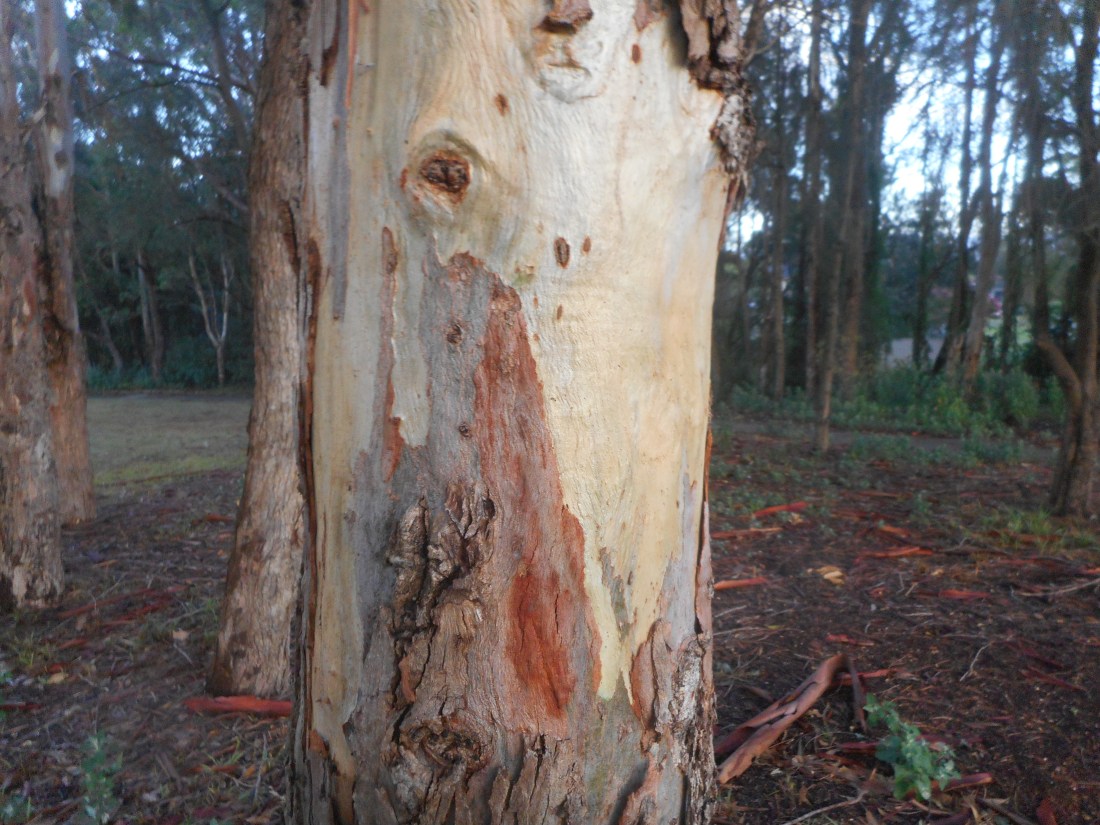
This is the trunk of one of my favourite trees in the park behind where I live.
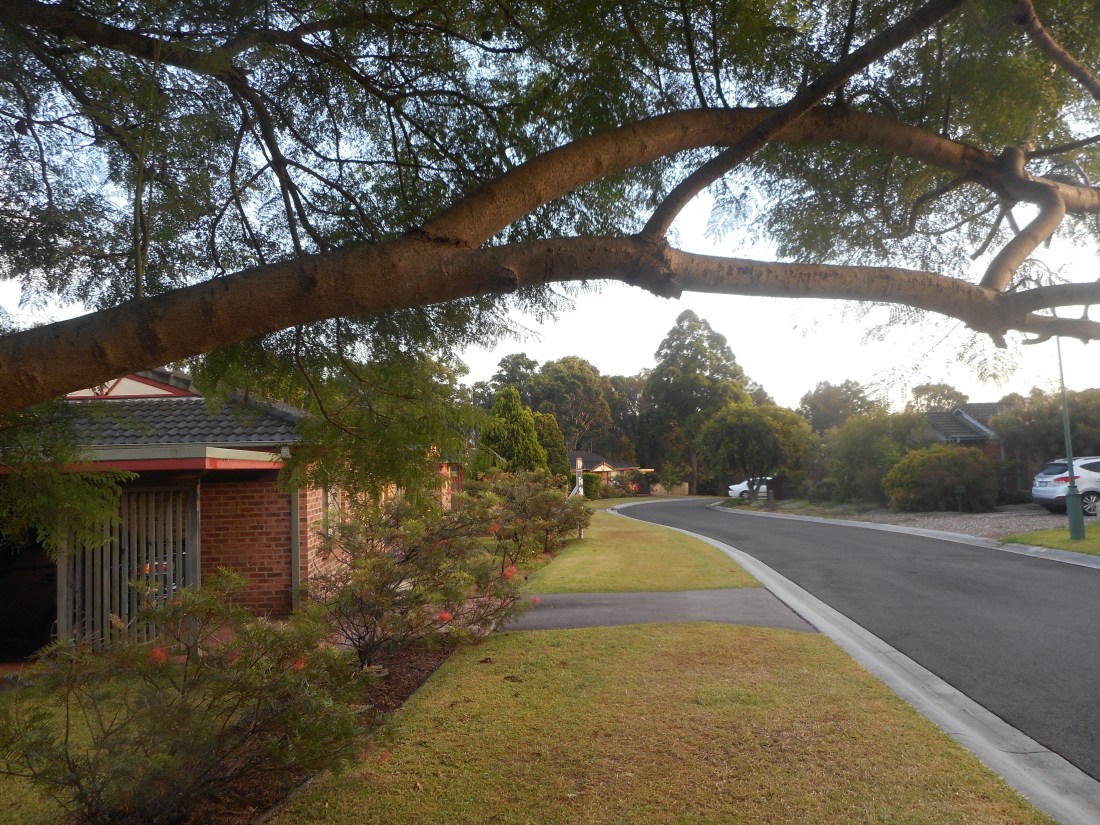
Now in the middle of March we are still on daylight saving time. The nights are already cooler but during the day we often still have more than 30C. However, we find that early in the morning it is never too warm to go for a little walk, that is we are in the habit of walking every morning for a little bit just before breakfast. I take only about 4 or 5 minutes to walk to my favourite trees in the park behind our complex of villas. Peter and I we usually leave our place together. I do walk very slowly just to stretch my legs a bit. Walking back home I usually walk a bit faster. Peter uses some spray on his tongue that helps his breathing. He aims to walk straight away at a faster pace for 8 minutes. He walks quite a bit faster than I walk. I watch him walking in the park in the distance. On the way back, when he passes me, he calls out (just for fun!) Good Morning! And I call back: Good Morning! The whole park area feels to me very private, meaning even if I owned the whole area, I could not make any better use of it than walking there for a few minutes every morning! These days the sun comes up later and later. So often we miss out now on some sun when we walk early in the moring. However, I love the mornings, when the sun does shine through the trees! When daylight saving is finally finished, the sun will be up a little bit earlier again.
I don’t think it’s your brain that is responsible, but a tireless ego, a strong will to live that dismisses the fact of aging. I can surely see this with my Dad. As we age, the brain does not accept information as rapidly as in our youth, but I find that I’m able to think on a much deeper level as I grow older and have stronger powers of concentration.
Thanks for commenting. You are probably right. My post is more tongue in cheek than anything else. But there seems to be a disconnect of what we want and of what we can achieve. At times, it is frustrating. Generally, I’m happy with my age and with my ability to manage my life.


 AuntyUta
Reblogged this on auntyuta and commented:
I love this post and want to reblog it!
I don’t think it’s your brain that is responsible, but a tireless ego, a strong will to live that dismisses the fact of aging. I can surely see this with my Dad. As we age, the brain does not accept information as rapidly as in our youth, but I find that I’m able to think on a much deeper level as I grow older and have stronger powers of concentration.
Thanks for commenting. You are probably right. My post is more tongue in cheek than anything else. But there seems to be a disconnect of what we want and of what we can achieve. At times, it is frustrating. Generally, I’m happy with my age and with my ability to manage my life.