Have you had a wake-up birthday? Can you barely believe you’re a certain age and dread what lies ahead? Is your future self a blurry screen or a stereotyped cartoon? Are you frozen even though you know exactly what to do? Do you think it’s too late or too soon?
Now’s the perfect time to face the facts and get a grip and get control of your precious life not because you ought to but because you can. Tweak your life and make the best of your bonus years and here’s the bottom line: you’re not dead!
—Rachel McAlpine 2020
. . . . .
Thoughts about aging (positive and negative) flourish in lockdown
Lockdown is like a wake-up birthday: time to choose your own old age
I would strongly recommend to go to this post by Rachel McAlpine. It shows that old age can be a beautiful time. How do we prepare for it? How do we live it? Rachel McAlpine has some great thought about what we can do to make good use of old age to the benefit of all society!
This place is the best for me. I love living in Montana. After watching that video, Can you understand?
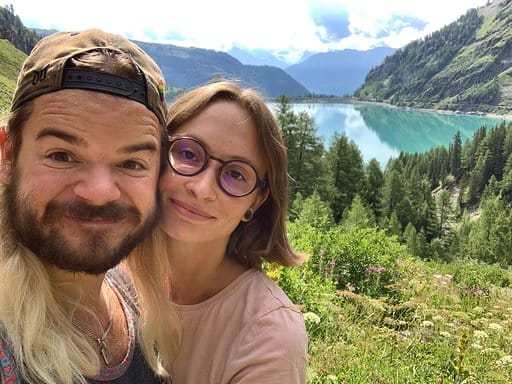
There’s no place like Montana, But Switzerland comes real close. Both have beautiful mountain majesty! I love visiting our family in Valais.
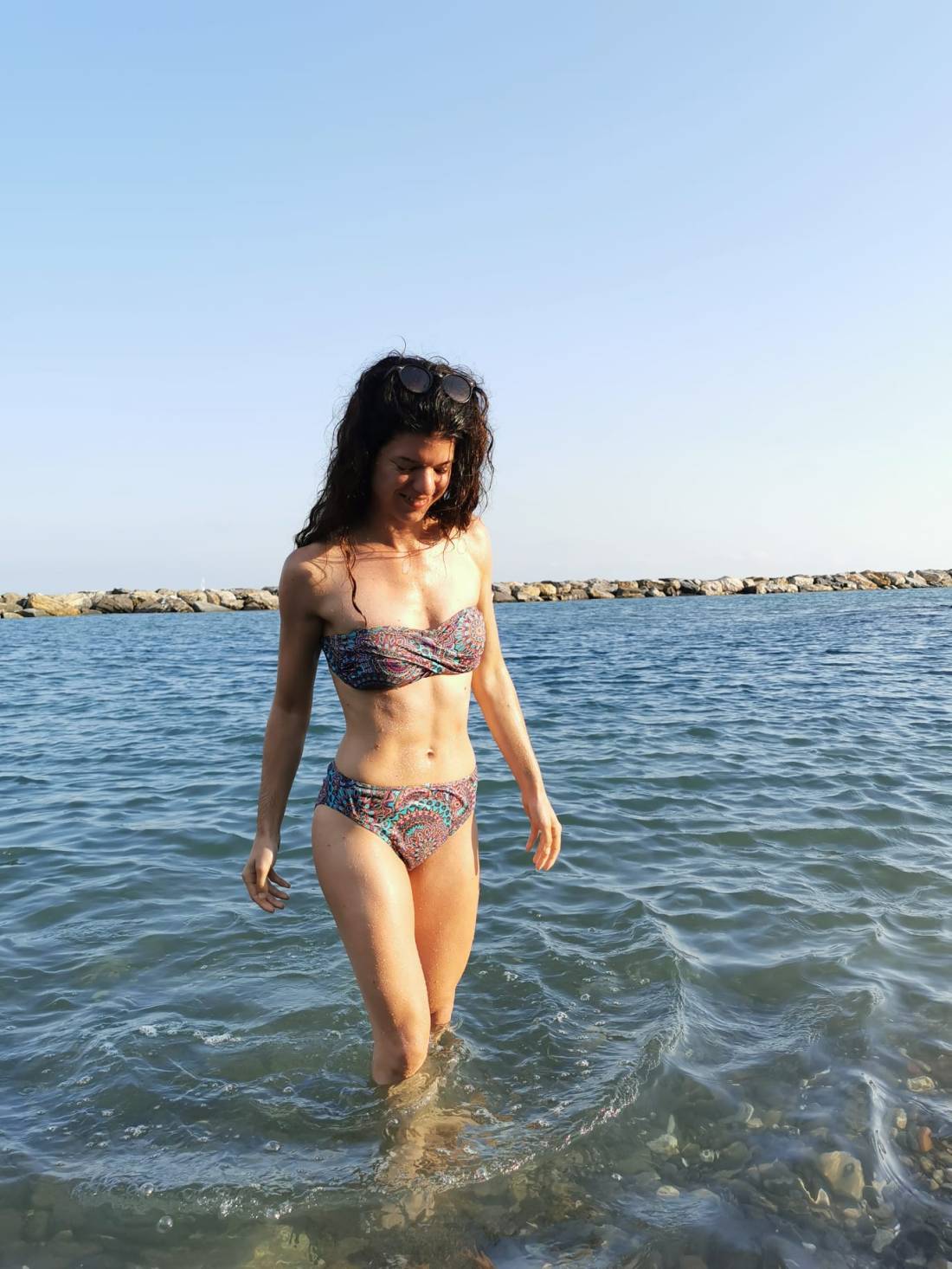
What places do you love? Where do you like to visit in this world? My grandson shared the following pictures today. Italy’s one of my other favorite places.
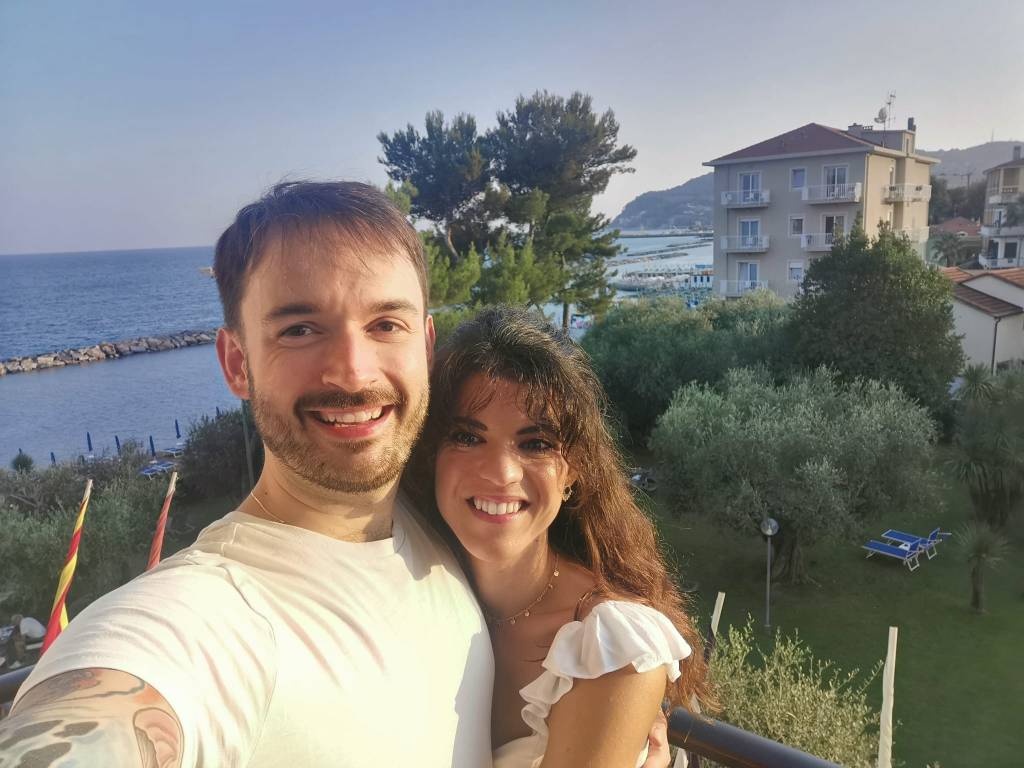
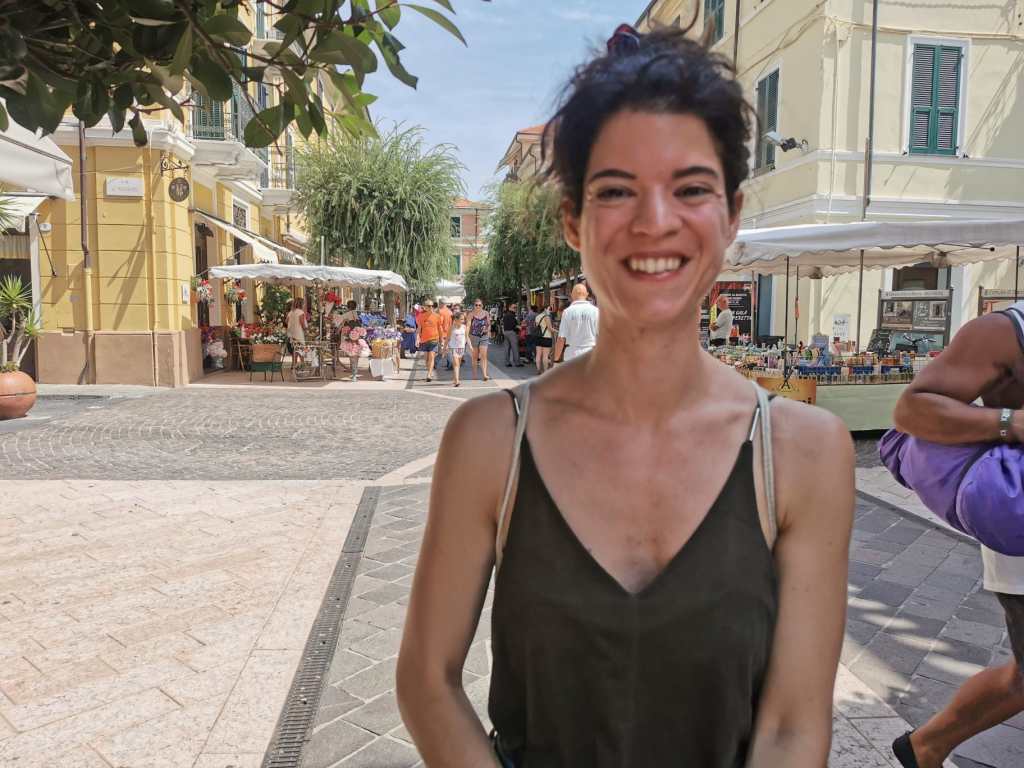
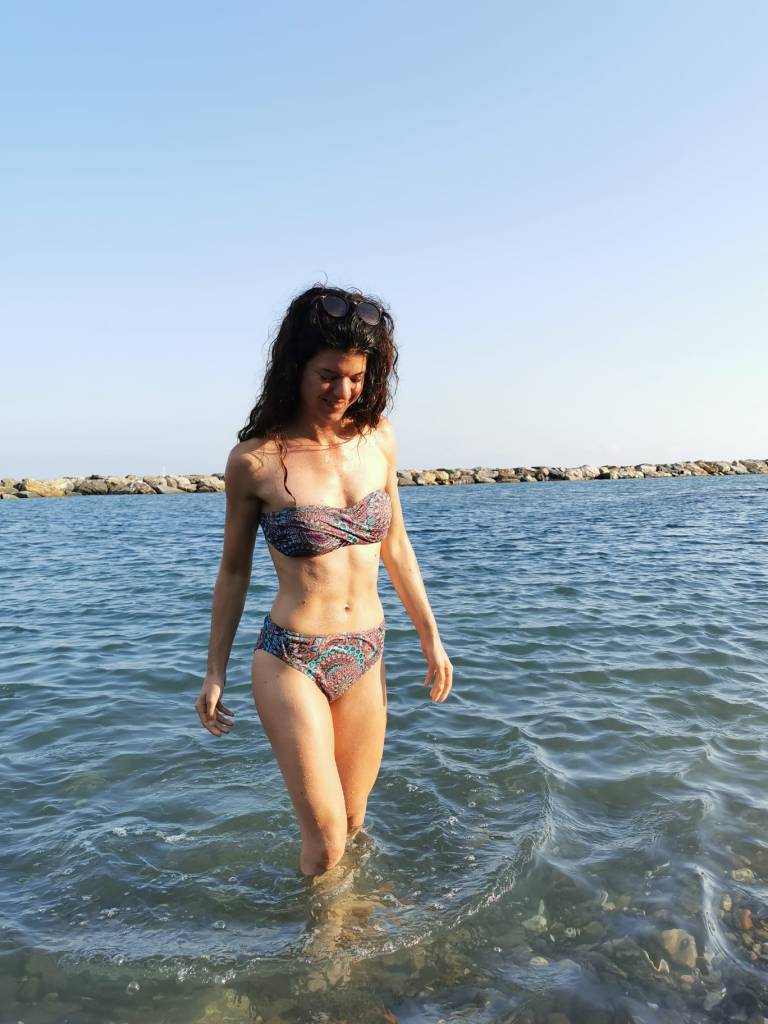
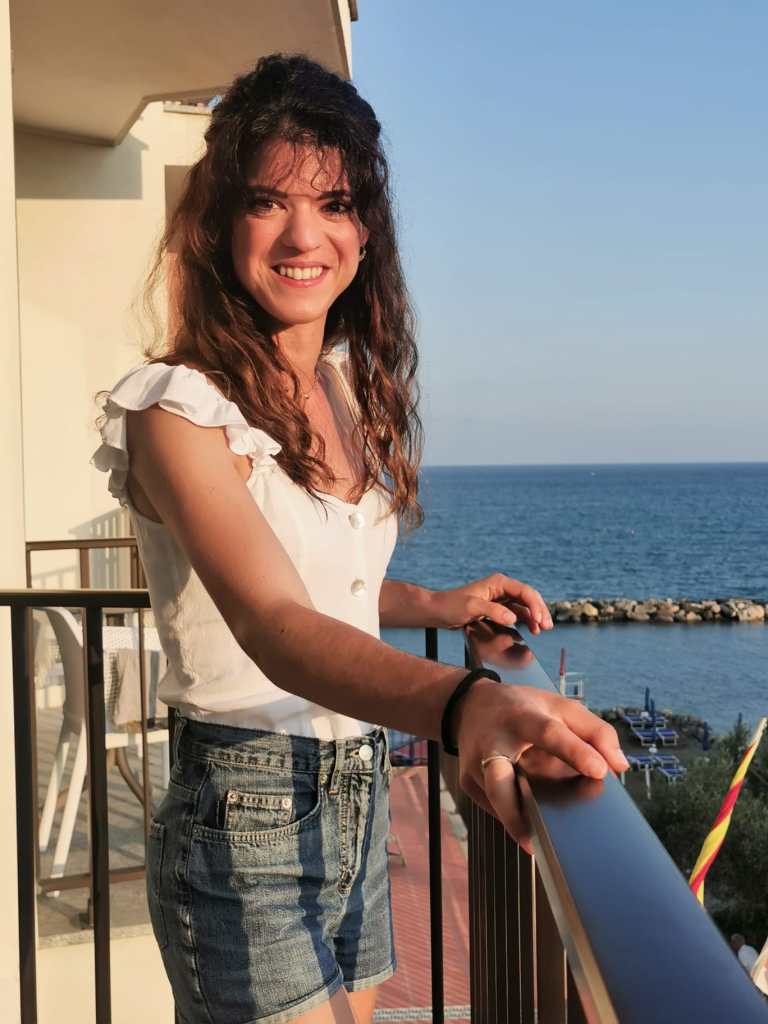
Mike and his girlfriend, Tania, Are vacationing in Italy this week. They are enjoying great days in the sun, Hiking, shopping, swimming, loving it!
Mike & Tania – such a cute couple!
Tania on a shopping trip in Italy
Tania – out for a swim – beautiful young lady, huh?
They have a great view from their balcony.
Meanwhile, back in Switzerland, my middle grandson, Nick, is out for a hike with his girlfriend, Celine.
Spiro Skouras is an Independent Journalist and contributor at ActivistPost.com Spiro joins Pete to talk about the near-future likelihood that a mandatory CV19 vaccine will come to “market.” Spiro has written about mandatory vaccination movements within the 50 state and is well equipped to speak to what could be a coming war, at least for those who value choice.
It says in this article by Prof. Anthony Hall:
“The lockdowns have, for starters, been directly responsible for explosive rates of suicide, domestic violence, overdoses, and depression. In the long run, these maladies from the lockdowns will probably kill and harm many more people than COVID-19.”
It usually makes sense to follow the money when seeking understanding of almost any major change. The strategy of following the money in our current convergence of crises in late summer of 2020 leads us directly to the lockdowns. The lockdowns were first imposed on people in the Wuhan area of China. Then other populations throughout the world were told to “shelter in place,” all in the name of combating the COVID-19 virus.
The Whispers in our Heart We all have whispers in our hearts – also known as our intuition, our gut feeling, sixth sense, whatever you want to call it – to do something. This whisper is very subtle and very soft and it whispers Truth and what to do. Whether that be to leave a […]
Yesterday’s post was about my first foray into learning to draw, which happened on Wednesday last week. One of the rules I planted firmly in my mind as I started was Draw every day.
Of course life isn’t very good at opening up an hour or so each day to sketch. The next day was going to be full on, so the only chance I had to sketch was when I first got up. As I walked Harry around the garden in my PJs contemplating what to draw, my eye fell on our fuchsia bushes…
They’re a bit scratty and skinny this time of year, but the flowers are still perfect
I was fascinated as a child by these beautiful flowers, that looked to me like fairy lanterns. Knowing I needed to get going, I grabbed a stalk and had a go at sketching one of the flowers. It was just…
I’m indebted to my colleague Josta Heylingers for pointing me at the literature on functional linguistics. Josta uses this literature to teach people how to write discussion chapters at Auckland University of Technology. To do this, she uses the work of John Swales, and his method of ‘move step analysis’. I touched on this method in my own PhD, and of my PhD students is using move step analysis in her work, so I’ve had to become passingly familiar with the method.
Swales starts by assuming that texts are social things: every reader has been ‘trained’ on what to expect from different kinds of texts. Job applications ‘sound’ different from grant applications, which sound different than a journal article. So readers are familiar with the linguistic ‘moves’ to expect. These linguistic moves are sort of like dance steps that build together to make a socially recognisable text.
Swales’ move step analysis is a way of breaking down the text dance so you can understand which bits go where and how to put them together in an accomplished performance. Think of any dance craze you can name. When I was a teenager, in the 1980s (!) it was ‘The Nutbush‘; by the 1990s it was The Macarena. In case you weren’t there, or don’t remember, here’s a helpful video. It’s worth watching, because it’s delightful, and a good way to understand what move step analysis is:
I’m indebted to my colleague Josta Heylingers for pointing me at the literature on functional linguistics. Josta uses this literature to teach people how to write discussion chapters at Auckland University of Technology. To do this, she uses the work of John Swales, and his method of ‘move step analysis’. I touched on this method in my own PhD, and of my PhD students is using move step analysis in her work, so I’ve had to become passingly familiar with the method.
Swales starts by assuming that texts are social things: every reader has been ‘trained’ on what to expect from different kinds of texts. Job applications ‘sound’ different from grant applications, which sound different than a journal article. So readers are familiar with the linguistic ‘moves’ to expect. These linguistic moves are sort of like dance steps that build together to make a socially recognisable text.
Swales’ move step analysis is a way of breaking down the text dance so you can understand which bits go where and how to put them together in an accomplished performance. Think of any dance craze you can name. When I was a teenager, in the 1980s (!) it was ‘The Nutbush‘; by the 1990s it was The Macarena. In case you weren’t there, or don’t remember, here’s a helpful video. It’s worth watching, because it’s delightful, and a good way to understand what move step analysis is:
I’m indebted to my colleague Josta Heylingers for pointing me at the literature on functional linguistics. Josta uses this literature to teach people how to write discussion chapters at Auckland University of Technology. To do this, she uses the work of John Swales, and his method of ‘move step analysis’. I touched on this method in my own PhD, and of my PhD students is using move step analysis in her work, so I’ve had to become passingly familiar with the method.
Swales starts by assuming that texts are social things: every reader has been ‘trained’ on what to expect from different kinds of texts. Job applications ‘sound’ different from grant applications, which sound different than a journal article. So readers are familiar with the linguistic ‘moves’ to expect. These linguistic moves are sort of like dance steps that build together to make a socially recognisable text.
Swales’ move step analysis is a way of breaking down the text dance so you can understand which bits go where and how to put them together in an accomplished performance. Think of any dance craze you can name. When I was a teenager, in the 1980s (!) it was ‘The Nutbush‘; by the 1990s it was The Macarena. In case you weren’t there, or don’t remember, here’s a helpful video. It’s worth watching, because it’s delightful, and a good way to understand what move step analysis is:
What was the Spanish Flu, why was it so deadly – and are there any lessons for today’s world as countries try to stem the spread of Covid-19? (Subscribe: https://bit.ly/C4_News_Subscribe) 100 years ago, the world was hit by a deadly pandemic during the last months of WWI: the Spanish Flu went on to kill millions of people around the globe. Channel 4 News speaks to Professor Howard Phillip, Professor Nancy Bristow and the writer Laura Spinney – all of whom have studied and written about the Spanish Flu crisis.






 They’re a bit scratty and skinny this time of year, but the flowers are still perfect
  AuntyUta