The COVID problem experts say must be accepted – and corrected

The risk of breathing in COVID-19 is 20 times higher indoors than out, doctors reveal.

Will BrodieJournalist June 8, 2021

. . . . . .

The expert advice is that super-spread events – where five people or more are infected – can be prevented, because 97 per cent of them happen indoors.

Many measures are simple and cheap: regular ‘airing out’ of rooms; resetting ventilation systems; checking wall vents are not blocked, and opening windows. Limiting activities such as shouting, singing and exercising indoors is also advised as is increasing humidity with humidifiers as the virus thrives on dry air.

Asst. Prof. Hegarty says vaccines alone will not end the pandemic.

“We now understand that risk of transmission is predominantly indoors and very specific to certain buildings and indoor air conditions.

“These conditions are preventable, and this knowledge is key to stopping infections and to opening buildings at low risk.”

The pressure is on for Australia to accept the coronavirus really can spread in the air we breathe

The Conversation, May 13, 2021

https://theconversation.com/the-pressure-is-on-for-australia-to-accept-the-coronavirus-really-can-spread-in-the-air-we-breathe-160641

. . . . .

Catching COVID from surfaces is very unlikely. So perhaps we can ease up on the disinfecting

What does the evidence say?

SARS-CoV-2 is a respiratory virus that multiplies in the respiratory tract. So it is spread by the respiratory route — via breathing, speaking, singing, coughing or sneezing.

Two other coronaviruses — the ones that cause MERS (Middle Eastern respiratory sydrome) and SARS (severe acute respiratory syndrome) — are also spread this way. Both are accepted as being airborne.

In fact, experimental studies show SARS-CoV-2 is as airborne as these other coronaviruses, if not more so, and can be found in the air 16 hours after being aerosolised.

. . . . .

So why has airborne denialism persisted for so long?

The role of airborne transmission has been denied for so long partly because expert groups that advise government have not included engineers, aerosol scientists, occupational hygienists and multidisciplinary environmental health experts.

Partly it is because the role of airborne transmission for other respiratory viruses has been denied for decades, accompanied by a long history of denial of adequate respiratory protection for health workers. For example, during the SARS outbreak in Canada in 2003, denial of protection against airborne spread for health workers in Toronto resulted in a fatal outbreak.

Even influenza is airborne, but this has been denied by infection control committees.

Read more: Here’s the proof we need. Many more health workers than we ever thought are catching COVID-19 on the job

What’s the difference between aerosols and droplets?

The distinction between aerosols and droplets is largely artificial and driven by infection control dogma, not science.

This dogma says large droplets (defined by WHO as larger than 5 micrometres across) settle to the ground and are emitted within 2 metres of an infected person. Meanwhile, fine particles under 5 micrometres across can become airborne and exist further away.

There is in fact no scientific basis for this belief. Most studies that looked at how far large droplets travelled found the horizontal distance is greater than 2 metres. And the size threshold that dictates whether droplets fall or float is actually 100 micrometres, not 5 micrometres. In other words, larger droplets travel further than what we’ve been led to believe.

. . . . .

Leading aerosol scientists explain the historical basis of these false beliefs, which go back nearly a century.

And in further evidence the droplet theory is false, we showed that even for infections believed to be spread by droplets, a N95 respirator protects better than a surgical mask. In fact airborne precautions are needed for most respiratory infections.

Why does this difference matter?

Accepting how SARS-CoV-2 spreads means we can better prevent transmission and protect people, using the right types of masks and better ventilation.

Breathing and speaking generate aerosols. So an infected person in a closed indoor space without good ventilation will generate an accumulation of aerosols over time, just like cigarette smoke accumulates.

church outbreak in Australia saw spread indoors up to 15 metres from the sick person, without any close contact.https://platform.twitter.com/embed/Tweet.html?

Masks work, both by preventing sick people from emitting infected aerosols, and by preventing well people from getting infected. A study in Hong Kong found most transmission occurred when masks weren’t worn inside, such as at home and in restaurants.


Read more: This video shows just how easily COVID-19 could spread when people sing together


Coughing generates more aerosols

The old dogma of droplet infection includes a belief that only “aerosol generating procedures” — such as inserting a tube into someone’s throat and windpipe to help them breathe — pose a risk of airborne transmission. But research shows a coughing patient generates more aerosols than one of these procedures.

Yet we do not provide health workers treating coughing COVID-19 patients with N95 respirators under current guidelines.

At the Royal Melbourne Hospital, where many health worker infections occurred in 2020, understanding airflow in the COVID ward helped explain how health workers got infected.

Think about it. Airborne deniers tell us infection occurs after a ballistic strike by a single large droplet hitting the eye, nose or mouth. The statistical probability of this is much lower than simply breathing in accumulated, contaminated air.

The ballistic strike theory has driven an industry in plastic barriers and face shields, which offer no protection against airborne spread. In Switzerland, only hospitality workers using just a face shield got infected and those wearing masks were protected.


Read more: Many of our buildings are poorly ventilated, and that adds to COVID risks


In hotel quarantine, denial of airborne transmission stops us from fixing repeated breaches, which are likely due to airborne transmission.

We need to select quarantine venues based on adequacy of ventilation, test ventilation and mitigate areas of poor ventilation. Opening a window, drawing in fresh air or using air purifiers dramatically reduce virus in the air.


Read more: As international travellers return to Melbourne, will it be third time lucky for Victoria’s controversial hotel quarantine system?


We need to provide N95 respirators to health, aged-care and quarantine workers who are at risk of high-dose exposure, and not place them in poorly ventilated areas.

It’s time to accept the evidence and tighten protection accordingly, to keep Australia safe from SARS-CoV-2 and more dangerous variants of concern, some of which are vaccine resistant.

Impacts of the Covid-19 Lockdown on World Trade: Global Shipping Crisis Far Worse than Imagined

Our World is changing!

stuartbramhall's avatarThe Most Revolutionary Act

https://www.globalresearch.ca/wp-content/uploads/2021/07/CONT4231-400x225.jpg

By F. William Engdahl

Global Research

Origins of the Crisis

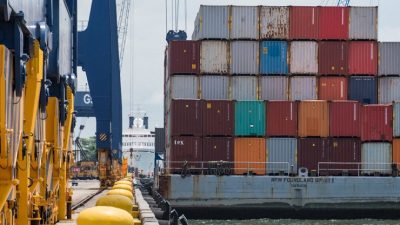
According to German-based Statista Research Department, some 80 percent of all goods globally are carried by sea including oil, coal, grains. Of that total, in terms of value, global maritime container trade accounts for some 60 percent of all seaborne trade, valued at around 14 trillion US dollars in 2019. This ocean shipping has become the arteries of the world economy for better or worse.

This is a direct consequence of the 1990’s creation of the WTO with new rules favoring out-sourcing of manufacture to countries where production was far cheaper, that is as long as ocean transport was cheap. After China became a WTO member in 2001, they became the greatest beneficiary of the new rules and within a decade China was called the “workshop of the world.” Entire industries such as electronics, pharmaceuticals, textiles, chemicals as well as…

View original post 746 more words

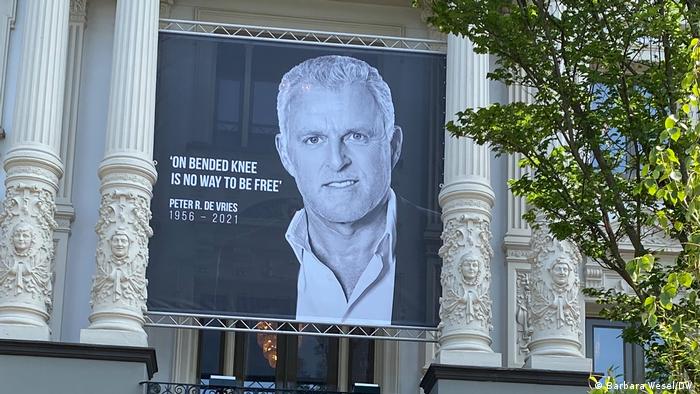
Thousands pay last respects to Dutch reporter Peter de Vries

https://www.dw.com/en/thousands-pay-last-respects-to-dutch-reporter-peter-de-vries/a-58583145

“Mourners spoke of the journalist’s fearlessness as police union leaders tried to make sense of a shooting in broad daylight in central Amsterdam. A smaller funeral for family and friends will be held on Thursday. , , , “

A picture of Peter de Vries at the Carre Theatre.

Mourners paid their last respects to Peter de Vries at the Carre Theatre

Dapto Exposure Sites, from Wednesday, 14 July to Saturday, 17th July

Dapto7-Eleven, Dapto125 Princes HighwaySaturday, 17 July4:55pm to 5:05pmGet tested immediately. Self-isolate until you get a negative result.
DaptoColes Dapto MallPrinces Highway and Moombara StreetWednesday, 14 July1:50pm to 2:10pmGet tested immediately. Self-isolate until you get a negative result.
DaptoPriceline Pharmacy Dapto33-35 Princes HighwayFriday, 16 July2:15pm to 2:45pmGet tested immediately. Self-isolate until you get a negative result.
DaptoWoolworths Dapto MallPrinces Highway and Moombara StreetThursday, 15 July11:40am to 12:00pmGet tested immediately. Self-isolate until you get a negative result.

COVID-19 cases confirmed in Illawarra and Southern Highlands, links to Sydney suspected

https://www.abc.net.au/news/2021-07-20/new-covid-cases-recorded-in-illawarra-and-southern-highlands/100307978

ABC Illawarra / By Ainslie Drewitt-Smith Posted Tue 20 Jul 2021 at 3:55pm

Authorities working to determine the source of three COVID-19 cases confirmed in the Illawarra this week suspect they may be linked to cases in Sydney.

Key points:

  • Three new cases of COVID-19 have been confirmed in the Illawarra, but no venues have been listed as places of concern
  • Two cases have also been confirmed in the Wingecarribee Shire, and one in the Wollondilly, where community exposure is said to be “minimal”
  • The exact source of the Illawarra infections is unknown

Two of the cases from the Wollongong area were revealed on Monday, with the Illawarra-Shoalhaven Local Health District (ISLHD) confirming the third case this afternoon.

“This case is from the Wollongong local government area and is linked to the two cases announced yesterday,” the spokesperson said.

“All three cases are currently isolating at home.”

New South Wales recorded 78 new locally acquired cases in the 24 hours to 8:00pm on Monday, 27 of which were infectious in the community.

No venues of concern

The ISLHD said in a statement that investigations into the source of the three infections was underway, but no new venues of concern had been listed in the region.

“It is believed there are links to employment in the Sydney area,” the spokesperson said.

“When a confirmed COVID-19 case attends a venue while possibly infectious, NSW Health carries out a risk assessment on that venue to determine whether other people may have been exposed and whether there is a public health risk.

“NSW Health does not disclose details about venues unless there is a public health reason.”

A woolworths sign, light up over the entrance to the supermarket.
Woolworths said it deep-cleaned its Dapto store after being contacted by NSW Health on Monday.(AAP: Mick Tsikas)

Businesses exposed

Several businesses in the Illawarra have identified themselves as exposure sites and are working to allay concerns from customers and clients.

“We have been notified that a customer with a confirmed case of COVID-19 was present at our Dapto store on Thursday, July 15,” a Woolworths spokesperson said.

“As a food retailer, we already have very high standards of cleaning and hygiene in place, and the store had a detailed deep clean overnight on Monday 19 July.

“Customers and team members should be assured they can continue to safely shop and work at our Woolworths Dapto store.”

LIVE UPDATES: Read our blog for the latest news on the COVID-19 pandemic.

In a Facebook post, Dapto Healthcare announced it would close as a precaution.

“Due to a Dapto medical centre being declared as a COVID-19 exposure site, Dapto Healthcare will be conducting telephone consults only, until further notice,” the post said.

A dermatology clinic in Wollongong was also closed on Monday for deep cleaning.

In a phone message, the clinic said a person who had since tested positive for the virus attended the venue between 10:00 and 11:00am on Thursday, July 15.

A residential-looking, brick rendered building that operates as a dermatology practice in a regional city.
Wollongong Dermatology informed its patients a person who has since tested positive for the virus attended the practice on Thursday, July 15. (Facebook)

. . . . .

Wollongong, Mittagong, and Burradoo have all been identified by NSW Chief Health Officer Kerry Chant as focus areas for increased testing in the coming days.

Australian government urged to secure COVID therapy drugs as experts look beyond vaccination

https://www.abc.net.au/news/2021-07-22/federal-government-urged-to-secure-covid-treatment-drugs/100312542

By Dan Oakes, ABC Investigations 5h ago, updated 19m ago

The federal government has been urged to secure supplies of COVID therapy drugs amid fears Australia could be left at the back of the queue as the world’s focus turns from vaccines to medicines to treat the disease.

Key points:

  • Vaccination may be ineffective for immuno-compromised people, which is about 4 per cent of the population
  • Antibodies that are administered intravenously are already in use in the United States
  • Singapore has signed a pre-purchase agreement for one drug, while the European Commission has purchased doses of another

Pharmaceutical giant GlaxoSmithKline, which has struck an agreement with the Singaporean Government to supply one promising treatment, says it’s unclear if the Australian Government will buy its drug.

Currently there’s only one treatment used widely for COVID patients, a steroid called Dexamaethasone which treats inflammation of the lungs.

However, the drug is only effective on patients who are suffering severe symptoms and are receiving oxygen.

Experts say that as Australia moves towards a future where COVID is ever-present in the community, there is an urgent need for drugs to treat milder, yet more infectious, cases.

. . . . .

Data shows coronavirus can only be controlled if 8 out of 10 Australians stay home

Here are some interesting Data from March last year!

auntyuta's avatarAuntyUta

Updated 

The success or failure of Australia’s coronavirus fight relies to a remarkable degree on just one thing, new modelling has found.

And that thing is whether individual Australians now follow official advice — and just stay home.

The data comes from a complex model of how COVID-19 could spread in Australia, which finds:

  • Coronavirus will continue to spread virtually unchecked unless at least eight in 10 Australians stay home as much as possible.
  • If that slips even slightly — to seven in 10 people — the fight to ‘flatten the curve’ will be lost.
  • It also suggests that…

View original post 177 more words