My Grandfather was in the Sejm and later in the Senate

auntyutaArticleCopyDocumentaryHistory  November 24, 2017 2 Minutes

I googled my grandfather’s name and found the following:

https://translate.google.com.au/translate?hl=en&sl=de&u=https://de.wikipedia.org/wiki/Josef_Spickermann&prev=search

Josef Alexander Spickermann (born March 6, 1870 in Bloto, Lodz [1] (probably Zgniłe Błoto ), died March 22, 1947 in Leipzig ) was a German politician and deputy of the German minority in Poland in the Sejm of the Second Polish Republic .

Table of Contents [Verbergen]
1 life
1.1 Family and work
1.2 Political career
2 literature
3 individual proofs
Life Edit ]
Family and occupation [ edit | Edit ]
Spickermann graduated from the school in Łódź and already passed the master craftsman carpentry exam at the age of 19. He was also a real estate dealer in Łódź. At the time of the German occupation from 1939 to 1945 he was senior master of the carpentry guild Litzmannstadt, Reichsgau Wartheland . [1]

Spickermann was married and had nine children, three of whom died in infancy. Three sons and three daughters reached adulthood and they started all families. In 1945, the Spickermanns, who joined other relatives, escaped to Pouch at Bitterfeld . [4]

Political career [ edit | Edit ]
From January 1919 Spickermann was a city councilor in Lodz. In the same year Spickermann and Ludwig Wolff were elected as representatives of the German People’s Party (DVP) for the district Lodz- Land Lask – Brzeziny in the Polish Constituent National Assembly (1919-1922) . Spickermann initially remained until 1920 deputies, but was re-elected for 1922-1928 in the Sejm, now for the constituency Konin – Koło – Lentschütz . From 1928 to 1930 he was senator for the Łódź Voivodeship . On 22 November 1930 Spickermann again ran successfully for the Senate, but had to resign his mandate due to an “internal agreement” in the German People’s Association to August Utta . He then retired from politics. [1]

Literature [ edit | Edit ]
Bertold Bergmann: Josef Spickermann, life picture of a German parliamentarian , in: Landsmannschaft Weichsel-Warthe: Jahrbuch Weichsel-Warthe 1960 , Munich 1960 [for this article so far not evaluated].
Ursula Brehmer: Responsibility as a task and life law, Josef Alexander Spickermann on the 50th anniversary of death in: Landsmannschaft Weichsel-Warthe: Jahrbuch Weichsel-Warthe 1997 , Berlin / Bonn 1997, pp. 68-72.
Karl-Heinz Reschke: Josef Alexander Spickermann, On the 60th anniversary of the death of the Sejmabgeordneter and Senator in Poland , in: Landsmannschaft Weichsel-Warthe: Jahrbuch Weichsel-Warthe 2007 ,
Wilfried Gerke: Contributions to the History of the Germans in Poland during the Second World War 1939-1945. Herne 2008, p. 67.
Hochspringen ↑ Eduard Kneifel: The Protestant-Augsburgischen communities in Poland 1555-1939. Vierkirchen 1971, p. 318.
Ursula Brehmer: Responsibility as a task and law of life. Josef Alexander Spickermann on the 50th anniversary of his death. In: Landsmannschaft Weichsel-Warthe: Jahrbuch Weichsel-Warthe 1997 , Berlin / Bonn 1997, p. 68.
Hochspringen ↑ Ursula Brehmer: Responsibility as a task and law of life. Josef Alexander Spickermann on the 50th anniversary of his death. In: Landsmannschaft Weichsel-Warthe: Jahrbuch Weichsel-Warthe 1997 , Berlin / Bonn 1997, p. 71.
Mads Ole Balling : From Reval to Bucharest – Statistical-Biographical Handbook of the Parliamentarians of German Minorities in Central and Southeastern Europe 1919-1945, Volume 1, 2nd Edition . .

. . .

Related

https://auntyuta.com/2012/11/23/a-cemetery-in-leipzig/

Childhood MemoriesNovember 20, 2011In “Childhood Memories”

My FatherMay 25, 2016In “Childhood Memories”

My Paternal Grandparents in Lodz, visiting Lodz on a joined Passport!October 12, 2017In “Childhood Memories”

Edit”My Grandfather was in the Sejm and later in the Senate”

Published by auntyuta

Auntie, Sister. Grandmother, Great-Grandmother, Mother and Wife of German Descent I’ve lived in Australia since 1959 together with my husband Peter. We have four children, eight grandchildren and two great-grandchildren. I started blogging because I wanted to publish some of my childhood memories. I am blogging now also some of my other memories. I like to publish some photos too as well as a little bit of a diary from the present time. Occasionally I publish a story with a bit of fiction in it. Peter, my husband, is publishing some of his stories under berlioz1935.wordpress.com View all posts by auntyutaPublishedNovember 24, 2017

6 thoughts on “My Grandfather was in the Sejm and later in the Senate”catterel EditWell done, Uta – you have made a good start on tracing your ancestors. Be prepared to discover unpleasant facts as well as interesting and sometimes amusing things. Your grandfather was an important man.Reply

auntyuta EditThanks, Cat. Yes, all his children and grandchildren who lived close to where he lived always thought that he was an important man. Grandfather loved to discuss things with the whole family being assembled around the dinner table. A few years after grandfather’s death I met the extended family a few times in Western Germany where they had settled as refugees from Poland. All the family still talked a lot about grandfather. It says in the above article:‘On 22 November 1930 Spickermann again ran successfully for the Senate, but had to resign his mandate due to an “internal agreement” in the German People’s Association to August Utta . He then retired from politics.”Elisabeth, Grandfather’s youngest daughter, talked for instance about this “internal agreement”. I remember her mentioning the name “Utta” in connection with grandfather’s resignation. She did not like it at all that he had to resign!My cousins always liked to research a lot about family history. Two of my cousins are mentioned in the above article. Thanks to them I could find the above article in google.Reply

catterel EditAnd have you googled August Utta? Interesting man, too.

auntyuta EditThanks, Cat. As you suggested, I googled August Utta,https://de.wikipedia.org/wiki/August_UttaI found it interesting that he died already in 1940 aged only 54. Apparently he went to farming for the last couple of years of his life.
So what caused his death? I wonder.Grandfather lived to age 77 after having fled with the extended family from Lodz to Pouch (near Bitterfeld) in Germany at the last moment before the Russians occupied Lodz in January/February 1945.https://de.wikipedia.org/wiki/PouchIt says that at the time of the German occupation from 1939 to 1945 Spickermann was senior master of the carpentry guild Litzmannstadt (Lodz) Reichsgau Wartheland.

doesitevenmatter3 EditExcellent research and interesting information.
HUGS!!! y

auntyuta EditThanks, HUGS 

Ode to Joy

https://en.wikipedia.org/wiki/Ode_to_Joy

From Wikipedia, the free encyclopediaJump to navigationJump to searchThis article is about Schiller’s poem. For the “Ode to Joy” theme by Beethoven, see Symphony No. 9 (Beethoven). For other uses, see Ode to Joy (disambiguation).

by Friedrich Schiller
Autograph manuscript, circa 1785
Original titleAn die Freude
Written1785
CountryGermany
LanguageGerman
FormOde
PublisherThalia
Publication date1786, 1808

Ode to Joy” (German: “An die Freude” [an diː ˈfʁɔʏdə]) is an ode written in the summer of 1785 by German poet, playwright, and historian Friedrich Schiller and published the following year in Thalia. A slightly revised version appeared in 1808, changing two lines of the first and omitting the last stanza.

“Ode to Joy” is best known for its use by Ludwig van Beethoven in the final (fourth) movement of his Ninth Symphony, completed in 1824. Beethoven’s text is not based entirely on Schiller’s poem, and it introduces a few new sections. His tune[1] (but not Schiller’s words) was adopted as the “Anthem of Europe” by the Council of Europe in 1972 and subsequently by the European UnionRhodesia‘s national anthem from 1974 until 1979, “Rise, O Voices of Rhodesia“, used the tune of “Ode to Joy”.

Contents

The poem[edit]

Schillerhaus in Gohlis

Schiller wrote the first version of the poem when he was staying in GohlisLeipzig. In the year 1785 from the beginning of May till mid September, he stayed with his publisher, Georg Joachim Göschen, in Leipzig and wrote “An die Freude” along with his play Don Carlos.[2]

Schiller later made some revisions to the poem, which was then republished posthumously in 1808, and it was this latter version that forms the basis for Beethoven’s setting. Despite the lasting popularity of the ode, Schiller himself regarded it as a failure later in his life, going so far as to call it “detached from reality” and “of value maybe for us two, but not for the world, nor for the art of poetry” in an 1800 letter to his longtime friend and patron Christian Gottfried Körner (whose friendship had originally inspired him to write the ode).[3]

Lyrics[edit]

An die Freude

Freude, schöner Götterfunken,
Tochter aus Elysium,
Wir betreten feuertrunken,
Himmlische, dein Heiligtum!
Deine Zauber binden wieder
Was die Mode streng geteilt*;
Alle Menschen werden Brüder*
Wo dein sanfter Flügel weilt.

Wem der große Wurf gelungen
Eines Freundes Freund zu sein;
Wer ein holdes Weib errungen
Mische seinen Jubel ein!
Ja, wer auch nur eine Seele
Sein nennt auf dem Erdenrund!
Und wer’s nie gekonnt, der stehle
Weinend sich aus diesem Bund!

Freude trinken alle Wesen
An den Brüsten der Natur;
Alle Guten, alle Bösen
Folgen ihrer Rosenspur.
Küsse gab sie uns und Reben,
Einen Freund, geprüft im Tod;
Wollust ward dem Wurm gegeben
und der Cherub steht vor Gott.

Froh, wie seine Sonnen fliegen
Durch des Himmels prächt’gen Plan
Laufet, Brüder, eure Bahn,
Freudig, wie ein Held zum Siegen.

Seid umschlungen, Millionen!
Diesen Kuß der ganzen Welt!
Brüder, über’m Sternenzelt
Muß ein lieber Vater wohnen.
Ihr stürzt nieder, Millionen?
Ahnest du den Schöpfer, Welt?
Such’ ihn über’m Sternenzelt!
Über Sternen muß er wohnen.
Ode to Joy

Joy, beautiful spark of Divinity [or: of gods],
Daughter of Elysium,
We enter, drunk with fire,
Heavenly one, thy sanctuary!
Thy magic binds again
What custom strictly divided;*
All people become brothers,*
Where thy gentle wing abides.

Whoever has succeeded in the great attempt,
To be a friend’s friend,
Whoever has won a lovely woman,
Add his to the jubilation!
Yes, and also whoever has just one soul
To call his own in this world!
And he who never managed it should slink
Weeping from this union!

All creatures drink of joy
At nature’s breasts.
All the Just, all the Evil
Follow her trail of roses.
Kisses she gave us and grapevines,
A friend, proven in death.
Salaciousness was given to the worm
And the cherub stands before God.

Gladly, as His suns fly
through the heavens’ grand plan
Go on, brothers, your way,
Joyful, like a hero to victory.

Be embraced, Millions!
This kiss to all the world!
Brothers, above the starry canopy
There must dwell a loving Father.
Are you collapsing, millions?
Do you sense the creator, world?
Seek him above the starry canopy!
Above stars must He dwell.

Revisions[edit]

The lines marked with * have been revised as follows:

OriginalRevisedTranslation of originalTranslation of revisionComment
was der Mode Schwerd geteiltWas die Mode streng geteiltwhat the sword of custom dividedWhat custom strictly dividedThe original meaning of Mode was “custom, contemporary taste”.[4]
Bettler werden FürstenbrüderAlle Menschen werden Brüderbeggars become brothers of princesAll people become brothers

Ode to freedom[edit]

Academic speculation remains as to whether Schiller originally wrote an “Ode to Freedom” (Ode an die Freiheit) and changed it to an “Ode to Joy”.[5][6] Thayer wrote in his biography of Beethoven, “the thought lies near that it was the early form of the poem, when it was still an ‘Ode to Freedom’ (not ‘to Joy’), which first aroused enthusiastic admiration for it in Beethoven’s mind”.[7] The musicologist Alexander Rehding points out that even Bernstein, who used “Freiheit” in one performance in 1989, called it conjecture whether Schiller used “joy” as code for “freedom” and that scholarly consensus holds that there is no factual basis for this myth.[8]

Use of Beethoven’s setting[edit]

Anthem of the European UnionMENU0:00Instrumental performed by the United States Navy Band
Problems playing this file? See media help.

Over the years, Beethoven’s “Ode to Joy” has remained a protest anthem and a celebration of music.

Other musical settings[edit]

Other musical settings of the poem include:

External audio
audio icon Schubert’s “An die Freude” on YouTubeDietrich Fischer-DieskauGerald Moore

References[edit]

  1. ^ The usual name of the Hymn tune is “Hymn to Joy” “Hymnary – Hymn to Joy”. Retrieved 11 October 2013.
  2. ^ “History of the Schiller House”stadtgeschichtliches-museum-leipzig.de.
  3. ^ Schiller, Friedrich (October 21, 1800). “[Untitled letter]”wissen-im-netz.info (in German). Archived from the original on 2016-03-04. Retrieved 2019-05-29.
  4. ^ Duden – Das Herkunftswörterbuch. Mannheim: Bibliographisches Institut. 1963. p. 446. ISBN 3-411-00907-1. The word was derived via French from ultimately Latin modusDuden cites as first meanings “Brauch, Sitte, Tages-, Zeitgeschmack“. The primary modern meaning has shifted more towards “fashion”.
  5. ^ Kubacki, Wacław (January 1960). “Das Werk Juliusz Slowackisund seine Bedeutung für die polnische Literatur”. Zeitschrift für Slawistik (in German). 5 (1). doi:10.1524/slaw.1960.5.1.545S2CID 170929661.
  6. ^ Görlach, Alexander (4 August 2010). “Der Glaube an die Freiheit – Wen darf ich töten?”The European. Archived from the original on 26 October 2016. Das ‘Alle Menschen werden Brüder’, das Schiller in seiner Ode an die Freude (eigentlich Ode an die Freiheit) formuliert, …
  7. ^ Thayer, A. W.(1817–97), rev. and ed. Elliot ForbesThayer’s Life of Beethoven. (2 vols. 1967, 1991) Princeton: Princeton University Press. p. 895.
  8. ^ Rehding, Alexander (2018). Beethoven’s Symphony No. 9. Oxford University Press. p. 33, note 8 on p. 141. ISBN 9780190299705.
  9. ^ Kerry Candaele (6 May 2015). “Following Beethoven’s Ninth”Al Jazeera. Retrieved 20 September 2020.
  10. Jump up to:a b Daniel M. Gold (October 31, 2013). “The Ode Heard Round the World: Following the Ninth Explores Beethoven’s Legacy”The New York Times. Retrieved 28 Sep 2014.
  11. ^ Video of a “flash mob” – “Ode to Joy” sung at Leipzig railway station (8 November 2009) on YouTube
  12. ^ Megan Garber (9 July 2012). “Ode to Joy: 50 String Instruments That Will Melt Your Heart”The Atlantic. Retrieved 3 January2020.
  13. ^ “Beethoven’s Flash Mobs”billmoyers.com. November 14, 2013.
  14. ^ Nougayrède, Natalie (8 May 2017). “Macron’s victory march to Europe’s anthem said more than words”The Guardian. Retrieved 16 July 2017.
  15. ^ “EU anthem played at Proms’ first night”BBC News. BBC. 14 July 2017. Retrieved 16 July 2017.
  16. ^ “Prom 9: War & Peace”BBC Music Events. Retrieved 2019-01-13.
  17. ^ Excommunication, daisakuikeda.org (undated)
  18. ^ Otto Erich Deutsch et al. Schubert Thematic Catalogue, German edition 1978 (Bärenreiter), pp. 128–129

External links[edit]

Wikimedia Commons has media related to Schiller’s Ode an die Freude.
Wikisource has original text related to this article:Ode to Joy
showvteLudwig van Beethoven‘s Symphony No. 9
showvteSongs by Franz Schubert
showAuthority control 

Categories

Navigation menu

Search

Contribute

Tools

Print/export

In other projects

Languages

Edit links

“Herd immunity” not responsible for Sweden’s control of COVID-19, say researchers

https://www.news-medical.net/news/20210714/e2809cHerd-immunitye2809d-not-responsible-for-Swedene28099s-control-of-COVID-19-say-researchers.aspx

. . . . .

“When the third wave began to subside in late April, only about 5% of the population were fully vaccinated. The vaccine coverage was almost zero among those aged 0 to 69 years, with only hospital workers and people from other selected professions have been immunized.”

. . . . .

“Herd immunity” is the accepted scientific consensus

Carlsson and Soderberg-Naucler say that these figures would lead most scientists to conclude that NPIs and voluntary behavioral changes made the second wave bend downwards in early November and that public weariness and/or mutant viral strains caused the third wave. They would also assume that the third wave bent downwards due to renewed public compliance with recommendations in the face of the recent surge, adds the team.

“Indeed, this is the by now accepted scientific consensus among scholars studying the pandemic, which is sometimes called ‘herd-protection,’ and builds on the simple idea that when a major deadly epidemic hits, society reacts in a way that is impossible to predict mathematically,” writes the team.

“The pandemic response in Sweden challenges this interpretation”

Related Stories

However, the pandemic response in Sweden challenges this interpretation with Carlsson and Soderberg-Naucler now presenting an alternative explanation for the pattern of viral spread.

The team says experts have previously proposed that “pre-immunity” or immunological “dark matter” could underlie the unexpected trajectory of the COVID-19 pandemic.

However, failure to identify this dark matter together with various erroneous predictions involving pre-immunity led to the hypothesis being discarded.

“We believe that it is too early to discard the hypothesis that some sort of pre-immunity needs to be taken into account, in particular for accurate mathematical modeling,” said the researchers.

The team suggests that what looks like pre-immunity on a population level, could in fact be a consequence of large variability in individual-level susceptibility. Furthermore, this susceptibility may depend on innate immunity and cross-reactive protective immunity initiated by another virus or other factors.

Pre-immunity is a necessity for successful mathematical modeling

Carlsson and Soderberg-Naucler have now shown that mathematical models considering variable susceptibility to SARS-CoV-2 are equivalent to simpler models that incorporate pre-immunity.

“Pre-immunity is a necessity for successful mathematical modeling of the pandemic,” they say.

“We argue that this is the key factor that has protected Sweden from a much higher hospitalization rate and death toll, given the Swedish mitigation strategy, and that it helps to keep cases down to a much greater extent than predicted by traditional models for disease spread,” write the researchers.

However, “since cases can still go up if NPI’s are lifted, the term herd-immunity can be misleading… we call it herd-immunity under limited restrictions,” they add.

Vaccination is a must

The team emphasizes that this study is not suggesting that it is safe to lift NPI’s, but rather it implies that around 60% of the community could have some level of protection against SARS-CoV-2 under current NPIs.

Such protection could disappear due to emerging mutations and exposure to higher viral doses following the lifting of restrictions, say the researchers.

Furthermore, it is impossible to know if pre-immunity is present or not, they write.

“Based on this, it is our firm conclusion that the vaccination roll-out must continue with high participation to avoid both personal tragedies and COVID-19 becoming endemic.”

*Important Notice

medRxiv publishes preliminary scientific reports that are not peer-reviewed and, therefore, should not be regarded as conclusive, guide clinical practice/health-related behavior, or treated as established information.Journal reference:

Shellharbour Mayor furious at NSW Premier for extending Greater Sydney lockdown to region

https://www.abc.net.au/news/2021-07-28/lockdown-extended-by-a-month-for-wollongong-shellharbour/100329270

ABC Illawarra / By Ainslie Drewitt-Smith

  • Shellharbour, Wollongong and the Wollondilly Shire are included the state’s extended lockdown 
  • Mayor Marianne Saliba is slamming the decision as “utter stupidity”
  • A local businesswoman says extended financial support does little to soften the blow

Shellharbour Mayor Marianne Saliba has criticised as “rubbish” Premier Gladys Berejiklian’s decision to include the Illawarra community in New South Wales’ extended lockdown.  

Key points:

  • Shellharbour, Wollongong and the Wollondilly Shire are included the state’s extended lockdown 
  • Mayor Marianne Saliba is slamming the decision as “utter stupidity”
  • A local businesswoman says extended financial support does little to soften the blow

Stay-home orders will now be in place across Shellharbour, Wollongong and the Wollondilly Shire until August 28, after the state recorded 177 new locally acquired cases of the Delta variant.

Among the new cases is a person from Wollongong, whose source of infection remains under investigation.

It takes cases numbers in Wollongong to 10, while Shellharbour has been free of the virus since early in June, when a person from Sydney infected with COVID-19 attended a baby store in the city.  

“It’s absolutely rubbish, complete and absolute rubbish [that] we’re being included in this lockdown,” Cr Saliba said.

“We had zero cases 30 days ago, we’ve had zero all the way through [the lockdown] and we still have zero.

“This government has continued to stuff this process up from Day One. It’s utter stupidity,” she said.

Blow for business

Her disappointment has been echoed by local businesswoman, Melissa Gorgievski, who owns hairdressing salons in Shellharbour and Wollongong.

“I was shocked. It’s not great for small businesses to battle through another four weeks,” she said.

“We thought we would be able to open one of our salons and [we] hung on to a bit of hope for that. But that’s gone now.”

On Wednesday, Treasurer Dominic Perrottet announced additional financial support for businesses impacted by the lockdown.

That included an increase of the annual turnover eligibility threshold from $50 million to $250 million.

Maximum weekly payments businesses could receive would also be boosted, from $10,000 to $100,000.

Ms Gorgievski said the changes did little to soften the blow for her business because it faced another month without trading.

“It doesn’t look they’re bringing any more to the table for small businesses. So, that’s disappointing,” she said.

Five women and a man stand in front of a hair salon
Melissa Gorgievski (third from right) says she is disappointed her salons at Wollongong and Shellharbour will have to remain closed for another month.(Supplied: Melissa Gorgievski)

Individuals who lose work would also be eligible for increased assistance from the federal government.  

Those who lose 20 hours or more of work in one week can now receive $750 a week, while employees who lose between 8 to 20 hours will be offered $450.

Construction resumes

A two-week pause on construction will end in the Illawarra from 12:01am on Saturday, with workers allowed to return to unoccupied sites in all but listed Sydney suburbs.

Tradies, including cleaners, can also resume work under the changes, so long as they don’t have contact with residents.

“I jumped for joy,” local cleaner, Terry Darby said.

“I’ve been stressed, worried about how I’m going to pay my rent, how I’m going to pay my bills.”

“It will depend on the clients but, maybe, they can go off for a walk while I clean their house for them,” she said.

an empty housing estate construction site
Construction work will be allowed to resume on Saturday in Wollongong, Shellharbour and Wollondilly, at sites where the are no residents. (ABC News: Brendan Esposito)

Families with children at school will have to continue home-learning for the next four weeks, but students in year 12 will be allowed to return to the classroom on August 16.  

Rapid antigen testing for those students is also being considered by the New South Wales government, to mitigate outbreaks.

Among the changes announced on Wednesday, a ‘singles bubble’ was introduced, with people living on their own now allowed to nominate a sole family member or a friend they can visit for companionship.

Related Stories

Big changes for shopping, schools and singles as NSW records 177 new COVID-19 cases

two women pushing a trolley doing shopping at a fuit shop

Organic cafe owners arrested and charged after $1,000 mask fine

A row of chairs at a counter in a cafe.

Diary: I keep thinking about Indoor Air-Flow

In February 2021 The Conversation wrote: “Catching COVID from surfaces is very unlikely. So perhaps we can ease up on the disinfecting.”

https://theconversation.com/catching-covid-from-surfaces-is-very-unlikely-so-perhaps-we-can-ease-up-on-the-disinfecting-155359

And then in May, The Conversation wrote: “The pressure is on for Australia to accept the coronavirus really can spread in the air we breathe.”

https://theconversation.com/the-pressure-is-on-for-australia-to-accept-the-coronavirus-really-can-spread-in-the-air-we-breathe-160641

I ask myself, Is there any acknowledgement in Australia that this is the case?

In this Conversation article it says: “The role of airborne transmission has been denied for so long partly because expert groups that advise government have not included engineers, aerosol scientists, occupational hygienists and multidisciplinary environmental health experts.

And then they explain the difference between aerosols and droplets.

In November last year the Conversation published an article with this heading:

Many of our buildings are poorly ventilated, and that adds to COVID risks.

https://theconversation.com/many-of-our-buildings-are-poorly-ventilated-and-that-adds-to-covid-risks-149830

It says: “Poor ventilation raises the risks of super-spreader events. The risk of catching COVID-19 indoors is 18.7 times higher than in the open air, according to the US Centers for Disease Control and Prevention.”

Why has indoor airflow not been a bigger part of the conversation?

Airflow inside buildings and other enclosed areas like public transport has received less attention than other prevention strategies, in part because of debate within medical and scientific circles about the role of aerosols in the transmission of the virus, with some experts focusing on bigger droplet particles as being more important in transmission.

Here another interesting point about the airflow in buildings:

“Airflow inside buildings and other enclosed areas like public transport has received less attention than other prevention strategies, in part because of debate within medical and scientific circles about the role of aerosols in the transmission of the virus, with some experts focusing on bigger droplet particles as being more important in transmission.

But in recent weeks, the World Health Organization, the American Centers for Disease Control, the European Commission and Canada have acknowledged airborne aerosol transmission has a significant role in the spread of coronavirus. . . .”

Here another expert opinion:

“All major buildings where people congregate should be assessed for ventilation, according to Professor Mary Louise McLaws, an expert in epidemiology, hospital infection and disease control and a member of the WHO’s expert panel on COVID-19.

She said confined spaces need ventilation rates of 3 litres of air per second per person.

“It’s [the ventilation message] not getting nearly enough traction because it costs money,” she said.

“It will cost money for every single building to go back and ensure it can do 3 litres per person per second and that is an enormous undertaking.

“They can do it in a hospital and some of the older-style hospitals are now being required to improve their airflow: they’re becoming woke to the importance of this.”

The Victorian Health Department’s Building Authority has commissioned engineering assessments of the HVAC systems within wards dedicated to suspected and confirmed COVID-19 patients at 20 hospital sites over the coming weeks.

Some countries are already taking substantial action, with Germany recently investing 500 million euros to improve ventilation systems in public buildings.”

The above was already said in November last year! Now we have July, that is some eight months later. And what has Australia done in the meantime, I would like to know.

For instance, can anybody tell me, how much Australia is spending right now to improve ventilation systems in public buildings?

Does Australia even discuss this issue?

Good, improvements like this cost money. But wouldn’t this be money spent the right way?

Does anyone know, how much government spends on vaccinations? Yes, I agree, vaccinations are necessary. But it seems to me to improve ventilation systems in public buildings is absolutely essential, no matter how much it costs!

The COVID problem experts say must be accepted – and corrected

The risk of breathing in COVID-19 is 20 times higher indoors than out, doctors reveal.

Will BrodieJournalist June 8, 2021

. . . . . .

The expert advice is that super-spread events – where five people or more are infected – can be prevented, because 97 per cent of them happen indoors.

Many measures are simple and cheap: regular ‘airing out’ of rooms; resetting ventilation systems; checking wall vents are not blocked, and opening windows. Limiting activities such as shouting, singing and exercising indoors is also advised as is increasing humidity with humidifiers as the virus thrives on dry air.

Asst. Prof. Hegarty says vaccines alone will not end the pandemic.

“We now understand that risk of transmission is predominantly indoors and very specific to certain buildings and indoor air conditions.

“These conditions are preventable, and this knowledge is key to stopping infections and to opening buildings at low risk.”

The pressure is on for Australia to accept the coronavirus really can spread in the air we breathe

The Conversation, May 13, 2021

https://theconversation.com/the-pressure-is-on-for-australia-to-accept-the-coronavirus-really-can-spread-in-the-air-we-breathe-160641

. . . . .

Catching COVID from surfaces is very unlikely. So perhaps we can ease up on the disinfecting

What does the evidence say?

SARS-CoV-2 is a respiratory virus that multiplies in the respiratory tract. So it is spread by the respiratory route — via breathing, speaking, singing, coughing or sneezing.

Two other coronaviruses — the ones that cause MERS (Middle Eastern respiratory sydrome) and SARS (severe acute respiratory syndrome) — are also spread this way. Both are accepted as being airborne.

In fact, experimental studies show SARS-CoV-2 is as airborne as these other coronaviruses, if not more so, and can be found in the air 16 hours after being aerosolised.

. . . . .

So why has airborne denialism persisted for so long?

The role of airborne transmission has been denied for so long partly because expert groups that advise government have not included engineers, aerosol scientists, occupational hygienists and multidisciplinary environmental health experts.

Partly it is because the role of airborne transmission for other respiratory viruses has been denied for decades, accompanied by a long history of denial of adequate respiratory protection for health workers. For example, during the SARS outbreak in Canada in 2003, denial of protection against airborne spread for health workers in Toronto resulted in a fatal outbreak.

Even influenza is airborne, but this has been denied by infection control committees.

Read more: Here’s the proof we need. Many more health workers than we ever thought are catching COVID-19 on the job

What’s the difference between aerosols and droplets?

The distinction between aerosols and droplets is largely artificial and driven by infection control dogma, not science.

This dogma says large droplets (defined by WHO as larger than 5 micrometres across) settle to the ground and are emitted within 2 metres of an infected person. Meanwhile, fine particles under 5 micrometres across can become airborne and exist further away.

There is in fact no scientific basis for this belief. Most studies that looked at how far large droplets travelled found the horizontal distance is greater than 2 metres. And the size threshold that dictates whether droplets fall or float is actually 100 micrometres, not 5 micrometres. In other words, larger droplets travel further than what we’ve been led to believe.

. . . . .

Leading aerosol scientists explain the historical basis of these false beliefs, which go back nearly a century.

And in further evidence the droplet theory is false, we showed that even for infections believed to be spread by droplets, a N95 respirator protects better than a surgical mask. In fact airborne precautions are needed for most respiratory infections.

Why does this difference matter?

Accepting how SARS-CoV-2 spreads means we can better prevent transmission and protect people, using the right types of masks and better ventilation.

Breathing and speaking generate aerosols. So an infected person in a closed indoor space without good ventilation will generate an accumulation of aerosols over time, just like cigarette smoke accumulates.

church outbreak in Australia saw spread indoors up to 15 metres from the sick person, without any close contact.https://platform.twitter.com/embed/Tweet.html?

Masks work, both by preventing sick people from emitting infected aerosols, and by preventing well people from getting infected. A study in Hong Kong found most transmission occurred when masks weren’t worn inside, such as at home and in restaurants.


Read more: This video shows just how easily COVID-19 could spread when people sing together


Coughing generates more aerosols

The old dogma of droplet infection includes a belief that only “aerosol generating procedures” — such as inserting a tube into someone’s throat and windpipe to help them breathe — pose a risk of airborne transmission. But research shows a coughing patient generates more aerosols than one of these procedures.

Yet we do not provide health workers treating coughing COVID-19 patients with N95 respirators under current guidelines.

At the Royal Melbourne Hospital, where many health worker infections occurred in 2020, understanding airflow in the COVID ward helped explain how health workers got infected.

Think about it. Airborne deniers tell us infection occurs after a ballistic strike by a single large droplet hitting the eye, nose or mouth. The statistical probability of this is much lower than simply breathing in accumulated, contaminated air.

The ballistic strike theory has driven an industry in plastic barriers and face shields, which offer no protection against airborne spread. In Switzerland, only hospitality workers using just a face shield got infected and those wearing masks were protected.


Read more: Many of our buildings are poorly ventilated, and that adds to COVID risks


In hotel quarantine, denial of airborne transmission stops us from fixing repeated breaches, which are likely due to airborne transmission.

We need to select quarantine venues based on adequacy of ventilation, test ventilation and mitigate areas of poor ventilation. Opening a window, drawing in fresh air or using air purifiers dramatically reduce virus in the air.


Read more: As international travellers return to Melbourne, will it be third time lucky for Victoria’s controversial hotel quarantine system?


We need to provide N95 respirators to health, aged-care and quarantine workers who are at risk of high-dose exposure, and not place them in poorly ventilated areas.

It’s time to accept the evidence and tighten protection accordingly, to keep Australia safe from SARS-CoV-2 and more dangerous variants of concern, some of which are vaccine resistant.

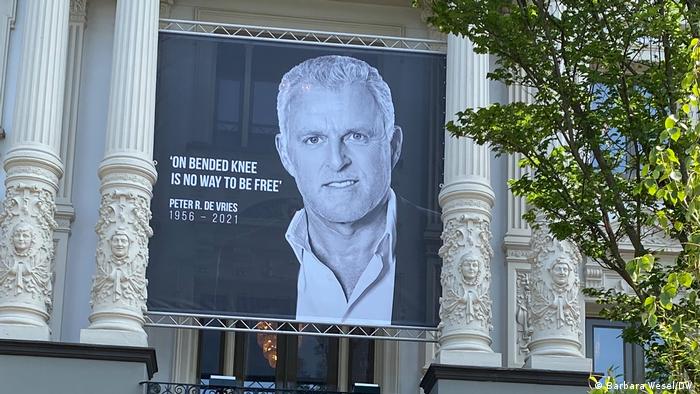
Thousands pay last respects to Dutch reporter Peter de Vries

https://www.dw.com/en/thousands-pay-last-respects-to-dutch-reporter-peter-de-vries/a-58583145

“Mourners spoke of the journalist’s fearlessness as police union leaders tried to make sense of a shooting in broad daylight in central Amsterdam. A smaller funeral for family and friends will be held on Thursday. , , , “

A picture of Peter de Vries at the Carre Theatre.

Mourners paid their last respects to Peter de Vries at the Carre Theatre

COVID-19 cases confirmed in Illawarra and Southern Highlands, links to Sydney suspected

https://www.abc.net.au/news/2021-07-20/new-covid-cases-recorded-in-illawarra-and-southern-highlands/100307978

ABC Illawarra / By Ainslie Drewitt-Smith Posted Tue 20 Jul 2021 at 3:55pm

Authorities working to determine the source of three COVID-19 cases confirmed in the Illawarra this week suspect they may be linked to cases in Sydney.

Key points:

  • Three new cases of COVID-19 have been confirmed in the Illawarra, but no venues have been listed as places of concern
  • Two cases have also been confirmed in the Wingecarribee Shire, and one in the Wollondilly, where community exposure is said to be “minimal”
  • The exact source of the Illawarra infections is unknown

Two of the cases from the Wollongong area were revealed on Monday, with the Illawarra-Shoalhaven Local Health District (ISLHD) confirming the third case this afternoon.

“This case is from the Wollongong local government area and is linked to the two cases announced yesterday,” the spokesperson said.

“All three cases are currently isolating at home.”

New South Wales recorded 78 new locally acquired cases in the 24 hours to 8:00pm on Monday, 27 of which were infectious in the community.

No venues of concern

The ISLHD said in a statement that investigations into the source of the three infections was underway, but no new venues of concern had been listed in the region.

“It is believed there are links to employment in the Sydney area,” the spokesperson said.

“When a confirmed COVID-19 case attends a venue while possibly infectious, NSW Health carries out a risk assessment on that venue to determine whether other people may have been exposed and whether there is a public health risk.

“NSW Health does not disclose details about venues unless there is a public health reason.”

A woolworths sign, light up over the entrance to the supermarket.
Woolworths said it deep-cleaned its Dapto store after being contacted by NSW Health on Monday.(AAP: Mick Tsikas)

Businesses exposed

Several businesses in the Illawarra have identified themselves as exposure sites and are working to allay concerns from customers and clients.

“We have been notified that a customer with a confirmed case of COVID-19 was present at our Dapto store on Thursday, July 15,” a Woolworths spokesperson said.

“As a food retailer, we already have very high standards of cleaning and hygiene in place, and the store had a detailed deep clean overnight on Monday 19 July.

“Customers and team members should be assured they can continue to safely shop and work at our Woolworths Dapto store.”

LIVE UPDATES: Read our blog for the latest news on the COVID-19 pandemic.

In a Facebook post, Dapto Healthcare announced it would close as a precaution.

“Due to a Dapto medical centre being declared as a COVID-19 exposure site, Dapto Healthcare will be conducting telephone consults only, until further notice,” the post said.

A dermatology clinic in Wollongong was also closed on Monday for deep cleaning.

In a phone message, the clinic said a person who had since tested positive for the virus attended the venue between 10:00 and 11:00am on Thursday, July 15.

A residential-looking, brick rendered building that operates as a dermatology practice in a regional city.
Wollongong Dermatology informed its patients a person who has since tested positive for the virus attended the practice on Thursday, July 15. (Facebook)

. . . . .

Wollongong, Mittagong, and Burradoo have all been identified by NSW Chief Health Officer Kerry Chant as focus areas for increased testing in the coming days.