Right to disconnect

The Business / 

By business reporter Daniel Ziffer

https://www.abc.net.au/news/2021-04-06/right-to-disconnect-gives-workers-their-lives-back/100040424

“. . . . a culture of being constantly contactable after hours has added to the draining mental toll of the work.

“It just causes undue stress for people,” Sergeant Dunkinson said.

“That’s not necessary when the job is stressful enough.”

Right to disconnect

“The right to disconnect – won in the union’s most recent negotiations – directs managers to respect leave and rest days and avoid contacting officers outside work hours, unless in an emergency or to check on their welfare. . . . “

About Grieving

A good friend of mine pointed out to me that the Grieving Process can take a long time. I googled ‘Grieving Process’ and ended up reading this article:

https://www.verywellmind.com/decisions-to-delay-if-youre-grieving-4065127

Avoid Making Big Decisions After Experiencing a Death

By Chris Raymond  Reviewed by Rachel Goldman, PhD, FTOS Updated on July 21, 2020

. . . . .

I find reading about the five stages of grief is worthwhile too:

https://www.verywellmind.com/five-stages-of-grief-4175361

STRESS MANAGEMENTEFFECTS ON HEALTH

The Five Stages of Grief

Learning about emotions after loss can help us heal

 Reviewed by Amy Morin, LCSW Updated on February 12, 2021Print Table of Contents

“When we lose a loved one, the pain we experience can feel unbearable. Understandably, grief is complicated and we sometimes wonder if the pain will ever end. We go through a variety of emotional experiences such as anger, confusion, and sadness. . . .”

The following I did write into my Diary recently after having visited my son in Victoria:

What Stage of Grieving am I at? And what Stage of Grieving about their Father are my children at?

Well, this is the question, isn’t it? Also, I’d like to know, how I, an 86 year old, can help my children at this stage?

Everyone knew already in March 2020 that Peter’s cancer was well advanced. So, it was only a matter of time, when his bladder cancer would spread into other areas.

By June 2020 the head oncologist at the hospital advised Peter, to bring his affairs in order. It looked to him, that the cancer had already spread to his bones. A few months later a nuclear test was done, that showed without doubt that the cancer had well and truly spread to his bones, which meant then, that in all probability Peter would have only a very short time to live anymore. It was obvious, that he was in the last stages of cancer and so was in need of some palliative care. . . . Soon, it was organised to give him palliative care at home with adequate pain reducing medication administered by Hospital staff who came to our home at scheduled times. To make the total care possible, quite a few family members were involved in helping to give this, plus we did get some subsidised respite care.

I would say, very often it was very difficult work for all the family. For sure it took a lot out of them, whereas overall I, the 86 year old wife, had not to do all that much physical work in looking after Peter. It was so amazing, how all the children did very lovingly look after their Dad! Also there was a constant stream of visitors by other family members, and a lot of friends were showing that they cared for him very much.

Somehow, all of us had finally to be prepared that is was highly unlikely that Peter would still be alive by Christmas. This prediction was close enough: Peter died on the 12th of the 12th 2020 and was cremated on the 21st of December 2020, our 64th Wedding Anniversary!

But now back to March 2020. By that time, Peter had enormous kidney pain. A solution was found, to drain the liquid around the kidney and his heart: A stent was inserted by an urology team. The stent went from the kidney to the bladder. The stent did its job quite well for a while. However we knew, the stent would have to be renewed after a few months. Finally this was done in August 2020.

On my birthday, on the 21st of September, Peter could hardly walk. I think he realised then that he probably would not last much longer. But somehow he may still have been in a state of denial. And I believe, one of our daughters and her husband were both in a state of denial too. The way they acted and looked after him once he did get palliative care showed to me a denial of very closely impending death.

I, on the other hand, I was already in 2018 convinced, that either his bad heart or his cancer would be the cause of his death. For instance, once the BCG treatment (Bladder cancer: What to know about BCG treatment)

https://www.medicalnewstoday.com/articles/324385#about

was stopped, there was not much left, that could be done. It was said, that because of his heart trouble, it was not possible for Peter to survive a five hour bladder operation!

So Peter’s cancerous bladder could not be removed. That meant, Peter’s cancer would sooner or later be spreading outside. . . .There was just no denying it!

I think my sadness started already in 2016, when Peter first found out about the tumour in his bladder. I did not want him to die before me: He would have been able to cope without me so much better than I can cope now without him!

I was sad, that Peter developed a terminal sickness, of course I was sad. But for sure I was not in denial that eventually the sickness turned out to be terminal. I was just grateful, that we could still have a few good years together, for Peter was most of the time still pretty active and not in severe pain since he was always well medicated.

Yes, there was sadness, but we were also grateful that we were still able to enjoy a lot of togetherness! Really, most of the time life seemed to be still quite enjoyable . . . .

Come to think of it, the five stages of grief somehow may not have effected my life so utterly, since we had such an early warning, and I was never in denial of the situation and learned to accept it early on. The grief may have effected our children much more. So, I would like to know, how I can help my children!

Very recently I found out, that as early as March 2020 our son was extremely depressed and in tears about the condition of his Dad. This was the time when his wife decided she did not want to see him anymore. I think she had not seen his tears, but she saw his neighbour who had recently moved into the house next door. This neighbour is a very compassionate woman and willing to be a good friend to Martin, however she is due for some rehabilitation for she drinks too much. She keeps telling over and over again, that she had quite a lot of bad experiences and suffering, partly because of her mother.

This neighbour is divorced. However she has a very lovely daughter from an earlier relationship. The daughter is divorced too and has a new partner, she also has a very good job. The neighbour’s 27 year old daughter has a sweet little four year old daughter and shares that little girl with her ex-husband. And when she is feeling well enough, dear grandma can look after the little one for a couple of nights as well. I met the whole family. They are all very nice.

My son lives in Victoria and is already retired, whereas my two daughters still work full-time. The daughters live in NSW both of them close enough for fairly regular visits, and one of the granddaughters comes to help too, whenever her work schedule allows for it.

So, the son lives some 600km away in Victoria. But he’s come to visit quite often whenever he was needed for something or other and when it was possible to visit without having to go into quarantine!

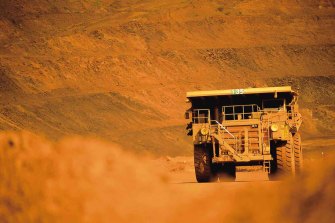
Aboriginal heritage site damaged at BHP Pilbara iron ore mine

https://www.smh.com.au/national/western-australia/aboriginal-heritage-site-damaged-at-bhp-pilbara-iron-ore-mine-20210222-p574uf.html

By Tess Ingram and Marta Pascual Juanola

February 23, 2021 — 4.19pm Larger text size

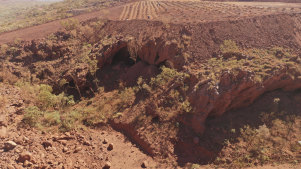
A registered Aboriginal heritage site has been damaged at one of BHP’s Pilbara iron ore mines, despite the major miner pledging in June to consult with traditional owners before disturbing sites in the area.

In late January, a culturally significant rock shelter was impacted at BHP’s Mining Area C project in the Pilbara, causing a rockfall at the site. It is understood neither BHP or the Banjima people are clear on what caused the damage.

The blast happened at the company’s South Flank iron ore mine.
The blast happened at the company’s South Flank iron ore mine.CREDIT:AP

Mining Area C is adjacent to BHP’s $US3.06 billion ($4 billion) South Flank project, which is under construction and will be the largest iron ore mining and processing facility ever built in Western Australia. It is located on Banjima’s traditional lands in Western Australia’s Pilbara region, 130 kilometres north-west of Newman.

The news comes almost a year after fellow Pilbara miner Rio Tinto drew international condemnation when it destroyed 46,000-year-old Aboriginal rock shelters while blasting at Juukan Gorge in the same region.

T

he destruction of Juukan went against the wishes of the traditional owners, the Puutu Kunti Kurrama and Pinikura people, shocked investors, forced the resignations of former chief executive Jean-Sebastian Jacques and two of his deputies, and sparked a federal parliamentary inquiry.

On May 29 2020, just five days after Rio’s blast at Juukan, WA Treasurer and Aboriginal Affairs Minister Ben Wyatt gave BHP approval to proceed with work at South Flank that would result in the destruction of 40 Banjima heritage sites. That approval was provided under the controversial section 18 of WA’s Aboriginal Heritage Act, which the WA government is in the process of reforming.

In a statement in June, BHP said it would “not disturb the sites identified without further extensive consultation with the Banjima people. That consultation will be based on our commitment to understanding the cultural significance of the region and on the deep respect we have for the Banjima people and their heritage.”

It is understood that commitment extends to all sites identified within Section 18 approvals, however, while the rock shelter was approved under a Section 18 application, BHP did not deliberately proceed with work that could affect the site.

BHP President Minerals Australia, Edgar Basto, said the rock fall at the site was identified as part of monitoring on January 29.

“This site is not part of current mining operations. The cause of the rock fall is not known,” Mr Basto said in a statement.

“The heritage site was first recorded in 2005 with the Traditional Owners of the land, the Banjima. The site does not contain rock art or archaeological deposits, and could not be dated. Section 18 approval was subsequently obtained following consultation with the Banjima and with their support.

“We notified the Banjima Traditional Owners of the rock fall, and I and Western Australia Iron Ore President Brandon Craig subsequently met with Banjima Elders as part of the Banjima Heritage Advisory Council, and agreed to a joint investigation with the Banjima to determine the cause of the rock fall. We are committed to learning from the outcomes of the joint investigation.

“The relationships we hold with the traditional custodians of the land on which we operate are critically important to BHP. Over many years, we have built a strong relationship with the Banjima people based on deep respect for their heritage and their connection to country. This includes the establishment of the Banjima Heritage Advisory Council last year. We will continue to work with the Banjima in a spirit of respect and cooperation.”

A spokesman for the Banjima Native Title Aboriginal Corporation confirmed an investigation had been launched into the incident.

RELATED ARTICLE

The site at Juukan Gorge that was reduced to rubble to extend one of Rio Tinto's iron ore mines.
Indigenous

Juukan Gorge destruction shines light on Aboriginal group ‘gags’

“In late January 2021, BHP submitted a report to Banjima Native Title Aboriginal Corporation RNTBC (BNTAC) outlining rockfall impact to a registered Banjima site, located within BHP’s Mining Area C,” the BNTAC spokesperson said.

“Following the initial report, Banjima’s newly established South Flank Heritage Advisory Council — together with BNTAC and BHP — launched an investigation into the cause of the rockfall.

Banjima’s South Flank Heritage committee met with BHP executives on 11 February to clarify the initial report’s details and progress of the investigation.”

The Banjima People told the Juukan inquiry they “have a long and sometimes difficult relationship with mining companies” and the “cumulative destruction of our country is something which sits uneasily with our people”.

“We are resolute in our position that the events at Juukan Gorge, the subject of this inquiry,
and the destruction of Aboriginal heritage generally — without due regard to the cultural
custodians of that heritage — must not be repeated, nor should it continue,” Senior Banjima elder and BNTAC chairman Maitland Parker told the inquiry.

RELATED ARTICLE

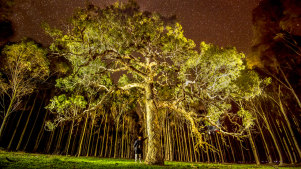
The yellow box tree, widely referred to as the directions tree or fiddleback, has been cut down.
Explainer
Indigenous culture

What do these sacred trees tell us about Aboriginal heritage in Australia?

In the wake of the Juukan disaster, BHP and BNTAC established the Heritage Advisory Council in September to provide input into mine planning at South Flank.

The council comprises of Banjima elders and senior BHP representatives.

Mr Basto said in September the council would “ensure on-going high level dialogue between us on important cultural heritage and other matters”.

WHY POLITICIANS AND DOCTORS KEEP IGNORING THE MEDICAL RESEARCH ON VITAMIN D AND COVID

18 February 2021 — Jonathan Cook

By Jonathan Cook

It is probably not a good idea to write while in the grip of anger. But I am struggling to suppress my emotions about a wasted year, during which politicians and many doctors have ignored a growing body of evidence suggesting that Vitamin D can play a critically important role in the prevention and treatment of Covid-19.

“. . ..For many years, limited studies – ones that Big Pharma showed no interest in expanding – had indicated that Vitamin D was useful both in warding off respiratory infections and in treating a wide variety of chronic auto-immune diseases such as diabetes and multiple sclerosis by damping down inflammatory responses of the kind that often overwhelm hospitalised Covid patients.

But many doctors and politicians were stuck in an old paradigm – one rooted in the 1950s that viewed Vitamin D exclusively in terms of bone health.

The role of Vitamin D – produced in the skin by sunlight – should have been at the forefront of medical research for Covid anyway, given that the prevalence of the disease, as with other respiratory infections, appears to slump through the sunny, summer months, and spikes in the winter.

And while the media preferred to focus exclusively on poverty and racism as “correlative” explanations for the disproportionate number of deaths among BAME doctors and members of the public, Vitamin D seemed an equally, if not more plausible, candidate. Dark skins in cloud-covered northern latitudes make production of Vitamin D harder and deficiency more likely.

MAGIC BULLET PREFERRED

We should not be surprised that Big Pharma had no interest in promoting a vitamin freely available through much of the year and one they cannot license. They would, of course, rather patent an expensive magic bullet that offers the hope of enriching company directors and shareholders.

But that is why we have governments, isn’t it? They could have stepped in to pick up the bill for the research after profit-motivated firms had refused to do so – if not to safeguard the health of their populations, at least to keep their health budgets under control. Most developed countries, even those with lots of sunshine, have large sections of their population that are Vitamin D deficient, especially among the elderly and housebound, the very groups most affected by Covid.

But governments shirked their responsibility too. Most have not offered supplements beyond measly and largely useless 400IU tablets to the elderly, and they have failed to fortify foods. Those taking small doses are unlikely to significantly and quickly address any deficiency they have or maximise their resistance to Covid.

To give a sense of what was potentially at stake, consider the findings of one of last year’s correlative studies, done by a team in Heidelberg. Their work implied that, had the UK ensured its population was not widely Vitamin D deficient, many tens of thousands of lives might have been saved. . . .”

What Will Happen to Your Body If You Walk Every Day

“Walking is a totally free, easy exercise that requires little effort, and benefits not only your physical but also your mental well-being. If you’re looking for a simple yet very effective way of losing weight and improving your overall health, walking is something just for you. People who are physically active throughout their life are much less prone to this disease than those who have a more sedentary lifestyle. And that’s because they have more volume in their hippocampus, the part of the brain responsible for verbal memory and learning. A daily half-hour walk helps avoid serious problems, like coronary heart disease to name one, by lowering high blood pressure and cholesterol levels and improving blood circulation. Because of better-quality and deeper breathing, some symptoms associated with lung disease can show significant improvement thanks to walking. Muscle tone and weight loss is also totally achievable through simple walking. Find your optimal pace, but don’t break out into a jog. This sort of speed walking is low impact and doesn’t require any recovery time, which means no sore muscles to keep you from getting out and walking the next day. The Arthritis Foundation recommends at least 30 minutes of moderate walking a day to reduce pain, stiffness, and inflammation in the joints. Building strong bones will help you prevent osteoporosis and reduce bone loss. Walking contributes to better blood circulation within the spinal structures, pumping important nutrients into the soft tissues and improving posture and flexibility, both of which are vital for a healthy spine. A group of researchers at Iowa State University worked with hundreds of college students. Walking changed their mood for the better, even though no one warned them it could do so. If you still don’t feel motivated enough to start walking for your health, try joining a class or find a buddy who also wouldn’t mind getting all the benefits of walking. Another idea could be to hire a personal trainer. Music: https://www.youtube.com/audiolibrary/…​ TIMESTAMPS Brain-boosting effect 0:45​ Improved eyesight 1:44​ Prevention of heart disease 2:47​ Increased lung volume 3:14​ Benefits for the pancreas 3:51​ Improved digestion 4:23​ Toned muscles 4:59​ Sturdier bones and joints 5:45​ Back pain relief 6:10​ A calmer mind 7:04​ Bonus: the FIT formula 8:00​ SUMMARY -Walking prevents the early onset of dementia, reduces the risk of developing Alzheimer’s disease and improves your overall mental well-being by reducing stress and releasing endorphins. -Get on the road to improve vision and protect your eyes now from potential problems, such as glaucoma, in the future. -Walking is no less effective than running when it comes to the prevention of heart disease and stroke. -Walking is an aerobic exercise, which means that it increases oxygen flow in the bloodstream and helps eliminate toxins and waste, which is great for your lungs. -Walking for exercise is a surprisingly more effective way to prevent diabetes than running is. -Just half an hour of walking every day not only lowers the risk of developing colon cancer but also improves digestion and regulates bowel movements. -Just 10,000 steps a day can be just as effective as a full-blown workout at the gym, especially if you add some intervals or uphill walking. -Walking can provide more joint mobility, prevent the loss of bone density, and even reduce the risk of fractures. -Walking is a real life-saver for those who experience back pain during more challenging high-impact exercises. -Walking improves depression symptoms in patients with MDD, just imagine how easily it could help us cope with just feeling down or exhausted. -Keep in mind the FIT formula. It stands for Frequency (how often), Intensity (how fast), and Time (for how long).”

Subscribe to Bright Side : https://goo.gl/rQTJZz

Title: Gurrupudu the Diver Bird

Artist: Bob Bilinyara


Title: Gurrupudu the Diver Bird

Artist: Bob Bilinyara

Date: 20th Century

Materials: Mineral pigments on eucalyptus bark

Dimensions: 26 cm width x 59 cm length x 28 cm width x 64 cm length

Location: Madison Art Collection

Accession Number 83.4.2

Visual Analysis

Artist Bob Bilinyara’s (1915-1959) eucalyptus bark painting Gurrupurru the Diver Bird (c.1930-1956), depicts a diver bird and six catfish in the Ramingining-Glyde River region at the permanent waterholes of the Gatji lagoon in Central Arnhem Land (1). The diver duck is both the central figure and the largest, it dominates the composition and the six smaller catfish that surround it. The background of the work is filled with a red ochre, or mineral pigment, that has faded over the years, while white lines filled in with black ocher create a border around the centralized subject matter. This bark painting is believed to depict the story of the ancestral diver bird. The ancestral diver bird is related to the creation of the Yathalamarra and Gatji waterholes around Arnhem Land . . . .

Please, go to the website. There is a lot more interesting information!

SEASON’S GREETINGS

by http://www.thepoliticalsword.com/

Another year is behind us. It’s been the most torrid since the end of WWII. I don’t need to elaborate.

Another year is behind us. It’s been the most torrid since the end of WWII. I don’t need to elaborate

http://www.thepoliticalsword.com/posts.aspx?authorid=Ad%20astra

“Premier Dan Andrews, by insisting on rigorous prophylactic measures, has all but eliminated the virus in his State. He has done this while being attacked every day by journalists, the malignant Murdoch press and its hangers-on, and of course opportunistic politicians operating in shameful adversarial mode. His most persistent critic, Opposition Leader Michael O’Brien, is now under scrutiny himself – from his own party, dismayed at his ineffectiveness.”

5 tips for staying healthy this festive season

https://www.abc.net.au/news/2020-12-24/christmas-day-covid-safe-tips-for-festive-season/13006496

Have yourself a merry COVID-safe Christmas: 5 tips for staying healthy this festive season

The Conversation / 

By Philip Russo and Brett Mitchell

A dining table decorated with Christmas baubles, a tree and holiday-themed napkins.

A dining table decorated with Christmas baubles, a tree and holiday-themed napkins.(Pixabay)

. . . . .

5 tips to reduce the risk

  1. 1.If there’s one thing we’ve learnt this year, it’s that it’s not heroic to soldier on if you’re sick. If you are feeling unwell, stay at home. This applies to you and your guests. If you are hosting and you’re unwell, look for another venue, or cancel
  2. 2.Plan for an outdoor gathering — the risk of transmission is significantly lower outdoors. We should make the most of Christmas falling in summer in Australia
  3. 3.If you’re hosting a gathering indoors, dine in your biggest room, or spread everybody out across a few rooms. Open your windows and doors to let in the fresh air and, importantly, increase ventilation
  4. 4.Avoid crowded seating at the table. Set up a few extra trestles or camp tables to space people out
  5. 5.Encourage your guests to perform frequent hand hygiene. Stock up on hand sanitisers and soaps and have them readily available in all rooms and outside, especially if people are helping themselves to food.

Food for Thought

https://www.abc.net.au/everyday/how-to-set-boundaries-at-christ

“This year Ginger Gorman says her family Christmas will be a two-hour brunch after which she plans to spend the afternoon by a pool with friends.”

https://www.abc.net.au/everyday/yumi-stynes-on-why-women-should-go-on-strike-this-christmas/11628692

“Change is afoot this Christmas for Yumi Stynes’ festive family get-togethers.”

https://www.abc.net.au/everyday/guide-to-a-less-stressful-christmas/11745088

Woman relaxing in a chair at a table with a large Christmas tree in the background to depict having a less stressful Christmas.

“Take a breath, pause a moment and read our guide to having a less stress-filled Christmas.” (Pxhere: An Min)

https://www.abc.net.au/everyday/how-to-save-money-while-shopping-online-this-christmas/100002658

“A few minutes planning and researching before hitting “buy” can pay dividends.”

https://www.abc.net.au/everyday/christmas-gift-ideas-when-youre-on-a-budget/12839442

“This year, you could make some presents yourself or give the gift of time — whether it’s helping a family friend with their garden or babysitting your friends’ kids.”

https://www.abc.net.au/everyday/benefits-of-family-secret-santa/100001868

Secret Santa’s fast becoming a family tradition that saves time, money and the environment

ABC Everyday / By Grace Jennings-Edquist

https://www.abc.net.au/news/2019-12-20/christmas-shopping-presents-gifts-season-budgeting/11766344

A woman with red nail polish wraps up and decorates a gift. Her face is not visible.

Gift-giving should be fun. But often, it can blow the budget. (Pexels)

“Vivienne Anthon has wrapped over 60,000 gifts in her life. ABC Life caught up with Vivienne to grab her top tips for gift wrapping this Christmas.”

Read more here: https://ab.co/2EFW8kG Subscribe to ABC Life on YouTube ►► http://bit.ly/35n2vn5 ABOUT ABC LIFE ABC Life helps you navigate life’s challenges and choices. Stay on top of food, wellbeing, travel, style, sex and relationships and more: https://www.abc.net.au/life/ How to wrap Christmas presents like a pro | ABC Life

https://www.abc.net.au/news/2018-12-21/plastic-free-gift-giving/10639500

Plastic-free Christmas gifts to feel smug about this season

By Clara Williams RoldanPosted FriFriday 21 DecDecember 2018 

https://www.abc.net.au/triplej/programs/drive/the-art-of-receiving-shitty-presents/9280316

The art of receiving shitty presents

By Claire BrackenSunday 24 December 2017

bc.net.au/news/2017-12-25/christmas-gifts-sustainable-low-waste-options-popular/9284808

Three Christmas hampers that include eco-friendly products and are encased in cardboard packaging rather than plastic

These Christmas hampers come without any plastic wrapping.(ABC News: Hayley Roman)

Climate change is wreaking havoc on Australians’ health. What’s our plan to fix things?

By Catherine Taylor and Bridget Judd

https://www.abc.net.au/news/2020-12-05/climate-change-wreaking-havoc-australians-health-national-plan/12950018

. . . .

“Even something as simple as retrofitting homes with heat-reflective roofing and reducing concrete and paving in backyards by increasing grassed areas can reduce what he calls “heat sinks around the home” and lower air temperatures.

When it comes to fighting fires, Gissing advocates investment in technology that can lead us to “the next generation of firefighting”.

“How are we going to be fighting fires in 2040 or 2050 when the frequency of blazes is only going to increase because of climate change?” he says, pointing out that new technology which aims to rapidly detect and suppress fires could prevent catastrophic fire events in the future.

Aerial view of Melbourne from the end of the Eastern Freeway in Abbottsford
Concrete, tile and paving can increase the way heat is absorbed and raise the temperature of a city.(Supplied: Linking Melbourne Authority)

. . . . .”