
Dr Ruth: ‘Nobody has any business being naked in bed if they haven’t decided to have sex’
Sex therapist, child of the Holocaust, former sniper… Dr Ruth Westheimer has lived more than most. Now 90, she’s as busy as ever – and still has strong opinions on pornography and consentSun 12 May 2019 21.03 AEST
Early this spring, the Smithsonian Museum in Washington DC, famous as a time capsule of American history and culture, reached out to Dr Ruth Westheimer and asked her to donate an object to its vast collection. It’s there that you can find such iconic totems of Americana as the glittery red shoes Judy Garland wore in The Wizard of Oz, or influential TV cook Julia Child’s kitchen, fully reassembled. Soon you will also be able to find the microphone that Westheimer used at WYNY, the New York radio station that helped cement her fame as a frank-talking sex therapist in 1981, in no small part thanks to her unmistakable accent.
“I’m very lucky, because it’s a combination of the German, the Hebrew, the Swiss, the French, and that accent helped because as soon as people heard it they knew it was me,” she says as she directs me around her tiny kitchen, filling the kettle for tea, retrieving a knife to cut a cheesecake. If you find yourself on TV talking about vaginas, penises and clitorises, an accent like Westheimer’s might also feel like a blessing. It’s hard to feel indignant or vexed when the person dishing advice on erectile dysfunction is a 90-year-old Jewish lady with long rolling R’s and a Munchkin giggle.
Humour and charm has long been Westheimer’s reflex for diffusing anxiety and shame. “In the Talmud, it says that a lesson taught with humour is a lesson retained,” she says. “I came from an Orthodox Jewish home so sex for us Jews was never considered a sin.” Has she never felt flummoxed by a question, or found herself blushing? Westheimer thinks for a moment. “The best answer to that is that when someone asked me a question about sex with animals, and I responded: ‘I’m not a veterinarian.’” She peers into a cupboard and frowns. “I want to find some tea, but I don’t find tea,” she muses. Not a problem, I assure her. Whatever is easiest. “Orange juice is easiest,” she says, producing a carton of Tropicana from the fridge.
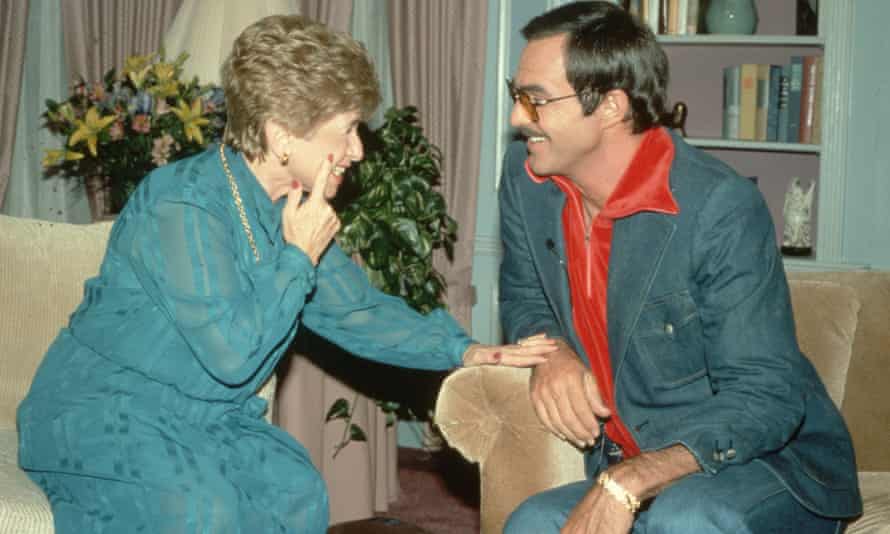
We are in Manhattan where Westheimer has lived for 55 years in a two-bedroom apartment overlooking the Hudson River. From the window, she points to the other bank – a steep escarpment known as the Palisades. “That used to be for nuns, over there,” she says, indicating a monastery-style building. “And when it snows it’s beautiful.” In the wake of her ascent to fame, friends urged her to move to Fifth Avenue, but Westheimer always resisted. She likes the neighbourhood’s European flavour, the fact that it was settled by German Jews. And besides, in the nearby Fort Tryon Park, one of the city’s most beautiful, sits a bench named in honour of her third husband, Fred Westheimer, who died in 1997. She has added an inscription from the Bible: “My beloved has gone down to his garden to gather lilies.” Today she gets a kick whenever she sees couples kissing there. Being a widow, she says, is harder than being an orphan. Children are resilient, adults less so.
These are busy days for Westheimer, the subject of a new documentary, Ask Dr Ruth, that receives its European premiere at Sundance Film Festival London later this month. She will be visiting Japan for a screening, before hitting Oxford University to debate pornography (she’s a fan), in addition to annual trips to Switzerland, where she spent the war in an orphanage, and Israel. There are also her teaching schedules at Hunter and Columbia universities in New York, and a prodigious publishing output, including a column for Time, an upcoming children’s book, and a new edition of her bestselling guide, Sex for Dummies, that will include chapters addressing millennials and the metastasising issue of loneliness. Immediately after our interview she is due at the opening of an exhibition at the Museum of Jewish Heritage titled “Auschwitz: Not Long Ago, Not Far from Here.” Westheimer, who is on the board of the museum, is proud of the name. “It’s for the Holocaust deniers and those people who have Holocaust fatigue, who say, ‘Stop talking about it, it’s so long ago.’”
Everyone’s on the phone now, instead of concentrating on their relationship
We tour the living room, a jumble of tchotchkes and books – a copy of Michael Wolff’s Trump exposé, Fire and Fury, Ruth Bader Ginsburg’s autobiography. There are mementoes of Shirley Temple, Westheimer’s favourite actor, and photos of her with the Obamas, with the Clintons and one of her dancing with the conductor Zubin Mehta, a memory that provokes particular delight. She was at a fundraiser for the Israel Philharmonic Orchestra. “I was dancing with a Japanese guy, and a man came and tapped me on the shoulder and said: ‘The Maestro wants to dance with you.’ I dropped the Japanese like a hot potato and danced with Zubin.”
Advertisement
Just inside the entrance, in pride of place, is a photo of David Ben-Gurion and Golda Meir, the first and fourth prime ministers of Israel. Westheimer was a member of the Jewish underground after the war, operating as a sniper (she learned to shoot by imagining Hitler was her target), and fighting the British, until she almost lost her legs in an explosion. But she would like readers to know she is grateful to Britain for organising the Kindertransport that brought 10,000 children to the UK. “Some of the children were able to save their parents, by going from house to house and asking for help in finding them work. When I was in Switzerland, I still had the fantasy I could have saved my parents and family if I’d stayed in Germany.” She shakes her head. “All nonsense. If they had not made the sacrifice to send their only child to Switzerland, I wouldn’t be alive.”
A powerful scene in Ask Dr Ruth, rendered into animation, shows young Westheimer waving goodbye to her mother and grandmother at Frankfurt station. It’s the last time she would see them. Her parents gave her life twice, she says: “Once when I was born, and once when they sent me to Switzerland.” When the war ended the children at her orphanage were gathered together while names of surviving parents were read aloud. Her parents were not among them. Put on a train, she was sent to Marseille, where she boarded a ship to Palestine. She was 17.

In the 1950s she returned to France, divorced her first husband, married a second time, and booked a passage to New York, travelling fourth class. Although she intended to return to Israel the arrival felt like a homecoming. She never left. Her marriage did not survive, although they had a daughter, Miriam. For Westheimer, the failure of marriage two was an important lesson: not having a satisfying sex life could be a problem, but intellectual boredom was insurmountable.
At this year’s New York Pride, Westheimer will ride on a carnival float to mark the 50th anniversary of Stonewall, a tribute to her outsize presence in the 1980s when her empathy cut through a miasma of bigotry. In the long, dark years of the Aids panic, she was among the few pinpricks of light. It was Dr Ruth who insisted there was no such thing as “normal” – everything was normal, as long as it involved two consenting adults in the privacy of their home. She recalls attending the Institute for Human Identity in the 1980s. “I wanted to learn how to work with homosexuals,” she says. “There were no lesbian couples coming; maybe lesbians didn’t need sex therapy. Maybe one woman knew better how to give another woman an orgasm.”
Time has finally caught up with Dr Ruth. Her attitudes no longer seem atypical. But if her approach to sex is now mainstream, anxiety around sexual desire and consent threaten to place her at odds with the very people who once welcomed her sex-positive thesis. “This idea that once you are aroused and have already started that you should then ask, ‘Can I touch your left breast, or your right breast?’ is just nonsense,” she says. “Nobody has any business being in bed, naked – two guys, two women, or a man and a woman – if they haven’t decided to have sex.”

She frets, also, that innocent compliments risk being stigmatised. “You can’t tell a woman any more that you like her blouse,” she says, and then gestures to herself. “By the way, do you like my blouse?”
Although no technophobe – in the documentary we see her conversing with Alexa – Westheimer believes our phones may be eroding our talents for conversation. “You walk into a restaurant these days, and what you see is everyone with their phone next to them,” she says. “That is terrible. Instead of concentrating on the relationship, on the needs and activities and interests of the other person, they are constantly looking at their phone.”
And she is sceptical of the idea that millennials are too busy to form relationships. “Don’t put sexual experience on the back burner,” she says. “Make time. After all, immigrants to this country worked much harder. They had to come in on Saturdays, even if they were observant Jews, otherwise they were told, ‘Do not come in Monday.’
Westheimer has a rule about not talking politics, but she also knows sex is political. Endorsing homosexuality or championing a woman’s right to choose, puts her firmly on one side of America’s culture wars. The one issue on which she will not stay silent is the one she feels compelled to speak about from personal experience. “I do say how upset I am when I see children being separated from their parents,” she says. “I have in my bones, and in my blood, the knowledge that you have to help the people who are persecuted.”

In spite of her curtailed childhood, Westheimer fizzes with energy. She fetches a leather frame on which is embossed in gold letters, It Can Be Done. “I love this,” she says. “It really is my motto in life.” She reads out the brand: “A-S-P-R-E-Y. I got it for free,” she says.
Does she think she’ll ever slow down? “No,” she says, then gestures to my notepad: “Write that down.” On 4 June, Westheimer turns 91. “This time I’m not going to make a big party,” she says. By not big, she means around 30 to 40 people. Last year there were more than 300.
In her chatty 2015 book, The Doctor is In, Westheimer offers a useful insight into how she lives with the trauma of her childhood. The solution, she says, is to focus on the present: “Pay attention to the people around you. Ask questions and listen to the answers. Tell everyone what happened to you during the day and make it as amusing as possible. Accentuate the positive, try to bring everyone’s spirits up; by doing that, you’ll find your own elevated.”
It’s a philosophy that has guided Westheimer through life. In the lobby of her building, the doorman pinches his fingers together, and brings them to his lips in a kiss when I mention I am coming from Dr Ruth’s. “A sweetheart,” he says. “If there were more people like that we’d never be at war. She’s nothing but a good-hearted person.”
Dr Ruth’s top 15 tips
Sex before dinner, afterplay, and fun with onion rings…
1. People are not Siamese twins. They don’t want to have sex, or the same amount of sex, at the same time. The important thing is that a couple adjusts to it.
2. I do suggest that people have sex before they go out to dinner.
3. Many people grow jealous of their partner’s fantasy lovers. That’s a big mistake. After years of being together, many people need fantasy to become sufficiently aroused for sex… with their partner!
4. If you’re always waiting for that orgasm, you won’t enjoy the rest of the lovemaking as much. You risk being goal oriented, impatiently waiting for that orgasm.
5. You don’t have to share your fantasies. If you have sex with your partner, and the woman thinks about a whole football team in bed with her, that’s OK, but keep your mouth shut about it.
6. Your sex life is not supposed to come to an end just because you’ve hit a certain age.
7. Men, want stronger sperm? Eat walnuts.
8. Make up your own events. Like an onion ring tossed on to an erect penis!
9. Put down the screen and get to know each other.
10 A good sexual experience needs time: for arousal as well as for hugging and kissing after sex. Afterplay is part of the arousal phase for the next encounter.
11. The more women engage in sex, the less severe the symptoms of menopause related to good sexual functioning will be.
12. In nursing homes, I would like to make sure that there’s a dating room, with a sign like in a hotel that says do not disturb. There’s a need for caressing and being held at every age.
13. Parade your body in front of your partner, show it off, try to feel good about it.
14. You’re on a business trip; you go out to dinner with a coworker; you each have too much to drink… and end up having sex, even though you’re both married. You have no feelings for this person, you both regret what happened, and you promise yourself that you will never let this happen again. Do you tell your spouse? I say you don’t. No matter how well your spouse takes this news, it’ll leave a scar on your relationship.
15. Older people have to be sexually literate. No sex in the evening when they’re tired. The best way for older people to engage in sex is after a good night’s sleep.
Ask Dr Ruth has its European premiere at Sundance Film Festival: London on 2 June, at Picturehouse Central. Tickets are available at



 We believe in the free flow of information




 J BaldwinConsidering there are already in place systems to deliver vaccines it would appear there was no need to reinvent the wheel.More importantly I feel vaccines should have been ordered in early 2020.Without supply it is impossible to vaccinate the adult population.No doubt there will be a royal commission into the handling of the Covid19 situation.
 Amkh Jogrlogged in via GoogleIn reply to
  Jen NortonIn reply to
  J BaldwinIn reply to
  Maggie Robertslogged in via FacebookIn reply to
  Glenda BunningIn reply to
  Colin MacGillivrayIn reply to
  Jock WebbAspen are certainly beloved of the government for reasons that are certainly not related to skill. They botched their first gig in Qld. DHL I have had personal experience of at a local level and useless would be my word. PWC have cost us a fortune by advising companies on tax dodging and we pay them more? I would say 10 years ago there would have been health bureaucrats well able to take this on, but the public servants with high skills have been replaced by flunkies or let go.
 Phil DavidsonWhen I first learned of the nature of these vaccines I understood they had to be transported at -80C A fellow commentator set me right and shared the information that -80C was the long term storage temperature. Pfizer had also developed transport cases that could be topped up with dry ice to maintain -80 for days. They could then be defrosted and stored at a much higher temperature similar to a standard pharmacy/clinic fridge used for other temperature sensitive pharmaceuticals and in that state had a shelf life of 5 days. But -80 became a big drama and specialists were needed to transport the vaccines…..when in fact existing mechanisms would have worked just as well. For example I believe 15 million of so flu vaccines are delivered to pharmacies, clinics etc most years in quite a short timeframe without too much drama.
 Sandra Cochranelogged in via GoogleIn reply to
  Luke WilliamsIn reply to
  Luke WilliamsIn reply to
  Wal MuhlederIn reply to
  Phil DavidsonIn reply to
  Phil DavidsonIn reply to
  Cormac Ó Síocháinlogged in via Facebook“Openness and transparency are the pillars on which trust in government is built. Currently they are sadly lacking.”Lesley, how do we change the system so that transparency and accountability become part of it?
 Stephen LakeIn reply to
  Maureen McInroyIn reply to
  Watashi-wa SugoiIn reply to
  Stephen LakeThis is part of a much larger and long-standing problem, and the ostensible rationales that underpin the concept of privatisation per se, as well as what amounts to a questioning of expertise and, if it exists, who has it and who doesn’t. The reality of privatisation is that it does not function even according to its own principles, insofar as it still depends upon, or is anxious to screw, billions out of the public purse instead of fully funding itself and ensuring through the notion of competition that it both keeps things affordable and maintains excellence – neither of which are true. Properly understood, privatisation should not cost the taxpayer a penny. So why does it? The notion of consultancies looked good on paper, but they essentially did what companies themselves did previously, and at a fraction of the cost. Consultancies often have no expertise in the sectors they are invited to consult on, which means that they – and many business managers – do not properly understand what they are advising on, miss essential aspects of enterprises, and do not at the end of the day make anything better – and all for the modest sum of millions of dollars that could be better spent elsewhere. It appears to be inherent in neoliberalism that the entire principle of expertise is being thrown out the window, which may help to explain the growing under-valuing of expertise, mistrust in it, anti-intellectualism and many other phenomena of culture and society today. And besides all of that, we are no longer really educating experts anymore anyway, insofar as the corporatisation of our universities has so drastically reduced our quality and standards, in order to divert more money away from the business at hand and into private pockets. No service delivery that operates for profit manages to combine a limited and acceptable profit margin while delivering best possible service. It was arguably the most advantageous element of the lot that government, or public, service delivery was not operating to make a profit but to provide a service, and in many instances they did a far better job than anything this country has known for the past 30 years. Operating for profit means that you invest the minimum amount of money possible to create an illusion of efficiency while guaranteeing inefficiency – as has also occurred in numerous other areas in this country, including in our universities – because you don’t spend what it takes to employ and maintain the best possible and most qualified workforce. You operate on the pink batts model, or the NBN model, or the age discrimination model that excludes anybody too old and with too much experience in favour of the young and dumb (no offence intended), or our energy sector, or infrastructure projects that drag things out as long as possible so that you have an indefinite guaranteed piggy bank while doing things so badly that they have to be done all over again, which keeps you in work for even longer. There is simply no case to justify the conduct of any outsourcing, privatisation or waste of taxpayer money on service delivery for anything in Australia, and there never has been. Added to this comes the government’s self-interest of keeping the business community happy so that it will support the government, rather than government actually governing in the best interests of the people and then standing for election on the basis of a solid track record, instead of corrupting democracy. And that, also at a high cost to the taxpayer.
 Brandon YoungIn reply to
  Mike McEnaneylogged in via GoogleIn reply to
  Trevor Kerrlogged in via TwitterNo surprises here, it’s just the way global capitalism operates. Most, or all, of those transactions & contracts are locked up behind the usual disclaimers. Sure, ministerial assent would have been given, but on advice, and those giving that advice will never be interrogated under pain of severe penalty. Look at how a previous director in Health walks large as life, dispensing opinion (and, likely, advice on vaccine contracts behind closed doors) while proudly extolling her virtues as director of a casino where black cash was laundered. We live in strange times. Darkness of deliberate obscurity nurtures secretive collusion that feeds conspiratorial mutterings. Never mind all that, though, 👍👍 is the response from our media overlords. All made to measure for a grateful herd of circus-lovers. Ask no questions, bring on the sport.As for trust, we already know how Govt responds – “You voted for us, trusted us, here we are. If you don’t like it, blame yourselves.” That attitude is corrosive to the core of democratic principles, but the USA with all its checks & balances and legalistic infrastructure couldn’t protect itself from the likes of Trump. We are in the grip of an enlarging crisis.
 Ron BowdenIn reply to
  Stephen Saunderslogged in via GoogleI would just like to clarify, none of this is down to Scott Morrison, he was home with an upset tummy that day, and it certainly isn’t his fault.Surely he must have an “Independent In-Confidence Commercial Advisory Board for Vaccine Consultancy Horizons” that can be blamed?
 Watashi-wa SugoiIn reply to
  Sandra Cochranelogged in via GoogleIn reply to
  Joy RingroseIf anything ever screamed to the Australian public the need fo an effective, retrospective Federal ICAC, it is this shamozzle. It also illustrates the desperate need for Australia to de-politicise the public service and return it to a meritocracy. We are way too far down the path of political corruption, and urgently need to return to transparent, accountable federal governance.
 Sandra Cochranelogged in via GoogleIn reply to
  Anita SpinksIn reply to
  Maureen McInroyIn reply to
  Enzo FableIn reply to
  Jonathan StraussThe government saw a great opportunity to come to the rescue of Australians. However by ignoring the established, well organised and seemingly relatively efficient systems that have delivered a multitude of vaccines for decades, it ignored the risk of failure in developing a new system with an inexperienced workforce. Unfortunately, for us and at the cost to bottom line, it fell flat on it’s face.The cloak and dagger secrecy that has become government modus operandi for all things just keeps growing. It’s origins sheeted home to “operation sovereign borders” the gabble of then minister Morrison,
 Sandra Cochranelogged in via GoogleDespite all this “expert” — and expensive — advice. It’s plain there’s been no expert advice. I want my money back.Fascinating that the pharmacists, generally so powerful and influential, have been locked out of this particular process when they have so much to offer.No wonder we need a bloke with a loud voice, gun, uniform and chest of medals to pull this lot into line! Maybe we should appoint Frewen Speaker of the Reps once he’s clean up this mess.
 Enzo FableIn reply to
  Scott SmithThe “bang for your buck” argument could apply to the entire federal government. They’ve spent so long outsourcing any responsibilities to either the states or consultants that one really has to ask why they exist at all.The vaccine rollout is just the latest failure – while the states did the heavy lifting Scomo spent most of his time ducking and weaving to avoid any responsibility.
 Sandra Cochranelogged in via GoogleThank-you for such a concise and clear summary, Leslie.
 Nell Crowe Ryan“commercial-in-confidence” says it all. This is the wrong government in a pandemic – vax rorts!
 janeen harrislogged in via GoogleIn reply to
  Tiffany MeekLet’s face it, most private sector contractors rub their hands together at the idea of getting a government contract. I think the basic maths behind the tendering process is: Work out how much it will cost to produce, times that amount by 10, add a 20% cushion in case it rains, then times all that by 2 for good luck. After all, the government is made of money yeah? When it comes to timeframes I think the same math applies. The government seems to have been blissfully unaware of this for decades. I’m not sure if this is because they have no idea how much it costs to deliver in the real world, or whether they’re so inefficient that they think these prices sound reasonable.
 Glenda BunningIn reply to
  Tiffany MeekIn reply to
  Glenda BunningIn reply to
  Mike PulestonThere’s no surer way to push up the cost of public services than to outsource them to the private sector. Everyone knows this. Yet, come election times, voters repeatedly fall for the line “private is better than public”.
 Sandra Cochranelogged in via GoogleIn reply to
  Tiffany MeekIn reply to
  Michael AffleckThis is just the Morrison government doing the only thing its good at – making sure its corporate mates make big profits and to hell with any accountability for what they are actually producing of benefit to the Australian people.
 Jen NortonIn reply to
  James CoburgAs on old leftie the superficial tendencies of The Conversation to shoot from the mouth without a thought to the mind stands out. The artticle is quite clear that there are existing effective private sector based means to distrubute vaccines – pharmacies and their distributors are private sector, heavily dependent on public underwriting.Hence the heading ought to be about using the ‘wrong companies’ not the use of companies.
 Enzo FableIn reply to
  John SneddonOver many years, governments have reduced and emasculated their public services so that expertise (in such things as logistics for example) has been reduced to such a level that they can no longer provide “frank & fearless” advice to the government. This, in turn, means that governments, composed of self-interested ideologues, are susceptible to the influences of equally uninformed and self-interested private interest persons (eg some consultants) who will often not provide relevant advice or support. Governments often need internal advice from public servants who know enough about particular topics to know what they and any external consultants don’t know and can thus advise caution.
 Mike PulestonIn reply to
  Glenda BunningIn reply to
  Enzo FableIn reply to
  James CoburgIn reply to
  Chris SaundersThanks Lesley some nice detail on what was already suspected. Existing supply lines tend to work quite smoothly in Australia. One had to assume they were not being used by this government and why the government wasn’t became more and more inexplicable as time and delay went on.
 Tony Simonslogged in via TwitterScotty wanted all the glory and so bypassed the states who have the experise.
 Enzo FableIn reply to
  Les JohnstonIt is apparent that the Federal Government was demonstrably incompetent in its management of vaccine delivery. The cost to all Australians for this incompetence is long lasting. It would be good to have the critical analysis of mismanagement and its cost towards lockdowns due to unvaccinated Australians.
 Enzo FableIn reply to
  Maggie Robertslogged in via FacebookIn reply to
  Nayland Aldridgelogged in via LinkedInUnlike the State Public Services, by and large the Commonwealth Public Service is not business of service delivery, instead it is geared towards the administration of the buckets of money doles out to the States. The Commonwealth Department of Health is a perfect example of this. Their website states that they “work in awareness and education, consultation and engagement, initiatives and programs, grants and tenders, policy, regulation, compliance and research.” It doesn’t actually own or run any hospitals. Instead of attempting to roll out the Vaccine, the Commonwealth should have procured the Vaccine and then stood back and let the States deliver it.
 Albert HaranDoes this look familiar?Which brings us to America’s idiocracy in 2021. Our most important public functions are handed over to corporate sponsors. Our entire political system is designed to let corporate money speak, through campaign contributions and corporate lobbying.
 Amkh Jogrlogged in via GoogleI propose that an “efficient rollout” was not the aim of the awarded contracts.I suggest that the intention was to funnel public monies into the bank accounts of various firms that would then divert some of those funds to the lib/nat parties as “political donations” or to various third parties (who then use the funds for electoral adverts and the like).… would it be possible that Palmer woudl receive such donations to run another fraudulent scare campaign in Qld?
 Bas DolkensScoMo likes keeping his mates on side, hence the transfer of public funds into his mates’ accounts. Just another rort to add to the growing list of rorts.
 Scott PickfordThe fact that the Coalition Government decided to ignore existing supply channels and arrangements is the biggest concern. The changing nature of the COVID virus and the already identified need for future booster vaccines and/or vaccination programs with yet to be developed vaccines mean that this is not once only effort. Therefore Australia needs to build capability and capacity in systems and processes that can be called upon in a repeatable manner. The mechanisms that the Government are using with once-off, secret contracts, private sector profiteering, unknown objectives and questionable outcomes will not deliver the capacity and capability that we need. As with many of the Coalition Government programs, home care, aged care, Barrier Reef, energy, etc, their vision ends at writing a big cheque and grabbing a “record spending” headline.
 Simon Coxlogged in via GoogleWhat is this ‘commercial-in-confidence’ bullshit? Any expenditure of public funds should be publicly accountable. It should be a condition of doing business with the government that it is not ‘in-confidence’. If you don’t like that, then you can’t take our money.
 Graeme HarrisonThe reason the Feds want zero transparency re vaccine strollout is because this would undoubtedly uncover the clear links with offices of Scovid Morrison & Ghunt as to who rebuffed Pfizer in mid-2020, and who made eventual decision to order only 5m doses, to vaccinate only 10% of population.My money is on Hunt being at epicentre of bad decisions, as he obfuscated most, claiming for months that ‘official’ negotiations with Pfizer started only in 2021. People lie most when covering up personal mistakes…
 George FinlayOnly when the coverup ends and the detailed information on our vaccination program is released should we accept the recent statements of regret from the government. Without that they are empty words and just the latest example of spin. We’ve had enough spin already. Why is so much information on the vaccination program being kept secret?We know the program has failed and continues to fail. It’s crystal clear from the figures which can’t be hidden that our vaccination program has progressed at a dangerously slow pace. So much so that the Delta variant is now a far greater threat to a low immunity Australia than it is to to all the countries which have higher vaccination rates. That is every other OECD country.But what is being hidden from us is the information which would explain in detail why our vaccination program has failed. Having that in the public domain would help lead to better approaches. However releasing the detailed information currently hidden would also make it very hard for the Morrison government to continue to muddy the waters and spin. It’s wasted so much of its energy doing that rather than focusing on getting vaccination up as fast as possible. It’s outrageous or worse that all this information is not already in the public domain. If it were released it would lead to a far better approach. The Morrison government needs the help of all the experts and all the capable organizations in this country to get this failed vaccination program on the right track. It seems to be relying too much on a secretive highly paid group of private contractors. And the figures clearly show this approach hasn’t worked.
 Shane Thomas O’DonohueThe public service has a culture of contracting out work even though people are in highly paid jobs to do the work eg. I previously employed a Director of marketing and communications in a large public sector super fund. When the appointed person came to me with a marketing strategy to be developed and delivered by an outside consult I told him that was his job and if I needed consultants I would sack him. The look of terror on his face was memorable.
 john daviesAnother consequence of the emasculation of what used to be one of the best “public services” in the world. A comment based on 39 years in the system, including a couple of years in the UK “civil service” and visits to half a dozen other countries, including the US, to compare how things were done.Years of cutbacks, so called “efficiency dividends”, sacking staff and replacing them with contractors, putting senior executives on fixed term contracts. Governments of the past twenty years have done the country a massive disservice. Starting in the Hawke/Keating years but taken to a scandalous level by governments of the opposite persuasion, to the extent that corruption and incompetence is rampant. Our current government has no concept of what the public service could, and should, be!
 Trevor Kerrlogged in via TwitterIn reply to
  Jose CroneroThe Morrison government, confronted with a public service ill-prepared for big challenges and with no expertise in rolling out vaccines nationally, has contracted out many aspects of the COVID vaccine rollout to a range of for-profit companies.Hang on….How are all other vaccines rolled out nationally? GPs? Chemists? Are these not private for profit entities?
 john daviesIn reply to
  George FinlayYou’d be naive to think that the massive and dangerous failure of our vaccination program was largely a problem caused by lower numbers in the public service or the use of private contractors per se.Problems raised about these issues in the comments here have validity. But the failed vaccination program has fundamentally been caused by very poor federal political leadership and poor overall federal management of the program. The failures have been exacerbated by the tendency of the government to spin, create diversions and exaggerate differences between the states rather than unite all the country and all the impressive resources this country has to get the vaccination program up to an acceptable standard. So that we don’t remain the worst performer of all OECD countries. We as a country have a very impressive public and private health system, very impressive and capable public and private organizations which should all be helping in this fight we have with the virus. But we know of two key organizations at least : the aged care industry and the organization of pharmacies which are well positioned and qualified to help and are not being fully used by the government. With the secrecy revealed in this article it’s hard to know how many more organizations offering to help have not been used to their potential by the government. And the government should not be waiting for organizations to offer help, it should be actively and creatively seeking help. Arguably there are still many untapped sources of help. Until the government comes clean and releases the information this article reveals the government has been hiding the electorate would be foolish to believe the government’s statements of regret or to have confidence in the capability of the government to turn their poor performance around.
 Steve HindleSounds like there a need for an entity with oversight of the contracted consultants overseeing the contractor companies and their sub-contractors. I guess that is something the Government could contract out?
 George FinlayUntil the secrecy and coverup stops we should regard any expression of regret by the government with suspicion. The government needs to show its good faith by releasing all the information this article reveals it’s been keeping secret. If it doesn’t the expressions of regret should be regarded as just another element of its spin campaign. The secrecy and coverup revealed in this article are consistent with the spin, the muddying of the waters and the obfuscation we’ve been getting from the government. Secrecy makes it easier to spin and cover up failures and mismanagement. We know from the vaccination figures which can’t be hidden that the vaccination program overall has been a dangerously slow failure. But we don’t have all the details of why it’s been a failure. We need information this article shows is being hidden released so we can learn from the failure and turn this vaccination program around.Rather than seeking to divide, hide and obfuscate the government needs to take the community into its confidence. We are in this together. Only then will the government deserve any forgiveness for its failures. And only then will its failures be reversed.
 Dave BradleyGet real. Morrison knew exactly what he was doing. He is just so utterly incompetent and mean. Morrison is more guilty of the offence of conspiracy to commit misconduct in public office than the ObiedsMorrison’s misconduct has cost many lives and billions of dollarsHis intention was to take credit for Roll out away from the states so he alone could claim credit tor saving Australia from Covid, win an early election and blow vaccine savings on his Covid led Gas economic recovery and tax cuts.But he didn’t follow expert advice in July 2020 and buy enough vaccines like every other developed country did. The LNP conspired against Australia.
 Andrew FisherI think there is little point in analysing this rollout as a discrete event. Our government spends billions outsourcing the provision of functions and services hitherto provided by government, to the private sector. Always with the same results. It costs more, it delivers less, it reduces the pool of skilled labour and it hobbles the government’s ability to react to changes and to control outcomes. And although the LNP are far more persistent in this, recent Labor governments have also played this game. The question is, why.Decades ago, we were sold the myth that private companies were leaner and more efficient than bloated government departments. We were told that they could be more flexible and more innovative and that we would get better value for money by letting them take over. Those claims have been belied by reality. Even in the few cases where private companies are all those things, the benefits don’t flow through to the state.Some people think that these moves by politicians and administrators are simply about enriching themselves and their friends. The proportion of MPs who become very rich during their tenure has never been higher and there are enough cases where the beneficiaries of decisions have been personal friends or acquaintances. So while this is clearly true in some cases, it probably doesn’t explain the overall thrust.My own belief that this relentless move to rid the government of its assets, capabilities and responsibilities, has more to do with a certain ideological world view. What we are seeing is an attempt to dismantle the trappings of the modern liberal democratic state. It’s a religious fight against big government that has nothing to do with social good. The point is that our government doesn’t believe it should be responsible for providing social benefit, or social reform, or social anything. This government, in particular, has never articulated a social vision. Like Thatcher in Britain decades ago, they don’t even believe in the existence of society. Looking at government decisions in this light, they make more sense and appear more consistent.The refusal to manage the vaccine rollout is as deliberate as the refusal to take action on global warming and results from the same way of thinking. They might prefer us to survive the pandemic and the coming climate catastrophe but they won’t acknowledge any collective responsibility to achieve those ends. Using the superior government infrastructure to vaccinate us would be admitting that some things can only, or best, be accomplished by collective action and they just can’t come at that.
 AuntyUta