
https://www.theguardian.com/world/2018/feb/20/netherlands-becoming-a-narco-state-warn-dutch-police
The Guardian reports: “Officers say many victims do not report incidents and organised gangs have a free rein . . . ”
https://www.theguardian.com/world/2018/feb/20/netherlands-becoming-a-narco-state-warn-dutch-police
The Guardian reports: “Officers say many victims do not report incidents and organised gangs have a free rein . . . ”
After browsing through a lot of articles on the internet, I ended up with the following blog about the Meaning in Life:
http://bigthink.com/21st-century-spirituality/4-ways-to-find-meaning-in-life
Derek Beres refers to Emily Esfahani Smith’s book, The Power of Meaning: Finding Fulfillment in a World Obsessed by Happiness, and says:
“We are obsessed with happiness, often believing it a birthright, yet as journalist We are obsessed with happiness, often believing it a birthright, yet as journalist Emily Esfahani Smith notes in her book, The Power of Meaning: Finding Fulfillment in a World Obsessed by Happiness, all that searching is actually making us unhappy”
Beres further says the following:
“As with my recent conversationwith Robert Lustig, Smith cites Aristotle’s concept of eudaemonia as a force for “cultivating the best qualities within you both morally and intellectually and living up to your potential.” Instead of chasing pleasure, we need to institute the search for meaning.
This is challenging during a time when you’re constantly instructed to do “what you love.” Smith counters this advice by invoking German philosopher Immanuel Kant. As with the mythologist Joseph Campbell, who, while famously remembered for saying “follow your bliss,” continued, “If your bliss is just your fun and your excitement, you’re on the wrong track.”
“To Kant, the question is not what makes you happy. The question is how to do your duty, how to best contribute—or, as the theologian Frederick Buechner put it, your vocation lies ‘where your deep gladness and the world’s deep hunger meet.’”
Smith’s beautifully researched homage to this hunger hinges on “four pillars of meaning.” By seeking, cultivating, and maintaining each of these, she argues, happiness arises from a deep sense of contentment rather than the incessant and unyielding grasping for pleasure. “
Then there are four interesting write-ups about
Beres says: “Transcendence is at the heart of most spiritual traditions. It can be achieved through psychedelics, music, scripture, or meditation. A deep sense of connectedness carries adherents beyond the normal trappings of society. People are able to intimately connect with their environment and peers. Writing of volunteers in a 2015 study focused on the development of empathy through transcendence,”
Smith notes:
“They abandoned the conceit, which many of us have, that they were the center of the world. Instead, they stepped outside of themselves to connect with and focus on others.”
Here is what I found in Amazon.com about the book:
https://www.amazon.com/Power-Meaning-Fulfillment-Obsessed-Happiness/
The Power of Meaning: Finding Fulfillment in a World Obsessed with Happiness Paperback – September 5, 2017
by Emily Esfahani Smith (Author)
In a culture obsessed with happiness, this wise, stirring book points the way toward a richer, more satisfying life.
“Too many of us believe that the search for meaning is an esoteric pursuit—that you have to travel to a distant monastery or page through dusty volumes to discover life’s secrets. The truth is, there are untapped sources of meaning all around us—right here, right now.
To explore how we can craft lives of meaning, Emily Esfahani Smith synthesizes a kaleidoscopic array of sources—from psychologists, sociologists, philosophers, and neuroscientists to figures in literature and history such as George Eliot, Viktor Frankl, Aristotle, and the Buddha. Drawing on this research, Smith shows us how cultivating connections to others, identifying and working toward a purpose, telling stories about our place in the world, and seeking out mystery can immeasurably deepen our lives.
To bring what she calls the four pillars of meaning to life, Smith visits a tight-knit fishing village in the Chesapeake Bay, stargazes in West Texas, attends a dinner where young people gather to share their experiences of profound loss, and more. She also introduces us to compelling seekers of meaning—from the drug kingpin who finds his purpose in helping people get fit to the artist who draws on her Hindu upbringing to create arresting photographs. And she explores how we might begin to build a culture that leaves space for introspection and awe, cultivates a sense of community, and imbues our lives with meaning.
Inspiring and story-driven, The Power of Meaning will strike a profound chord in anyone seeking a life that matters.”
https://www.goodreads.com/book/show/35724024-the-red-coast
“THE RED COAST” is the title of a novel by DI MORRISSEY. I am now about half way through reading this book. Last night = just before going to sleep – I got stuck on pages 184/185. DI MORRISSEY tells the reader about a writers’ festival in Broome where some well known authors are present. During question time Wally, a 90+ old man from the audience asks one of the authors:
“So, tell me, how would you suggest getting a book together from a whole pile of notes and letters?”
“Are they yours? Or someone else’s? You mean like compiling a family history?” replied the young author.
Wally points out that it is not just a family history but “a ripping yarn, an adventure and a mystery” which is all true and “would be a bloody good movie. But sad though.”
The author’s advice is as follows: “Start at the beginning. Pretend you are writing a letter to a friend.” And then he asks Wally: “Can you use a computer?”
Here is Wally’s answer: “Bloody oath, I’m on Facebook. – Well, computers might be all the go these days, but I reckon we should all be writing down our family stories. And even if they don’t get published, someone will find and read them. Nobody inherits emails and tweets. My wife’s family history is an oral one, so unless the stories are told to the next generation, the history will be lost. You got to keep your family’s stories.”
So DI MORRISSEY writes: “There was a burst of applause when he said this, and Wally sat back down looking pleased with himself.”
Recently I’ve been reading a lot of novels about outback Australia, wriiten by Australian authors. I find it always very interesting to learn a bit more about outback Australia. What this over ninety year old bloke says in DI Morrissey’s novel I find most interesting. For instance he says, that nobody inherits emails and tweets. This is pretty sharp, wouldn’t you think so?
https://diverstavern.com.au/event/corrugation-lines-broome-writers-festival/
Grassroot Records and Divers Tavern present a special Corrugation Lines, Broome writer’s Festival opening event. Shane Howard in Concert. The Tavern will be transformed into a seated theatre for this rare chance to see one of Australia’s treasured artists in an intimate concert. Marking 20 years since he produced the widely loved Pigram Brothers album “Saltwater Country”, Broome welcomes back the writer and poet in all his heartfelt storytelling magic. Do not miss!
The above was a Broome Writers’ Festival Event in August 2017.
https://en.wikipedia.org/wiki/Shane_Howard
” . . . .
Philippines-born Bobis, who lives in Canberra, came to Australia as a student 25 years ago, taught creative writing at Wollongong University for 20 years, and is the author of novels, stories, poetry and radio dramas in English, Filipino and her native language, Bikol.
Locust Girl grew out of her concern for the people and nature in both her countries, which has led her to work with the International Water Project, leading a community in the Philippines to tell stories about the dying river that supplies their water.
“We think there is a border between us and the non-human world,” she says. “We think of water only as a resource, but we’re looking at how to teach people to care for water, and how to help students reimagine water.”
Thinking about climate change, poverty, terrorism, globalisation, she says, “I wondered how I could write about all this and make a big issue come alive in a small story, so that even a child could understand.”
. . . . .
The State Library of New South Wales is a large reference and research library open to the public. It is the oldest library in Australia, being the first library established in New South Wales.
Following is a write-up by the State Library about the Christina Stead Prize:
The Christina Stead Prize ($40,000) is offered for a book of fiction.
The award may be made for a novel or a collection of stories.
A collection of stories may contain some previously published work. In such a case the judges will determine whether the new work is sufficient, in quantity and quality, to merit an award. It is the nominator’s responsibility to clearly identify previously published material.
Works of creative non-fiction, including fictionalised memoirs, are eligible for consideration under this category, but not under the Douglas Stewart Prize. Works of multiple authorship, including anthologies, are not eligible for nomination.
The award commemorates Christina Ellen Stead (1902-1983), Australian novelist and short-story writer. Stead was born in Rockdale, New South Wales. She published fifteen novels beginning with The Salzburg Tales and Seven Poor Men of Sydney (1934). Her most well-known novel The Man Who Loved Children (1940) was based on her childhood in Sydney. Stead lived most of her life overseas, in Europe and the U.S., but retained a strong sense of national identity, reviewing Australian novels for the New York Times Book Review and keeping up with news from Australia through family correspondence. Her work, including several volumes of short stories, is acclaimed for her satirical wit. Stead’s literary popularity in Australia increased significantly after her return in 1974. The same year she received the inaugural Patrick White Literary Award to recognise her lifetime achievement.
http://www.abc.net.au/news/2018-01-20/sydneys-royal-national-park-blaze-downgraded/9345834
by:
Updated
“A fire burning through the Royal National Park in Sydney’s south has been downgraded to advice status, although thick plumes of smoke are still drifting across the city.”
As we went home by train last night we could see and smell smoke from the fires in the Royal National Park. The guard made an announcement on the train about the fires assuring us that the fires were not near the railway tracks and that it was safe for the train to continue as usual.
So we did arrive home safely.
https://en.wikipedia.org/wiki/Environmental,_social_and_corporate_governance
Please, go to the above link. I reckon this article provides very interesting information. It says: “Environmental, social and governance(ESG) refers to the three central factors in measuring the sustainability and ethical impact of an investment in a company or business.”
So, what do you think, do people think about sustainability or the ethical impact of their investment in a company or business,
or do they just think where they can get the highest profit?
Here is also an interesting link to Market Governance Mechanisms (MGMs):
https://en.wikipedia.org/wiki/Market_governance_mechanism
In this Wikipedia article it says:
“Market governance mechanisms(MGMs) are formal or informal rules that have been consciously designed to change the behaviour of various economic actors – including individuals, businesses, organisations and governments – to encourage sustainable development.
Well known MGMs include fair trade certification, the European Union Emission Trading System and Payment for Ecosystem Services (PES).
MGMs, meanwhile, are not to be confused with market-based instruments, for MGMs, as a group, includes command and control regulations as well as regulatory economics. As such, MGM is a broader classification.


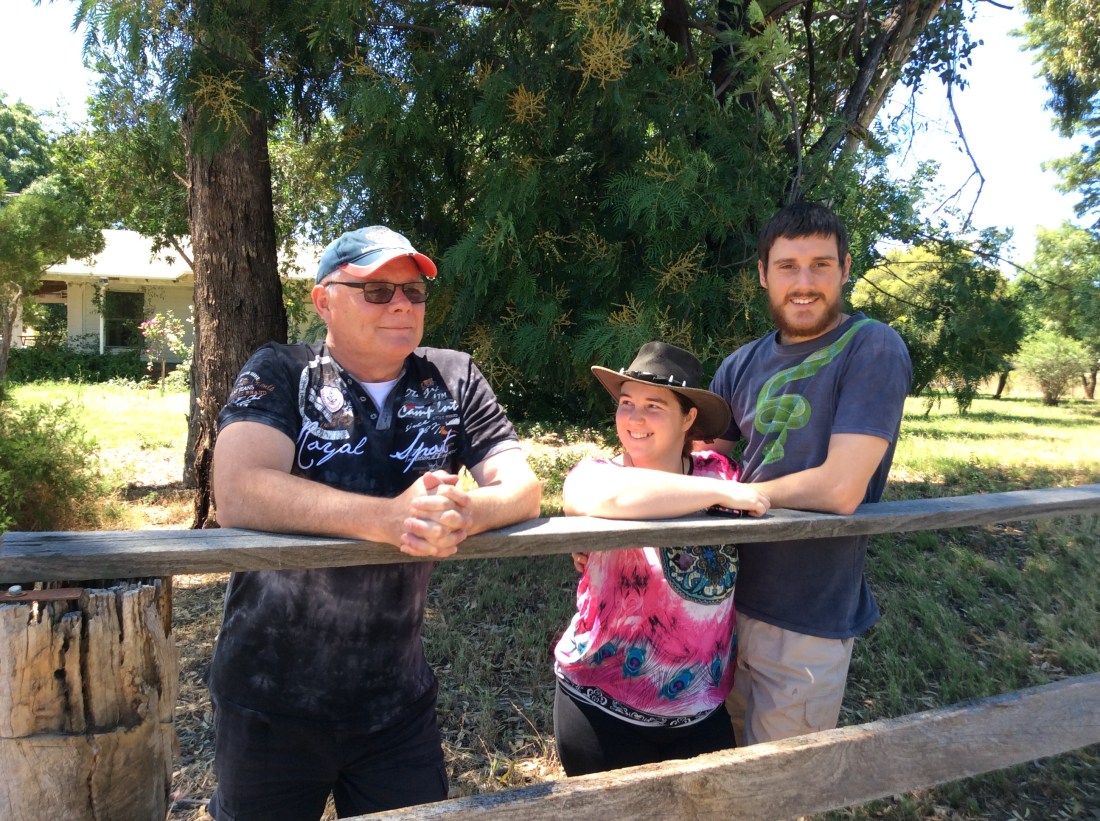
We visited our grandson with his family on our way back home from Melbourne. The above layout pictures are from our visit at the farmhouse where Tristan and family live now.


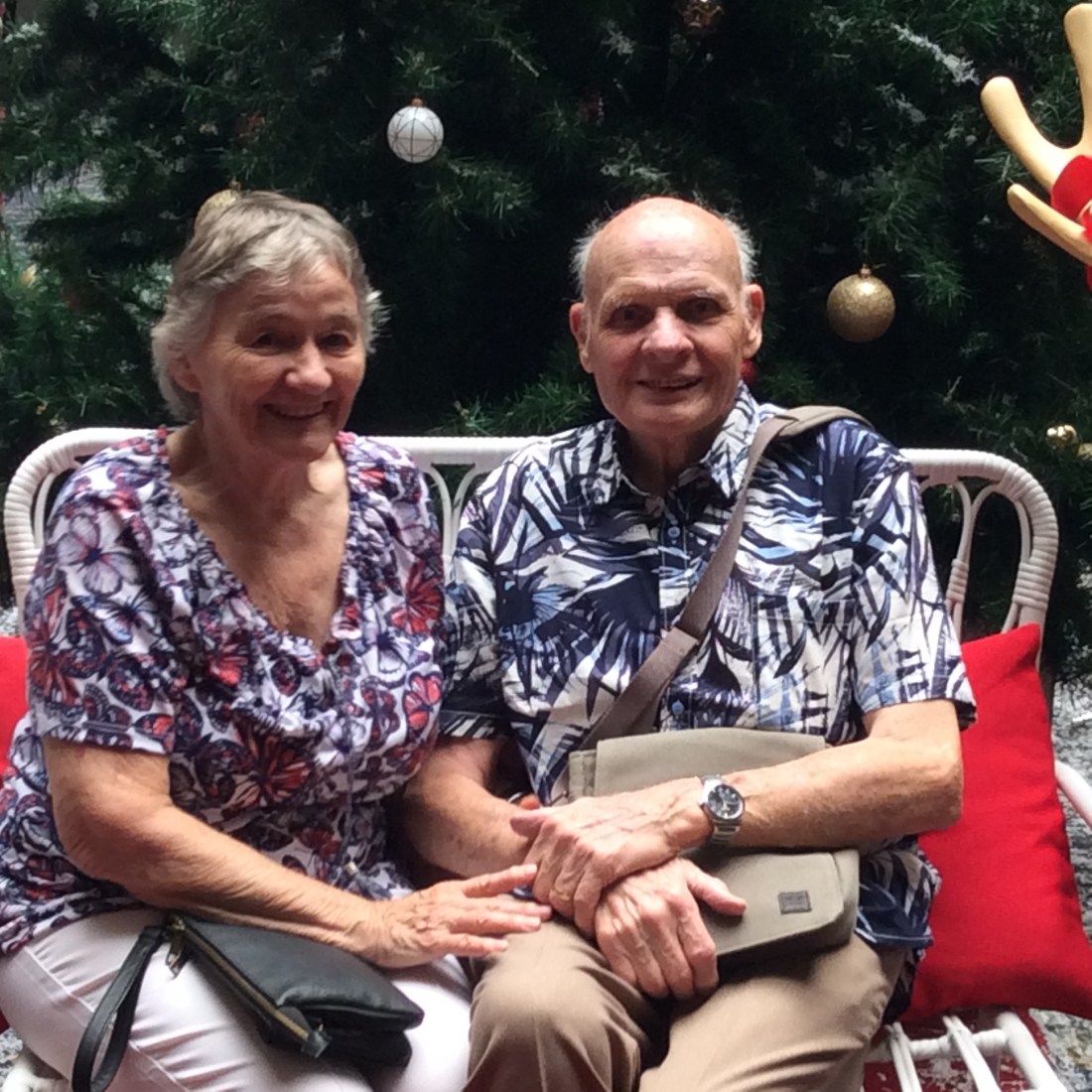
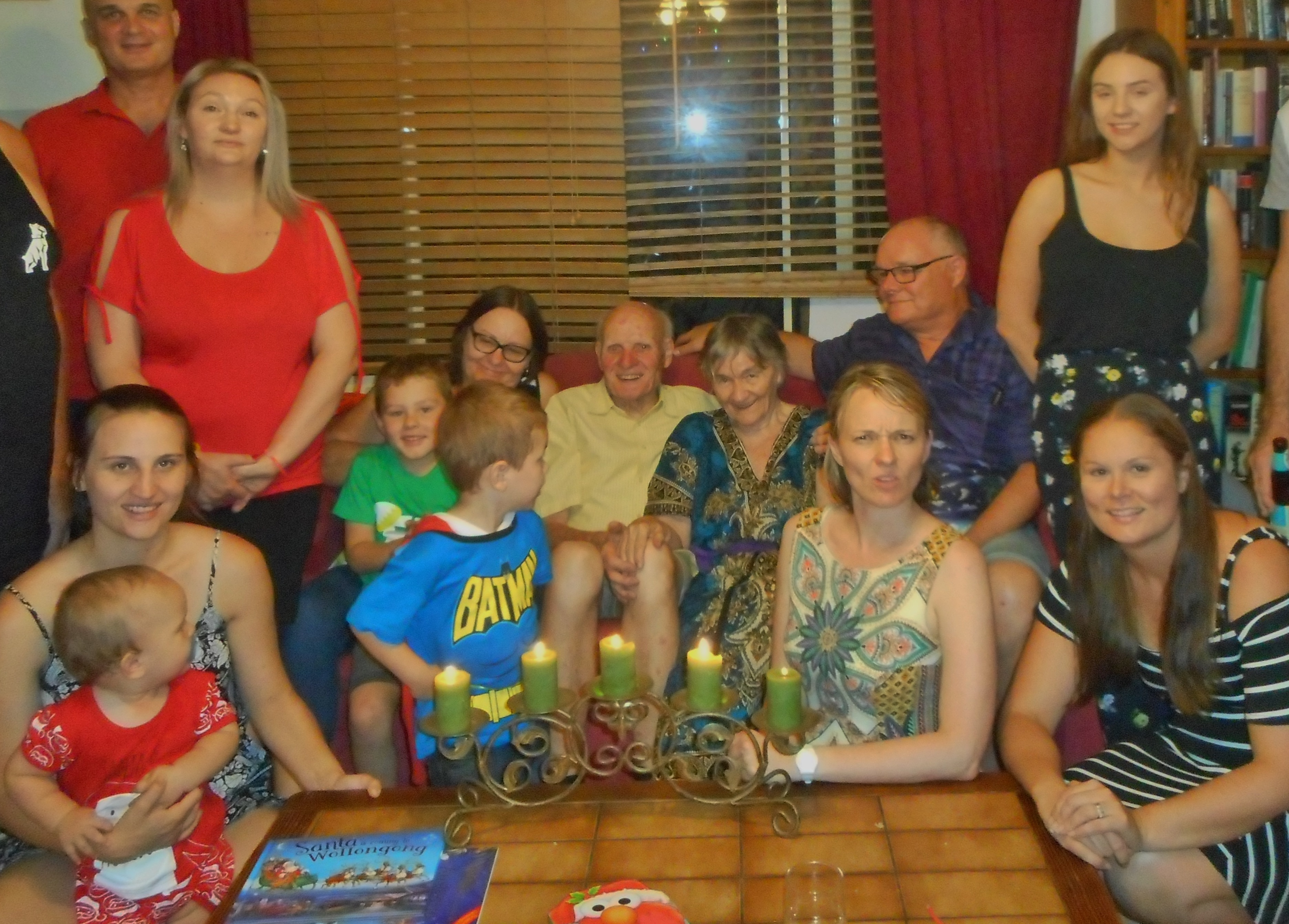
The following are some pictures from our anniversary celebrations on Christmas Eve:





The Epiphany is a Christian feast day, also known as the 12th day of Christmas, which falls on January 6 and marks the official end to the festive season.
Two weeks ago, on Saturday, the 23rd of December 2017, we went with son Martin to Berry for morning coffee, then to Kiama for an early fish and chips lunch, and later to Shellharbour for ice-cream. After we have had our delicious ice-cream, Martin drove us to the Beach Farm with is now a beautiful public area close by the sea.
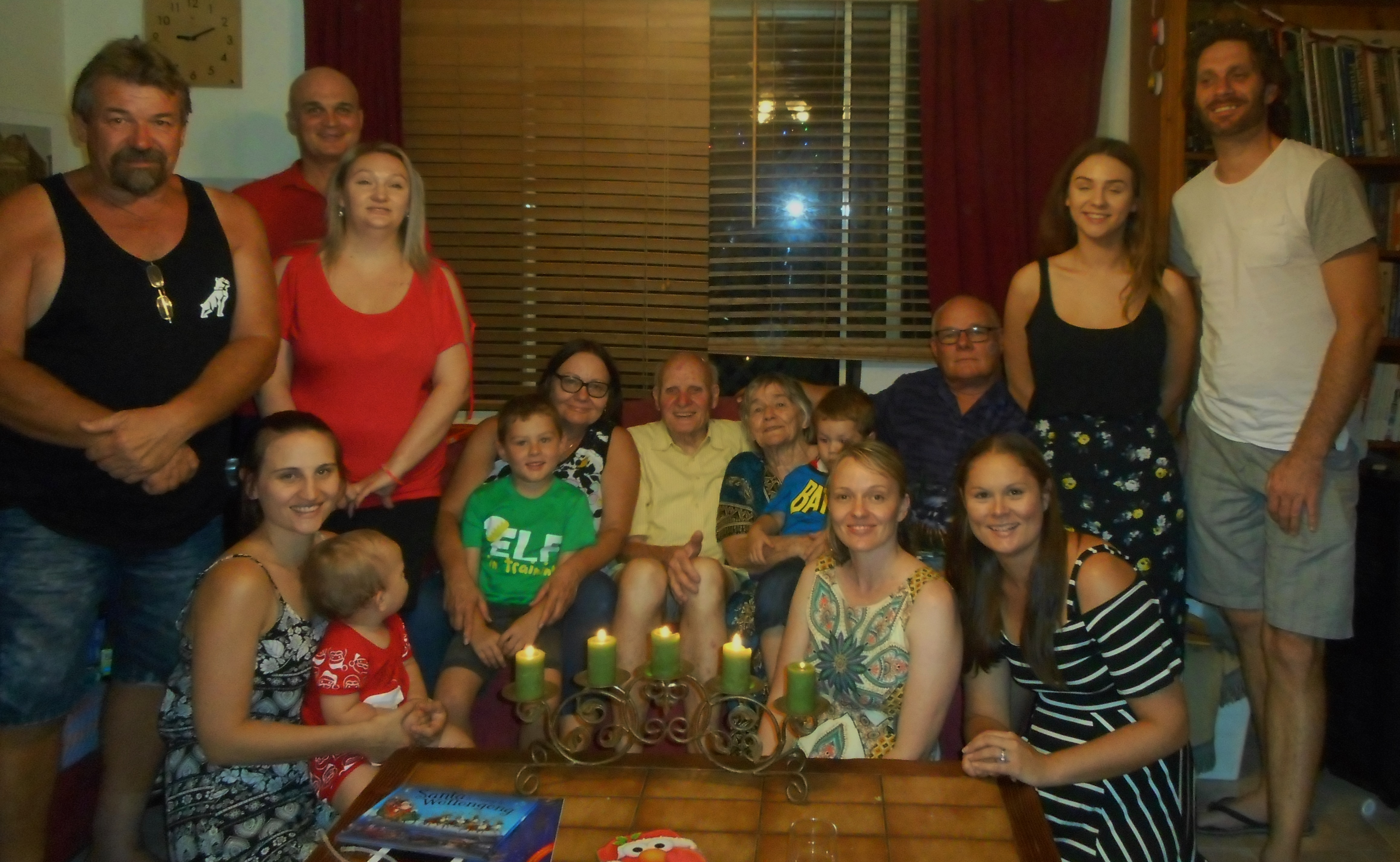
I think our Christmas Season started already with Sunday, the 24th of December, when the family gathered at our place for our customary Christmas Eve celebrations. Matthew and Caroline had arranged that Matthew’s mum could join us for Christmas Eve and stay overnight at our place. This was really great, that Yittah could join us!

https://wordpress.com/post/auntyuta199172524.wordpress.com/1065
(A REBLOG of the POST I published on the 22nd of January 2013)
Our day on the 31st of December 2012 started with a trip to Bondi Junction, where we met our daughter. We had a cup of coffee with Caroline (sorry no photo). Then Caroline had to go shopping. We strolled back to the station. This time to a different entrance to the station, one that we weren’t familiar with yet. A beautiful large rest area opened up in front of us. Lots of different food and drinks were on offer at different outlets. In the middle of the plaza some delicious looking (homemade) ice-cream caught our eye. Peter and I each had a cup full of this very refreshing treat. It wasn’t expensive but tasted wonderful. There were plenty of seats everywhere to have a rest. We took the lift down to the platform. Only a few minutes and our train departed. We got off at Town Hall Station.  Later on we looked at the displays of some cake-shops. We were hoping we would find some Berliners. It is our tradition to eat Berliners on New Year’s Eve. We had no luck. We couldn’t find any. We went back to Town Hall Station to catch our train to Dapto. While we were waiting for the train we took some photos. The trip to Dapto took nearly two hours. Some shops in Dapto Shopping Center were already about to close when we arrived there. We knew we had a bottle of Bubbly at home in the fridge for our end of year celebrations. But we were still without any Berliners. I felt a bit tired and was sitting down for a while. In the meantime Peter rushed into another shop that was still open. Surprise, surprise, he came out with some delicious looking Berliners in the form of stars! He got them at half price for they were the last ones that were left! At home we watched “Dinner for One”, which is a tradition with us to watch on New Year’s Eve. It is a sketch about Miss Sophie’s 90th Birthday. Very, very funny! We’ve seen it so often and every time we laugh our heads off again. Peter tried out to take a few pictures from the TV showing Sydney Harbour. At midnight he took also some pictures of the fireworks. Soon after we went to bed. But of course we did have our Bubbly and did eat the heated up little stars with it. They tasted delicious, just as good as the balls, called Berliners, do taste. Of course we did get messages and phone calls from our children before we went to bed, wishing us a HAPPY NEW YEAR.


 Sorry,


So, this is a REBLOG of what we did on New Year’s Eve of 2012 (five years ago!). This year we plan on staying home again to watch ‘Dinner for one’ and the Fireworks on TV, also to have some bubbly and hopefully also some Berliners. For lunch on that last day of this year we want to go out with some friends
Here are the comments and my replies to the above post from January 2013:

Maxim Gorki’s play “Children of the Sun” was shown at the Drama Theatre in Sydney’s Opera House. We saw this play last Saturday. There was a matinee performance at 2 pm which suited us for we prefer to be home at nighttime. Before we went to the theatre we met Caroline for lunch in the city.


We told Caroline that we had lunch at the same place on the last day of the year 2012. Later at home I looked up the post I published from that day. Sure enough I did find the lunch pictures and was able to republish them.


 AuntyUta
auntyutaJanuary 22, 2013 at 2:00 pm Edit #
Near the Queen Victoria Building we found a lovely little place where we could have a bit of lunch. The fish tasted so good, I managed to eat both large pieces! And imagine, the lunch in the center of the city was a special for ten Dollars! Great value indeed.
Three Well BeingsJanuary 22, 2013 at 3:31 pm Edit #
The Queen Victoria Building is really beautiful. And I was just thinking today how quickly we moved on from the busy Christmas and New Year’s activities. It was nice to have a reason to look back and see how you spent your last day of the year! The food looks delicious, too! 🙂
auntyutaJanuary 22, 2013 at 3:58 pm Edit #
Thank you, Debra. 🙂
likeitizJanuary 22, 2013 at 6:43 pm Edit #
You both look great!
auntyutaJanuary 22, 2013 at 6:53 pm Edit #
Thanks, Mary-Anne. It was a good ending of the year.
The EmuJanuary 22, 2013 at 9:11 pm Edit #
What a delightful and beautiful way to spend new years eve, love your tradition.
The pics are great and I must admit the one with the fish in it is more to my liking.
May you both relive your tradition for many more years to come.
Emu aka Ian
auntyutaJanuary 22, 2013 at 10:08 pm Edit #
Hi, Ian, I’m glad you liked my little post. The fish I had for lunch was really great, very fresh tasting the way I like it. Normally I would eat only one piece of fish that big, but it tasted so yummy that I finished off the other piece as well! And I did eat most of the chips and all the salad. As a drink we only had water, which was for free.
The young friendly woman who served us asked us whether we were planning on seeing the fireworks that night. But we said, no, we were going back home to watch it on TV.
After the scorcher we had last Friday we had some cooler weather the past few days. When you go out in 40+ temps it’s like going out into an oven, isn’t it?
Hope you’re keeping well, Love, Uta.
catterelJanuary 22, 2013 at 9:41 pm Edit #
Lovely post Uta – and so pleased for you that you can upload your photos again. I’m very impressed by your starshaped “Berliners” – they look very posh. “Dinner for one” is shown on all the German-speaking TV channels in Europe over and over again on New Year’s Eve – for some Germans, it’s the only English film they know! But surprisingly enough, although the actors were very well known in Britain, hardly anyone in the UK knows that little film. Glad you are carrying on the tradition down under!
auntyutaJanuary 22, 2013 at 9:55 pm Edit #
So pleased, Cat, to be able to share some of my photos again. You probably know that Germans call these “Berliners” Pfannkuchen.
I heard about it that “Dinner for One” for some reason is hardly known in the UK whereas in Germany it is very popular. There’s one channel here in Australia who always have it in their program for New Year’s Eve. Some fans in Australia watch it every year too. 🙂
catterelJanuary 22, 2013 at 9:58 pm Edit #
I guess the ex-pat German-speakers were homesick for it so the TV people do them the favour!
auntyutaJanuary 22, 2013 at 10:19 pm Edit #
We belong to the people who are really hooked on it. Just thinking about it makes me laugh. The Butler asks: Same as every year, Miss Sophie? And she answers: The same as every year! It’s so good the way they’re acting it. But I’m afraid I don’t know the names of the actors. Poor 90 year old Miss Sophie. All her companions are already dead. And the butler has to pretend they’re still alive and have come to the dinner party.