Drone Nation

Something to mull over!

stuartbramhall's avatarThe Most Revolutionary Act

drones

Part 5 of Counter-intelligence: Shining a Light on Black Operations

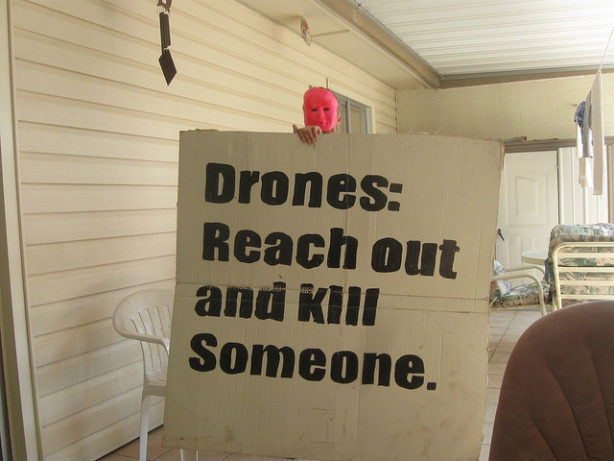
The final episode of Counter-intelligence is dedicated to drone technology and Barack Obama’s virtual repeal of the Fifth Amendment. The Fifth Amendment of the Bill of Rights guarantees that “no person shall be deprived of life, liberty or property without due process of law.” Obama’s National Defense Authorization Act (NDAA) allows the government to detain individuals indefinitely without charge, trial or conviction. Obama has also granted himself the authority, via executive order, to arbitrarily execute civilians (including American citizens) without due process, evidence or accountability to Congress or the courts. Both overturn hundreds of years of common law preventing the rich and powerful from using government to attack their personal enemies.

Filmmaker Scott Noble reminds us that Obama deliberately leaked details of his weekly White House “kill list” meetings. Individuals are added to the kill lists, which are maintained by…

View original post 245 more words

Veterans Day: A Tribute To All Who Served

Eliz@MirthandMotivation's avatarMirth and Motivation

Veterans Day: Saluting All Who Served - 2014 Poster Veterans Day: Saluting All Who Served – 2014 Poster

“Since the birth of our Nation, American patriots have stepped forward to serve our country and defend our way of life. With honor and distinction, generations of servicemen and women have taken up arms to win our independence, preserve our Union, and secure our freedom. From the Minutemen to our Post-9 /11 Generation, these heroes have put their lives on the line so that we might live in a world that is safer, freer, and more just, and we owe them a profound debt of gratitude. On Veterans Day, we salute the Soldiers, Sailors, Airmen, Marines, and Coast Guardsmen who have rendered the highest service any American can offer, and we rededicate ourselves to fulfilling our commitment to all those who serve in our name.” Excerpt from President Barack Obama’s Proclamation on Veterans Day 2014

Today, we honor and salute all…

View original post 499 more words

Favorite Children Books: Part 4

I also thank you very much, Elizabeth. What Evelyne wrote is very interesting and I want to reblog it. We own the book THE LITTLE PRINCE by Saint-Exupery. I plan on spending some time with it asap. Looking forward to it!

Elizabeth's avatarBreaking the Cycle 716

The next installment of Favorite Children’s Books is hosted by Evelyne Holingue, a published author who grew up in France and raised her children in America.  Like Aunty Uta, Evelyne’s multicultural experience lends an interesting perspective to this topic.

Tell us about yourself, Evelyne!

I had never been to the USA when the young man I met in Paris told me that he would love to live there one day. Unlike me he had been there many times, visiting both coasts extensively. Honestly, I didn’t really think about his American dreams until one night, shortly after we got married, he told me that we should go. I remember excitement and anxiety stirring inside me, working at the making of a totally foreign stew.

Retrospectively, I’m glad I agreed. Saying no to the dreams of the man I love would have been hard.  Now that we have been living in the…

View original post 1,110 more words

Favorite Children’s Books: Part Three

Elizabeth's avatarBreaking the Cycle 716

I’ve asked friend and fellow blogger Aunty Uta about her favorite children’s books.  Aunty Uta grew up in Germany during World War II.  I find her personal perspective on something as universally applicable as children’s books during such a tumultuous time fascinating.  Aunty Uta immigrated to Australia with her husband Peter in 1959. There, they raised four children.  They have eight grandchildren and four great-grandchildren. Aunty Uta just turned eighty.

1) Do you have a favorite book from childhood? Feel free to mention more than one.

Fairy Tales, Fables, Robinson CrusoeStruwwelpeterMax and Moritz.

2) Who did you read with as a child?

Well, anyone who happened to be around may have volunteered: Father, mother, aunts, uncles, older cousins, grandmother.  I particularly loved reading with my little brother, Bodo.

3) Tell us about him.

Bodo and I shared a love of scary stories, especially illustrated fairy tale…

View original post 852 more words

HOW TO HALLOWEEN

THE FOLLOWING IS TAKEN FROM:
http://www.shoeboxblog.com/
HOW TO HALLOWEEN

Halloween is tomorrow! Here are a few things you should know.


HOW TO CANDY AND BEER:

candy and beer pairings


HOW TO COFFEE:

me with coffee vs zombie


HOW TO CANDY CORN:

candy corn hole cartoon


HOW TO HAUNTED HOUSE:

what to do if your house is haunted pie chart


Any other advice on how to Halloween?


Post a Comment

Posted by Mia – Labels: Bill G., Cartoon, Chris C., Russ E., Valerie S. – See more at: http://www.shoeboxblog.com/#sthash.XdARy5kj.dpuf

What Is Love?

I liked this post very much. You may find it interesting to have a read of it. Carole has a lot to say about her life experiences. Very well written indeed.

caroleparkes's avatarAuthor -Carole Parkes

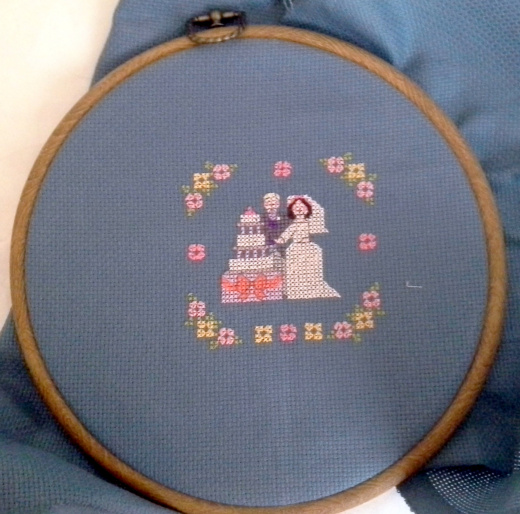
Cross-Stitched Wedding

What is Love?

Does anybody know what love is? My guess is no-one can define it, or put it into a single sentence, least of all me. Neither am I an expert on marriage, but, having been married for 49 years, and witnessing my parents’ long marriage; I do feel I might know a bit about it. Enough anyway, to express some views on love, and what makes a relationship work.

My parent’s marriage lasted nearly 76 years, and they never stopped loving each other despite the trials thrown at them. My mum was 18 and pregnant when she married my dad, who was 22. My mum, an only child, had already lost her father when she was 15; he’d had a stroke. Her mother was also ill, from the effects of breathing in cotton fibres at the mill where she worked. She died aged 45 when my mum was just 20. Just…

View original post 1,145 more words

Englobo, Speculative Vacancies, the Wealth Illusion‏

THE ENEWS OF PROSPER & EARTHSHARING AUSTRALIA
OCTOBER 2014

Lee Sie
Englobo 2014 Report Launch – tomorrow night 

Thursday, October 30th, 6.30 – 8pm
Level 2, 22 Punch Lane, Melbourne
Presenter: David Collyer
RSVP, donations appreciated

We hope you will join us tomorrow evening as David Collyer launches Englobo 2014 – Land Banking Profits during a Housing Supply Crisis. The investigation into just how much land Australia’s biggest property developers are holding and the effect on the housing market  is set to be as explosive as ever.

For an introduction to the concept of Englobo and why it matters check out this article from David’s first Englobo investigations in 2012.

Alper Cugun
Speculative Vacancies 7 – Report Release 

Wednesday, November 12th, 6.30pm
Level 2, 22 Punch Lane, Melbourne
Presenter: Catherine Cashmore

RSVP, donations appareciated

The 7th Speculative Vacancies report will again raise awareness of the need for property held for capital gains to be included in Australia’s housing vacancy measures. Only looking at ‘housing for rent’ is not accurate as a vacancy measure in this investor-dominated market. Our vacancy rate typically doubles the vacancy findings the mainstream media quotes. With the capital gains in the land game regularly tripling the yearly rental incomes available, there is less and less motivation for investors to risk their kitchen cupboards on a ‘reckless renter’. Catherine Cashmore, the winner of the EJ Craigie writing award, will inject her unique investigative manner to this year’s report.

The final vacancy numbers are again shaping up to reveal a jaw-dropping number of under-utilised properties in this era of the Housing Supply Crisis.

Please save the date and invite your friends feeling the housing stress!

Loozrboy
Unaffordable housing not making us wealthy

Earlier this month Credit Suisse released their latest Global Wealth Report which found that based on our extremely high house prices Australians are the richest people in the world. In contrast to most of the media Warwick Smith cuts through the illusion in this article reposted to the Prosper website:

“The true beneficiaries of ever increasing real estate prices are the banks and other lenders. Most Australians spend a very significant proportion of their incomes paying interest to the banks, either directly on their own mortgages or indirectly via their landlords. The higher house prices go, the more income is captured by the banks. Saddling our young people with a lifetime of debt is not a cause for celebration, it’s a problem to tackle.”

Also at Prosper Leith van Onselen discusses how to get the states on board with federal tax reform and cites Prof. John Freebairn’s address from this year’s Henry George Dinner.

askyog
Want to share? There’s a catch…

The “sharing economy” is in the spotlight again with Salon writer Richard Eskow warning that we’rebuying into a digital myth about wealth creation that we can only ignore at our own peril:

“These corporations are monopolists – and much more. They’ve quickly assumed extraordinary influence over our lives. They control what we know, what we see and how we spend our time. They decide who knows our most intimate secrets. They are acquiring the kind of power totalitarian governments of the past could only dream about.”

As Facebook, Amazon and Uber exert every increasing influence on the market – and our lives, it’s time to make sure we are truly paying attention.

RubyGoes
The forgotten coup

Much has been written on the many achievements of great reforming Prime Minister Gough Whitlam since the news of his death and we would like to recommend adding this article by John Pilger to your reading list. Pilger explores Whitlam’s radical attitude towards foreign policy and our colonial ties as a forgotten but critical factor in his political demise.

“Australia briefly became an independent state during the Whitlam years, 1972-75. An American commentator wrote that no country had “reversed its posture in international affairs so totally without going through a domestic revolution”. Whitlam ended his nation’s colonial servility.”

Retired Army Gal
Rounding Off

If you missed the last few editions of Renegade Economists make sure you head to our Mixcloud pageand check them out. Matt Ellis from Rational Radical joins Karl for a lively discussion about his petition calling out Senator Nick Xenophon for pushing superannuation access as a vehicle for housing affordability. Last week Karl was joined by Jacob Wills (radicalhousingnetwork.org) to discuss the commodification of housing and the protest movement against the international property convention that was just held in London.

On a lighter note, the G20 summit is fast approaching and we highly recommend giving this latest addition of the Rap News a listen.

As always thanks for your support. You can get involved via our website, or head to our twitter feeds where there’s always plenty of lively discussion – @earthsharing & @don’tbuynow.

See you tomorrow evening for Englobo,
Jess Wright
Office Manager.


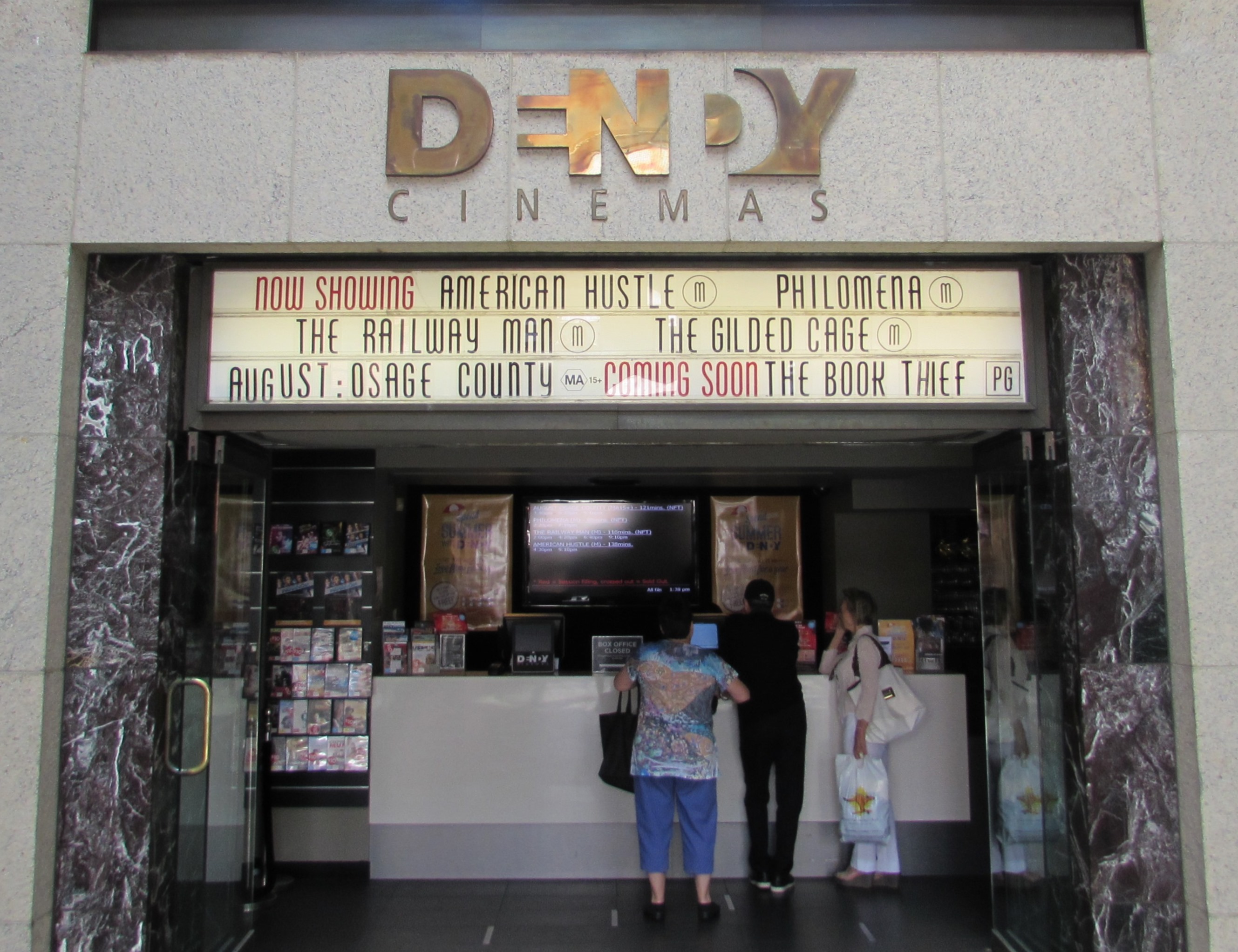
Seeing “The Railway Man” at the DENDY on Sunday, 5th Jan.2014

“The Railway Man” is a movie with Colin Firth and Nicole Kidman. We saw recently another movie with Colin Firth and Nicole Kidman: “Before I go to sleep”

auntyuta's avatarAuntyUta

IMG_0235

Yesterday, Peter and I  went to see the ‘The Railwnay Man‘ at the Dendy Cinemas at the Quay, Sydney Harbour.

This movie is based on the best selling book by Eric Lomax. Colin Firth plays the older Eric Lomax and Jeremy Irvine is in the role of the young one who got captured by the Japanese in Singapore in 1942 and sent with his mates to the notorious ‘Death Railway’ in Thailand.

Patti Lomax (Nicole Kidman) turns out to be a wonderfully supportive wife of the older Eric.  Eric, as a 21 year old, is a British Signals Engineer and railway enthusiast. And of course he is in the British Army. The film depicts the sufferings that war veterans undergo even decades after the events. The sufferings occur on both sides, the oppressed as well as the oppressors. It shows the absolute trauma that wars can inflict on the…

View original post 228 more words

An Article in The Washington Post from January 27, 2013

By Bob Woodward January 27, 2013
Bob Woodward is an associate editor of The Post. His latest book is “The Price of Politics.” Evelyn M. Duffy contributed to this column.
In the first months of the Obama presidency in 2009, Chuck Hagel, who had just finished two terms as a U.S. senator, went to the White House to visit with the friend he had made during the four years they overlapped in the Senate.

So, President Obama asked, what do you think about foreign policy and defense issues?

According to an account that Hagel later gave, and is reported here for the first time, he told Obama: “We are at a time where there is a new world order. We don’t control it. You must question everything, every assumption, everything they” — the military and diplomats — “tell you. Any assumption 10 years old is out of date. You need to question our role. You need to question the military. You need to question what are we using the military for.

“Afghanistan will be defining for your presidency in the first term,” Hagel also said, according to his own account, “perhaps even for a second term.” The key was not to get “bogged down.”

Obama did not say much but listened. At the time, Hagel considered Obama a “loner,” inclined to keep a distance and his own counsel. But Hagel’s comments help explain why Obama nominated his former Senate colleague to be his next secretary of defense. The two share similar views and philosophies as the Obama administration attempts to define the role of the United States in the transition to a post-superpower world.

This worldview is part hawk and part dove. It amounts, in part, to a challenge to the wars of President George W. Bush. It holds that the Afghanistan war has been mismanaged and the Iraq war unnecessary. War is an option, but very much a last resort.

So, this thinking goes, the U.S. role in the world must be carefully scaled back — this is not a matter of choice but of facing reality; the military needs to be treated with deep skepticism; lots of strategic military and foreign policy thinking is out of date; and quagmires like Afghanistan should be avoided.

The bottom line: The United States must get out of these massive land wars — Iraq and Afghanistan — and, if possible, avoid future large-scale war.

Although much discussion of the Hagel nomination has centered on his attitudes about Iran, Israel and the defense budget, Hagel’s broader agreement with Obama on overall philosophy is probably more consequential.

Hagel has also said he believes it is important that a defense secretary should not dictate foreign policy and that policy should be made in the White House.

He privately voiced reservations about Obama’s decision in late 2009 to add 51,000 troops to Afghanistan. “The president has not had commander-in-chief control of the Pentagon since Bush senior was president,” Hagel said privately in 2011.

If Hagel is confirmed, as appears likely, he and the president will have a large task in navigating this new world order. Avoiding war is tied directly to the credibility of the threat to go to war.

Hagel’s experience provides two unusual perspectives. The first is as a former E-5 Army sergeant in 1968, which he has described as “the worst year of the Vietnam War.” In summation, another Vietnam must be avoided.

The second is the Georgetown University class that he taught called “Redefining Geopolitical Relationships.” He asks the class the basic question: Where is all this going?

For example, he has said that one result of the Iraq war has been to make Iran the most important country in the Middle East, and he worried that Iraq could become an Iranian satellite.

When I interviewed President Obama in the summer of 2010 for my book “Obama’s Wars,” his deeply rooted aversion to war was evident. As I reported in the book, I handed Obama a copy of a quotation from Rick Atkinson’s World War II history, “The Day of Battle,” and asked him to read it. Obama stood and read:

“And then there was the saddest lesson, to be learned again and again . . . that war is corrupting, that it corrodes the soul and tarnishes the spirit, that even the excellent and the superior can be defiled, and that no heart would remain unstained.”

“I sympathize with this view,” Obama told me. “See my Nobel Prize acceptance speech.”

I had listened to the speech when he gave it, Dec. 10, 2009, and later read it, but I dug it out again. And there it was:

“The instruments of war do have a role to play in preserving the peace. And yet this truth must coexist with another — that no matter how justified, war promises human tragedy. The soldier’s courage and sacrifice is full of glory, expressing devotion to country, to cause, to comrades in arms. But war itself is never glorious” — Churchill had called it that — “and we must never trumpet it as such. So part of our challenge is reconciling these two seemingly irreconcilable truths — that war is sometimes necessary and war at some level is an expression of human folly.”

That is probably the best definition of the Obama doctrine on war. Applying such a doctrine in today’s dangerous and unpredictable world will be daunting — but on these issues Obama seems to have found a soul mate.

Read more on this debate:

Robert Satloff: The message Hagel carries on Iran

Jim Inhofe: The wrong man to be defense secretary

David Ignatius: Hagel and the revival of Eisenhower’s doctrine