Uta’s Diary, 20th November 2015, Queen Rania’s Views. And how to drink Red Wine!

Queen Rania: Let’s Drop The First ‘I’ In ISIS. There’s Nothing Islamic About Them

http://www.huffingtonpost.com.au/2015/03/06/queen-rania-isis-islamic_n_6781160.html?ir=Australia

Posted: 07/03/2015 LONDON — Queen Rania of Jordan said Thursday evening that there is nothing Islamic about the self-proclaimed Islamic State, or ISIS.

She was speaking with Huffington Post Editor-In-Chief Arianna Huffington as a part of The WorldPost Future of Work Conference.

Here is an extract of what Queen Rania said in this interview in March. For the full interview please go to the above links:

“Queen Rania said she thought there are different reasons people join ISIS, including desire for a sense of belonging, for adventure, for a job and/or for the religious rhetoric. She said she sees it as a pyramid:

At the top of the pyramid are those who actually generate that ideology, and I think they’re the worst. Fanaticism and extremism exists in every religion but it always remains on the fringes. And I think what makes it drift to the mainstream is the fact that they were supported. Some did support them with money, and they provided them with the infrastructure, which allowed them to then spread that ideology a lot more.
At the middle of the pyramid are those who … [believe] that there’s a political injustice. That they don’t have a stake in their own societies. That there’s no justice. And I think at the bottom of the pyramid are those who are probably uneducated and suffer from poverty and unemployment, and they are the most vulnerable. Apart from those on the top, it’s vulnerability that makes people fall prey to their kind of rhetoric.
Because there are different reasons why people join, she said, the fight against ISIS needs to be undertaken at different levels — including militarily. “But this can’t just be won on the battlefield,” she said. “At the heart of this war is ideology, and you cannot kill an ideology with a bullet. You can only kill it with a better idea.”

I think this pyramid of reasons is very well explained. Last night we opened a bottle of red wine. I had been a hot day. Our room temperature was still 27C. Our motto was always to drink red wine at room temperature. What if the temperature was well above 20C? I urged Peter to keep the opened bottle in the fridge. This morning I happened to notice an article about red wine in the Huffington Post. Here you can read it:

http://www.huffingtonpost.com.au/2015/11/19/red-wine-room-temp-sensor_n_8595676.html?ncid=edlinkauhpmg00000001

Among other things they say in this article: “Red wine drinkers, prepare to have your minds blown — when a winemaker says you should serve at ‘room temperature’, they’re not talking about the temperature of an Australian room.

The antiquated term dates back to medieval French drawing rooms which were about 14-16˚C and the average Aussie living room is closer to 20˚C.

So basically our wine-drinking habits are the European equivalent to drinking warm beer.”

Another Trailer of Bridge of Spies

http://fanboynation.com/bridge-of-spies-clips/

It’s been three years since a Steven Spielberg film last graced the silver screen, and, dagnabbit, our long wait is nearly over. The legendary filmmaker is reuniting with Tom Hanks for the Cold War thriller Bridge of Spies. The political films of Spielberg, in my ever-so humble opinion, are a mixed bag — Lincoln was well-acted but felt too procedural and Munich‘s tension was sometimes undercut by some heavy-handed choices — but I’m still amped up for the Cold War paranoia that Bridge of Spies is teasing, and we have two new clips from the film that focus on Hanks’ character James Donovan and the moral quandary of having to defend an accused Soviet spy in open court. There’s also an ace in the hole for Bridge of Spies, and that’s the fact that the screenplay is co-written by Joel and Ethan Coen, alongside Matt Charman. Think about that for a second — the Coen Brothers and Spielberg working together on the same movie. It almost sounds too good to be true.

Co-starring with Hanks in Bridge of Spies is Mark Rylance, Scott Shepherd, Amy Ryan, Sebastian Koch, and Alan Alda. The film opens in theaters on October 16th. Be looking over your shoulder when you enter the theater because you don’t know who’s watching you watch Bridge of Spies.

American Justice

Free a Traitor

The official synopsis for Bridge of Spies:

In the 1950s during the early stages of the Cold War, tensions are rife between the U.S. and USSR, so when the FBI arrests Rudolf Abel (Mark Rylance), a Soviet agent living in New York, the fear and paranoia only escalate. Charged with sending coded messages back to Russia, Abel is questioned by the FBI but refuses to cooperate, declining their offer to turn on his country, and is detained in federal prison pending trial.

The government, in need of an independent attorney to take on Abel’s defense, approaches James Donovan (Tom Hanks), an insurance lawyer from Brooklyn. But Donovan, a former prosecutor at the Nuremberg trials and highly regarded within the legal community for his profound skills as a negotiator, has little experience with allegations of this magnitude and isn’t eager to get involved. Advocating such a deeply unpopular defense would make him a public figure and could subject his family to scrutiny, disdain and even, potentially, danger.

Something to look forward to

I have never been to Frankfurt/Oder. We found out now that there is a beautiful Cafe in Slubice in Poland which can be reached from Frankfurt by crossing the bridge over the river Oder. From Berlin to Frankfurt/Oder is only a short trip. When we are in Berlin next year we may have the opportunity to go into Poland to the little town of Slubice and pay the Szczerbisky cafe a visit. Apparently they have yummy dumplings and cakes!

Welcome to the Confectionery Szczerbińscy

From Wikipedia, the free encyclopedia
See also: Słubice, Masovian Voivodeship
Słubice

Website http://www.slubice.pld
Słubice [swuˈbʲit͡sɛ] (German Dammvorstadt) is a border town in the Lubusz Voivodeship of western Poland. Located on the Oder river, directly opposite the city of Frankfurt (Oder) in Germany, of which it was a part until 1945 (as Dammvorstadt). At the 2011 census, the town had a total population of 18,000 (urban agglomeration Słubice-Frankfurt 85,000).

https://en.wikipedia.org/wiki/Frankfurt_(Oder)

International relations
Frankfurt (Oder), being located on the border to Poland, plays a special role in connection with German-Polish relations and European integration. The European University Viadrina has one of its buildings in Poland, in the neighbouring town of Słubice. The university also has a number of projects and initiatives dedicated to bringing Poland and Germany together, and offers its students pro bono Polish courses. Another project that contributes to German-Polish integration in Frankfurt (Oder) is the fforst house, a German-Polish student project, which has been granted support by the town’s administration[7] and by the Viadrina,[8] having been described by the former president of the university, Gesine Schwan, as the place where “Europe begins”.[9]
Twin towns and sister cities[edit]
See also: List of twin towns and sister cities in Germany
Frankfurt (Oder) is twinned with:
Poland Gorzów Wielkopolski, Poland, since 1975
Poland Słubice, Poland, since 1975
France Nîmes, France, since 1976
Finland Vantaa, Finland, since 1987
Germany Heilbronn, Germany, since 1988
Belarus Vitebsk, Belarus, since 1991
Israel Kadima, Israel, since 1997
United States Yuma, United States, since 1997
Italy Scandicci, Italy
Bulgaria Vratsa, Bulgaria, since 2009

Cake, balloons and fireworks One of the many surprises we have prepared Slubice to celebrate the 750 birthday of Frankfurt, was a huge cake, which on Saturday July 12, during the fair partner cities, residents distributed Mayor Richard Bodziacki.

Mädchen für alles – Gofer

We’ve just been watching this movie from 1937. The actress, Grethe Weiser, reminded me a lot of Australian actress  – Jacki Weaver. Peter and I, we both thought this old movie was a very well made, pleasant comedy. It was very interesting for us to see fashions from that area, as well as the way middle class people lived during this time. A lot of what I saw in this movie looked very familiar to me since I grew up in Berlin during this time.

Published on May 18, 2012 by youtube (for URL look in comments, please)

Fröhliche Filmkomödie mit zahlreichen Verwicklungen, in der es die “Kodderschnauze” darauf anlegt, sich einen attraktiven Flieger anzulachen, obschon sie nur ein armes Zimmermädchen ist.

https://translate.google.com.au/translate?hl=en&sl=de&tl=en&u=https%3A%2F%2Fde.wikipedia.org%2Fwiki%2FGrethe_Weiser

Grethe Weiser, born Mathilde Ella Dorothea Margarethe Nowka (* 27. February 1903 inHannover;2. October 1970 in Bad Tolz), was a German stage and film actress.
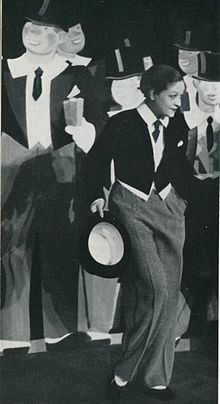
Life [Edit]

Grethe Weiser, appearance in the Berlin Conservatory (1932)

Grethe Weiser as waxwork inPanopticon Mannheim.

The grave of Grethe Weiser and her husband Dr. Hermann Schwerin in the cemetery Heerstraße in Berlin (2006)

Youth [Edit]

The daughter of a construction entrepreneur grew in Klotzsche and Dresden on. She attended the girls’ secondary school and the Friedel private school in Blasewitz.

At age 17, she married the confectionery wholesalers and -Fabrikanten Josef Weiser. The couple first lived in Dresden; In 1922 their son was born. After her husband the cabaret -Theater “Charlott” on Kurfürstendamm in Berlin had leased, Grethe Weiser graduated there first appearances as Diseuse.

A short time later broke the marriage, but it was only divorced 1934th Grethe Weiser was now placed as a single mother to be, she took singing – and acting lessons and graduated from appearances as a soubrette and comedienne in numerous cabarets, revues and operettas. From 1928 to 1930 she was at the Volksbühne active in Berlin, then stepped in several Berlin cabarets,as well as chanson singer on. Self she had, for example, at the Thalia Theater in Hamburg or at Komödienhaus in Dresden.

The actress [edit]

Grethe Weiser made ​​her film debut in 1927 nor the silent era as unnamed Supporting Actress.As a film actress she appeared regularly from 1932. She was very much in demand in important supporting roles as “quick-witted maid on duty”, for example in Escapade (1936). At the same time she had a successful singer hits with songs like “The Vamp” or “Emil’s hands”.

The final breakthrough came in 1937 with Erich Waschnecks film Divine Jette. Weiser shines therein as a young singer, who viewed with a healthy self-confidence and Berlin Kodderschnauzeclaims and ascends to the celebrated star.

After that, they played almost only supporting roles in films of all genres, in which they, however, was able to show the entire repertoire of her comic talent, so among other things, Rolf Hansenthe love (1942), in Helmut Käutner We make music (1942), in Carl Froelich Familie Buchholz(1944) or in Georg Jacoby The woman of my dreams (1944).

Pressures, the board of the Ministry of Arts and thus the NSDAP join, they successfully resisted.

Postwar [edit]

In post-war film Grethe Weiser was soon joined and played in numerous entertainment films with, often as a prevailing widow resolute aunt or mother dreaded. Her trademark was to continue: Heart with snout. She was seen in Hans Deppe’s holiday from I (1952) – as recreation vulnerable stage star Käthe Greiser -. My children and I (1955), Lemke sel Widow (1957) or How to Marry a husband (1959) and appeared in a total of more than 100 films. Among her few appearances atradio comedy part you can tell me a lot with Heinz Rühmann and Elfriede Kuzmany of 1949 by director Ulrich Erfurth.

Since 1934, she was with the Ufa -Produktionschef Hermann Schwerin romantically involved, but whom she married after 24 years on March 21, 1958th

In 1949 she played under the direction of her friend Ida Ehre in Hamburg for the first time on stage, the role of Mary Miller in the comedy The odd one of Irma and Walter Firner which became her signature role. She played this role every ten years and called it therefore jokingly “my Oberammergau Passion Play”. Also on stage they had in 1953 success as Mother Wolff inGerhart Hauptmann’s classic caper comedy The Beaver Coat. In 1966 she ventured into the German premiere of Friedrich Dürrenmatt’s play The Meteor at the Thalia Theater Hamburg as a dying woman toilet Nomsen the excursion to the serious character roles. In this role she beat unusually quiet, to serious and angry tones. This excursion into serious specialist remained the exception in her long career as a popular actress.

Heitere plays found in the later 1960s and the way to television. The ZDF transferred numerous pieces with Grethe Weiser. One of the most successful pieces, which is repeated until today occasionally on the cultural theme channels ZDF, was no corpse without Lily, the German adaptation of the criminal grotesque Busybody the British playwright Jack Popplewell.

1969 began preparations for a new edition of The Cuckoo’s Egg, which was also broadcast on ZDF time. The trade to the six-car filming TV series Theatre dressing room after screenplays byHorst Pillau preceded. Weiser played in a resolute dresser, which acts as a good spirit, the actor behind the scenes and for every situation a suitable Council on the lips.

Grethe Weiser died as a result of a traffic accident in which died and her husband. It was under the name of Grethe Weiser-Schwerin next to her husband at the cemetery Heerstraße in Berlin-Westend in an honorary grave buried the city of Berlin in the box 18-L-228 / 229th

Awards [edit]

http://www.imdb.com/title/tt0029290/fullcredits?ref_=tt_ov_st_sm

Full Cast & Crew

Directed by

Carl Boese

Writing Credits (in alphabetical order)

Hans Adler (play “Maedchen fuer alles”)
Bobby E. Lüthge (as B.E. Lüthge)

Cast (in credits order) complete, awaiting verification

Grethe Weiser Grethe Weiser
Hanni
Ralph Arthur Roberts Ralph Arthur Roberts
Dr. Fürgartner
Heinz Salfner Heinz Salfner
Ellen Frank Ellen Frank
Lissy Fürgartner
Frank Zimmermann Frank Zimmermann
Herbert Gaspari
Rudolf Platte Rudolf Platte
Monteur
Lotte Rausch Lotte Rausch
Marie, Köchin
Irmgard Novac Irmgard Novac
Käte (as Irmgard Novak)
Gerti Ober Gerti Ober
Sekretärin
Franz von Bokay Franz von Bokay
Michael von Newlinsky Michael von Newlinsky
Hotel-Geschäftsführer (as Michael von Newlinski)
Hansjakob Gröblinghoff Hansjakob Gröblinghoff
Pressefotograf
Claire Glib Claire Glib
Dame an der Bar
Livia Stolp Livia Stolp
Brunnenmädchen
Charly Berger Charly Berger
Hotelgast
Karl Jüstel Karl Jüstel
Tänzer
Jutta Jol Jutta Jol
Zofe
Hans Schneider Hans Schneider
Anton, Diener
Create a character page for:
Hanni
Dr. Fürgartner
Lissy Fürgartner
Herbert Gaspari
Monteur
Marie, Köchin
Sekretärin
Hotel-Geschäftsführer
Pressefotograf
Dame an der Bar
Brunnenmädchen
Hotelgast
Tänzer
Zofe
Anton, Diener
Create »?

Music by

Michael Jary

Cinematography by

Carl Drews

Film Editing by

Martha Dübber

Art Direction by

Karlheinz Böhm
Erich Czerwonski

Production Management

Conrad Flockner unit manager
Paul Goergens unit manager
Bruno Lopinski production manager

Sound Department

Carl Erich Kroschke sound (as Carl-Erich Kroschke)

Camera and Electrical Department

Erich Tannigel still photographer

See also

Release Dates | Official Sites | Box Office/Business | Company Credits | Filming Locations |Technical Specs | Literature

http://www.imdb.com/title/tt0029290/reviews?ref_=tt_ov_rt

1 out of 1 people found the following review useful:

The chambermaid did it

Author: Chip_douglas from Rijswijk, ZH, Netherlands
7 August 2004

Why do we love comedies starring scrupulous liars out to gain a lover (or a fortune) by taking advantage of others? Presumably because deep down we all would like to be that inventively naughty and still come out on top. Or maybe it’s just that everybody wants to be loved (or rich). Chambermaid Hanni works for Dr. Fuergartner and his wife Lissy, and is taking full advantage of residing in their big fancy house (twice a week she has her piano lesions there). She also knows the Fuergartners are friends with Herbert Gaspari, a famous flyboy she fancies, and has been corresponding with him under the assumed name of Isabella. Unbeknown to her, Lissy Fuergartner is planning to marry off the pilot to her sister.

When ‘Isabella’ (wearing one of Lissy’s dresses) finally meets her Herbert at a bar, Herr Doktor accidentally arrives on the scene and blows her cover. The pilot does not seem to mind, but Frau Fuergartner, mistakingly believing her husband and the maid are having an affair, has Hanni fired immediately. Still, her husband needs the girl to stay close to Mr. King, a man he has to impress at any cost (most comedies have a character like this, too). Dirty old King is about to divorce his forth wife and fancies Hanni as the next one. So everyone reunites at a big dinner party (one of the few signs that this was based on a play). Hanni, now engaged to King (which does not seem to matter to the pilot either), is now trying to hook the old man up with her not so refined best friend. Since both of them are dressed up in Mrs Fuergartner’s fine clothes, the Mrs. winds up playing the maid.

“The War Still Rages Within”


Published on Sep 27, 2015

Official Website of Destiny Cross: http://www.ShaDoWCa7.com

Per request, here is my cover of “The War Still Rages Within” from the video game Metal Gear Rising: RE Vengeance. There is a lot of bass in this one, so those of you who have good sub-woofers will get the best experience. 🙂 I am singing lead vocal, and I played and arranged all the music using my midi-keyboard. I went a little over-board with the guitar riffs, but I was having such a blast that I couldn’t stop! *hehe* And I also added a few lyrics of my own (the last two verses). This was pure fun! ^^ ♥ I made a lot of mistakes. I hope you’ll excuse them. Thank you for watching! 😀 I hope you enjoy it! The background footage is from the video game “The Evil Within” (PC).

Lyrics: “The War Still Rages Within”

Looking down on the cars on the highway,
The stream of tail-lights.
Everybody advancing together,
To so willingly sacrifice rights.
When people accept the cogs in the system,
Give up free will, conform,
Individual pieces of dust swirl together,
And become a full storm!

Looking down on the burgeoning city,
The skyscrapers rise.
Even men with the greatest intentions,
Start believing their own lies.
We can borrow from the future,
But eventually someone’s got to pay!
The only way out of the cycle,
Is to strike out and pave your own way!

We all fight our own fight.
Will you fuel the desire to win?
Always struggling with the truth,
Of the life that might have been!
But no matter how jagged your path is,
You’ll always come back to the road.
When the dust of battle settles,
The war still rages within!

As decisions unearth right before you,
Be careful the path that you choose.
Our actions build privilege or consequence,
The importance of safe-keeping truth!
When you feel that your voice has no power,
That peace can no longer contend;
Just remember that small acts of kindness,
Will spark and ignite into flames!

No matter the pressures before us,
The choice is always our own!
No matter how small or forgotten,
We all play a part, have a role!
It’s the details, the small things that matter,
A smile, a friendship, a helping hand!
Let the goodness of virtue and mercy,
Guide you wisely as we take our stand!

Die Gedanken Sind Frei – Thoughts Are Free – COVER with Lyrics

Published on Mar 7, 2012

Official Website of Destiny Cross: http://www.ShaDoWCa7.com

I dedicate this song to all my viewers who love the “old country” German folk songs. This is an old song that has a lot of meaning (please forgive my poor pronunciation and foreign accent). I have sung both the German and English verses together. I am singing three-part harmony. I hope you like it. ^^

Legend claims this song goes back to the Bundshuh rebellion of 1525 when the peasants rebelled against their oppression by the Swabian princes. The revolt was a failure, and serfdom continued for another three hundred years in Germany (the words to this song first appeared on leaflets in 1780).

The concept of “freedom of thought” has nearly always been considered dangerous, and the song was banned for many years before the 1848 revolution, especially as it was seen to be associated with the ideals of the French Revolution. It was widely sung in pre-Hitler Germany and brought to the USA by German immigrants fleeing Nazi-Germany. It is also said to have been sung in German concentration camps between 1933 and 1945. The original lyricist and composer are unknown.

Lyrics:

Die Gedanken Sind Frei (Thoughts Are Free)

Die Gedanken sind frei, wer kann sie erraten,
sie fliegen vorbei wie nächtliche Schatten.
Kein Mensch kann sie wissen, kein Jäger erschießen
mit Pulver und Blei: Die Gedanken sind frei!

Die Gedanken Sind Frei, my thoughts freely flower,
Die Gedanken Sind Frei, my thoughts give me power,
No Scholar can map them, no hunter can trap them,
No man can deny, Die Gedanken Sind Frei!

Ich denke was ich will und was mich beglücket,
doch alles in der Still’, und wie es sich schicket.
Mein Wunsch und Begehren kann niemand mir wehren,
es bleibet dabei: Die Gedanken sind frei!

I think as I please and this gives me pleasure,
My conscience decrees this right I must treasure,
My thoughts will not cater to duke or dictator,
No man can deny, Die Gedanken Sind Frei!

Und sperrt man mich ein im finsteren Kerker,
das alles sind rein vergebliche Werke.
Denn meine Gedanken zerreißen die Schranken
und Mauern entzwei: Die Gedanken sind frei!

And should tyrants take me and throw me in prison,
My thoughts will burst free like blossoms in season,
Foundations will crumble and structures will tumble,
And free men will cry, Die Gedanken Sind Frei!

Drum will ich auf immer den Sorgen absagen
und will mich auch nimmer mit Grillen mehr plagen.
Man kann ja im Herzen stets lachen und scherzen
und denken dabei: Die Gedanken sind frei!

And now I renounce forever my sorrows,
And never again to fret my tomorrows,
I’ll always have laughter and joy ever after,
For in my heart I’ll sing, Die Gedanken Sind Frei!


Sealevel Rise

https://theconversation.com/au/topics/sea-level-rise


Rising seas threaten to drown important mangrove forests, unless we intervene

October 15, 2015 6.33am AEDT

Mangroves put their roots down where few other plants will. Catherine Lovelock, Author provided


Getting to the root of it all

Mangroves grow along tropical coasts. Unique amongst the world’s plants, they can survive in salt water and can filter seawater. The rain of leaf-fall from tropical mangrove forests provides food for crabs and other herbivores, the foundation of a food web that extends to fish (and therefore people) right across the tropics.

One of the distinguishing characteristics of mangroves are their roots, used to anchor the plant on unstable ground and buttress against wind, waves and currents. The form of root architecture varies greatly between families of mangrove, including the dense prop-roots (Rhizophora), cathedral-like buttresses (Bruguiera), and numerous pneumatophores – literally narrow breathing–tubes – of the common grey mangrove of southeast Australia (Avicennia).

Prop roots on a mangrove Ruth Reef

A high proportion of the living mass of mangroves exists below-ground. This means mangroves are the most efficient ecosystem globally in the capture and sequestration of atmospheric carbon dioxide. The uniquely oxygen-poor, salty characteristics of mangrove soil provides the perfect setting for long-term preservation of carbon below ground. The typical mangrove forest sequesters several times more carbon dioxide than a tropical rainforest of comparable size.

Mangrove roots trap sediment as currents carrying suspended particles are intercepted and slowed. Between the carbon sequestered below-ground, and the sediment trapped within the tangle of roots, mangroves are effectively able to raise the height of the land over time.

Keeping up with rising seas

Analysis of these sediments shows mangroves can deal with low to moderate sea-level rise by building up land. But how will mangroves respond to future rising seas when people are in the way?

We and other colleagues measured how fast mangrove forests in the Indo-Pacific region increase the height of the land. We used a tool called Surface Elevation Table-Marker Horizon, as you see in the video below.


Mangroves also build up land height by accumulating roots below ground. Previous studies have focused on this. Our study, using up to 16 years of data across a range of coastal settings, shows that sediment build up is also important.

We also compared the rate of land height increase in mangroves to local tidal gauges, to assess whether mangroves were keeping pace with the local rate of sea-level rise.

In most cases (90 out of 153 monitoring stations) mangroves were lagging behind. This is not an immediate problem if mangroves are already high enough to delay the effect of expected sea-level rise. However, mangroves at the low end of their elevation are highly vulnerable.

We used this insight to model how long mangroves might survive rising seas across the Indo-Pacific. We used a range of sea-level rise projections from the Intergovernmental Panel on Climate Change, including a low-range scenario (48 cm by 2010), high-range (63 cm by 2100) and extreme (1.4 m by 2100).

Mangrove forests with a high tidal range and/or high sediment supply such as Northern Australia, eastern Borneo, east Africa and the Bay of Bengal proved to be relatively resilient. Most of these forests will likely survive well into the second half of the century under low and moderate rates of sea-level rise.

The prospect of mangrove survival to 2070 under the 63 cm and 1.4 m scenarios was poor for the Gulf of Thailand, the southeast coast of Sumatra, the north coasts of Java and Papua New Guinea and the Solomon Islands.

Dams holding mangroves back

Our results imply that factors that prevent sediment building up may prevent mangroves responding to sea-level rise. This might include dams holding sediment within water catchments.

This impact is already being felt. An 80% reduction in sediment delivery to the Chao Phraya River delta has, for example, contributed to kilometres of mangrove shoreline retreat.

Similar developments are planned for the Mekong River. These threats compound those already being felt, including the widespread conversion of mangrove to aquaculture.

Appreciation of the financial contribution of mangroves has been slowing the trend of decline. However, long-term survival will require planning that includes both the continued provision of sediment supply, and in many cases the provision of retreat pathways, to allow mangroves to respond to sea level in ways they always have.


Pope Francis at UN to speak out for the poor and the planet


Streamed live on Sep 25, 2015

Pope Francis heads to the United Nations on Friday to deliver an appeal to world leaders to help the poor, combat climate change and end conflicts that have sent desperate refugees fleeing to Europe. Making his first address to the UN General Assembly, Francis will set the tone for an anti-poverty summit where leaders will adopt ambitious new global development goals for the next 15 years. The Vatican flag will be raised at UN headquarters for the first time to mark the occasion, only the fifth visit by a pope to the world body in its 70-year history.