What’s the secret of a conductor’s success? His aura? Charisma? Stage presence? Authority? Technical ability? Hard work?
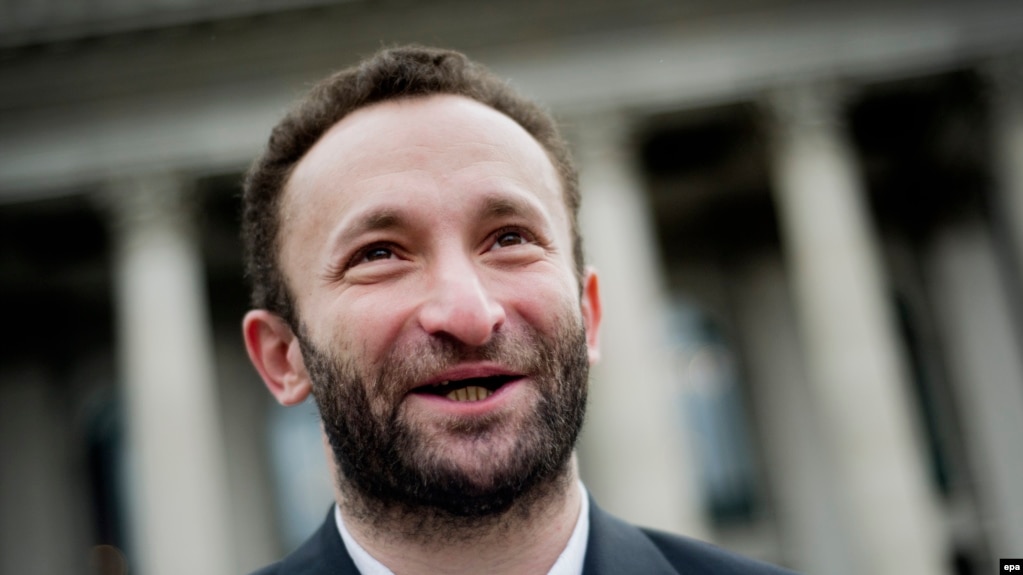
Those questions came to mind while experiencing Kirill Petrenko’s first appearance as principal conductor of the Berlin Philharmonic. And were answered.
Read more: Back to the basics with Petrenko
The iconic Berlin Philharmonie shook to the performance of Beethoven’s Ninth Symphony, and one could feel the tremors in far-off Bonn, where this author watched the transmission in a movie theater. Getting a ticket for the concert in Berlin was impossible, but that was a blessing in disguise: In the theater, one could watch the musical process up close.
Rare appearances
Back to the beginning: In 2015, the Berlin Philharmonic — one musician, one vote — elected the now 47-year-old Austrian, born in Siberia, to be the seventh principal conductor in the orchestra’s 137-year history. Only seven principals in 137 years points to a long history for each individual one.
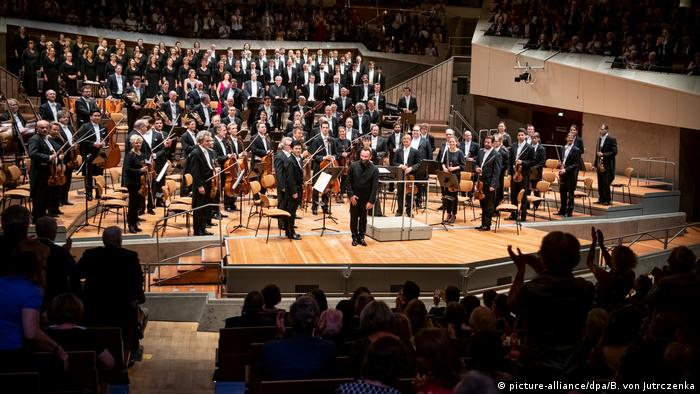
All dressed in black, except for the mezzo-soprano — she wore red
Pre-election, the Berliners had experienced Petrenko only a few times, and post-election there were only four joint performances. In the season to come, Petrenko graces the playbills only six times — in contrast to his omnipresent predecessor, Simon Rattle. The reason? Until the end of 2020, Petrenko remains under contract with the Bavarian State Opera and will commute from Munich to Berlin and back.
So his inaugural performance was all the more hotly anticipated. It began with Symphonic Pieces from the opera “Lulu” by Alban Berg. A riddle of a work from the year 1934: highly modern, atonal.
With 100 energetic musicians onstage, one had the impression that the conductor was working harder than the rest together. Veins pulsed in his forehead, and long before the main work of the evening, he was working up a sweat.
Making music with modest means
Petrenko’s philosophy? “We have to see what we can achieve with our modest means,” said the maestro in a pre-concert interview. Modest means? The Berlin Philharmonic is considered one of the world’s most-renowned orchestras. Some even say: the most-renowned.
Was the conductor playing down the group or its members’ abilities? Hardly. “There are not just 130 musicians sitting there,” says cello chair Olaf Maninger. “The orchestra’s whole history is sitting there. And he brings along the respect for that into his official function.”
The remark about “modest means” can have been made by Petrenko only in relation to something much greater: a work of music, something that can be only approached and never fully revealed.

A conductor who wants to insure that every one of his musicians gets fair credit
Beethoven’s Ninth sounding new
All the more so with a often-heard piece like Beethoven’s Symphony No. 9, which had also been important to his predecessors Hans von Bülow, Artur Nikisch, Wilhelm Furtwängler, Herbert von Karajan, Claudio Abbado and Simon Rattle. When conducting it, every nerve, ever fiber in in Kirill Petrenko’s body seems infused with music. He drives the musicians with expansive, energetic gestures, yet seems to conduct most of all with his eyes. In close-ups, those expressions are intriguing, ranging from desperation to jubilation, from wild to crazy — and culminating again and again in an ecstatic grin.
Read more: all about Deutsche Grammophon
Sometimes Petrenko seems to beseech, to implore his musicians with his body language. He often even seems to stand at the edge of a precipice, as though only his last reserves of energy and those of his fellow musicians could prevent the fall.
The exertion is echoed in the faces of the instrumentalists. They, too, play as though their lives depend on it.
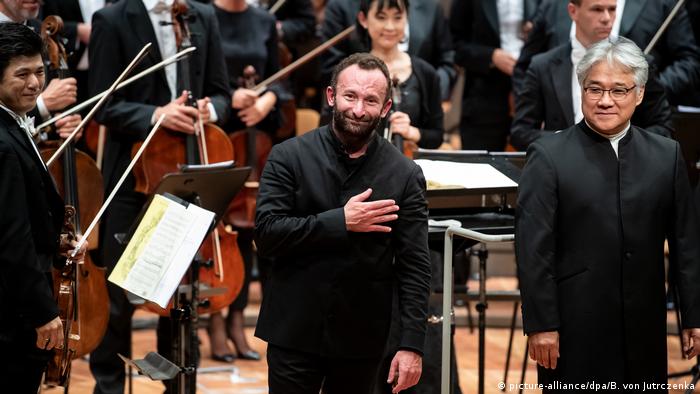
Moved and exhausted: Petrenko and baritone Kwangchul Youn
Passion and humility
Orchestra members confirm that wild, uncompromising demeanor. “He went absolutely berserk,” says horn player Sarah Willis, describing Petrenko’s passion. “He struck like a meteor,” agrees violist Matthew Hunter. “It was an explosive experience.”
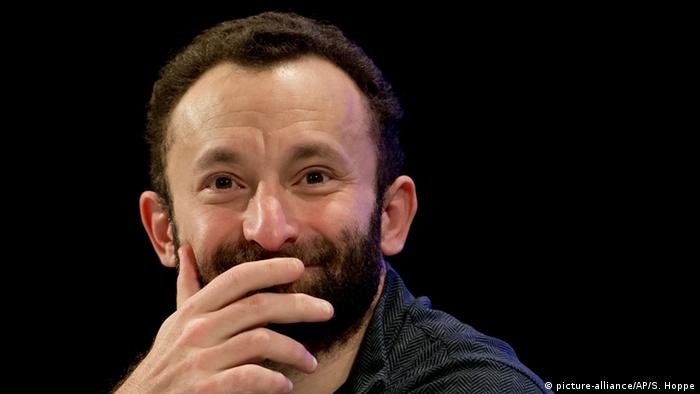
Yet in conversation, the conductor seems quiet and modest, anything but a commanding presence. In an interview with cellist Olaf Maninger, he mostly avoids eye contact and speaks in a quiet tenor and with a thick Russian accent, as though embarrassed to be speaking at all. One understands why Petrenko rarely gives interviews. But the message is clear: “A concert like this comes only once in a lifetime. Yet the pressure is incredible. I couldn’t wait for the day to pass. I wanted it to be evening right away.”
And about the point of departure for the new relationship: “I had the feeling that the musicians are ready to honestly follow my intention. And so I want to give them some kind of confirmation, to say: ‘Yes, I’m the one!'”
No megalomaniac at the podium
The American Matthew Hunter, a member of the Berlin Philharmonic since 1996, explains what Petrenko’s modesty means in terms of music-making: “You don’t have to have a big ego onstage. In fact, it probably gets in the way of achieving musical aims. So you can be modest and still have the maximum musical authority.”
And the results? Beethoven’s Ninth was rendered with momentum, passion — and meaning. A work that has to withstand performances at every kind of official celebration sounded fresh, as though heard for the first or only time. Timpani player Rainer Seegers describes the experience, saying: “You take the maximum risk. But then you have the chance that something comes about that can never be repeated.”
Gazing into the crystal ball
What’s to be expected in the Petrenko era of the Berlin Philharmonic Orchestra? Matthew Hunter gives a hint: “I can’t predict how Kirill Petrenko will develop our sound in the next five or 10 years. But I would say we’re returning to something in our sound. The sound is in us, and it will be in the air.”
Rainer Seegers adds, “Something is returning, something that was there ages ago with Karajan. Restoring the unmistakable sound of the Berlin Philharmonic: I think that’s his secret goal or wish.”

Just what does he have in mind?
For the moment, it’s more of a honeymoon feeling between maestro and orchestra. The program is to be repeated outdoors on August 24 in front of the Brandenburg Gate for an audience of up to 32,000, with transmission onto an LED screen, to television and to the Berlin Philharmonic’s Digital Concert Hall. The program begins at 8:00 p.m. CET.
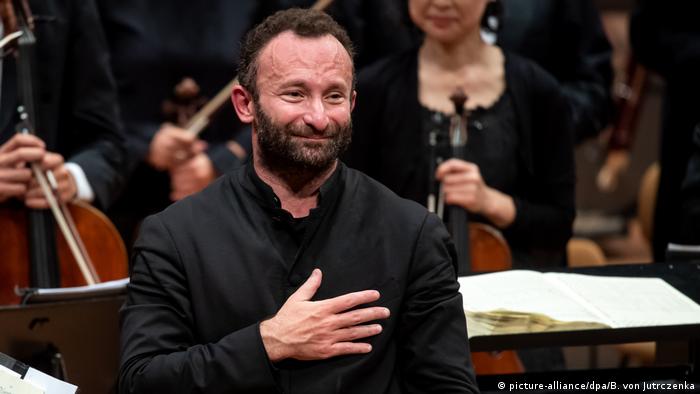
But what was the last thing heard the night before? Ovations, curtain calls, flowers, bows, hugs: the usual ritual — but the ovations wouldn’t subside. One felt the applause could have gone on for half an hour, had the chorus and orchestra not stood up and walked out. Then the auditorium thinned out, too, but the clapping and cheering continued until Kirill Petrenko appeared again on the now empty stage and bowed to the remaining audience members as though to say, “Yes, I’m the one!”
Every evening at 1830 UTC, DW’s editors send out a selection of the day’s hard news and quality feature journalism. You can sign up to receive it directly here.






 AuntyUta
We forgot the ABC Insiders which is unusual. Just as well by the sound of it. Glad you made up for it by having such a lovely breakfast. We are finding that the ABC is so keen to remain neutral that it is now dribbling a lot of nonsense in its commentary, frightened to give an opinion, any opinion.
Here you can watch the whole program, Gerard, in case you and Helvi are interested.
http://www.abc.net.au/insiders/sunday-12-august-full-program/10111188
“Barrie Cassidy interviews Energy Minister Josh Frydenberg, and Fiona Katauskas talks pictures with The Feed’s Jan Fran. On the panel are The Australian’s Niki Savva, Guardian Australia’s Lenore Taylor and The Saturday Paper’s Mike Seccombe.”
Barrie Cassidy and also the panel did not upset me. The Energy Minister chose not to answer certain questions. Do you expect anything else from politicians? Sometimes I just cannot listen to them anymore! But I understand that the person who is interviewing has to remain polite. I went out for a while to calm down. But I did watch the hilarious talking pictures. A bit of fun and laughing is definitely preferable!
What do you think of the “National Energy Guarantee” program?
http://www.abc.net.au/insiders/balancing-act/10111158
https://www.energy.gov.au/government-priorities/better-energy-future-australia
Thank you Uta for the links.
Helvi watched the whole episode on my computer. She thought Frydenberg was weak. We feel that renewables are the only way to get cheap energy that will also guarantee lower emissions. It is ironic that Australia with its overabundance of resources now has some of the highest energy prices in the world.
Sadly the word ‘renewables’ has become a dirty word in our Government. Those without solar and batteries will increasingly carry the burden of coal fired energy and its maintenance.
What do you think will give us energy at a price that is affordable? I just had my electricity bill which was $410.- for three months. The last gas bill was about the same.
Our recent electricity bill was a bit over 600 Dollars for three months, Gerard. But we use no gas. You’re right, only people who have solar and batteries can expect to pay less for power in the long run. Why does the government not want some of the old power stations to close? And why, oh why, do they even think of allowing new coal power stations to open? Surely no investor would want to invest in new coal fired power stations? Who owns the coal? Is it the government or some companies?
Surely, we have enough sun and wind in Australia for all our energy needs. We have sun and wind for free, whereas someone has a vested interest in all the coal reserves and wants to get some adequate profit from whatever their investments were.
I hate it that there are so many different energy companies now. The supply of energy and water should be in government’s hands only. The government should also have strict rules that our air and environment does not get polluted. But instead of looking after the needs of the total population in the first place, they are more interested in looking after vested interests and companies above all. Anyhow, this is the way I see this, and I am just an ordinary citizen without special knowledge.
You say that renewables are the only way to get cheap energy that will also guarantee lower emissions. I could not agree more!
Your Sunday meals sound beautiful and yummy! Especially the eggs Peter made for you with love! 🙂
I try not to watch news or politics TV shows. But maybe I should. Usually they upset me too much. 😦
HUGS!!! 🙂
It is kind of a tradition that we have soft boiled eggs on Sundays for breakfast. And usually it is Peter who enjoys boiling the eggs.
Hugs from Uta 🙂
I haven’t met an egg…fixed any which way…that I don’t like. 🙂