Members of the media were invited to NASA’s Kennedy Space Center in Florida to participate in a news conference Dec. 12 with cast members from the 20th Century Fox motion picture Hidden Figures.
The film is based on the book of the same title, by Margot Lee Shetterly, and chronicles the lives of Katherine Johnson, Dorothy Vaughan and Mary Jackson — African-American women working at NASA as “human computers,” who were critical to the success of John Glenn’s Friendship 7 mission in 1962.
Ismaïl Omar Guelleh (Somali: Ismaaciil Cumar Geelle; Arabic: إسماعيل عمر جليه) (born 27 November 1946)[1] is the current President of Djibouti, in office since 1999. He is often referred to in the region by his initials, IOG.
Guelleh was first elected as President in 1999 as the handpicked successor to his uncle, Hassan Gouled Aptidon, who had ruled Djibouti since independence in 1977. Guelleh was re-elected in 2005, 2011 and again in 2016; the 2011 election was largely boycotted by the opposition amid complaints over widespread irregularities. Guelleh has been characterized as a dictator, and his rule has been criticized by some human rights groups.[2]
Guelleh was born in Dire Dawa, Ethiopia, into the politically powerful Mamassan subclan of the Issa clan.[3] When Guelleh was younger he attended a traditional Islamic school. In the late 1960s, Guelleh migrated to Djibouti before finishing high school. He later joined the police, becoming a junior non-commissioned officer. He entered the service in 1968. After Djibouti became independent, he became head of the secret police and chief of the cabinet in the government of his uncle Hassan Gouled Aptidon. He received training from the SomaliNational Security Service and then from the French Secret Service, and was intended to become his uncle’s successor. “The key to Guelleh’s success is the skillful way in which he has played the cards in his strong hand”, according to PINR.
Ismail Omar Guelleh meets U.S. President George W. Bush, January 21, 2003.
On February 4, 1999, President Gouled Aptidon announced that he would retire at the time of the next election, and an extraordinary congress of his party, the ruling People’s Rally for Progress (RPP), chose Guelleh as its presidential candidate.[4] As the joint candidate of the RPP and moderate wing of the Front for the Restoration of Unity and Democracy (FRUD), Guelleh won the presidential election held on April 9, 1999 with 74.02% of the vote, defeating his only challenger, the independent candidate Moussa Ahmed Idriss.[5][6] He took office on May 8.[7] Moussa Ahmed Idriss was arrested the following September for “threatening the morale of the armed forces” and detained at an undisclosed location.[8]
In December 2000, Guelleh sacked the chief of staff of the National Police Force, Yacin Yabeh; policemen loyal to Yacin unsuccessfully rebelled following his dismissal.[9]
Guelleh was nominated by the RPP as its presidential candidate for a second time on October 7, 2004, at an Extraordinary Congress of the party. He was backed by several other parties[10] and was the only candidate in the presidential election held on April 8, 2005.[11]Without a challenger, he won 100% of the ballots cast and was sworn in for a second six-year term, which he said would be his last, on May 7.[12]
Opposition parties boycotted the election, leaving only one little-known candidate against him on the ballot. Guelleh won almost 80% of the vote.[15]Human Rights Watch questioned whether the election could be called fair when opposition leaders were jailed twice prior to polling.[16] He again said that he would not run for another term.[17]
Guelleh was also the winner of the 2016 election with about 87% of the popular vote.
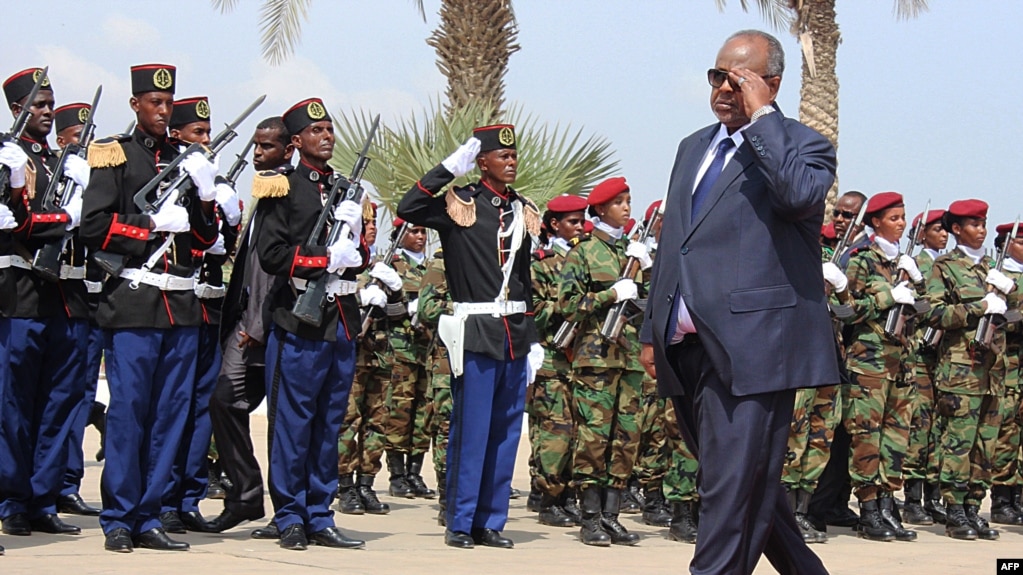
Djibouti’s President Ismael Guelleh inspects a guard of honour during his inauguration on May 8, 2016 in Djibouti after his fourth re-election.
Share
Djibouti’s president says African leaders believe President-elect Donald Trump will pay little attention to Africa, but is hopeful that Djibouti can continue a strong bilateral relationship with the U.S.
“Africa does not appear on the foreign agenda of the U.S. president-elect, Donald Trump, but as Djibouti, we had a good and deep relationship with U.S. government which I am hopeful will continue,” Ismail Omar Gulleh said in an exclusive interview with VOA Somali Service on Thursday. “Our relationship was not with an individual but with U.S. institutions.”
Ending his 2015 visit to Africa, U.S. President Barack Obama warned the continent would not advance if its leaders refuse to step down when their terms end. “Nobody should be president for life,” Obama said.
However, last April, President Guelleh won third term in a disputed re-election boycotted by opposition parties. In order for Guelleh to win that election, parliament had to change the country’s constitution because presidents were limited to two terms.
Mind your business
Referring to Obama’s warning and the recent U.S. election results, Guelleh said, “Those who used to say we are giving lessons to Africa, you see what they are facing. It is none of their business to determine any incoming or outgoing African president,” he said.
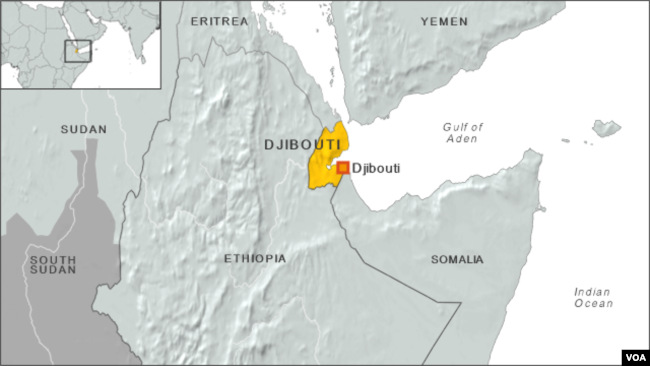
The tiny East African country hosts the United States’ only military base on the African continent. In 2014, the U.S. and Djibouti signed a 10-year lease on the military base, Camp Lemonnier.
At the time, the based housed about 4,000 U.S. soldiers and other military personnel. The United States regards it as a major staging area for attacks against terrorists in Yemen and Somalia, where Djiboutian solders are part of the African Union force that has had some success against al-Shabab militants.
Chinese influence
Djibouti is also home to a military base from former colonial power France. Japan has also leased a military base, while there is a growing Chinese influence in Djibouti.
On Wednesday, Djibouti and its neighbor Ethiopia officially launched the first fully electrified cross-border railway line in Africa, a project 70 percent financed by China’s Exim Bank and built by China Railway Group and China Civil Engineering Construction.
Guelleh says his country is capable of managing those different and sometimes rival foreign interests.
“All those countries which have bases and interests in Djibouti have been brought together by common interests, including the global anti-terrorism efforts, the piracy and economic interests. So that, we are capable of managing and maintaining good relationship with our friends.”
Falastin Iman contributed to this report from Djibouti
But when does it stop? It just keeps on pouring, pouring . . .
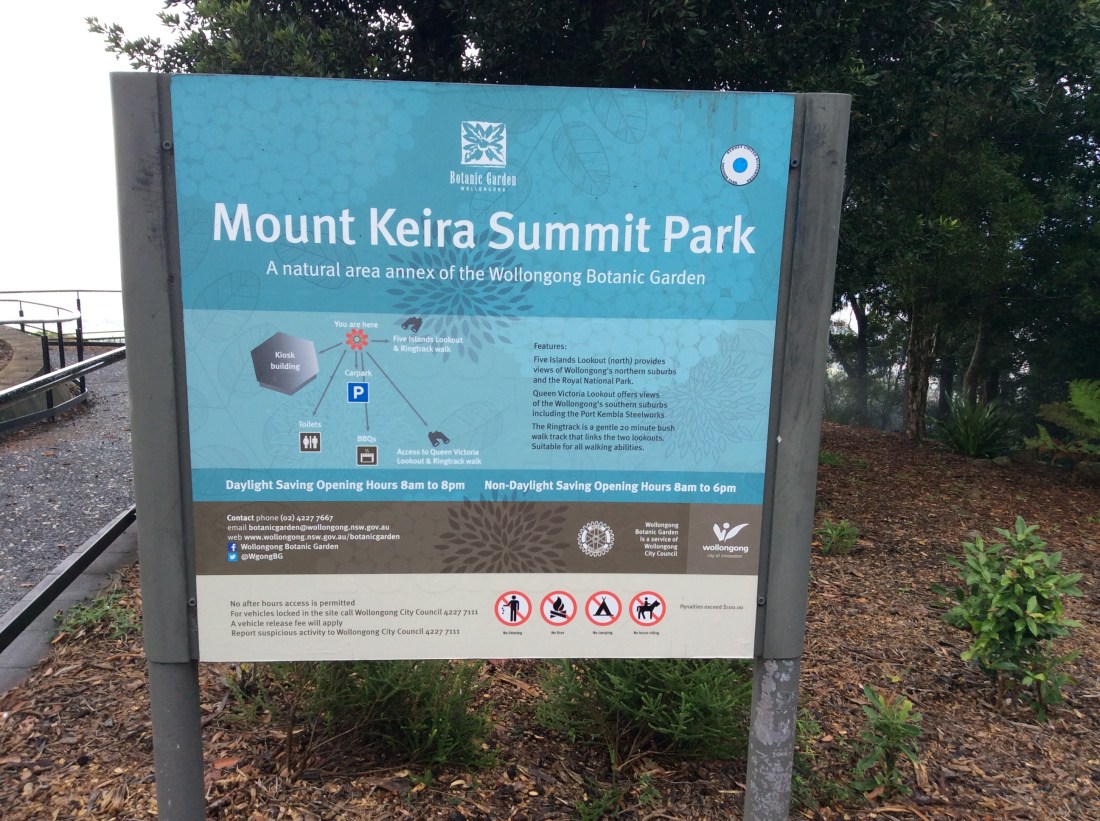
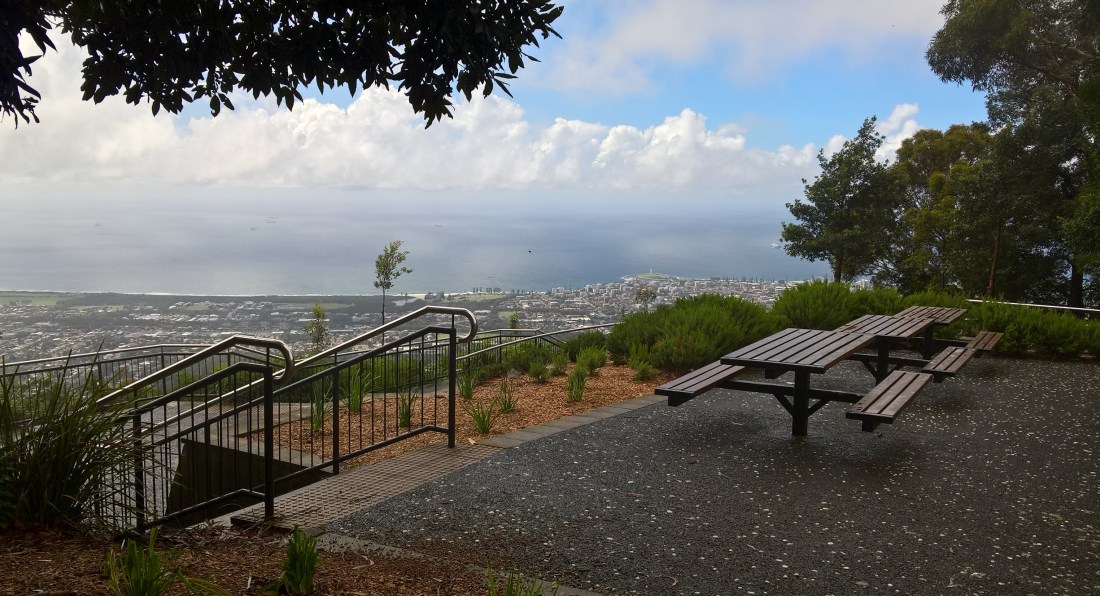
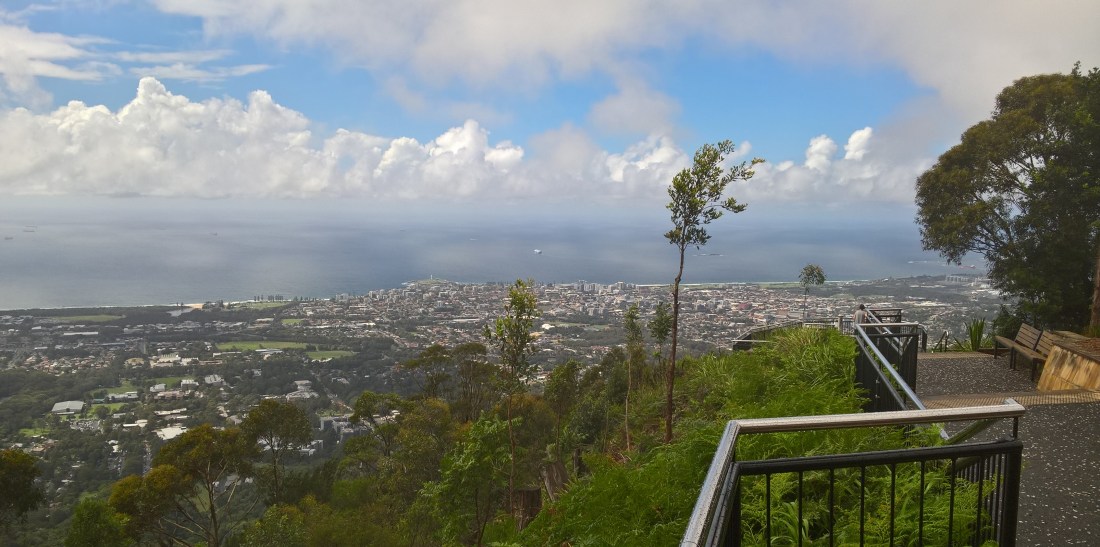
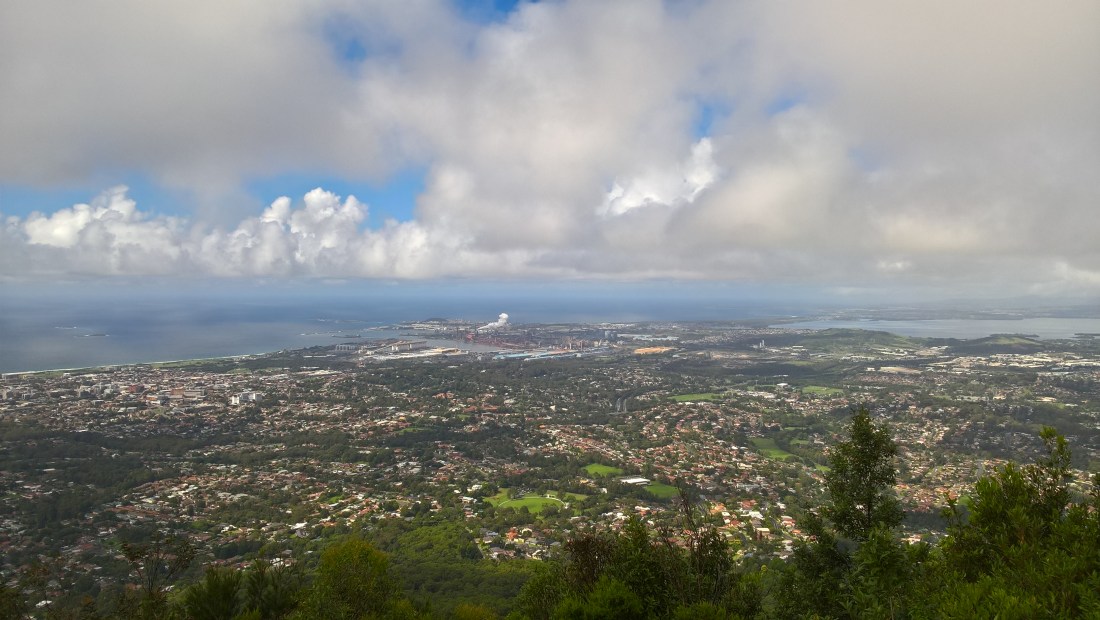
I hope it won’t keep raining like this next month when my brother Peter Uwe and his wife Astrid are going to be with us. I am very much looking forward to their visit from Germany. Yesterday Peter and I drove up to Mt.Keira. The rain had stopped for just a little bit and Peter could take some pictures with his phone. After a while he also took his tablet out and took a picture with that. We were thinking we could take Peter Uwe and Astrid to the top of Mt.Keira. This should be an interesting outing for them to see the Wollongongs coastline from up there.
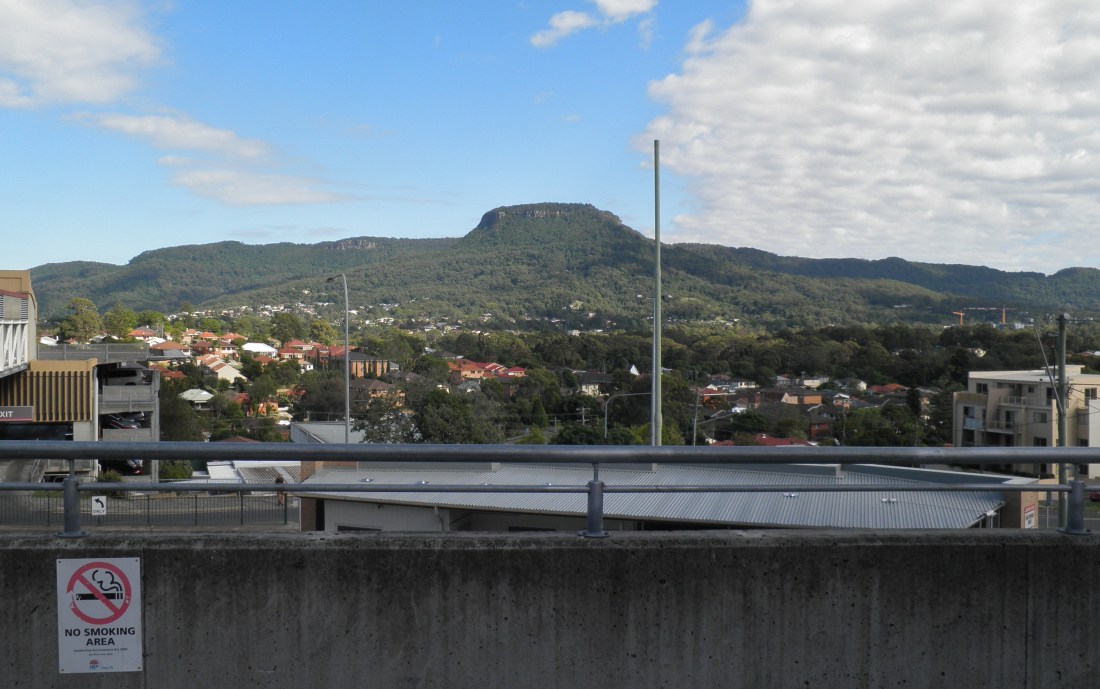
View of Mt.Keira from Wollongong Hospital: I took this picture last week when Peter was in Wollongong Hospital for an operation.
When we first came to Australia people told us that they would say it’s raining ‘cats and dogs’ when there were extremely heavy downpours. Well, today it has been raining ‘cats and dogs’ quite often, then there’s some drizzle, then it stops for a while, but not for long, and then it starts all over again. Not a good day for doing my washing . . .
After about two hours in the Day Surgery waiting room Peter was taken to one of the Holding Bays. I was allowed to go with him.
Peter’s things were put at the end of his bed.
Peter had been given a hospital gown to change into. The nurse took Peter’s blood pressure and put some stockings on him.
At 1,15 pm Peter was taken into the Operating Theatre and I had to leave. Peter had had no food and no drink, not even water, since 9,20 the night before! He could have consumed something till midnight, but he chose to go to bed early.
I had had a bit of breakfast before we left at 9 am. I welcomed the chance to go for some lunch when Peter went into surgery. I took a bus down to the Mall and went up Keira Street to the Indian Restaurant where we had been on the 9th of December when Peter had had the other operation. On the 9th of December happened also to be Caroline’s birthday. Caroline took some carer’s leave, Matthew was on leave from Uni and Monika was on her annual leave. This is why they all could stay with me and we all had lunch together in that Indian Restaurant.
This was my Lunch Special for only 8 Dollars.
This lunch turned out to be delicious. When I returned to the hospital by 3 o’clock, I was told that Peter had only just come out of surgery and was in Recovery now where I could not see him. The receptionist advised me to come back by 5 o’clock. I passed the time having coffee at the Hospital’s Cafeteria. Next to the Day Surgery Centre is a beautiful spacious lounge room as well as an outside terrace with quite a few seats. First I tried the terrace, but it soon got too hot there in the afternoon sun. So I found a lounge seat next to a table with several magazines. One magazine announced that Prince Harry is getting married in September. I also had our TIME magazine with me. In the TIME magazine I found for instance a very interesting article about sleep. The following is one section of that article which confirmed my belief that 7 hours sleep each night is the most healthy.
The following two links show what I wrote about Peter’s operation last December.
Shortly before 5 o’clock I went back to the reception desk on floor 1 near the main entrance. According to their computer Peter had just been released from Recovery and was about to be taken to B 4 East. I then took the lift to level 4 , where Peter had just arrived and was given a bed in the ward that is mainly for Urology patients.
Peter soon could send messages from his phone: One message to Monika, who was still at work in Wollongong, the same message to Caroline and Mathew in Sydney and also to our son Martin in Melbourne. They all were happy, that the operation did go well without any complications.
In this ward Peter stayed for only one night. The following day he was allowed to go home.
On Tuesday, the day of the operation, our daughter Monika had changed her shift from 9 o’clock start to 10 o’clock start so that she could pick us up and drop us off at the hospital. After her shift, which ended at 6 pm on that day, Monika came to the hospital to see Peter and then take me back home to Dapto.
I ended up being extremely tired when I arrived home that night. Regrettably, I had then some quite restless sleep that night, but got out of bed very early the next morning because I could not go back to sleep.
Monika came again to pick me up to take me to Wollongong where she had to be at work already at 9 o’clock. We left early to beat the traffic. Shortly before 8 am I was already in the hospital and could go straight to the ward to see Peter who had just received his breakfast tray. The policy in the hospital is, that one person is allowed into the ward from 8 am on already. From 10 am on more visitors are allowed in. Peter was happy that I could come in early.
Peter stayed in the ward till lunch time. One woman in Peter’s room had to cancel her meal, probably for some medical reason. We never talked to her, for she was behind a curtain. But the nurse offered me the spare meal which was Mac/Cheese. I accepted and really enjoyed this meal. It was an excellent meal. Very tasty! Peter had a meal with lots of vegies and some chicken.
We know that Monika had to work till 5 on that day. To ask her to take us home would have meant many hours of waiting time. Peter felt well enough, to go to Dapto by bus and catch a taxi back home from near the bus stop in Dapto.
A sister said she’d have to ask the doctor whether it was ok for Peter to go on the bus. Luckily the doctor said it was ok. So with great relief we were home by early afternoon.
As compared to the operation in December Peter recovered this time much more quickly. This is really good.
Yesterday I wrote: Shorty before 11 am we went up by lift to Level 2. Immediately we were let into the reception area, which was well equipped with chairs and some screens. On the TV screen we noticed that there had been an Air Crash in Melbourne near Essendon Airport.
Mt. Keira can be seen from the Entrance to the Hospital.
On Tuesday, the 21st of February, Peter was booked into hospital for another operation. We arrived early and waited near the Main Entrance for the assigned time to be let into the Day Surgery Ward. We went up by lift to Level 2 shorty before 11 am. Immediately we were let into the reception area, which was well equipped with chairs and some screens. On the TV screen we noticed that there had been an Air Crash in Melbourne near Essendon Airport.
February 23, 2017 7:00 PM Dinner
Loews Santa Monica Beach Hotel
1700 Ocean Avenue, Santa Monica CA 90401February 23, 2017 7:00 PM
William Perry, former Defense Secretary, will talk to a LAWAC dinner on February 23rd about the escalating dangers of nuclear conflict in today’s chaotic world – dangers that are more urgent than most Americans realize. Vladimir Putin has begun upgrading Russia’s nuclear arsenal and last year stationed nuclear missiles on the borders of Poland and Lithuania. North Korean dictator Kim Jong Un has conducted two nuclear tests in the past year, and his scientists are working on a long-range ICBM missile that could reach Los Angeles. ISIS made four attempts between 2010 and 2015 to buy radioactive materials from Russian underworld gangs, according to the FBI, and other jihadist groups show continued interest in obtaining a nuclear bomb. Perry says “I believe that the likelihood of a nuclear catastrophe is greater today than it was during the Cold War.” Perry has joined with veteran statesmen Henry Kissinger and George Shultz to highlight a growing threat that most people assumed had disappeared after the collapse of communism, but could in an instant change the face of the planet forever.
Perry’s commitment to reducing the nuclear threat goes back to his days in the US Army when he served in postwar-occupied Japan, where he saw the results of the devastation of nuclear weapons. Later in life when he became Secretary of Defense under President Bill Clinton in 1994 he would preside over the destruction of more than 8,000 nuclear weapons with the Russians. Perry is a mathematician and engineer by training, and currently is a professor emeritus at Stanford with a joint appointment at the Freeman Spogli Institute for International Studies and the School of Engineering. He has worked in defense and international relations for seven decades. He was brought in as an analyst during the Cuban missile crisis, was an undersecretary of defense for research and engineering during the Carter administration, and served on President Reagan’s Commission on Strategic Forces. He is the author of My Journey at the Nuclear Brink (2015). He received his BS and MA from Stanford and his PhD in mathematics from Pennsylvania State University






 AuntyUta