This is a reblog of my post from the 21st of September 2015. In this post are some pictures from our lunch at Daoto Leagues Club. Yesterday we went with Tilde and Klaus for lunch at the Treasure Court Restaurant of the Dapto Leagues Club to celebrate Tilde’s birthday. Again we had a good time there.
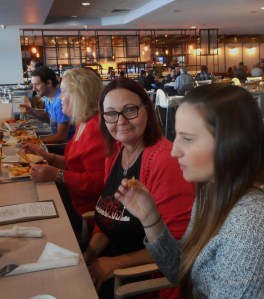
Last year I turned eighty. What a special birthday it was! Another year is gone. I consider myself to be at an ‘advanced’ age. Still, sometimes I seem to forget about this a little bit. But more about this later. First of all I would like to insert a few pictures that we took yesterday, on Sunday the 20th September. Three of our friends joined us for lunch at the Treasure Court Restaurant of the Dapto Leagues Club:
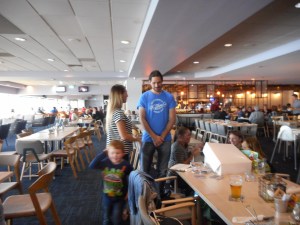
Last month Lucas turned four. His birthday was celebrated in the Yacht Club at Lake Illawarra. From the club one has a good view across the lake.
The family birthday party was on a Sunday, the day before the actual birthday. Matthew, Peter and I had earlier on that Sunday picked up Caroline from Sydney Airport where Caroline had been flying in from Darwin via Adelaide.
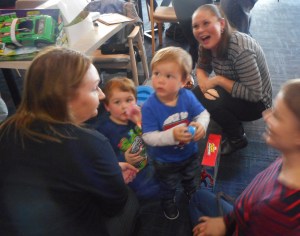
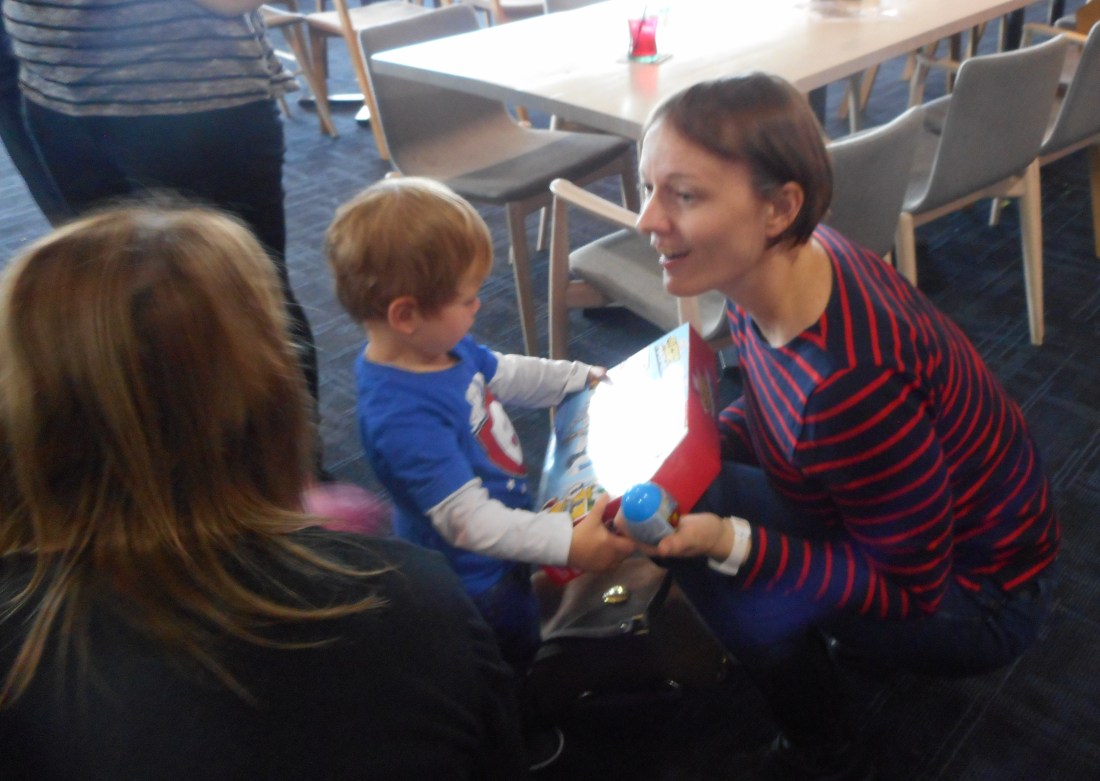
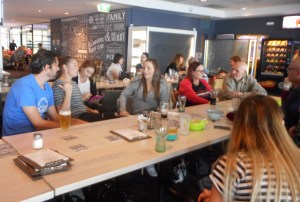
Here is Ebony with her two sons Lucas and Alexander. Caroline and Natasha are looking on.Caroline with little AlexanderRyan and Krystal, Lucas in the front
Monika and Roxy
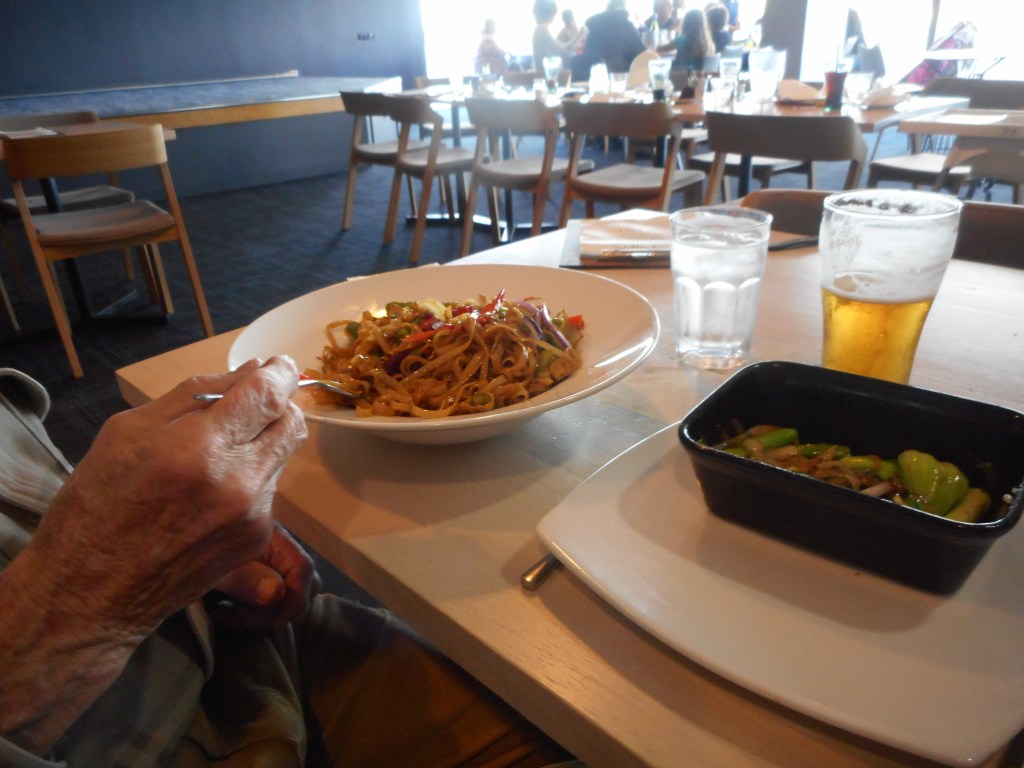
This is the food that Peter chose as his lunch.
I very much liked the rice and some of the very good tasting vegetables
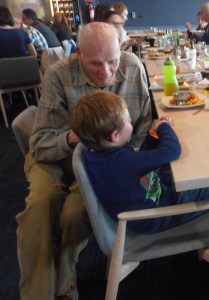
Peter with the birthday boy
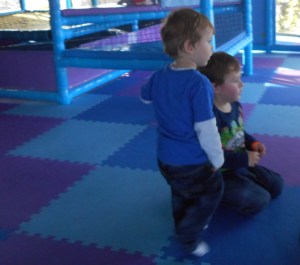
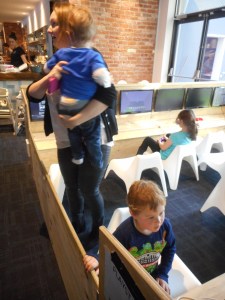
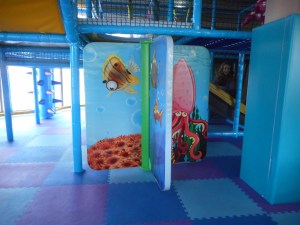
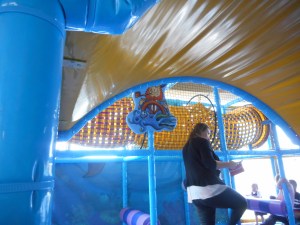
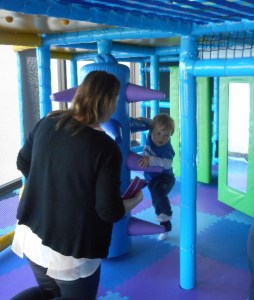
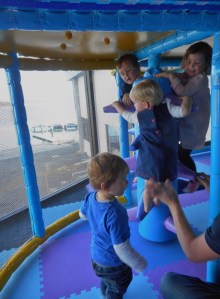
Alexander and Lucas in the club’s playground
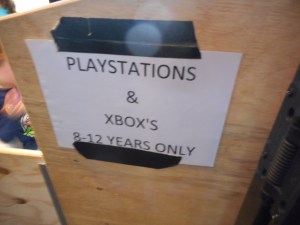
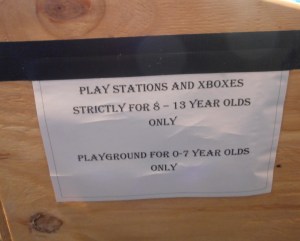
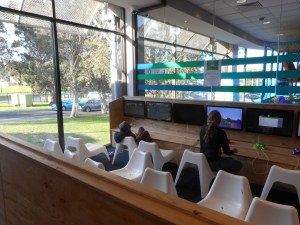
The Playstation
They like the Playstation
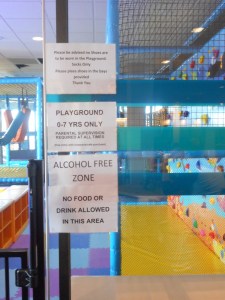
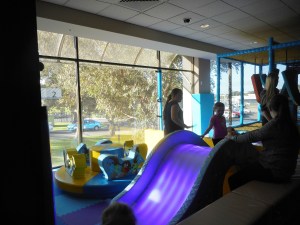
A Playground for the very young ones
Fun Play Area
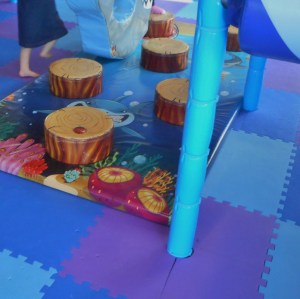
Beautifully designed Play Areas
I loved to walk around and take pictures.
Natasha was keeping an eye on her little nephews.
Alexander is about to try out a bit of climbing.Alexander watches his brother climbing.
Children having Fun!
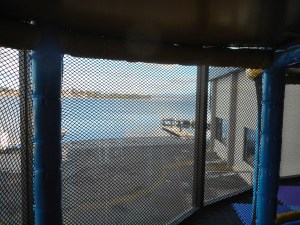
Another View to the Lake from the Playground Area
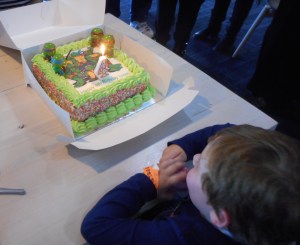
Ebony and Natasha are about to take the children back to the table for the cutting of the Birthday Cake!
Arriving at Platz der LuftbruckeThis is where Peter grew up as a childLucas stands where Peter may have stood more than 70 years ago.The family meets cousin Corinna.In a park in KreuzbergPeter gives Lucas a swing in that Kreuzberg park.Lucas is admiring the flowers.Lucas, Peter and UtaIlse with Lucas and Alexander
We are on the way to visit Ilse.Kaiser Wilhelm Gedachtnis Kirche in the backgroundRyan and Ebony with Lucas
A left over part of the Berlin Wall
Ryan with Alexander touching a Berlin Bear
Natasha with LucasPeter Uwe with Ilse on the day of the great Family MeetingThis picture was taken at 9 in the evening on Saturday, 25th of June. The whole family had had dinner at this restaurant in Friedenau. Some people are missing: Some had not been able to come at all or had to leave early. Still it is a nice large group.
A House in FriedenauCaroline in Klaudia’s apartmentKlaudia and CarolineMartin in Klaudia’s apartment Sakorn, Matthew, Caroline and Daniel in Alt-Spandau (Western Suburb of Berlin)
It had been Daniel’s birthday and he invited all his family for lunch in Alt-Tegel.
Some more pictures of that family lunch I’ll publish in another blog.
We had tickets for the Komische Oper in Berlin. We saw a modern production of the “Magic Flute”
This sign we saw outside a charity shop in Rubensstrasse.We went with Martin to U-Bahnhof Rathaus Schoneberg.Quite a collection close to where we came out of the underground station.View down Innsbrucker Strasse towards Bayerischer Platz.
It was a rainy day. None the less we walked passed the duck pond through the Stadpark towards our destination: Die Pusteblume Cafe!
This duck pond is close to where I used to live as a child.Another U-Bahnhof (Underground Station)An interurban train (S-Bahn) arriving at Sudkreuz Station
The next three pictures show some of the food we had at a restaurant in Mecklenburg-Vorpommern:
Red cabbage, rouladen (meat-rolls) and dumplingsIn the midst of the Sony Centre (Potsdamer Platz, Berlin Centre) A birch-tree near the Sony Centre
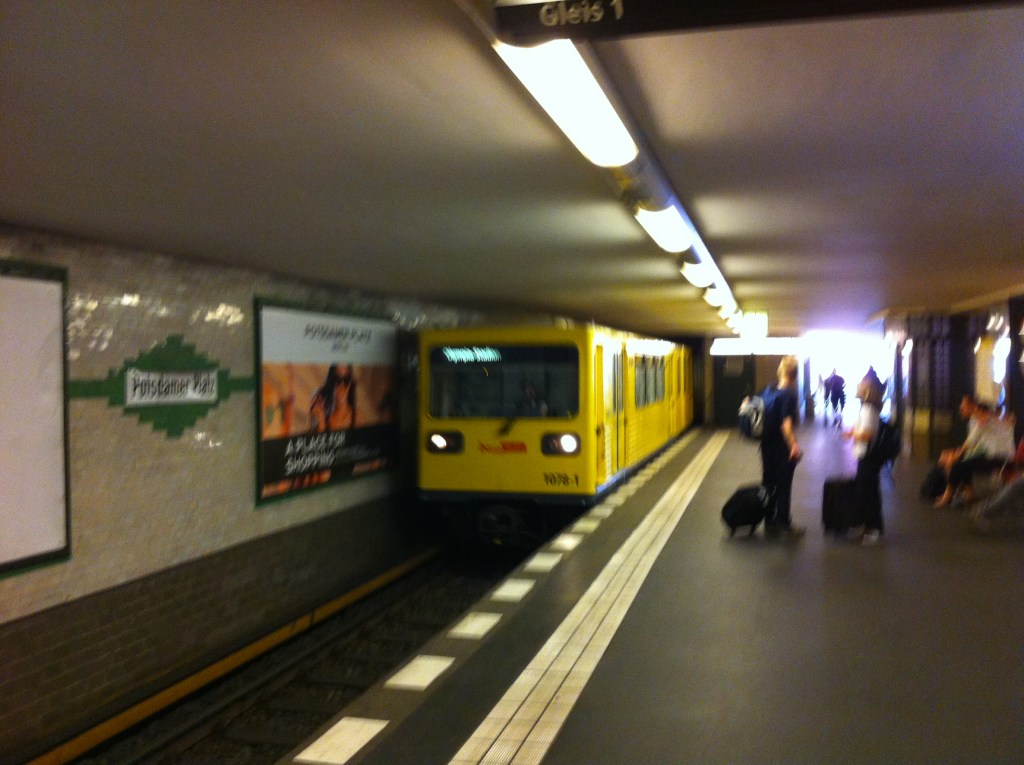
Potsdamer Platz underground station
They showed here the State of Origin Game from Australia.
This was a great meeting place for Australians who happened to be in Berlin at the time!
Our daughter Monika had arrived in Berlin with her children and two grandchildren.Natasha pushing her two nephews along. Mum Ebony looks on.Kids having fun
Peter took the above pictures near the Brandenburg gate where the kids were entertained with chasing soap bubbles.
This is our great-grandson Lucas.One of the statues on the Schlossbrucke symbolizing peace. All along the way we saw some building sites.Here again Natasha with the kids and the kids’ parents, Ryan and Ebony, looking on.This is die Neue Wache which is “Unter den Linden” a famous avenue.
A mother holding her dead son, a sculpture by Kathe Kollwitz inside of the “Neue Wache”
Martin enjoys Berlin
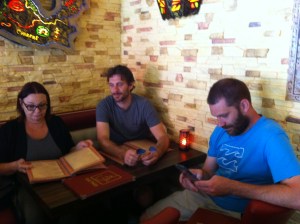
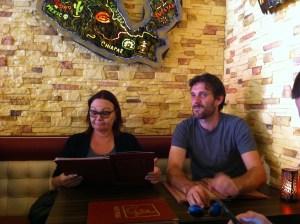
Our family in a Mexican restaurant in Berlin-Kreuzberg
Nadine, Monika and Troy have come for a visit to our apartment on one of our last evenings there.
And here are some more of Peter’s Iphone pictures from the first week of our stay in Berlin:
Caroline and MatthewMy brother Peter Uwe and Astrid
The scent of chaos hangs heavy in the air. Donald Trump evokes it in Cleveland. Islamic State sows it in Nice, Brussels, Paris, Orlando. Britain is immersed in it after Brexit, while the EU struggles to prevent its onset amid mounting crises of migration and political legitimacy. Ukraine and Syria are being torn apart by it, and Turkey looks fragile after a failed coup.
To apply a metaphor from the science of chaos, we are, it seems, in a moment of phase transition. A state of relative global order – the Long Peace, as Steven Pinker describes it in The Better Angels Of Our Nature – has existed since 1945. We’re now moving into a new configuration of competing powers and ideologies, the structure of which we cannot predict, except to assume it will be very different from what we have known.
The intervening period of transition, which we may have entered, could be chaotic, destructive and violent to a degree that no one born after 1945 in the industrialised countries that constructed the post-war order can imagine.
The great battles of the era now underway or emerging are not those which dominated the late 20th century – left versus right, east versus west, communist versus capitalist. Since the fall of the Berlin Wall, these binaries have had less and less relevance. It is the dark forces of nationalism and religious sectarianism that now drive global politics, fuelling the rise of a crude, xenophobic populism in the advanced capitalist world that we have not seen since the 1930s.
Trump is the most vivid manifestation of it, but we see it everywhere we look in formerly stable social democracies – Germany, Denmark, the UK, France, Greece, even Australia, where the demagogue Pauline Hanson’s One Nation party was returned to the Senate in the recent election. Appeals to nationalism and fear of the “other” are replacing notions of collective security, common interest and the moral duty to care for those in need such as asylum seekers.
Trump openly praises Putin and Saddam Hussein for their leadership and effectiveness (which in Saddam’s case, lest we forget, included the use of chemical weapons on his own people). NATO, he declares, is past its sell-by date, as are all international climate change and trade agreements which he judges to be against America’s interests.
People continue to flee violence from forces loyal to Islamic State. Rodi Said/Reuters
The internet destabilises
In 2006, two years before the global financial crisis, and five years after al-Qaeda’s September 11 attacks on New York and the Pentagon, I wrote about the cultural chaos then emerging as an unforeseen, unintended consequence of the internet.
“Its roots,” I wrote then, “lie first in the destabilising impact of digital communication technologies … Not only is there more information out there, the speed of its flow has increased. The networked nature of the online media means that an item posted in one part of the world immediately becomes accessible to anyone with a PC and an internet connection, anywhere else – linked, signposted, rapidly becoming part of the common conversation for millions”.
As a consequence, I argued, established elite power was leaking away, becoming more porous. As 9/11 showed, we had entered a world where affluent, stable democracies were vulnerable as never before to disproportionate disruption by terrorism. A world where policy – as in the case of the EU and the current migrant crisis – was driven not by rational calculation so much as the power of testimonies, narratives and images captured and shared on digital media.
No one doubts the humanitarian impulse underpinning Angela Merkel’s decision to offer open house to millions of refuges from the Middle East. This policy was fuelled by distressing, globally networked accounts of desperate people drowning in Mediterranean waters, and pictures of children dead on the tourist beaches of southern Europe.
But if it contributes to the rising influence of anti-immigrant party AfD and the rise to power of its equivalents in France, Italy, the Netherlands, it will come to be seen as having hastened the fragmentation of the European Union; to have been an ill-considered response to a crisis amplified and intensified by 24-hour, always on, real time news and social media culture.
Supporters of anti-immigration right-wing movement PEGIDA demand the resignation of German Chancellor Angela Merkel. Wolfgang Rattay/Reuters
Notwithstanding the huge benefits brought to people and societies all over the world by the internet, then, it also presents challenges to the capacity for the good governance and rational decision making on which our collective well-being depends. In a world where information of all kinds – nasty as well as nice, false as easily as true – travels faster, further, and with fewer possibilities for censorship than ever before in human history, authority and the exercise of power are uniquely precarious.
Greater transparency and accountability of governing elites – what Sydney University professor John Keane calls monitory democracy – remains a positive benefit of digital technology. The internet made WikiLeaks, and the revelations of Edward Snowden and the Panama Papers possible. It gave every digitally networked individual on the planet all nine volumes of Sir John Chilcot’s report with its devastatingly forensic details of how and why Tony Blair took Britain to war with Iraq in 2003. You may choose not to read it, but it will be your choice, and no-one else’s.
If power is built on knowledge, and effective democracy requires that citizens be informed about their environment, the age of digitalisation has also been one of global democratisation. It has made popular challenge to authoritarian rule easier to organise (if not necessarily to succeed). Cultural chaos, like chaos in nature, can be a constructive as well as destructive force.
Fear is contagious
This media environment sees isolated events which would once have been of mainly local importance, such as the Lindt Café siege in Sydney (a “lone wolf” terrorist attack in which two people were killed), become global in their impacts through the immediacy and visceral nature of their media coverage. But it is also an efficient way to disseminate anxiety, panic and fear.
Donald Trump understands this, and uses Twitter like no other presidential candidate before him. He is able to further stir up his already enraged constituency with simplistic, authoritarian solutions to complex social problems like illegal migration and global terrorism.
IS, like al-Qaeda before it, understands it. Jihadi John cuts off the head of an American or Japanese journalist, and the uploaded, socially networked video becomes a weapon of mass psychic torture, spreading virally.
Some Britons voted for Brexit because they had seen those videos, or heard about them. They believe they can be quarantined from radical Islamism by rejecting Merkel’s humanitarianism and closing the doors on the continent.
9/11 cost al-Qaeda $500,000. It cost the world trillions in military expeditions, heightened airport security and other responses, not to mention the hundreds of thousands of deaths inflicted in the “war against terror” since 2001. IS atrocity videos are well produced, but cheap to make, and the communicative power of digital networks does the rest. They are at the heart of a new kind of asymmetrical warfare.
The chaos Edward Lorenz described in nature applies also to our globalised, digitised societies. From small bifurcations in the social fabric emerge catastrophic, potentially system-destroying consequences.
One crisis feeds into another. Trump’s success fuels French National Front leader Marine Le Pen. The UK Independence Party’s Nigel Farage encourages Putin in his dream of winning back Ukraine and the Baltic states. And as the mass murderer of Nice follows the attack at Ataturk airport, both outdone by the atrocity of Bataclan, we enter a period of cascading, interconnected crises, where “black swan” moments become part of everyday life, and the unthinkable becomes mainstream.
The majority of us don’t want to build walls. Mario Anzuoni/Reuters
Is it too late?
Have we reached the tipping point between order and chaos at the global level? Is it too late to stop this slide backwards into the vortex of violent nationalism, sectarian hatred and authoritarianism that caused World War II? After a century of unparalleled progress in democratisation and the extension of human rights to women, ethnic and sexual minorities, are we now at the top of the ladder, the peak of a cycle, with nowhere to go but down?
No one knows, because by definition the onset of chaos is non-linear and unpredictable. Its precise causes are impossible to identify, and its consequences unknowable.
Personally, I think not. I believe not, because I am an optimist and I have confidence in the essential goodness of most people.
We – that is, those of us who don’t wish to build walls, or erect borders where there were none, or to prevent others from harbouring beliefs, religions or values different to our own – are still the majority, as far as I can see. Our law governed liberal states still define the rules and set the tone for global culture and politics. Barack Obama won two elections with convincing majorities.
If we can engage in this global struggle with the same confidence and commitment as the other side engage in their jihads and nationalist hate-mongering and fascistic public gatherings, not with military hardware but with ideas and words, it is not too late.
The journalists of Charlie Hebdo did that, and paid the price. Human rights activist Ayaan Hirsi Ali called for reformation of islam, and has been condemned not only by the mullahs who regard her an apostate but by some western non-muslims for doing so. We must support voices like Ali’s, and add to them, at the same time as we challenge the racists and xenophobes who are feeding off fundamentalist islam’s excesses.
That the global system is under unprecedented stress is by now undeniable. The role of the digital media in increasing that stress is also clear, as is its potential to be utilised for progressive reform and democratic accountability. We have to be wise in responding to the first, and smart about fulfilling the second. As to their impact on political outcomes, that remains stubbornly unpredictable. The Arab Spring failed to become a summer.
With that knowledge, all we can do is what we must do. Resist the censors, the haters, the authoritarians, religious and secular, the builders of walls, and declare them the enemy of us all, this human race, which will not be dragged against its will into a new dark age.
Above is the video that was taken in the Volkspark am Weinberg.
We had arrived on Saturday, the 4th of June. Ilse’s sons had come to Tegel-Airport to pick us up and drive us with all our luggage to our apartment in Rubensstrasse. It was so good to have the two cars waiting for us. Klaudia as well as Ilse and Finn had also come along and we took off on the Autobahn that took us from the airport to our apartment in just a few minutes! Once we were settled in our apartment, we were given huge amounts of food, especially Ilse and Finn had brought a lot of food along. So all of us stayed together for quite a while, talking about lots of things and having a nice meal.
Strangely enough we did not feel too tired to go out to the Brandenburg Gate after our Berlin family had left us. So it was the five of us from Australia, namely Martin, Caroline, Matthew, Peter and me, exploring Berlin on our own on our first day in Berlin after we had only just arrived on our very long trip all the way from Australia.
The following morning we went out for breakfast. Die “Wolke” was just around the corner. They were doing pretty good business on a Sunday morning. We noticed a constant stream of customers. So we had a good breakfast sitting down in the Wolke Cafe.
PETER LOVED THIS BUN
Steak tartare is a meat dish made from finely chopped or minced rawbeef.
This is what I hadStreusel-Schnecke is what we liked too.I did not take pictures of all the food, but here is some more of the food that was on offer.
I seem not to have taken any pictures from that afternoon we spent near Brandenburg Gate (Brandenburger Tor) and where we had gone to by public transport.
But on Sunday the five of us did – also by public transport – go to Alexander Platz and from there on the U-Bahn to Rosenthaler Platz to meet my niece Corinna and her son Carlos for lunch.
Am Alexander PlatzMartin, Caroline, Peter and Matthew
The above picture I still took at Alexander Platz. After Alexander Platz we took off to ROSENTHALER PLATZ.
Peter with my niece Corinna and her son CarlosI with Caroline, Matthew and CorinnaThis lunch was to my liking
After lunch we went to this place.
When we left this interesting place we were heading for the park where – as Corinna promised – there would be some dancing on display together with great swing music from the 1940s. Carlos had made his good-buys in the meantime. (After all, it is only a certain amount of time a fifteen year old is willing to spend with the ‘oldies’!)
Corinna had been right, there was some dancing going on here.
Peter and I found the music quite electrifying. It reminded us of old times and the swing music that we used to like. During the 1950s, when we would often go dancing, swing was still quite popular.On that Sunday afternoon in the park inspired by the music Peter and I actually tried a little bit of dancing of our own. To our amusement, somebody videoed us while we were doing this! (See video at the beginning of page) We found this absolutely hilarious. Later on we watched for quite some time the dancing of the very young people. They seemed quite familiar with this type of dance music and danced very well indeed. A lot of these young people had dressed up in the 1940s style. There was even one young guy who had dressed in something that reminded us of the post WWII period when the young Americans of our occupation forces looked in their uniforms a bit like this guy did. Quite amazing!
I took a picture of our little group before we were sitting down for some drinks.
It was a balmy early summer afternoon. We enjoyed our drinks, listening to the music and watching the young people dancing. The place is called “Volkspark am Weinberg”.
In this picture of the Golden Wedding are the three daughters and the three sons of the grandparents, all with their spouses. There are also a number of grandchildren (including me next to grandma!). Some of the younger grandchildren are not in the picture.
A 2013 Princeton University study by Martin Gilens entitled Affluence & Influence suggests that the US is no longer a democracy but an oligarchy, in which power rests with a small number of wealthy elites. Hillary’s decision to back the 2010 Citizens United bill which protects multi-million dollar political donations as the exercise of “free speech” confirms this. It doesn’t take an IQ of 180 to realise that under a capitalist system the political class exist to serve the interests of capitalists.
In scenes reminiscent of the 1930s the euro is rapidly dissolving and we are seeing the rise of fascism across Europe. While NATO surrounds Russia’s borders, the US continues to run destabilising coups in Latin America, the Middle East, and Africa. Currently there are some 250,000 US military personnel deployed to over 725 military bases throughout the world. As the popular meme goes, that’s not self-defence; that’s an empire.
Martin, Peter and Caroline on the way to our apartment in RubensstrasseMartin, Caroline and Matthew walk ahead to our apartment.We have a visitor!
Locally grown fruit that we could buy at ALDI’sIt was about 1 km to walk to the ALDI shop.
A few steps away from the ALDI shop is the entrance to S-Bahnhof Friedenau. We used the S-Bahn (city-train) frequently. Martin often went to do some shopping at ALDI’s for us. He did not take very long to go there and back. I probably needed at least twice as much time to walk there for I walk so much slower than Martin.
We had also an EDEKA store very close by to where we lived. Martin would quite often do some shopping there as well. The following pictures I took close to Rubensstrasse.
We always bought a good selection of bread.We were one floor above ground-level and had this view into a courtyard from our living-room window.During the day quite often trucks and/or workers would come into the courtyard.
Peter and MartinThis is the window with a view to the courtyard.
This Berlin visit was a true family event for Peter and me. I would like to tell about the 26 days in Berlin in three different parts. First there were 8 days with Martin, Caroline and Matthew, then 9 days spent just with Martin and the last 9 days in Berlin we saw a lot of Monika and her family who came to visit Berlin from the 21st to the 30th of June.
When we arrived in Berlin on Saturday, the 4th of June, we were five adults from Australia, and we were renting a three bedroom apartment in Rubensstrasse, Berlin-Friedenau. Our rented apartment was just great, very spacious and well equipped.
The other family group from Australia had booked an apartment in Prenzlauer Berg which is a bit North-East from the centre of Berlin, whereas Friedenau is South of Berlin’s centre. Monika’s group stayed in Berlin for 9 days after already having visited London, Paris and Zuerich. On Thursday, the 30th of June, they travelled back to London to stay there for another four nights and then to fly back to Sydney, Australia.
Thursday, the 9th of June was my brother Bodo’s 78th birthday. Peter, Martin, Matthew and Caroline went on that day to Kreuzberg (Cross-Mountain). Peter wanted to show them the place where he had grown up. My brother Peter Uwe came to go with me to visit Bodo.
Bodo is being looked after in a home for the Aged.
We walked along here to get to the home where Bodo lives.
This place, a Memorial for the Berlin Wall, is not far from where Bodo lives.Peter Uwe and BodoUta and BodoMum with Bodo, Uta and Peter Uwe in 1948
Below a few pictures I took one morning in our apartment. Matthew is in the background, Martin is on the left, and Caroline and Peter on the right.


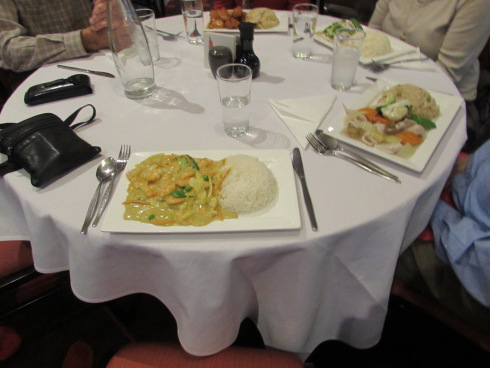
 I had small prawns in curry sauce and boiled rice. Peter had chicken and fried rice. Klaus is waiting for his Schnitzel..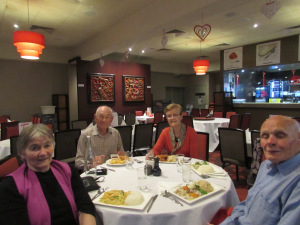
 I had a voucher for a complimentary birthday cake. Everybody liked it!
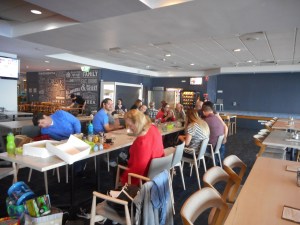
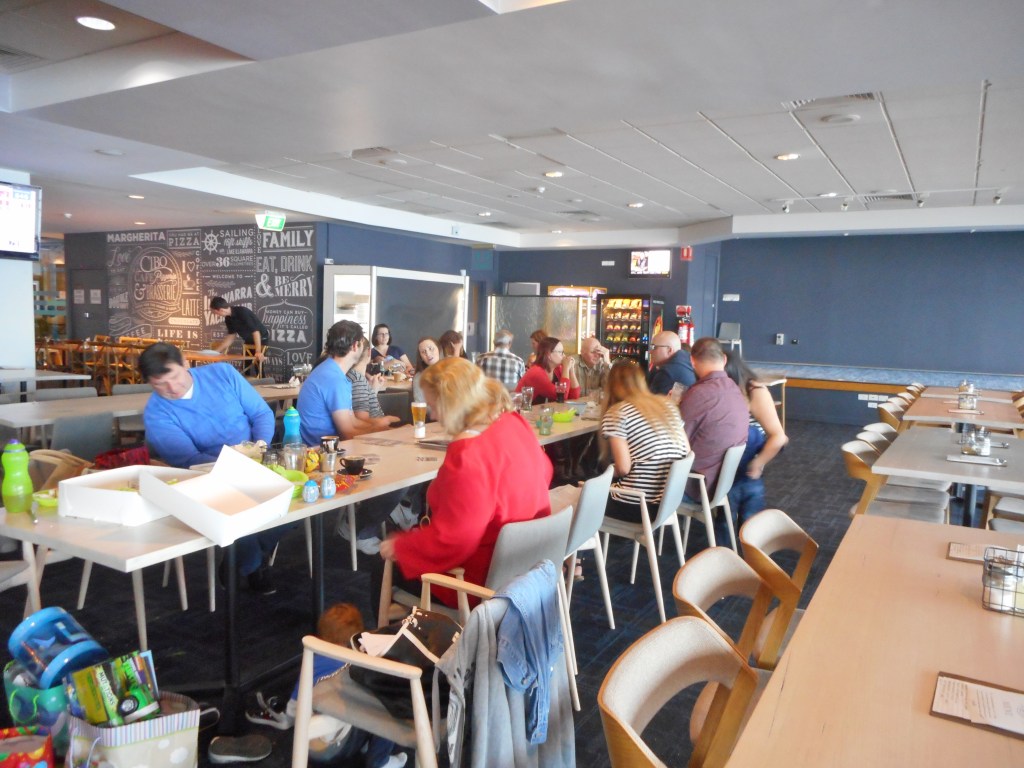
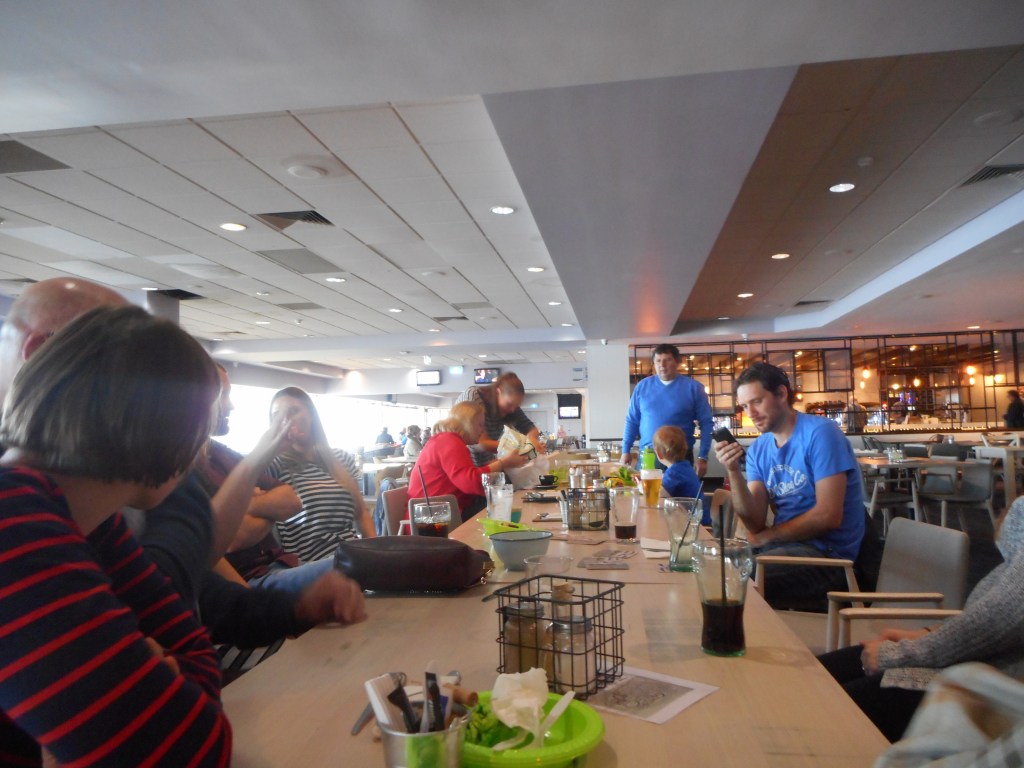
  After we had our beautiful ice-cream cake we went to the League Club’s lounge room for some coffee.
 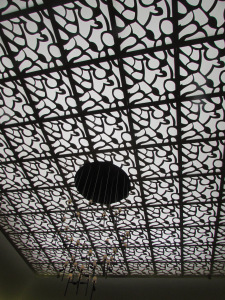 We noticed this great ceiling in the room where we were sitting.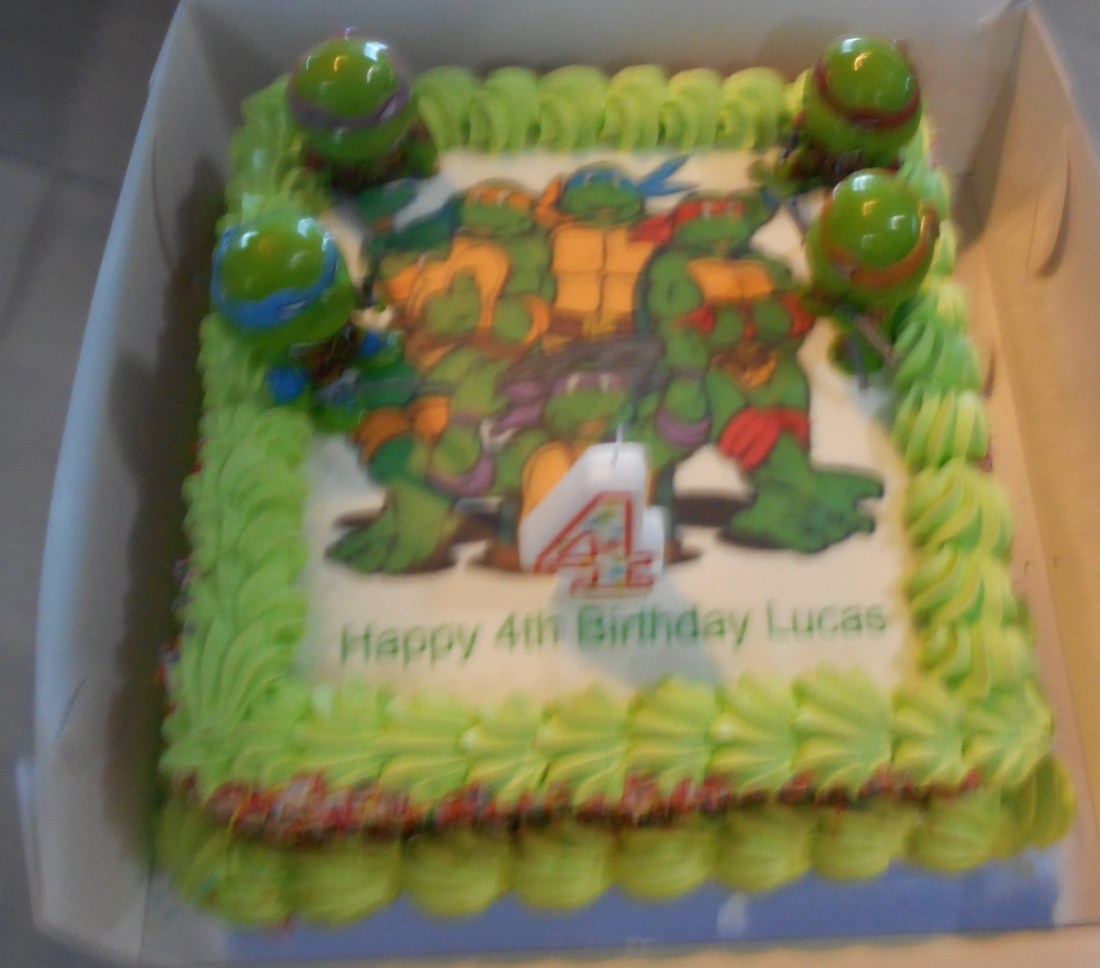





















 AuntyUta