Do we have Special Needs in an Emergency?

Do we have special needs in an emergency? I wrote this in my diary on the 2nd of November in 2013. At the time large areas of New South Wales experienced very hot conditions and fast spreading fires. I wrote that Peter copied for us from the internet a plan for an emergency during a HEATWAVE. It said: “ABC Emergency delivers official warnings and alerts and publishes emergency coverage sourced form ABC Local Radio and ABC News.”

I copy all this again, for after the recent rains with everything growing very well and with very hot conditions forecast for this summer, maybe we should be prepared again for outbreaks of fires.

So here is the list of some of the things we should have prepared in our SURVIVAL KIT:

BATTERY-OPERATED RADIO (WITH SPARE BATTERIES)
Torch (with spare batteries)
Strong shoes, gumboots, leather gloves and overalls
First aid kit and medications we need
A change of clothes, toiletry and sanitary supplies
Water in sealed containers – ten litres per person (for three days)
Three days supply of canned food (plus can opener and utensils)
Pillows and blankets (woollen and thermal)
Mobile phone and charger
Strong plastic bags (for clothing, valuables, documents, and photos)
Spare car and house keys

Several Emergency Services are mentioned that can be of help.

Here is what we should do before a HEATWAVE:

Stay hydrated – it’s recommended to drink two to three litres of water and to avoid alcohol and caffeine
Dress light

Check on family and friends – twice a day
Avoid exposure to the sun
Get your home ready – draw curtains, blinds, awnings at the start of the day to keep the sun out
Seek air-conditioning in a shopping centre, library or other public place. (We do not have air-conditioning)
Fans can also provide relief (We do have fans.)

During a HEATWAVE we should phone for assistance immediately if we show any symptoms of heat stress including extremely heavy sweating, headache and vomiting, confusion, swollen tongue

After a Heatwave we should be careful of falling tree limbs – they can be a hazard during periods of extended high temperatures.

Uta’s Diary, 3rd of September 2015

In September 2013 my blogger friend Linda wrote in a comment to one of my blogs:

“As I grow up 🙂 I discover that families the world over and through the centuries have been weird. Just plain weird! It’s a good thing to know. More kids should recognize this fact so they wouldn’t feel so isolated by the facts of their families.”

And my reply was:
“Quite amazing, Linda, isn’t it? What exactly do you mean by ‘weird’? Families that are somehow ‘dysfunctional’? What about divorce? Hasn’t this been on the increase in our time? Maybe it has partly to do with the increase in life expectation? In any case I believe it is important for children to know who their parents are. Whether they stay through all their growing up years with one, two or none of their parents this is a different matter. Some parents might not be the best option for a child, but the same goes for some institutions. It all depends. I did get to know during my growing up years some very well functioning families. I am talking about our extended family and about the families of some of my friends. I also saw examples of desperately struggling war widows with for instance four children and a bone breaking job with very little money. When I was a child a lot of people seemed to blame WW II for the increase in dysfunctional families.”

I experienced my growing up years in Berlin, Germany. During my teenage years I was always dreaming of living in some other country with a different family. I feel, having lived in Australia since 1959 I grew more and more apart from Berlin. Over the years I have been back to Berlin for some family visits. But I am always glad when I am back in Australia. It is quite amazing how Berlin has changed over the years. I can understand how a lot of young people feel now

A cafe in Berlin, where we like to go to when we visit Berlin.
The cafe is right at the Gendarmen Markt.

attracted to living in Berlin. However, I definitely want to spend the last few years of my life in Australia. Even my husband Peter, who has still very strong attachments to Berlin, prefers to live in Australia for as long as he can still afford to go back to Berlin for regular visits!

My parents separated soon after WW II. Then, around 1950, my mother demanded a divorce. During 1948/49 Peter’s mother left Peter’s father and got a divorce from him. Peter and his two sisters moved along with their mother. Both our fathers, Peter’s and mine, died long before our mothers. Both fathers had suffered badly due to war experiences.

All my cousins seem to come from very stable families. The generation of my nieces and nephews is different though. Whereas Peter’s nieces and nephews seem to come from rather stable families. Of course, Germans these days have very small families. Some people point out,  the increased influx of migrants to Germany could be a blessing,  for there are too many old people in Germany and not enough young people. Still, this enormous influx of refugees, that is taking place right now,  does cause major upheavals. I hope, all this can be settled in a humane way, and a lot of effort will be directed towards avoiding outbreaks of violence.


Uta’s Diary, 2nd of September 2015

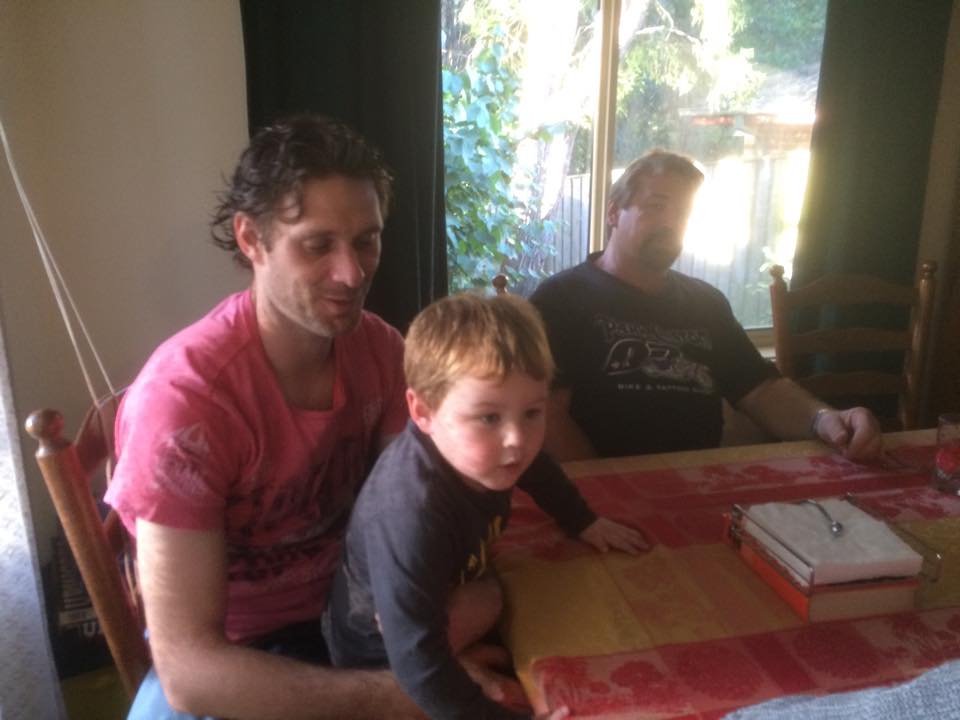
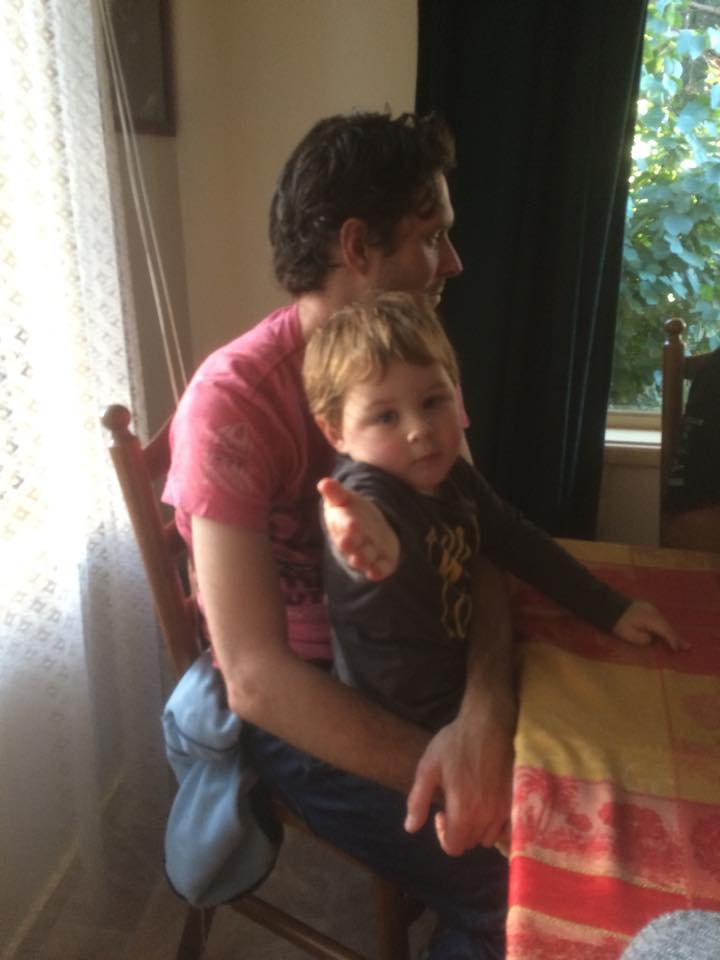
Last Sunday turned out to be a lovely family day at our home. It was beautiful to be surrounded by children, grand-children, and great grand-children for a few hours in the afternoon.  Some almond-cake was left from Gaby’s birthday. There was also freshly baked cheese-cake. Peter had baked this cake!

IMG_1034

IMG_0639

Our daughter Monika took a few pictures with her phone. On most pictures you can see either Lucas or Alex, Monika’s two little grandsons.
As promised, Monika let us have these pictures. So I am going to publish here some of them:
11920381_10207692619339086_770919645_n

11911698_10207692619979102_329149932_n

11922973_10207692620019103_1162597858_n

11924671_10207692621059129_1331407223_n

11948208_10207692622059154_879370842_n

11948208_10207692622059154_879370842_n (2)

11949673_10207692624819223_1408442958_n

11949757_10207692623419188_754561025_n (5)

11950868_10207692620699120_2130607373_n (3)

11950979_10207692624179207_616521434_n

11930656_10207692625299235_372501843_n

The older I get the more I seem to reflect on times past. I often felt very much out of place as a young person. Also I tended to be “zurückhaltend”, that is I was usually more the listener and observer and did not show a great deal of affection and emotion. On the other hand, I also remember times when I felt free and communicative and very talkative.

When I think of my parents, the most remarkable memory about them is, how very different they were. Here is a bit of how my father may have influenced me, and then how my mother’s influence was so very different.

My father was the most open minded and tolerant person. He liked to talk to me about a lot of things. He always treated me as though I was trustworthy and mature for my age, able to understand different points of view. Very rarely did I see him being angry with me. He only tended to be somewhat angry when, all of a sudden, I behaved in a very unpredictable way. Despite his open mindedness he was basically a very conservative man. If I showed signs of departing from his view of the world, this would upset him personally. Still, he was loving and forgiving, and eventually he was always able to accept my departure from some of his conservative views.

Now, my mother was in every way the opposite of my father. On the whole she was maybe rather tolerant as far as I was concerned because she loved me. But she made it very clear, that she did not love my father anymore. She showed not the least bit of tolerance towards him, on the contrary, she showed a lot of hatred, for in her opinion he was a “Versager” who did not do anything for his children. She thought it was not up to her to look after him when he had serious health issues. Maybe she thought he was just pretending. Also, she hardly ever talked to me about things that were important to me. She tended to keep very important things from me, for she wanted ‘to protect’ me! At least, this is how I remember it. I knew she loved me very much. Still, I always felt I was not the daughter she imagined I should be. I remember she telling me, I was an “Oppositionsgeist”. So I must have been speaking up about some things that disturbed me a great deal. I felt very bad for opposing her, but I could not help it. Of course, on the outside I tried very hard to go along with what she expected of me, just to keep the peace. Alas, I think I came into inner conflict about it. In short, I often did not feel happy about myself.

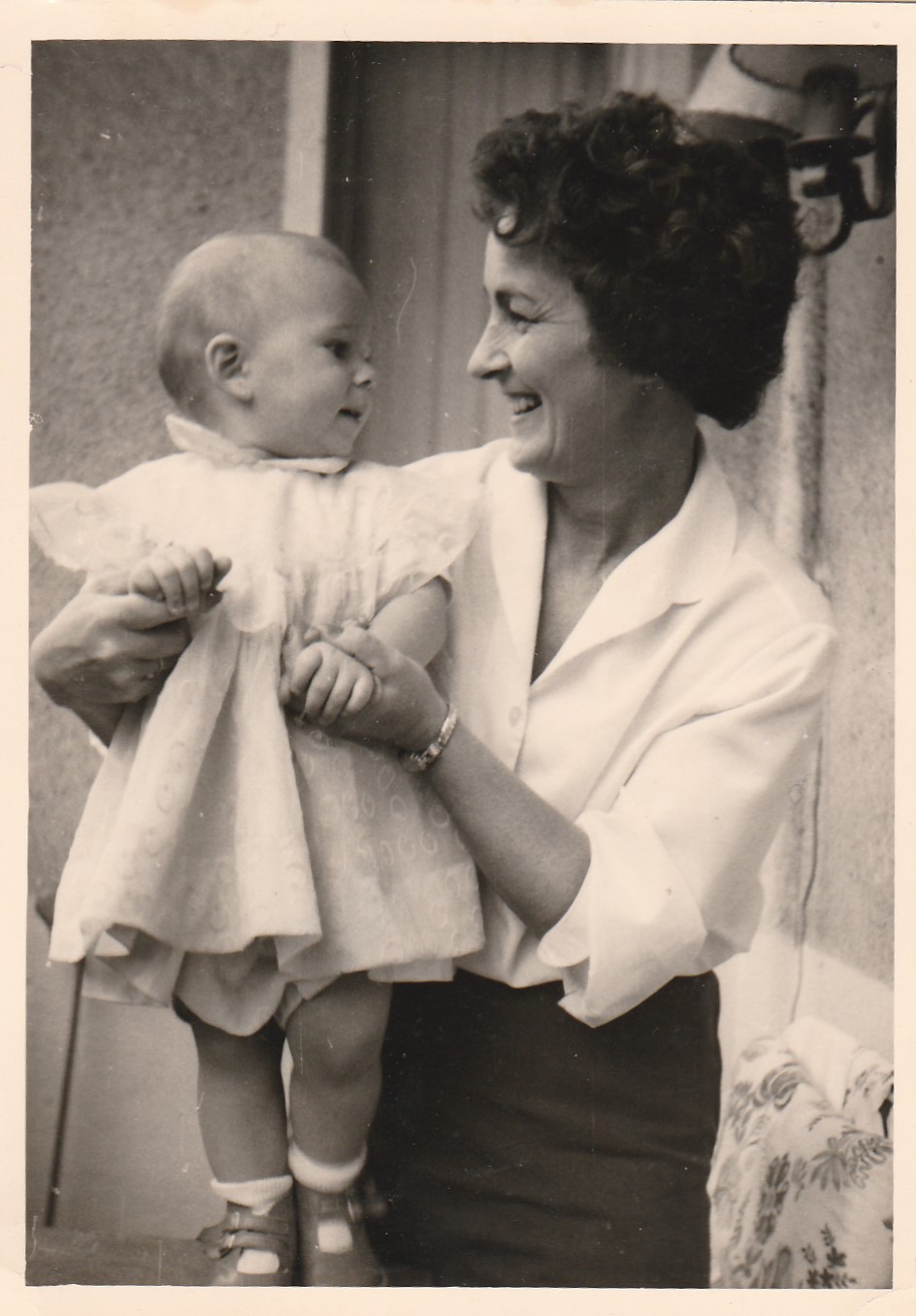
But all this is in the past. Peter suggested, I could insert a few photos with my father and mother and Baby Gaby in 1958.

my Father with Gaby in February 1958
My Mother with Gaby in August 1958
My Father in his Office ca. 1955

Last Sunday was a great day for us. The following Sunday, which is Fathers’ Day here in Australia, we are all going to meet for lunch at a Thai Restaurant.

The Meaning of Life – Mary Robinson

Presented by Geraldine Doogue, Compass explores the interface between religion and life as experienced by individuals and communities – including ordinary Australians, public leaders, religious thinkers and philosophers. #ABCcompass, Sundays 6.30pm

The Moral Compass

Series 29 | Episode 27CCDOCUMENTARY/FACTUAL27 mins

Geraldine Doogue debates the hot-button moral, ethical and religious controversies of our day in this smart and entertaining Compass series, The Moral Compass.

To enquire about obtaining a copy of this program please contact ABC Program Sales 1300 650 587 or progsales@abc.net.au


http://www.abc.net.au/compass/s4289196.htm

Mary Robinson, Ireland’s first woman President, talks to Irish broadcasting legend Gay Byrne about the people, ideas, values and beliefs that give her life meaning.

A brilliant lawyer and human rights activist before entering politics, she famously challenged the influence of the Catholic Church in Irish society and helped to bring about changes in the law concerning contraception, divorce and homosexuality. And yet she remains the product of a traditional religious upbringing and education and sees those values as the moral engine behind her continuing work for human rights and what she calls climate justice.


Peter B. Todd :

31 Aug 2015 9:51:23am

Splendid interview with Mary Robinson who respects the great religious traditions of the earth while alluding to a numinous principle implicit in cosmology and in the evolutionary process from which humankind’s symbolic consciousness has emerged. Humanity not only participates in a numinous dimension but also in co-creative divinisation by directing the future cosmic evolution. Her comment on Christ was particularly insightful. The implication seemed to be that Christ was an epiphany of a continuing incarnation of God in history as articulated by the fourteenth mystic Meister Eckhart and in the work of such contemporary thinkers as the Jesuit palaeontologist Teilhard de Chardin. This concept of God is archetypal and NOT that of an anthropomorphic, interventionist, creator. I elaborate these ideas in my book “The Individuation of God: Integrating Science and Religion” (Chiron publications 2012) and in my Skype interview with Bruce Sanguin

LINK: http://brucesanguin.com/interview-with-peter-todd/


Memories

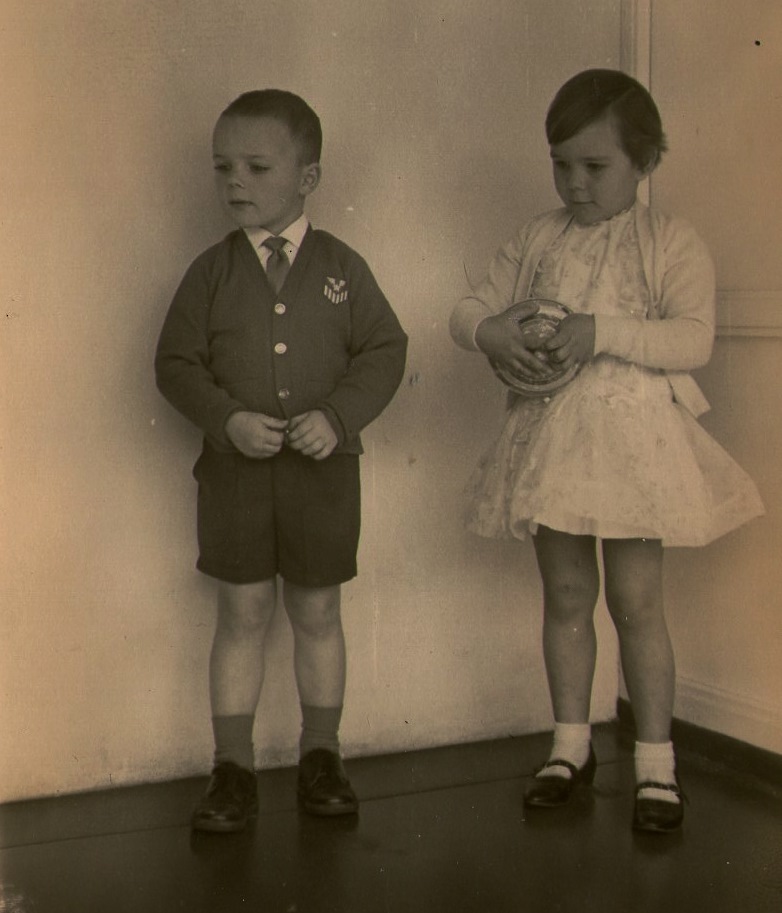
28th August 1962, Gaby is five years old
Gaby is five years old
Monika and Martin see Gaby on her birthday.
Gaby's birthday in 1963. She loves her musical bear.
Gaby’s birthday in 1963.
She loves her musical bear.
Monika and Martin want to see Gaby on her birthday.
Monika and Martin want to see Gaby on her birthday, 28th August 1963

img115

img112

Sister Harford organised a birthday party for Gaby outside the ward in the built-in veranda,
Sister Harford organised a birthday party for Gaby outside the ward within the built-in veranda,
Martin and Monika are having fun.

img114


Peter with Martin and Monika on the train to Sydney to go for a visit at Prince-Henry-Hospital.
The veranda at the hospital is full of Christmas decorations.
The veranda at the hospital is full of Christmas decorations. 1962

img125

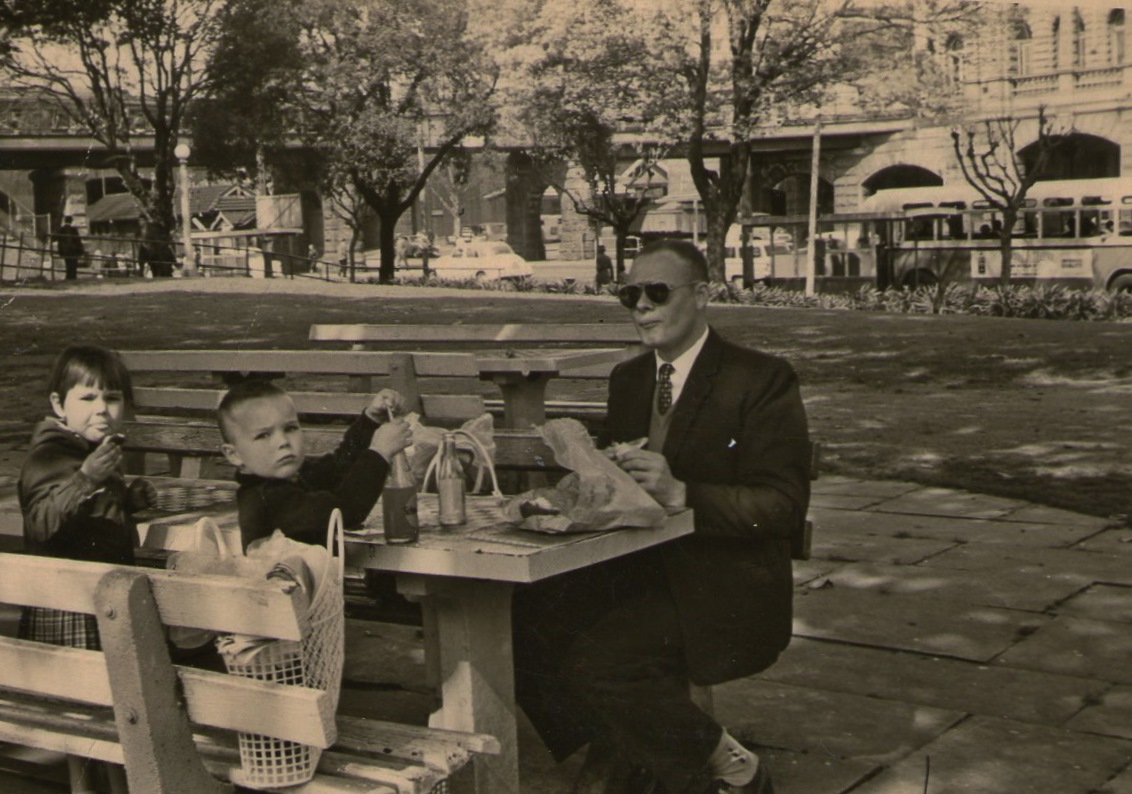
It is amazing that we all have winter coats on in the midst of summer in Australia. It must have been a very cold morning. The next pictures show it did get quite a bit warmer eventually.

img128

img126

This picture is taken in Belmore Park near Central Station.

On that day we had something to eat either before or after visiting Gaby at Prince-Henry-Hospital.

Another picture taken in Belmore Park.
Some pictures at the bubbler in Belmore Park.

img123

This picture, also in Belmore Park. with Peter Martin and Monika in January 1973.
This picture, also in Belmore Park. with Peter, Martin and Monika. January 1973.
The bubbler in Belmore Park is still popular in December 1987 with Caroline and grandsons Troy and Ryan.
The bubbler in Belmore Park was still popular in December 1987. Caroline and grandsons Troy and Ryan

img034

Faith in Spring – Frühlingsglaube

RIMG0282


.

German Verse by Ludwig Uhland

In the original German with a
line-by-line prose translation in English

Frühlingsglaube Faith in Spring
von Ludwig Uhland Prose translation by Hyde Flippo

Die linden Lüfte sind erwacht, The gentle winds are awakened,
Sie säuseln und wehen
Tag und Nacht,
They murmur and waft
day and night,
Sie schaffen an allen Enden. They create in every corner.
O frischer Duft, o neuer Klang! Oh fresh scent, oh new sound!
Nun, armes Herze, sei nicht bang! Now, poor dear [heart], fear not!
Nun muss sich alles, alles wenden. Now everything, everything must change.
Die Welt wird schöner
mit jedem Tag,
The world becomes more beautiful
with each day,
Man weiß nicht,
was noch werden mag,
One does not know
what may yet happen,
Das Blühen will nicht enden. The blooming doesn’t want to end.
Es blüht das fernste, tiefste Tal: The farthest, deepest valley blooms:
Nun, armes Herz, vergiss der Qual! Now, poor dear [heart], forget the pain!
Nun muss sich alles, alles wenden. Now everything, everything must change.

Send a greeting card with
lines from this Uhland poem.

I used to know this poem by heart. And I am still pretty familiar with it. Some of the verses come back to me whenever I experience a most beautiful early spring day. Just recently we had such a day with very “gentle winds”  that  “murmur and waft”.  Maybe I would say gentle breezes instead of winds. The poem speaks about these feelings of hope that are awakened in spring. On a beautiful springlike day, such as we had the other day, one feels immensely uplifted.

Today is the 28th of August 2015. Our daughter Gabriele died in 2012. She would have been 58 today.

IMG_0643


Monarch Cafe

https://www.google.com.au/maps/place/Monarch+Cakes/@-37.8681082,144.9795341,3a,75y,335.86h,84.72t/data=!3m7!1e1!3m5!1sTQ6DtMc2Ga5fLnHPyzglTQ!2e0!3e2!7i13312!8i6656!4m2!3m1!1s0x0:0x16310decdadc11d!6m1!1e1

TRAM ROUTE MAP EAST BRUNSWICK – ST KILDA BEACH:

img110

On Monday, the 17th of August, 2015, we were still in Melbourne.

https://auntyuta.com/2015/08/22/last-cab-to-darwin/

After Peter and I  had seen the movie “Last Cab to Darwin” in the KINO in Melbourne, it was our plan to get to the Monarch Cafe. We knew that TRAM 96 would take us there to ST KILDA.

Somewhere in the city we got unto the 96 tram. We soon found out it was not going to St Kilda but to Brunswick. This meant we had to get off the tram and catch a tram into the other direction. The trams come along every six or seven minutes. So we were soon on our way towards ST KILDA. There are several stops within ST KILDA. We were not sure where to get off. Somehow the Canterbury Road stop looked to us like the right stop. Wasn’t that the corner where Acland Street was with the Monash Cafe just around the corner. we thought. It turned out we were wrong. There was no Acland Street. It took us quite a while and a lot of walking before we found Acland Street and the way to our chosen cafe. When we finally made it, we had some yummy cake and coffee. Next time we know we have to get off at Belford Street, just one stop before the terminal.

In April 2013 we were in Melbourne. Martin and his daughter Lauren went with us to ST KILDA.

DSCN5835

In April 2013 Peter and I went with Lauren and Martin to the MONARCH CAFE.
This is a picture from inside the Monarch Cafe.
We love their cakes and coffee!

Privatization and the Theft of the Commons

Well worth watching and a great film review by Dr Stuart Bramhall

https://www.youtube.com/watch?v=RORPpFL21dM

stuartbramhall's avatarThe Most Revolutionary Act

Catastroika

by Aris Chatzistefanou andKaterina Kitidi

Film Review

Catastroika is a Greek documentary on neoliberalism, with a specific focus on the privatization of publicly owned resources. Although it makes no mention of historian Richard Linebaugh, its depiction of the neoliberal privatization movement provides an elegant illustration of the ongoing theft of the Commons (see Stop Thief: the Theft of the Commons).

After a brief overview of the University of Chicago economists (championed by Milton Friedman) who first put neoliberal theory into practice during the Pinochet dictatorship, the documentary tracks the wholesale privatization of Russia’s state owned industries after the 1993 coup by Boris Yeltsin, in which he illegally ordered dissolution of the Russian parliament (see The Rise of Putin and the Fall of the Oligarchs).

The fire sale of state assets to oligarchs and western bankers would virtually destroy the Russian economy, throwing millions of people into…

View original post 325 more words

My Brain – my Master or an imperfect Tool?

I love this post and want to reblog it!

berlioz1935's avatarBerlioz1935's Blog

Spring is in the air - an Australian Wattle in full bloom Spring is in the air – an Australian Wattle in full bloom

Sometimes I wonder whether my brain is in charge or I am.

I have come to the conclusion that there is  a difference. My brain is a bit of a bully. It likes to tell me what to do and how to do it. And this independently from my wishes.

It starts already in the morning. While I definitely want  to sleep another wink, my brain has no compunction giving  me signals to get up. The first signal arrives via the bladder of course. I try to ignore this signal by calling on the god of dreams, Morpheus. But he has gone to where the night has gone to and can’t hear my prayers anymore. I have to get up.

All day, my brain is urging me on, even when my body can’t go on anymore. We…

View original post 607 more words