Ukrainian Crisis

Julian Borger is the Guardian’s diplomatic editor. He was previously a correspondent in the US, the Middle East, eastern Europe and the Balkans.
Arming Ukraine army may escalate conflict, west warned.
http://www.theguardian.com/world/2015/feb/08/arming-ukraine-army-escalate-conflict-ocse

Richard Norton-Taylor writes for the Guardian on defence and security and until recently was the paper’s security editor. He is a regular broadcaster.
He joined the Guardian in 1973 as the newspaper’s first European correspondent based in Brussels. He returned to Britain in 1975. He won the Freedom of Information Campaign Award in 1986 and in 1994, and Liberty’s Human Rights Award for journalism in 2010.
He edits the Guardian Defence and Security blog with Ewen MacAskill
US weapons to Ukraine ‘would be matched by Russian arms to rebels’
International Institute for Strategic Studies warns that Moscow could arm separatists more quickly than US could reinforce Ukraine’s forces

Starting a bit of Diary for February 2015

I have recently neglected to write any kind of diary writing or any kind of writing for that matter. What kept me occupied was scanning through quite a few blogs by bloggers I subscribe too. Some of the blogs stirred something in me that I felt I very much liked to reblog. I think sometimes I commented a bit when I reblogged something. All the reblogs I found very much worth noticing in one way or another.

Some of the said reblogs had to do with the Ukrainian crisis. Everything that goes on in connection with this crisis alarms me. Nobody seems to be on top of the crisis. How easily a situation like this can lead to war. This frightens me, it frightens me very much!

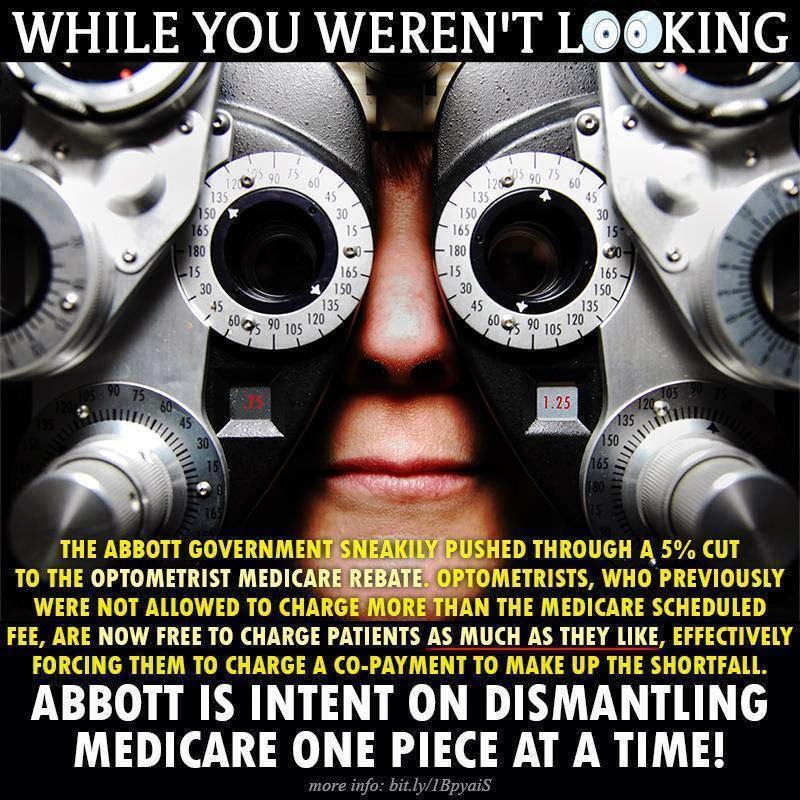
Then there are the frightening changes our government here in Australia plans for us. Peter is the secretary of our body cooperative. He just received a notice from the office that our funds are not sufficient for all the necessary repairs that are outstanding right now. All the owners of the units in our complex always want to keep the fees as low as possible. They want to keep as much money as possible for their own personal use. It is the same with taxation overall. Nobody wants to pay a lot of taxes, but expects government to look after services and infrastructure and maintenance of everything. The changes our government plans, are definitely affecting low income earners much more than well off people!

This is what we saw as we entered the Capitol Theatre in Sydney for a Matinee  on Wed 11 Feb 2015
This is what we saw as we entered the Capitol Theatre in Sydney for a Matinee on Wed 11 Feb 2015

Yes, we went to Sydney yesterday. I’ll write about it in my next post.

TODAY IN BERLIN: FEBRURY 8th – THE STASI

It is quite horrendous. One wonders, how all this was possible!

Berlin Companion's avatarKREUZBERGED - BERLIN COMPANION

65 years ago and less than half a year after the birth of the DDR – German Democratic Republic or East Germany – the new state moved on to secure its position by introducing one of the most effective tools of social control in history: the Stasi.

Short for Staatsicherheit – State Security – the ministry in its charge called it to life with the Soviet secret police as its blueprint. In its first year, the Stasi had 2,700 official  employees. Three years later that number grew to 13,000 – a rather moderate count compared to the 91,015 on the official Stasi payroll recorded on October 31st, 1989.

Between 1950 and 1989 the East German secret police provided regular employment to 250,000 people, at the same time using the “services” of 624,000 unofficial agents. Considering the numbers, one in 30 East Germans was more or less actively involved with the…

View original post 499 more words

Ukraine Crisis

http://www.themoscowtimes.com/opinion/article/ukraine-crisis-more-dangerous-than-cold-war/514900.html

Ukraine Crisis More Dangerous Than Cold War
By Igor Ivanov Jan. 26 2015 17:27 Last edited 17:28

Since the crisis in Ukraine began, many have claimed that a new Cold War between Russia and the West already exists. This rhetoric, used even by high-profile politicians, in my opinion, is driven mostly by emotions and is meant to justify difficult positions taken by one or the other side.

I am convinced that no Cold War of the type we experienced in the second half of the 20th century can be repeated today. The world has changed in the most radical way. Today we live in an entirely new reality that does not fit the old paradigms.

But if we compare the current state of global affairs with those that existed during the Cold War, we must keep in mind that during the Cold War, international relations were confined by a certain order established after the end of World War II.

All the shortcomings and liabilities of this order notwithstanding, it allowed humankind to avoid a new global disaster.

True, we all lived fearing a devastating nuclear conflict. But this fear forced the Soviet Union and the United States to negotiate serious nuclear arms reduction agreements accompanied by appropriate verification mechanisms.

Today we live in a world where the old order has ceased to exist, and a new one that would suit all the major players has not yet been established. And this is what makes our times so different from the Cold War.

Yes, we have the same international institutions like the United Nations, just as we had in the second half of the past century. Formally, we all subscribe to the established norms of international law. However, as the Ukraine crisis has demonstrated once again, the old institutions are dramatically losing their efficiency, and international law is becoming a victim of political interests.

The current transition stage in international relations has become unnecessarily protracted, and further procrastinations in facing these problems will generate more complications. Above all, the current transition creates major security challenges.

The threat of a nuclear conflict is higher today than it was during the Cold War. In the absence of a political dialogue, with mutual mistrust reaching historical highs, the probability of unintended accidents, including those involving nuclear weapons, is getting more and more real.

The situation with regional conflicts does not look any better. Let us consider, for instance, the Middle East conflict and the security of Israel. During the Cold War, the two superpowers had at their disposal mechanisms that could stop military clashes in the region within a couple of days, preventing uncontrolled escalation. Today such mechanisms are no longer available.

The recent terrorist act in Paris has demonstrated not only the vulnerability of modern society to religious extremism, but also the absence of adequate instruments that should unite the international community in its fight against this common threat.

Likewise, the Ukraine crisis that has already led to thousands of deaths and the suffering of millions of innocent people should be a powerful message to all of us: We are falling behind a rapidly changing world and are failing to come up with adequate solutions to problems of the 21st century.

I noticed that on New Year’s Eve many wished their friends and loved ones not only traditional things like good health, happy family life and professional accomplishments, but also a peaceful year without war.

This bad presentiment should urge responsible politicians all over the world to put aside their ambitions and mutual insults in order to start a meaningful dialogue about the future world order that would allow all the nations to build their own futures. Otherwise, instead of a new Cold War, someday we could face a real, large-scale military conflict.

Igor Ivanov is the president of the Russian International Affairs Council (RIAC) and served as Russian foreign minister from 1998 to 2004

What the Obama Administration issued

http://www.globalresearch.ca/national-security-strategy-document-affirms-us-drive-for-world-domination/5430114?utm_source=rss&utm_medium=rss&utm_campaign

By Patrick Martin
7 February 2015

The Obama administration issued its National Security Strategy document Friday, ostensibly laying out the principles on which its foreign policy will be based for the final two years that Obama occupies the White House.

The document was presented by National Security Adviser Susan Rice at the Brookings Institution on Friday afternoon, no doubt aimed at focusing attention on US threats against Russia over Ukraine. The Obama administration is currently considering providing direct arms to the US-backed regime in Kiev, a move that could lead very quickly to a direct war with Russia, a nuclear-armed power.

‘ ‘ ‘ ‘ ‘

To read more please go to:

http://www.globalresearch.ca/national-security-strategy-document-affirms-us-drive-for-world-domination/5430114?utm_source=rss&utm_medium=rss&utm_campaign

A Prime Minister has to be a team player

Very timely post by Robyn Oyeniyi. Well worth reading!

Robyn Dunphy's avatarRandom Observations of Life

Tony Abbott makes far too many Captains’ Calls. Knights and dames, the $20 Medicare rebate reduction, Prince Philip’s knighthood and now the call to move the leadership spill discussion/meeting/vote to Monday at 9 am. Make no mistake: this is a strategic move with personal motivation. It is not true leadership style.

Abbott seems to be under the illusion he is a president, not a prime minister. The Australian system is the party that wins a majority in the lower house forms government and chooses the Prime Minister. The Prime Minister MUST be a team player, otherwise democracy is undermined. Despite the number of Abbott supporters wailing they voted for Abbott as Prime Minister, they didn’t. That is impossible in the Australian system, irrespective of what any individual might like…

View original post 578 more words

MalcolmTurnbull

https://www.thesaturdaypaper.com.au/news/politics/2015/02/07/malcolm-turnbull-awaits-the-leadership/14232276001470?utm_source=PANTHEON_STRIPPE

The SATURDAY PAPER published today an article on Malcolm Turnbull. They refer to a 5000-word speech Turnbull gave in the United States on the future of the Asia-Pacific. In this speech Turnbull embedded his reflections on leadership. He said:

“Leaders must be decision-makers, but they must also be, above all, explainers and advocates, unravelling complex issues in clear language that explains why things have to change and why the government cannot solve every problem.”

This sort of thing is exactly what I expect from a leader. I definitely like things to be explained to me in clear language. To be kept in the dark about all the decision making is an awful feeling!

Ah, and here is something else Turnbull said:

“It is vitally important both as a matter of social justice and political reality, that structural changes are seen as being fair across the board. That means not only must tough decisions be justified, but that the burden of adjustment is not borne disproportionately by one part of the community.”