The Kichwa tribe in the Sarayaku region of the Amazon in Ecuador believe in the ‘living forest’, where humans, animals and plants live in harmony. They are fighting oil companies who want to exploit their ancestral land. A delegation of indigenous people are at the Paris COP21 climate conference to make sure their voices are heard. Can they win their battle?
In October 2010 Peter and I stayed in a cabin at Bulli Beach. I posted about it in 2012. Having been for an outing to Bulli Beach just recently I thought the pictures from 2010 make for interesting comparisons. Actually, our most recent visit, just for the day, was on Sunday, the 6th of December 2015.
I am going to republish now a few pictures from our stay at Bulli Beach in October 2010.
This cabin was opposite ours.Early morning view from our kitchen window.
Ready for a walk to the beach.
This is the little cabin we were staying in.
Our kitchen
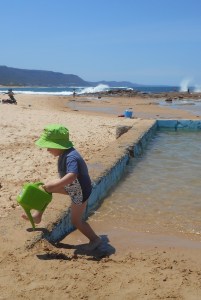
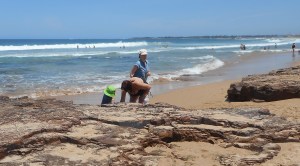
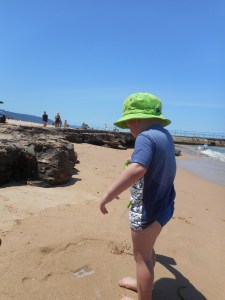
And this is where we sleep!This flag indicates, if you go for a swim lifesavers are going to keep an eye on you.Workers get the pool ready for the summer season.The next day I consider to go for a swim in the pool.Gee, the water is still a little bit cold.Peter decides to stay out of the water.Let’s go to this place where we can get some refreshments.A beautiful sunny day.And who is this?
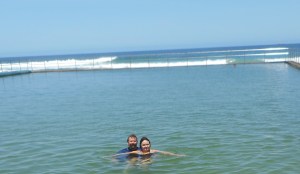
Peter took a picture of me.And then someone came along asking would we like to have our picture taken together?We stopped for coffee on the way back home.
What follows is a reblog that I wanted to cancel, but did not know how I could cancel it. The following text does not make much sense because it is something that I had written quite a few years ago.
We live south of Wollongong and Bulli Beach is north of Wollongong. From where we live to Bulli Beach is a fifteen minutes drive by car. So why did we book into a cabin at Bulli Beach when we can drive there from where we live any day really? The answer is simple. We need at least thirty minutes to go to this particular beach and back home again. Would we do this every day? No way. Most people don’t go to the beach regularly even if they live within walking distance. It is really quite different if you rent accommodation right next to the beach.
We had been staying at lots of other beaches before in different parts of Australia. Last year I had booked into hospital for a day-only procedure (biopsies on tongue). I had to leave the admission forms at Bulli Hospital. On that same…
On the 6th of December 2015 we had a beautiful get together with the family. Having lunch at the Bulli Beach Cafe reminded me of our stay at Bulli Beach just two years ago. This is why I reblog our ‘adventure’ from two years ago.
We had arrived at Bulli Beach on Friday, the 6th of December 2013, at one in the afternoon. Amazingly, up to Saturday night all the food that we had brought from home, was sufficient for every meal in our cabin up until Sunday morning the 8th, when we had to check out. Saturday night, however, we decided to go out for a meal.
Ruby’s Cafe was close to our Tourist Park. They had special music on that night and tables had to be booked. In passing early in the evening we noticed a lot of people already occupying all the outside tables. We went on past the playground towards the Bulli Beach Cafe.
Looking at the playground in passing I thought of little Lucas straight away. When we had seen Ebony and Lucas on Thursday, the 5th of December, for Monika’s birthday, we mentioned to Ebony that we had booked…
“Unreasoning fear and political panic only serve our enemy.” This is what Peter Hartcher points out in this article in the Sydney Morning Herald.
Peter Hartcher is international editor. (of the SMH)
I believe Peter Hartcher’s article is well worth reading. I hope the URL link works for you.
. . . . .
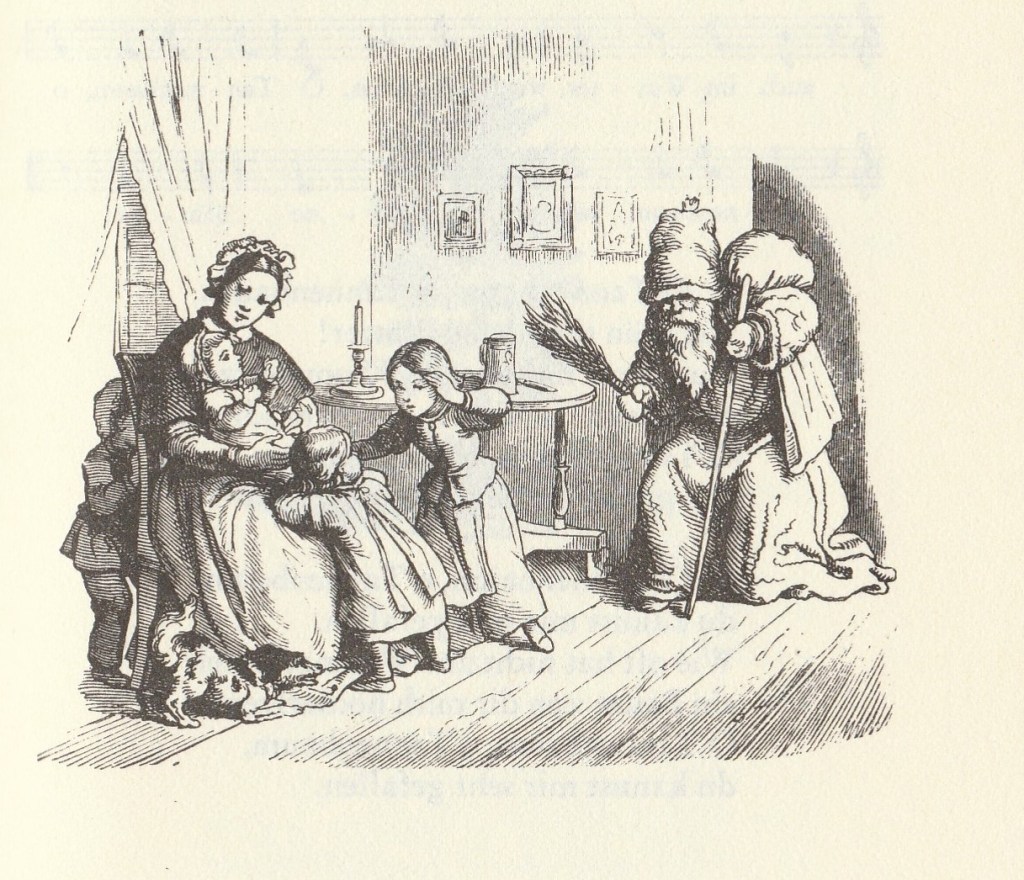
Recently I mentioned in one of my posts how in the past little children were made scared of the “Weihnachtsmann” (Santa) so as to make them “good little boys and girls”.
I ask myself, are we in the Western societies all like “little children” that we can be frightened that much by our politicians? Why do they not frighten us to do any travelling? After all accidents do happen, don’t they? How many people get killed or injured in traffic accidents every year?
Why are women not warned to get into a relationship with a man? After all possessive men may do terrible things. How many women get killed or injured by their partners every year?
Why are we hesitant to let our children walk to school and home by themselves? They could get molested or kidnapped! Well, to how many children does this actually happen every year? Do we teach them not to be too trustful of strangers? What about the internet? Do we have control over how they use the internet?
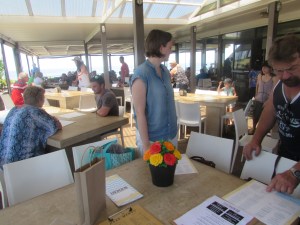
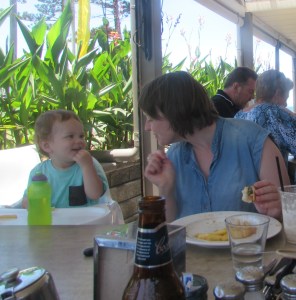
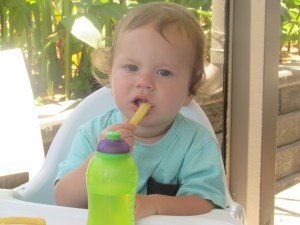
We had lunch at the Bulli Beach Cafe. The sugary flowers were to be eaten later on. But after lunch we went to the beach first.
Peter waits for the coffee.
The coffee has arrived and we can eat the cup cakes.Some cup cakes are left over.Matthew reckons the glove compartment is a good spot for taking some cakes home.Caroline and Matthew are about to go back to Sydney.
Some Diary notes:
As usual I am running out of time on the computer. Just now I have been scanning some old photos. I’ll try to insert them before I get ready for our day at Bulli Beach.
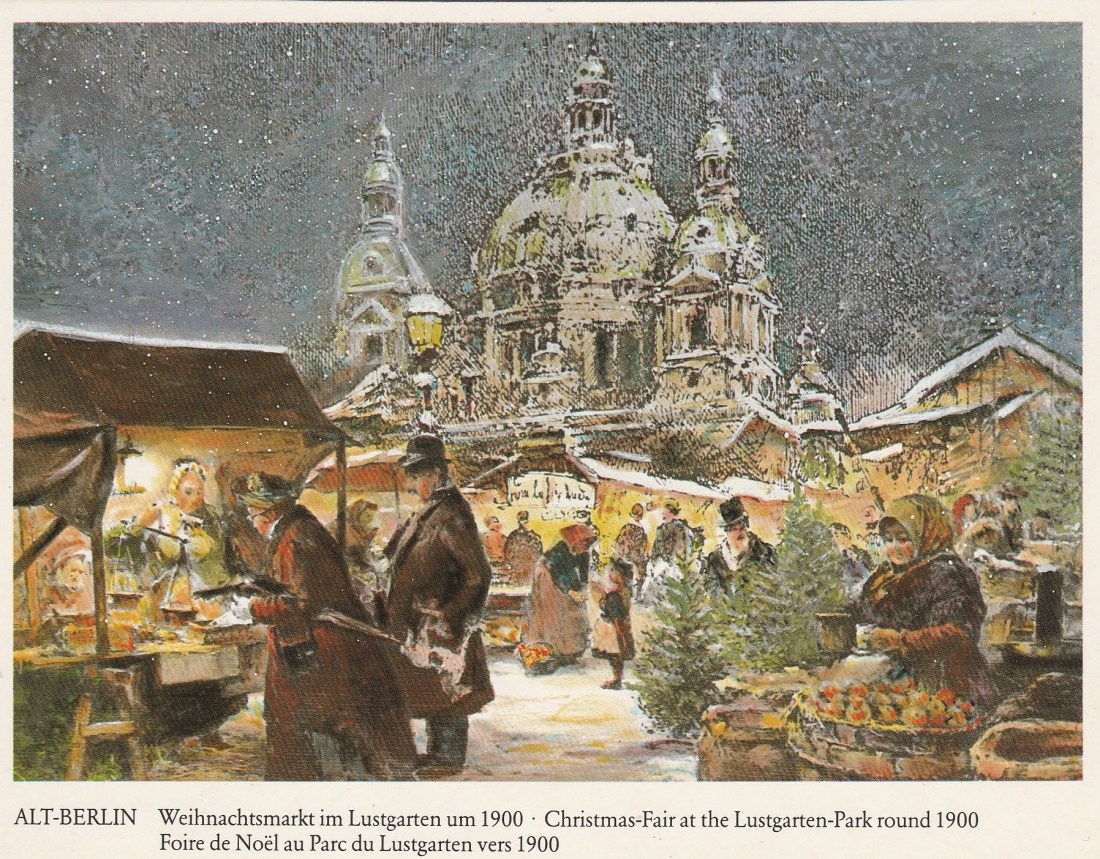
First here is a picture from around 1900 that shows a “WEIHNACHTSMARKT” in Berlin. I came across this picture only yesterday and I think it has historical value.
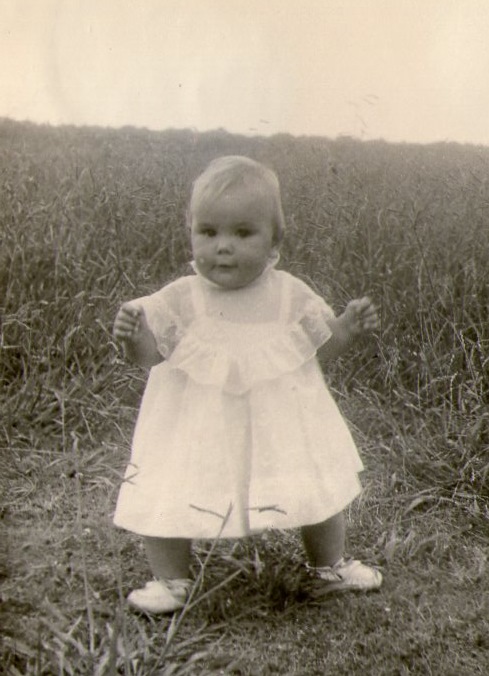
Yesterday, on the 5th of December, was Monika’s birthday. Here is a picture of Monika that was taken on the 5th of December 1959:
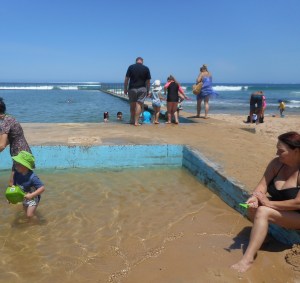
I had to put the top half of this post in draft. We did go to Bulli Beach Cafe for lunch. All in all we spent more then three hours at the cafe and at the beach. Everyone had a good time. The weather was perfect for a day at the beach. Today’s pictures I am going to publish some other time. Today I want to conclude this post with more of the scanned Christmas pictures from years past.
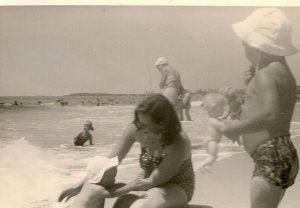
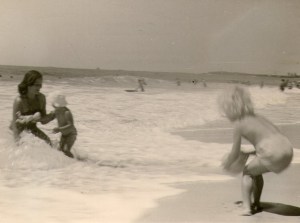
Here I am with Monika at Fairy Meadow Beach.
The following pictures are also taken at Fairy Meadow Beach on Christmas Day 1959. It was our first Christmas in Australia.
Peter with Monika and GabyUra with Gaby. Also a friend of the children. three year old Birgit.Gaby, Birgit and MonikaChristmas 1962 Martin and Monika with five year old Gaby , who is in Prince Henry Hospital
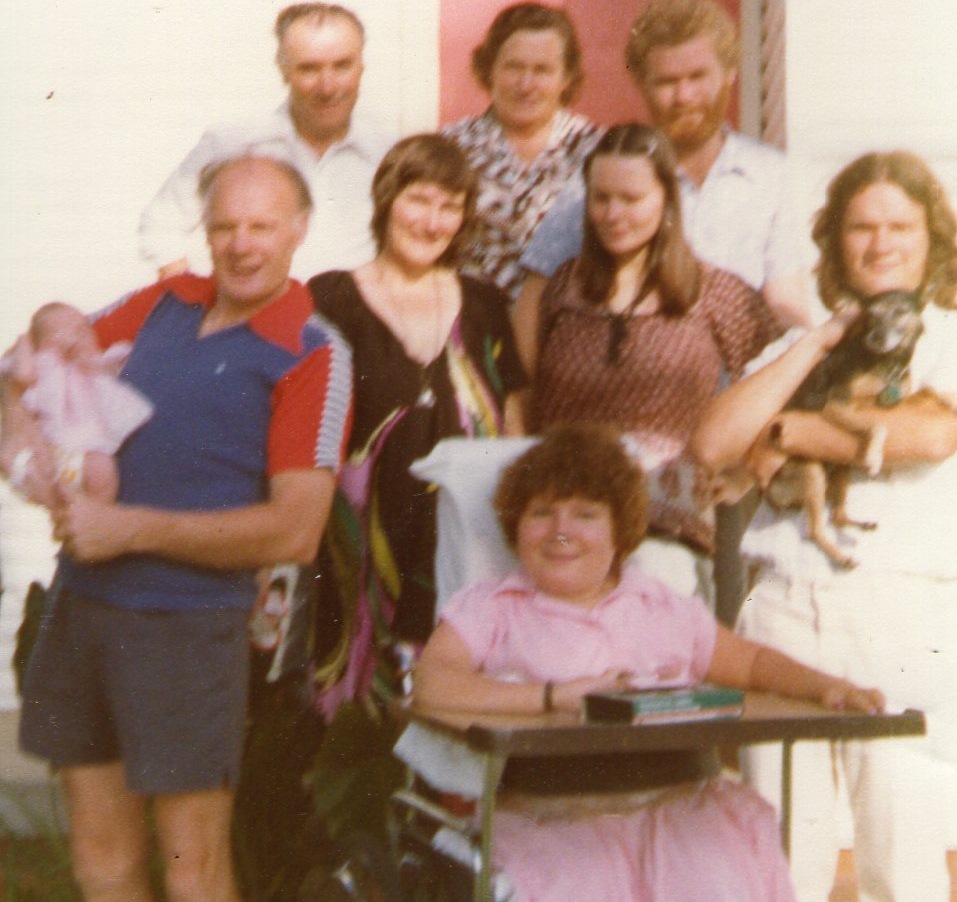
The following picture was taken on Christmas Eve 1978. Caroline was only a few weeks old.
Peter and Caroline Christmas 1979Christmas 1981 Here we have for the first time an artificial Christmas Tree!Troy, Ryan and Caroline Christmas Eve 1981Gaby on Christmas Eve 1981Monika and Martin on Christmas Eve 1981
German children used to be very scared of Santa, who was called ‘Weihnachtsmann’. Every little German child used to learn this verse:
“Lieber guter Weihnachtsmann,
Sieh mich nicht so böse an,
Stecke deine Rute ein,
Ich will auch immer artig sein!”
In English it means something like this:
Dear good Santa,
Don’t give me these scary looks,
Do get rid of that stick of yours,
I do promise, I’ll always be good!
It was very important that a child was able to recite this to the Weihnachtsmann”: If they could not say it they would be smacked by Santa! Or at least they believed he was going to smack them with his stick full of branches. This stick was Santa’s “Rute”. No child could imagine Santa without a “Rute”.
Older children were expected to recite a longer poem. Learning a poem like this by heart would keep me busy during the weeks before Christmas.
I think as a nine year old I learned to recite:
“Markt und Strassen sind verlassen . . . .”
I loved this poem. It spoke to me of a very calm and peaceful night, the night of Christmas.
Just now I am thinking back to Christmas 1962. On the 18th of December we went by train to Sydney to visit our daughter Gaby in Prince Henry Hospital. When we left in the morning it must have been pretty cold for we were wearing thick winter coats.
Five year old Gaby was in the hospital’s respiratory ward. By the time we arrived she was already propped up in a wheelchair and waiting for us in the enclosed verandah so that her four year old sister and 2 and a half year old brother were allowed to see her. (Naturally very young children would not have been allowed to enter the respiratory ward, where visitors had to enter with a mask and wearing a white gown.) The verandah was decorated for Christmas as shown in the above picture. It was quite warm there, so we soon took off our winter coats.
My goodness, this was fifty-three years ago! How time flies – – – Last Tuesday, the first of December, was our official start of summer and the temperature at our place was 35C, which we thought was what an Australian summer should be like. But the following day, on Wednesday, it was only between 18 and 22C. Did we have changes like that in the middle of summer some sixty years ago? I can remember some very hot Christmases, but also some fairly cool ones. So we have to be prepared for either close to 20C or close to 40C. On Christmas Day we always love to go to the beach or somewhere in the country. I never like the idea of cooking a hot Christmas dinner on Christmas Day, and I think we never did this, but some people do this, even on a very hot day in Australia. But then, sometimes to cook a Christmas dinner might be all right if they are lucky and it doesn’t get too hot on Christmad Day.
Here is something else I do remember: Travelling to Australia as migrants from Germany on the big ocean liner STRATHAIRD in 1959, we had the opportunity to go to some English lessons on board the ship. The teacher told us a bit about the climate in Australia. She said Melbourne was a city that was known for great variations in temperature. The standard saying was, that Melbourne could have four seasons in one day! She also said that rich people liked to stay in Queensland during the winter months which were always pleasantly warm there, whereas the summer months they preferred to stay in Tasmania. She said Tasmania was too cold in winter but in summer it was a beautiful place. Strange that I should still remember this introduction to Australian weather conditions.
Putin hits ISIS where it hurts: Russia hits more than 200 targets in 24 hours as Moscow aims to cut off jihadists’ income by taking out refinery and oil trucks
Russia is targeting ISIS-held oil trucks and refineries in bid to cut off the terrorist group’s largest source of income
It was recently revealed ISIS is making more than £320million a year from oil despite a US-led bombing campaign
Terror group claimed responsibility for downing of Russian passenger jet and last week’s terror attacks in Paris
Prompted joint campaign by France and Russia to target ISIS despite opposing stances on Syrian President
See full news coverage of the conflict in Syria at http://www.dailymail.co.uk/syria
By KEILIGH BAKER FOR MAILONLINE
PUBLISHED: 15:02 EST, 19 November 2015 | UPDATED: 23:56 EST, 19 November 2015
Last month it was revealed ISIS is still making more than £320million a year from oil, despite the US-led bombing campaign which was meant to break up the insurgency.
‘This is where we must hit Daesh, in its lifeblood,’ said French Defence Minister Jean-Yves Le Drian, using the Arabic acronym for the group.
Despite their diametrically opposed stances on Assad, France and Russia agreed to coordinate their military and security services to fight ISIS after the attacks in Paris and the downing of the Russian airliner.
The vast wealth generated by oil fields, power plants, extortion, taxes, and the pillaging of antiquities means ISIS is the most well-funded terrorist group in history, experts have warned.
Figures from oil workers in Syria and Iraq along with Western intelligence estimates suggest up to 40,000 barrels are being produced every day in ISIS-held territory.
This wealth has allowed the group to flourish regionally and internationally, and presents a unique challenge for world leaders attempting to suppress the bloodthirsty jihadis.
A US-led air coalition began targeting ISIS in both Iraq and Syria, with French strikes on the latter beginning in September. Moscow launched its own air war in Syria, in coordination with President Bashar al-Assad, on September 30.
US President Barack Obama praised Russia as a ‘constructive partner’ in international talks in Vienna aimed at reaching a solution to Syria’s bloody conflict, which has cost 250,000 lives.
The US and France have been firm backers of Syria’s uprising, while Russia and Iran remain staunch allies of Assad.
In October MailOnline reported on the uneasy alliance between ISIS and the Assad regime when it comes to providing energy to Syria.
It has was claimed terrified staff are forced to work in Islamist-held electricity plants. Syrian engineers have reported seeing their colleagues beaten and even killed after being assigned to ISIS-controlled gas plants that produce most of the country’s power.
A number of the facilities have essentially become ‘joint ventures’ between Assad and the militants – despite the two sides being locked in a civil war.






















 AuntyUta