Auntie, Sister. Grandmother, Great-Grandmother,
Mother and Wife of German Descent
I've lived in Australia since 1959 together with my husband Peter. We have four children, eight grandchildren and two great-grandchildren. I started blogging because I wanted to publish some of my childhood memories. I am blogging now also some of my other memories. I like to publish some photos too as well as a little bit of a diary from the present time. Occasionally I publish a story with a bit of fiction in it. Peter, my husband, is publishing some of his stories under berlioz1935.wordpress.com
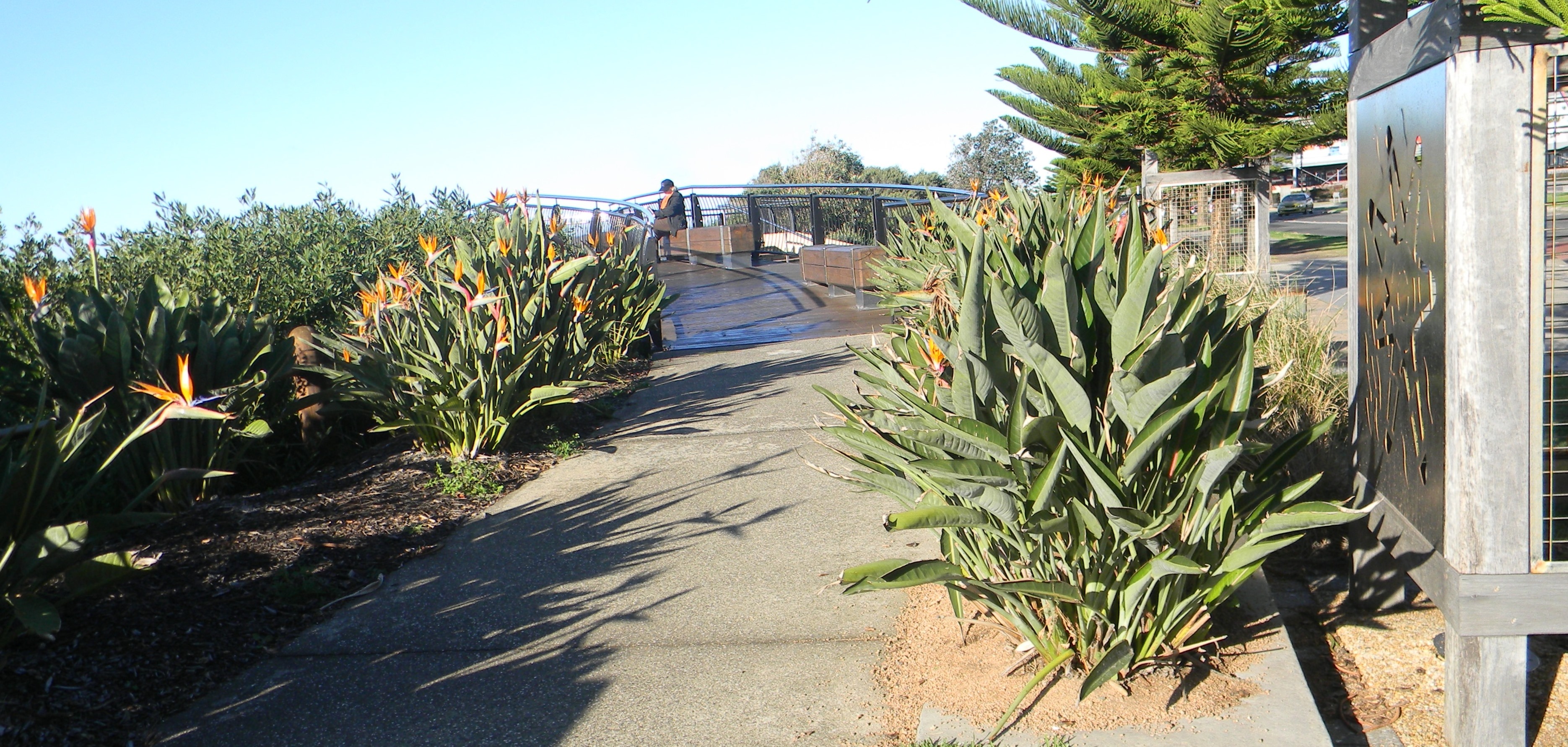
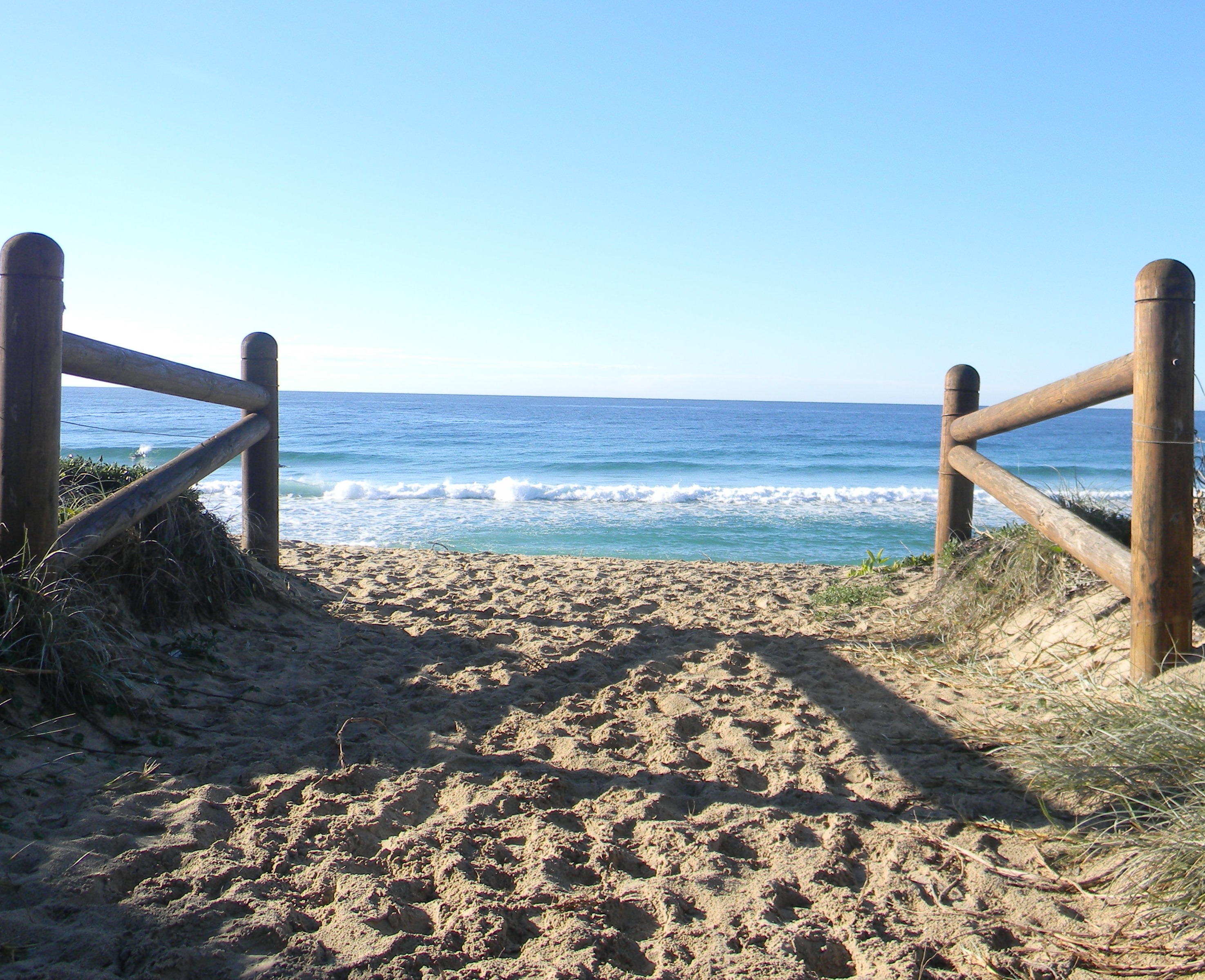
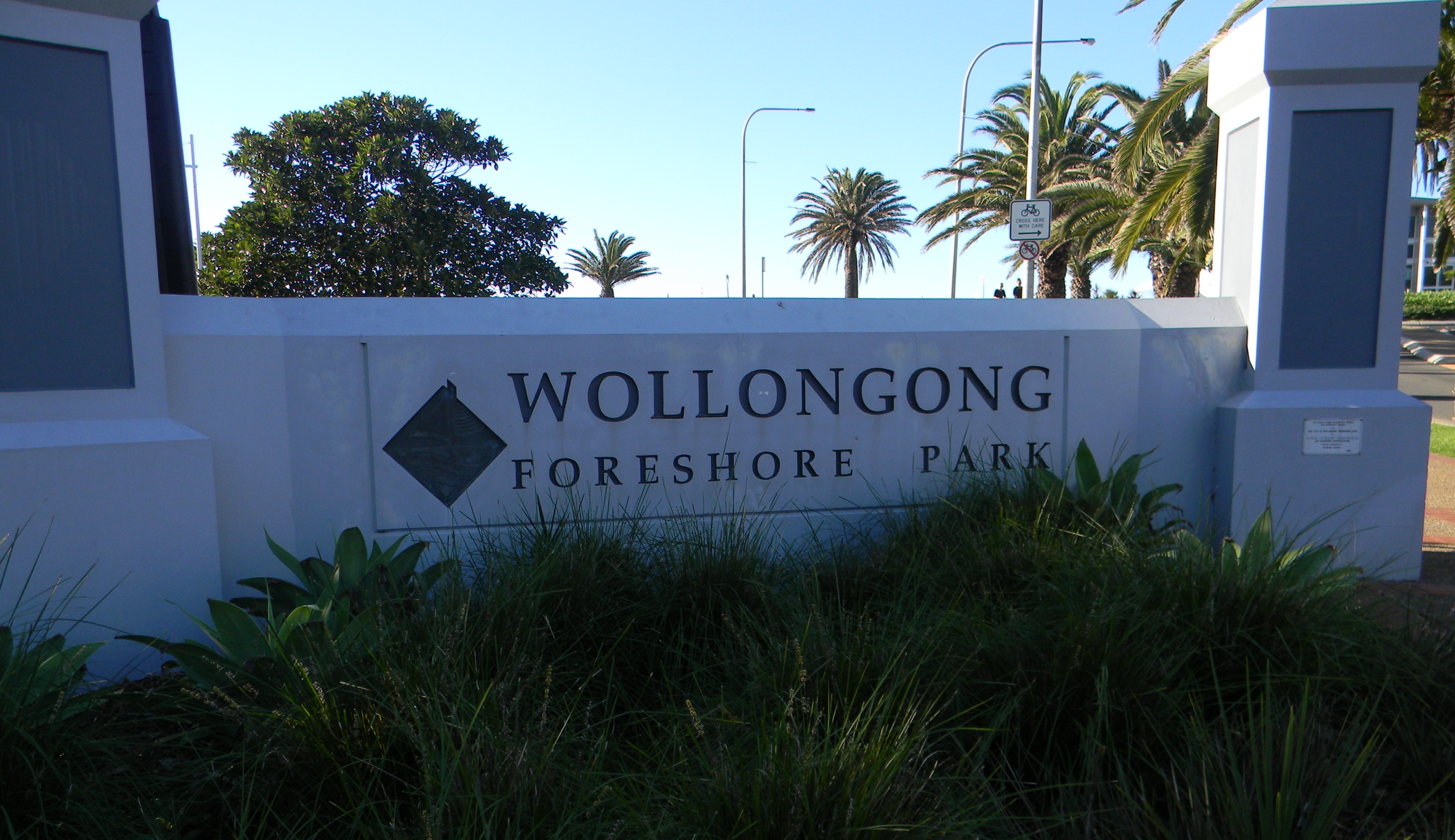
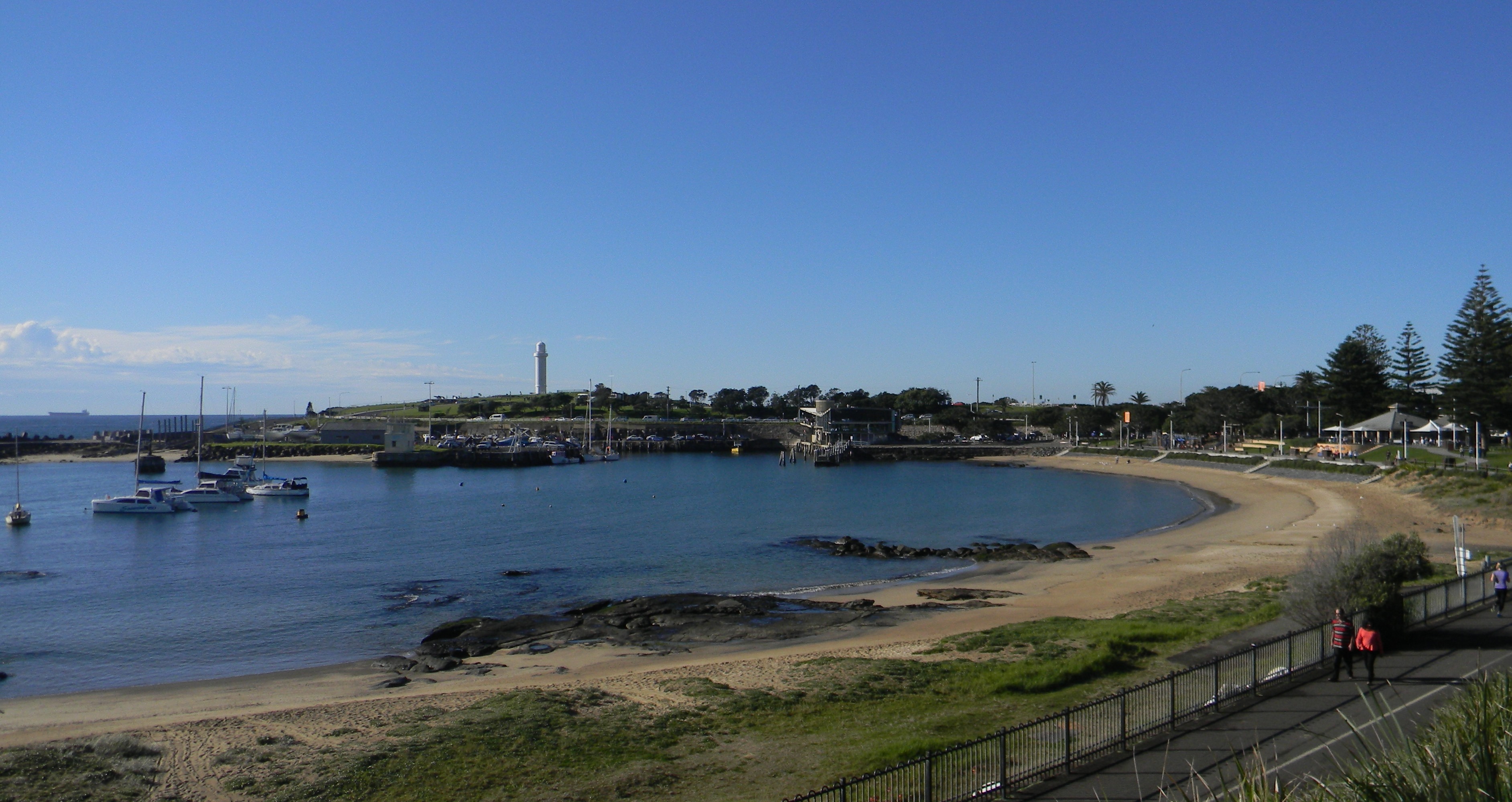
At 8,20 this morning we caught the bus in Dapto, going to Wollongong and arriving there at Marine Drive by 8,45 am. Bad weather had been forecast. This is why we left early hoping that we might be lucky and still have a bit of sunshine before the weather turned bad. We were right. Beautiful morning sun received us at Wollongong’s foreshore and we took off on our walk. It was very beautiful to walk along the foreshore this early on a winter morning.
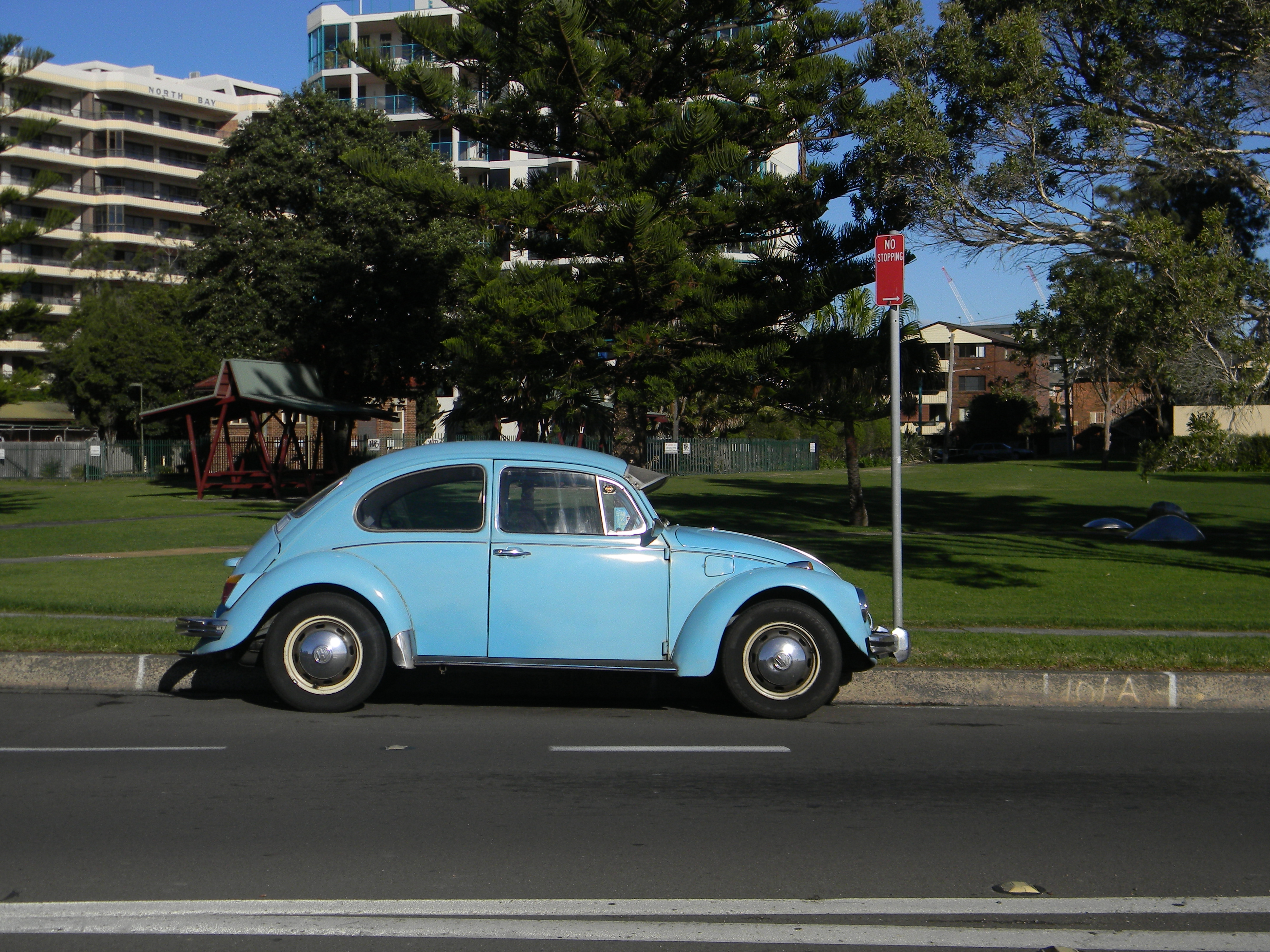
Peter saw this beautiful little car in the street and took a picture of it.
We waited at this bus stop for the free shuttle bus that was to take us into Wollongong City.
In Wollongong City we met up with our friend Sylvia for some coffee in a Spanish Cafe.
We went back to Dapto by bus, picking up a bit of fruit in Dapto Shopping Centre. Just before midday we were back home again. We were happy that we had left early for this terrific outing. As it turned out, in the afternoon the weather was indeed not as good anymore.
Tomorrow, Sunday, we’ll go out for lunch to meet the family to celebrate little Lucas being one year old.
Of course we are looking forward to this very much.
This is the time of the year when we have to go to Centrelink to let them know we are still alive. Well, both Peter and I, are old age pensioners. We get the Australian pension plus a small monthly pension from Germany which is so small that it doesn’t affect our Australian pension.
As I said we have to present ourselves at the Centrelink office with a form that has been sent to us from Germany. Peter filled out both our forms (I only had to sign). With both these forms and our passports for identification we arrived at Centrelink. A woman very politely took all the details from Peter and then pointed to a row of seats telling Peter to wait there till his name was called.
I felt I was completely invisible but didn’t feel the need to draw some attention to me. Well, she had advised Peter. And that was it. All I had to do was follow him and sit down beside him. After a while someone called “Peter” (no surname). I doubted Peter had been able to hear this call. (He has again a bit of trouble with his hearing aid) I told him a “Peter” had been called and that it may be him. Peter got up and a woman asked him to come over to a certain counter. I followed.
In the past we had always been called to a table with seating provided for the two of us and the office person sitting opposite us and taking notice of both of us. So this time we just stood at a counter. But then it didn’t take very long at all to get the required certification and stamp. Peter handed over the papers, the Centrelink office worker very efficiently took care of these, soon handing them back to Peter. She didn’t say one word to me. I contemplated why on earth should she take notice of me?
I wondered whether she even had noticed that I was there. When I talked about this to Peter later on, Peter assured me that she must have seen me. How else could she have certified that I was still alive?
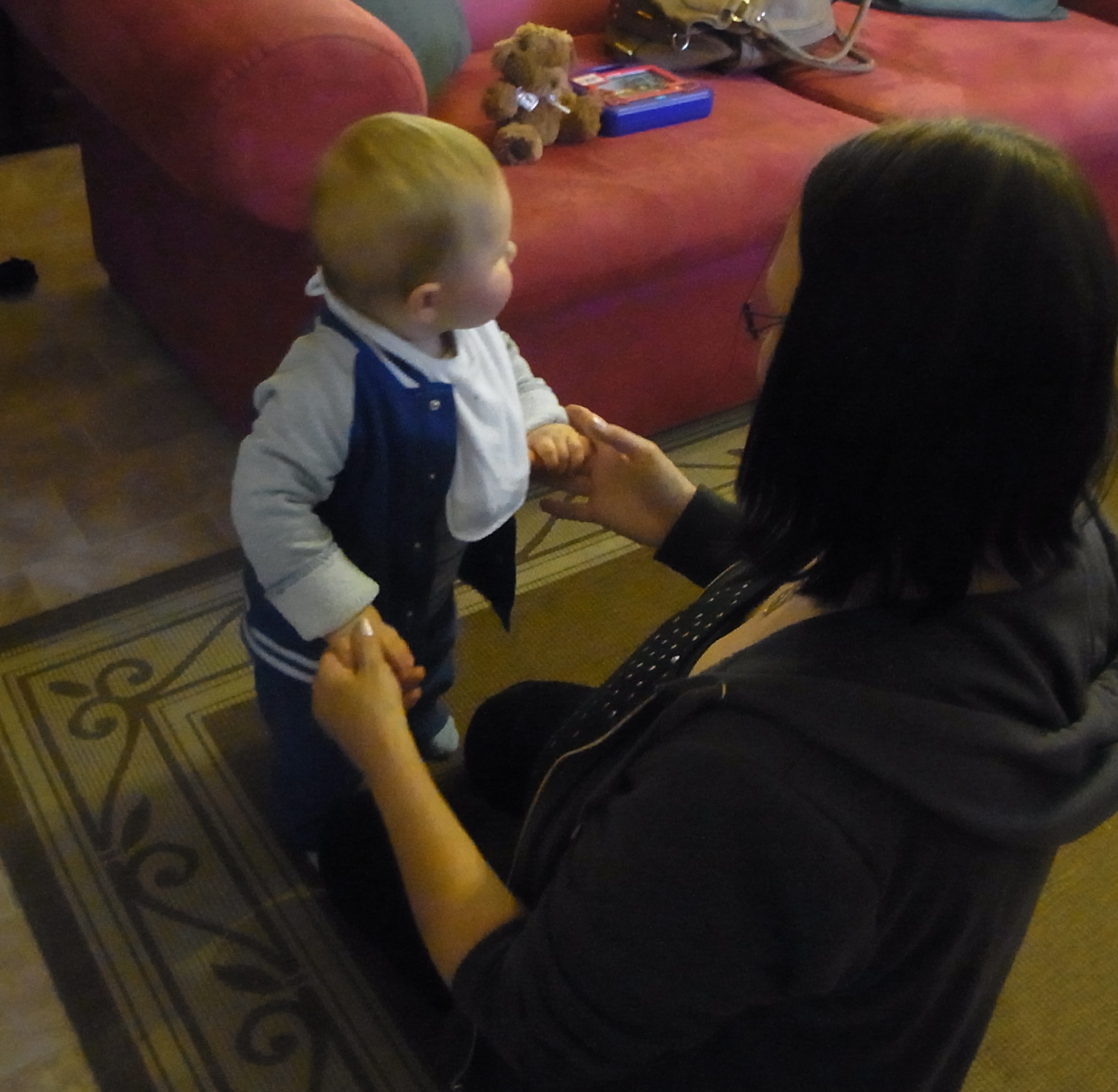
It was Sunday. Our daughter had said she’d see us in the afternoon. What a surprise it was when she brought her little grandson Lucas along who’s nearly twelve months now.
Here are a few pictures I took soon after their arrival.
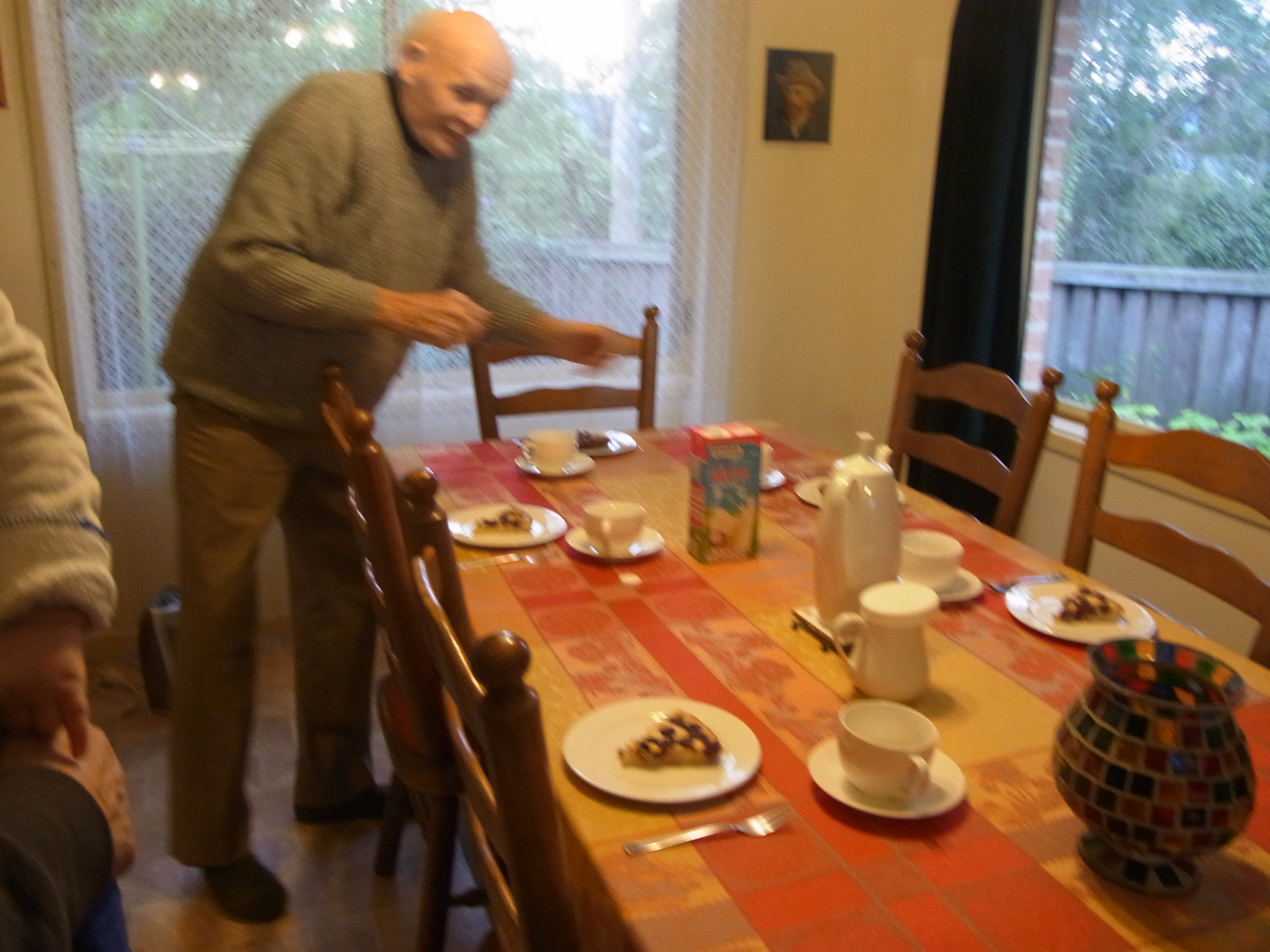
While I took photos Peter already set the table for afternoon coffee.
The parents of Lucas were busy with something that needed doing to the house. Some kind of maintenance. So Monika suggested she could take Lucas along to our place. Her daughter Natasha was also with her. And we already had our daughter Caroline from Sydney with us. So we were a nice group of people having afternoon coffee together. Caroline had been baking the cake.
Hyde Park is in the midst of Sydney. This is where we were today, Wednesday, and not only today but also two days ago on Monday.
Peter had to have treatment at the Dental Center for a broken off tooth and I had to go for another visit to a dental clinic for getting new dentures fitted. I’ll have to go to Sydney two more times for further fittings. Caroline came to see us again and later on also Matthew. It was great to see them both.
Last Saturday Peter and I went on this excursion to the highlands. Sunday I ventured on my own for a walk to Lake Illawarra while Peter did his running training. I took heaps of pictures at the lake. So here I show some of them.
This is Brooks Creek that flows into the Lake.
On Monday we went on an early train to Sydney and could see the sun rise shortly after seven.
It was windy and cold today, however plenty of sunshine and beautiful clear air. We thought it would be wonderful to go up to the highlands on a day like today. To drive up Macquarie Pass was no problem. Here is what it says about this pass in the Wikipedia:
“Macquarie Pass is an eight-kilometre-long section of the Illawarra Highway passing through Macquarie Pass National Park. It was opened in 1898.[1]
Macquarie Pass links the Southern Highland town of Robertson to the coastal town of Albion Park, descending the Illawarra Escarpment via a very narrow bitumen roadway, which has several single-lane sections and is mostly two lanes with double “no overtaking” lines. It is in the Shellharbour local government area.
This section of roadway is very steep, and contains a large number of hairpin bends, resulting in buses and trucks needing to reverse on some of the bends. The pass is quite notorious for accidents due to its nature, and drivers and riders are required to be cautious.
After heavy rain, the Macquarie Pass can be closed due to flooding on the top half of the pass. Cars and motorcycle riders may opt to use Jamberoo Mountain Road between Robertson and Jamberoo, while trucks are advised to use Mount Ousley Road (Southern Freeway) and Picton Road as an alternative.
The road is very popular with motorcyclists on weekends and public holidays. The Shellharbour and Wingecarribee Councils and the NSW Roads and Traffic Authority have therefore published a safety brochure entitled ‘Motorcycling Macquarie Pass.'[2]”
We reached Robertson and decided we would first of all have an early lunch with one of the famous Robertson pies and a cup of tea. The pies were delicious as ever. We have frequented this PIE SHOP in Robertson for over fifty years. The pies there are really special. Peter had a pepper steak pie and I had a beef curry pie. A hot cup of tea with it was lovely.
In the Wikipedia it says that the road is very popular with motorcyclists on weekends and public holidays. And so it is. At the pie shop for instance scores of motorcyclists had just arrived for a well deserved break. The eating section of the shop got pretty crowded after a while for lots of other holiday makers with children on winter school holidays had also arrived. The shop did a roaring business with their pies.
Near the railway line and near what used to be Robertson station is the little bit of rainforest which we had not been visiting for decades. Today was the day. We got ourselves reacquainted with it. There is a round-track of only about 600 m. We walked along it and felt like being in another world.
Earlier in the morning on the way to Macquarie Pass we stopped at the Marshall Mount Dance Hall. Our daughter Monika liked to go to their dances nearly forty years ago. Looking at the hall today Peter recalled how he drove to this hall on a Saturday night to pick up Monika and her friends after the dance had finished. We noticed today also a building next to this hall which used to be the Marshall Mount Public School.
We did a little detour through the country side where we noticed some ducks crossing the road. All in all we had a lovely day on this beautiful sunny winter day with gusts of wind that felt very cold.
On this coral tree were already some flowers appearing. Does this mean spring is not far away any more?
I’ve been reading a few very interesting blogs again today. Somehow I ended up looking at what Matthew Wright had to say. I found out he is a historian and a successful writer. He published for instance this book about New Zealand’s hidden past. Maybe some bloggers would like to have a look.
Highlighted book:
Convicts: New Zealand’s hidden criminal past Penguin, Auckland 2012
‘As Matthew Wright acknowledges, although “generations of historians have told and retold the tales, openly and happily”, the true story of convict involvement has been ignored by many New Zealanders who have sought to differentiate themselves from their Western Island… Although some academic reviewers use the word “prolific” as a pseudo-insult, Wright combines a scholar’s mastery of the sources with a journalistic skill at communicating complex messages to lay people, all sharpened by the experience of writing nearly 50 books.’ – Gavin McLean, Otago Daily Times, 11 August 2012.
‘…great reading, full of specific real-life personalities and daring escapades, some horrifying, to be measured and understood against the background of Maori and British cultures of those decades of the nineteenth century. This is the first time the tale of New Zealand’s convicts has been told to this detail, in a single book – one destined to become a New Zealand classic.
– Jo Keppel, Greymouth Evening Star, 26 July 2012
‘Wright has done a great job of exposing activities which society had considered best forgotten, and made it interesting reading to boot’.
– Graeme Barrow, Northern Advocate, 23 July 2012, and Wanganui Chronicle, 16 August 2012.
‘…an entertaining and informative account of some of the larger-than-life characters who made this country their home in the early 19th century…’
– Alister Browne, Manawatu Standard, 17 August 2012.
‘…adds to the colourful tapestry of New Zealand’s early settlement.’
– Mana, New Zealand, 1 September 2012.
‘Wright has carved out a niche for himself in pre-Treaty New Zealand history, from which very few written records survive. It’s not an easy field to research.’
– Mike Houlihan, D-Scene, 5 September 2012.
This rollicking tale of white crime takes us to pre-1840 New Zealand, a riotous age when lawlessness leaked from the periphery of Empire – in this case, the penal colonies of Australia, established in 1788.
Prisoners stowed away on boats, escaped in boats and otherwise made their way across the Tasman – where Maori looked on most of them with disdain. Some left as soon as they could. Others stayed.
Curiously, the biggest criminals weren’t convicts – they were sea captains, supposed upholders of the law who became involved in all kinds of skullduggery around New Zealand’s coastline, ranging from cannibalism to genocide. They were bad, some of them were mad – and it all happened in just a few exciting decades in a tiny corner of the South Pacific.
Available in print and e-book.
Paperback, 256 pp
ISBN 13: 9781742532493 ISBN 10: 1742532497
What are ballot propositions, initiatives, and referendums?
Ballot measures or ballot propositions are proposals to enact new laws or constitutional amendments or repeal existing laws or constitutional amendments that are placed on the ballot for approval or rejection by the electorate. There are several different kinds of ballot measures:
An initiative is a proposal of a new law or constitutional amendment that is placed on the ballot by petition, that is, by collecting signatures of a certain number of citizens. Twenty-four states have the initiative process (list). Of the 24 states, 18 allow initiatives to propose constitutional amendments and 21 states allow initiatives to propose statutes. In most cases, once a sufficient number of signatures has been collected, the proposal is placed on the ballot for a vote of the people (“direct initiative”). In some cases, the proposal first goes to the legislature, and if approved by the legislature, is not voted on by the people (“indirect initiative”). For constitutional amendments, 16 states allow direct initiatives and two allow indirect initiatives. For statutes, 11 states allow direct initiatives for statutes, seven allow indirect initiatives, and two states (Utah and Washington) allow both direct and indirect initiatives.
A referendum (sometimes “popular referendum”) is a proposal to repeal a law that was previously enacted by the legislature, and that is placed on the ballot by citizen petition. A total of 24 states permit referendums, most of them states that also permit initiatives. Although the Progressives considered the referendum as important as the initiative, in practice, referendums are fairly rare, especially compared to initiatives.
A legislative measure or legislative proposition (or sometimes “referred” measure) is a proposal placed on the ballot by the legislature. All states permit legislative measures (list) and all states except for Delaware require constitutional amendments to be approved by the voters at large. In some states, legislatures place nonbinding advisory measures on the ballot. Legislative measures are much more common than initiatives and referendums, and are about twice as likely to be approved. Some states, such as Florida, also allow certain commissions to refer measures to the ballot.
Caroline and Mama Uta sitting outside towards the end of summer
This photo was taken a few months ago when Caroline had been at our place for a visit. We were sitting behind our house for morning tea. Peter and I always love to have a cup of tea outside enjoying a beautiful sunny day in our backyard that is overgrown with trees. We just love to sit under these trees and listen to a variety of birds who usually chirp happily close by. It is such a peaceful place. We always call it our little paradise.
Caroline and Papa PeterThis is what the table looks like without the table cloth.
We are in the midst of winter now here in Australia. After a long rainy period in June, the month of July is promising to be full of sunshine. However the nights are extremely cold. All the rooms in the house are extremely cold too, not just during the night but during the day too unless we put the heaters on. We usually switch our electric heater only on in the rooms we happen to use for a while. The warmest room is usually the computer room for it is small and does not require a lot of heating to get it comfortably warm.
Outside in the sun it is much warmer today than inside. So, naturally we had morning tea as well as lunch outside. We sat there for quite a while, absorbing the lovely sunshine and listening to the birds. How lucky we are to have such a lovely spot behind our house. As I said, we feel this is our little paradise! 🙂
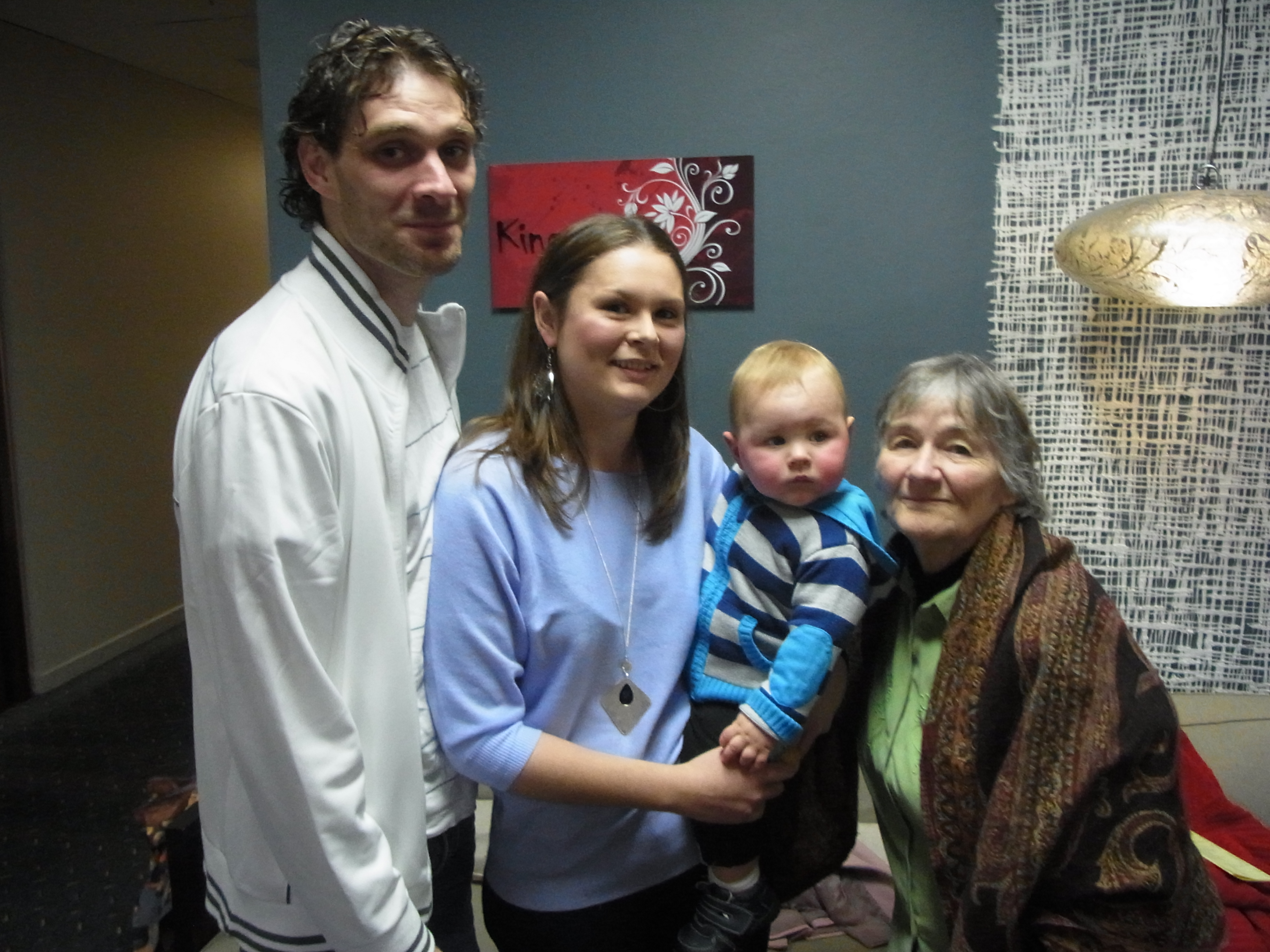
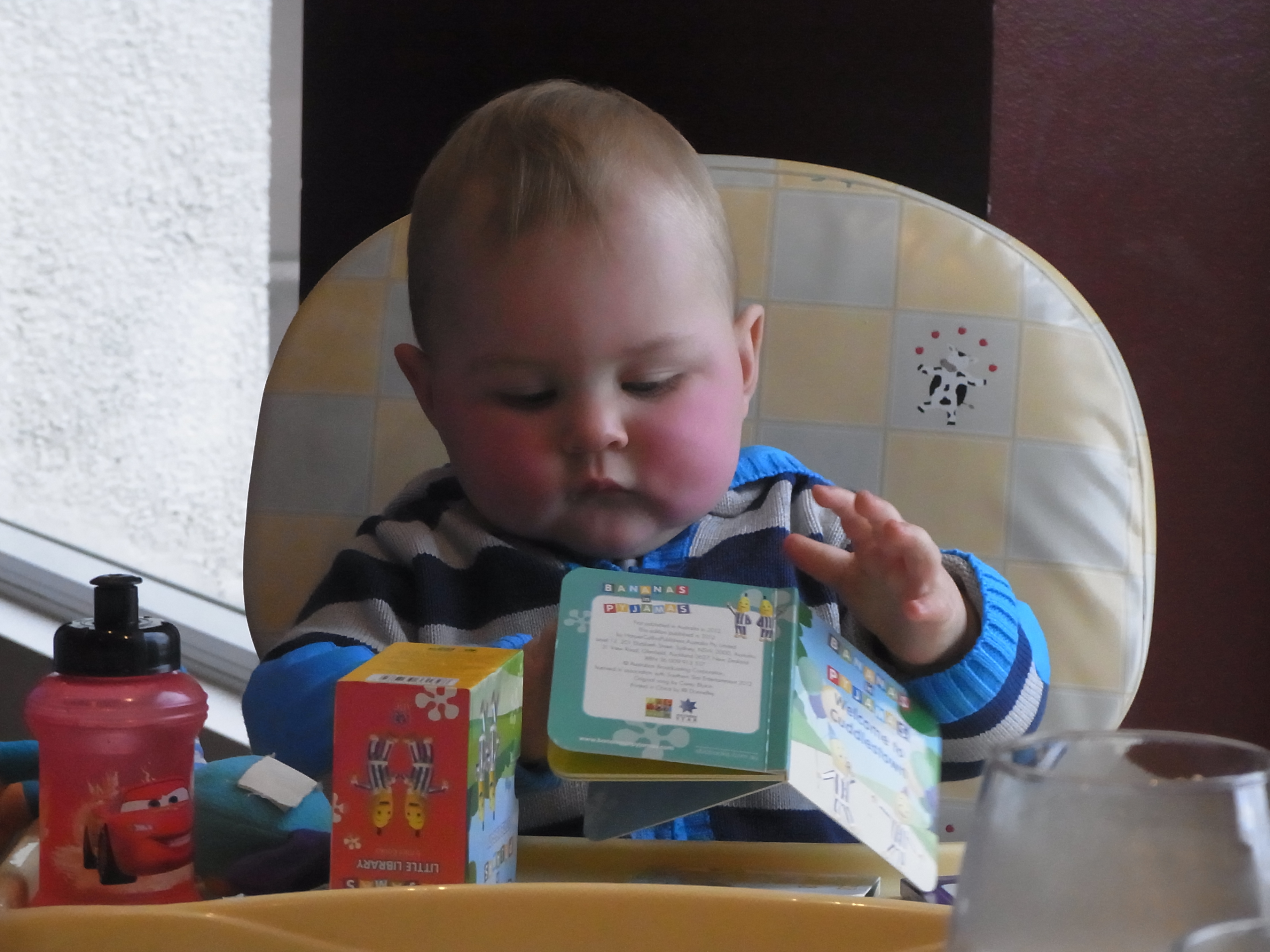
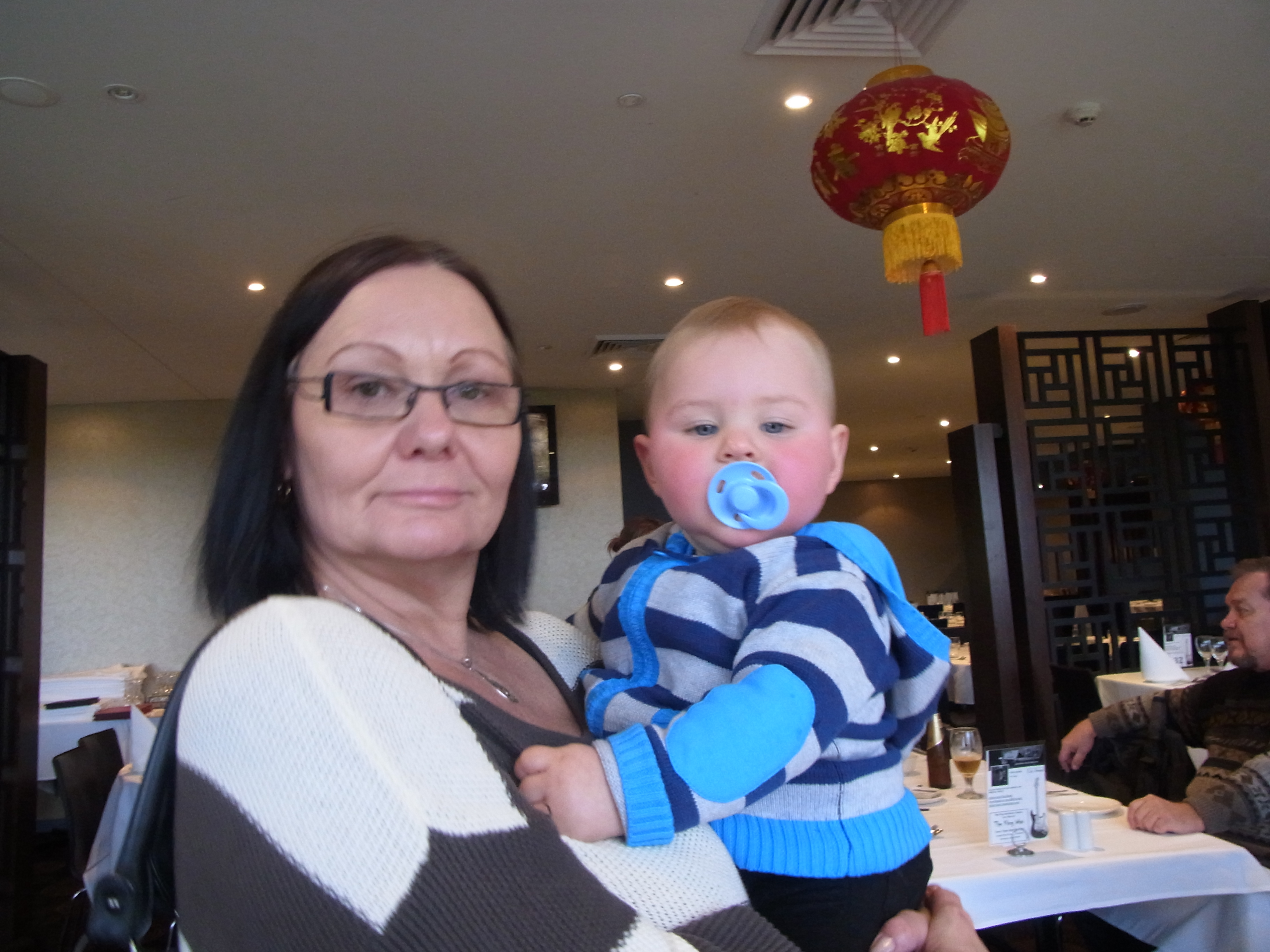
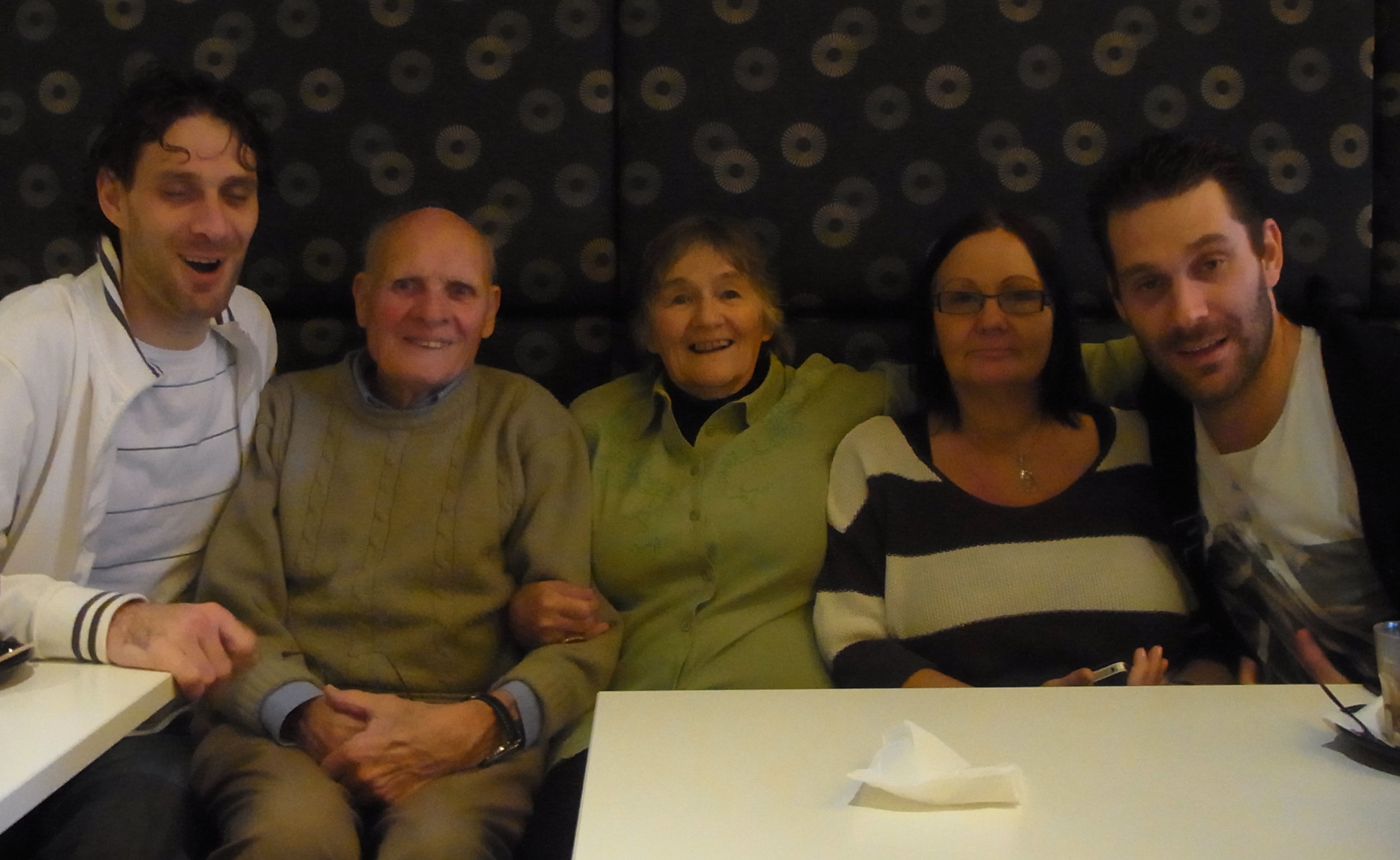
The Twins with their Aunty Caroline for their Birthday Lunch on Sunday. We are the early arrivals at the Restaurant.We met at this Chinese Restaurant.Another photo with me, Ryan and Ebony and Baby Lucas.We’re still waiting for Mark to arrive. In the meantime Lucas plays with his books.Our daughter Monika has arrived. She is the twins’ mum. She proudly holds her little grandson, Lucas.Two of Monika’s daughters with TroyCaroline took this picture of us with daughter Monika and the twins.









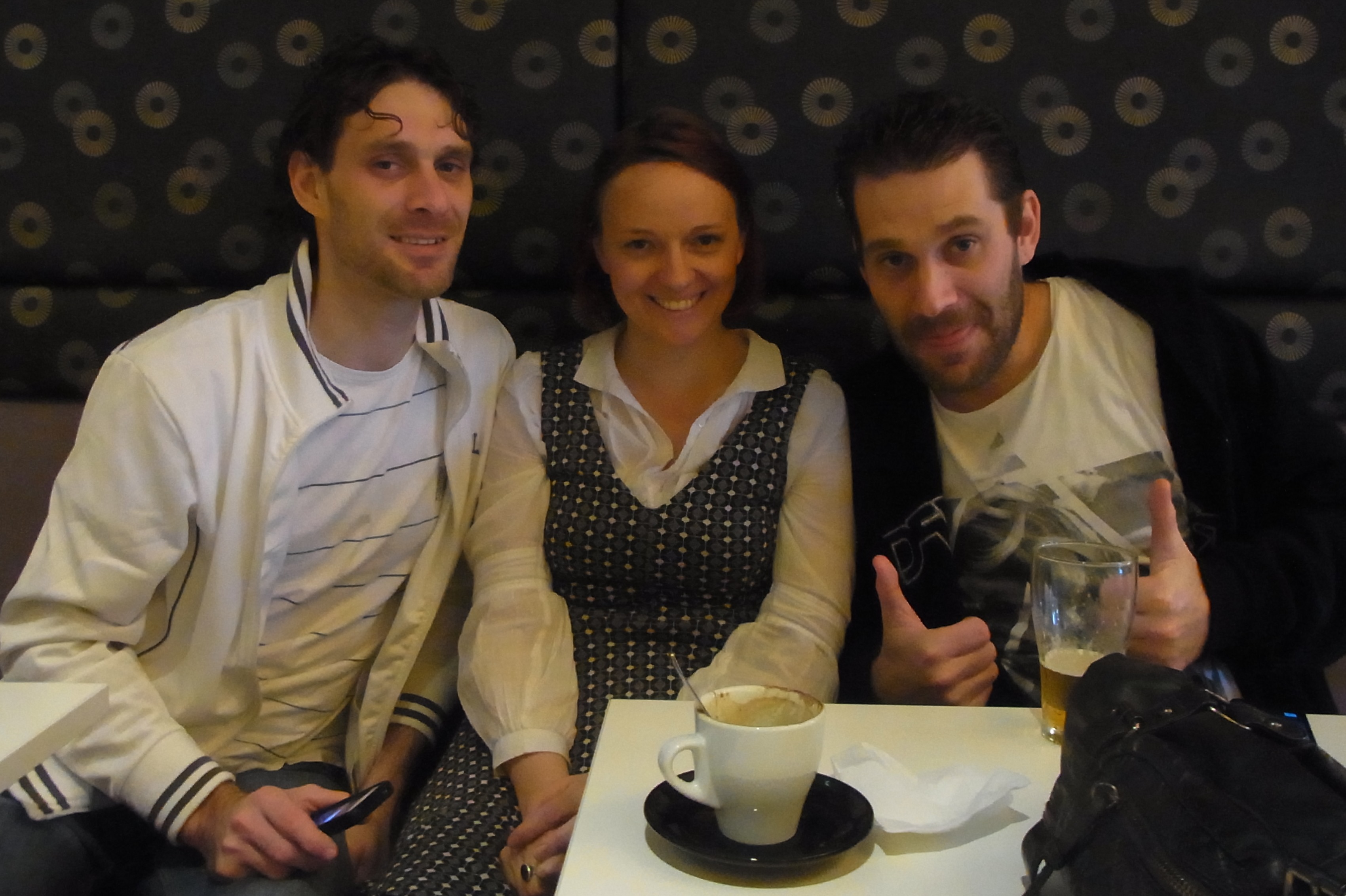

 We are the early arrivals at the Restaurant.


 AuntyUta