Climate Change Response

https://readersupportednews.org/opinion2/277-75/53671-rsn-climate-change-response-pits-trump-against-us-government

Climate Change Response Pits Trump Against US Government

By William Boardman, Reader Supported News

01 December 18

I don’t believe it.

– Donald Trump, November 26th, referring to the 1596-page Fourth National Climate Assessment, released by the White House at 2 p.m. on Black Friday, November 23rd, the day after Thanksgiving.


 don’t believe it” is not, by definition, a rational argument supported by evidence. It’s a statement of faith, not susceptible of proof or rebuttal, and as such is useless to effective governance. “I don’t believe it” is the empty opposite of the Fourth National Climate Assessment that is part of a continuing, multi-disciplinary, real-world examination of climate change that began in 1990 (more on this under-publicized report later). Produced by the 13 government agencies that comprise the U.S. Global Change Research Program, the Assessment is the latest report in a thirty-year climate watch that has seen steady, unchanging trends toward catastrophic global impact. Climate change is a dynamic process, driven by human activity that humans have done little to mitigate for a generation. Climate change is happening, it is irreversible, but there is still time to mitigate its worst effects, to save lives, to preserve habitat, to adjust economies, to sustain a somewhat civilized world.

“I don’t believe it” is Donald Trump’s response to all of this. Researchers in the Trump administration are forbidden – forbidden! – from even mentioning climate change, never mind developing strategies to cope with its varied impacts. Sorry about that, Puerto Rico. Sorry about that, Houston and North Carolina. Sorry about that, California. Sorry about that, everyone.

“I don’t believe it” has a corollary in White House practice: “I don’t want you to believe it.” The White House considered suppressing the report, but that would require overt law-breaking, since the National Climate Assessment is mandated by Congress. The White House reportedly considered editing or censoring the report, but feared that would make things worse (as it had when a Bush administration oil executive falsified an earlier climate report). So the White House went with a traditional subterfuge, releasing the Assessment when it would be least likely to get significant news coverage – at 2 p.m. on a Friday, not only a traditional black hole for bad news but super-shopper Black Friday after Thanksgiving as well. For a report that signaled the inevitably of an uninhabitable planet within decades, unless the U.S. and others make major changes of public policy, the story has received rather muted attention.

As one Trump advisor summed up the dishonest White House approach, adding a touch of conspiratorial paranoia:

We don’t care. In our view, this is made-up hysteria anyway…. Trying to stop the deep state from doing this in the first place, or trying to alter the document, and then creating a whole new narrative — it’s better to just have it come out and get it over with. But do it on a day when nobody cares, and hope it gets swept away by the next day’s news.

To reinforce distraction from news that affects every American for generations, the White House also chose to lie about it. The White House issued a statement on November 23rd that falsely claimed that “the report is largely based on the most extreme scenario.” The report included a range of scenarios. White House spokesperson Sarah Huckabee Sanders repeated this lie on November 27th, falsely claiming the official U.S. government position on climate was “not based on facts.” Sanders also lied when she claimed that the National Climate Assessment process was not transparent. Sanders also made false environmental claims that are irrelevant to and a distraction from climate questions.

In a sense, it’s not news when Donald Trump and his followers double down on climate denial. These are veteran birthers, after all. But the scale of climate change is vast and daunting. The stakes in dealing with climate change are intimidatingly high: millions of lives, billions of acres, trillions of dollars. It’s enough to give the most careful, rational leader pause.

“I don’t believe it” is not an answer. It’s not a policy. It’s cowardice or worse.

At this point, the world is past the point of preventing climate change from doing serious damage. That damage is already happening. Bigger and more powerful storms, coastal and inland flooding, larger and more intense forest fires, water scarcity, lethal heat waves and more, all exacerbated by climate change, take more lives and property every year. The problem is global; political dithering is pandemic, reinforced by political corruption. We’ve known – or should have known – for at least thirty years that we have a problem we need to face. Exxon and other oil companies have known for fifty years or more that their profitability came at the cost of putting the planet at risk. Coal companies have always known that coal was unhealthy for people, if not the globe.

“I don’t believe it” is an abdication of leadership. “I don’t know” is what you say, whether you believe it or not, when your goal is to put a prohibitive tariff on solar panels, to slow the rush away from fossil fuels.

We didn’t have to get to this place, where our choices are all stark. In 1989, President George H.W. Bush initiated the U.S. Global Change Research Program. In 1990, Congress passed the Global Change Research Act, designed to develop and coordinate “a comprehensive and integrated United States research program which will assist the Nation and the world to understand, assess, predict, and respond to human-induced and natural processes of global change.” From that rational beginning of intellectual integrity, we have drifted through one feckless presidency and Congress after another, squandering thirty years of opportunity to save ourselves from ourselves.

“I don’t believe it” seems to have become the national motto, sometimes expressed as “In God We Trust,” long since replacing e pluribus unum or any other aspirational goal. The reigning cultural stupidity of the United States, its suicidal cultural stupidity, was neatly encapsulated by Utah Republican senator Mike Lee on November 25th, when he expressed the widely shared mindlessness that passes for conventional wisdom on addressing climate change:

All the proposals I’ve seen so far that would address any of these issues would devastate the U.S. economy and have little or no benefit that is demonstrable from our standpoint. And so I have yet to see a proposal that would bring this about. I think if we’re going to move away from fossil fuels, it’s got to be done through innovation. And innovation can be choked out through excessive government regulation.

He doesn’t mention regulation like a tariff on solar panels. He has no proposal of his own. He’s not even sure fossil fuels are bad (“if we’re going to move away from fossil fuels”). For the foreseeable future the Mike Lees of the world, who hold positions of power everywhere, are content to let the planet creep toward further catastrophe rather than disturb the profit centers of their patrons. He may as well as have said, “I don’t believe it.”

While it is true that climate change is a global problem that needs a global solution, it is also true that the U.S. is the single largest contributor of greenhouse gases driving the problem. And the U.S. is led by people committed to creating ever more greenhouse gases until some uncertain future date when something unspecified will change their course. In February, the U.S. Energy Department reported that there was likely to be no decrease in U.S. carbon emissions for more than 30 years. That would mean the rest of the world would have to achieve zero carbon emissions, immediately, just to maintain the already damaging status quo.

Thirty years ago, Bill McKibben published “The End of Nature,” an early warning about what was then called “the greenhouse effect.” McKibben’s recent piece in the New Yorker of November 26th is a long, angry, despairing piece about our collective path to self-destruction:

The extra heat that we trap near the planet every day is equivalent to the heat from four hundred thousand [400,000] bombs the size of the one that was dropped on Hiroshima.

As a result, in the past thirty years we’ve seen all twenty of the hottest years ever recorded. The melting of ice caps and glaciers and the rising levels of our oceans and seas, initially predicted for the end of the century, have occurred decades early. “I’ve never been at … a climate conference where people say ‘that happened slower than I thought it would,’ ” Christina Hulbe, a New Zealand climatologist, told a reporter for Grist last year…. 

All this has played out more or less as scientists warned, albeit faster. What has defied expectations is the slowness of the response. The climatologist James Hansen testified before Congress about the dangers of human-caused climate change thirty years ago. 

The cultural vacuity of American leadership is as stunning as is it self-willed. Confronted with an official U.S. government report, American leadership chooses to ignore three decades of conscientious, consistent, accumulating research that a real problem is getting steadily worse, choosing instead to ignore, deny, lie, and maintain the policy that feeds the crisis. This is beyond rearranging deck chairs on the Titanic. This is maintaining full speed ahead while betting that there are no icebergs.

No matter what happens next, the failed American leadership of the past thirty years has assured that we, and the rest of the world, will go on suffering unnecessary losses for a long time into the future. Perhaps the new Democrats in Congress will force the failed party leadership to adopt a “Green New Deal” and perhaps, in time, that can make some difference, though it’s too late to make much difference in time. But that’s one of the two grim choices we face: do something to reduce carbon emissions as quickly as possible and risk the possibly severe economic consequences.

The other choice is to follow current policy and risk almost certain, severe economic consequence – as well as severe ecological consequences – as well as severe consequences to human well being, health, and life. This is the path of Trump’s climate leadership, and it is fraudulent, irresponsible, and criminal.

Criminal? We have seen the carnage caused by climate change already. We know there will be more and worse to come unless we take efforts to mitigate the consequences. Trump shows no evidence that he knows the risk or cares about it, so how is that not criminal negligence on a global scale? Lock him up.

William M. Boardman has over 40 years experience in theatre, radio, TV, print journalism, and non-fiction, including 20 years in the Vermont judiciary. He has received honors from Writers Guild of America, Corporation for Public Broadcasting, Vermont Life magazine, and an Emmy Award nomination from the Academy of Television Arts and Sciences.

Reader Supported News is the Publication of Origin for this work. Permission to republish is freely granted with credit and a link back to Reader Supported News.

Senator Jim Molan grilled over climate change, bushfire response on Q&A with Hamish Macdonald

https://www.abc.net.au/news/2020-02-04/jim-molan-under-fire-for-climate-change-admission-on-q&a/11925750

By Paul Johnson

Key points:

  • Senator Jim Molan has defended the Federal Government response to the bushfire crisis
  • He was heckled and laughed at by the live audience in Queanbeyan
  • The senator argued that climate science is not settled, but said he was “not relying on evidence”


RELATED STORY: India started filming not knowing how bad the firestorm would get. Now millions know her
RELATED STORY: Vets to spend days at ‘crime scene’ where at least 30 koalas were killed
RELATED STORY: Scientists call for end to political ‘smokescreen’ when it comes to climate change

Using less power, eating less meat, avoid flying, reduce water consumption

https://www.abc.net.au/news/2020-01-28/climate-researcher-says-australians-need-to-take/11892966

Professor Palutikof says, people have to be prepared ‘for the changes that they are going to have to make’, meaning for instance using less power, eating less meat, avoid flying, reduce water consumption.

https://www.abc.net.au/news/2020-01-28/climate-change-bushfires-and-cutting-my-carbon-emissions/11892230

ABC News Breakfast By Madeleine Morris:

“We would need 3.4 Earths if everyone had my lifestyle. . . .”

“I always thought I was environmentally responsible. But when I calculated my family’s carbon emissions I was shocked by the result,” writes Madeleine Morris.

In this article by Madeleine Morris it says that the average Australian footprint is 15.37 tonnes of CO2 and vastly above the EU average of 6.4 tonnes.

It also says that Jean Palutikof from the Climate Change Adaptation Research Facility says about the impacts of climate change that we need to do to reduce them while we still can.

“People are going to have to change their way of life,” she said.

“There is this rhetoric about the Government taking action, but actually what that means is that people will themselves have to take action.”

Madeleine Morris is News Breakfast’s finance presenter. Previously she was a Melbourne-based reporter for 7.30, and worked for the BBC in London for 11 years as an international reporter and presenter.
Madeleine Morris says: “I calculated my carbon footprint and now my family will try to cut our emissions by 7.6 per cent”

FUTURE DEVELOPMENT Stakeholder capitalism arrives at Davos Addisu LashitewTuesday, January 21, 2020

Stakeholder capitalism arrives at Davos

“The 2020 annual meeting of the World Economic Forum opens this week with the theme of “Stakeholders for a Cohesive and Sustainable World.” More than 3,000 global leaders, including 53 heads of state, will convene in the resort town of Davos on the Swiss Alpine to deliberate on pathways to “stakeholder capitalism.”

GLOBAL RISKS REPORT 2020

https://www.oliverwyman.com/our-expertise/insights/2020/jan/globalrisks2020.html?utm_source=exacttarget&utm_medium=email&utm_campaign=risk-report

“Economic and political polarization will intensify, as collaboration is needed more than ever to respond to severe threats to climate, public health, and technology systems.”

“The Global Risks Report 2020 presents the major risks the world will be facing in the coming year. It stresses the need for a multistakeholder approach to addressing the world’s greatest challenges, and comes ahead of the World Economic Forum’s 50th Annual Meeting in Davos-Klosters, where the focus is Stakeholders for a Cohesive and Sustainable World.

Speakers: Borge Brende, President, World Economic Forum Mirek Dusek, Deputy Head of the Centre for Geopolitical & Regional Affairs, World Economic Forum John Drzik, President, Global Risk and Digital, Marsh Peter Giger, Group Chief Risk Officer,

Zurich Insurance Group Emily Farnwoth, Head of Climate Change Initiatives,

World Economic Forum Moderated by: Adrian Monck, Managing Director, Head of Public Engagement The World Economic Forum is the International Organization for Public-Private Cooperation. The Forum engages the foremost political, business, cultural and other leaders of society to shape global, regional and industry agendas. We believe that progress happens by bringing together people from all walks of life who have the drive and the influence to make positive change.”

Concentration Camp Survivors

https://www.abc.net.au/news/2019-12-29/esther-perel-on-the-erotic/11769448

https://www.abc.net.au/radio/programs/conversations/esther-perel/11170108

When Esther was a teenager she was voraciously curious about human behaviour.

She thought she’d become a journalist or a translator, but instead she grew up to become the world’s most famous contemporary psychotherapist.

Esther became known around the world after the release of her podcast “Where Should We Begin?” in which she counsels real-life couples who are on the brink of marital breakdown.

In her sessions she’s often exploring the tension between the need for security in a relationship, and the need for some distance and a sense of adventure, to keep the spark alive.

Esther says when you choose a partner you choose a story, and by doing so, you’re often recruited for a part you never expected to play.

Further information

The State of Affairs: Rethinking Infidelity is published by Yellow Kite Books

Listen to the podcast Where Should We Begin?

Duration: 52min 34sec

Broadcast: 
Guests


December Writing Challenge/ Prompts:

https://patchworkmomma.wordpress.com/manifest20-prompts/

  1. Choose one word which you would like to embody during 2020 as a sort of theme for the year. How would you like to see this word manifest in your life?
  2. Who inspired you in 2019? Why? What gifts did they give you? How will you carry these forward in 2020?
  3. What made you feel joyful in 2019? What steps can you take to create more joyful moments in the coming year?
  4. What goals did you accomplish in 2019 that you’re proud of? How will your achievement continue to benefit you or others in the future?
  5. What musical discovery did you make this year? Share a memory involving music or tell us what artist or song would feature on the soundtrack of your life for 2019?
  6. What surprised you in 2019


Today I want to write about Nr.  6!

So, what surprised me in 2019?

Did it surprise me that Greta Thunberg continued to get so much media attention? She is a very determined young woman, only sixteen, but she stuck it out, did not hesitate to live by her principles. To find supporters that made it possible for her to travel for instance by boat to the Americas and back again. Well, this was quite an achievement!

Yes, in a way it did surprise me that Greta was able to get such an enormous support!

I want to keep it brief. So I only want to mention, that I find it surprising that so many people these days are able to live into their eighties or nineties. I would be surprised, if Peter and I were able to make it to the nineties! Somehow, I cannot quite imagine it. I am surprised about every year that we are still alive.

Just recently I was surprised that independent Senator Jacqui Lambie voted with the government to repeal the medevac bill. It does not seem to make sense, not at all.

Here is an interesting link to an article about the repeal bill:

https://www.abc.net.au/news/2019-12-05/medevac-repeal-bill-scott-morrison-new-zealand-png-nauru/11765456

Australia is at present in the grip of enormous draught as well as disastrous bushfires with soaring temperatures and extremely strong winds. The government says, this is quite normal for Australia. A lot of people here want to talk about it why there is so much climate change, but the government says there is no need to talk about it or to do something about it. Am I surprised that our government acts this way? No, not at all. The Australian voters voted the present government in. It surprised me at the time. And I’ll be still more surprised, should they be voted in again at the next election.


1

Smartphones creating generational and income divide


https://www.abc.net.au/news/2019-11-18/digital-divide-australia-inequality-access-to-technology/11627020

Updated 

Desmond White leads a very modern life, riding his bike around inner-city Newcastle, where he lives on his own in a fifth-storey apartment overlooking the wharf.

Key points:

  • The Australia Talks survey found 96 per cent of Australians use a smartphone
  • 62 per cent of Australians spend between one and six hours a day on their devices, the survey found
  • Most people think technology is making life better in Australia

But the 93-year-old was unimpressed when he recently became the owner of an iPhone.

“I had one of the old traditional phones, which was misbehaving. All callers — and I’ve got a lot of callers — would say ‘what’s up with your phone, what’s wrong with your phone?'” he said.

Optus offered Mr White a new phone and he agreed, but he was surprised to find it was an iPhone that arrived in the mail.

“I was expecting one like the old-fashioned stuff,” he said.

Suddenly, Mr White, who once presided over a successful tyre business, found himself unable to perform the previously simple task of making a phone call.

“Everybody promised — I’ve got grandkids and whatnot — to show me what to do with it,” he said.

With most of his family outside of the Newcastle area, Mr White turned to a computer club for older Novocastrians.

“I somehow managed to be able to make a call, and of course receive one … but it would be nice if I could do ever so much more, because I know it has so much to offer,” Mr White said.

“Some of them feel a little bit intimidated, feel a little bit upset because the world is changing so fast.

“It is scary, a lot of them are fearful.”

Tutors at the club say where once people would come in curious to explore this new frontier, they are now coming in because they have no choice.

With Australia moving towards a cashless economy, many people have found themselves caught out, unable to use internet banking.

Ms Keen said the generational gap was particularly glaring when younger people tried to help out.

“They [older people] say, ‘oh I asked my son, or my daughter or my grandson or granddaughter … and they say, ‘oh you do this, this and this, press this button, do that, that’s how you do it’,” she said.

“The person sitting there who hasn’t understood the vast difference in the language and all the terminology, and hasn’t seen that before, is suddenly thrown and they’re thinking, ‘I have no idea what that person did’.

“They go to replicate it later and they have no idea.”

Has technology made life better?

It has been more than a decade since Australians were introduced to smartphones, and the ABC’s Australia Talks survey found 96 per cent of people in the country now own one.

Not surprisingly though, the data shows the older you get, the less likely you are to have one.”

I, Uta, copied the above. This new technology I find very scary. I get the creeps when I am bombarded with terms like ‘the cashless society’! I am not 93 yet, I am ‘only’ 85. But I have very poor vision. The idea that in future I  may have to use an iPhone does scare me no end. My husband Peter is very close to my age. However, he knows how to use a smartphone and keeps in touch with the children and he also accesses all the information about the children that is available on Facebook. He spends many hours a day on these gadgets. I find it very helpful that he can always give me information about family and friends. So far it worked out all right that I have to rely on Peter for all this information. I think to have to spend hours and hours on these gadgets to eventually get some valuable information is not a very efficent way to get to the news that is important to me. I think I prefer to keep in touch via email or a ‘normal’ phone call if person to person contact is not possible. So far I have been lucky in that person to person contact has still been possible a lot of the time. And occasionally I still get some beautiful emails! And I like the World Wide Web and WordPress! 

“Tutors at the club say where once people would come in curious to explore this new frontier, they are now coming in because they have no choice.”

So this is what the tutors say! NO JOICE? I hope this is not true for me. I just do not feel like going to that ‘new frontier’ and spending the last bit of time that may be left to me with torturing my brain with new things that I feel I should not have to learn at this stage of my life!! Please understand, I am willing to adapt as much as possible to new things that are necessary for instance to cope with climate change, but somehow I feel that new frontier technology I should not have to be confronted with . . . .


ABC announces probe into feminist Q&A episode after audience complaints

https://www.sbs.com.au/news/abc-announces-probe-into-feminist-q-a-episode-after-audience-complaints?cid=trending

Monday night's Q&A panel with guest host Fran Kelly.
Monday night’s Q&A panel with guest host Fran Kelly. Source: ABC

Minister for Communications Paul Fletcher said the decision to investigate Monday night’s Q&A program was “appropriate”.

UPDATED

“The ABC will investigate whether Monday night’s episode of Q&A breached editorial standards after receiving several audience complaints about the language and ideas expressed by the panel.

The entirely non-male panel featured high-profile feminists – Egyptian-American writer Mona Eltahawy, Indigenous screenwriter Nayuka Gorrie, journalist Jess Hill, business leader Hana Assafiri and anti-ageism campaigner Ashton Applewhite – ahead of this weekend’s Broadside Festival, hosted by the Wheeler Centre.

ABC Managing Director David Anderson said the intention of the panel was to “present challenging ideas from high-profile feminists” but he acknowledged the program was “provocative in regard to the language used and some of the views presented”.

.  .  .  .


Sydney Metro in meltdown

Hundreds of Sydney Metro passengers were ordered off trains during the height of Thursday morning’s peak hour services after mechanical problems on a train at North Ryde caused serious delays.

Commuters reported being left stuck for up to 20 minutes on stationary trains after 8am and being told to disembark and wait for buses.

Sydney Metro commuters face delays

Sydney Metro commuters face delays

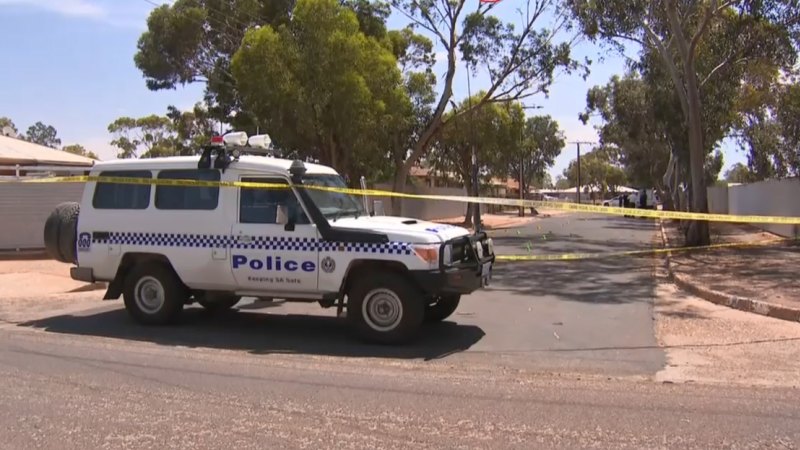
Port Augusta woman charged with murder

Sydney Metro commuters face delays

Tania Matin said she was told via an announcement to get off the train at Macquarie University and catch a bus, but nobody was there to direct passengers and she returned to the station after waiting 15 minutes.

She was then able to board a train, but ordered off again at Macquarie Park, where she was greeted by a line of “thousands” waiting for buses. After another 20 minutes, she gave up and took a metro train back to Epping.

Ms Matin said she was angry “not at the mechanical failure… but lack of communication, mismanagement and lack of skill to control the huge crowd [at peak hour]”.

Services on the network returned to normal about 11am.

It’s been a poor week for the Sydney Metro, which also had a train break down at Chatswood on Wednesday. On Tuesday, a fire alarm prompted services to skip Macquarie Park.

The network has faced frequent technical problems since its opening in May.

Jenny Noyes

Jenny Noyes is a journalist at the Sydney Morning Herald. She was previously a writer and editor at Daily Life.