HOW DID WORLD WAR TWO AFFECT US?

http://www.zeit.de/gesellschaft/zeitgeschehen/2016-04/kriegsenkel-2-weltkrieg-

http://www.zeit.de/index

Peter and I, we both looked yesterday at two articles in ZEIT ONLINE. These articles are written in German by

Reading these articles prompted us to think once more about how WW2 affected us. We both came to the conclusion that we did not experience anything that would have caused us some trauma. Both our fathers survived the war, but we agreed that both our fathers most likely would have gone through traumatic experiences during the war. Both our parents’ marriages ended up in separation and divorce after the war.


Peter has written a number of blogs about his experiences during and after the war. On the 16th May 1945, soon after the end of the war in Germany,  Peter turned ten. Now, more than 70 years later, Peter still remembers amazingly much about 1944 and 1945, and as I said, he has written about it. You may find some of his blogs here:

https://berlioz1935.wordpress.com/page/2/?s=World+War+Two&submit=Search


Following is a link to the blogs that I wrote about my childhood during World War Two and after:

https://auntyuta.com/?s=World+War+Two&submit=Search


Matthias Lohre writes about how badly millions of people had been affected by the War. Yes, millions and millions of people. And a lot of readers wrote comments on this subject.  I read only a few of the comments, there are just too many. But just reading some of the comments, one becomes aware how badly even second and third generations have been affected by the traumatic experiences of their parents or grandparents.


Even if Peter and I have not been affected personally by traumatic war experiences so I must say that as children and later young adults we were very much aware how much suffering the war had caused. Some families were totally or nearly totally wiped out because of the holocaust, military casualties or bombing raids on civilians. o All survivors from families with such traumatic experiences were experiencing trauma themselves and even the next generation became very aware that the parents were affected by war.


I wonder, how many people, alive today, have never been affected by war? Wars continue to be fought in a lot of countries and a lot of continents. The refugee crisis is now worse than ever. Is mankind going backwards? The few people, who are not affected by wars, do they not ever consider how wars affect the rest of humanity? For as long as some of us can live in peace, we do not care what is being done to the rest of humanity? How can we be so selfish? Has it just got to do with a survival wish?


Or is it just a feeling that we have no power to stop wars? But at least we can voice an opinion that we do not want all these wars, can’t we? I really do wonder whether mankind has any chance that some true peacekeepers with a lot of power will come to the fore once more to stop all this fighting! Well, for as long as there is life, there is hope! Or is there?


Uta’s Diary, Tuesday, 12th April 2016

http://www.smh.com.au/entertainment/abc-qa-germaine-greer-slams-claim-extreme-jealousy-causes-domestic-violence-20160412-go3xri.html

This link is about last night’s Q&A program. This program is on late at night, a bit too late for Peter and myself.  We decided we’re going to watch it  today. Luckily Peter could record this program.

I am very much looking forward to watch it, especially with Germaine Greer in the panel. Apparently there is some talk about domestic violence. For sure, there would have to be said a lot about this subject!


Heads or Tails: Being a Winner in the Blended Australian FamilyKindle Edition

Kindle Edition

Here follows what Kindle says about this novel:

“Novel about a young koori man finding his identity in the emerging multiculturalism of Australia in the 1980s. The storyline focuses on a fictitious young koori policeman, James Finley (Fin). A born leader, Fin tries to help a man wrongly imprisoned. Anger at injustice threatens to devour him in the case and in his unusual personal life. He battles with finding his place in the early multiculturalism of Australia during the 1980s, when many want to use him for their own purposes. Fin finds he has to personally change to succeed in relationships and learns that the road to reconciliation is not as straightforward as many tell him it is, but he believes he can discover success and happiness – on his own terms – and has to learn to play by the rules in the pursuit of justice.”

I have read this novel on KindleI would like to have the paperback. However it seems not to be available any more. This novel was dealing with very interesting subjects. What is said about Fin in the above write up says it very well: This young koori man “has to learn to play by the rules in the pursuit of justice.”  

This novel is of course fictional. But I would like very much that more people in our society were concerned about the pursuit of justice. This koori policeman is a good example how multiculturalism can work in our society. The book shows how it can be quite a struggle for some people to find out about themselves and where they fit in. This does not only apply to indigenous people but also to migrants from different cultures.

Last but not least, here is a link to a blog with some excellent photos about cooking:

https://42weimar42.wordpress.com/


Affordable Housing

http://www.domain.com.au/news/why-my-family-has-given-up-on-the-sydney-property-dream–for-now-20160405-gnyjnq/

Above is a link to the blog that Nikki Wallman wrote about her family’s move from Sydney to Bowral. She points out that Sydney is much too expensive for first home buyers. Apparently they made a good choice in moving to Bowral where they  bought  “a lovely, light-filled, four-bedroom, three-bathroom house on a big block in a beautiful wonky street where daisies grow wild and cockatoos call to each other like grumpy old men.”

And she goes on writing:

“Enormous trees hug the skyline around our deck; we’re walking distance to town. We’ve made great friends who live down the road (Bowral seems flush with young families in similar situations to ours). We stroll there with the pram, past the “ducks crossing” signs, for drinks and playtime in the backyard.”

Nikki writes how much they love Sydney life. However, “the increasing stress of chasing tails and deposits and ever-rising house prices”  was grinding them down.

This reminds me of C and M, who were renting for ten years a two bedroom unit in the Eastern suburbs of Sydney. Paying rent in Sydney they would never have been able to save up enough money for a deposit on a house. Finally they decided they could commute from the South Coast. It means for them long hours on the train to Sydney and back. But finally they are in a position to save a bit of money and look for a suitable affordable place some distance away from Sydney.

C is our daughter.  She lived with M for close to ten years already.  M is the father of two children, who are by now both in their twenties and continue to live in Sydney. We offered to C and M to live with us for the time being. This should give them some time to look for suitable housing in our area. For Peter and me it is very beneficial to have family around. Right now C is away on an overseas business trip, and that means, we all miss her a lot.  She’ll be away for all of April!

Many months ago, before the great influx of refugees to  European countries, we did already some bookings for the month of June.  So Peter and I are now looking forward to go to Berlin to see our German family once more, as well as some old friends. We are going to be there with quite a few of our Australian family which is rather exciting!


Uta’s Diary, Easter 2016

DSCN0916

DSCN0915

DSCN0914

DSCN0917

DSCN0918

DSCN0922

DSCN0921

DSCN0920

DSCN0919

Lucas looked around in our backyard and called it a “forest”. He loved running from the side gate on the south side of the house back to the table on the north side. He kept running, and running, and running with little Alexander always following him. That was after they had been looking for Easter eggs. Alexander was happy, when he found just one little egg. He did eat it straight away and let his big brother look for all the other eggs!

Our Granddaughter Natasha, the boys’ Aunty,  took some pictures of her Nephews while sitting at the table with them.

Some weeks ago we went to the Bulli markets, where Peter bought some gelato. Daughter Caroline took some pictures of Peter buying the gelato and of me trying to take a picture of it. I also took a picture of Caroline walking towards us.

IMG_2116

DSCN0896

IMG_2117

DSCN0898DSCN0897

A. Piazzolla. Libertango Moscow City Symphony – Russian Philharmonic Moscow City Symphony – Russian Philharmonic

A. Piazzolla. Libertango

So it is probably true that my thoughts do very much influence how I feel and act. I am going to try to reflect about this a bit more. Yes, I think, it is true, I mostly let my thinking determine my feelings and how I act.

I hope I can soon write about this a bit more.

Wet Weather Problems

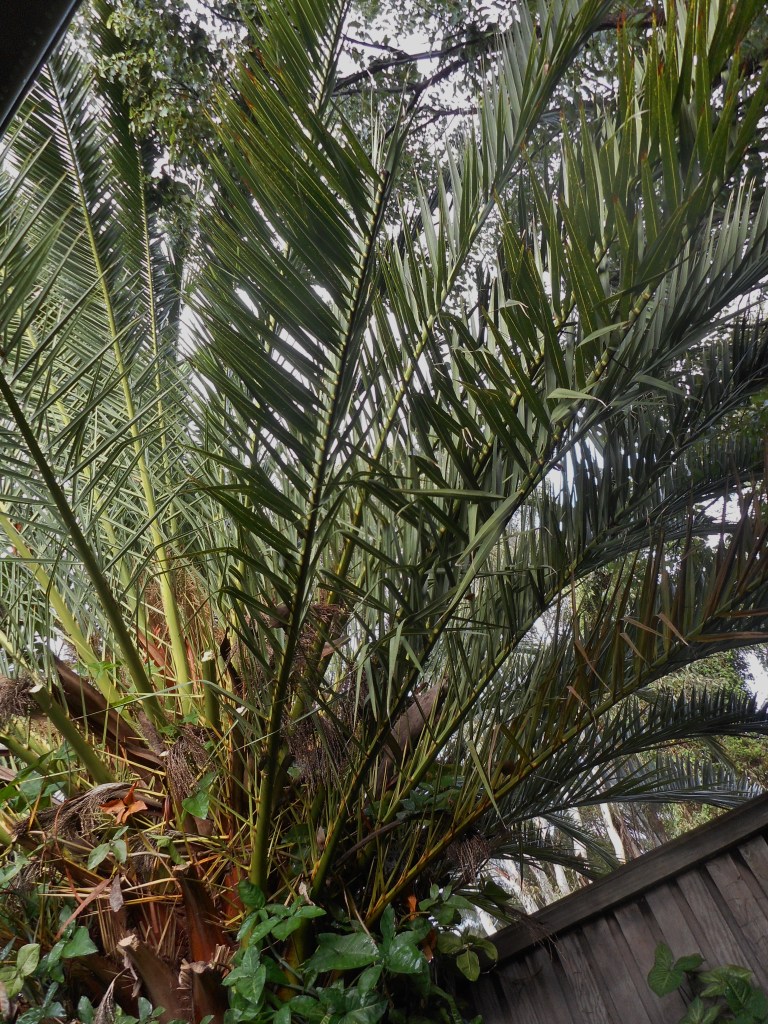
What a huge tree it has become!

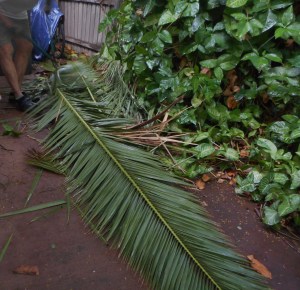
It is still a huge tree, even though Peter just cut off about a dozen huge leaves. Why did he have to cut off some more of the leaves? Well, we had some problems with water coming through the roof onto the bathroom heating-lights! This was the other night after we have had a few horrendous downpours. So the next morning (that was yesterday) he looked at the roof to find out whether there were some lose tiles. To his satisfaction all the tiles seemed to be in the right position. However some huge, wet branches of the palmtree were hugging the spot of the roof where the water had come through.

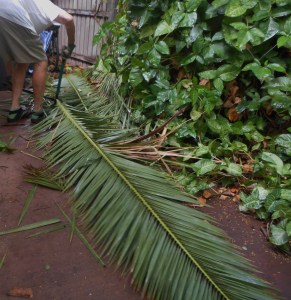
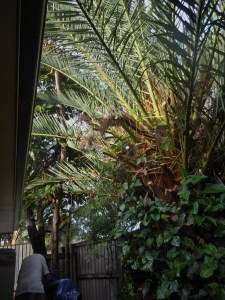
Peter decided all these branches needed cutting off. He set to work straight away. My foot was pretty sore again that morning. Peter realized that I needed to rest it. But he asked me to come out with him anyway to keep him company. He set up two chairs for me, one to sit on, the other one for putting up my legs. I felt quite comfortable sitting there and took some photos while Peter was working, working, working. It took him only about one hour, and the job was finished. I was amazed how quickly he was able to cut all the leaves into small pieces to place them in the council’s garden refuse bin. The bin is outside right now at the kerb for collection for today all our bins are out for rubbish and garden refuse collection.

By the way, we think that unfortunately this whole palm-tree has to go soon for apart from the large leaves growing across our roof again and again it is causing unacceptable damage to our backyard fence. It has just grown much too huge. We never thought it would become that big.

Here are all the photos I took yesterday from where I was sitting on my chair:

DSCN0912

DSCN0911

DSCN0910

DSCN0904

DSCN0903

DSCN0902

DSCN0900

DSCN0899

Uta’s Diary two Weeks before Easter 2016

I am a bit overwhelmed when I think about it that it is only two more weeks to Easter. I feel like I am just drifting from day to day. Sharing temporarily our house with our daughter and her partner, our life has changed. It is like having moved to a different house.

Often I imagine what it would be like to have to move to a retirement village, to a hostel or to a nursing home. How much of our stuff could we take with us, and if it cannot be a place where we can have an independent living unit, what then? Could Peter and I stay together in a hostel or a nursing home? Not very likely, not at all.

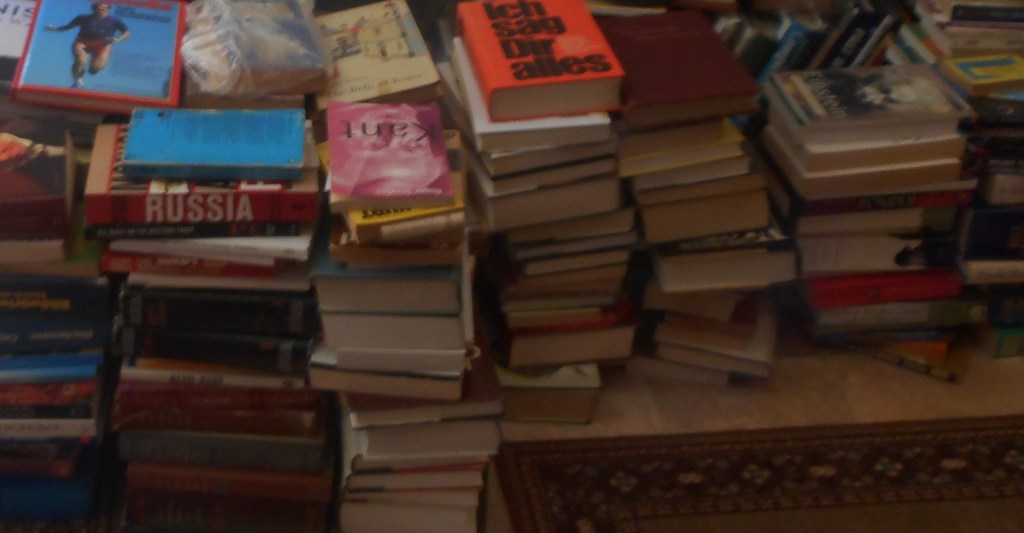
C and M lead very busy lives. Still, since they have moved in with us, there have been quite a few very enjoyable hours when we could spend time together. The young people are such good company for us. We had to make a bit of room for them in our little house. That meant we had to get rid of a lot of our stuff, for instance books:

DSCN0837

I probably do have a better understanding now why people find it very difficult to move from a long established larger residence into a very much smaller residence. It is hard to make the decision that there are certain things in your life that you do not need any more.

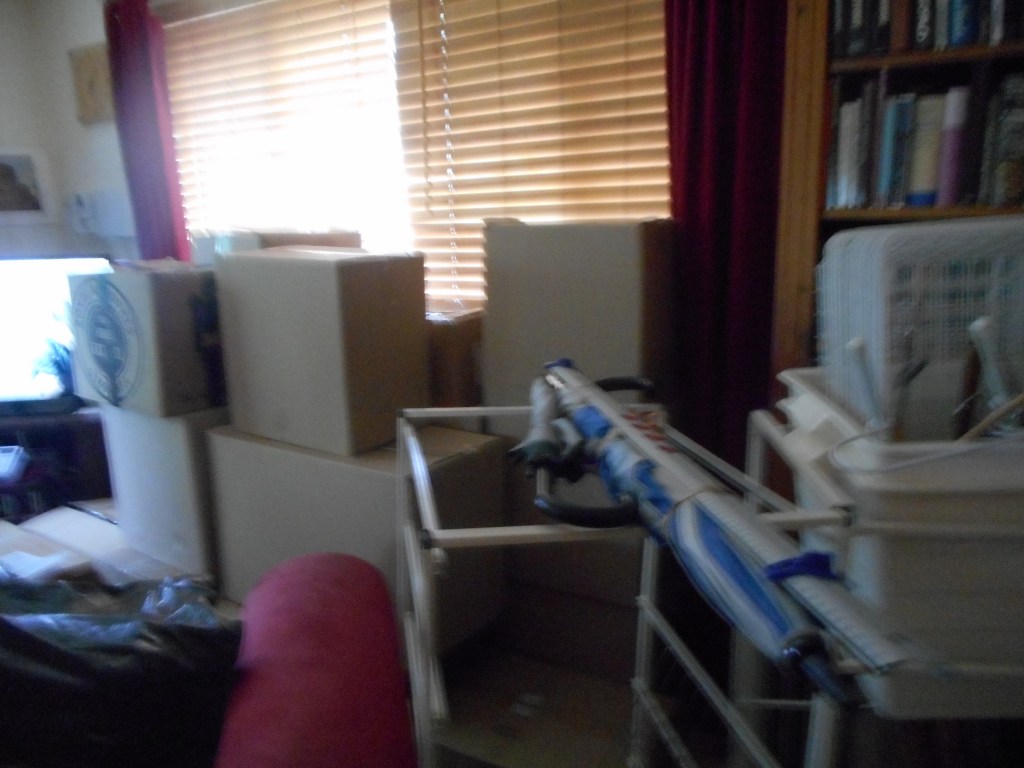
Our daughter lived in her flat in the Eastern suburbs of Sydney for more than ten years. Her partner and his teenage son (he turns 21 this month) lived there with her for close to ten years. They established their own household. They worked out a plan how to move some of their household stuff into our home. The plan worked out on the whole surprisingly well. Most of these boxes with their stuff they were able to unpack and find some room for the contents:

DSCN0841

Since I walk around a lot barefoot, I ended up with some very hard skin, especially under my right foot. Actually this week it got somewhat inflamed after I tried to cut off some of the skin. So for a couple of days I suffered quite a bit of pain. Thankfully it is getting better now.

DSCN0842

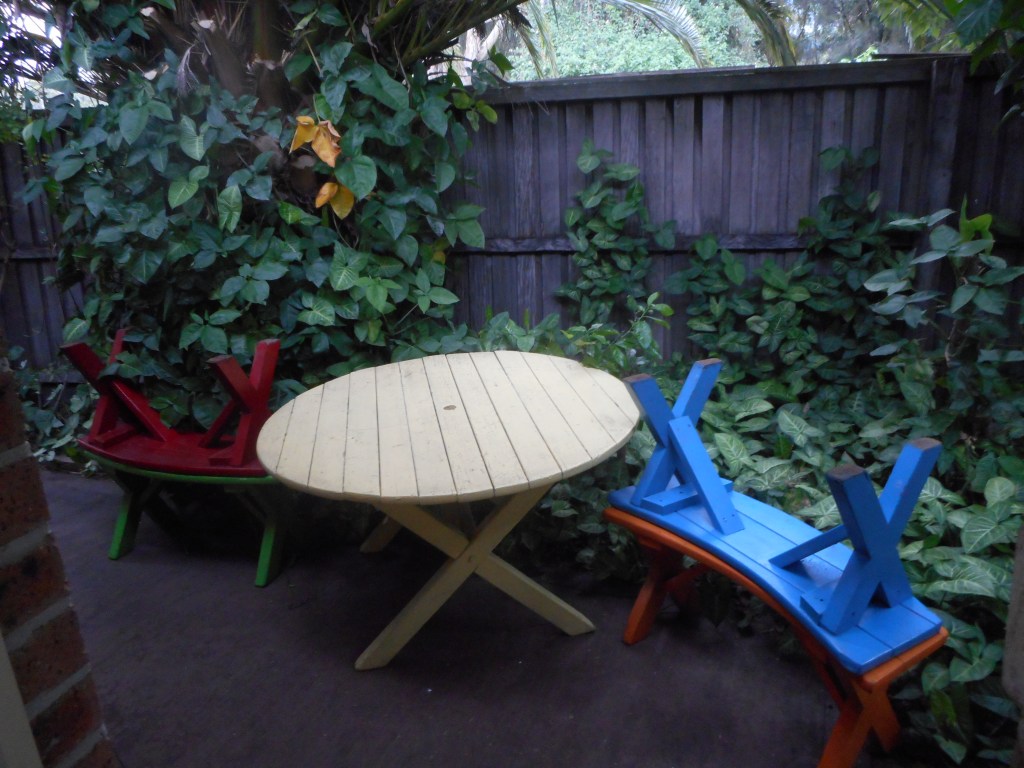
I like to sit outside in the morning sun. This simple garden furniture from their porch/terrace in Waverly (Sydney), which C and M had painted themselves many years ago, they wanted to throw out. But I told them I love it. So it is now installed at the north side of our house. There are a lot of trees, but the morning sun gets through a bit, and we love to sit there with our morning tea.

Uta’s Diary, Mach 2016

DSCN0885


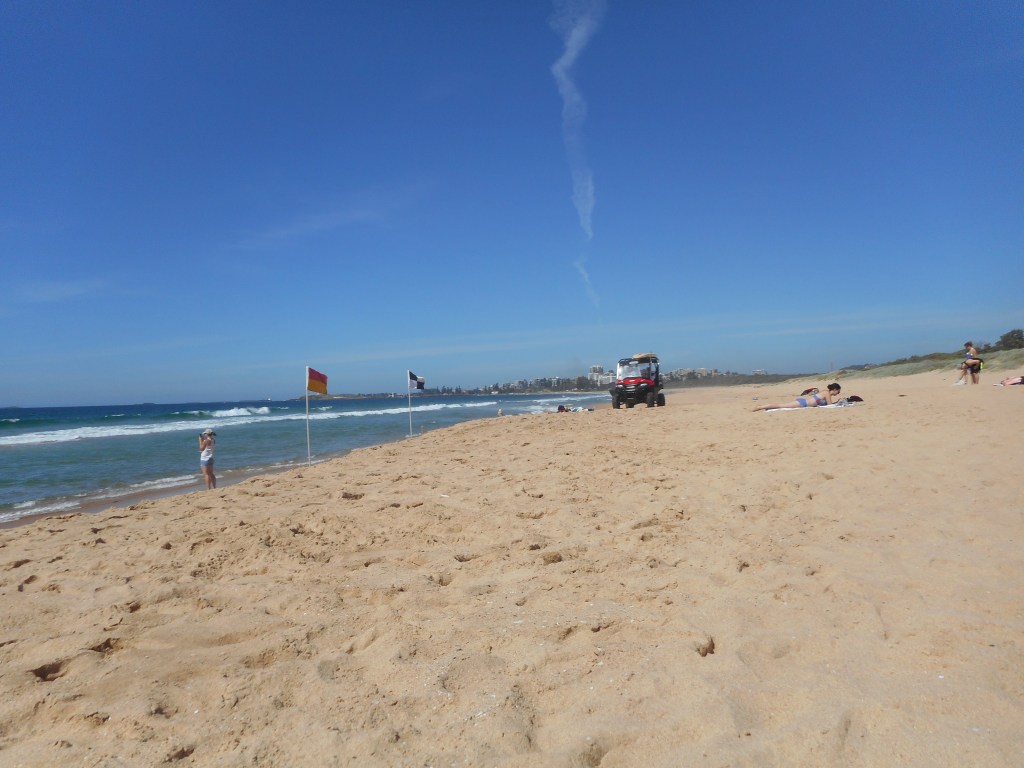
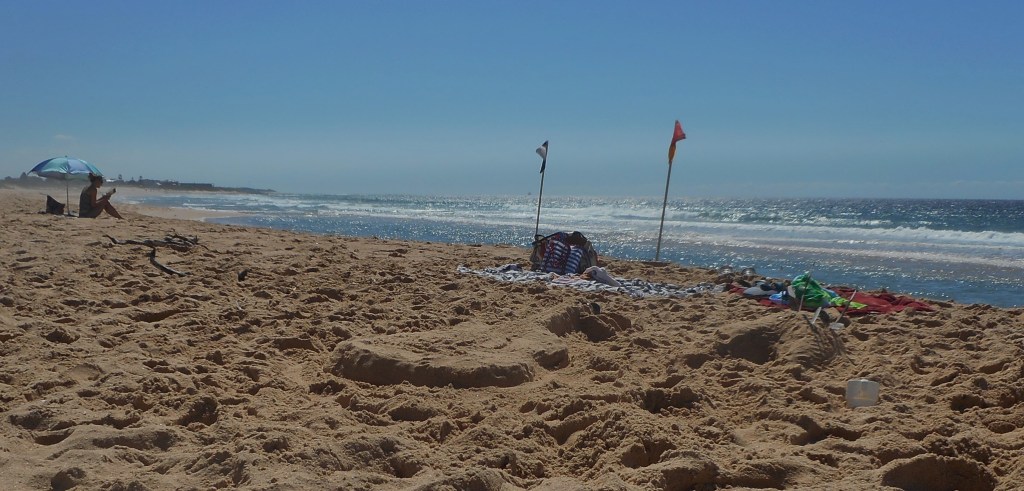
This is Fairy Meadow Beach on Saturdarday, 4th of March. Peter and I were yesterday at that beach. It was a warm day. I wanted to go into the water for a bit. There was a sandbank a short distance from the shore. The water in the front looked beautiful and clear. However, when I attempted to go in it, I felt the sand under my feet shifting a bit. I decided then, I would rather stay out of the water for I was a bit scared I might to easily lose my balance.

The water was warm enough for Peter. He did go right in it, while I was watching our belongings. As I said, it was a warm day and very sunny. But it was also a bit windy. So we did not feel too hot. We stayed only for about half an hour on the beach. Afterwards we did some shopping in Fairy Meadow’s Leisure Coast Fruit Shop, where we met up with Caroline and Mathew.

Before I left the beach area I found some facilities:

DSCN0889

Someone had built this in an area where the sand was moist enough.
I thought this cloud had a rather curious shape.

Fairy Meadow Beach is actually the beach that we had been to for the first time in July 1959 after we had been in Australia for only a couple of months. We went swimming there in the midst of the Australian winter. We did find the water warm enough for us. And the sum was shining and felt beautiful hot!


Uta’s Diary, a Continuation from the 26th of February 2016


I reblogged on the 25th of February 2016 this article which has the title:

“CONDITIONS MASQUERADING AS DEMENTIA”


They say, that dementia and even Alzheimers can be controlled by adopting a very healthy life-style. Here is a link to that article.


https://auntyuta.com/2016/02/25/7-conditions-masquerading-as-dementia/


I said in my diary from the 26th of February that I wanted to come back to that article, which is written by health coach MARGIE KING. She says among other things “A new program from UCLA and the Buck Institute for Research on Aging offers new hope. In the first study of its kind, researchers have proved that natural therapies can not only slow the progress of dementia but can actually reverse it.”

This article is actually written by health coach MARGIE KING, She says among other things “A new program from UCLA and the Buck Institute for Research on Aging offers new hope. In the first study of its kind, researchers have proved that natural therapies can not only slow the progress of dementia but can actually reverse it.”

The UCLA protocol recognizes that dementia can have many causes and those causes are often reversible.


I copied the following from  MARGIE KINGS’S article:

”  .  .  .    Sharp Again Naturally (www.sharpagain.org) is a non-profit organization formed in 2012 to educate the public and the medical community about the reversible causes of dementia.

Here are seven areas Sharp Again Naturally suggests you investigate before accepting a dementia or Alzheimer’s diagnosis. These are conditions that may cause memory loss and dementia but can be reversed.

1. Nutritional imbalances and deficiencies. Deficiencies of omega 3s, vitamisn B12, vitamin C, magnesium, selenium, probiotics, and other nutrients frequently cause symptoms of Alzheimer’s and dementia.

Adhering to a balanced Mediterranean-style diet is associated with slower cognitive decline.  It’s also linked to a reduced risk of Alzheimer’s.

Studies also show low vitamin D levels are linked to Alzheimer’s. Low folate (vitamin B9) may also lead to cognitive decline.

Adding coconut oil may rescue a brain from Alzheimer’s.  And turmeric is known to boost working memory in just one dose.

2. Artificial food colors, flavors, and sweeteners. Artificial additives of all kinds may cause dementia symptoms.

Studies show the artificial sweetener aspartame impairs cognitive function and leads to memory loss.

3. Prescription medication side effects. Drugs, especially pain medications, and psychotropic drugs can severely disrupt cognition.

Statins are particularly harmful.  In one study from the University of California – San Diego, 90 percent of patients who stopped taking statin drugs reported improvement in cognitive problems in a matter of weeks.  In some of the patients a diagnosis of dementia or Alzheimer’s was reversed.

Another study showed that the sleep drug Ambien increased the risk of dementia in elderly patients.

4. Inflammation from low-level infections, mold, food allergies, and Lyme Disease. Inflammation is the body’s attempt to get rid of a toxic element or organism, and so it occurs in many different situations, even root canals and urinary tract infections.

Studies suggest that mental disorders result from neuroinflammation.

5. Stress and stagnation/inactivity. Stress elevates cortisol levels, leading to inflammation, and in turn to hormone imbalances, cognitive impairment, heightened blood sugar levels, hypertension, delayed healing time, and susceptibility to disease. The body’s self healing mechanisms depend on unimpeded flow of lymph, blood, and other fluids, all of which are promoted by exercise. Inactivity, by contrast, allows cellular shutdown and blockages, taxing the whole system and interfering with healing on every level.

One study showed that in patients younger than 65 years-old, 41% of dementia diagnoses were incorrect.  Misdiagnosis occurred most frequently in patients with depression or alcohol abuse.

6. Thyroid and other hormonal imbalances. Many people diagnosed with Alzheimer’s or dementia simply have low levels of T3 thyroid hormone. However, standard thyroid tests completely miss T3 levels, and Synthroid (T4) doesn’t help. It is estimated that 10 to 15% of all nursing home residents may be there because of low T3.

7. Mercury and other heavy metal poisoning. So-called silver amalgam fillings contain 50 percent mercury, and that mercury is neither stable nor inert. It off-gasses, crosses the blood-brain barrier, and destroys neurons even without contact. Removing these fillings is hazardous unless done with mercury-safe protocols.

Annual flu shots are another source of these toxins.  Research shows that people who took the flu shot for five consecutive years had 10 times or 1000 percent higher risk of developing Alzheimer’s Disease than people who only had one or two flu shots due to the accumulation of mercury and aluminum in the vaccines.

Most doctors are not expert in these causes of dementia or how to treat them.  Sharp Again Naturally is building a medical advisory board and a database to get the word out.  It also offers help finding functional medicine specialists, naturopaths, or doctors who practice integrative medicine who are familiar with these areas.

Click here for more information on natural approaches to preventing and overcoming dementia.


The Marriage of Opposites  


https://auntyuta.com/2016/02/07/charlotte-amalie/

“The Marriage of Opposites”,  is an excellent title, I think.  I had this book renewed by the library, but today is the day when it finally needs to be returned. The weeks vanish so quickly. I cannot believe,  I’ve had this book for so many weeks. I just remembered, that I had intended to make a note about the different chapters in that book.

Chapter One starts in 1807. It is set in Charlotte Amalie, on the island of St. Thomas, and Rachel Pomie is the narrator. This Rachel did strike me straight away as a very interesting woman. Her relationship with her mother and father in her childhood reminds me a bit about the relationship that I used to have with my parents. I reckon, there are some similarities, but the outward circumstances are totally different to the way I grew up, namely I grew up in a very different place and in a very different time. Due to WW Two and the separation of my parents after the war, I saw my father overall not very often, whereas Rachel’s father always lived with the family . . . .  Rachel is not at all the way her mother would like her daughter to be. Girlish things do not interest her at all, but she loves her father’s books and his conversations. Rachel’s father treats her as an intelligent person. This is how she becomes a fairly well educated woman.

The last chapter in the book, CHAPTER ELEVEN, starts in 1855. It is again set in Charlotte Amalie on the island of St. Thomas, and again Rachel by the name of Rachel Pomie Petit Pizarro is the narrator. 1855 is the year when she is determined to go to Paris to live there for the rest of her life. She goes on the sea voyage together with Jestine, her longtime friend from the islands who wants to join her daughter in Paris whom she has not seen since she had been kidnapped as a child. Rachel’s husband was going to come to Paris soon after. He first had to close up their business on the island.

Rachel soon feels very much at home in Paris. She goes on narrating her story in 1863. Alice Hoffman fictionalized the life of Rachel. But all the dates and instances are based on the life of Rachel Monsanto Pomie Petit Pizarro, who died in Paris in 1889 at the age of ninety-four. One of her sons was Camille Pissaro, the artist.

Here now I made some notes about the dates and various narrators in the CHAPTERS TWO to TEN of “The Marriage of Opposites”:

Chapter Two, 1818 Rachel (narrator)

Three, 1823 Rachel (narrator)

Four, 1824 Rachel (narrator)

Five, 1825 Abraham Gabriel Frederic Pizarro (narrator)

Six, 1826 Rachel (narrator)

Seven, 1841 Jacobo Camille Pizzarro (narrator)

Eight, Paris 1847 Lydia Cassin Rodrigues Cohen (narrator)

Nine, St. Thomas 1848 Jacobo Camille Pizzarro (narrator)

Ten, St. Thomas 1855 Camille Pizzarro (narrator)

During most of the book, Rachel is the narrator. The other narrators are the artist, Jacobo Camille (Rachel’s son), Frederic Pizzarro (her second husband) and Lydia, the daughter of Rachel’s friend Jestine, who had been kidnapped from Charlotte Amalie  as a child and taken to Paris. When Jestine sees her daughter finally in Paris some twenty years later, the daughter is already married with three beautiful daughters!

Rachel had two marriages, a lot of children (many died early). She did  like very much  to spend time with her grand-children.