21st of September 2015

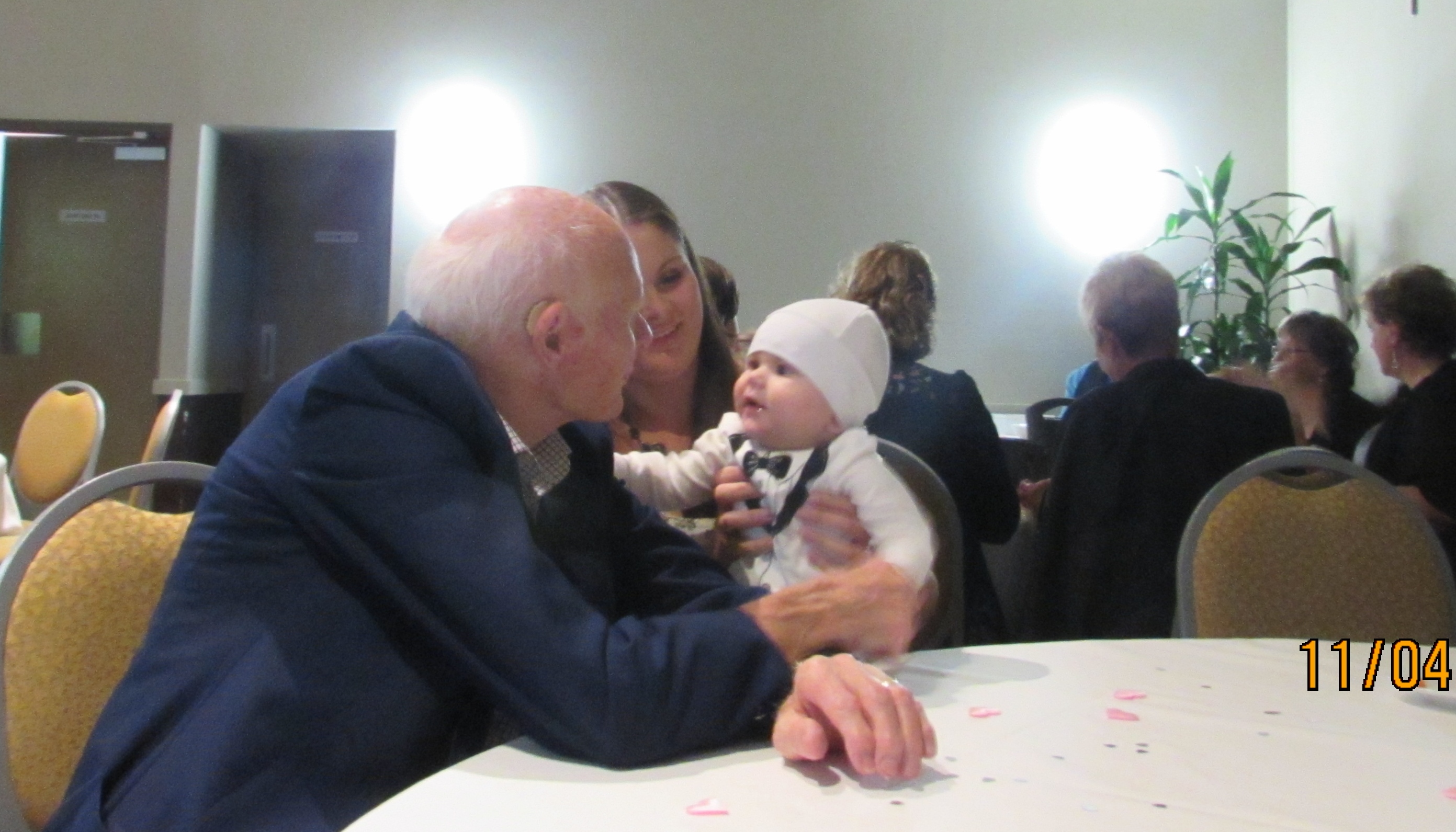
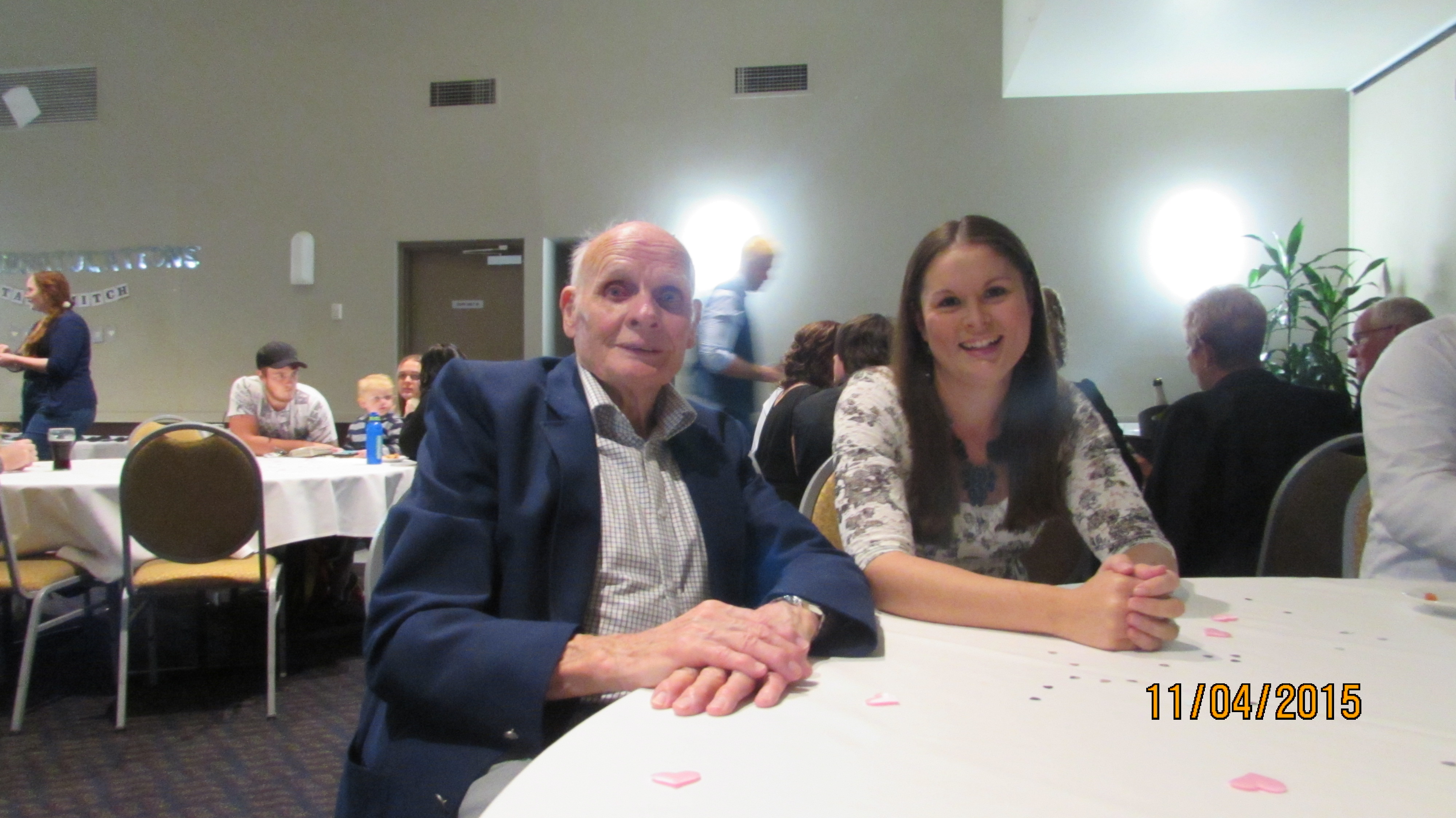
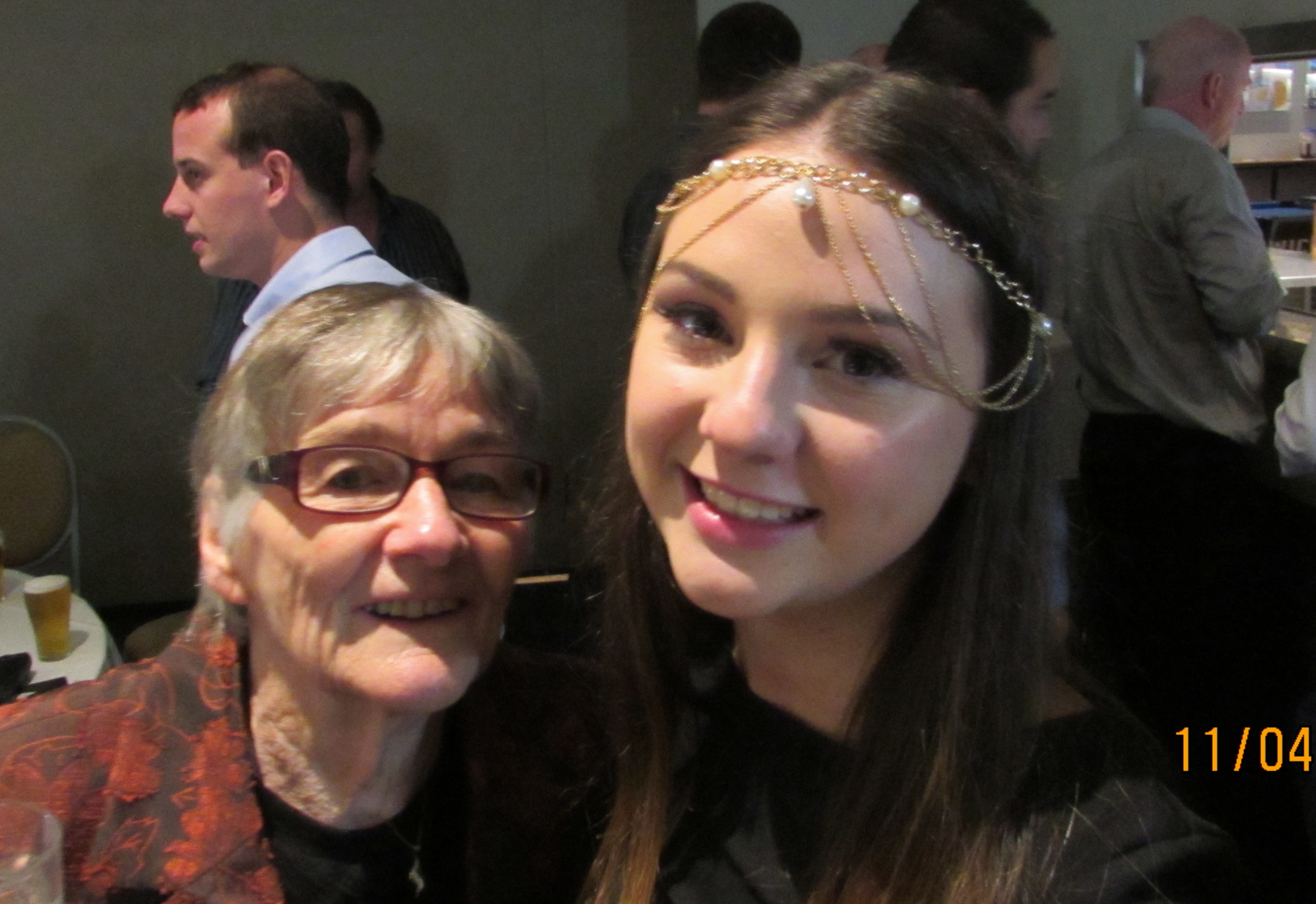
Last year I turned eighty. What a special birthday it was! Another year is gone. I consider myself to be at an ‘advanced’ age. Still, sometimes I seem to forget about this a little bit. But more about this later. First of all I would like to insert a few pictures that we took yesterday, on Sunday the 20th September. Three of our friends joined us for lunch at the Treasure Court Restaurant of the Dapto Leagues Club:

http://www.daptoleagues.com.au/treasure-court/

IMG_1054

I had small prawns in curry sauce and boiled rice.
I had small prawns in curry sauce and boiled rice. Peter had chicken and fried rice. Klaus is waiting for his Schnitzel..

.

IMG_1056

I had a voucher for a com
I had a voucher for a complimentary birthday cake. Everybody liked it!
After we had our beautiful ice-cream desert we went to the League Club's lounge room for some coffee.
After we had our beautiful ice-cream cake we went to the League Club’s lounge room for some coffee.
We noticed this great ceiling in the room where we were sitting.

All in all our lunch lasted for well over three hours. We were sitting and talking over afternoon coffee for quite some time. It was  very stimulating, this talk with friends our age. We had so much to talk about! When we left the club, we showed our friends our new second hand car. They were very impressed because it looks like new. I now hope it is going to drive like new for a few years, for this ‘new’ car is already eleven years old!

This is a picture from Tuesday, the 8th Sept, 2015, when we first saw the car at a dealer in Warrawong.

It did not take us long to make up our mind to buy this car. Two days later (Thursday the 10th) we could already pick it up. In the meantime we already took it to the highlands for a drive. Peter had no problem to drive with it up and down MacQuarie Pass. It has a 2 litre engine compared with our old, 15 year old,  car that has only a 1,3 litre engine!

Yesterday we told every one, we would go today to a funeral at Rookwood Cemetery. The funeral is to be in the Catholic section of the cemetery. Susan, Mila’s daughter, rang us the other day that her mother had died. I think she was 89 and had been rather sick for quite some time in a nursing home. We remember Mila well. She used to be our neighbour quite a few years ago. After she moved in with her daughter in Sydney, she sometimes came with a pensioners’ group for visits to the Dapto Leagues Club, where we could meet up with her.

Here we are with Mila in the Dapto Leagues Club.

Initially I really thought we would be able to make it to today’s funeral. Alas, Peter and I had a very short night. We both woke up much too early and just could not go back to sleep. We had been thinking of going to Merrylands as well as to Lidcombe to the cemetery. The funeral is to be at 2 pm. Peter pointed out that we could not go back to Susan’s place after the funeral for this would mean we would be getting home far too late.

Anyhow, we decided now, all in all it would be too much of a hassle for us. There are reason, why we should be going to Merrylands one day. But I think we have to do it on a day when we have nothing else planned. I reckon for younger people it is easier to plan to do several things in one day. We are just a bit too old for all this. I feel better when we can do everything at a leisurely pace and don’t have to stress ourselves out too much.

Anyhow, we decided to stay in our local area today to have a quiet, relaxing day – – –

Bowral Tulip Festival 1982 and 1983

We have some pictures to prove that we were at Bowral in 1982 and also in 1983. In 1982 we were in Bowral with our friends and their daughter Ellen who was a good companion for our daughter Caroline who was four at the time. I remember that in 1982 we were not only at Corbett Gardens in Bowral, but we had also tickets to visit a number of private display garden. We enjoyed very much looking at all the gardens.

Caroline and Ellen with Dutch Girls at the Bowral Tulip Festival in 1982


Bowral 1982: Ellen with her parents and Caroline with us, her parents.
Bowral 1982:
 Caroline with us, her parents, also Ellen with her parents

img133


img131

For the following pictures it says in our album “Bowral Oct.83” During that visit Caroline was not quite five yet. The Tulip Festival was on again in the Corbett Gardens, the same as every year. Since Caroline is to be seen in the picture with some Dutch girls from the Festival, I think that the Tulip Festival must still have been on, even though it was already October.

img136

img135

img137 (2)

Early Memories (A Copy}

The other day I could not copy the pictures to this blog. I have no idea what went wrong that day. Today I tried it again, and it worked immediately! So I publish here once again the whole blog. I guess some bloggers who have already been reading this blog might like to see the pictures that go with it. I did write this blog in 2013.

https://auntyuta.com/2013/06/02/early-memories/

Before I was three we lived in Taunus Strasse, Berlin- Friedenau. Some time during 1937 we moved to Bozener Strasse in Berlin-Schöneberg. This is where Tante Ilse and Onkel Addi lived as well and also my friend Cordula and her parents. Later on we did get to know Family T. who lived in the house opposite our apartment building.

During my early childhood Bozener Strasse was a very quiet street. There were no cars parked in the street.

Tante Ilse had this narrow but very long balcony with a lot of plants to water. As a two year old I loved to help with watering some of the plants!

Uta loves to water the plants. Mum is looking on.

Here Mum still has this “Bubikopf” which I believe became fashionable already in the 1920s.

In the next picture, which was taken in Bozener Strasse on 21st September 1947, my brother Peter is nearly six. I stand behind Peter. I turned thirteen on this day. My brother Bodo is on the left. He is nine. Beside him Eva Todtenhausen, who is going on twelve and beside Eva is Cordula who is twelve. Today I found out that Cordula died in July 2011, aged 76. This was very sad news for me. 😦
2-06-2009 5;02;21 PM23-02-2009 6;29;31 PM

The above picture is from my birthday in 1940. We stand under the huge chestnut tree. Cordula spent part of the war outside of Berlin. She is not in the 1940 picture.

We took the following picture of Bozener Strasse during our Berlin visit in September 2012. It is still the same chestnut tree. But look at all the cars now!

DSCN3831

Our apartment was on the third floor, Tante Ilse lived two floors further up. Mum quite often went up with me to visit Tante Ilse. One of my early memories is that Tante Ilse and Mum were lying  under the bright lights of some tanning lamps (Höhensonne).  They used some oil on their skin which smelled beautiful and made their skin look shiny. Their skin usually had quite a bit of a tan. They wore some protective dark glasses. Sometimes they made me lie under the lamp for a little while.  I  liked it when some of this nice smelling oil was rubbed all over my body. I too had to wear these dark glasses. I liked to wear them for a little while. But I was required to lie totally still. Very soon  I did get sick of it, not wanting to lie still any more under the hot tanning lamp. I was then always glad when I was allowed to get up again.

I remember thinking that Auntie was a very beautiful looking woman with her very long curly hair. In the three way mirrors of her dressing table I remember watching  how Auntie brushed her hair. It was very strong and long chestnut-coloured hair.  Auntie usually brushed it slightly back so it stayed behind her ears. She often wore very long blue earrings. Oh, I loved the look of these blue earrings.  They looked beautiful hanging down from Auntie’s ears! I think Mum did not wear any earrings, because her ears were covered by her hair. Mum’s brown hair was very fine and much shorter than Auntie’s. My hair was rather fine too. Mum always cut it quite short. I often wished  that I could wear my  hair longer but Mum would not let me grow it longer.

Both Auntie Ilse and Mum wore identical three big rolls of hair horizontally on top of their heads. The front rolls covered the top of their foreheads, the other two rolls were rolled behind the front roll. They often wore identical clothes, for instance light pink angora wool tops with identical grey suits.

1948: Mum 37, Uta 14, Bodo 10 and Peter 7.

Mum features her three big rolls of hair, I am already allowed to wear my hair long!

———-

Mum often called me  ‘MAUSEL’ or ‘Mauselchen’, whereas Auntie liked to call me ‘HERZCHEN’ or ‘LIEBLING’. Dad sometimes said ‘HERZEL’ to me, but he usually called me by my name. Mausel is derived from Maus (mouse), Herzchen means ‘little heart’, Liebling means ‘darling’.

Cordula’s mum once told  me, that her name meant ‘heart’ in the Latin language, but not to tell anyone otherwise some children would make fun of the name. I did not want anyone to make fun of Cordula. So I promised myself to keep the meaning of the name to myself.

My brother Bodo was born in June 1938. I think Cordula’s  brother Tilwin was born a few months after that. Mum said that Tilwin was an extremely odd name. It turned out he grew up with very bright red hair. The children in the street teased him about his hair. As much as possible Cordula always stood up for her  brother. I think for the most part Tilwin avoided playing with other children.

The Lepsius apartment was on the same side as our apartment, just two floors further up. (Auntie Ilse’s apartment was on the other side of the fifth floor). I often went up to the Lepsius apartment all by myself to play with Cordula. They had a ‘roof-garden’ (Dachgarten) above their apartment. It was the size of a big room and had no roof above it. I remember the sun shining right into it. The floor was concrete and along the walls were garden-beds . Cordula was allowed to look after her own little garden-bed.. Once Cordula’s Mum let me have a portion of a little garden-bed too! Cordula’s Mum and Dad were always kind to me. They made me feel welcome and included.

Cordula’s family had food that I had never seen before.. For snacks we children were often given some kind of brown flakes and raisins. Sometimes we were given dates or figs. I loved this food! My Mum thought it was strange to eat something like that. In Mum’s opinion this family was rather odd because they had lived in the Middle East for a while. Cordula’s  father was an architect. My Mum called him ‘the Hunger-Architect’ (Hungerleider)  since he seemed to get hardly any work in his profession.

Mum must have seen their apartment once for I remember her remarking how sparsely furnished it was.  Mum found their choice of furniture quite odd. There were a great number of shelves stacked full with books. These shelves went from floor to ceiling. Herr Lepsius sometimes showed us children books with colourful  illustrations. He also told us stories. We loved one story in particular which had a funny ending. We demanded to be told that story again and again. Each time we laughed our heads off and Herr L laughed with us. The story was about a beggar who knocked at the door of an apartment. A ily had two connecting apartments across two buildings; that is, the wall between the buildings had beautiful maid opened the door. Some time later the beggar knocked at another door of an apartment in the neighbouring building. And the same beautiful maid opened the door! We found the astonishment of the beggar very funny! Herr L explained to us, that a wall had been broken through to connect the apartments on that floor. This was actually where the family of Herr L had lived, when he was a boy.

Herr L was old and bald. He was about twenty years older than his wife. Quite a few years later Cordula and I went to the same high-school. We walked there together every morning. One morning I climbed up the stairs to  Cordula’s  apartment to find out why she  had not come down yet to go to school with me. I rang the bell. Frau L opened the door. She was in tears. She did not let me come in but went with me to the top of the stairs. She said: “Our father just died; I haven’t even told Cordula yet.”  She looked at me with despair in her face.  I did not know what to say. She hugged me and then she disappeared in her apartment.

Our Landlord in 1943/1945

Our toilets were “plumps-closets” some distance away from the house. Water for cooking and washing had to be fetched from a pump in the backyard. Fetching water from the pump kept both maids, Maria and Katja, very busy indeed. For lights we had kerosene-lamps, for heating there were coal-fired stoves which could also be used for cooking. Everything was very basic.

Gradually some changes were being made. The first big change was that our landlord had electricity laid on. All the workers who lived with their families in the other part of the building, received the benefit of electricity at the same time. This certainly was a very welcome improvement for them.

The ‘Ausbau’ was built close to a dirt-track which meandered through wide open barley-, oat- and potato-fields. On the track it was a good half hour to walk to the next village. Bike-riding however made it a bit quicker.

Werner Mann, the owner of all those fields that went on for miles and miles, was an acquaintance of Tante Ilse. People said he was a millionaire. Apart from these Ländereien he owned extensive brick-works (Ziegeleien). He was our landlord and he liked to spoil us. With no strings attached! Tante Ilse only had to voice a wish and Werner Mann immediately did whatever he could to fulfill her wish. He spoiled all of us by constantly getting produce delivered to us such as: Potatoes, cabbage (for making sauerkraut), wonderful treacle made of sweet-beets, and coal for our stoves.

Even I, as a nine year old, could see that sixty year old Werner Mann was hopelessly in love with Ilse. I also was quite aware, that she always kept him at a distance. He was happy to just be invited for ”Kaffee und Kuchen” on weekends and to spend some time with all of us. He always came to visit on his bike. On his daily inspection tours of the workers in the fields he also went around on his bike. He owned coaches with horses, but hardly ever used these to go anywhere.

Occasionally we were invited to his place (which people called ‘Schloss’), Then he sent a coach with a coachman to pick us up. Once in winter when there was plenty of snow, Werner Mann sent a ‘Pferde-Schlitten’ (horse-drawn sledge). On this sledge we were wrapped up in blankets under a clear night-sky with the moon and lots of stars shining on us. It was unforgettable and one of the rare highlights in our otherwise pretty dreary country-life existence.

The place, where Werner Mann lived, did not look like a castle at all, even though people called it ‘Schloss’. It was not even a mansion but a rather large, but fairly plain house. There was a huge, fenced in veggie garden next to the house. I have seen the veggie garden only once. However I was very impressed by it, because it seemed to be very large.

When we moved to the ‘Ausbau’, Ilse had already been divorced from her first husband. It was obvious that Werner Mann would have liked to marry Ilse. However, it never came to that. Tante Ilse married Onkel Peter aka Helmut Lorenz on July 20th, 1944.

**************

Our part of the building had a huge storage room on the top floor. A lot of our furniture was stored there. I loved to go exploring among the furniture where Mum used to store a lot of goodies. Especially in the weeks before Christmas Mum used to store there a lot of stuff. It was very exciting for me to find out what new things had been stored in that big room. I remember seeing huge chunks of nougat (a yummy hazelnut-paste) as well as heart-shaped marzipan-pieces. There was a pot with sweetened thick milk. Sometimes I dipped my finger into it to lick this wonderful sweet stuff! I also liked to eat a few of the stored raisins and prunes! There were smells of ginger bread and apples: It made me feel that Christmas was something to be looking forward to.

Where on earth did Mum get all these things from? It was war-time after all! We were in the midst of war. – However I knew very well where all this stuff came from. The parents of Mrs.T. had a distributing business. It was called ‘Backbedarf en Gros’. That meant they delivered goods to bakeries and cake-shops. Even in the midst of war deliveries of the above mentioned goods still took place! Of course there were shortages, but basically most things were still available. Mr. Fritz T. was in that business with his parents-in-law. This is why he stayed in Berlin during the week. But on weekends he left Berlin to stay with his family in the Ausbau. He usually was able to bring along some delicious Backbedarf. And apparently he was always willing to let my mum Charlotte have some of the goodies too. Mr.T., being over forty, was not required to join the German army.

Mr. Fritz T. and Mrs. Edith T., as well as Tante Ilse and Mum were all good friends. Every Saturday night they came together for some card games. Eight year old daughter Eva and I were allowed to stay up late on those nights. For hours we were watching the adults playing cards. At the same time we entertained ourselves with doodling on bits of paper. At around ten o’clock some cake and hot chocolate as well as coffee were served. But the maids did not have to do the serving, They were already in their rooms at this hour. The cake was usually freshly baked, very fluffy yeast cake topped with delicious butter-crumbs and filled with a thick custard. Hmm, yummy!

During the summer of 1944 Mr.T. and Mum liked to go on their bikes to a neighbouring nursery where they were able to trade sweets for fresh produce. Eva and I were often allowed to go along with them on our bikes. The sweets were traded for strawberries or cherries or gooseberries as well as peaches and apricots, and later on in the year for pears and apples. I remember the Boskop apples were still in season in late autumn. The owner of the nursery was a well-off looking middle-aged woman who was very fond of sweets and loved to trade her produce. At one time we found out that she thought Mr.T. and Mum were a couple and we girls were sisters. Laughing joyfully, Mum and Mr.T. explained, that this was not so.

Only once, as far as I remember, were we shown into the lady’s home. Mr.T. made complimentary remarks about the interior of the house. He said it showed off the owner’s good taste. I liked the lady’s house a real lot too. Our families used to have well furnished apartments in Berlin. But this modern looking villa in the midst of the nursery really was something else. My feelings were I would very much like to live in a place like that! However we had to be happy with our accommodation in the Ausbau. To us children it was always pointed out, that we should be happy that we did not have to live in Berlin where all these bomb raids occured. I’m pretty sure that by myself I felt that I’d rather live in Berlin, bomb-raids or not. I think to children bomb-raids usually didn’t seem as scary as to the adults. At the time we children had had no experience yet how absolutely horrible these bomb-raids could become.

In 1990, soon after the Fall of the Wall, we went for a visit to Germany and had a look at this area east of Berlin where we used to be hidden away. We discovered that the nursery as well as the lady’s house had completely vanished. There was nothing left of the ‘Ausbau’ either!

In 1943, after we had lived at he ‘Ausbau’ for a couple of months only, Mrs. T. delivered a healthy daughter in a regional hospital. The day after the baby was born, it may perhaps have been a Saturday or Sunday, Mr. T. and Eva went for the forty-five minute bike-ride to the Hospital. I was thrilled that I was allowed to go with them! The baby was rather tiny. I think this is why she was soon called Krümel (tiny crumb). Her given name was Ruth. Eva had a pet-name too. She was often called Honkepong.

As soon as Mrs.T. came home from hospital, there was a nurse waiting for her to take charge of the baby. Mr.T. said something like: “Katja is a very nice girl, but I would not trust her with our new born baby. I am glad that Nurse is here to help my wife to look after our Krümel.”

Nurse used for herself the bedroom next to our playroom. Sometimes she sat with us children in the playroom. Since Christmas was approaching, she taught us how to make some Christmas decorations. I was very impressed, because I was nine years old and nobody had ever taught me anything like it! Nurse also made sure, we learned our Christmas poems. We had to be prepared to recite them to Santa on Christmas Eve!

Maria, our Polish maid, had been with us since before my little brother was born. He regarded Maria as his ‘Dah-dah’, that is he always called her ‘Dah-dah’. By the end of January 1945 we had to flee from the ‘Ausbau’ as the Russians were approaching fast. We went to Berlin first and then by train to Leipzig to stay at Grandma Olga’s place. Maria remained in Berlin with her Polish fiancee, who was a butcher.

When we parted from Maria, little brother Peter had just turned three. Yet he must have missed her for quite a while since she had always looked after him and I am sure, he loved her very much and she loved him. Mum always trusted Maria, who was in every way caring and efficient at the same time. Mum was always impressed how quickly Maria worked. Any dirty dishes were washed immediately. She was indeed capable of doing all the housework. Mum was happy to let her do just about everything. An exception was the baking of a large cake on Saturdays, which Mum loved to do herself.

Maria always made some potato-salad for the weekend. I watched how she did it. To the cooked, peeled and sliced potatoes she added finely cut onion, some oil, pepper and salt. Then she poured hot vinegar-water over the potatoes as a finishing touch. The huge salad-bowl was placed outside on a shelf near the stairway so the salad could cool down. I often helped myself to some of the warm salad when nobody was looking, because I loved to eat the salad when it was still a little bit warm. It was the same every Saturday. I watched Maria preparing the salad and placing it on the shelf outside. Then it did not take long before I had a good taste of it!

Friday night was the night for our bath. Maria placed a small tin-tub on the kitchen-floor. She carried several buckets of water from the outside pump to the kitchen. Some of the water she heated on the kitchen-stove in an especially huge pot. I was always the first one to use the bath-water, then it was brother Bodo’s turn. Little brother Peter was always the last one. Some hot water was added for everyone, but still the water must have been quite dirty for little Peter after Bodo and I had had our baths!

When Maria first came to live with us, she knew very little German. However she was determined to learn German quickly. She liked to ask Bodo and me how to pronounce certain words. She also asked me how to write these words in German. Mum often praised Maria, that she was willing and able to learn quickly. This applied to everything she did. She was an amazingly efficient person. A ‘pearl of a maid’ people would say of her. Maria was a city girl. She came from Lodz, which was called ‘Litzmannstadt’ at the time. We had spent the summer-months of 1941 at Zokolniki (near Lodz) and that was when Maria was assigned to us as a help. Mum liked Maria and wanted her to come with us when we went back to Berlin. Maria told me later that she did not want to leave Poland. But she had not been given the choice to stay in her own country.

When Katja arrived, we could see that she was very different from Maria. She was a country-girl from Russia. She never learned German as well as Maria did. She could never be trusted to do all the house-work by herself. Mrs.T. always had to supervise her and do certain things herself because Katja took too long to learn to do it properly. But we all loved Katja. She was always cheerful and full of beans. As a country-girl she did not know certain things that a city-girl had been brought up with. Maria took to instructing Katja about certain things. I think they communicated in German. After they finished work in the evening, they had plenty of time to stay in their rooms together and keep each other company. Both girls always had to get up early. During summer, school-classes in the village started as early as seven o’clock. That meant, I had to get up at six o’clock to get ready for school. Mum never got up that early. But Maria always came down at six o’clock to start working for us. She often had to do Peter’s linen early in the morning, which I am sure was not one of her favourite tasks.

I mentioned in this post our landlord, Werner Mann. He is here in this picture which was taken by Mrs. T. on Christmas Eve 1943.

Werner Mann is on the left, on the right is Mr. Fritz T.

Tante Ilse is next to Werner Mann. together with cousin Renate. I am in the back with my doll. You can see me holding up one of my Käthe-Kruse-Dolls. Mum had knitted a lovely new dress for this doll.

The children in front are eight year old Eva T. and my five year old brother Bodo.

Next to Mr. T. is Mum and Grandma Olga (Mum’s mum) is on the left next to Werner Mann.

Christmas Eve 1943

This photo was taken in Tante Ilse’s livingroom. We were all sitting together for Christmas Eve celebrations. The photo is proof that my grandmother from Leipzig and cousin Renate were with us for Christmas 1943.

In the weeks before Christmas Mum loved to do some sewing of clothes as well as a lot of knitting for us children. When she did this we were not allowed in the living-room because she wanted the gifts to be a surprise for Christmas Eve. That meant of course that we had to be very, very patient. Naturally we thought Christmas Eve would never come!

Celebration of Gaby’s Life

Gaby died on the 15th of July 2012. This is going to be two years ago tomorrow. I copied here a post I published two years ago as a celebration of her life. The pictures show a lot of her carers, friends and family. We all remember you, Gaby.

Give thanks to the

Lord, call on his

name; make known

among the nations

what he has done.

Sing to him, sing

praise to him; tell of

all his wonderful acts.


Psalm 105; 1-2


A Bit of Trivia

When I published recently a blog about our adventures with the 2CV,  Catterel made the following comment: “I love how certain makes of car can trigger memories – I once had a boyfriend in France, with this kind of 2CV. Canvas seats suspended from metal frames, like beach chairs! But we squeezed half a dozen students into it – don’t ask me how!”

I answered as follows:

“In the sixties we had a Volkswagen Beetle. Our friends, Karl and Marianne, had no car. So we invited them to come with us for an excursion. They had two children, a boy and a girl,, and we had two children the same age (Gaby was in long time hospital care already). Four adults and four children, we all fitted into this small VW. Seatbelts were not compulsory yet at this time. I think the children were between 4 years and 6 years, two girls and two boys. Behind the back seats there was room for two children, right under the back window of the car. I was the only one with a driver’s license at the time. So I was the driver!”

Memories from 1950 to 1955

THIS IS A REWORKING OF ONE OF MY OLDER BLOGS. GOING BACK AGAIN TO MY GROWING UP YEARS IN BERLIN.

I left high-school at intermediate level in the summer of 1951. Thereafter I lost contact with all my girl-friends, who went on to high-school to the end of year thirteen to get the ‘Abitur’, which would qualify them for university entrance. My choice was to continue higher education at a commercial school, which hopefully would qualify me for a secretarial position.

The best thing at that school was, that we read Goethe’s Faust. I was therefore able to get good marks in German. English was a good subject for me too. However in all the commercial subjects I was extremely unsatisfactory.

One day our class-teacher, Herr Gluschke, had had enough and talked to me under four eyes. “How come “, he said, “that you are good in all subjects, the other teachers teach, and in all the subjects that I teach, you’re far from good?”

What did I answer? Did I say, that the other subjects interested me more? Did I tell him, I found it hard to work anything out on a counting machine because I felt I needed a lot more practice on it? Or that I had problems remembering the required wording in answer to a set question, when we were not allowed to take notes in his classes and when we had no books whatsoever on the subjects he was teaching? I don’t know, what I answered him.

No wonder I was dead scared of the final exams. Rather than finish the second year of commercial schooling, I applied for a job which would enable me to get familiar with secretarial work. I looked up advertised jobs. In one of the ads they offered two beginners’ jobs for office work. Later I found out, that there were ninety-five applicants for these two very lowly paid jobs! And I was the extremely lucky person, who ended up with one of the two jobs!

Herr Gluschke, on hearing that I wanted to leave school and start working, happily wished me all the best for the future! I started work in the clearing house of FLEUROP/INTERFLORA on the second of January 1953 and stayed with that company for the best part of five years.

At commercial school my best and probably only friend was Eva Horn. Eva did not finish school either. Her father, who was an executive at TELEFUNKEN, had seen to it, that she could start work for TELEFUNKEN in Spain. Apparently Eva longed to experience a different country.

Apart from some commercial English, we had also learned a bit of commercial Spanish at school, which came in handy for Eva Of course in Spain it did not take her long to speak and write Spanish fluently. She became friends with a Spanish guy called Jesus. So Eva stayed on in Spain. I missed her very much. We kept writing each other for a while. I also saw her, when she came back to Berlin to visit her parents.

—————————————————————————————————————————————-

I had started selling Sunday night newspapers during the summer of 1950. I needed a special permission from the police to do it for I was not sixteen yet and therefore not supposed to work late at night. But since I was nearly sixteen and looked much older anyway, I had no problem in getting the permission.

I had to sell ‘Die Nachtausgabe des Montags-Echos’ (the night-edition of the Monday-Echo). It earned me a bit of pocket-money. Occasionally people would think I was a university student who was badly in need of money. These people would give me a generous tip, sometimes a five Mark note! Once a class-mate saw me selling papers in front of a cinema. I felt extremely embarrassed that my class-mate had seen me doing this. It was not the done thing for school-students to sell papers. University-students did it all the time, but not school-students.

Soon after Easter of 1952 (I was seventeen and a half) I met Wolfgang Steinberg. He was already nineteen and in his final year of schooling. I had gone to an evening class to catch up on a bit of Spanish. Wolfgang happened to be in this class. When he realized that I had already done a bit of Spanish at Commercial School, he approached me in a very friendly way asking me whether I would be willing to study some Spanish together with him.

So we did get together. When he was invited to our place on a Sunday, he met my mother. My mother had no objections to my seeing him again. At the time we still had a piano on loan in our home. Wolfgang came to visit several times, even when my mother was not at home. He would play wonderful tunes on the piano. Once Mum came home unexpectedly when we had done a bit of necking. Mum stormed into the living-room and straight away screamed at the top of her voice that Wolfgang had behaved improperly because he had caused her daughter to have a red face! Well, it was obvious, wasn’t it, that I had fallen in love with this guy.

This was not good enough for my mother, of course. She had to find out a bit more about his background. He had claimed that his mother was dead and that he lived with his aunt. Well, it was true, his mother had died when he was still very young. His father had married again and owned a small flower-shop.

In my mother’s eyes this made Wolfgang some-one of very low standing; definitely not suited for me as a companion! My mother decided, she wanted to see the father in his flower-shop and made me go along with her.

The flower-shop turned out to be very small indeed. The whole family was gathered in the shop, when we arrived. There was the congenial looking father, who was of small stature. The mother was a tallish woman. I imagined her to be very resolute and practical in every way. Wolfgang had shown me a picture of his mother who had died when he was still so young. But he did remember her and missed her very much. The photo showed a young, extremely friendly and beautiful looking woman. I could understand, how a boy would be fascinated by those soft features. The step-mother turned out to have rather harsh features. There was also a step-sister, a spindly looking girl of about ten. When she heard, what was going on, she said full of ‘Schadenfreude’: “Ah. so Wolfgang has been telling fibs again!”

Then Wolfgang was called out. When he appeared from behind the shop, he looked small and embarrassed, letting his head hang from having a bad conscience. I felt sorry for him. Talking to the father, my mother made sure, that we two young people were never allowed to see each other again. The father said a few soothing words to me, trying to comfort me. He urged me, that it was for the best, if I listened to my mother.

I trotted back home with Mum, feeling very, very sad indeed. For the next few months my only friend remained my school-friend Eva. She lived around the corner. I was allowed to visit her at night-time, whenever I felt like it. I also went on a few outings with her.

A few months later, aged eighteen, I started work. Then in the spring of 1953 I met another guy, who I thought was very likable indeed. During the summer of 1953 I met Wolfgang one more time. He had done his ‘Abitur’ in the meantime and found employment in some office near Kurfürstendamm. He was telling me about Fax- machines, which he had to use.

When I told him about my new friend, he must have sensed, that I was not really interested anymore in a friendship with him; that most likely I was feeling somewhat attached to the other guy. We parted as good friends. However we agreed, it would be interesting to see each other again at the same place, which was the Bayrischer Platz, exactly ten years later, on the 30th June 1963. But by that time I was already married with three children and living in Australia. Needless to say, I never saw him again.

But here are some more thoughts on Wolfgang. He had been telling me such wonderful stories! He also played songs on the piano. I loved it when he played the song about the lonely soldier at the river Wolga. He also knew some naughty songs. But I told him, I wasn’t so keen on these. He accepted that gracefully.

I called him ‘Wölfi’; he called me ‘Schäfchen’. Schäfchen means ‘little sheep’. Of course, he only called me that, when no-one else was around. ‘Schäfchen’, he said it lovingly and understandingly, and I didn’t object! I must say, as compared to him, I really felt like a ‘Schäfchen’. He told me, he earned some pocket money as a piano-player in night-bars. So he must have been well aware of what was going on at night-time in a big city.

Students in their final year of high-school, that is the thirteenth year of schooling (after having started at around six), those students in their final year were called ‘Abiturienten’. So Wolfgang was an ‘Abiturient’, when I met him at the Spanish evening class. I had joined that class of the Workers’ Education to catch up on Spanish, for I felt the few hours of schooling at my school were not sufficient to get a proper footing in the language. Come to think of it, there would not have been a reason for Wolfgang to join that class, for Spanish was not required at his school. He was interested in travel though. Maybe that is why he wanted to learn some Spanish.

Sunday nights I was supposed to sell news-papers. One Sunday night I skipped it, because I wanted to stay with Wolfgang. That was a mistake, because Mum found out about it. She was outraged about my behaviour. She started making inquiries about him. She had begun to smell a rat! And yes, she was right. Wolfgang had been telling me and Mum quite a lot of fibs. For one, he did not want to admit, that his father was only a small shopkeeper. He thought, if Frau Dr. Spickermann knew about that, she would never agree to her daughter going out with him! So he told us stories about a rich aunt, who was his patron and who took him on travels to Italy and America. It was of course all fantasy! Naturally Mum thought, he could not be trusted anymore. There was not a thing in the world I could have done to change her mind. I still had feelings for him, but I had to suppress them.

When I started office work I quit my paper job even though in the beginning I earned an extremely low salary at FLEUROP.
I guess a year later it would have been my choice to continue meeting Wolfgang in secret. We both had jobs by that time. Actually I forgot to mention that we kept up a secret correspondence for about a month (via Eva’s address). Wolfgang and I promised each other then to meet again one year later at Bayrischer Platz. This was the last I saw of him. I felt at the time that my friend, Karl-Heinz, was the better choice for me. I think this new guy never ever met my mother. Mum did not want to know of my friendship with him. She definitely did not approve of him. He was only 17 when I first met him (I was nine months his senior). In the end he preferred another girl. And she was a bit older than I was! In May 1955, when I was twenty and a half, I met my lovely husband. He’s still with me and keeps telling me every day that he loves me!

Sunday Lunch

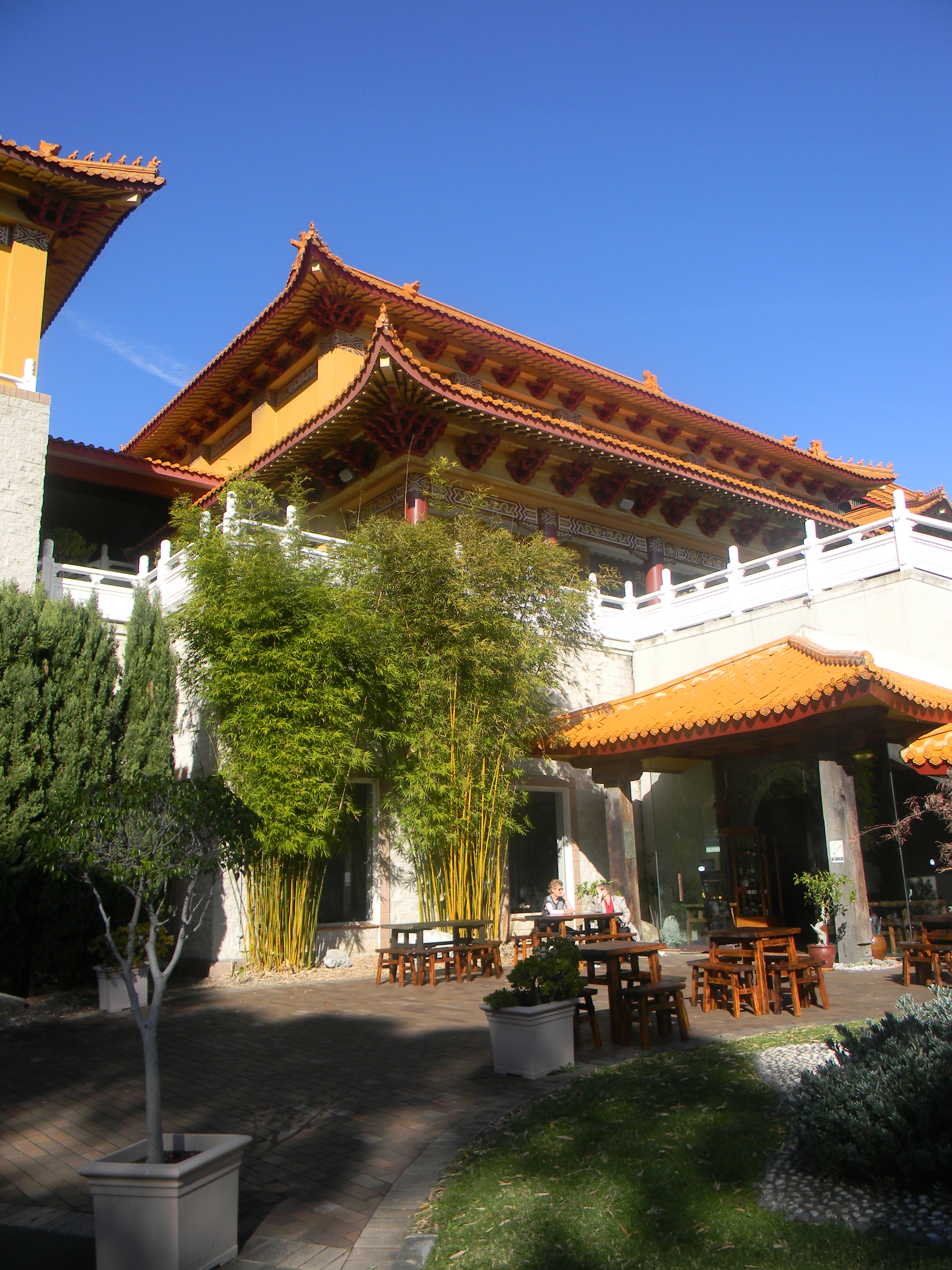
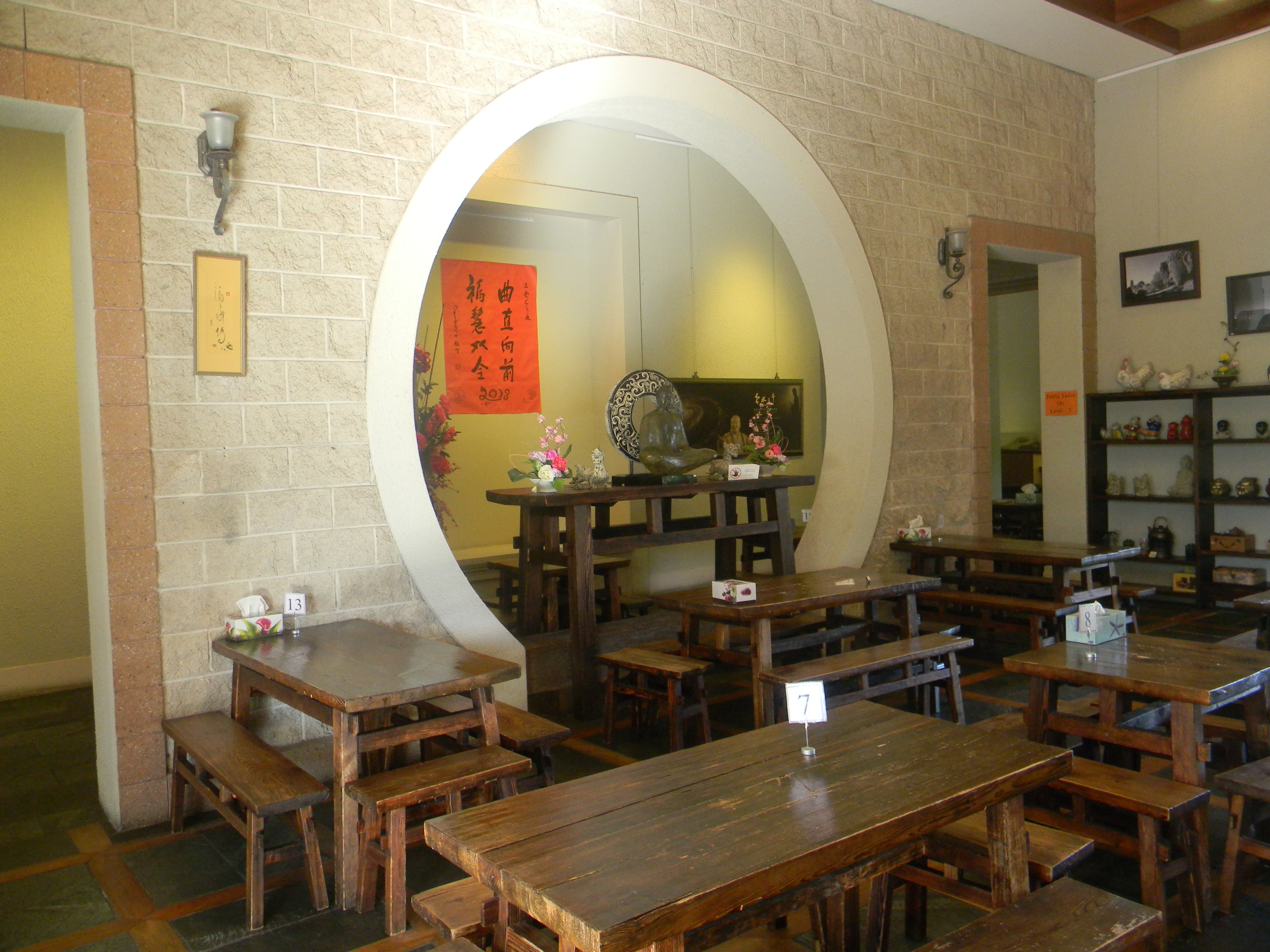
This was our place for morning tea in the sun.

RIMG0882

A bit later this  place would be filled with people having lunch.
A bit later this place would be filled with people having lunch.
I noticed this beautifully decorated reserved table.
I had dumplings for lunch.
Peter had noodles.
Peter had noodles.
Our friends had spring rolls and a rice dish.

RIMG0888

Peter doing a bit of meditating.
He found some companions.
While I'm hugging a tree.
While I’m hugging a tree.

RIMG0900 (2)

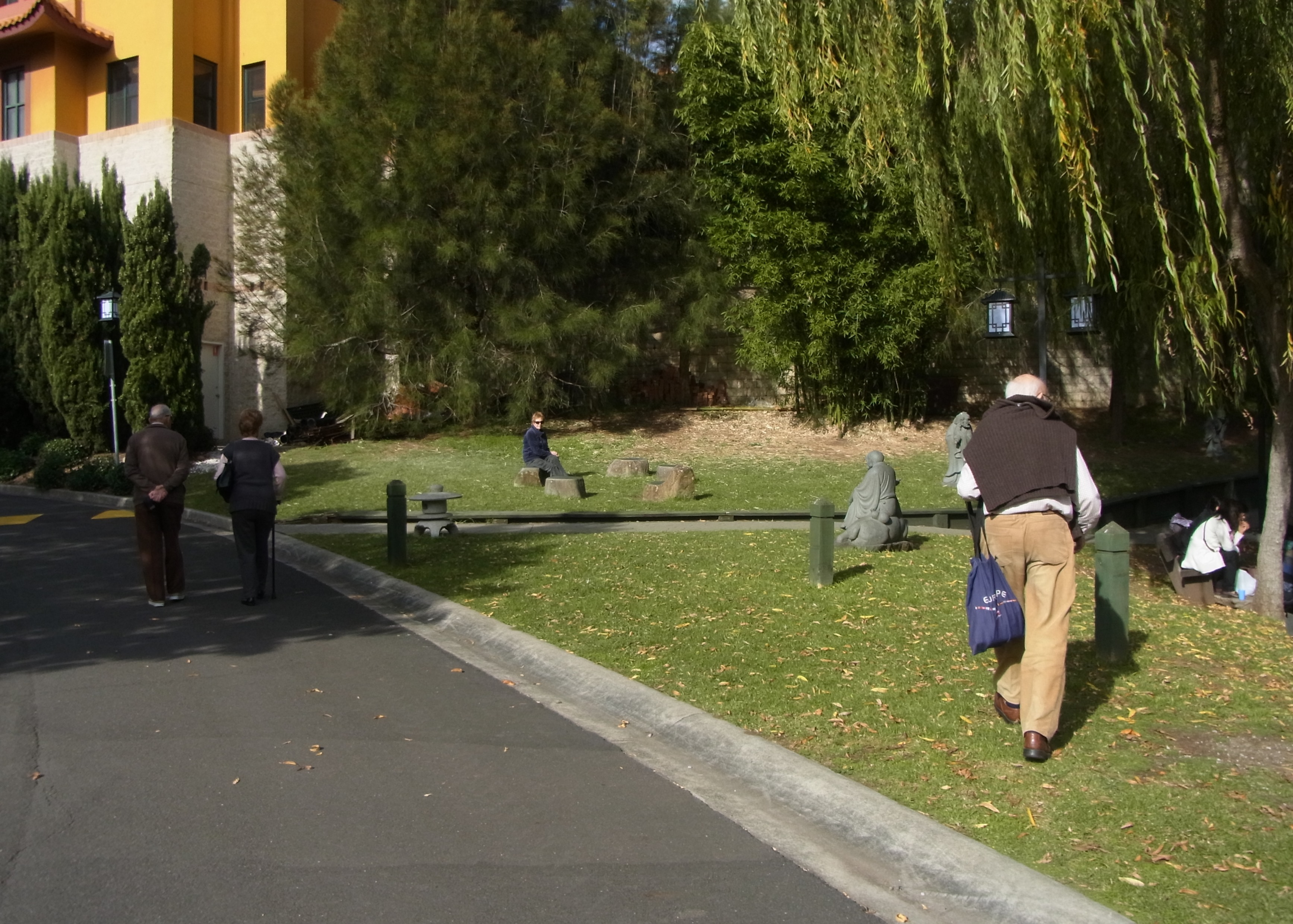
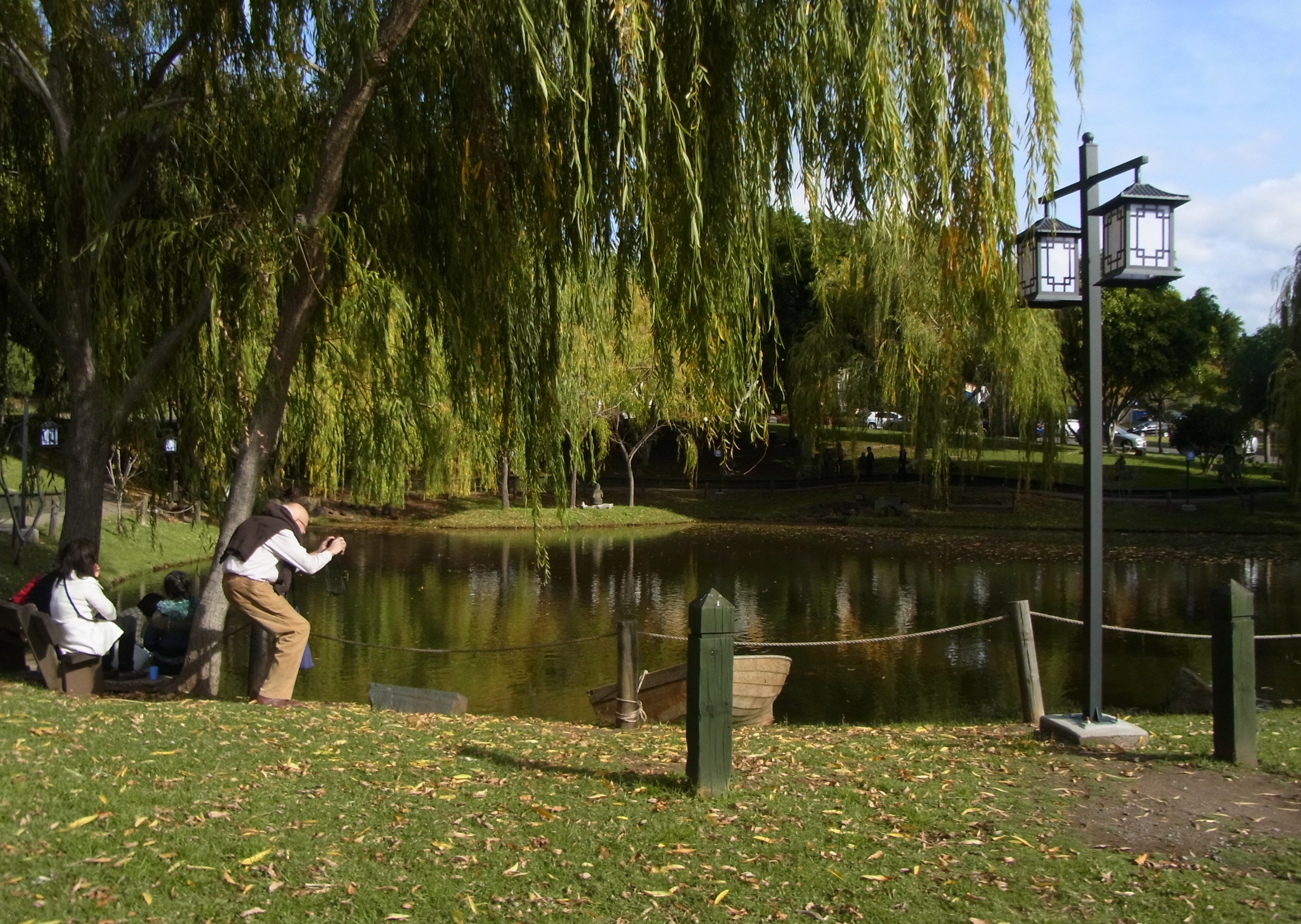
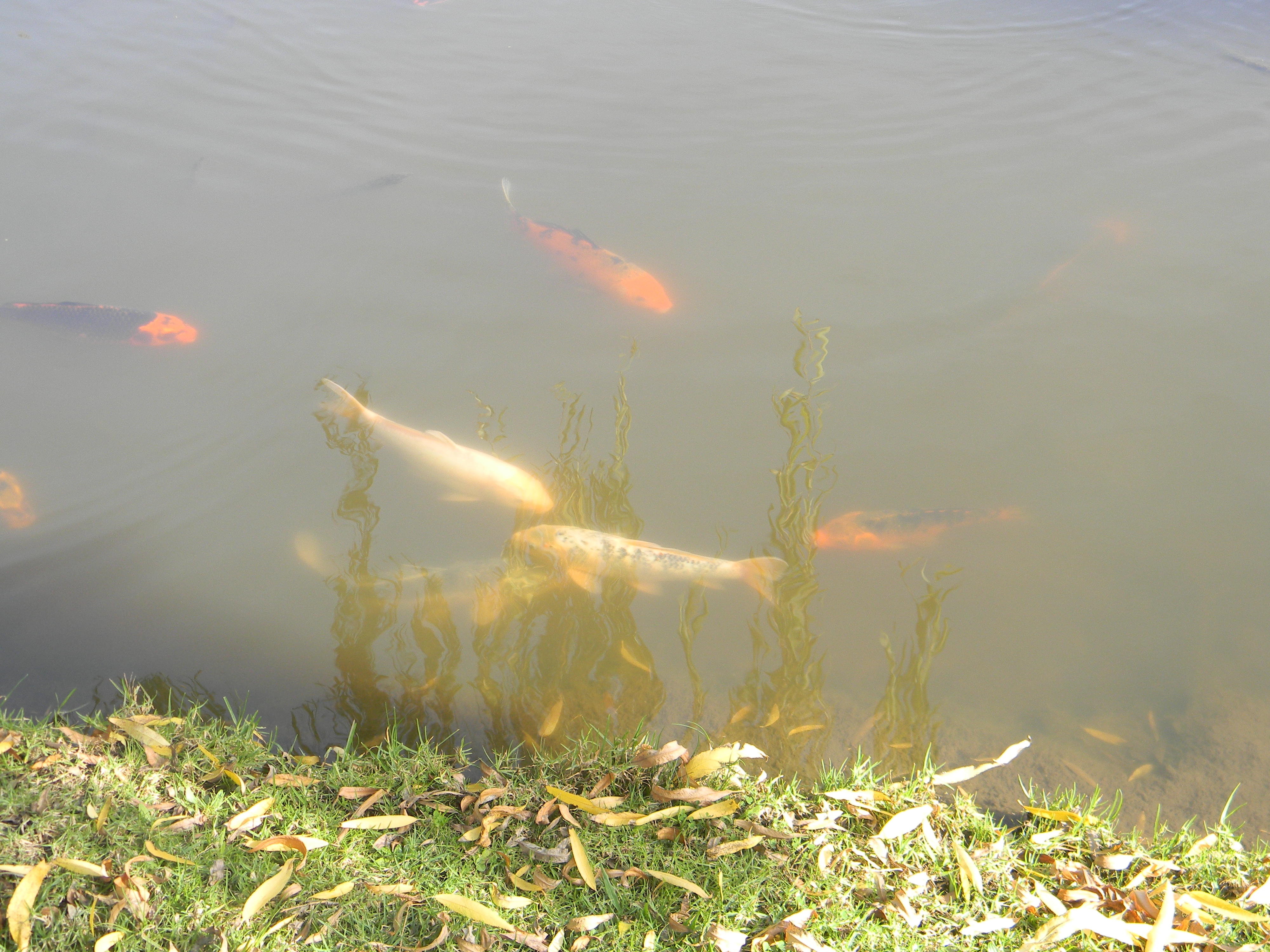
Peter is rushing to take some pictures of the pond while our two friends walk ahead to the car. Sadly it's already time to drive bck home.
Peter is rushing to take some pictures of the pond while our two friends walk ahead to the car. Sadly it’s already time to drive back home.

RIMG0904

DSCN5950

DSCN5951

This weekend is called ‘Queen’s Birthday Weekend’ here in Australia. This means tomorrow, Monday, is a public holiday.
We were lucky with the weather today. There was plenty of sunshine in the morning. So it was a good day to go out for lunch with our friends who picked us up from home at 10 o’clock. By 2 pm we were back at our place for afternoon coffee and some more talking. It’s always good to see some friends whom we have known for a long time.