
Tag: Life in Australia
trees in backyard
A bit of Diary
A Car did get stolen from one of my neighbours! How did this happen? I found out about it last night. Apparently, some teenagers stole the car during the night from Sunday to Monday. Early Monday morning the police came to the neighbour’s door telling him that his incinerated car had been found in Coonawarra!
Living on my own at my own Home
The organization HOME INSTEAD makes this possible for my mobility is drastically shrinking and without some care giving I would not be able to look totally after myself. There are just too many things that I cannot do anymore. The Australian government is subsidizing HOME INSTED to a large extant. It is said to stay at home with some help is cheaper than be looked after in a care home.
Would I ever want to go to a care home? I do not think so. What if I really cannot look after myself anymore? I want to talk to my doctor about all this as soon as possible.
Memories about our Dutch Friends
I want to write about our friends Nick Tap and Nell Tap. They were both of Dutch origin. Nell died in January 2013. I have no idea what happened to Nick. He had major health problems. There were widespread family members, including three sons.
Nick and Nell were both born ln 1933. They suffered a lot under the German occupation in World War Two. The food that the Dutch people did grow ended up on German tables. For the Dutch population there was hardly anything to eat. The children suffered severe starvation.
As I said in the previous post Peter and I liked to visit the Taps. I remember how they told us about the scarcity of food. Once a German soldier very secretly had given Nick a piece of bread. This soldier could have been severely punished for this!
My Brother Peter Uwe
We could not go on that Cruise
Our landline phone was out of order

Peter took this picture on the morning of Sunday, the 7th of September 2014. This was Fathers Day in Australia. There were blue irises as well as a bottle of Peter’s favourite port-wine. The cake made with ground almonds was for the afternoon. Monika arrived in the afternoon with sons and daughters as well as two year old grandson Lucas. Monika brought gifts along for her Papa: A lovely bottle of wine, chocolates, scratchies and a card.
Son Martin rang from Melbourne at night-time. This call was diverted to our interim mobile phone that Telstra had sent us to use while our landline phone was out of order. This mobile phone had no ringing sound. Instead a computerised female voice always announced to us when we had a phone call.
Caroline and Matthew had been going away for a few days to attend the wedding of their friends. They are back now and we are going to see them on Sunday. They probably made a lot of pictures and are going to tell us a lot about their trip.
Peter thought he had a lovely Fathers Day last Sunday. We are looking forward to seeing Caroline and Matthew very soon.
Severe Edema
Sudden change in mental state or coma- Muscle aches and pains
What Causes It?
Some of the following factors may cause edema:
- Sitting or standing for long periods
- Certain medications
- Hormonal changes during menstruation and pregnancy
- Infection or injury to a blood vessel, blood clots, or varicose veins
- Blocked lymph channels (lymphedema)
- Allergies to food or insect bites
- Kidney, heart, liver, or thyroid disease
- High or low blood pressure
- Eating salty foods
- Brain tumor or head injury
- Exposure to high altitudes or heat, especially when combined with heavy physical exertion
What to Expect at Your Doctor’s Office
Your health care provider will look for varicose veins, blood clots, wounds, or infections. An x-ray, computed tomography (CT) scan, magnetic resonance imaging (MRI), urine test, or blood test may be necessary. Pulmonary edema, which occurs when fluid builds up in the lungs, can be caused by other diseases, such as cardiovascular disease or by climbing at high altitudes. It can be life threatening and may require hospitalization.
Treatment Options
Treatment may involve using compression bandages and pressure sleeves tightened over swollen limbs to help force the body to reabsorb the fluid. Other options include a salt reduction diet, daily exercise, resting with legs elevated above the heart level, wearing support hose, taking a diuretic, and massage.
Drug Therapies
- Medication for your underlying disorder. Talk to your health care provider.
- Diuretics. For example, loop diuretics or potassium-sparing diuretics. These medicines reduce body fluid levels, but they also deplete important vitamins and minerals, which can result in loss of bone mass. Diuretics may have several other possibly serious side effects.
Surgical Procedures
Surgery may be needed to remove fat and fluid deposits associated with a type of edema called lipedema, or to repair damaged veins or lymphatic glands to reestablish lymph and blood flow.
Complementary and Alternative Therapies
The following nutritional and herbal support guidelines may help relieve edema, but the underlying cause must be addressed. Tell your health care provider about any complementary or alternative therapies (CAM) you are considering. If you are pregnant, or thinking about becoming pregnant, do not use any CAM therapies unless directed to do so by your physician.Nutrition and Supplements
Following these nutritional tips may help reduce symptoms:
- Eliminate suspected food allergens, such as dairy (milk, cheese, and ice cream), wheat (gluten), soy, corn, preservatives, and chemical food additives. Your provider may want to test you for food allergies.
- Reduce salt intake. If you are taking diuretics, your doctor should give you specific instructions about salt intake.
- Eat foods high in B-vitamins and iron, such as whole grains (if no allergy), dark leafy greens (such as spinach and kale), and sea vegetables. If you are taking certain diuretics, your provider may give you specific instructions about getting different nutrients into your diet, such as potassium and/or potassium potassium restrictions. Potassium is in many vegetables. Follow your provider’s instructions strictly.
- Eat natural diuretic vegetables, including asparagus, parsley, beets, grapes, green beans, leafy greens, pineapple, pumpkin, onion, leeks, and garlic. Some of these foods may interact with diuretic medications.
- Eat antioxidant foods, such as blueberries, cherries, tomatoes, squash, and bell peppers.
- Avoid refined foods, such as white breads, pastas, and sugar.
- Eat fewer red meats and more lean meats, cold-water fish, tofu (soy, if no allergy), or beans for protein.
- Use healthy cooking oils, such as olive oil.
- Reduce or eliminate trans fatty acids, found in commercially-baked goods, such as cookies, crackers, cakes, French fries, onion rings, donuts, processed foods, and margarine.
- Avoid alcohol, and tobacco.
- Exercise lightly 5 days a week if your health care provider says you can.
You may address nutritional deficiencies with the following supplements:
- A multivitamin daily, containing the antioxidant vitamins A, C, E, the B-complex vitamins, and trace minerals, such as magnesium, calcium, zinc, and selenium. Many multivitamins contain calcium and potassium, two minerals your doctor may want you to avoid in large quantities if you are taking certain types of medications. Talk to your provider.
- Vitamin C, as an antioxidant.
- If you use diuretics, your doctor may have you take potassium aspartate (20 mg per day), since diuretics flush out potassium from the body and cause a deficiency. DO NOT take extra potassium without informing your doctor. Some diuretics do the opposite and cause potassium to accumulate in the body.
Herbs
Herbs are generally a safe way to strengthen and tone the body’s systems although they can interact with many medications and have certain side effects. As with any therapy, you should work with your doctor to determine the best and safest herbal therapies for your case before starting treatment, and always tell your provider about any herbs you may be taking. If you are pregnant or nursing, do not use herbs except under the supervision of a provider knowledgeable in herbal therapies. Your doctor may need to strictly monitor your potassium levels if you take certain types of diuretics, and some herbs may be naturally high in potassium. You should not use herbal remedies without first consulting your physician. You may use herbs as dried extracts (capsules, powders, or teas), glycerites (glycerine extracts), or tinctures (alcohol extracts). Unless otherwise indicated, make teas with 1 tsp. herb per cup of hot water. Steep covered 5 to 10 minutes for leaf or flowers, and 10 to 20 minutes for roots. Drink 2 to 4 cups per day. You may use tinctures alone or in combination as noted.
- Bilberry ( Vaccinium myrtillus ) standardized extract, for antioxidant support. DO NOT use bilberry if you are on blood-thinning medications.
- Dandelion ( Taraxacum officinale ). Dandelion leaf is itself a diuretic, so it should not be used while taking diuretic medications. Speak with your doctor. DO NOT use dandelion if you have gall bladder disease, take blood-thinning medications, or have allergies to many plants. Dandelion can interact with many medications, including antibiotics and lithium. Talk to your provider.
- Grape seed extract ( Vitis vinifera ), standardized extract, for antioxidant support. Evidence suggests that using grape seed extract may improve chronic venous insufficiency, which causes swelling when blood pools in the legs. Grape seed can interact with some medicines, including blood-thinning medications such as warfarin (Coumadin).
Physical Medicine
- Dry skin brushing. Before bathing, briskly brush the surface of the skin with a rough washcloth, loofa, or soft brush. Begin at your feet and work up. Always stroke in the direction of your heart.
- Cold made with yarrow tea.
- Contrast hydrotherapy involves alternating hot and cold applications. Alternate 3 minutes hot with 1 minute cold. Repeat 3 times to complete one set. Do 2 to 3 sets per day for a short term only. Check with your provider to make sure your heart is strong enough for this therapy.
- Put a pillow under your legs when you’re lying down.
- Wear support stockings, which you can buy at most drugstores.
Acupuncture
Acupuncture may improve fluid balance.Massage
Therapeutic massage can help lymph nodes drain.
Special Considerations
Excessive fluid retention during pregnancy (toxemia) is potentially dangerous to both you and your baby.
Supporting Research
Adeva MM, Souto G, Donapetry C, et al. Brain edema in diseases of different etiology. Neurochem Int . 2012;61(2):166-74.
Clement DL. Management of venous edema: insights from an international task force. Angiology . 2000;51:13-17.
Hansell DM, Armstrong P, Lynch DA, et al. Imaging of Diseases of the Chest . 4th ed. Philadelphia, PA: Elsevier Mosby; 2005.
Haritoglou C, Gerss J, Hammes HP, et al. Alpha-lipoic acid for the prevention of diabetic macular edema. Ophthalmologica . 2011;226(3):127-37.
Kiesewetter H, Koscielny J, Kalus U, et al. Efficacy of orally administered extract of red vine leaf AS 195 (folia vitis viniferae) in chronic venous insufficiency (stages I-II). A randomized, double-blind, placebo-controlled trial. Arzneimittelforschung . 2000;50:109-17.
Ma L, Lin S, Chen R, et al. Treatment of moderate to severe premenstrual syndrome with Vitex agnus castus (BNO 1095) in Chinese women. Gynecol Endocrinol . 2010;26(8):612-6.
Maggiorini M. Prevention and treatment of high-altitude pulmonary edema. Prog Cardiovasc Dis . 2010;52(6):500-6.
Makri OE, Georgalas I, Georgakopoulos CD. Drug-induced macular edema. Drugs . 2013;73(8):789-802.
Meissner MH, Eklof B, Smith PC, et al. Secondary chronic venous disorders. J Vasc Surg . 2007;46 Suppl S:68S-83S.
Rathnasamy G, Ling EA, Kaur C. Therapeutic implications of melatonin in cerebral edema. Histol Histopathol . 2014; 29912):1525-38.
Schütz K, Carle R, Schieber A. Taraxacum — a review on its phytochemical and pharmacological profile. J Ethnopharmacol . 2006;107(3):313-23.
Shapiro S, Pollock DM, Gillies H, et al. Frequency of edema in patients with pulmonary arterial hypertension receiving ambrisentan. Am J Cardiol . 2012;110(9):1373-7.
Shi J, Yu J, Pohorly JE, Kakuda Y. Polyphenolics in grape seeds-biochemistry and functionality. J Med Food . 2003;6(4):291-9.
Szczesny G, Olszewski WL. Post-traumatic edema: pathomechanism, diagnosis and treatment. Ortop Traumatol Rehabil . 2001;3(3):385-94.
Tickle J. Managing venous leg ulcers and oedema using compression hosiery. Nurs Stand . 2015;30(8):57-63.
Trayes KP, Studdiford JS, Pickle S, et al. Edema: diagnosis and management. Am Fam Physician . 2013;88(2):102-10.
Villeco JP. Edema: a silent but important factor. J Hand Ther . 2012;25(2):153-61.
Zafra-Stone S, Yasmin T, Bagchi M, et al. Berry anthocyanins as novel antioxidants in human health and disease prevention. Mol Nutr Food Res . 2007;51(6):675-83.
Advanced Study
Related Information
Towards the End of November 2015
Last Wednesday we went to Merrylands.

It was a very hot day. We had lunch in Stockland Merrylands and a cup of coffee later on.


Many things had changed since we last had been in Merrylands with Gaby. But we noticed that the Heart to Heart Cafe was still there.






The Hannemann Family in Australia in 1997
In this picture Peter and I are with all our four children. Daughter Caroline stands next to Peter. All five children of daughter Monika are in the picture too! Her very tall twin sons are eighteen, her two little daughters in the front are Natasha and Roxanne. Well, this was more than sixteen years ago!

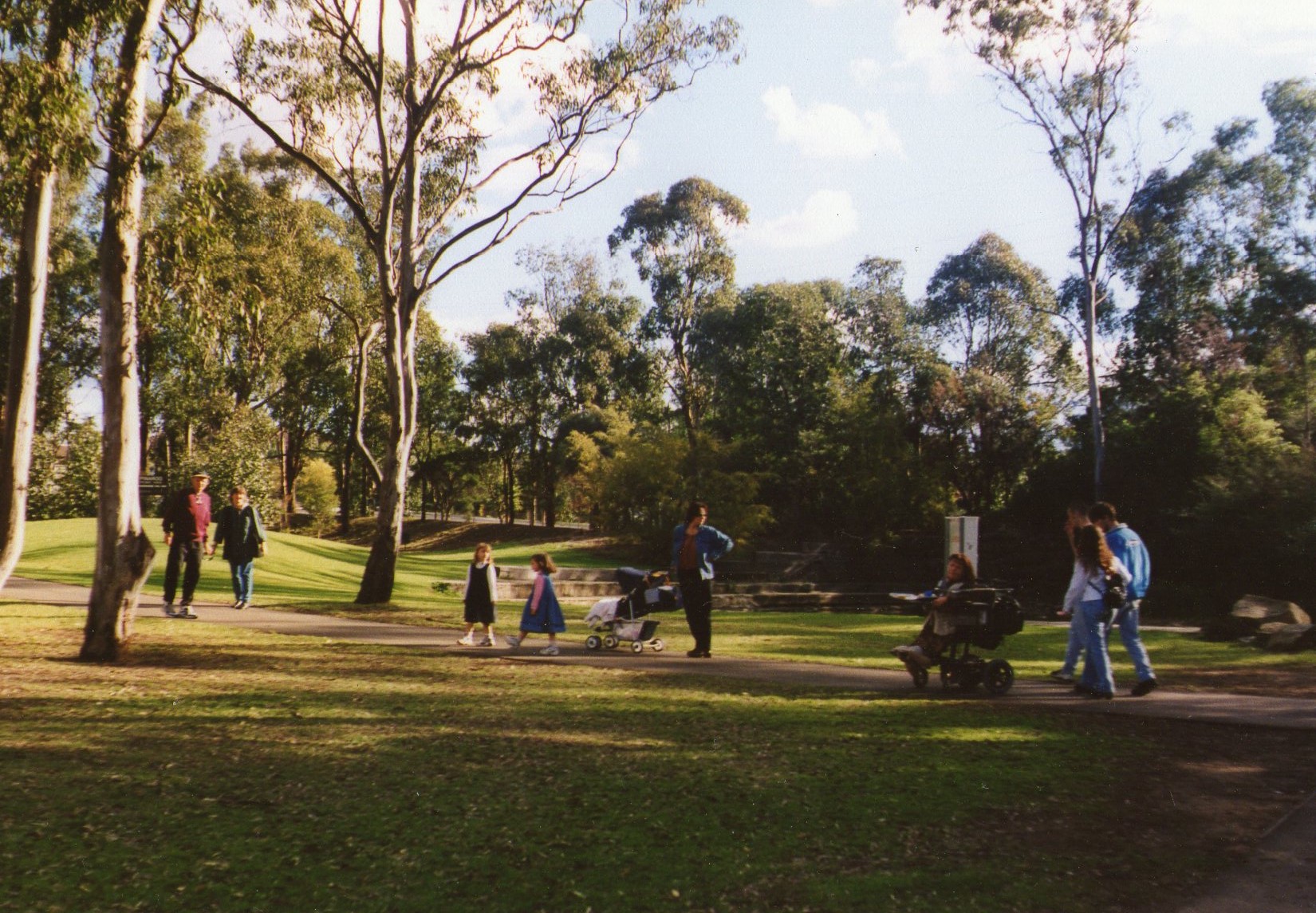
This picture was taken at the beginning of September 1997, a few days after our daughter Gaby’s 40th birthday! We all met for a picnic lunch at Central Park in Merrylands near Gaby’s and David’s home. David, Gaby’s carer, stands in the middle of the photo behind Gaby’s wheelchair. Our son Martin (who’s holding onto the wheelchair) lived in Newcastle at the time and had come to Sydney to see us all. Merrylands is a Western Suburb of Sydney. The Central Park there is a very popular recreational place.

In the picture below Troy, who is one of the twins, walks with his girlfriend.
Ryan, the other twin, as well as Caroline, Martin and David presumably walked ahead.
However one of them must have taken this picture, right? Maybe Caroline?
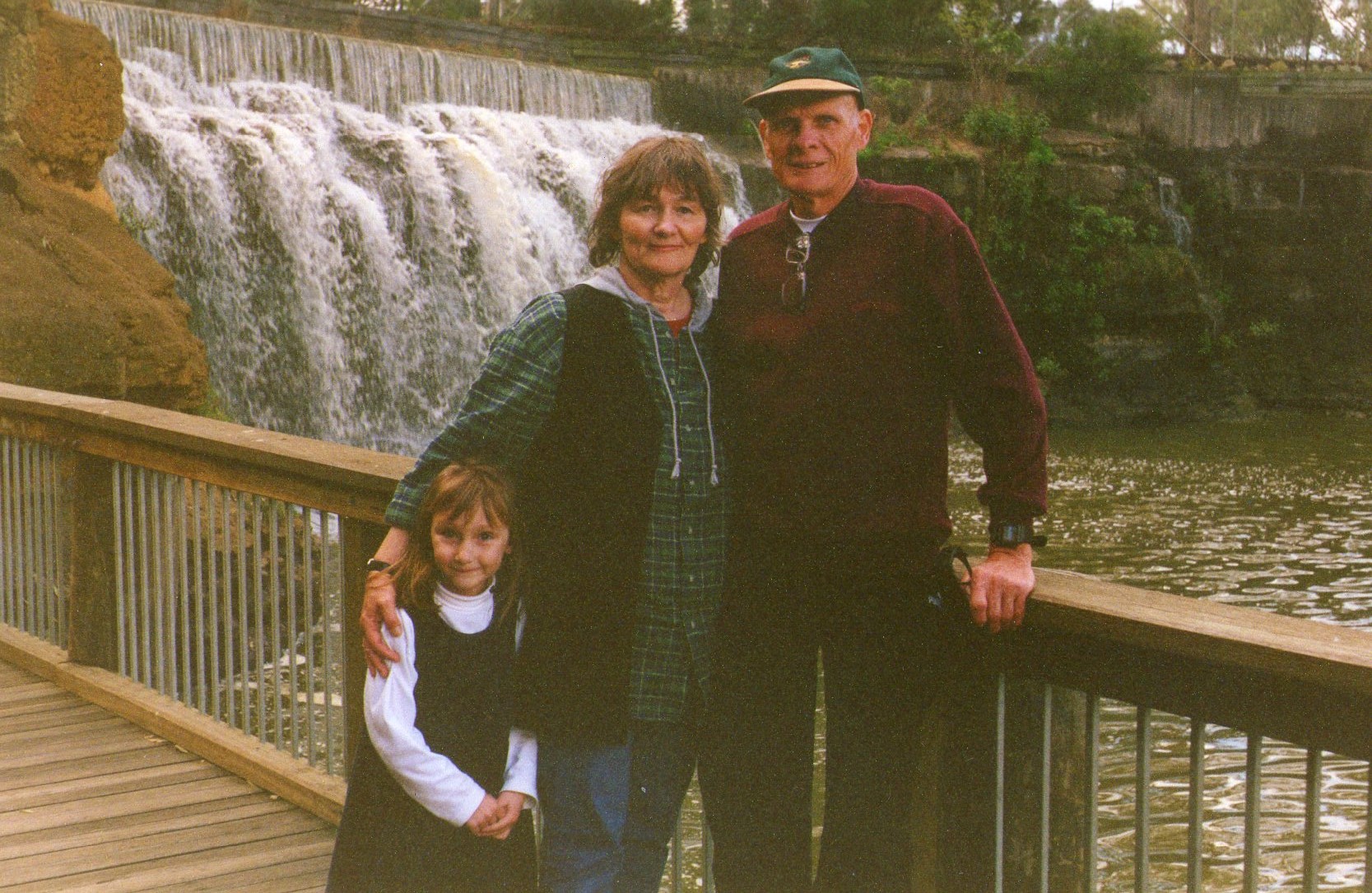
After our picnic lunch we all walked right through the park towards the little waterfall. It looks like at the time there was still quite a bit of water to be seen. Sadly, after a few years without much rain, there was no water left in this area. When we took a picture there two years ago, everything looked completely dry. Maybe in the meantime the water situation has improved somewhat. We should go there one day and have a look.
 AuntyUta